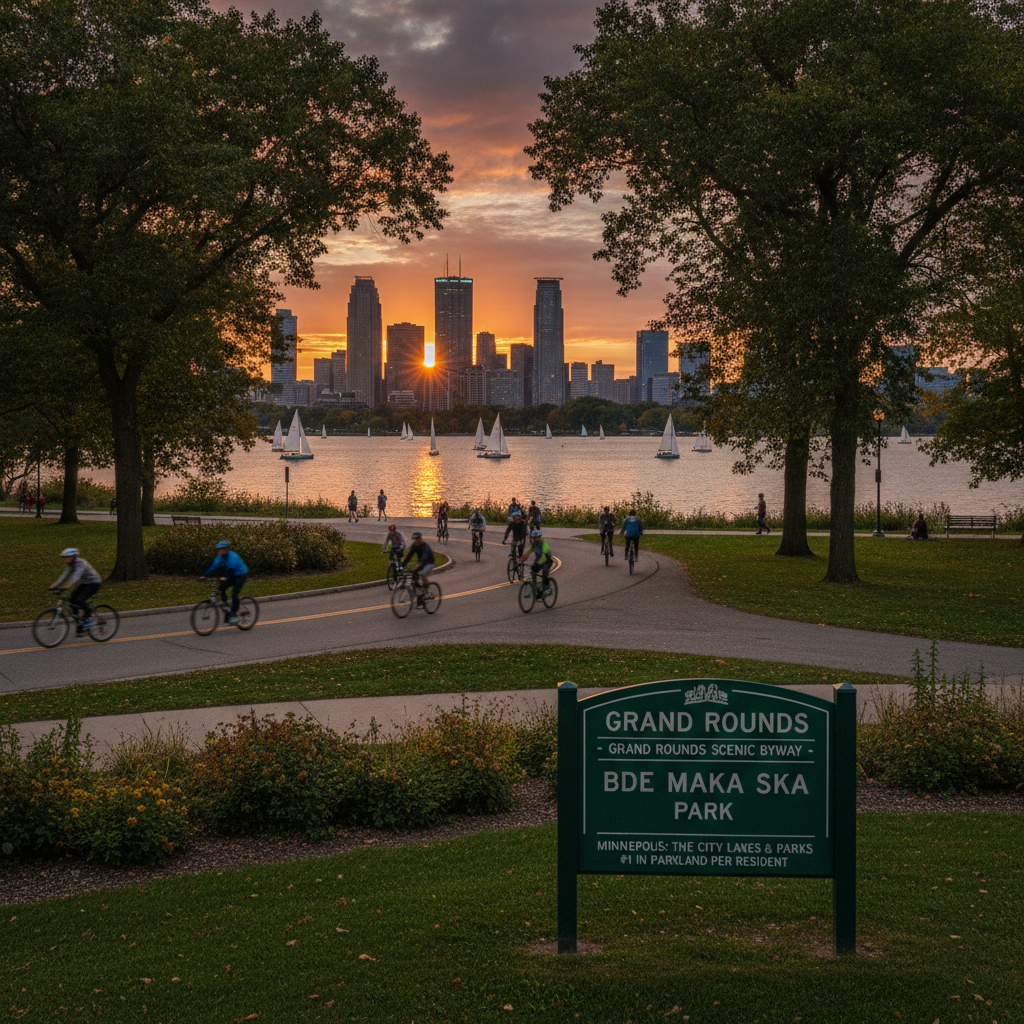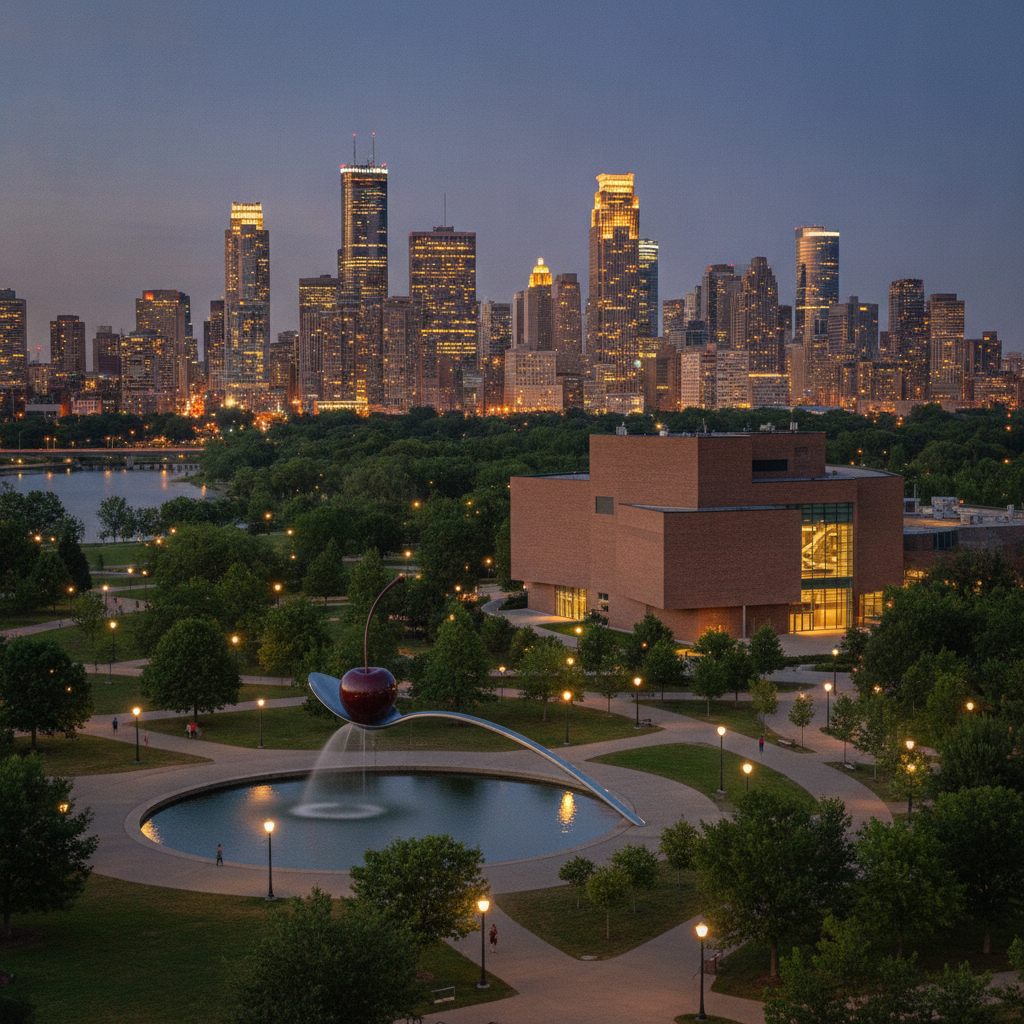
Minneapolis: Mississippi River national park and 22 city lakes (best urban park system US, Grand Rounds 87km loop, Bde Maka Ska), Prince and Paisley Park (Purple Rain 1984, First Avenue nightclub, 100M records, Paisley Park museum), Mall of America (largest US mall, 40M visitors, Nickelodeon Universe, Walker Art Center Spoonbridge and Cherry, Guthrie Theater Jean Nouvel), Twin Cities food and diversity (Somali diaspora largest US 70,000-100,000, Hmong Village Saint Paul, Juicy Lucy invention, Minnesota State Fair 2M visitors), George Floyd Square (May 25 2020, Darnella Frazier, largest US protest movement 15-26M people, Chauvin convicted 2021), Practical (skyway system 13km longest world, Vikings 4 Super Bowls 0 wins, MSP airport Delta hub, Metro Blue Line airport rail)
Minneapolis highlights: Mississippi River and lakes (22 lakes, Grand Rounds 87km parkway, best urban park system in US by Trust for Public Land, Bde Maka Ska Dakota renaming), Prince legacy (39 albums, 100M records, Purple Rain 24 weeks at #1, Paisley Park Museum Chanhassen, First Avenue nightclub 1937 bus depot), Mall of America (520 stores, 40M visitors, Nickelodeon Universe roller coaster, Walker Art Center 13,000 works, Minneapolis Sculpture Garden, Guthrie Theater Jean Nouvel Endless Bridge), Twin Cities food and diversity (Somali diaspora 70,000-100,000 Cedar-Riverside, Hmong Village largest urban Hmong community US, Juicy Lucy Matts Bar vs 5-8 Club rivalry, Minnesota State Fair 2M visitors), George Floyd Square (May 25 2020 murder, Darnella Frazier Pulitzer citation, 15-26M protesters largest US protest movement, Chauvin 22.5 years first convicted Minneapolis officer), Practical (Skyway System 13km longest world, Vikings 4 Super Bowls 0 titles, MSP Delta hub, Metro Blue Line airport to downtown).
- 1
Minneapolis - Twin Cities Overview and the Mississippi River
Minneapolis (Hennepin County seat, population approximately 430,000 city, 3.7 million metropolitan area including Saint Paul) and Saint Paul (the capital of Minnesota, approximately 310,000 people): together they form the Twin Cities, the 16th largest metropolitan area in the United States and the largest metropolitan area in the upper Midwest between Chicago and Seattle. Minneapolis geography and the Mississippi River: Minneapolis is built on the only natural waterfall on the upper Mississippi River, Saint Anthony Falls (the original commercial heart of Minneapolis, where flour mills and sawmills drove the early economy). The Mississippi River National River and Recreation Area (the only national park unit in the country protecting an urban river), running 72 km through Minneapolis-Saint Paul, with trails on both banks and 54 islands. Minneapolis lakes system: the city of Minneapolis contains 22 lakes within its city limits (more than almost any other American city of comparable size), connected by 97 km of parkways — the Minneapolis Grand Rounds National Scenic Byway, a continuous 87-km parkway loop circling the city. The Minneapolis Park System: consistently rated the best urban park system in the United States by the Trust for Public Land (ranking #1 in 2022, 2021, 2019, and 2018), serving more parkland per resident than any other major American city, with 6,740 acres of parkland including Lake Calhoun (Bde Maka Ska, renamed in 2020 to its original Dakota name meaning White Bank Lake), Lake Harriet, Lake of the Isles, and Cedar Lake connected by trails and parkways.
- 2
Prince and the Minneapolis Music Legacy
Prince Rogers Nelson (born 7 June 1958, Minneapolis; died 21 April 2016, Chanhassen, Minnesota): one of the most influential musicians in the history of American popular music and the defining artist of Minneapolis popular culture. Prince career overview: signed to Warner Bros. Records at age 19 (1977), Prince released 39 studio albums in his lifetime, sold over 100 million records worldwide, won 7 Grammy Awards, 1 Academy Award (for Purple Rain, 1984), 1 Golden Globe, and was inducted into the Rock and Roll Hall of Fame in 2004 (his first year of eligibility). Purple Rain (the 1984 film and soundtrack): shot almost entirely in Minneapolis (at First Avenue nightclub, where Prince performed the title track as a concert film), the Purple Rain soundtrack spent 24 consecutive weeks at #1 on the Billboard 200 and contained 3 top-5 singles (When Doves Cry, Let's Go Crazy, Purple Rain). Paisley Park (at 7801 Audubon Road, Chanhassen, 25 km southwest of Minneapolis): the private studio complex built by Prince in 1988, where he lived, worked, and recorded until his death; now open as the Paisley Park Museum, with guided tours of the recording studios, the NPG Music Club stage, the soundstages, and Prince's personal artifacts including his Purple Rain costume and the Grammy Awards. First Avenue nightclub (at 701 First Avenue N, Minneapolis): the most historically important rock venue in Minneapolis, housed in a 1937 Greyhound bus depot, host of the Purple Rain concert sequences, with the names of more than 500 performers star-etched on the exterior black walls.
- 3
Mall of America and the Twin Cities Arts Scene
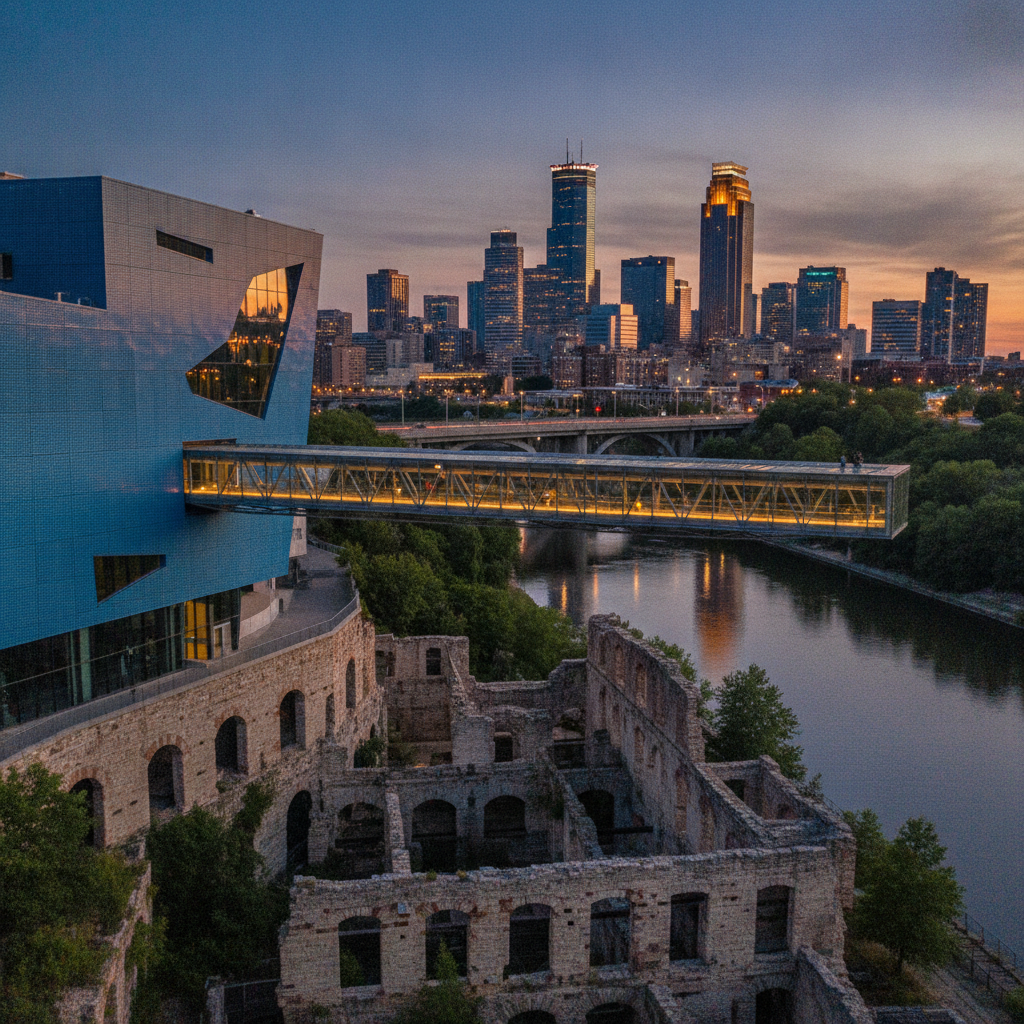
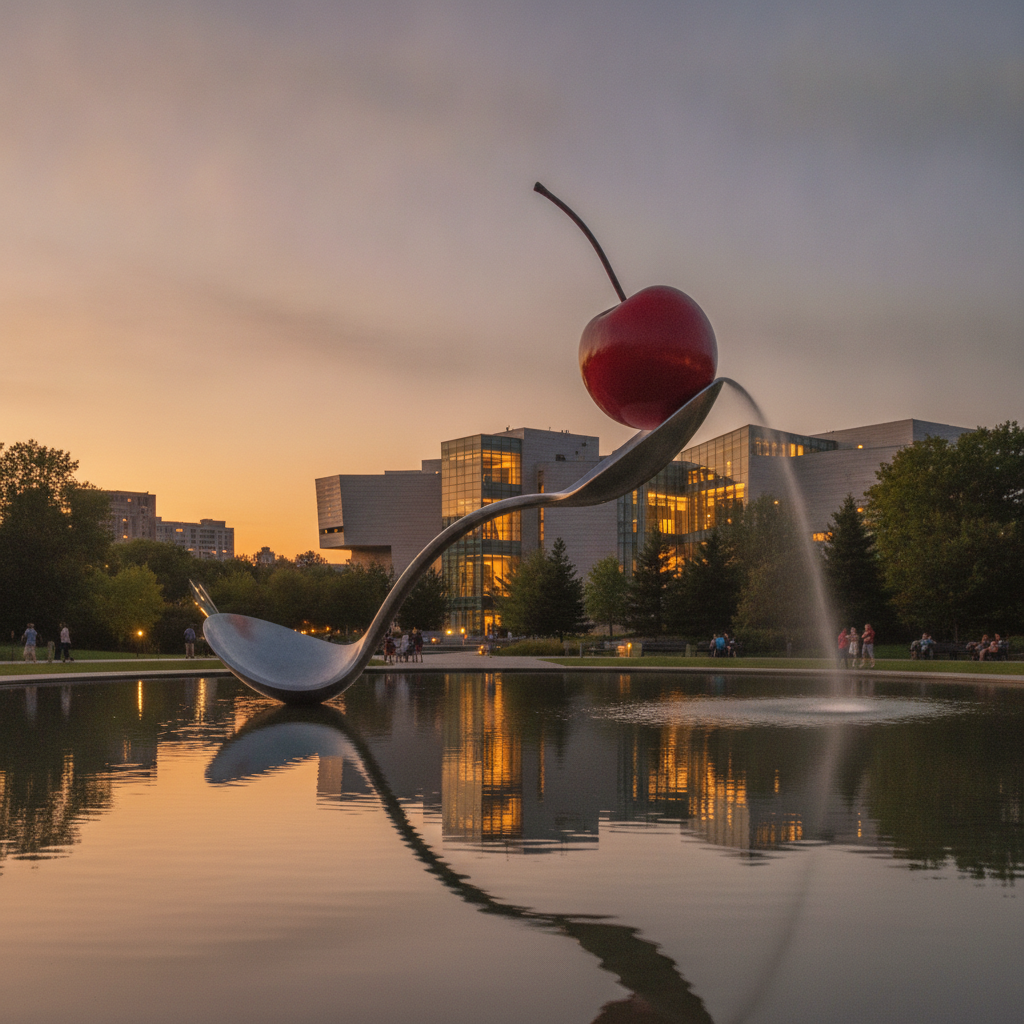
Mall of America (at 60 East Broadway, Bloomington, adjacent to MSP Airport, 22 km south of downtown Minneapolis): the largest shopping mall in the United States by total area, with 520 stores, 50 restaurants, 14 movie screens, a 7-acre indoor theme park (Nickelodeon Universe, with 27 rides including a roller coaster), an indoor aquarium (SEA LIFE Minnesota), a Crayola Experience, a comedy club, a hotel, and a wedding chapel. Mall of America statistics: 40 million annual visitors (more than the combined annual visitors of Disneyland and Disneyworld), 13,000 employees, and USD 2 billion in annual retail sales; the mall generates more tax revenue for the state of Minnesota than the entire city of Duluth. The mall has no sales tax on clothing purchases in Minnesota, making it a shopping destination for visitors from neighboring states with clothing taxes. Walker Art Center (at 725 Vineland Place, Midtown Minneapolis): one of the most important contemporary art museums in the United States, with a permanent collection of approximately 13,000 works and the adjacent Minneapolis Sculpture Garden (the largest urban sculpture garden in the United States, 11 acres, containing the iconic Spoonbridge and Cherry by Claes Oldenburg and Coosje van Bruggen, 1988). Guthrie Theater (at 818 South 2nd Street, on the Mississippi River, Minneapolis): one of the most important regional theater companies in the United States, founded 1963 by Tyrone Guthrie, housed since 2006 in a spectacular building designed by Jean Nouvel with the Endless Bridge cantilever extending 17 meters over the Mississippi River gorge.
- 4
Minneapolis-Saint Paul Food Scene and Diversity
Minneapolis-Saint Paul food scene: the Twin Cities have one of the most diverse and nationally recognized food scenes of any American metropolitan area outside the coasts, reflecting both the Scandinavian-German immigrant heritage of the upper Midwest and the remarkable diversity of more recent immigrant communities. The Somali community (the largest Somali diaspora community in the United States, concentrated in the Cedar-Riverside neighborhood of Minneapolis and the Riverside Plaza housing complex): approximately 70,000-100,000 Somali Americans live in the Minneapolis-Saint Paul metropolitan area, making it the most significant Somali community outside of East Africa. Cedar-Riverside (the West Bank neighborhood adjacent to the University of Minnesota): the most diverse neighborhood in Minneapolis, with Somali restaurants, tea houses, and markets concentrated on Cedar Avenue. The Hmong community: the Twin Cities are home to the largest urban Hmong community in the United States (approximately 70,000 Hmong Americans, mainly refugees from the Vietnam War era Laotian civil conflict), with the Hmong Village (1001 Johnson Pkwy, Saint Paul) the largest Hmong marketplace in the United States. Minnesota-specific food culture: Juicy Lucy (the Minneapolis-invented variant of the cheeseburger in which the cheese is stuffed inside the meat patty rather than placed on top): the original dispute between Matts Bar (at 3500 Cedar Avenue S) and the 5-8 Club (at 5800 Cedar Avenue S) over which invented the Juicy Lucy has become one of the most storied food rivalries in American regional cuisine. Minnesota State Fair (the Great Minnesota Get-Together, held 12 days ending on Labor Day at the State Fairgrounds in Falcon Heights): the second largest state fair in the United States by attendance (2 million visitors over 12 days), famous for its food-on-a-stick innovations.
- 5
George Floyd Square and Minneapolis Racial Justice Legacy
George Floyd Square (at the intersection of East 38th Street and Chicago Avenue S, Powderhorn Park neighborhood, Minneapolis): the memorial site at the location where Minneapolis police officer Derek Chauvin murdered George Perry Floyd Jr. on 25 May 2020. George Floyd death and global impact: the murder of Floyd (a 46-year-old Black man who was pinned to the ground with Chauvin kneeling on his neck for 9 minutes and 29 seconds during an arrest for an alleged counterfeit USD 20 bill) was filmed by bystander Darnella Frazier (then 17 years old) and shared on social media, triggering the largest protest movement in American history. Between 15 and 26 million people participated in Black Lives Matter protests in the United States between late May and early June 2020 (the largest protest event in US history by most measures), with protests occurring in over 2,000 American cities and in 60 countries worldwide. Derek Chauvin was convicted of second-degree murder, third-degree murder, and second-degree manslaughter on April 20, 2021 (the first Minneapolis police officer to be convicted of murder in US history), sentenced to 22.5 years in prison. George Floyd Square as a memorial: the intersection was closed to traffic by the community for over a year after the murder and transformed into a community memorial and social justice hub, with murals, a community garden, and a fist sculpture. The Frazier Nobel Peace Prize nomination: Darnella Frazier received the PEN/Benenson Courage Award and a special citation from the Pulitzer Prize board in 2021 for her role in documenting Floyd's murder.
- 6
Minneapolis Practical Guide - Weather Sports and Twin Cities Navigation
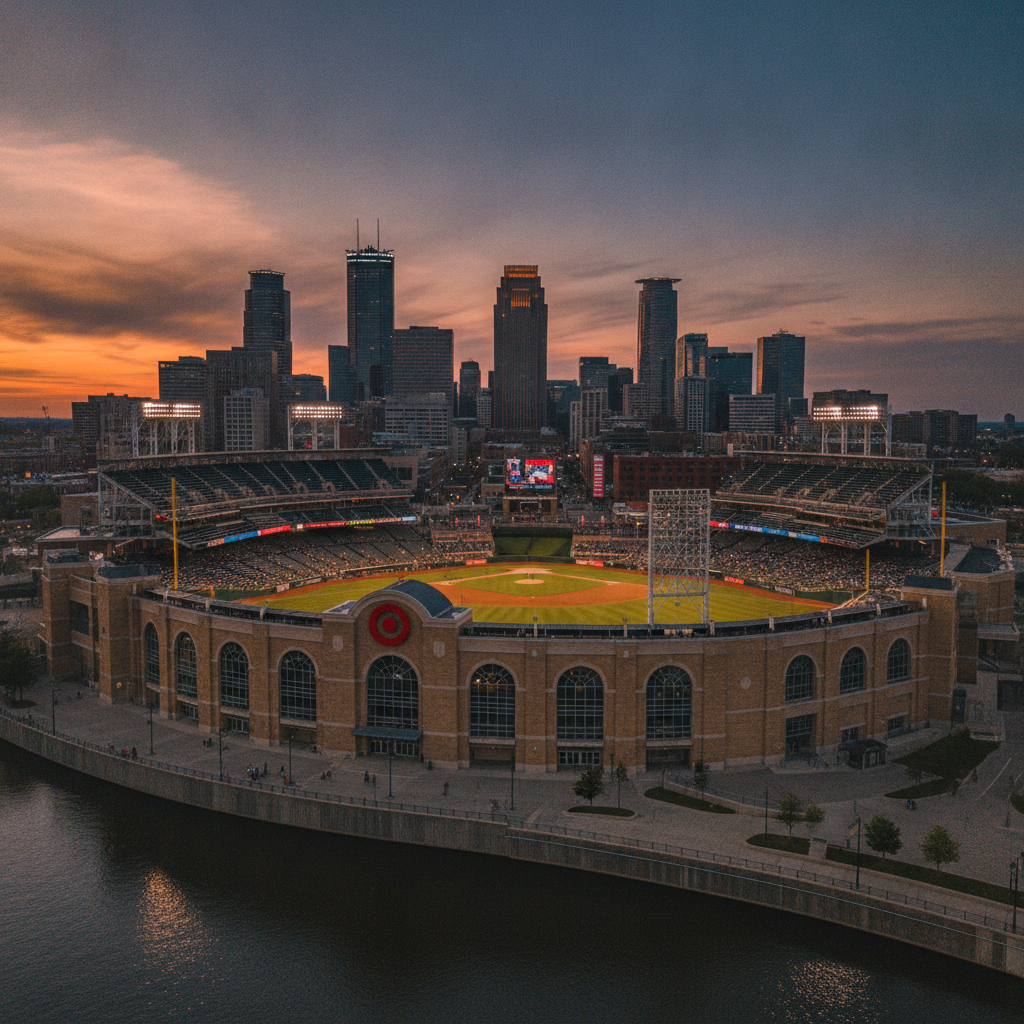
Minneapolis practical guide: Minneapolis climate: Minneapolis has one of the most extreme climates of any major American city, with winter temperatures regularly reaching -20 to -30 degrees Celsius and summer temperatures reaching 35 degrees Celsius, a temperature range of approximately 65 degrees Celsius across the year. Minneapolis snow: the city averages approximately 127 cm of snow per year (compared to 48 cm for Chicago and 71 cm for Boston), and the Minneapolis-Saint Paul Airport has never cancelled a flight due to snow (the airport has plow equipment for all runways and maintains operations even during major blizzards). The Minneapolis Skyway System (the 80-building, 13-km enclosed pedestrian skyway network connecting most of downtown Minneapolis above street level): the longest such system in the world, allowing residents and workers to move through most of downtown without encountering outdoor temperatures during winter. Minneapolis sports: Minnesota Vikings NFL (founded 1961, 4 Super Bowl appearances with 0 wins, the Minnesota Miracle, currently playing at US Bank Stadium opened 2016 with a fixed ETFE roof — the Vikings have never played in a Super Bowl in their home state); Minnesota Twins MLB (2 World Series championships: 1987 and 1991, the Metrodome Homerdome era, now playing at Target Field open-air stadium); Minnesota Timberwolves NBA (Karl-Anthony Towns, Anthony Edwards); Minnesota Wild NHL; Minnesota United MLS. Getting to and around the Twin Cities: Minneapolis-Saint Paul International Airport (MSP), served by Delta (primary hub) and all major US carriers; Metro Transit light rail Blue Line (airport to downtown) and Green Line (Minneapolis to Saint Paul Union Depot).
Walk this route with audio
Stories play automatically as you reach each stop — no tapping needed.
More in minneapolis
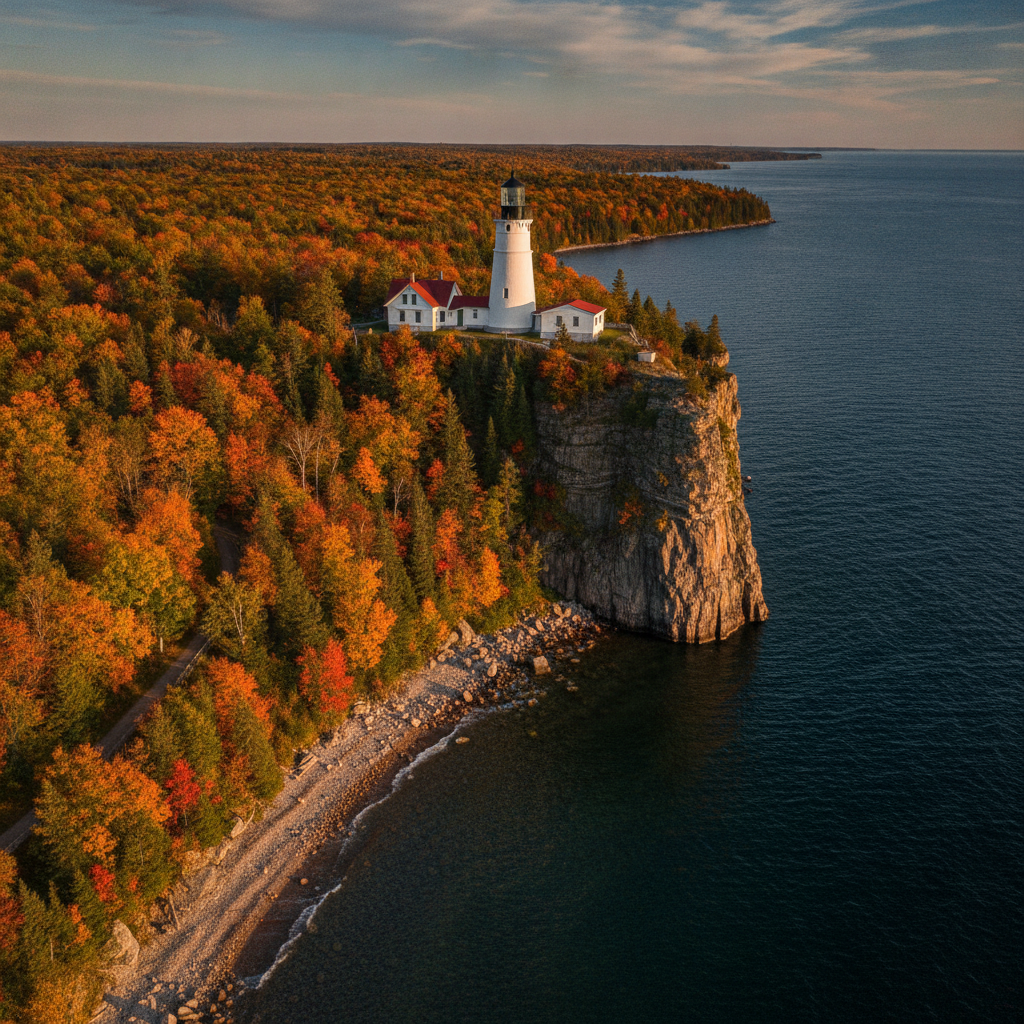
Minneapolis: Cuba-Touring Orchestra, Indigenous James Beard Winner and 150 Miles of Lake Superior Cliffs
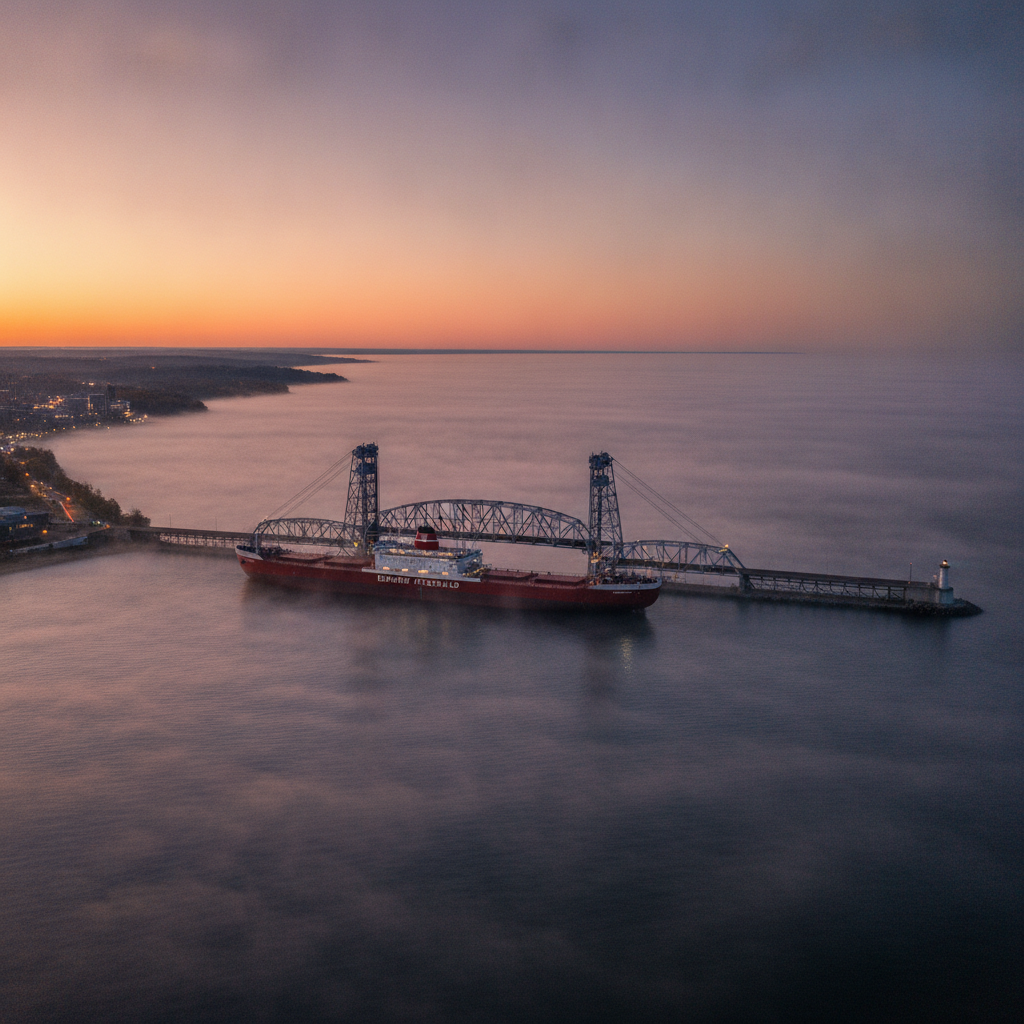
Minneapolis R2: Nicollet Mall and downtown architecture (IDS Center Philip Johnson 1972, Foshay Tower 1929 W Hotel, Mary Tyler Moore statue, Hennepin Ave theater district), University of Minnesota (51,000 students, 29 Nobel laureates, Norman Borlaug Green Revolution 1 billion deaths prevented, Bob Dylan Dinkytown 1959-1960), Boundary Waters Canoe Area (1.1M acres, 1,175 lakes, most visited US wilderness, Twin Metals mining controversy), Saint Paul (Minnesota State Capitol Cass Gilbert, Summit Avenue F. Scott Fitzgerald, Cathedral of Saint Paul), Minnesota Scandinavian heritage (1.5M Norwegian descent, Minnehaha Falls Longfellow, lutefisk Lutheran church suppers, Lake Wobegon Garrison Keillor), Day trips (Duluth Lake Superior Aerial Lift Bridge, Mayo Clinic Rochester, Stillwater Victorian birthplace of Minnesota)
Minneapolis: F. Scott Fitzgerald Summit Avenue, Guthrie Theater Over the River and 9 Miles of Indoor Skyways
Minneapolis: Bob Dylan Dinkytown Coffeehouses, East African Little Mogadishu and Gehry Campus
Minneapolis: Prince Paisley Park, Spoonbridge Cherry and the Busiest Wilderness in America