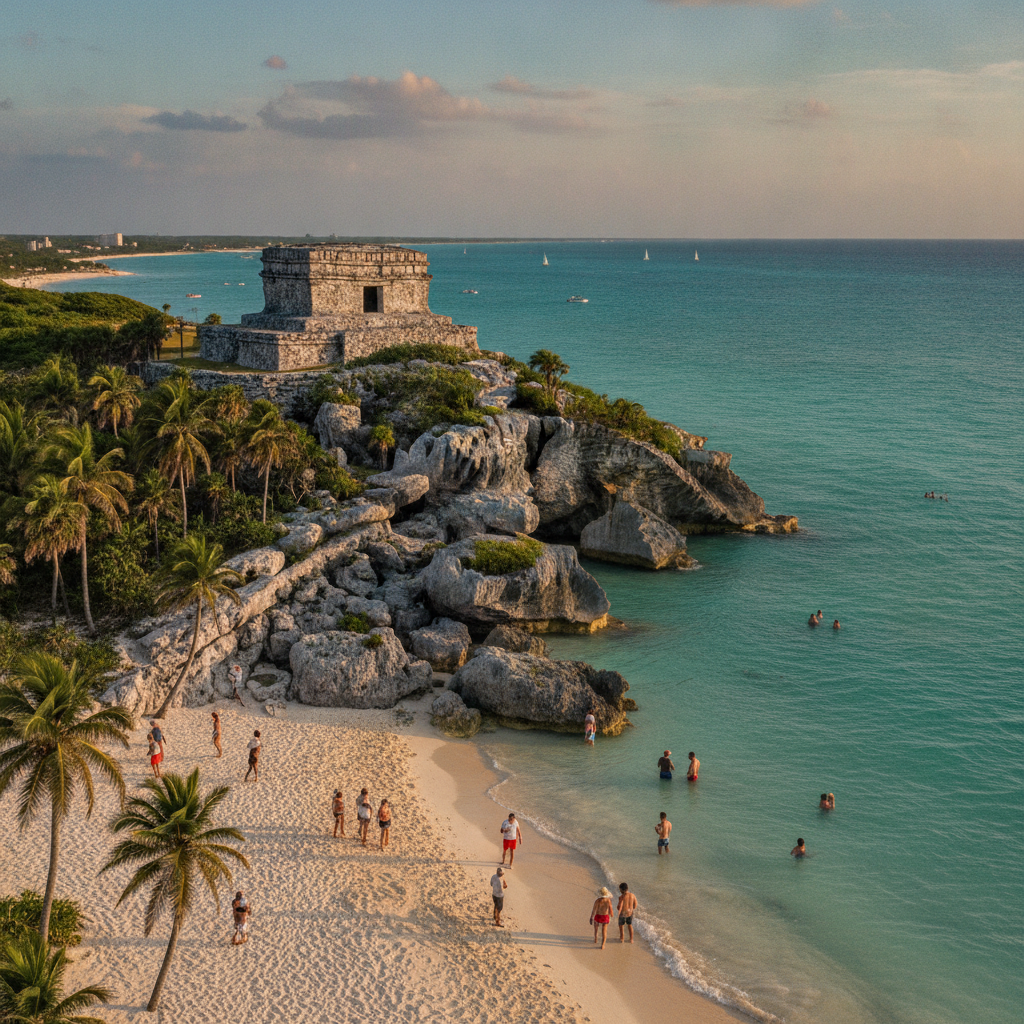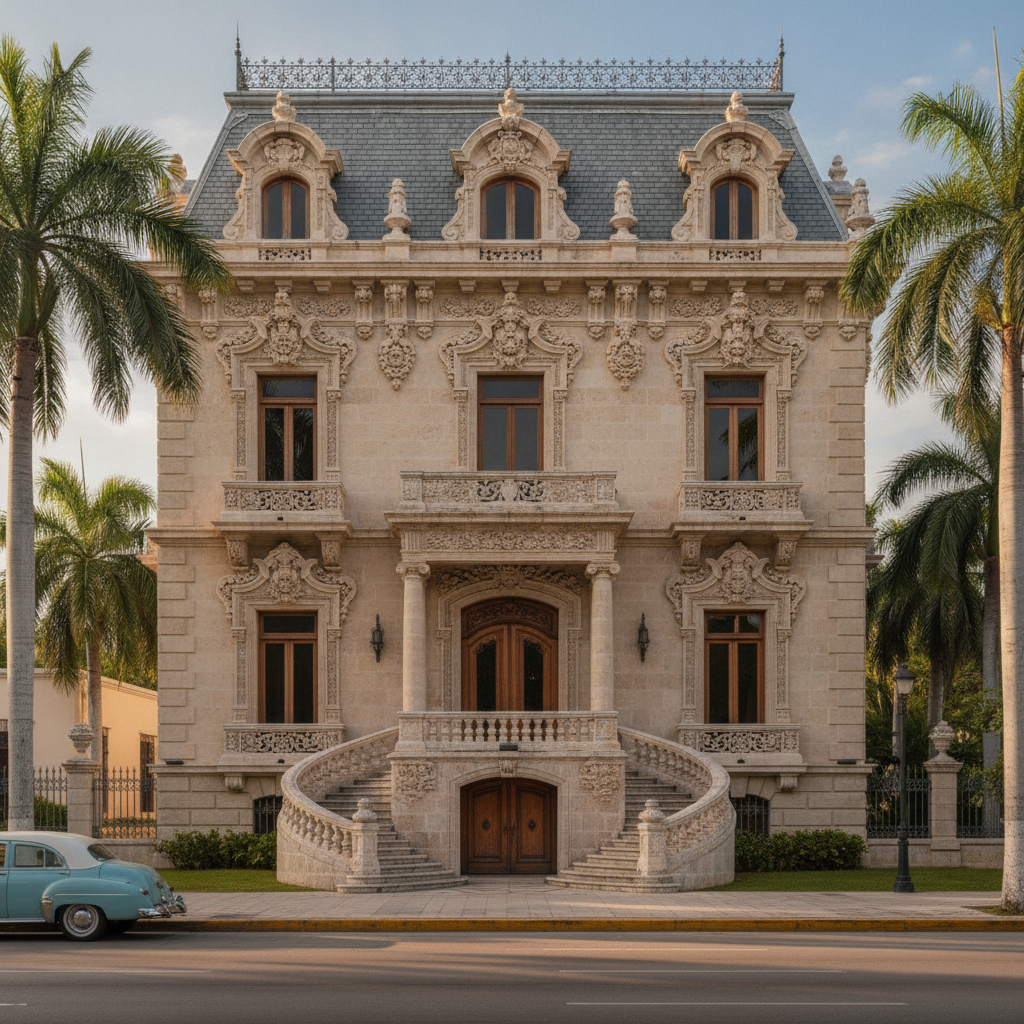
Merida Colonial Architecture Walking Tour: Cantera Limestone Mansions of the Calle 60 Corridor, the Plateresque Doorways of the Historic Center and the Architectural Inventory That Makes Merida the Best-Preserved Colonial City in Mexico After Oaxaca
Merida's historic center, covering approximately 9 square kilometres of the original colonial grid established in 1542 on the site of the Maya city of T'ho, preserves the most complete inventory of colonial and 19th-century residential architecture in the Yucatan Peninsula and one of the most significant in Mexico, with the characteristic one-story or two-story limestone mansions of the colonial and Porfiriato periods lining the grid streets in a density that allows the visitor to walk for hours through essentially unchanged streetscapes. The Yucatan limestone, a white-to-cream carbonate rock that is easily carved when freshly quarried and hardens with exposure to weather, was the building material of both the Maya civilization and the Spanish colonial construction, creating a material continuity across the conquest that is embedded in every colonial building: the doorways of the Merida historic center mansions are built with the same stone as the Maya pyramids that were demolished to clear the site. The colonial house typology of Merida, the casa de mamposteria with its thick walls, high-ceilinged rooms, interior garden courtyard called the patio, and street-facing portal covered passage, adapts the Spanish colonial house tradition to the tropical Yucatan climate in a way that uses passive cooling principles — thermal mass, shading, air circulation through the central courtyard — that contemporary sustainable architecture has rediscovered as superior to mechanical air conditioning in the hot dry months of the Yucatan spring. The walking tour of Merida's historic center, moving from the Plaza Grande through the Calle 60 corridor to the Santa Lucia plaza and north to the Paseo Montejo, provides the most complete experience of the colonial architectural tradition of the city.
- 1
Calle 60 Architecture Corridor
Calle 60, the primary commercial and cultural street of the Merida historic center running from the Plaza Grande northward to the Parque de Santa Lucia and continuing to the Paseo Montejo, contains the most concentrated inventory of colonial and Porfiriato architecture in the city: the neoclassical Teatro Peon Contreras, completed in 1908 with an Italian marble interior, frescoed ceiling, and an exterior of Corinthian columns and neoclassical pediment that was designed by the Italian architect Enrico Deserti commissioned to give the booming henequen capital a European cultural institution equivalent to those the hacendados had seen in Paris; the Universidad Autonoma de Yucatan in the former Seminary of San Ildefonso, a colonial building modified in the 19th and 20th centuries that maintains the colonial arcade courtyard organization; and the Parque Hidalgo, a small plaza with cafes under the portal arcades where Meridanos and visitors alike sit for hours in the tradition of the Spanish and Caribbean plaza cafe culture. The portal, the covered arcade that lines many Merida streets and plaza perimeters, is the architectural element most characteristic of Merida's colonial street life, providing shade for pedestrians in the extreme Yucatan sun and the ground-floor commercial space for the cafes, pharmacies, and shops that have occupied these positions since the colonial period. The Teatro Peon Contreras hosts the Ballet Folklorico de Yucatan, the Merida Symphony Orchestra, and visiting productions, and its exterior in the evening, illuminated against the dark sky with Meridanos gathered on the steps, is the most cinematic urban scene in the city.
- 2
Colonial Residential Architecture and Typology
The colonial residential architecture of the Merida historic center follows a typology derived from the Spanish Mediterranean house tradition but modified for the Yucatan climate: the casa de mamposteria consists of a street-facing facade of whitewashed or painted limestone with a decorative doorway and one or two windows protected by iron rejas grilles, a series of high-ceilinged rooms organized linearly from the street to the rear garden, a patio courtyard garden at the center providing light and air to the interior rooms, and a rear service area with the kitchen, cistern, and servants quarters. The decorative doorways of the Merida colonial houses, ranging from the simple wooden door in a plain limestone surround of the humbler examples to the elaborate stone-carved Baroque portico of the elite residences, are the primary architectural ornament of the street facade. The 19th-century Porfiriato modifications to many colonial houses replaced the austere Spanish colonial elements with Eclectic decoration incorporating Italian marble columns, French iron balustrades, and Moorish tile panels that reflected the cosmopolitan ambitions of the henequen elite. The interior patio gardens of the Merida colonial houses, planted with the native trees and plants of the Yucatan including the nanche, the guaya, and the chaya plus the introduced species of the colonial period including bougainvillea, jasmine, and plumbago, are invisible from the street and constitute the most private and pleasant spaces in the Merida residential tradition, occasionally visible through an open door on a hot afternoon. The renovation of colonial houses for boutique hotel use has made some of these patio gardens accessible to visitors as the primary amenity of the hotel experience.
- 3
Merida Markets and Mercado Lucas de Galvez
The Mercado Lucas de Galvez, the main covered market of Merida occupying a full city block two blocks from the Plaza Grande, provides the most complete encounter with Yucatecan food culture in the city, with the ground floor dedicated to fresh produce, meat, fish, and the specialized Yucatecan ingredients — the recado spice pastes, the bitter orange, the habanero chile, the achiote paste, the epazote and chaya herbs — and the upper level devoted to handicraft and clothing stalls selling hammocks, huipiles, guayaberas, Panama hats, and Yucatecan crafts. The cochinita pibil vendor stalls of the Lucas de Galvez market, operating from early morning through noon when the day's supply is exhausted, serve the most authentic and inexpensive version of the dish available in the city, with the banana leaf-wrapped pork served with pickled red onion and habanero salsa alongside corn or flour tortillas. The market builds on the same commercial site that has served as Merida's primary retail food market since the colonial period, when the indigenous tianguis market that had operated at the same location before the Spanish conquest was formalized into the colonial market structure. The market operates six days a week with reduced Sunday hours, with the early morning the busiest period when restaurant operators and domestic cooks select the freshest ingredients. The market vendors of the Lucas de Galvez are predominantly women, continuing the Yucatecan tradition of women's market commercial control that the Isthmus Zapotec are famous for in their own region.
- 4
Paseo Montejo Mansions and Belle Epoque
The Paseo Montejo mansions, built between 1895 and 1915 for the henequen families at the peak of the sisal fiber boom, represent the most comprehensive inventory of Belle Epoque residential architecture in Mexico, with 22 surviving mansions in various states of preservation and use, including the Palacio Canton now housing the Regional Anthropology Museum, the mansion now housing the Merida City Council offices, and several properties in active use as hotels, consulates, and cultural institutions. The architectural styles of the Paseo Montejo mansions span the full range of late 19th and early 20th century revival and eclectic styles: the Palacio Canton in French Second Empire with its mansard roof and classical pilasters; the Casa Cámara in an Italian Renaissance palazzo style; mansions in Moorish revival, Catalan Modernisme, and American Beaux-Arts styles that reflect the variety of European travel experiences and architectural influences the henequen families brought back from their European tours. The Museo Regional de Antropologia de Yucatan in the Palacio Canton at the northern end of the central Paseo Montejo section, holds the most comprehensive collection of Maya ceramic, stone, and metal objects from the Yucatan Peninsula outside the National Museum of Anthropology in Mexico City, including objects from Chichen Itza, Uxmal, and the cenote offerings. The Paseo Montejo walking experience is best in the early morning when the heat is manageable and the cars are fewer, with the mansions seen in the raking morning light that reveals the architectural detail of the carved limestone facades.
- 5
Santa Ana and Santiago Neighborhoods
The colonias of Santa Ana and Santiago, the neighborhoods immediately north and west of the Plaza Grande that contain the highest density of independent restaurants, galleries, boutique hotels, and craft shops serving the visitor and expatriate market, represent the Merida version of the gentrification pattern visible in colonial cities across Mexico: 19th-century residential properties renovated by entrepreneurial owners to commercial use serving the tourism economy, with rents and property values rising to the point where the original working-class residents are displaced to peripheral colonias with less infrastructure and more heat. The Parque de Santa Ana, the plaza at the center of the Santa Ana colonia, anchors the neighborhood's social life with the neighborhood church, the surrounding cafes and restaurants, and the Tuesday artisan market. The Parque de Santiago in the adjacent colonia, smaller but equally well-defined, is the venue for the Monday evening vaqueria dance event and the Wednesday jarabe yucateco performance that bring the traditional dance culture of the Yucatan to a neighborhood public space. The concentration of independent restaurants in Santa Ana and Santiago includes some of the finest contemporary Yucatecan cuisine establishments in the city, where trained chefs apply modern cooking technique to traditional Yucatecan ingredients and preparation methods. The 17-year-old Merida street market scene, with regular artisan and food markets in the plazas of different colonias on different days, provides a shopping and eating circuit that rewards the visitor who stays long enough to explore more than the immediate Plaza Grande vicinity.
- 6
Merida Architecture Preservation and Future
The architectural preservation of the Merida historic center, one of the most important colonial architectural ensembles in Mexico, operates through a combination of INAH federal historic monument designation for the most significant buildings, state-level heritage zone regulations for the broader historic center area, and municipal building permit requirements that theoretically mandate architectural compatibility in new construction within the protected zones. The practical enforcement of these regulations is inconsistent: the rapid increase in property values driven by the tourism boom and the expatriate migration has made the economic incentive for demolition and replacement of colonial buildings with tourist-market commercial buildings significant, and several notable colonial properties have been demolished or severely altered in the past decade despite their protected status. The most visible threat to the Merida historic center is the subdivision of large colonial mansions, which were built for multi-generational family occupancy with domestic staff, into multiple smaller units for short-term rental accommodation, a process that preserves the facade while eliminating the interior spatial organization and material character that gives the houses their heritage significance. The growth of the Merida metropolitan area into the surrounding municipalities at low density, driven by suburban residential development for the growing middle class of the city, is consuming the cenote-dotted rural landscape north and west of the city at a rate that INAH and state environmental authorities lack the regulatory capacity to meaningfully control. The balance between the economic development that preservation of the colonial core helps attract and the development pressures that threaten the colonial core from the tourism success it generates is the defining tension of Merida heritage politics in the current decade.
Walk this route with audio
Stories play automatically as you reach each stop — no tapping needed.
More in Merida

Merida Hacienda Hotels and the Yucatan Countryside: Swimming Pools in Converted Sisal Vats, Flamingo Lagoons at Celestun and the Biosphere Reserve Where Jaguars and Manatees Still Exist Within Two Hours of a Colonial Capital
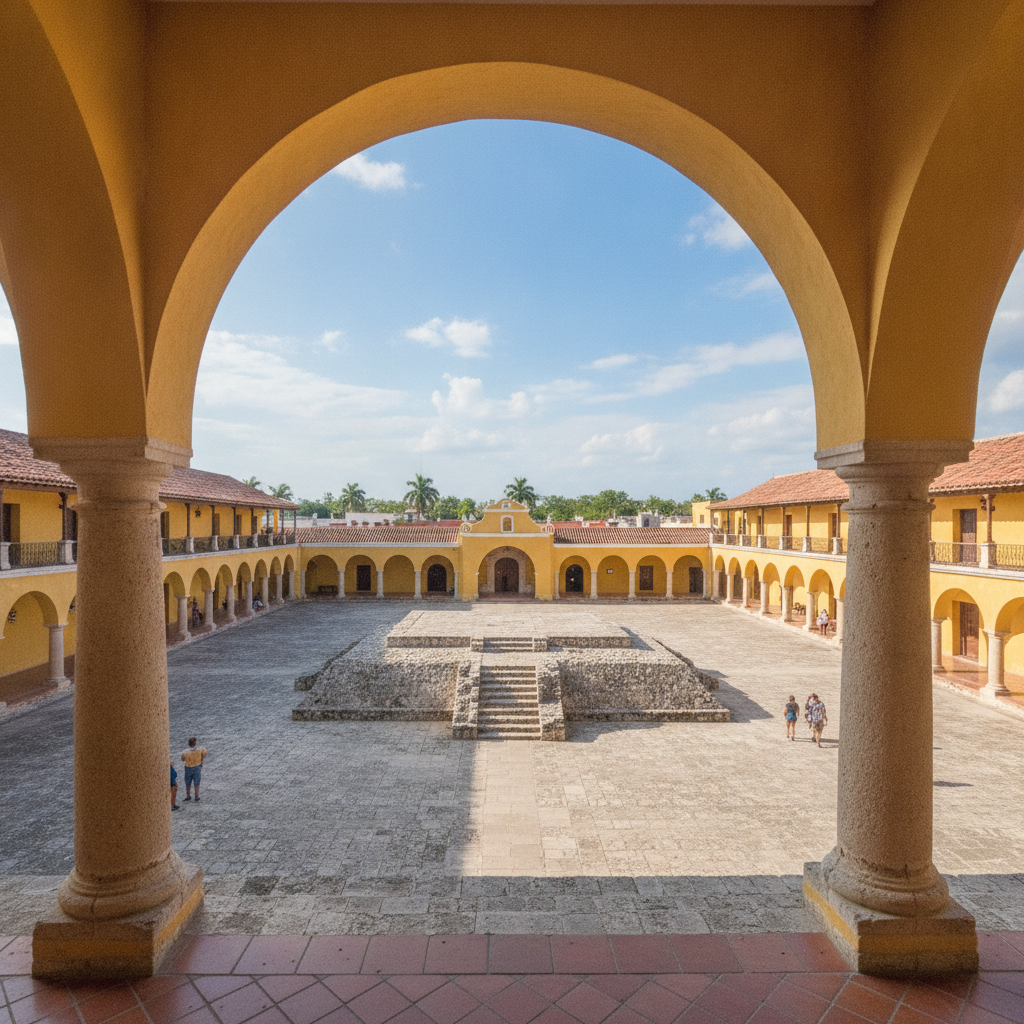
Yucatan Colonial Churches and the Franciscan Campaign That Replaced Every Maya Pyramid With a Monastery: How the 16th-Century Mass Conversion Program Produced the Most Impressive Monastic Architecture in the Americas
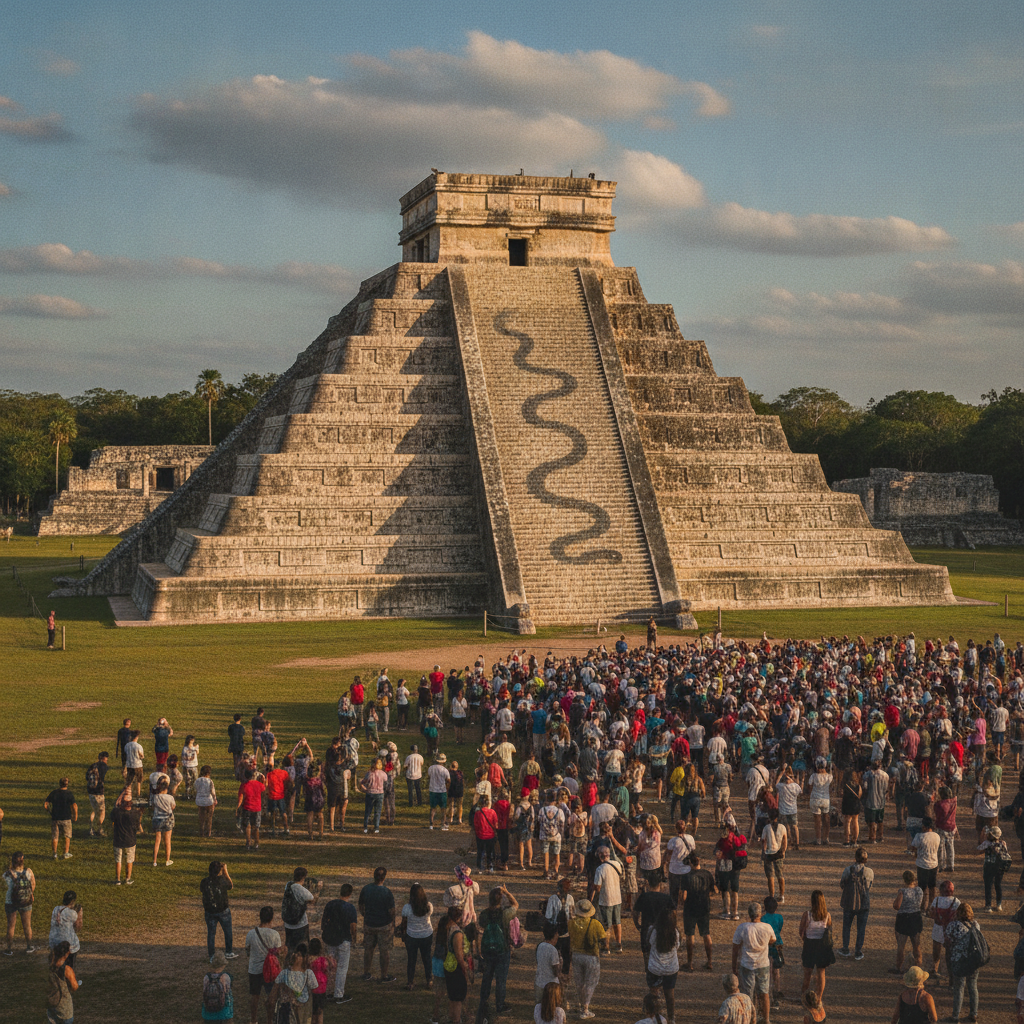
Merida: The White City of the Yucatan Peninsula Where Henequen Millionaires Built Beaux-Arts Mansions on a Maya Foundation and Where Chichen Itza Is Ninety Minutes Away and Cenotes Are Everywhere Beneath the Flat Limestone Plain
Maya Civilization in the Yucatan: The Writing System That Scholars Could Not Read for 150 Years, the Dresden Codex Astronomical Tables That Are More Accurate Than European Medieval Equivalents, and the Debate About Who Built Chichen Itza
Merida and Yucatan Water Crisis: How the Aquifer That Feeds 5 Million People Is Being Contaminated by Pig Farms Pesticides and Hotel Septic Systems While the Government Issues New Tourism Development Permits