Mendoza Nightlife, Arts, and the Creative Cuyo Scene
Mendoza has a cultural and nightlife scene that punches above its size of 1.2 million metropolitan inhabitants, driven by the university population, the wine industry professionals, the digital nomads and international tourism workers attracted by the wine tourism economy, and the deeply rooted Argentine social culture of late-night dining, live music, and extended public socializing that characterizes the provincial capitals of the southern cone.
- 1
Arístides Villanueva: The Wine Bar Street of Argentina
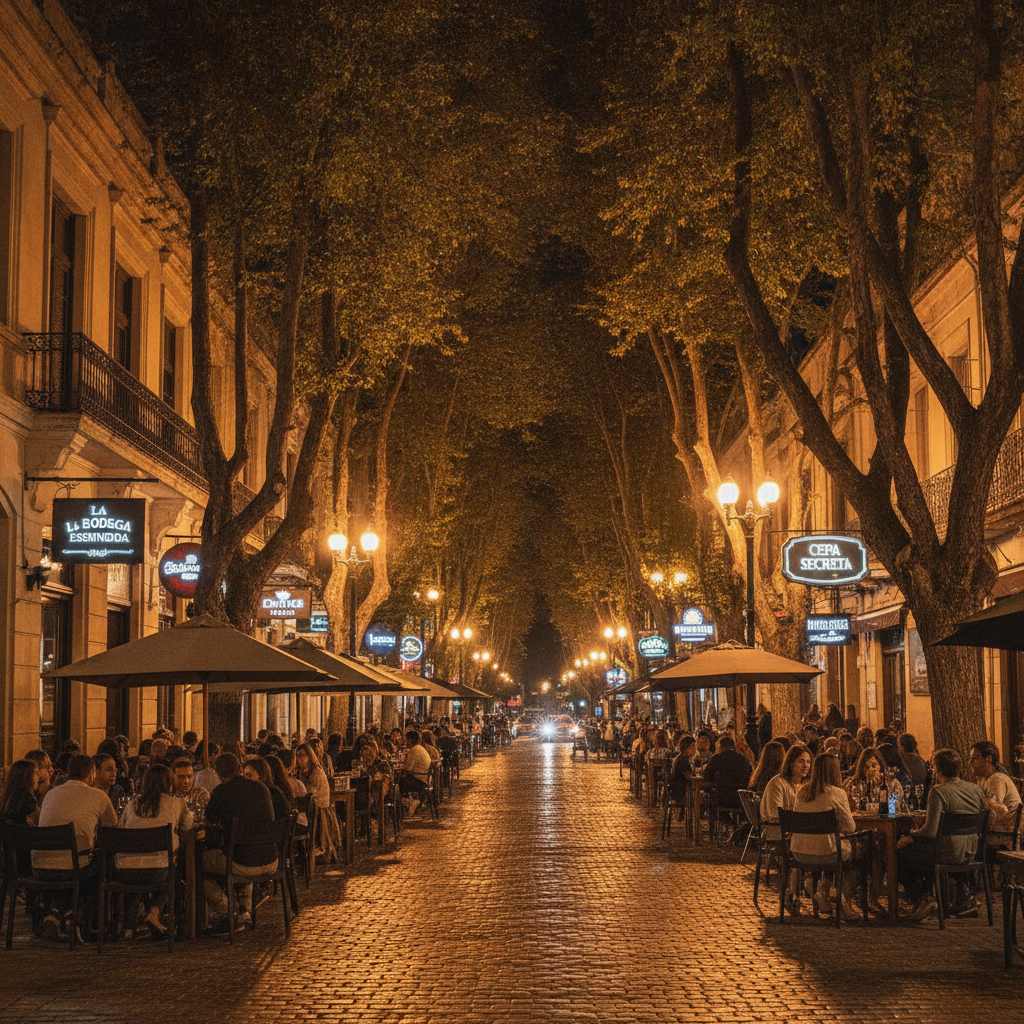
The Calle Arístides Villanueva in central Mendoza, a several-block stretch of bars, wine bars, live music venues, and restaurants that begins its social life well after midnight and continues into the early hours, is considered the most celebrated bar street in Argentina outside Buenos Aires and the commercial embodiment of the Mendozan culture of convivial wine drinking. The Aristides strip operates on Argentine time: dinner does not typically begin until 9 or 10 in the evening, the bars fill from midnight onward, and the social activity peaks between 1:00 and 3:00 AM in a rhythm that reflects the Argentine cultural convention of late-night social life. The wine bars on Aristides represent the retail expression of the wine tourism culture, with extensive by-the-glass programs and knowledgeable staff who can guide visitors through the range of regional producers; these venues are the most natural setting for informal wine education for visitors who have visited the formal winery tasting rooms during the day. The live music on Aristides includes folk music in the cuyo style with charango, guitar, and bombo drum, contemporary Argentine rock and cumbia, and international styles that reflect the cosmopolitan character of the venue mix; weekend evenings bring street performers and the overflow of bar patrons onto the sidewalks in a pedestrian social environment that is characteristic of the Argentine city nightlife culture.
- 2
Teatro Independencia and the Mendoza Arts Scene
The Teatro Independencia in the central plaza area of Mendoza city is the primary venue for theater, opera, dance, and classical music performances in the province, with a season that runs from March through November and includes national touring productions from Buenos Aires alongside locally produced works that reflect the distinctive cultural identity of the Cuyo region. The Mendozan theater scene has produced several nationally recognized playwrights and directors, and the local theater community maintains a tradition of politically engaged and formally experimental work that has been a significant element of Argentine cultural life since the return to democracy in 1983. The contemporary arts and crafts scene in Mendoza is concentrated in the Perdriel and Vistalba neighborhoods of Luján de Cuyo, where the combination of wine industry prosperity and the influx of creative professionals has created a cluster of galleries, design studios, and artisanal workshops. The annual Mendoza Wine Week, held in April, combines wine industry tastings and presentations with cultural events including concerts, art installations, and food experiences in the winery estates; the event is the most significant gathering of the Argentine wine industry and attracts producers, buyers, and journalists from throughout the wine world. The craft beer movement has established itself alongside the wine culture in Mendoza, with several breweries using local barley and hops from the Patagonian foothills to produce Argentine interpretations of traditional European styles; the craft beer bars of the Godoy Cruz neighborhood provide an alternative social scene to the wine bars of Aristides for visitors seeking variety.
- 3
Argentine Folk Music: Cueca, Zamba, and the Cuyo Musical Identity
The folk music of the Cuyo region, centered on the cueca and the zamba as the primary dance forms and the guitar and bombo as the primary instruments, has a distinctive character that differs from the chamame of the northeast and the tango of Buenos Aires and reflects the specific cultural mixture of indigenous Huarpe, Spanish colonial, and criollo mestizo traditions that shaped the Cuyo region. The cueca cuyana, the regional variant of the cueca dance that is also the national dance of Chile, involves a handkerchief-waving courtship between a male and female dancer in a form that combines European influenced footwork with indigenous rhythmic elements; the dance is performed at folk festivals and peñas throughout Mendoza province. The peña, a gathering for folk music and dance in a social setting combining live performance with audience participation, eating, and drinking, is the primary institutional form of Argentine folk culture and the most accessible way for visitors to engage with the living musical tradition of the Cuyo region. The annual folk festival at Cosquín in Córdoba province is the most important gathering of Argentine folk music nationally, but Mendoza has its own significant folk festival season around the Vendimia period in late February and March that brings the leading performers of the cuyo and national folk traditions to outdoor stages throughout the province. The influence of the Chilean musical tradition across the Andes is evident in the Mendozan folk music heritage, creating a cross-border folk culture that reflects the historical integration of the Cuyo region with the trans-Andean economy and society before the Argentine-Chilean border became a significant political division.
- 4
Gastronomic Mendoza: Beyond the Winery Lunch
The restaurant scene of Mendoza city beyond the estate dining rooms of the wine country has developed significantly in the past decade, with a generation of young chefs trained in Buenos Aires and abroad returning to the Cuyo to open restaurants that combine the local ingredients of the Andean piedmont with international culinary techniques. The Cobos Park area of the Luján de Cuyo wine zone has become a restaurant cluster with a concentration of quality dining within cycling distance of several premium wineries, allowing visitors to combine winery visits with dinner without returning to the city. The mercado central of Mendoza city, a covered market in the city center, contains prepared food stalls serving traditional Mendozan dishes including humita in chala, tamales, empanadas al horno, and the regional stew locro that warms the cold months of the Cuyo winter; the market is the most authentic setting for everyday Mendozan food as eaten by local residents. The olive oil and preserve producers of the Cuyo region sell their products at the urban markets and specialty food shops of the city center; the combination of Arauco olive oil, local almonds, and regional dried fruits creates an artisanal food souvenir tradition that complements the wine tourism economy. The craft chocolate production that has developed in Mendoza alongside the wine industry uses cocoa from northern Argentine provinces to produce bonbons and tablets flavored with local grape must, Malbec reduction, and Andean herbs in combinations that reflect the same terroir-based thinking that drives the premium wine culture.
- 5
Architecture and Urban Design: Mendoza as a Model of Earthquake Resilience
The urban design of post-earthquake Mendoza, with its wide streets, low buildings, abundant plazas, and the acequia irrigation system, has been recognized by urban planners as one of the early examples of designing an entire city around seismic risk reduction, with principles that anticipate modern earthquake-resistant urban design by a century. The five-plaza system centered on Plaza Independencia, with four subsidiary plazas at the cardinal corners of the grid providing refuge areas in case of building collapse, is the most distinctive element of the Mendozan urban form and gives the city center an openness and green quality that distinguishes it from other Argentine cities of similar size. The early 20th century architecture of Mendoza, built during the prosperity of the Italian immigration period and the wine industry expansion, features elaborate beaux-arts facades on the commercial buildings of the center that contrast with the simple modernist residential architecture of the post-war period. The acequia system, maintained by a dedicated municipal team that manages the water flow and the lining of the canals, is the most important piece of urban infrastructure in Mendoza and the most visible expression of the pre-Columbian hydrological engineering that continues to sustain the city. The contemporary architecture of the Valle de Uco wineries, where designers including Bormida and Yanzon have created landmark winery buildings that integrate with the vineyard landscape through earthwork construction, locally sourced stone, and careful siting, represents the most ambitious current expression of Argentine architectural culture outside Buenos Aires.
- 6
Mendoza as Digital Nomad Hub: Cafes, Co-Working, and the Cuyo Lifestyle
Mendoza has emerged in the past decade as one of the leading digital nomad destinations in South America, attracting location-independent workers from North America, Europe, and other parts of Argentina with the combination of comfortable infrastructure, favorable exchange rates for foreigners, the quality of life associated with the wine culture and outdoor access, and a city size that provides urban amenities without the congestion and cost of Buenos Aires. The cafe culture of Mendoza city, concentrated in the Aristides Villanueva area and the Sarmiento pedestrian street, provides the slow-wifi cafe atmosphere that nomadic workers seek alongside a social scene in which finding conversation partners and co-working companions is relatively easy in the international community. The co-working space infrastructure in Mendoza has grown significantly to serve both the nomad community and the local tech and creative industries that have developed in the city; several co-working spaces in the Godoy Cruz and Luján de Cuyo areas combine desk space with wine access in a combination that reflects the local culture of blending work and pleasure. The cost of living in Mendoza for visitors holding hard currencies is extremely favorable by any South American capital standard, with comfortable accommodation, restaurant meals, wine, and local transport available at prices that make extended stays financially accessible for a wide range of budget levels. The Argentine visa system allows tourist stays of up to 90 days renewable by a border crossing, making Mendoza accessible for extended working stays without requiring a formal nomad visa; the growing Argentine digital nomad visa program has created a more formal pathway for those planning longer residence.
Walk this route with audio
Stories play automatically as you reach each stop — no tapping needed.
More in Mendoza
Mendoza Malbec Deep Dive: Varieties, Terroir, and Tasting Like a Sommelier
Mendoza Day Trips: Potrerillos, Villavicencio, Luján Hot Springs, and Malargue

Mendoza Birdwatching: Condors, Flamingos, and Andean Endemics
Mendoza Outdoor Adventure: Aconcagua, Rafting, Skiing, and the Andean Frontier
Mendoza History: Huarpe People, Spanish Colonization, the 1861 Earthquake, and San Martin