Memphis R4: Yellow fever epidemics (1873 1878 1879, 5000 dead 1878, population 40,000 to 14,000, municipal charter revoked 1879 operating as taxing district until 1893, Sisters St Mary Episcopal nursed dying, George Waring Memphis Sewer System 1880-1890 first modern US sanitary sewer), Cotton Exchange (84 Union Avenue, 2.2M bales/year 1920s-1930s, cotton compression 40% volume reduction, FedEx founded 1971 Frederick Smith MEM 4th busiest cargo world), Literature and film (Faulkner Oxford 100km south Memphis symbol of urban corruption in Sanctuary Sound and Fury, Guralnick Last Train to Memphis 1994 Careless Love 1999 finest rock biography, Hustle and Flow 2005 Craig Brewer Three 6 Mafia Oscar), African American history (Ida B Wells Memphis Free Speech 1889-1892 anti-lynching journalism exiled after mob destroyed office 1892 Pulitzer Prize 2020 posthumous, Robert Church Sr 1839 first Black millionaire South yellow fever real estate, Church Park 1899 first safe Black public gathering), Music economy (Beale Street USD 150M tourist economy cover bands, Soulsville Charter School 300 students South Memphis, Royal Studios 1320 Soul Avenue Willie Mitchell Al Green Hi Records, GloRilla born 2000 Memphis 2022 national attention, Julien Baker born 1995), Practical (MEM 4M passengers FedEx hub 4th cargo world, Peabody Hotel USD 300-450, April-May Memphis in May best season, 38C summer humidity).
Memphis R4: yellow fever (1873 1878 1879, 5000 dead 1878, 40,000 to 14,000 population, charter revoked 1879-1893 taxing district, Sisters St Mary, George Waring sewer system 1880-1890 first modern US sewer eliminated mosquito breeding), Cotton Exchange (peak 2.2M bales/year, compression 40% volume for Liverpool trade, FedEx 1971 Frederick Smith relocated Memphis 1973 geographic center population MEM 4th cargo world), literature film (Faulkner Oxford 100km south Memphis corruption in Sanctuary, Guralnick Elvis biographies 1994 1999, Hustle and Flow 2005 Three 6 Mafia Oscar Brewer), African American (Ida Wells Memphis Free Speech 1889 anti-lynching mob exile 1892 Pulitzer 2020, Robert Church Sr first Black millionaire South yellow fever real estate, Church Park 1899, Church Jr Republican power 1920s-1940s), music economy (Beale Street USD 150M cover bands, Soulsville Charter 300 students, Royal Studios Willie Mitchell Al Green, GloRilla 2000 2022 national, Julien Baker 1995), practical (MEM 4M passengers FedEx hub 4th cargo, April-May best, 38C summer, Peabody USD 300-450).
- 1
Memphis and the Yellow Fever Epidemics
The Memphis yellow fever epidemics: the three major yellow fever epidemics of 1873, 1878, and 1879 were the defining catastrophe of 19th-century Memphis, killing approximately 10,000 people (including 5,000 in 1878 alone), depopulating the city by more than half (Memphis population fell from 40,000 to fewer than 14,000 between 1878 and 1880), bankrupting the municipal government (Memphis was the only major American city to have its municipal charter revoked — the charter was surrendered in 1879 and Memphis operated as a taxing district under state supervision until 1893), and fundamentally altering the racial composition of the city (most of the white population fled during the epidemics, while many Black residents stayed and died, but the survivors — particularly the Catholic Sisters of St. Mary, who nursed the dying regardless of race — became foundational heroes of the Memphis civic narrative). The cause and cure: yellow fever is transmitted by the Aedes aegypti mosquito (identified as the vector only in 1900 by Major Walter Reed and the US Army Yellow Fever Commission in Cuba), which breeds in standing water. Memphis eliminated yellow fever by constructing a comprehensive sewer system (the Memphis Sewer System, designed by George Waring Jr. and constructed 1880-1890, the first modern sanitary sewer system in the United States) that drained the stagnant water that bred the mosquitoes. The Memphis Sewer System is now recognized as one of the most important public health engineering projects in American history, directly inspiring the construction of sewer systems in New York, Boston, and dozens of other American cities. The legacy of the epidemics: the Sisters of St. Mary (the Episcopal religious order that nursed the dying in 1878 and lost multiple sisters to the disease) are memorialized at St. Mary's Cathedral (at 700 Poplar Avenue), and Howard Association nurse volunteers are honored at the Memphis Yellow Fever Memorial at Elmwood Cemetery.
- 2
The Memphis Cotton Exchange and Economic History
The Memphis Cotton Exchange (at 84 Union Avenue, the historic building now converted to offices): the institution that controlled the global cotton market from approximately 1870 to 1940, making Memphis the largest inland cotton market in the world and one of the three or four most economically important cities in the United States in the 1880s-1930s. Memphis cotton statistics: at the peak of the Memphis cotton market in the 1920s-1930s, the city was processing approximately 2.2 million bales of cotton per year (each bale weighing approximately 226 kg), worth approximately USD 200M annually. The compression process: raw cotton bales arriving from the Mississippi Delta plantations by rail or river barge were compressed by hydraulic cotton presses in the Cotton Row warehouses along the bluff above the river from approximately 1840 bale compression facilities reduced the volume of a bale by approximately 40% for ocean shipping, making the difference between profitability and loss in the Liverpool textile trade. The decline of Memphis cotton: synthetic textiles (nylon, introduced 1935 by DuPont; polyester, introduced 1941) and the mechanization of cotton agriculture combined with international competition from lower-cost cotton production in Egypt, India, and later China to destroy the economic basis of the Memphis Cotton Exchange, which stopped significant trading by the late 1950s. FedEx world hub: the most significant successor to the cotton economy in Memphis is FedEx Corporation (founded 1971 by Frederick W. Smith, Memphis native, as Federal Express in Little Rock, Arkansas, relocated to Memphis 1973), which chose Memphis for its world hub because Memphis International Airport sits at the geographic center of the continental United States population, and whose hub operations (processing approximately 1.5M packages per night, with approximately 200 aircraft) make MEM the 4th busiest cargo airport in the world.
- 3
Memphis in Literature and Film
Memphis in literature: Memphis has inspired a rich literary tradition, from the blues poetry of Langston Hughes to the contemporary crime fiction of Ace Atkins. William Faulkner and Memphis: the greatest American novelist of the 20th century (born September 25, 1897, New Albany, Mississippi; died July 6, 1962, Oxford, Mississippi) lived in Oxford, Mississippi (100 km south of Memphis), used Memphis as the off-stage city to which his Yoknapatawpha County characters fled for illicit pleasures — the city appears in Sanctuary (1931), The Sound and the Fury (1929), and Light in August (1932) as a symbol of urban corruption. Peter Guralnick and the Memphis music biography tradition: Guralnicks two-volume biography of Elvis (Last Train to Memphis: The Rise of Elvis Presley, 1994, and Careless Love: The Unmaking of Elvis Presley, 1999) is the finest rock and roll biography in American literature, based on years of interviews with Memphis musicians, producers, and Elvis associates. Memphis in film: the city has served as the setting for numerous important films, including Hustle and Flow (2005, written and directed by Craig Brewer, featuring Memphis rapper Terrence Howard in an Oscar-nominated performance and the song It's Hard Out Here for a Pimp by Three 6 Mafia, which won the Academy Award for Best Original Song), Mystery Train (1989, directed by Jim Jarmusch, a three-part comedy set in a Memphis flophouse near Sun Studio), and the documentary The Last of the Mississippi Jukes (2003). The Memphis filmmaking scene: CBHS Film Program at Christian Brothers High School and the Indie Memphis Film Festival (held annually in October, one of the most respected independent film festivals in the American South).
- 4
Memphis and African American History - Beyond the Civil Rights Narrative
Memphis African American history beyond the Civil Rights Movement: while Memphis is most internationally known for the King assassination, the city has a rich and complex African American history that extends far beyond that single event. The Memphis Free Speech and Headlight: Ida B. Wells (born July 16, 1862, Holly Springs, Mississippi; died March 25, 1931, Chicago) was a co-owner and editor of the Memphis Free Speech and Headlight newspaper from 1889 to 1892, and used it to mount the first systematic journalistic investigation of lynching in the United States. After three friends were lynched in Memphis in 1892 (Thomas Moss, Calvin McDowell, and Will Stewart, who operated a grocery store that competed with a white-owned store), Wells wrote articles so pointed that a white mob destroyed the newspaper office and threatened her life — forcing her permanent exile from Memphis. Wells went on to become the most important anti-lynching activist in American history, and was posthumously awarded the Pulitzer Prize in 2020. Robert Church Sr. (born 1839, Holly Springs, Mississippi; died 1912): the first Black millionaire in the American South, who made his fortune in Memphis real estate after the yellow fever epidemics (buying properties abandoned by fleeing white residents at distressed prices). Church Park and Auditorium (at 862 S Parkway East, the Robert R. Church Park): the park and entertainment venue established by Robert Church Sr. in 1899 as the first public park in Memphis where Black residents could safely gather. The Church Family political dynasty: Robert Church Jr. (born 1885; died 1952) became one of the most powerful Black Republican political operators in the United States in the 1920s-1940s, delivering the Black vote in Tennessee to Republican presidential candidates.
- 5
The Memphis Music Economy Today
The Memphis music economy in the 21st century: Memphis has attempted to leverage its extraordinary musical heritage into a sustainable economic development strategy, with mixed success. The Beale Street tourist economy: the 2-km entertainment district generates approximately USD 150M annually in economic activity but has been criticized for promoting a sanitized version of blues history (the clubs feature cover bands playing blues standards for tourists rather than the living tradition of Memphis music). The Memphis Music Initiative: the nonprofit organization (founded 2018) providing music education, instruments, and performance opportunities to Memphis youth in underfunded public schools, attempting to maintain the pipeline of musical talent that has defined the city for a century. Soulsville Charter School (adjacent to the Stax Museum, at 926 E McLemore Avenue): the charter school serving approximately 300 predominantly low-income students in South Memphis, built on the belief that rigorous academic instruction combined with serious music education can break cycles of poverty. The Memphis music studios today: Royal Studios (at 1320 Soul Avenue, founded 1956 by Willie Mitchell, the home studio of Al Green and the definitive Hi Records sound) is still operated by the Mitchell family and remains a working studio where contemporary artists record. Memphis rap: Three 6 Mafia (DJ Paul and Juicy J), Young Dolph (murdered 2021), Key Glock, GloRilla (born 2000, Memphis — her rap style bringing Memphis to national attention in 2022), and the Memphis rap tradition of chopped and screwed beats influence contemporary rap globally. Contemporary Memphis music: Benjamin Booker, Julien Baker (born 1995, Memphis, the acclaimed indie rock singer-songwriter), and Al Kapone continue traditions of Memphis musical innovation.
- 6
Memphis Practical Guide and Seasonal Events
Memphis practical visitor guide: the full spectrum of planning information for visiting Memphis. Transportation: Memphis International Airport (IATA: MEM, at 2491 Winchester Road, 13 km southeast of downtown) is served by all major US airlines, with approximately 4M passengers per year. The airport is a FedEx hub and the 4th busiest cargo airport in the world. Downtown to airport: 20-25 minutes by taxi or rideshare (approximately USD 25-35). Memphis Area Transit Authority (MATA): the trolley system connecting downtown Memphis to the Medical Center (3 km east), South Main (2 km south), and the riverfront. Parking: free street parking is available in most residential neighborhoods, with paid parking garages throughout downtown. Memphis accommodation: the Peabody Hotel (the most iconic, at approximately USD 300-450 per night), the Hu Hotel (contemporary boutique, at 79 Madison Avenue, formerly the First Tennessee Bank building), and numerous budget and mid-range options along Poplar Avenue. Best time to visit: April-May (Memphis in May International Festival, Beale Street Music Festival first weekend, World Championship BBQ second weekend, mild temperatures 18-24 degrees Celsius) and September-October (Cooper-Young Festival, Indie Memphis Film Festival, cooler temperatures after the brutal Memphis summer of 38+ degrees Celsius and high humidity). What to avoid: summer (June-August) temperatures regularly exceed 38 degrees Celsius with extreme humidity, making outdoor sightseeing exhausting. Memphis safety: the citys high violent crime rate (among the top 5 major US cities for violent crime per capita) is geographically concentrated in specific neighborhoods — the tourist areas (Beale Street, Graceland, Cooper-Young) are generally safe during the day, but standard urban precautions apply after midnight.
Walk this route with audio
Stories play automatically as you reach each stop — no tapping needed.
More in memphis
Memphis R3: Sanitation Strike (February 12 1968 65 days, Cole and Walker crushed in truck February 1, I Am a Man signs, King Mountaintop speech April 3 1968, Loeb capitulated April 16 after assassination), Rockabilly (Cash born 1932 died 2003, Jerry Lee Lewis died October 28 2022 last Sun Records survivor, Perkins Carl died 1998, Al Green pastor Full Gospel Tabernacle 1976 hot grits incident 1974), Soul food (Four Way Restaurant 1946 South Memphis MLK Civil Rights musicians, Gus Fried Chicken 1953 Napoleon Vanderbilt, Cozy Corner Raymond Robinson 1977), Neighborhoods (Midtown Cooper-Young Novel bookstore Cooper-Young Festival 110,000 September, Overton Park v Volpe 1971 Supreme Court landmark urban park protection, Orange Mound 1890 oldest Black-developed US neighborhood 45% poverty), Shelby Farms (1800 acres 3x Central Park 50km trails 30 bison, Greenline 10.65km rail-to-trail, Mississippi River Trail 3000km cycling headwaters Minnesota to Gulf), Architecture (Pink Palace Piggly Wiggly Saunders 1916 self-service grocery inventor went bankrupt 1923, Memphis Brooks Museum 9000 works 5000 years, Memphis Zoo panda Ya Ya repatriated April 2023, Autozone Park Triple-A Cardinals).
Memphis: Creative Districts, River Festivals and Living Music
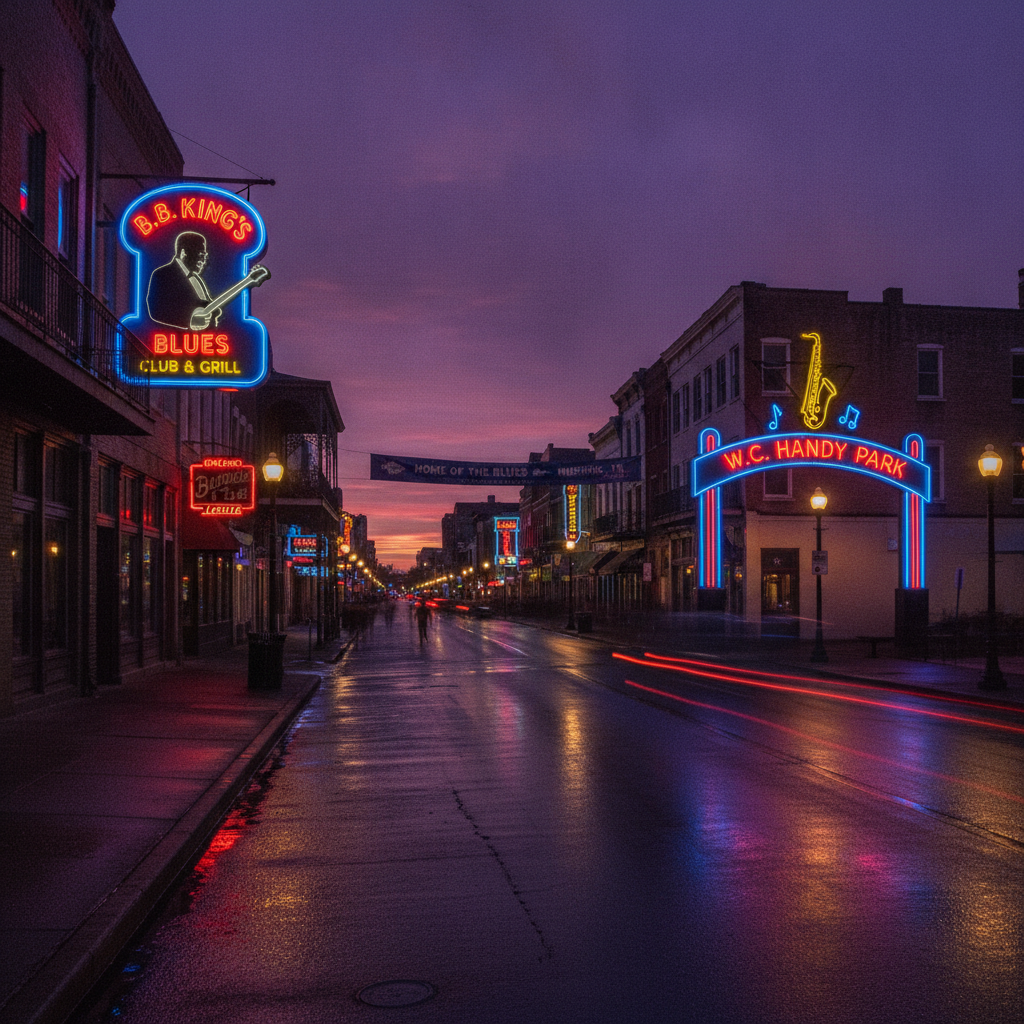
Memphis: Beale Street, Sun Studio, Stax Museum, National Civil Rights Museum, Graceland, and BBQ
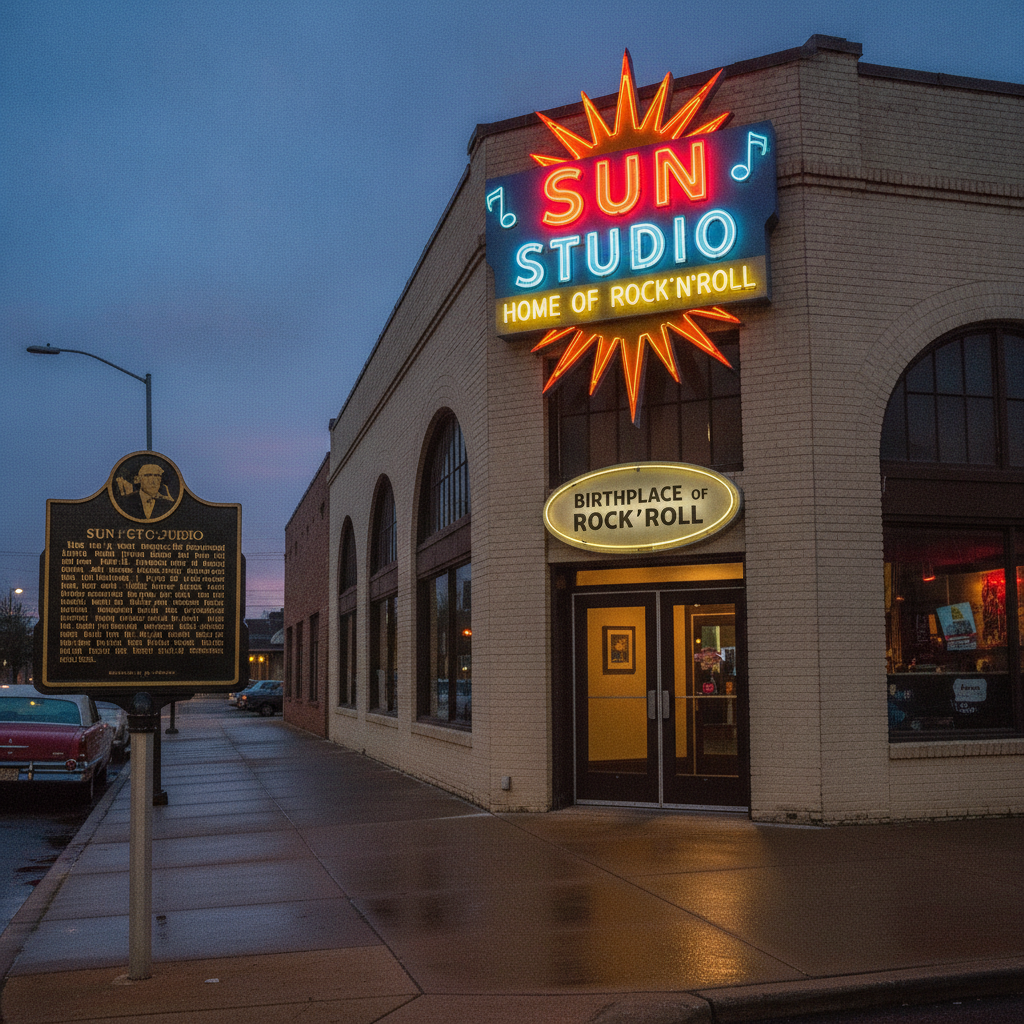
Memphis: River Science, Rock and Roll Origins and Medical Miracles
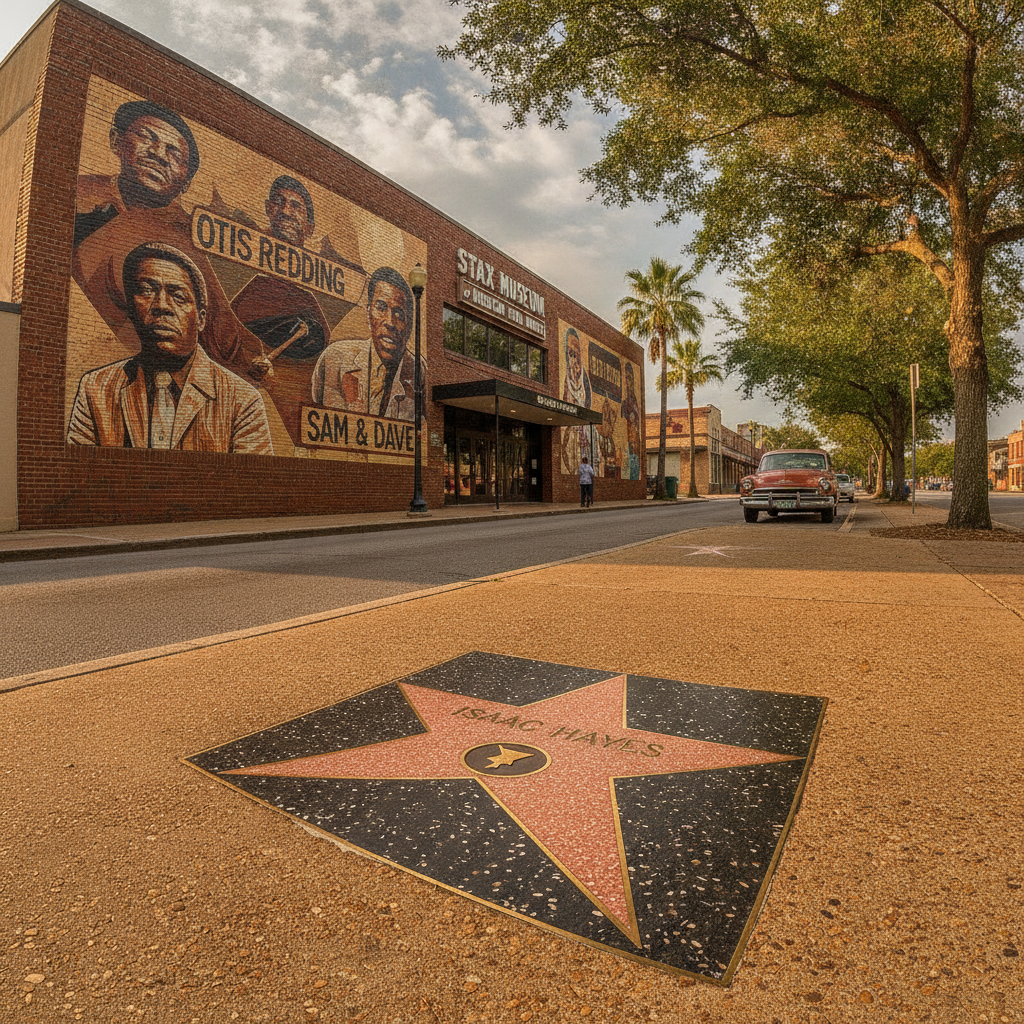
Memphis: Soul Music, Civil Rights and the Taste of the South