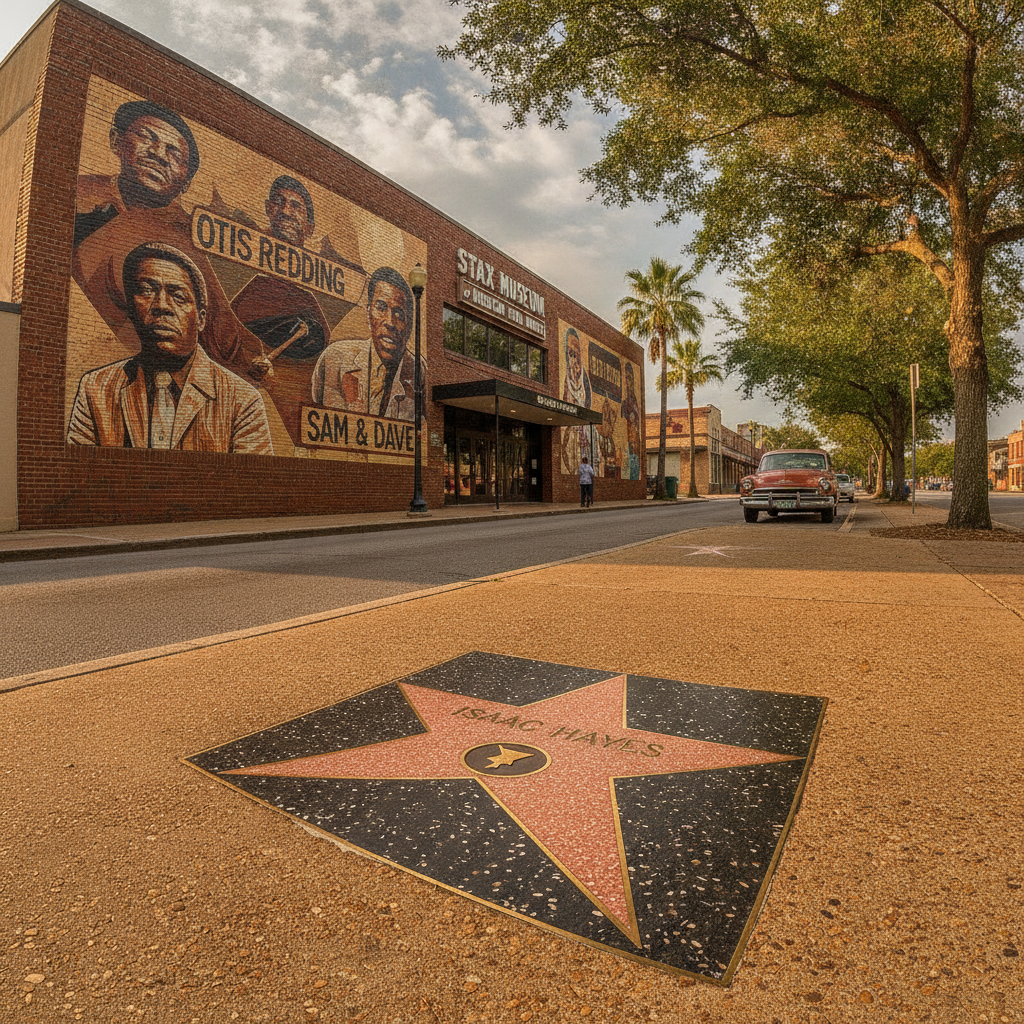
Memphis R2-R4: WC Handy Father of the Blues (Memphis Blues 1912 first published blues St Louis Blues 1914 most recorded 1940s, Delta blues Charlie Patton Son House Robert Johnson 27 Club crossroads Clarksdale), Peabody Hotel (Duck March 1933 nightly red carpet John Philip Sousa, Great American Pyramid 1991 largest Bass Pro Shops world aquarium bowling archery, Victorian Village yellow fever 1878-1879 10,000 dead 14yr municipal charter lapse), Mississippi Delta Blues Highway (US 61 200km Clarksdale Morgan Freeman Ground Zero, Delta Blues Museum, sharecropping debt peonage, International Harvester cotton picker 1948 mechanization Great Migration), Grizzlies (Grit and Grind Marc Gasol Zach Randolph 2011-2017, Three 6 Mafia Oscar 2006 first rap group, Young Dolph murdered November 17 2021), St Jude (Danny Thomas 1962 vow Saint Jude, USD 2.4B budget no charges to families, childhood cancer survival 20% to 80%, Memphis poverty 21%), Day trips Shiloh 1862 23,746 casualties, Elvis Presley birthplace Tupelo, Chickasaw Nation Treaty Pontotoc Creek 1832 Trail of Tears.
Memphis R2-R4: WC Handy Father of the Blues (Memphis Blues 1912 first published blues, St Louis Blues 1914, Delta blues Patton House Robert Johnson crossroads Clarksdale 27 Club), Peabody Hotel (Duck March 1933 Sousa red carpet, Pyramid 1991 stainless steel now Bass Pro Shops world largest aquarium bowling archery hotel restaurant, Victorian Village yellow fever 1878 10,000 dead 14-year charter lapse), Mississippi Delta (US 61 Blues Highway 200km Clarksdale Delta Blues Museum Ground Zero Morgan Freeman, Shack Up Inn Hopson plantation sharecroppers shacks, cotton picker 1948 mechanization ended sharecropping accelerated Great Migration), Memphis today (Grizzlies Grit and Grind Gasol Randolph, Three 6 Mafia Oscar 2006 first rap group, Young Dolph murdered 2021, University of Memphis Penny Hardaway), St Jude (Danny Thomas 1962 USD 2.4B no family charges childhood cancer 20% to 80% survival), practical (Shiloh 180km 23,746 casualties, Tupelo Elvis birthplace, Chickasaw Trail of Tears 1832-1837, MEM airport 15km, spring fall best seasons).
- 1
WC Handy and the Origins of the Blues
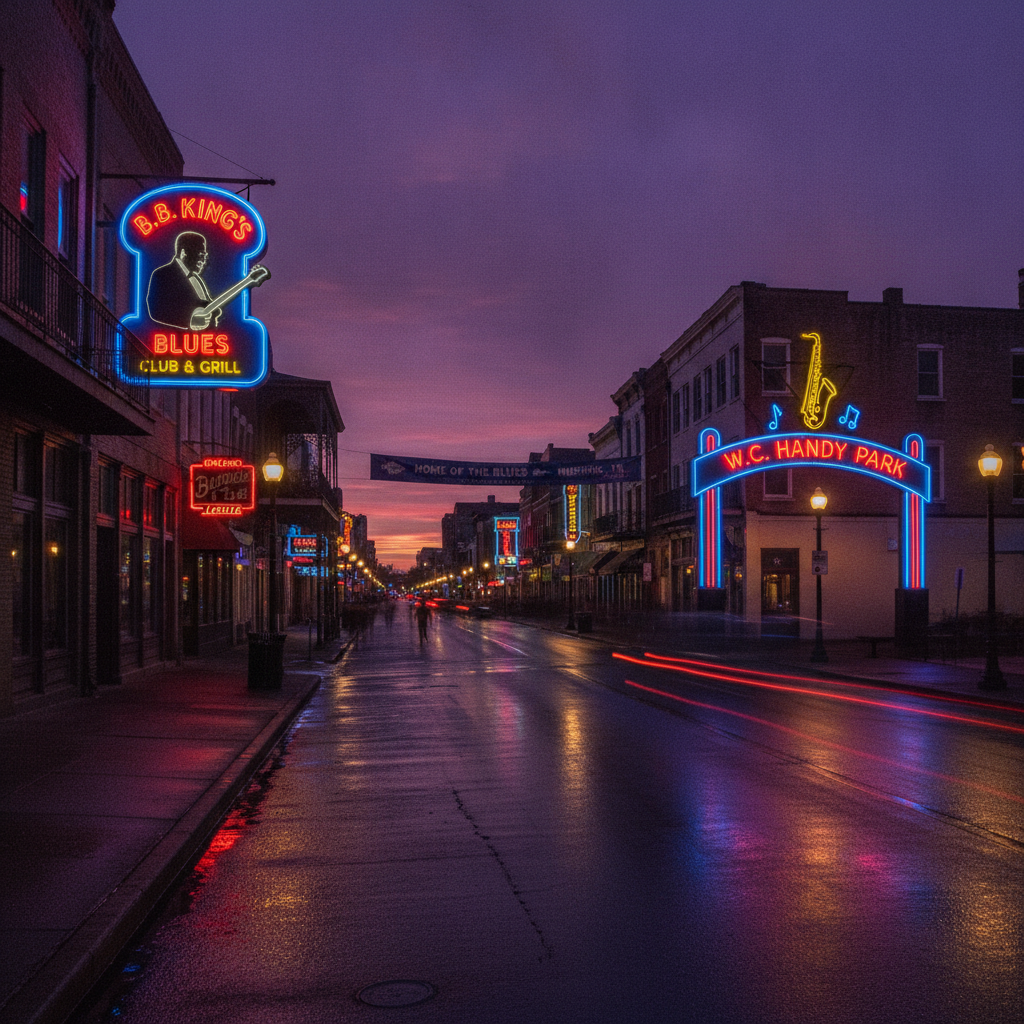
W.C. Handy (William Christopher Handy, born November 16, 1873, Florence, Alabama; died March 28, 1958, New York): the Father of the Blues and the most important figure in translating African American folk music into published sheet music that could reach white audiences. Handy moved to Memphis in 1909 and established his music publishing business at 310 Beale Street, where he composed or arranged the most commercially successful blues compositions of the early 20th century: Memphis Blues (1912, the first published blues composition, originally written as a campaign song for Memphis Mayor Edward H. Crump), St. Louis Blues (1914, the most recorded song in history through the 1940s, recorded by Louis Armstrong, Bessie Smith, Glenn Miller, Frank Sinatra, and hundreds of others), and Beale Street Blues (1916). The W.C. Handy House Museum (at 352 Beale Street): the former home of Handy in Memphis, now operated as a museum. The W.C. Handy Music Festival (held annually in Florence, Alabama, in July): the music festival in Handy's birthplace. Memphis before Handy: the blues tradition that Handy codified and published had been developing in the Mississippi Delta since the late 19th century — the genre emerging from the work songs, field hollers, and spirituals of enslaved and formerly enslaved African Americans in the plantation economy of the Mississippi Delta, with artists such as Charlie Patton (born 1891), Son House (born 1902), and Robert Johnson (born 1911, died August 16, 1938 at age 27) establishing the Delta blues canon. The crossroads myth: Robert Johnson, the most mythologized of all Delta blues artists (and the first use of the 27 Club — the pattern of rock musicians dying at age 27 that includes Jimi Hendrix, Janis Joplin, Jim Morrison, Amy Winehouse, and Kurt Cobain), is associated with the legend of selling his soul to the devil at the crossroads of US 61 and US 49 in Clarksdale, Mississippi, 100 km south of Memphis.
- 2
The Peabody Hotel and Memphis Architecture
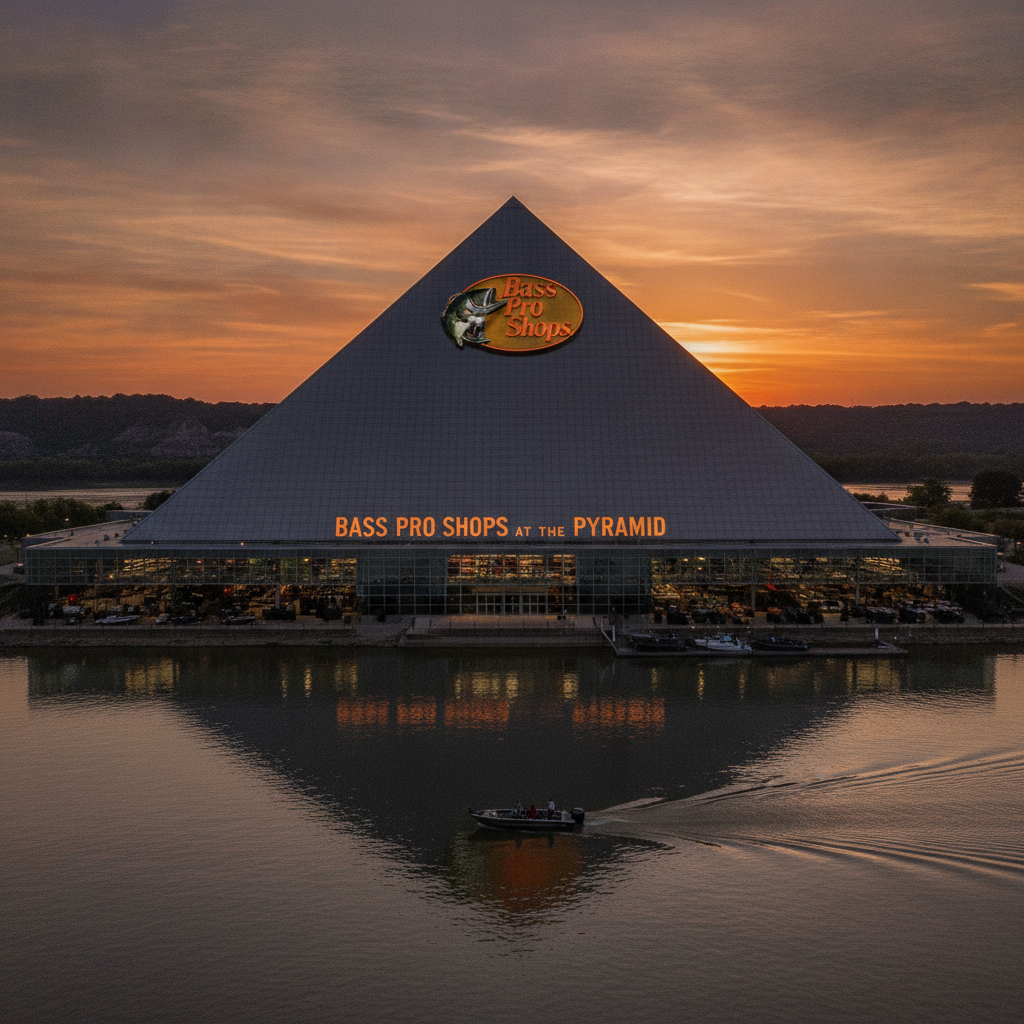
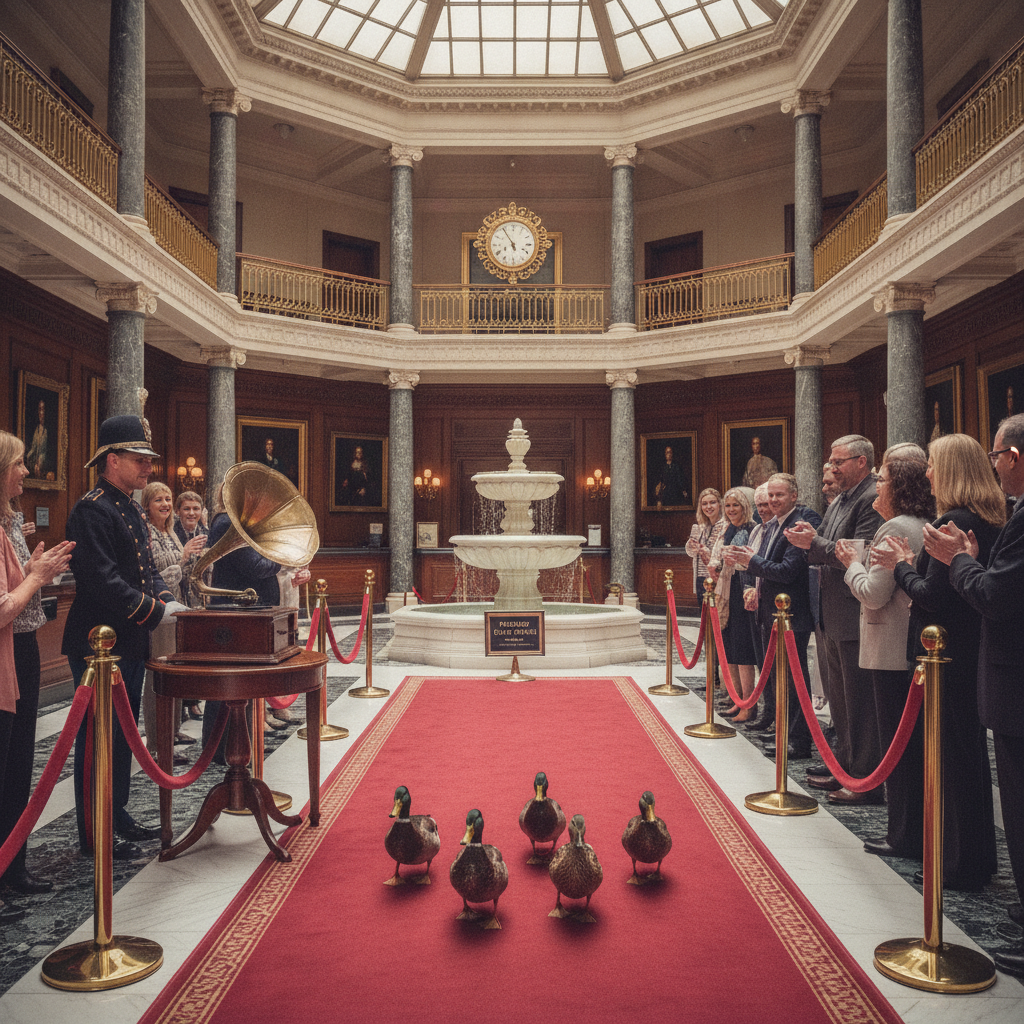
The Peabody Hotel (at 149 Union Avenue, Memphis, built 1925): the most famous hotel in the American South (Tom Wolfe called it the center of the Mississippi Delta — the Delta begins in the lobby of the Peabody Hotel in Memphis), with the twice-daily Peabody Duck March (the five mallard ducks who live in the rooftop Royal Duck Palace descend by elevator each morning at 11 a.m. to the marble fountain in the lobby, walking down a red carpet to John Philip Sousa music, and return at 5 p.m. — a tradition begun in 1933 by general manager Frank Schutt) that is the most-photographed tourist moment in Memphis. Memphis architecture: Memphis developed distinctive architectural traditions that reflect its history as a cotton and commercial city. The Pyramid (the Great American Pyramid at 1 Auction Avenue, completed 1991): the 32-story stainless steel pyramid on the Mississippi River (the third-largest pyramid in the world by volume, modeled on the Great Pyramid at Giza), built as a sports arena (home to Memphis Grizzlies and University of Memphis Tigers basketball 1991-2004), which has been operated since 2015 as the anchor of a Bass Pro Shops retail store (the largest Bass Pro Shops location in the world, with a 2,800-sq-ft aquarium, a bowling alley, an archery range, a hotel, and a restaurant) — one of the most unusual adaptive reuse projects in American architectural history. Victorian Village (on Adams Avenue, between Orleans and Lauderdale Streets): the district of 11 Victorian-era mansions from the 1840s-1890s that survived the great yellow fever epidemics of 1873, 1878, and 1879 that killed approximately 10,000 people in Memphis and caused the city to lose its municipal charter for 14 years (1879-1893). The Fontaine House (at 680 Adams Avenue, built 1870-1871): the finest Victorian mansion in Tennessee, now operated as a house museum.
- 3
Memphis and the Mississippi Delta - Clarksdale and the Blues Highway
The Mississippi Delta (the alluvial plain between the Mississippi and Yazoo Rivers, extending 200 km south from Memphis to Vicksburg): the most music-rich geographic region in American history, producing blues, gospel, rock and roll, soul, country, and rap in greater density per square kilometer than anywhere else on earth. The highway connecting Memphis to the Mississippi Delta: US Highway 61 (the Blues Highway), running from New Orleans to Thunder Bay, Ontario, but most mythologized in its 200-km stretch from Memphis south through Tunica, Clarksdale, Greenville, Greenwood, and Vicksburg — the route of the Great Migration north and the route of musical influence south. Clarksdale, Mississippi (100 km south of Memphis): the most important small city in blues history, with the Delta Blues Museum (at 1 Blues Alley, in the 1918 freight depot), the Ground Zero Blues Club (at 387 Delta Avenue, co-owned by actor Morgan Freeman), the Shack Up Inn (the converted cotton plantation sharecroppers shacks at the Hopson plantation, now operated as an eclectic music-themed hotel), and the Crossroads of US 61 and US 49 (the intersection associated with Robert Johnson). The cotton economy of the Delta: the Mississippi Delta cotton plantation economy (which produced more cotton per acre than anywhere in the world in the 1850s-1950s) was built on slavery (before 1865) and sharecropping (after 1865, a debt-peonage system that effectively bound Black farmers to plantation owners in conditions that historians have compared to renewed enslavement). The mechanization of cotton harvesting (the International Harvester cotton picker, first commercially deployed in the Mississippi Delta in 1948-1950) made sharecropping economically obsolete almost overnight, accelerating the Great Migration and transforming the Delta from one of the most densely populated rural regions of the South to one of the most depopulated and impoverished by 1980.
- 4
Memphis Grizzlies, University of Memphis, and Contemporary Culture
Memphis Grizzlies (the NBA team founded in Vancouver in 1995 as the Vancouver Grizzlies, relocated to Memphis in 2001): the only major professional sports team in Memphis, playing at FedExForum (at 191 Beale Street, opened 2004). The Grizzlies in Memphis culture: despite never winning an NBA championship, the Grizzlies have become the most unifying institution in a deeply divided city (Memphis has a 64% Black population and a long history of racial tension following the King assassination), with the Grit and Grind era (2011-2017, featuring Marc Gasol and Zach Randolph, playing the physical, defensive-oriented basketball style that became one of the most beloved in NBA history without winning a championship) representing the identity of a city that prides itself on working-class resilience. Memphis Grizz-related culture: the Memphis Grizzlies official partnership with Jack Daniel's (headquartered in Lynchburg, 200 km east of Memphis), the Beale Street game nights, and the local tradition of Grizz Nation. University of Memphis (formerly Memphis State University): the flagship public university of Memphis, with 22,000 students, the Jordan Chair in Business Ethics (named for NBA legend Michael Jordan's Memphis-born father — an error that reveals how deeply basketball culture is embedded in Memphis self-image), and the basketball program (the Memphis Tigers, coached by Penny Hardaway since 2018, playing at FedExForum). The Memphis music present: Memphis continues to produce influential popular music, with Three 6 Mafia (the Memphis rap collective founded by DJ Paul and Juicy J in 1991, Oscar winners for Best Original Song It's Hard Out Here for a Pimp in 2006 — the first rap group to win an Oscar) and Young Dolph (born 1985, murdered November 17, 2021, in Memphis — a death that represents the continuing violence of the commercial rap industry).
- 5
Memphis Healthcare and the St Jude Research Hospital
St. Jude Children's Research Hospital (at 262 Danny Thomas Place, downtown Memphis): the most important pediatric cancer research hospital in the world, founded by entertainer Danny Thomas on February 4, 1962, in fulfillment of a vow to Saint Jude Thaddeus (the patron saint of hopeless causes). St. Jude facts: the hospital treats approximately 8,500 children per year from across the United States and internationally, charging no fees to patients or their families (all costs are covered by the hospital, which operates on a USD 2.4B annual budget funded by the American Lebanese Syrian Associated Charities — the fundraising arm). St. Jude research: the hospital has increased the overall childhood cancer survival rate from 20% in 1962 to over 80% today, through research that is freely shared with institutions worldwide. Memphis as a medical center: beyond St. Jude, Memphis is a major medical and healthcare center, with the University of Tennessee Health Science Center, the Regional Medical Center at Memphis (The Med, the Level I trauma center serving a multi-state region), and Methodist Le Bonheur Healthcare. Memphis poverty and health disparities: Memphis has one of the highest poverty rates of any major American city (approximately 21% overall poverty rate, with concentrated poverty in neighborhoods like Frayser, Whitehaven, and Orange Mound) and corresponding health disparities, with among the highest rates of infant mortality, heart disease, and obesity of any major American city. The St. Jude Dream Home campaign: the annual national fundraiser in which St. Jude gives away a luxury home built by local homebuilders, raising approximately USD 50M annually.
- 6
Memphis Day Trips and Practical Guide
Memphis day trips and regional context: Memphis is ideally positioned for day trips to some of the most historically important sites in the American South. Shiloh National Military Park (at 1055 Pittsburg Landing Road, Hardin County, Tennessee, 180 km east of Memphis): the site of the Battle of Shiloh (April 6-7, 1862), one of the bloodiest battles of the Civil War (23,746 casualties in two days, including General Albert Sidney Johnston — the highest-ranking officer killed in combat in the Civil War), where General Ulysses S. Grant's Army of the Tennessee was nearly destroyed on the first day before counterattacking on the second and securing a decisive Union victory. Tupelo, Mississippi (150 km south of Memphis): the birthplace of Elvis Presley (at 306 Elvis Presley Drive, the two-room shotgun shack now a museum), with the Tupelo Auto Museum and the Natchez Trace Parkway (the 716-km National Scenic Byway following the ancient road from Nashville to Natchez). Chickasaw Nation history: the Memphis area was the homeland of the Chickasaw Nation (a confederacy of several thousand people living in fortified towns across western Tennessee and northern Mississippi) until the Treaty of Pontotoc Creek in 1832, by which the Chickasaw ceded their last eastern lands and relocated to Indian Territory (present-day Oklahoma) in 1837-1838 — one of the less-documented episodes of the Trail of Tears. Practical guide to Memphis: the city has a compact, walkable downtown (Beale Street, the Civil Rights Museum, and the waterfront are all within 2 km). Memphis International Airport (IATA: MEM) is 15 km southeast of downtown. Best seasons: spring (April-May, Memphis in May) and fall (September-October). The Memphis trolley (MATA) connects downtown to the Medical District. Warning: Memphis has among the highest violent crime rates of US cities over 500,000 population — standard urban precautions apply in unfamiliar neighborhoods after dark.
Walk this route with audio
Stories play automatically as you reach each stop — no tapping needed.
More in memphis
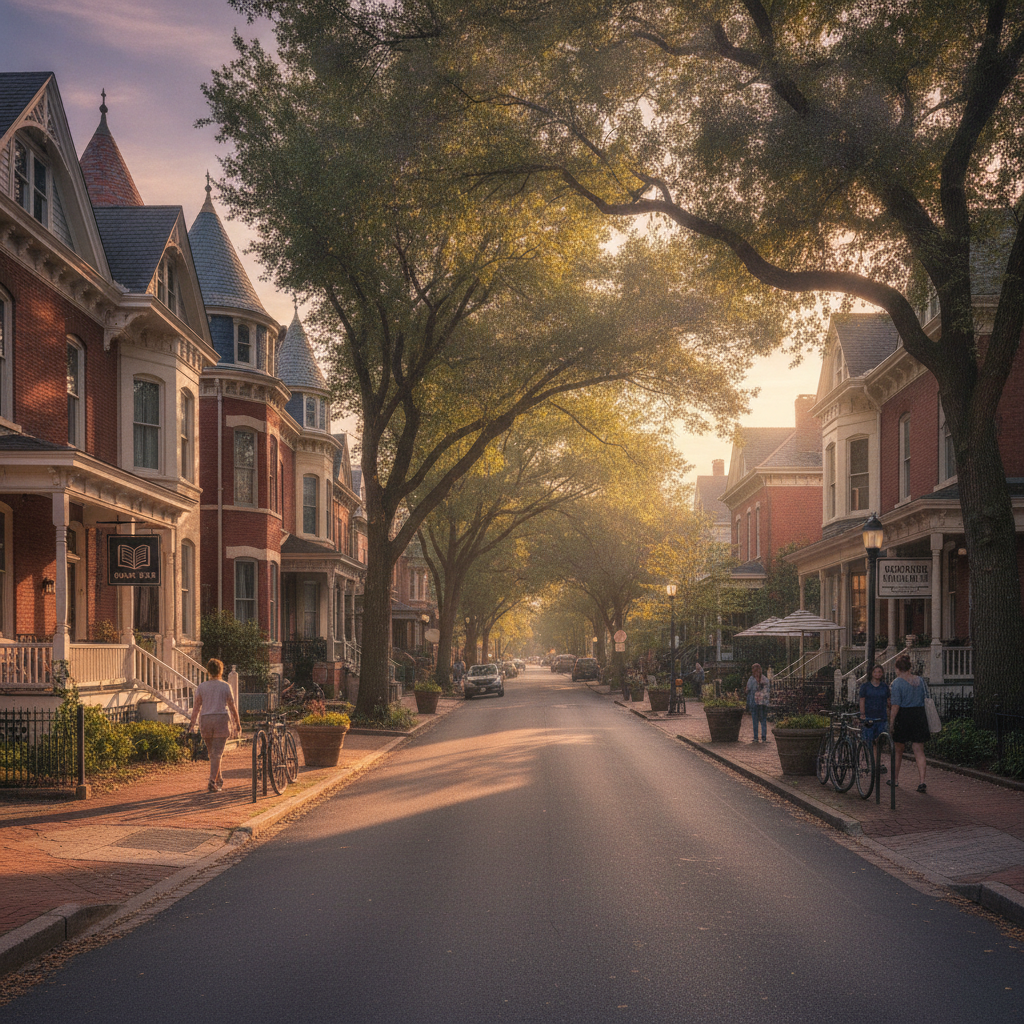
Memphis R3: Sanitation Strike (February 12 1968 65 days, Cole and Walker crushed in truck February 1, I Am a Man signs, King Mountaintop speech April 3 1968, Loeb capitulated April 16 after assassination), Rockabilly (Cash born 1932 died 2003, Jerry Lee Lewis died October 28 2022 last Sun Records survivor, Perkins Carl died 1998, Al Green pastor Full Gospel Tabernacle 1976 hot grits incident 1974), Soul food (Four Way Restaurant 1946 South Memphis MLK Civil Rights musicians, Gus Fried Chicken 1953 Napoleon Vanderbilt, Cozy Corner Raymond Robinson 1977), Neighborhoods (Midtown Cooper-Young Novel bookstore Cooper-Young Festival 110,000 September, Overton Park v Volpe 1971 Supreme Court landmark urban park protection, Orange Mound 1890 oldest Black-developed US neighborhood 45% poverty), Shelby Farms (1800 acres 3x Central Park 50km trails 30 bison, Greenline 10.65km rail-to-trail, Mississippi River Trail 3000km cycling headwaters Minnesota to Gulf), Architecture (Pink Palace Piggly Wiggly Saunders 1916 self-service grocery inventor went bankrupt 1923, Memphis Brooks Museum 9000 works 5000 years, Memphis Zoo panda Ya Ya repatriated April 2023, Autozone Park Triple-A Cardinals).
Memphis: Creative Districts, River Festivals and Living Music
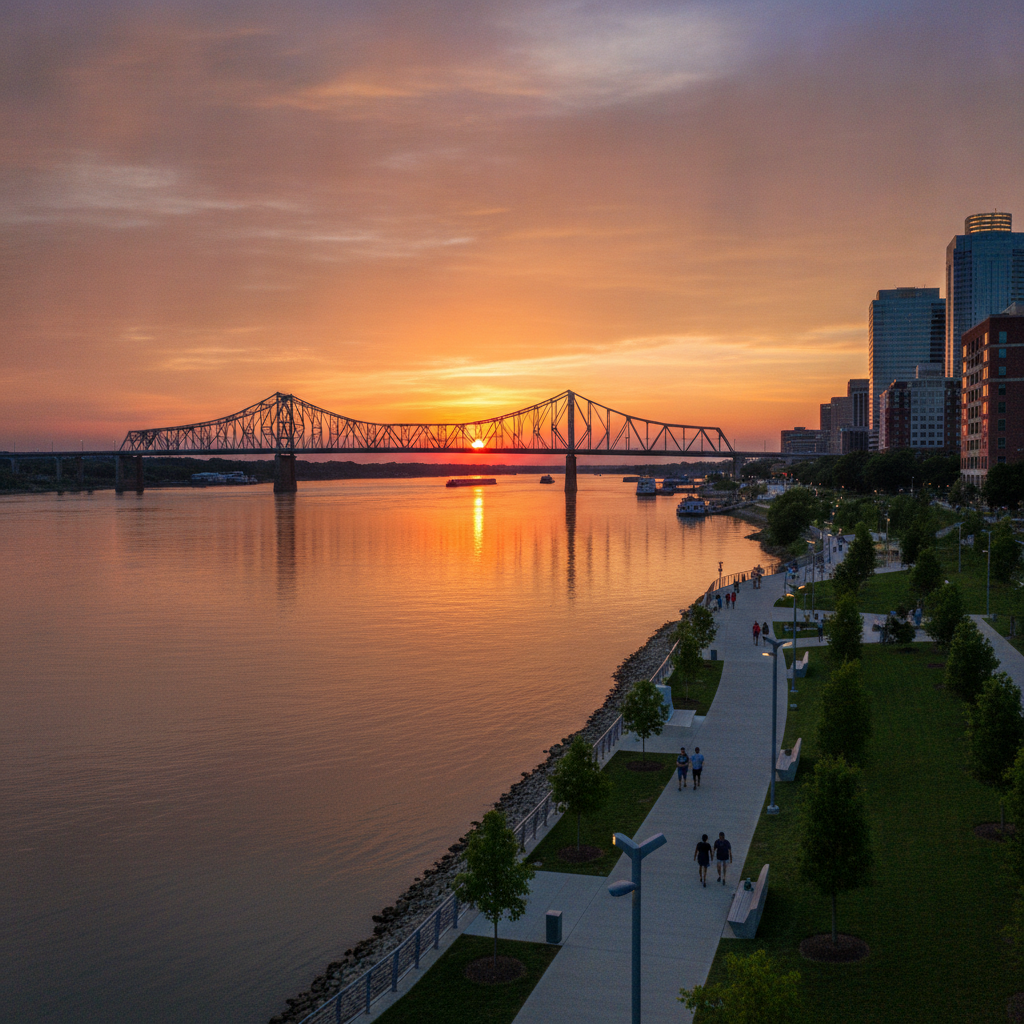
Memphis R4: Yellow fever epidemics (1873 1878 1879, 5000 dead 1878, population 40,000 to 14,000, municipal charter revoked 1879 operating as taxing district until 1893, Sisters St Mary Episcopal nursed dying, George Waring Memphis Sewer System 1880-1890 first modern US sanitary sewer), Cotton Exchange (84 Union Avenue, 2.2M bales/year 1920s-1930s, cotton compression 40% volume reduction, FedEx founded 1971 Frederick Smith MEM 4th busiest cargo world), Literature and film (Faulkner Oxford 100km south Memphis symbol of urban corruption in Sanctuary Sound and Fury, Guralnick Last Train to Memphis 1994 Careless Love 1999 finest rock biography, Hustle and Flow 2005 Craig Brewer Three 6 Mafia Oscar), African American history (Ida B Wells Memphis Free Speech 1889-1892 anti-lynching journalism exiled after mob destroyed office 1892 Pulitzer Prize 2020 posthumous, Robert Church Sr 1839 first Black millionaire South yellow fever real estate, Church Park 1899 first safe Black public gathering), Music economy (Beale Street USD 150M tourist economy cover bands, Soulsville Charter School 300 students South Memphis, Royal Studios 1320 Soul Avenue Willie Mitchell Al Green Hi Records, GloRilla born 2000 Memphis 2022 national attention, Julien Baker born 1995), Practical (MEM 4M passengers FedEx hub 4th cargo world, Peabody Hotel USD 300-450, April-May Memphis in May best season, 38C summer humidity).
Memphis: Beale Street, Sun Studio, Stax Museum, National Civil Rights Museum, Graceland, and BBQ
Memphis: River Science, Rock and Roll Origins and Medical Miracles