Memphis R3: Sanitation Strike (February 12 1968 65 days, Cole and Walker crushed in truck February 1, I Am a Man signs, King Mountaintop speech April 3 1968, Loeb capitulated April 16 after assassination), Rockabilly (Cash born 1932 died 2003, Jerry Lee Lewis died October 28 2022 last Sun Records survivor, Perkins Carl died 1998, Al Green pastor Full Gospel Tabernacle 1976 hot grits incident 1974), Soul food (Four Way Restaurant 1946 South Memphis MLK Civil Rights musicians, Gus Fried Chicken 1953 Napoleon Vanderbilt, Cozy Corner Raymond Robinson 1977), Neighborhoods (Midtown Cooper-Young Novel bookstore Cooper-Young Festival 110,000 September, Overton Park v Volpe 1971 Supreme Court landmark urban park protection, Orange Mound 1890 oldest Black-developed US neighborhood 45% poverty), Shelby Farms (1800 acres 3x Central Park 50km trails 30 bison, Greenline 10.65km rail-to-trail, Mississippi River Trail 3000km cycling headwaters Minnesota to Gulf), Architecture (Pink Palace Piggly Wiggly Saunders 1916 self-service grocery inventor went bankrupt 1923, Memphis Brooks Museum 9000 works 5000 years, Memphis Zoo panda Ya Ya repatriated April 2023, Autozone Park Triple-A Cardinals).
Memphis R3: Sanitation Strike (February 12 1968, Cole Walker crushed compactor February 1 denied restroom access, I Am a Man signs Declaration of Independence, King Mountaintop April 3 I may not get there with you, Mayor Loeb capitulated April 16), rockabilly legacy (Cash died 2003, Jerry Lee Lewis died October 28 2022 last surviving Sun artist, Al Green pastor Full Gospel Tabernacle 1976 hot grits 1974), soul food (Four Way 1946 South Memphis MLK musicians, Gus Fried Chicken 1953 Mason Tennessee Napoleon Vanderbilt, Cozy Corner 1977 Robinson Cornish hens), neighborhoods (Midtown Cooper-Young Festival 110,000 September, Overton Park v Volpe 1971 landmark Supreme Court no highway through park, Orange Mound 1890 oldest US Black-developed neighborhood 45% poverty), Shelby Farms (1800 acres 3x Central Park 30 bison 50km trails, Greenline 10.65km rail-to-trail, Mississippi River Trail 3000km), architecture (Pink Palace Piggly Wiggly inventor Saunders 1916 self-service grocery bankrupt 1923, Brooks Museum 9000 works, Memphis Zoo panda Ya Ya returned China April 2023).
- 1
Memphis and the Sanitation Strike of 1968
The Memphis Sanitation Strike (February 12 to April 16, 1968): the most significant labor action in the final chapter of the Civil Rights Movement, and the context in which Dr. Martin Luther King Jr. was assassinated. The strike origins: on February 1, 1968, two Black sanitation workers (Echol Cole and Robert Walker) were crushed to death inside a malfunctioning garbage compactor truck — they had climbed inside the truck to shelter from rain (because Black workers were not permitted to use the white workers restroom facilities or break rooms). Mayor Henry Loeb refused to recognize the workers union (AFSCME Local 1733) or their right to strike, setting the stage for a 65-day confrontation. The I Am a Man signs: the marching workers carried hand-lettered signs reading I Am a Man (a phrase drawn from the Declaration of Independence and asserting the full humanity of Black workers in a context where the American South still routinely denied their legal and social equality) — the most powerful single image of the late Civil Rights Movement. King in Memphis: King came to Memphis on March 18, 1968, and again on March 28 (a demonstration that turned violent, with police using Mace and batons on marchers) and April 3, 1968 (delivering the I Have Been to the Mountaintop speech — widely considered the most prophetic political speech in American history, in which King said: I have been to the mountaintop. I may not get there with you. But I want you to know tonight that we, as a people, will get to the Promised Land). The strike resolution: Mayor Loeb capitulated on April 16, 1968, 12 days after King's assassination, recognizing the union and granting a pay increase — a pyrrhic victory given the price that had been paid.
- 2
Memphis Music Heritage - Rockabilly, Country, and Gospel
Rockabilly as Memphis music: the synthesis of African American blues with white country (hillbilly) music in Memphis in the early 1950s produced rockabilly (the most commercially successful early rock and roll style), with Sun Records being the primary commercial catalyst. The rockabilly artists: beyond Elvis, Sun Records produced Johnny Cash (born February 26, 1932, Kingsland, Arkansas; died September 12, 2003), Carl Perkins (born April 9, 1932; died January 19, 1998), Jerry Lee Lewis (born September 29, 1935, Ferriday, Louisiana; died October 28, 2022, at age 87 — the last surviving member of the Sun Records core artists), and Roy Orbison (born April 23, 1936; died December 6, 1988). Memphis country music: Memphis is less associated with country music than Nashville (250 km to the east), but the city produced some of the most important country figures of the 20th century, including Eddy Arnold (born Richard Edward Arnold, May 15, 1918, Henderson, Tennessee) and Bobby Blue Bland (born January 27, 1930, Rosemark, Tennessee; died June 23, 2013). Memphis gospel: the gospel tradition of Memphis (the city has more Black churches per capita than almost any major American city) produced artists including Al Green (born April 13, 1946, Forrest City, Arkansas), who became the most commercially successful R&B singer of the early 1970s (Lets Stay Together, 1972, I Am So in Love With You, 1975) before experiencing a religious conversion in 1974 (following a violent incident involving a girlfriend and a pot of hot grits) and becoming the pastor of the Full Gospel Tabernacle Church (at 787 Hale Road, Whitehaven, Memphis) — where he has preached and led the choir every Sunday since 1976, except during recording or touring commitments.
- 3
The Memphis Food Scene - Soul Food and Beyond
Memphis soul food and food culture: Memphis has one of the most distinctive and historically rooted food cultures of any American city, combining African American soul food traditions, Mediterranean immigrant food (Lebanese, Greek, Italian), and the barbecue tradition described above. The Four Way Restaurant (at 998 Mississippi Boulevard, South Memphis, founded 1946): the most historically important soul food restaurant in Memphis, located in the predominantly Black neighborhood of South Memphis and frequented by civil rights leaders (Martin Luther King Jr. ate there), musicians (Stax Records artists were regulars), and local families for three generations. Soul food defined: the African American culinary tradition of the Deep South, deriving from the necessity of enslaved people to prepare nutritious meals from the least desirable parts of the pig (fatback, chitterlings, ham hocks), field greens (collard greens, mustard greens, turnip greens), and the starchy staples of the plantation diet (cornbread, sweet potatoes, black-eyed peas) — transformed over generations into one of the most complex and flavorful regional cuisines in the United States. Gus's World Famous Fried Chicken (at 310 S Front Street, downtown Memphis, founded 1953 in Mason, Tennessee, by Napoleon Vanderbilt): the most acclaimed fried chicken in Memphis, with the spicy-battered golden crust and the decades of national media attention making it a pilgrimage destination. Cozy Corner Restaurant (at 745 N Parkway, founded 1977 by Raymond Robinson Sr.): the barbecue restaurant famous for its whole-smoked Cornish hens and smoked sausage, consistently rated among the top 10 BBQ restaurants in the United States by food critics who consider it the last great old-school Memphis BBQ institution.
- 4
Memphis Neighborhoods - Midtown, Cooper-Young, and Orange Mound
Memphis neighborhoods: beyond downtown and the tourist attractions, Memphis has distinct neighborhoods that reflect its complex history and contemporary culture. Midtown Memphis (the neighborhoods north of Poplar Avenue and south of Summer Avenue, approximately 3-8 km east of downtown): the most diverse and culturally vibrant residential area of Memphis, with Victorian-era houses, independent restaurants and bars, and the concentration of the citys creative class. Cooper-Young (at the intersection of Cooper Street and Young Avenue, Midtown): the most walkable neighborhood in Memphis, with independent bookstores (Novel, at 387 Perkins Extended), bars (The Buccaneer, at 1368 Monroe Avenue), restaurants, and the Cooper-Young Festival (the annual arts festival in September, drawing approximately 110,000 visitors). Overton Park (the 170-acre urban park in Midtown, established 1901): the setting of Overton Park v. Volpe (1971, the landmark US Supreme Court case in which the Court ruled that the Federal Highway Administration could not run Interstate 40 through the park, establishing the precedent that parkland is a protected public resource that cannot be taken for highway use without demonstrating there is no feasible alternative — the most important environmental law case in US history for urban parks). Orange Mound (the South Memphis neighborhood bounded by Park Avenue, Southern Avenue, Airways Boulevard, and Getwell Road): the oldest neighborhood in the United States developed by and for African Americans (established 1890, when the neighborhood was subdivided and marketed specifically to Black buyers in the aftermath of Reconstruction), now one of the most economically distressed neighborhoods in Memphis with a poverty rate over 45%. Memphis Greenline (the former freight rail corridor converted to a multi-use trail): the most-used non-motorized transportation corridor in Memphis, connecting Shelby Farms Park to Midtown.
- 5
Shelby Farms and Memphis Outdoor Recreation
Shelby Farms Park (at 6903 Great View Drive, East Memphis): the 1,800-acre urban park — more than three times the size of Central Park in New York — located 10 km east of downtown Memphis, with 50 km of trails, multiple lakes for fishing and kayaking, a treetop adventure course, a bison herd (approximately 30 American bison, the descendants of a bison herd maintained by the Shelby County Corrections Center on the farmland that was converted to the park), and the Woodland Discovery Playground (the largest natural playground in the United States). Shelby Farms Greenline: the 10.65-km greenway converting the former Norfolk Southern freight rail corridor into a multi-use trail connecting downtown Memphis to Shelby Farms Park — opened in 2010 and expanded since, it is the most successful rail-to-trail conversion in Tennessee and the primary cycling connection between the citys residential neighborhoods and its major park. The Mississippi River Trail: Memphis is the southern terminus of the Mississippi River Trail, the 3,000-km cycling route from the headwaters of the Mississippi River at Lake Itasca, Minnesota to the Gulf of Mexico, passing through 10 states. Lichterman Nature Center (at 5992 Quince Road, East Memphis): the 65-acre urban nature center operated by the Pink Palace Museum, with urban wildlife habitat (white-tailed deer, wild turkey, box turtles, and over 100 bird species), a pond, and a canopy walkway. Memphis in May International Festival: the month-long festival (held throughout May along the Memphis riverfront) incorporating the World Championship Barbecue Cooking Contest (second weekend of May), the Beale Street Music Festival (first weekend of May, with approximately 100,000 attendees and performers including major international headliners), and Sunset Symphony (the free outdoor classical concert on the last Sunday of May).
- 6
Memphis Architecture, the Pink Palace, and the Memphis Brooks Museum
The Pink Palace (Pink Palace Museum, at 3050 Central Avenue, East Memphis): the mansion begun in 1922 by Clarence Saunders (the inventor of the self-service grocery store — Saunders opened the first Piggly Wiggly at 79 Jefferson Avenue in Memphis in 1916, the revolutionary retail concept in which customers selected their own groceries from open shelves rather than handing a shopping list to a clerk behind a counter — changing the retail industry forever). Saunders built the Pink Palace (in Georgia pink marble, hence the name) as his personal residence, but went bankrupt in 1923 before its completion and forfeited the building and estate to his creditors. The mansion was purchased by the city and converted into the Pink Palace Museum (now covering natural history, cultural history, and science, with an IMAX theater and a planetarium). The Memphis Brooks Museum of Art (at 1934 Poplar Avenue, Overton Park, established 1916): the largest art museum in Tennessee, with a permanent collection of approximately 9,000 works spanning 5,000 years of art history, including significant holdings of Italian Renaissance painting, Dutch and Flemish baroque, and American art. The Memphis Zoo (at 2000 Prentiss Place, Overton Park, founded 1906): the 22nd oldest zoo in the United States, with approximately 3,500 animals and the Giant Panda Exhibit (Ya Ya and Le Le, two giant pandas on loan from China 2003-2023 — Le Le died at Memphis Zoo in February 2023 and Ya Ya was repatriated to China in April 2023, ending a 20-year panda loan agreement). Autozone Park (at 200 Union Avenue, downtown Memphis): the home of the Memphis Redbirds (the Triple-A affiliate of the St. Louis Cardinals), consistently ranked among the five most beautiful minor league ballparks in the United States.
Walk this route with audio
Stories play automatically as you reach each stop — no tapping needed.
More in memphis
Memphis: Creative Districts, River Festivals and Living Music
Memphis R4: Yellow fever epidemics (1873 1878 1879, 5000 dead 1878, population 40,000 to 14,000, municipal charter revoked 1879 operating as taxing district until 1893, Sisters St Mary Episcopal nursed dying, George Waring Memphis Sewer System 1880-1890 first modern US sanitary sewer), Cotton Exchange (84 Union Avenue, 2.2M bales/year 1920s-1930s, cotton compression 40% volume reduction, FedEx founded 1971 Frederick Smith MEM 4th busiest cargo world), Literature and film (Faulkner Oxford 100km south Memphis symbol of urban corruption in Sanctuary Sound and Fury, Guralnick Last Train to Memphis 1994 Careless Love 1999 finest rock biography, Hustle and Flow 2005 Craig Brewer Three 6 Mafia Oscar), African American history (Ida B Wells Memphis Free Speech 1889-1892 anti-lynching journalism exiled after mob destroyed office 1892 Pulitzer Prize 2020 posthumous, Robert Church Sr 1839 first Black millionaire South yellow fever real estate, Church Park 1899 first safe Black public gathering), Music economy (Beale Street USD 150M tourist economy cover bands, Soulsville Charter School 300 students South Memphis, Royal Studios 1320 Soul Avenue Willie Mitchell Al Green Hi Records, GloRilla born 2000 Memphis 2022 national attention, Julien Baker born 1995), Practical (MEM 4M passengers FedEx hub 4th cargo world, Peabody Hotel USD 300-450, April-May Memphis in May best season, 38C summer humidity).
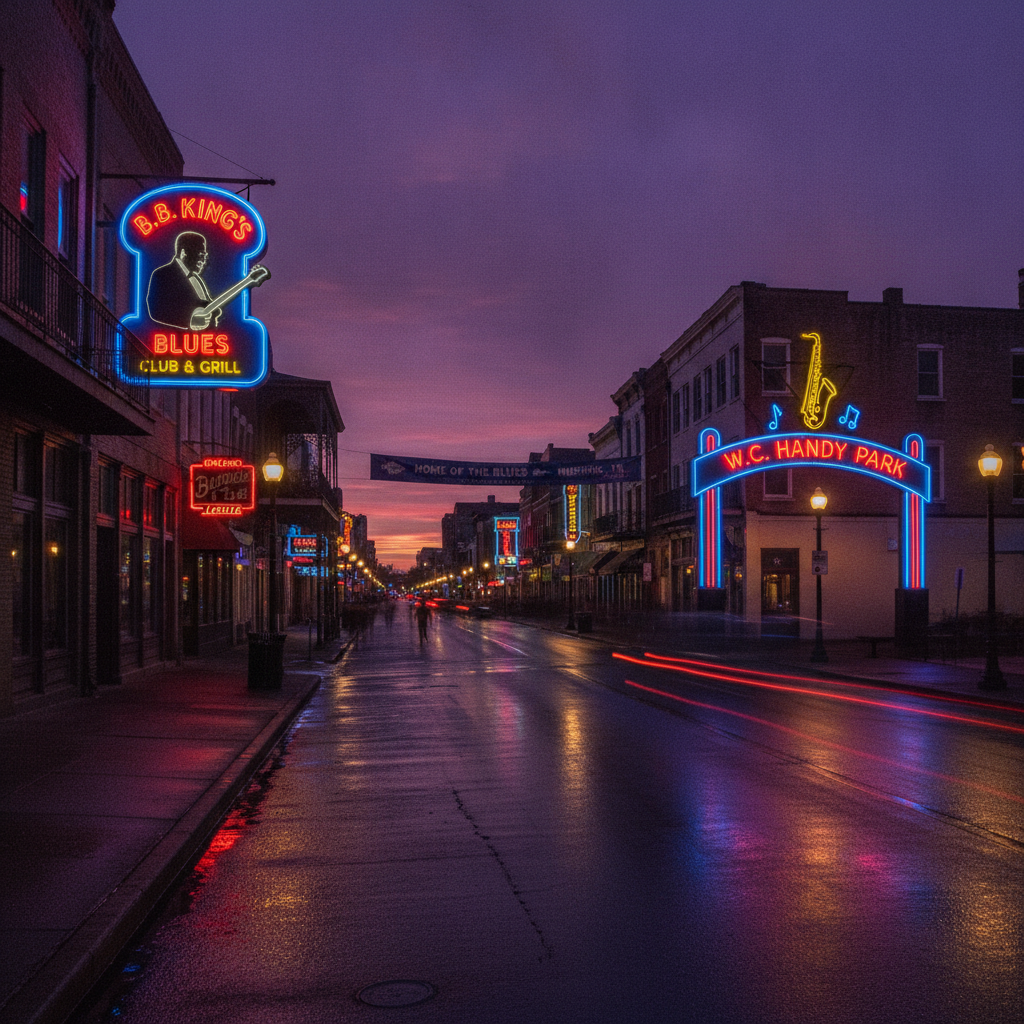
Memphis: Beale Street, Sun Studio, Stax Museum, National Civil Rights Museum, Graceland, and BBQ
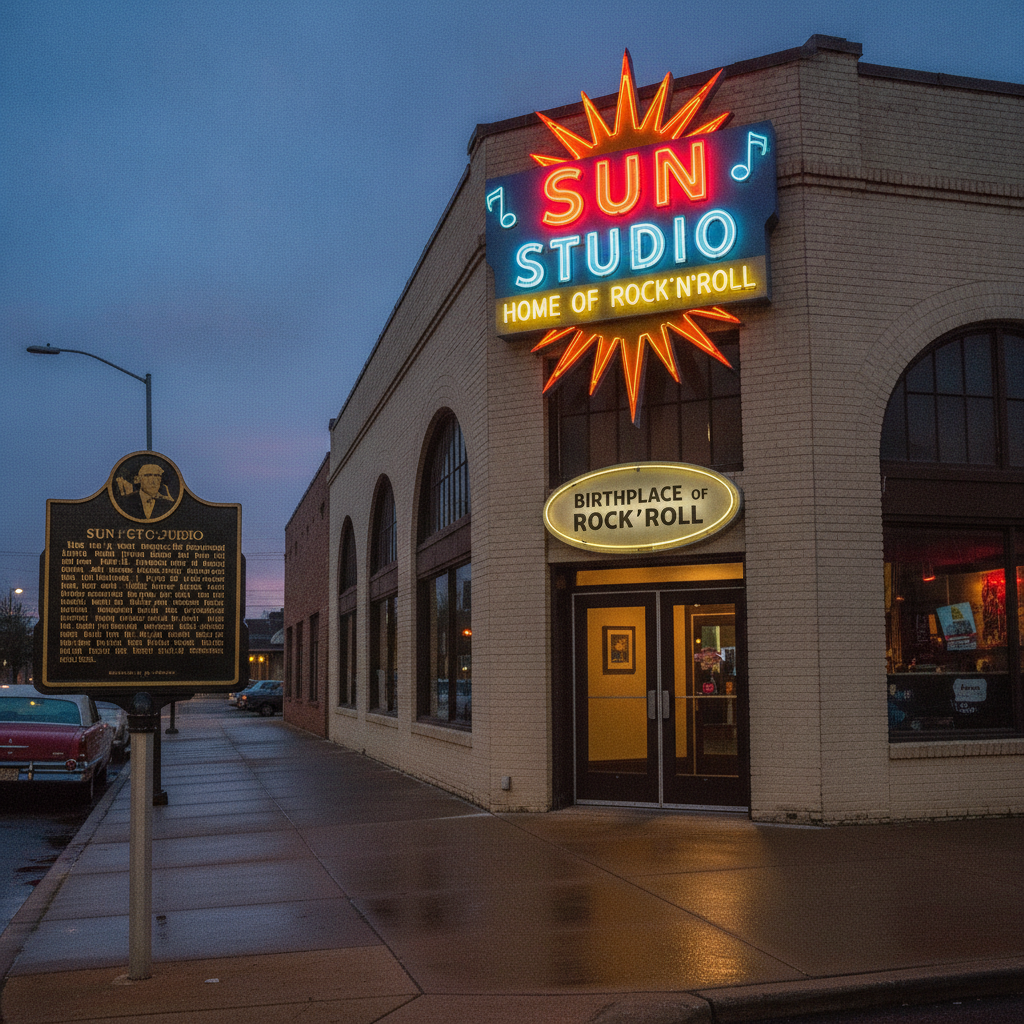
Memphis: River Science, Rock and Roll Origins and Medical Miracles
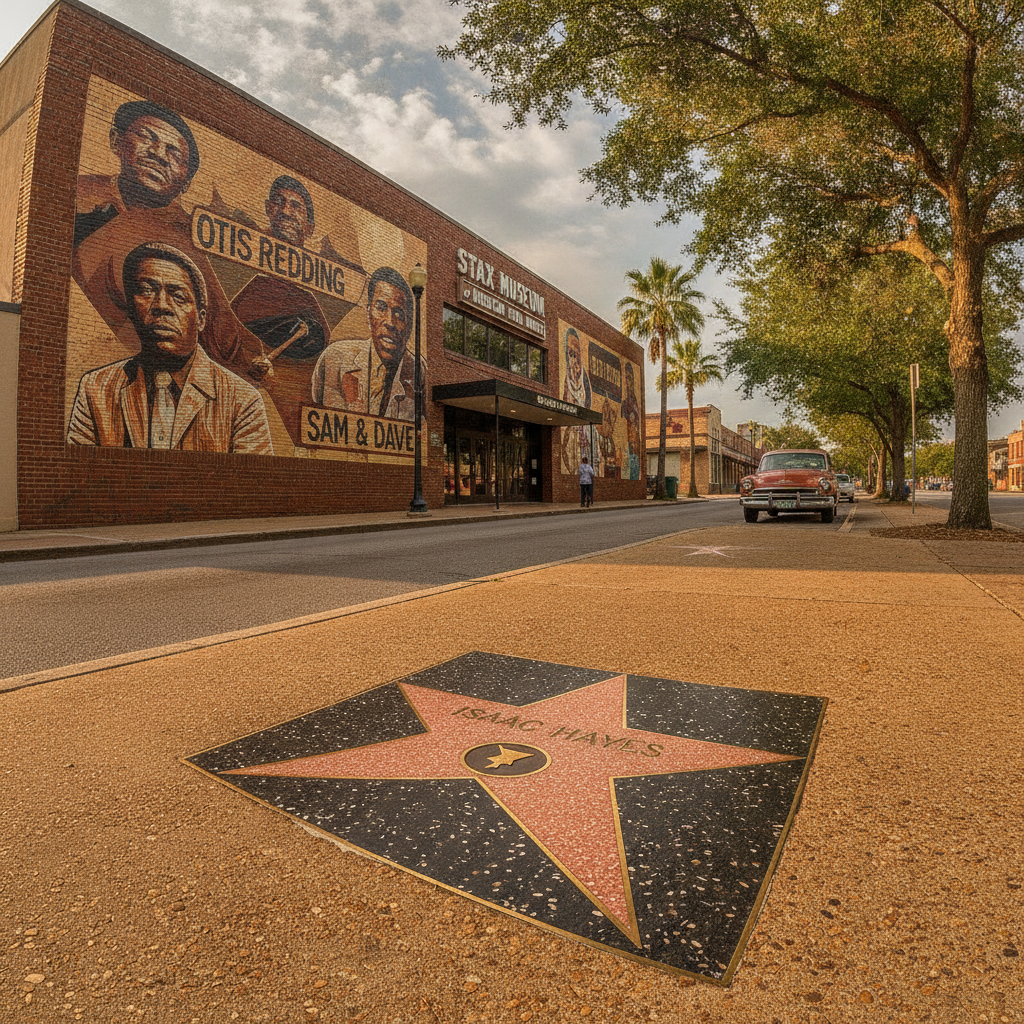
Memphis: Soul Music, Civil Rights and the Taste of the South