Melbourne: Great Ocean Road Complete Drive, Otways Rainforest and Cape Otway Lighthouse, Twelve Apostles at Sunrise, Grampians Rock Art and Waterfalls, Ballarat Gold Rush and Eureka Stockade, Five-Route Melbourne Assessment
Melbourne day trips: Great Ocean Road planning (Torquay to Port Fairy, 2-3 days), Otways National Park rainforest and koalas, Twelve Apostles and Loch Ard Gorge, Grampians National Park (Aboriginal rock art, MacKenzie Falls), Ballarat gold rush city and Eureka Stockade rebellion, and the complete five-route Melbourne visitor assessment.
- 1
The Great Ocean Road - Planning the Drive
Great Ocean Road planning: the road starts at Torquay (the surf capital of Australia, 95 km southwest of Melbourne) and ends at Allansford near Warrnambool (340 km from Melbourne). Most visitors drive the Great Ocean Road west from Melbourne as a 2-day trip (staying overnight at Lorne or Apollo Bay) or a 3-day trip (staying at Lorne, Apollo Bay, and Port Campbell). The direction debate: driving west to east (returning to Melbourne via the inland Princes Highway) allows the driver to be on the ocean side of the road and provides better views; driving east to west (the more common direction, away from Melbourne) keeps the ocean on the passenger side. Key stops in order from east to west: Torquay and Bells Beach (surfing), Anglesea (kangaroos on the golf course), Lorne (the resort town with the Erskine Falls), Apollo Bay (the fishing village and Otway Ranges gateway), Cape Otway Lighthouse, the Twelve Apostles (the primary attraction), Loch Ard Gorge, London Bridge, the Grotto, and Port Fairy (the historic whaling town). Distance and time: Torquay to Port Campbell (the Twelve Apostles) is 232 km; approximately 4-5 hours driving without stops; 6-8 hours with major stops.
- 2
Otway National Park - Rainforest and Lighthouses on the Great Ocean Road
Cape Otway (the southernmost point of mainland Australia, accessible from the Great Ocean Road at Apollo Bay): the lighthouse promontory with the Cape Otway Lightstation (built 1848, the oldest surviving lighthouse on mainland Australia). The Cape Otway koala colony: Cape Otway has one of the highest densities of wild koala in Australia; koalas are frequently visible in the manna gum trees along the Lighthouse Road access road. The Otway National Park (the national park covering the Otways Ranges and the coastal strip of the Great Ocean Road): dominated by the tall temperate rainforest of the Otways, with mountain ash, myrtle beech, and tree ferns. The Otway Fly Tree Top Walk (the 25 m elevated steel walkway through the Otways forest canopy, at Beech Forest): the primary treetop experience in the Otways, with views of the myrtle beech forest from above. The Beauchamp Falls and Triplet Falls (the waterfall walks in the Otways interior): the tall mountain ash trees of the Otways interior are among the tallest trees in the world (some specimens exceed 80 m). The Apollo Bay Fishermen Cooperative: the fresh King crab and abalone sourced directly from the Southern Ocean; the Apollo Bay harbor is the primary commercial fishing port on the Great Ocean Road.
- 3
Port Campbell National Park and the Twelve Apostles
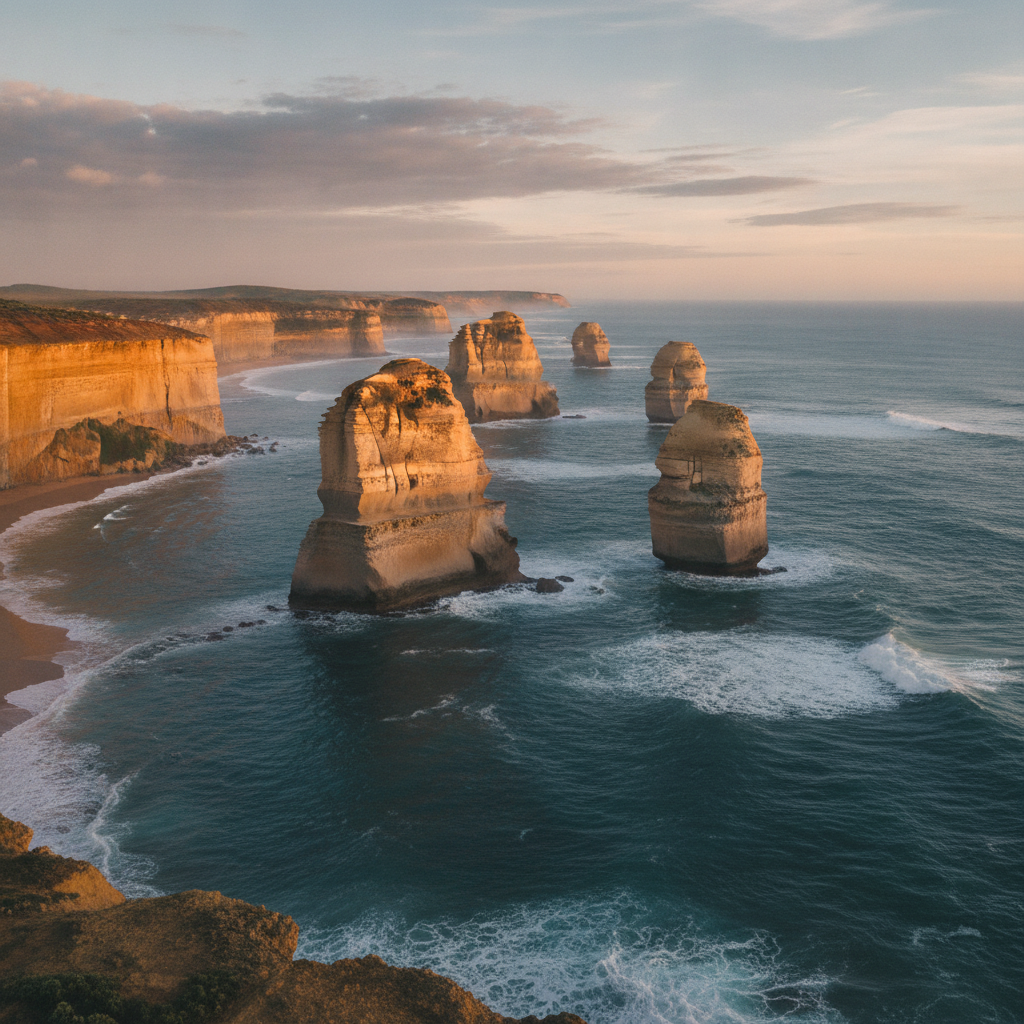
Port Campbell National Park (the coastal national park west of the Otways, along the Shipwreck Coast): the primary natural attraction of the Great Ocean Road and one of the most visited national parks in Australia. The Twelve Apostles: the stacks of limestone rising from the Southern Ocean, carved by the relentless erosion of the Southern Ocean waves against the soft limestone cliffs (the cliffs retreat at approximately 2 cm per year). The Twelve Apostles viewing: the helicopter flights from the Twelve Apostles helipad provide the most dramatic aerial view of the stacks. The sunrise at the Twelve Apostles: the eastern orientation of the primary viewpoint means that the stacks catch the first light at dawn; the sunrise visit (arriving before dawn) avoids the midday coach tour crowds. Loch Ard Gorge (2 km east of the Twelve Apostles): the narrow gorge where the iron-hulled clipper Loch Ard ran aground in 1878 with the loss of 52 of 54 lives; the graves of the victims are in the Loch Ard Gorge cemetery. London Bridge (4 km west of the Twelve Apostles): the double-arched limestone bridge that partially collapsed in January 1990 (two tourists were stranded on the outer arch when the connecting section fell into the sea; they were rescued by helicopter). The Grotto and Thunder Cave: the natural arch and sea cave formations at the Peterborough end of the Shipwreck Coast.
- 4
The Grampians National Park - Aboriginal Rock Art and Spectacular Ranges
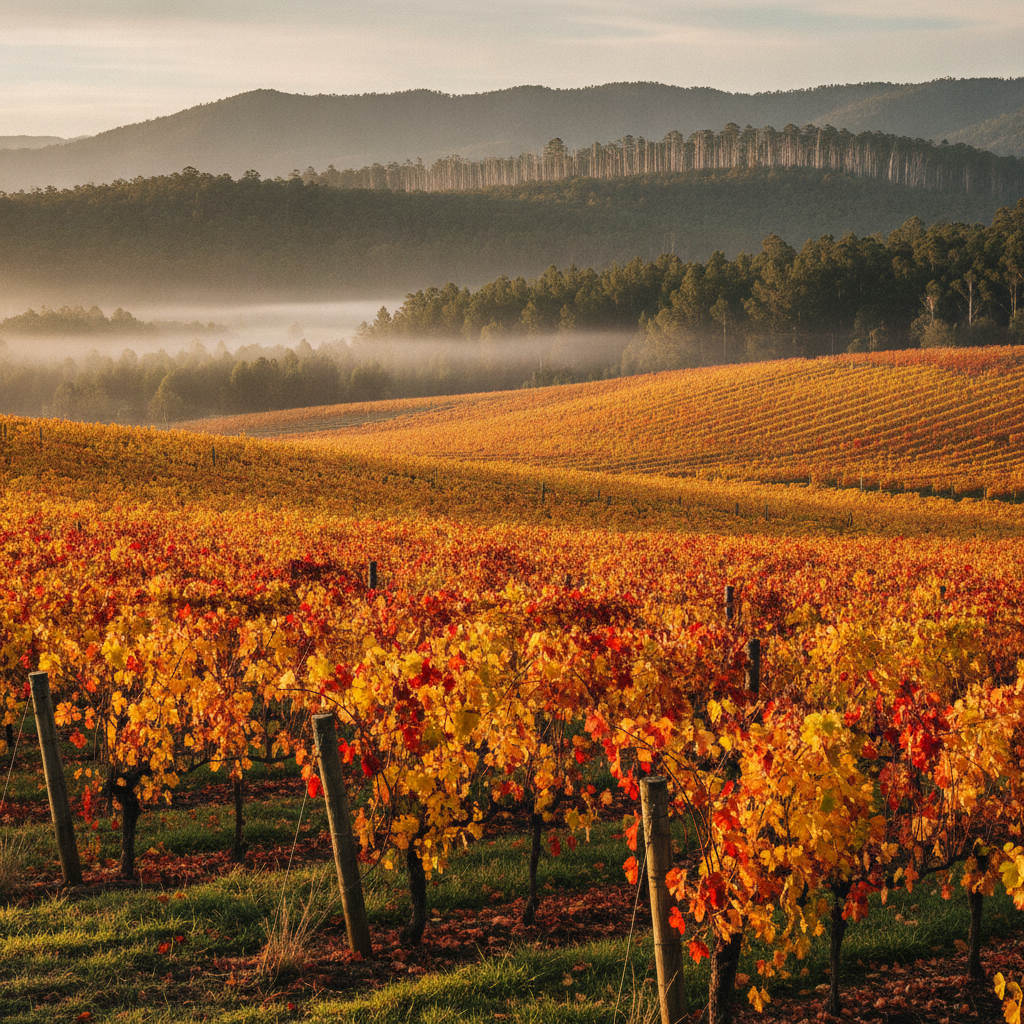
The Grampians (Gariwerd National Park, approximately 260 km northwest of Melbourne, 3 hours by road): the dramatic sandstone ranges rising abruptly from the flat wheat plains of western Victoria. The Grampians are the traditional country of the Djab wurrung and Jardwadjali people; the range contains the largest concentration of Aboriginal rock art in southeastern Australia. Bunjil Shelter (near Halls Gap): the shelter with the rock painting of Bunjil (the wedge-tailed eagle creator spirit of the Kulin Nation peoples of Victoria), accompanied by two dingoes. The Grampians landscape: the ranges rise to 1,167 m (Mount William, the highest point in the Grampians), with steep sandstone cliffs on the west face and gentle eastern slopes. The MacKenzie Falls (the largest waterfall in Victoria): the 30 m waterfall flowing year-round in the Grampians National Park. Halls Gap (the town within the Grampians National Park): the primary accommodation base for the Grampians. The wildflowers of the Grampians: October to November is the primary wildflower season, when the heathland on the Grampians plateau is covered in spider orchids, trigger plants, and everlastings. The kangaroo mob in Halls Gap: the eastern grey kangaroo are extremely habituated to humans in Halls Gap; large mobs gather on the oval and in the town parks at dusk.
- 5
Ballarat - Gold Rush History and the Eureka Stockade
Ballarat (approximately 110 km northwest of Melbourne, 1.5 hours): the gold rush city of Victoria and the site of the Eureka Stockade (the most significant armed rebellion in Australian history). The Ballarat gold rush (1851-1861): the Ballarat goldfields were among the richest in the world; the population of Victoria grew from 77,000 in 1851 to 540,000 in 1861 as the gold rush attracted prospectors from Britain, Ireland, China, and the United States. The Eureka Stockade (3 December 1854): the rebellion of goldfield miners against the colonial government, sparked by the brutal enforcement of the mining license fee. The miners built a wooden stockade and flew the Southern Cross flag (the blue flag with the white stars that became the symbol of the Eureka rebellion and remains an Australian labor movement symbol). The government troops attacked at 3 am; 22 miners and 6 soldiers were killed. The Eureka Museum (the Sovereign Hill outdoor museum): the living history museum of the Ballarat gold rush, with costumed guides, gold panning demonstrations, and the underground mine tour. The Museum of Australian Democracy at Eureka (MADE): the museum of Australian democracy, including the original Eureka flag.
- 6
Melbourne Complete: Five Routes and City Assessment
Melbourne five-route summary. Route 1: laneways and Hosier Lane street art, coffee capital (flat white origin, third wave roasters), AFL at the MCG, multicultural food (Greek, Italian, Vietnamese), Great Ocean Road introduction, practical guide. Route 2: Yarra Valley Pinot Noir and Healesville Sanctuary, Mornington Peninsula wine and hot springs, Federation Square and NGV, St Kilda beach and penguins, Fitzroy and Collingwood bohemian culture, Phillip Island Penguin Parade. Route 3: Great Ocean Road planning, Otways rainforest and Cape Otway Lighthouse, Twelve Apostles and Port Campbell National Park, Grampians National Park and Eureka Stockade gold rush Ballarat. Melbourne five-route final verdict: Melbourne is the city Australia visitors most often say they wish they had spent more time in. Sydney has the Harbour Bridge and the Opera House; Melbourne has everything else. The laneways, the coffee culture, the AFL atmosphere, the multicultural diversity (from Brunswick Street Ethiopian to Richmond Vietnamese to Carlton Italian to Chinatown), the gallery scene, and the day trip infrastructure (Yarra Valley, Mornington Peninsula, Great Ocean Road, Phillip Island) combine to create the deepest visitor experience in Australia. Allow at minimum 4-5 days; a week is better. The best season is October to April.
Walk this route with audio
Stories play automatically as you reach each stop — no tapping needed.
More in melbourne
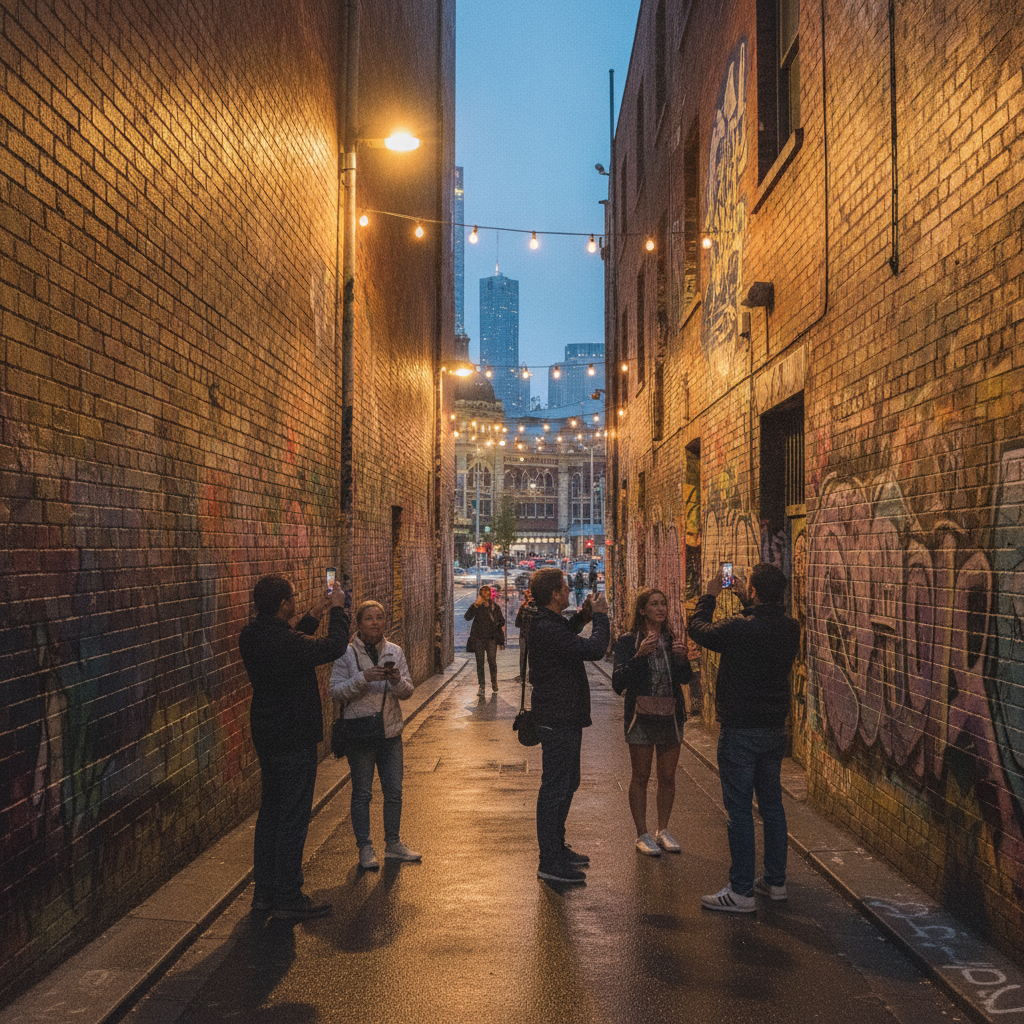
Melbourne: Laneways Street Art, Coffee Capital of the World, AFL Football Religion, Most Multicultural City in Australia, Great Ocean Road and Twelve Apostles, Complete Practical Guide
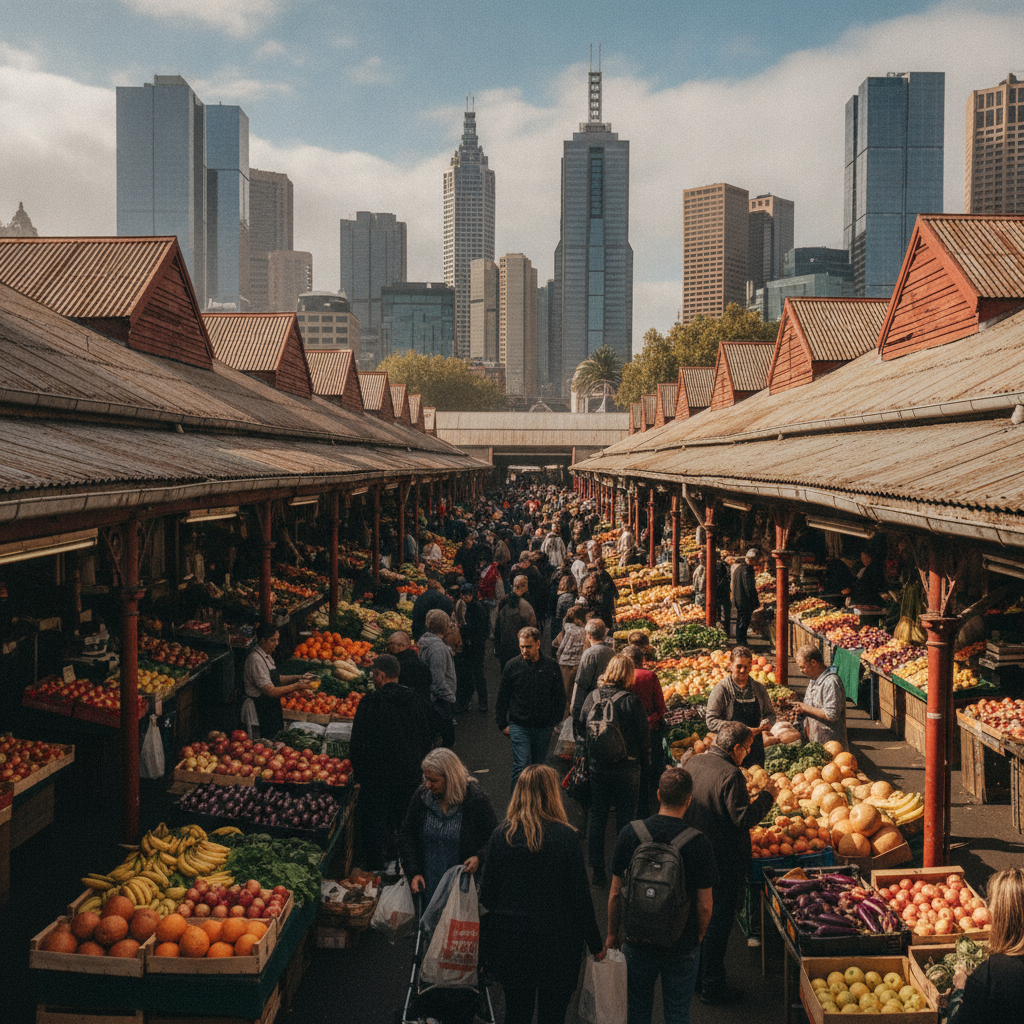
Melbourne: Flinders Street Station and Meeting Culture, Queen Victoria Market Living Heart, Royal Exhibition Building UNESCO Heritage, Kulin Nation Indigenous History, Melbourne versus Sydney Rivalry, and Complete Practical Guide