Melbourne: Flinders Street Station and Meeting Culture, Queen Victoria Market Living Heart, Royal Exhibition Building UNESCO Heritage, Kulin Nation Indigenous History, Melbourne versus Sydney Rivalry, and Complete Practical Guide
Melbourne city depth: Flinders Street Station and the under-the-clocks tradition, Queen Victoria Market (largest open-air market in southern hemisphere), Royal Exhibition Building UNESCO (site of first Australian Parliament 1901), Kulin Nation and the Yarra River Birrarung, Melbourne vs Sydney rivalry explained, and the complete Melbourne practical guide.
- 1
Flinders Street Station - the Icon and the Meeting Place
Flinders Street Station (the main suburban rail station of Melbourne, on the corner of Flinders Street and Swanston Street): the most iconic building in Melbourne and the busiest railway station in Australia outside of Sydney. Flinders Street Station history: the original station (opened 1854) was replaced by the current building (designed in the Edwardian baroque style by James Fawcett and W.P.W. Price, opened 1910). The clocks above the Flinders Street Station entrance: the row of clocks showing the departure times of the next suburban train from each platform; the clocks have been displayed since the station opened in 1910. The meeting place tradition: meeting someone under the clocks at Flinders Street Station is the classic Melbourne meeting arrangement, referenced in literature and film as a distinctly Melbourne practice. The Young and Jackson Hotel (opposite Flinders Street Station on the corner of Swanston Street): the Victorian-era hotel famous for the painting Chloe (1875, by Jules Joseph Lefebvre), which has been displayed in the bar since 1909. The Flinders Street Station footbridge (over the Yarra River): the view from the footbridge looking east (the MCG visible in the distance) and west (the Arts Centre spire and the Southgate promenade) is one of the classic Melbourne views.
- 2
Queen Victoria Market - the Living Heart of Melbourne
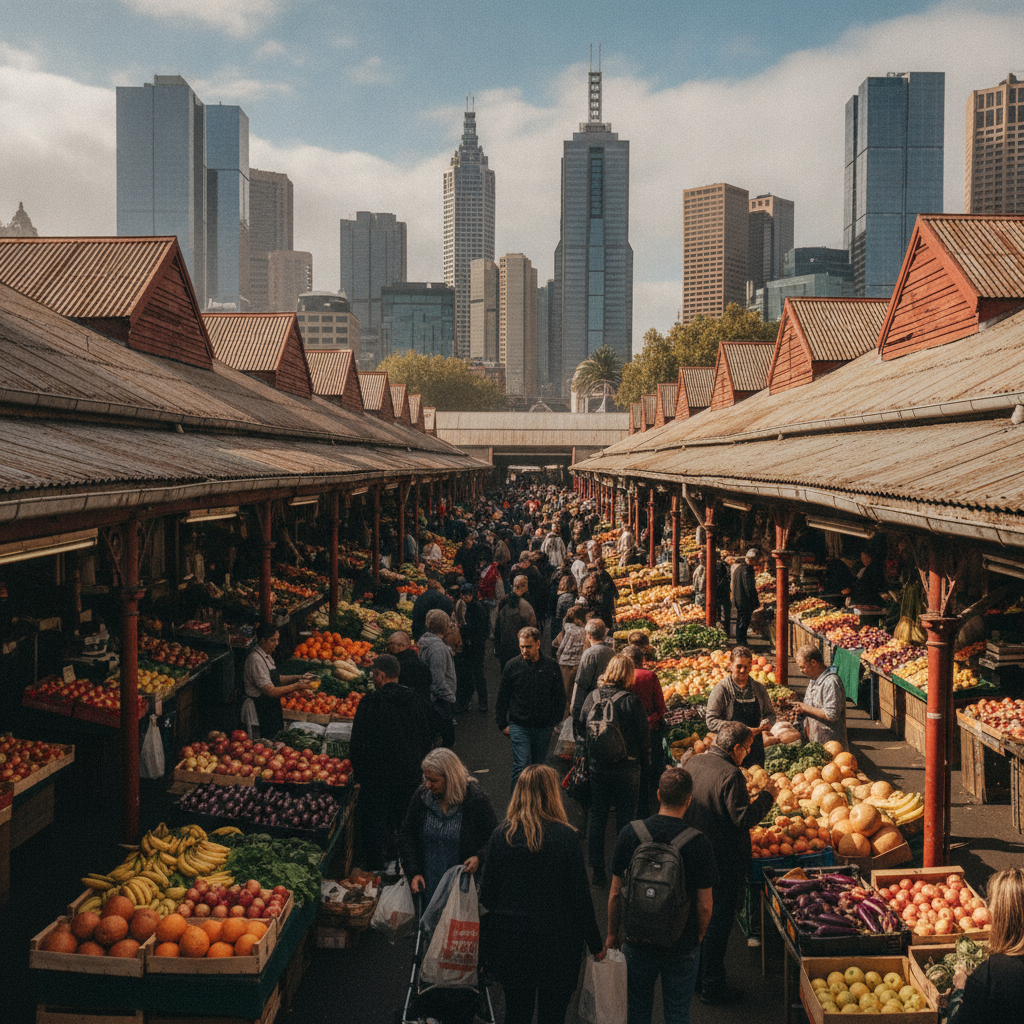
Queen Victoria Market (in the northern CBD, on the block bounded by Queen, Victoria, Peel, and Therry Streets, approximately 1 km from Flinders Street Station): the largest open-air market in the southern hemisphere and the most important food market in Melbourne. The QVM history: the market has operated on the current site since 1878. The market replaced the original Melbourne General Cemetery (the graves of the original cemetery remain beneath the market). The QVM structure: the sheds are organized by product type: the Meat Hall (the indoor meat market, a Melbourne institution since the 1880s, with the hanging carcasses and the specialty butchers), the Dairy Produce Hall, the Deli Hall (European continental food, reflecting Melbourne immigrant communities), and the extensive outdoor fruit and vegetable market. The QVM Night Market (summer season, Wednesday evenings): the food and live music event that transforms the market into a multicultural food festival. The QVM Sunday market (the general goods and clothing market): the Sunday market has operated at QVM since the 1970s, with stalls selling everything from vintage clothing to arts and crafts. The QVM cooking school (on-site): the cooking school offering market tours and cooking classes using QVM produce.
- 3
Royal Exhibition Building - UNESCO World Heritage and the History of Federation
The Royal Exhibition Building (in Carlton Gardens, 1 km north of the Melbourne CBD): UNESCO World Heritage Site (2004, one of only two buildings in Australia listed as a World Heritage Site, the other being the Sydney Opera House). The Royal Exhibition Building was built for the Melbourne International Exhibition of 1880 and the Melbourne Centennial International Exhibition of 1888. The building (designed by Joseph Reed in the Byzantine, Romanesque, and Lombardic styles, with a grand dome rising to 55 m): opened the Commonwealth of Australia in 1901. The opening of the Australian Parliament (May 9, 1901): the first Parliament of the Commonwealth of Australia was opened in the Great Hall of the Royal Exhibition Building by the Duke of Cornwall and York (the future King George V). The Carlton Gardens (the formal Victorian gardens surrounding the Royal Exhibition Building): the mature London plane trees, the ornate fountains, and the formal flower beds are the finest Victorian-era public gardens in Melbourne. The Melbourne Museum (immediately adjacent to the Royal Exhibition Building, opened 2000): the largest museum in the southern hemisphere, with the Bunjilaka Aboriginal Cultural Centre, the IMAX Cinema, and the Pauline Gandel Children Museum.
- 4
Melbourne Indigenous History and the Kulin Nation
The Kulin Nation: the alliance of five Aboriginal language groups who have lived in the Melbourne area for at least 40,000 years. The Kulin nations are the Wurundjeri Woi Wurrung (the traditional custodians of the land on which Melbourne CBD and the Yarra River valley stand), the Boon Wurrung (the Mornington Peninsula and Port Phillip Bay), the Wathaurong (the Geelong area), the Dja Dja Wurrung (the Bendigo and Castlemaine areas), and the Taungurong (the upper Yarra and the northeast). The Yarra River (Birrarung in the Wurundjeri Woi Wurrung language, meaning river of mist or river of fog): the river was the central resource of the Wurundjeri people, providing fish (eels, Murray cod), fresh water, and the river-flat meeting grounds. The Batman Treaty (June 1835): the agreement signed by John Batman with the Wurundjeri elders exchanging approximately 600,000 acres of land for trade goods; the Colonial Office repudiated the treaty, declaring the land Crown property, but the Batman Treaty was the first formal negotiation with the Kulin Nation. The Birrarung Marr parkland (the parklands along the Yarra River bank adjacent to Federation Square): the primary Melbourne park integrating Kulin Nation cultural history. The Bunjilaka Aboriginal Cultural Centre (at Melbourne Museum): the primary institution for Kulin Nation and broader Victorian Aboriginal cultural heritage.
- 5
Melbourne vs Sydney - Australia Great Cities Rivalry
Melbourne vs Sydney: the defining rivalry of Australian urban culture. Sydney (population 5.4 million) vs Melbourne (population 5.2 million): the two cities alternated as the primary city of Australia for most of the nineteenth and early twentieth century. Sydney was founded first (1788) and has the world-famous harbour; Melbourne was founded later (1835) but grew rapidly in the gold rush of the 1850s to exceed Sydney in wealth and population by the 1880s. The 1890s depression reduced Melbourne and the gold rush boom ended; Sydney reasserted its primacy in the twentieth century. The rivalry touchpoints: Melbourne claims better coffee, better food scene, better arts and culture, better sport (AFL), better weather (Sydney claims summer superiority but Melbourne springs and autumns are generally agreed superior), and better livability. Sydney claims the better natural setting (the harbour, the beaches), warmer winters, and international brand recognition. The capital: Canberra was chosen as the capital of Australia in 1913 precisely because neither Sydney nor Melbourne would accept the other as capital; a neutral site between the two was selected. Melbourne was the seat of the federal government from Federation in 1901 until 1927 when Parliament moved to the provisional Parliament House in Canberra.
- 6
Melbourne Practical: Accommodation, Getting Around, Budget, and Melbourne Card
Melbourne accommodation: the city center hotels range from the grand hotel institutions (the Windsor Hotel, opened 1883, the oldest hotel in Australia still operating as a hotel; the Hotel Sofitel on Collins Street, with the rooms starting from level 35 for views) to the mid-range (the QT Melbourne, the CitizenM, the Adelphi) and budget (the Ovolo Laneways, the Space Hotel on Russell Street). Melbourne public transport: the Myki card is the primary transit payment method for trains, trams, and buses; available from 7-Eleven and train stations. The free CBD tram zone: all trams within the CBD boundary are free to board (the zone is marked on tram stops). Melbourne Airport to CBD: the Skybus (AUD 32 one-way, 30 minutes) is the primary option; taxis and Uber (AUD 50-70, 25 minutes without traffic) are alternatives; there is no rail connection between Melbourne Airport and the CBD. Melbourne food budget: AUD 20-30 for a cafe breakfast or lunch; AUD 50-100 per person for a restaurant dinner with wine. The best free Melbourne experiences: Botanic Gardens walk, Hosier Lane street art, NGV (entry to the permanent collection is free), Federation Square, and the Birrarung Marr riverside walk.
Walk this route with audio
Stories play automatically as you reach each stop — no tapping needed.
More in melbourne
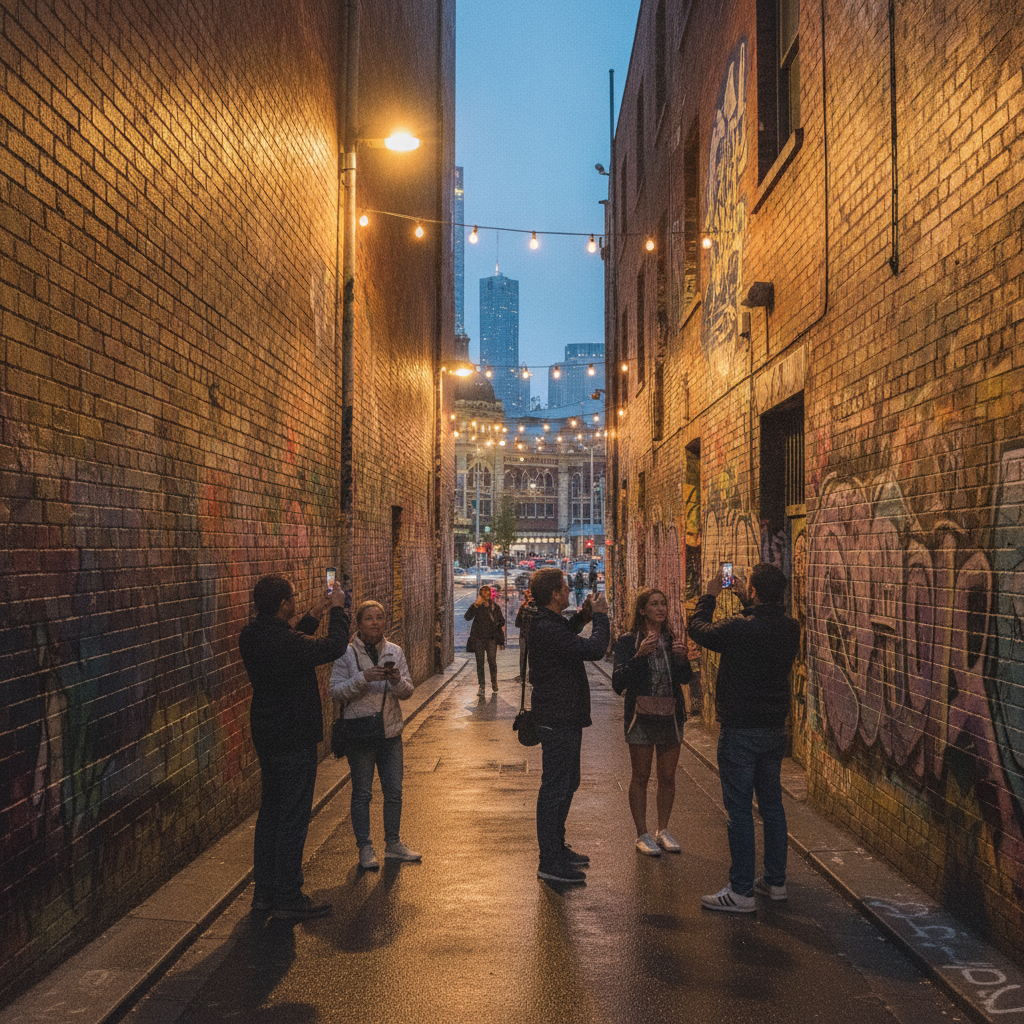
Melbourne: Laneways Street Art, Coffee Capital of the World, AFL Football Religion, Most Multicultural City in Australia, Great Ocean Road and Twelve Apostles, Complete Practical Guide
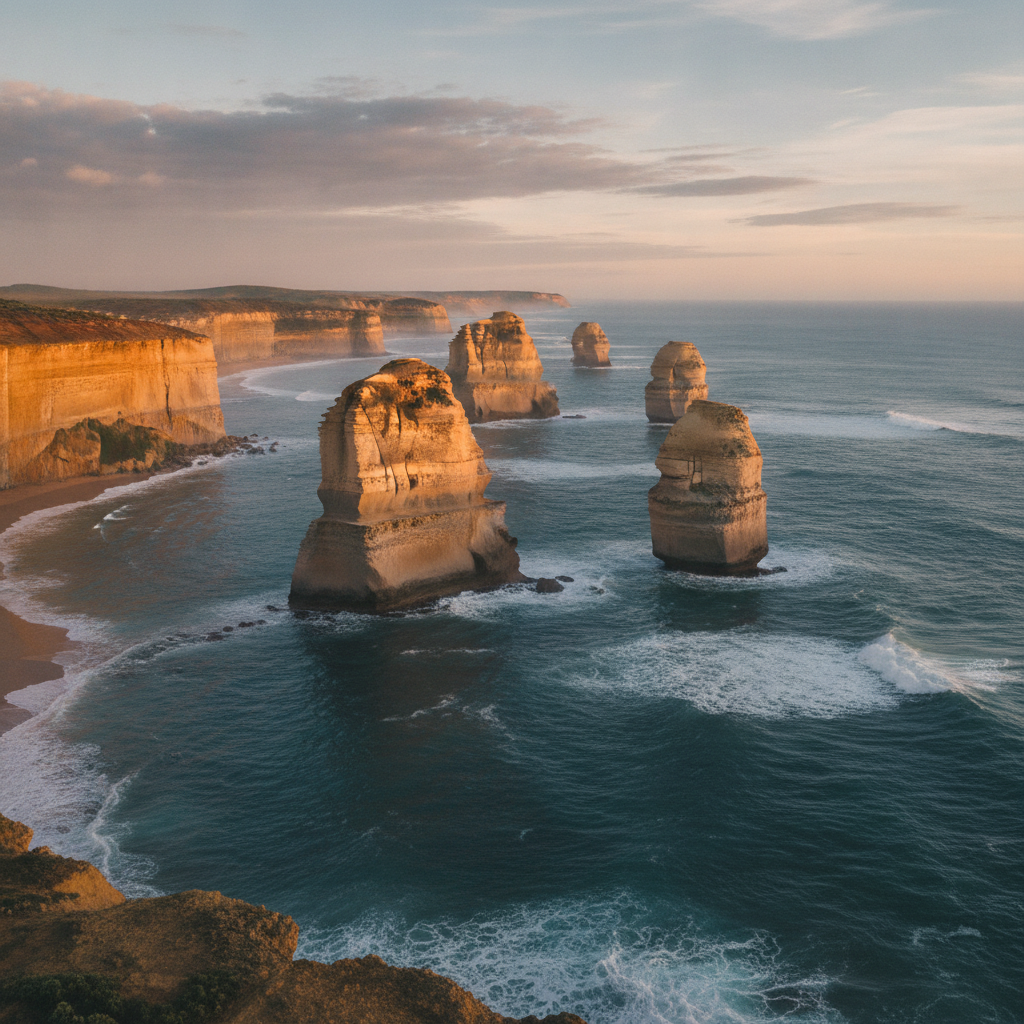
Melbourne: Great Ocean Road Complete Drive, Otways Rainforest and Cape Otway Lighthouse, Twelve Apostles at Sunrise, Grampians Rock Art and Waterfalls, Ballarat Gold Rush and Eureka Stockade, Five-Route Melbourne Assessment