Medellin Day Trips: Guatape, Coffee Region, Jerico, and the Antioqueño Countryside
The Antioqueño countryside surrounding Medellin within two to three hours of the city contains some of the most beautiful and culturally distinctive landscapes in Colombia. Guatape, two hours east of Medellin, is a lakeside town with the most extravagantly colorful zócalo tile decorations in Colombia and the dramatic El Peñol granite monolith that rises 200 meters above the reservoir. The Eje Cafetero coffee region to the south contains the colonial towns of Salento and Jardín within reach of day trips or overnights. The pueblo antioqueño towns of Jericó, Jardín, Támesis, and Santa Fe de Antioquia represent the purest surviving expression of the traditional Antioqueño architectural and social culture that spread through the Andes in the 19th century colonization movement.
- 1
Guatape and El Peñol: The Painted Town and the Giant Rock
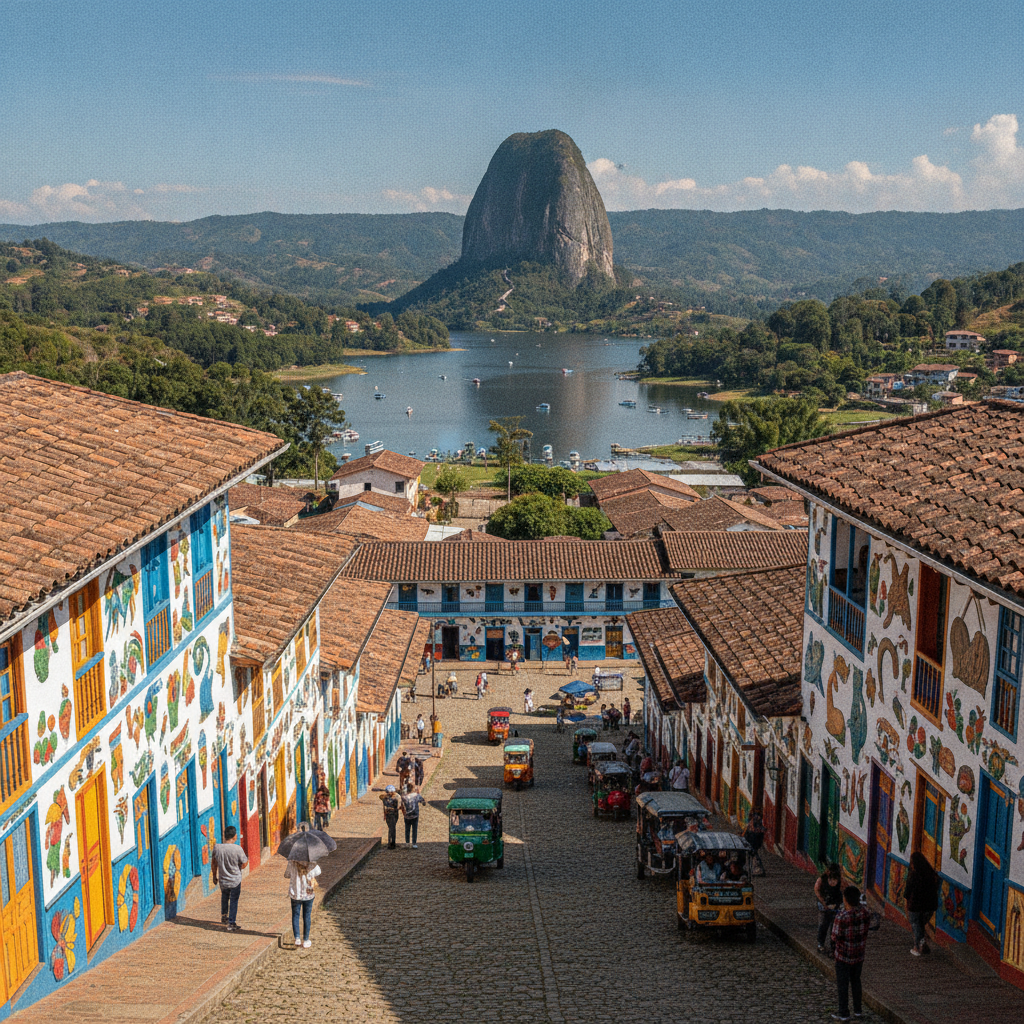
Guatape, a lakeside town two hours east of Medellin on the shores of the Guatape reservoir created by the Peñol-Guatape hydroelectric dam, is best known for two things: the zocalos, the colorful three-dimensional bas-relief tile panels that decorate the lower section of virtually every building facade in the town center with scenes of daily life, animals, flowers, and abstract patterns; and the Piedra del Peñol, a massive granite monolith that rises 200 meters above the surrounding reservoir landscape and is climbed via a stairway of 740 steps cut into a crack running up its face. The view from the summit of El Peñol encompasses the intricate reservoir landscape of islands, peninsulas, and open water created when the valley was flooded in 1978, displacing the original town of El Peñol whose church spire occasionally appears above the water during drought conditions. The reservoir itself is used for water sports, boat tours, and weekend recreation by Medellin residents; the combination of the town, the rock, and the reservoir makes Guatape the most popular day trip from Medellin by a wide margin. The town center of Guatape, with its painted facades and pedestrian-friendly streets, is one of the most photogenic small towns in Colombia.
- 2
Jardin: The Most Beautiful Pueblo Antioqueño
Jardin, a small town of approximately 14,000 people in the southwestern Antioquia mountains at 1,740 meters altitude approximately three hours from Medellin, is consistently rated among the most beautiful towns in Colombia for the integrity of its traditional pueblo antioqueño architecture, the quality of its central plaza with its large Romanesque cathedral, and the surrounding landscape of coffee farms on steep mountain slopes. The zócalo tradition of decorative building facades is present in Jardin, and the town has maintained its colonial-era architectural character with minimal modern intrusion. A cable car connects the town to the surrounding mountain above, offering views over the coffee farm landscape. Jardin is known for its coffee production, particularly from the farms in the mountain slopes above the town, and several farm tours and specialty coffee tasting experiences have been developed for visitors. The town also has a tradition of artisan crafts including carriel leatherwork, the traditional decorated leather shoulder bag that is the most recognizable accessory of Antioqueño rural identity. Day trips from Medellin to Jardin require an early start; overnight stays are recommended for a fuller experience.
- 3
Santa Fe de Antioquia: The Colonial Capital
Santa Fe de Antioquia, approximately 80 kilometers northwest of Medellin on a lower warm valley at 550 meters altitude, was the colonial capital of the Antioquia region from the 16th century until Medellin assumed primacy in the 19th century, and retains one of the best-preserved colonial urban ensembles in Colombia. The town was founded by Spanish conquistadors in 1541 and served for over two centuries as the administrative and ecclesiastical center of the region; its churches, convents, and townhouses represent the colonial baroque architecture of the early Antioqueño settlements before the later 19th century Greek Revival style that defines the pueblo antioqueño town square tradition. The Bridge of the West, the Puente de Occidente, a suspension bridge built between 1887 and 1895 spanning the Cauca River near Santa Fe de Antioquia, was one of the first large suspension bridges in Latin America and remains in use as a national monument. The warm climate of Santa Fe, 1,100 meters lower than Medellin, makes it a popular weekend destination for Paisas escaping the city; the combination of colonial architecture, warm weather, and riverside recreation along the Cauca attracts families from across the region.
- 4
Coffee Farm Tours in the Eje Cafetero
The Eje Cafetero, the Coffee Axis of Colombia including the departments of Caldas, Quindío, and Risaralda plus the coffee-growing municipalities of southern Antioquia, is within reach of Medellin for day trips or short overnights and contains some of the most productive and scenic coffee farming landscape in the world. The UNESCO Cultural Landscape of Coffee-Growing Regions of Colombia designation, awarded in 2011, recognized the cultural landscape of the coffee farms, the traditional finca architecture, and the social customs that developed around coffee cultivation in the region. Farm tours in the Eje Cafetero allow visitors to follow the full coffee production process from the arabica coffee cherries ripening on the bush through manual picking, wet processing in the beneficio, and drying on raised beds, with tasting of the fresh local crop. The town of Salento in Quindío, accessible from Medellin via the town of Manizales, is the most popular base for Eje Cafetero tourism, with the Valle de Cocora palm valley nearby containing the wax palm groves where Colombia's national tree grows to heights of 60 meters. Several haciendas in the southern Antioquia coffee region, including the Hacienda Guayabal near the town of Chinchina, offer farm stays with guided coffee tours.
- 5
Parque Nacional Las Orquídeas: Cloud Forest Near Medellin
The Parque Nacional Natural Las Orquídeas, located in the western Antioquia cordillera approximately three hours from Medellin, is one of the most biodiverse protected areas in Colombia and one of the most orchid-rich places in the world, with over 300 orchid species recorded within its boundaries. The park encompasses a range of elevations from 900 to 3,500 meters, covering the full transition from subtropical forest to cloud forest to high-altitude paramo, and its position on the western slope of the western Andes places it in a zone of exceptionally high rainfall and biodiversity. The park is part of the Tatama Massif complex, one of the most important refugia for western Andean species during climate shifts, and supports populations of species including spectacled bear, mountain tapir, and dozens of bird species endemic to the Colombian western Andes. Access to the park requires local guides and preparation; the nearby community of Urrao serves as the primary access point. The park is less visited than other Colombian protected areas due to its remoteness and the access logistics, making it an excellent destination for serious naturalists willing to invest the planning effort.
- 6
Antioqueño Architecture: The Bahareque Tradition and Town Square Culture
The traditional architecture of the Antioqueño colonization, the settlement movement in which Antioqueño families expanded south and west from their original mountain valleys through the 19th century, produced a distinctive regional style recognizable across hundreds of towns from the coffee region to the Pacific foothills. The bahareque construction technique, using bamboo or wood frames filled with earth and covered with plaster, allowed rapid and relatively earthquake-resistant construction in the steep mountain terrain. The architectural ensemble of a pueblo antioqueño town consists of a large central plaza with a prominent church on one side, surrounded by two-story buildings with covered arcades at ground level, painted in bright colors with decorative woodwork on balconies and window surrounds. The interior of the typical Antioqueño house is organized around a central patio with a garden, providing ventilation and light in a climate where neither heating nor cooling is required. The colonization movement created dozens of towns across southern Colombia that share this architectural vocabulary while varying in their specific site adaptation, collectively representing one of the most extensive examples of planned vernacular urban development in the Americas and the basis for the UNESCO Cultural Landscape designation of the coffee region.
Walk this route with audio
Stories play automatically as you reach each stop — no tapping needed.
More in Medellin
Medellin History: From Colonial Foundation to Industrial Capital and Cartel Violence
Medellin Practical Guide: Neighborhoods, Safety, Transport, and Colombia Travel Connections
Medellin Urban Transformation: Architecture, Innovation, and the World Design Capital

Medellin Birdwatching: Colombia as the Most Bird-Rich Country and the Antioquia Avifauna
Medellin: The City of Eternal Spring, Urban Transformation, and the Flower Festival