Mawlamyine Pagoda Ridge & Temple Walk
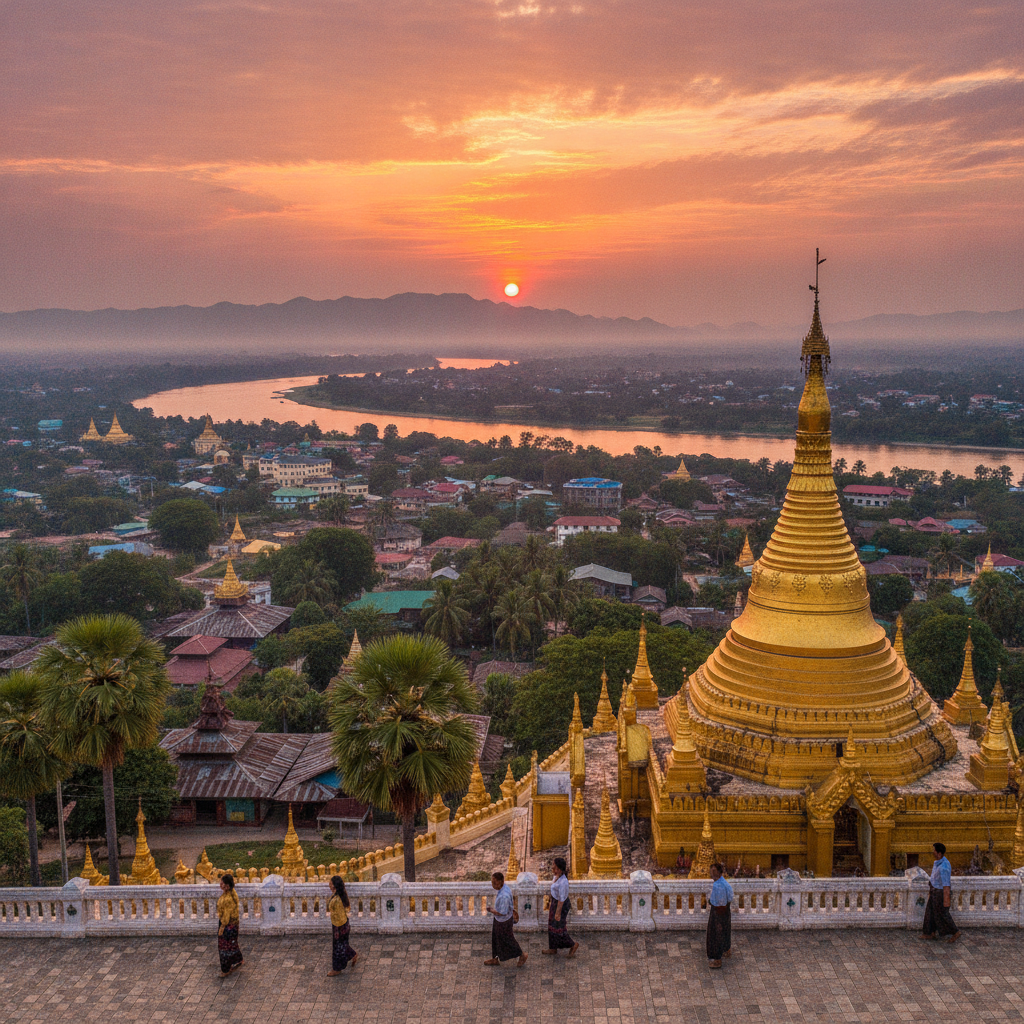
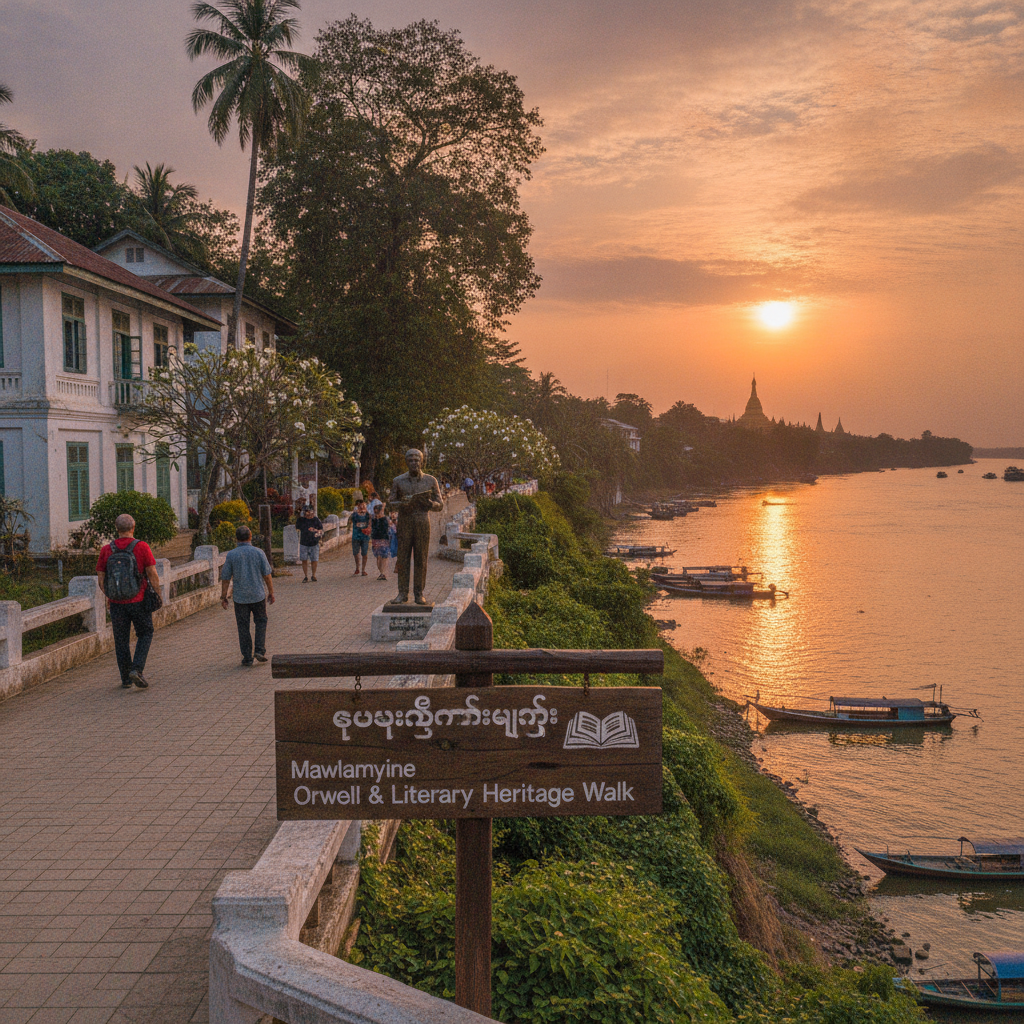
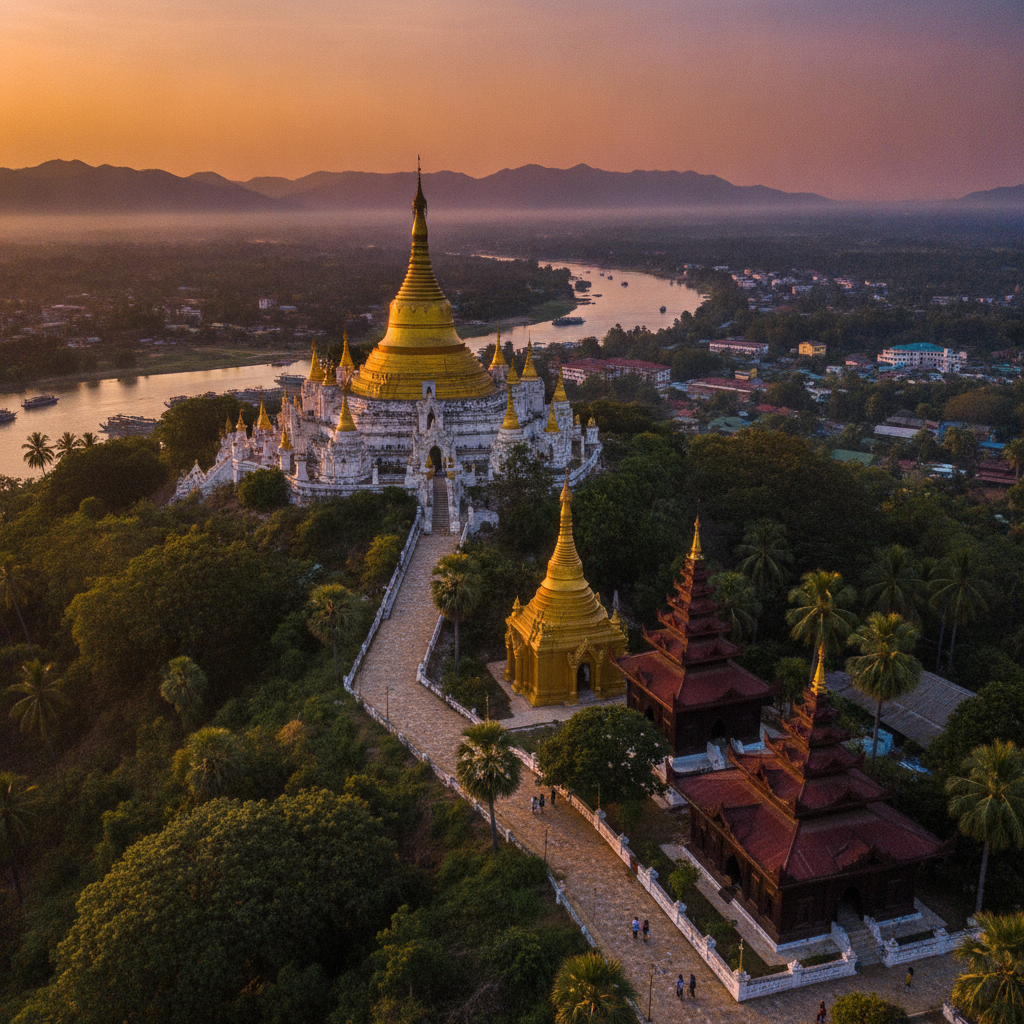
Climb Mawlamyine's pagoda ridge — the long ridge running north-south behind the city is crowned with a continuous line of Buddhist pagodas and monasteries that make Mawlamyine's skyline the most dramatically pagoda-dense in Myanmar, and the ridge walk provides the most complete panoramic view of the city, the Salween River, and the islands.
- 1
Kyaikthanlan Pagoda
Kyaikthanlan Pagoda (the largest and most sacred pagoda in Mawlamyine, the golden stupa on the central ridge that Kipling immortalised in 'Mandalay' as 'the old Moulmein Pagoda' where 'the flying fishes play') is the most historically famous single Buddhist monument accessible in Mawlamyine and one of the most literary-historically significant pagodas in the Buddhist world — the pagoda's ridge-top position (the golden stupa visible from the river and from the city below, the most dominant single landmark in the Mawlamyine skyline) and the views from the pagoda terrace (the 360-degree panorama over the Salween River, the city, the Mon State lowlands, and the distant Tenasserim Hills) create the most comprehensively geographical single viewpoint accessible in the region. The pagoda's religious significance to the Mon Buddhist community (the Mon people who have maintained the pagoda as their most important single sacred site for centuries, the pagoda predating the British colonial period by centuries) makes Kyaikthanlan the most historically deep single religious monument accessible in Mawlamyine.
- 2
Ridge Pagoda Walk
The ridge walk connecting the various pagodas and monasteries along the Mawlamyine ridge (the elevated path running south from Kyaikthanlan along the ridge crest, passing the smaller pagodas, the meditation centres, and the monastery compounds that together create the most pagoda-dense single ridgeline accessible in Myanmar) is the most architecturally rewarding urban walk accessible in Mawlamyine — the continuous sequence of religious structures along the ridge (the different styles of Burmese, Mon, and colonial-period pagoda construction visible in sequence along the path, ranging from the classic Mon-style bell-shaped stupa through the later Burmese tiered forms to the smaller meditation pagodas of the colonial era) provides the most complete survey of the Myanmar Buddhist architectural vocabulary accessible in a single walking route. The ridge path's shade (the trees planted along the eastern face of the ridge providing the morning shade that makes the northward pagoda walk comfortable before the afternoon heat) is the most practically considerate urban walking environment accessible in the city.
- 3
U Zina Pagoda Vista
U Zina Pagoda (one of the major pagodas on the Mawlamyine ridge south of Kyaikthanlan, notable for the particularly clear panoramic view accessible from its elevated terrace and for the large reclining Buddha image accessible in the temple building adjacent to the stupa) is the most panoramically informative of the secondary ridge pagodas accessible during the Mawlamyine ridge walk — the terrace view from U Zina (the Salween River visible in both the upstream and downstream directions from the ridge's southern viewpoint, with the river's width and the island geography visible in greater detail than from the Kyaikthanlan pagoda to the north) provides the most complete geographical survey of the Salween River valley accessible from any single point on the ridge. The reclining Buddha (the large image of the sleeping Buddha, its face serene and its length extending the full width of the shrine hall) is the most classically Mon artistic expression accessible on the ridge walk.
- 4
Win Sein Taw Ya Reclining Buddha
Win Sein Taw Ya (the enormous reclining Buddha statue approximately 20km south of Mawlamyine, accessible by motorcycle or taxi as a half-day trip from the city) is the most physically overwhelming single Buddhist monument accessible from the Mawlamyine base — the reclining Buddha (at 180 metres in length, one of the largest reclining Buddhas in the world, the figure lying on its right side in the parinirvana posture) houses a complete series of interior rooms inside the body of the statue accessible via the staircase entrance at the feet, the rooms containing dioramas of the Buddhist hells and heavens and narrative scenes from the Jataka tales. The scale of the Win Sein Taw Ya experience (the approach along the road with the statue's head visible above the horizon long before the full figure becomes clear, the gradual revelation of the statue's impossible length as the visitor approaches along the path parallel to the body) creates the most spatially disorienting single religious monument encounter accessible from any Myanmar city base.
- 5
Mon State Buddhist Culture
The Mon Buddhist culture visible in Mawlamyine (the Mon people — the ethnic group that preceded the Burmese as the dominant civilisation in lower Myanmar, and whose Theravada Buddhist tradition provided the religious foundation on which the Burmese Buddhist civilisation was subsequently built) is the most historically foundational single ethnic Buddhist tradition accessible in Myanmar — the Mon cultural distinctiveness (the Mon language (the oldest known written language in Southeast Asia with inscriptions dating to the 6th century CE), the Mon architectural tradition (the pagoda forms that are the prototypes of the Burmese stupa), and the Mon Buddhist manuscript tradition (the palm-leaf manuscript libraries that preserve the oldest Buddhist texts accessible in Myanmar)) is most directly encountered in the Mawlamyine area, the capital of the remaining Mon State. The Mon monks visible at the Mawlamyine pagodas and monasteries (identifiable by the darker maroon robes that are the traditional Mon monastic colour, distinguishable from the orange of the Burmese Theravada tradition) are the most directly visible expression of the Mon cultural continuity accessible in the city.
- 6
Pagoda Night Illumination
The Kyaikthanlan Pagoda at night (the golden stupa illuminated by the flood lights after dark, visible from the river and from the city below as the most dramatic single landmark in the Mawlamyine night skyline) is the most atmospherically complete single night-time religious encounter accessible in the city — the pagoda terrace at night (the cool evening air at the ridge-top, the city lights visible below, the river reflecting the urban illumination in the valley, and the golden stupa visible against the dark sky above) creates the most completely romantic single evening environment accessible in Mawlamyine. The evening religious activity at the pagoda (the Myanmar Buddhist tradition of the evening prayer and circumambulation, the monks and the lay devotees visible at the pagoda terrace in the cooler evening hours, and the candles and incense creating the most sensory-rich religious atmosphere of the day) is the most directly participatory single night-time religious encounter accessible during the Mawlamyine stay.
Walk this route with audio
Stories play automatically as you reach each stop — no tapping needed.