Nader Shah Mausoleum Military Conqueror Legacy
Visit the mausoleum of Nader Shah, the 18th-century military genius who conquered from India to the Caucasus and briefly restored Persian imperial power, whose tomb in Mashhad commemorates one of history's most remarkable — and brutal — military careers.
- 1
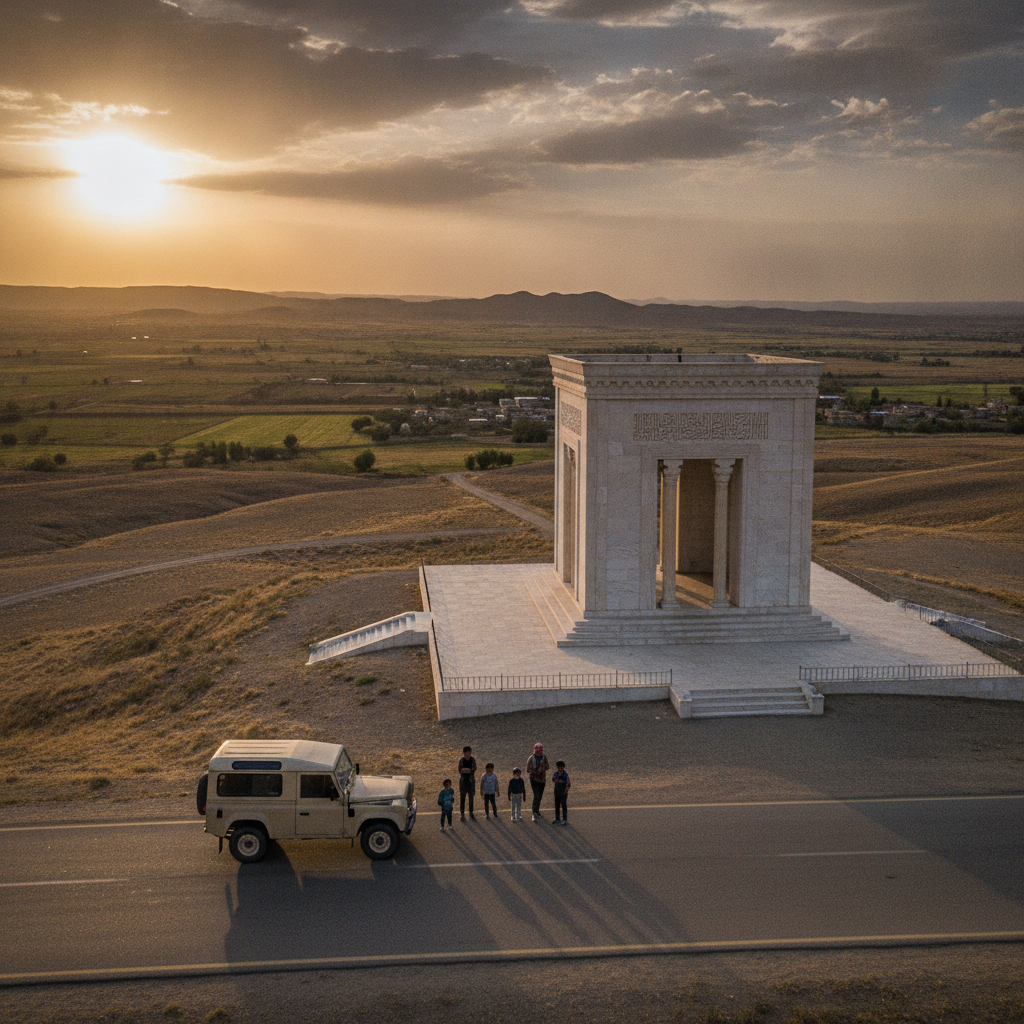
Mausoleum Exterior
Approach the dramatic modernist mausoleum designed in the 1950s to honor Nader Shah, the marble and granite structure combining traditional Persian architectural elements with mid-century modernist design in an attempt to match the monumental scale of Nader's historical achievement.
- 2
Nader Shah Tomb
Stand before the sarcophagus of Nader Shah Afshar (1688-1747) whose military campaigns at the height of his power made him master of an empire stretching from the Caucasus to northern India, his sack of Delhi in 1739 returning the Peacock Throne and the Koh-i-Noor diamond to Persia.
- 3
Military History Exhibition
Explore the military history exhibition documenting Nader's campaigns where maps, weapons, and period artwork tell the story of his rise from a Khorasan tribal leader to self-proclaimed Shah of Persia, his military genius compared by some historians to Alexander the Great and Napoleon.
- 4
Khorasan History Museum
Visit the Khorasan history museum within the mausoleum complex where the broader history of the region that Nader Shah ruled — one of the great provinces of Persian civilization — is displayed, the exhibits spanning from ancient times through the Islamic period to the Afsharid dynasty Nader founded.
- 5
Sculpture Gallery
See the sculptural works depicting Nader Shah and scenes from his campaigns, the heroic representation of a ruler whose extraordinary military success was matched by brutal methods of suppression, his assassination in 1747 ending the brief period of Persian imperial renaissance he had created.
- 6
Mashhad Connection
Understand Nader Shah's deep connection to Mashhad where he was born in the region, spent his early life, and specifically chose to be buried near the shrine of Imam Reza despite his own complex relationship with Shia Islam, the mausoleum's proximity to the holy shrine reflecting the entanglement of political and religious power in Iranian history.
Walk this route with audio
Stories play automatically as you reach each stop — no tapping needed.