Majorelle Garden, the YSL Museum & Gueliz — Marrakech's Modern Quarter
Beyond the medina, Marrakech's Gueliz district (the French-planned ville nouvelle built from 1912 as the administrative and commercial centre of the French Protectorate) contains two of the most visited attractions in Morocco: the Majorelle Garden (the botanical garden and Art Deco villa created by the French painter Jacques Majorelle and subsequently owned by Yves Saint Laurent) and the Musée Yves Saint Laurent.
- 1
Jardin Majorelle — The Most Beautiful Garden in Morocco
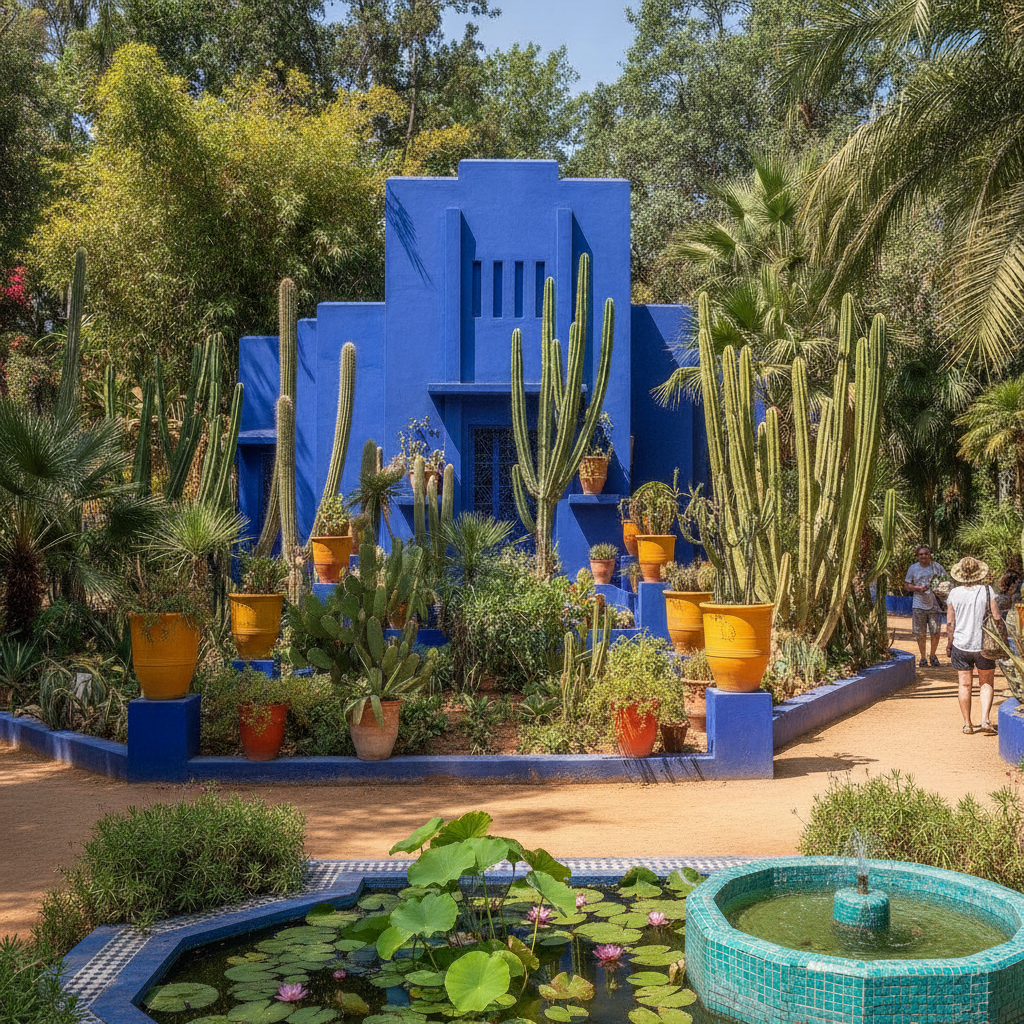
Jardin Majorelle (Rue Yves Saint Laurent, Gueliz — the botanical garden and Art Deco villa created by the French painter Jacques Majorelle (1886-1962) over a period of 40 years (1923-1962) — the most visited garden in Morocco (approximately 900,000 visitors per year) and one of the most photographed gardens in the world): Majorelle began creating the garden in 1923, importing plants from five continents over the following decades; the garden is defined by its collection of approximately 300 species of cacti (towering Mexican columnar cacti, opuntia, agave), bamboo, and subtropical plants (jacaranda, bougainvillea, water lilies, and the Lotus lotus water plants in the pool); the studio building (the Art Deco modernist structure that Majorelle designed himself, painted in the distinctive 'Majorelle blue' (the vivid cobalt blue that Majorelle developed and which he named (and which Yves Saint Laurent subsequently registered as a trademark)) is the defining visual element of the garden; the garden was purchased in 1980 by the French fashion designer Yves Saint Laurent (1936-2008) and his partner Pierre Bergé (1930-2017), who restored it and opened it to the public; Saint Laurent's ashes were scattered in the garden's rose garden after his death in 2008.
- 2
Musée Yves Saint Laurent Marrakech — Fashion as High Art
Musée Yves Saint Laurent Marrakech (Rue Yves Saint Laurent, adjacent to the Majorelle Garden — the fashion museum opened October 2017 in a purpose-built building designed by the French architects Studio KO (Olivier Marty and Karl Fournier), housing the archive and permanent collection of Yves Saint Laurent's work alongside temporary exhibitions): Yves Saint Laurent (1936-2008 — the Oran-born French-Algerian designer who became the most influential fashion designer of the second half of the 20th century, the creator of the women's tuxedo (le smoking, 1966), the pea coat for women, the safari suit, the Pop Art dress, and the first ready-to-wear luxury fashion line (Rive Gauche, 1966)) first visited Marrakech in 1966 with Pierre Bergé and fell deeply in love with the city; Marrakech's colours, textiles, and craft traditions profoundly influenced Saint Laurent's collections, and he lived part of each year at the Villa Oasis (the house adjacent to the Majorelle Garden) until his death; the museum building (the terracotta-coloured geometrically patterned brick facade, designed to echo the traditional lattice screens (moucharabieh) of Moroccan architecture) is itself an important architectural statement.
- 3
Gueliz — The French Ville Nouvelle & Modern Marrakech
Gueliz (the new town of Marrakech, built from 1912 under the French Protectorate (1912-1956) on a grid plan west of the medina — the commercial and administrative district of modern Marrakech, with its wide tree-lined boulevards (Mohammed V Boulevard is the main axis), Art Deco and Modernist buildings, pavement cafes, and the most international restaurants and shops in the city): the planning of Gueliz (by Henri Prost, the chief planner of the French Protectorate's urban development) was designed to avoid destroying the historic medina by building a completely separate modern city adjacent to it — a planning approach that preserved the medina's historic fabric better than any other North African city; the Place du 16 Novembre (the main square of Gueliz, with the city's main post office) and the Mohammed V Boulevard are the commercial spine of the ville nouvelle; the Marché Central (the central market of Gueliz, in the streets between Avenue Mohammed V and Rue de la Liberté) sells fresh produce, spices, and Moroccan crafts at lower prices than the medina souks.
- 4
La Mamounia Hotel — The Most Legendary Hotel in Africa
La Mamounia Hotel (Avenue Bab Jdid, adjacent to the medina walls — the most celebrated hotel in Morocco and one of the most famous hotels in the world, established 1923 in the former pleasure garden of Prince Moulay Mamoun (hence the name) by the Moroccan state railways (ONR), now managed by the Moroccan state): La Mamounia has been the destination of choice for royalty, heads of state, film stars, artists, and writers since its opening in 1923; Winston Churchill (who visited repeatedly between 1935 and 1959) declared it 'the most lovely spot in the whole world' and painted extensively in its gardens; Charlie Chaplin, Franklin Roosevelt, Alfred Hitchcock (who filmed part of The Man Who Knew Too Much (1956) in the hotel), Mick Jagger, Robert Plant, and the Rolling Stones (who recorded parts of Exile on Main Street (1972) in Marrakech, partly inspired by their stays at La Mamounia) are among its celebrated guests; the hotel's gardens (the original Saadian-era garden surrounding the hotel, with its olive trees, orange groves, and rose gardens) and its Art Deco interior (designed by Henri Prost and Charles Bühler in 1923, with subsequent renovations) are among the finest in Morocco.
- 5
Marrakech Hammam Culture — The Art of the Moroccan Bath
The Moroccan hammam (the traditional steam bath and bathing ritual that is the primary form of personal hygiene and social relaxation in Moroccan culture, dating in its current form from the introduction of the hammam in the medieval Islamic world): the hammam ritual (entering the warm room (beit awwal), then the hot room (beit wast), soaking and sweating, then being scrubbed by the kessala (the hammam attendant) with a kessa (the rough exfoliating glove) to remove dead skin (the kir (black soap) — the traditional Moroccan black olive oil soap applied with the kessa — is the defining sensory experience of the hammam), then rinsed, massaged, and wrapped in towels to cool in the cool room) is the fundamental Moroccan bodily and social experience; Marrakech has both traditional neighbourhood hammams (open to Marrakchis as everyday bathing facilities, for a few dirhams) and upscale spa hammams (at La Mamounia, the Riad hotels, and dedicated spa destinations such as Les Bains de Marrakech) providing the full hammam experience for visitors.
- 6
Marrakech Night Markets & Street Food
Marrakech's night food culture (the evening transformation of Djemaa el-Fna and the surrounding streets into an enormous open-air food market and entertainment complex): the food stalls of Djemaa el-Fna (approximately 100 stalls set up from approximately 6pm, serving a complete range of Moroccan street food — harira (the thick tomato, chickpea, and lentil soup served with dates and chebakia (a honey and sesame pastry)), snail soup (ḥallouf), sheep's head (bouzelouf), Marrakchi spiced liver (kabdah), mechoui (slow-roasted lamb, sold by weight), couscous, tagine, and brochettes)); the Café de France (the landmark café at the edge of Djemaa el-Fna with its terrace overlooking the square — the best place from which to observe the square spectacle); and the night market of Souk el-Khemis (the Thursday/Sunday flea market in the northern medina, selling second-hand items, antiques, and curiosities — the most authentic market experience in Marrakech after the main souks).
Walk this route with audio
Stories play automatically as you reach each stop — no tapping needed.
More in marrakech
Djemaa el-Fna, the Medina & the Souks — Marrakech's Living UNESCO Heritage
Gnawa Music, Sufi Culture & the Spiritual Heart of Marrakech
Essaouira — Marrakech's Atlantic Escape
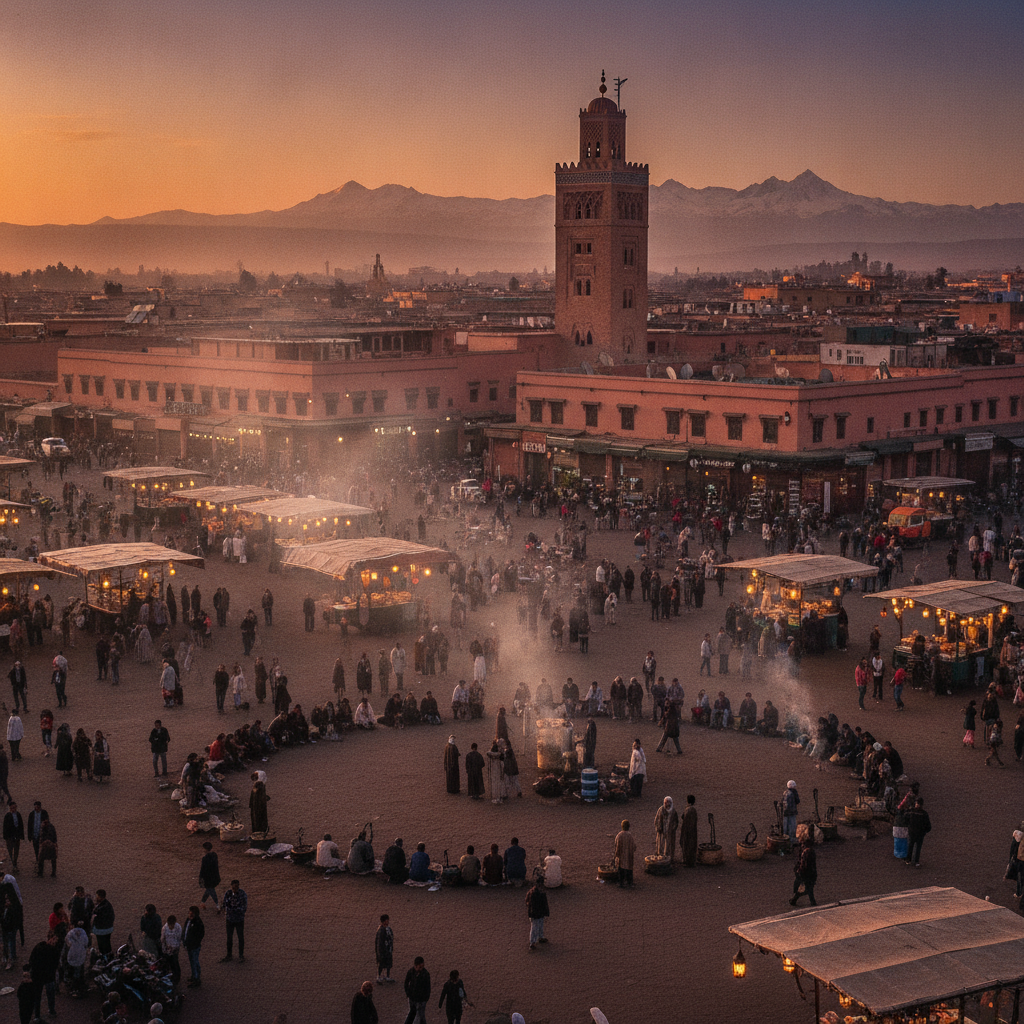
Marrakech Essential: Djemaa el-Fna the Living Square, the Medina Souks, the Koutoubia Mosque, the Bahia Palace, the Saadian Tombs, and the Pink City Character
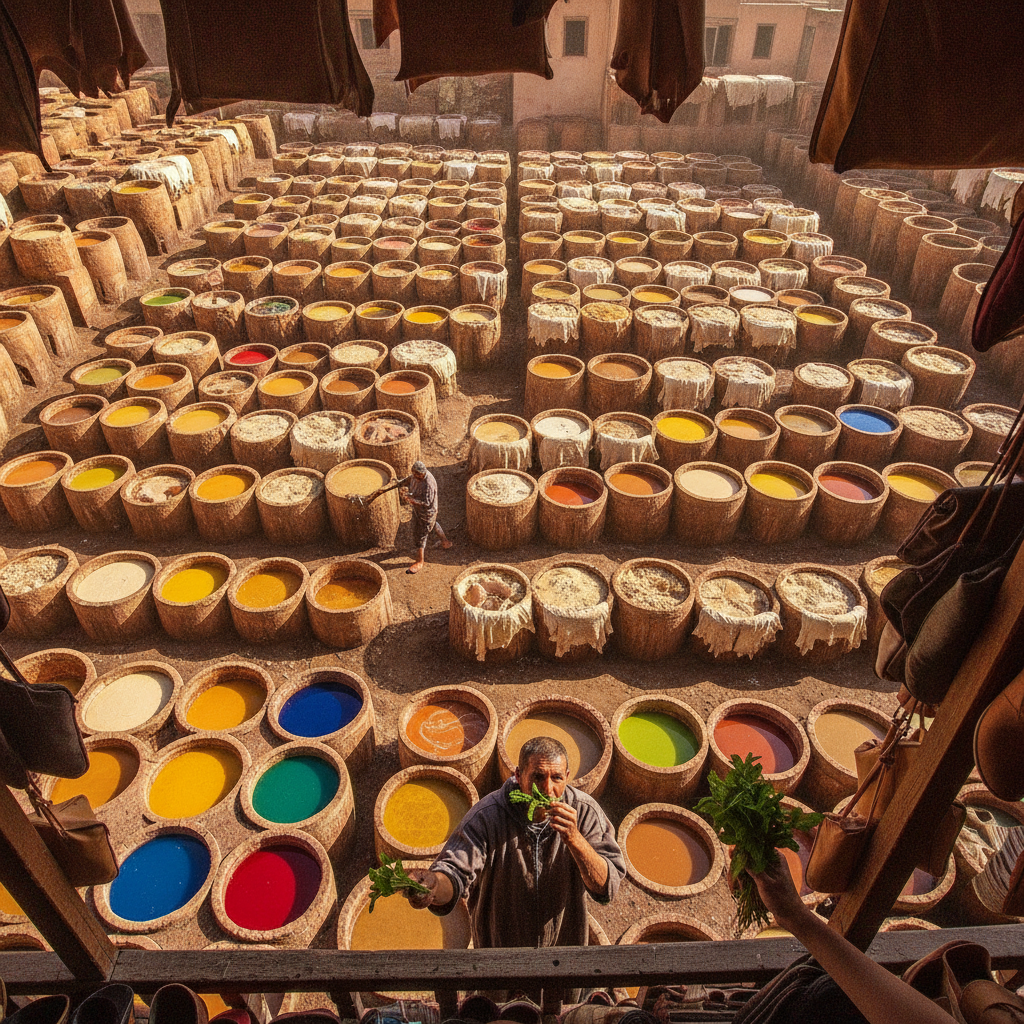
Moroccan Crafts — Leather Tanneries, Pottery & Artisans
