Atlas Mountains, Ourika Valley & Berber Villages — Day Trips from Marrakech
The High Atlas Mountains (the Haut-Atlas — the mountain range rising immediately south of Marrakech, visible from the city on clear days as a wall of peaks including Jbel Toubkal (4,167 metres — the highest peak in North Africa)) are accessible from Marrakech as day trips (Ourika Valley, 60 km) or multi-day trekking expeditions (Toubkal Base Camp and summit, 2-3 days from Imlil, 60 km from Marrakech).
1. Jbel Toubkal — The Highest Peak in North Africa
- 1
Jbel Toubkal — The Highest Peak in North Africa
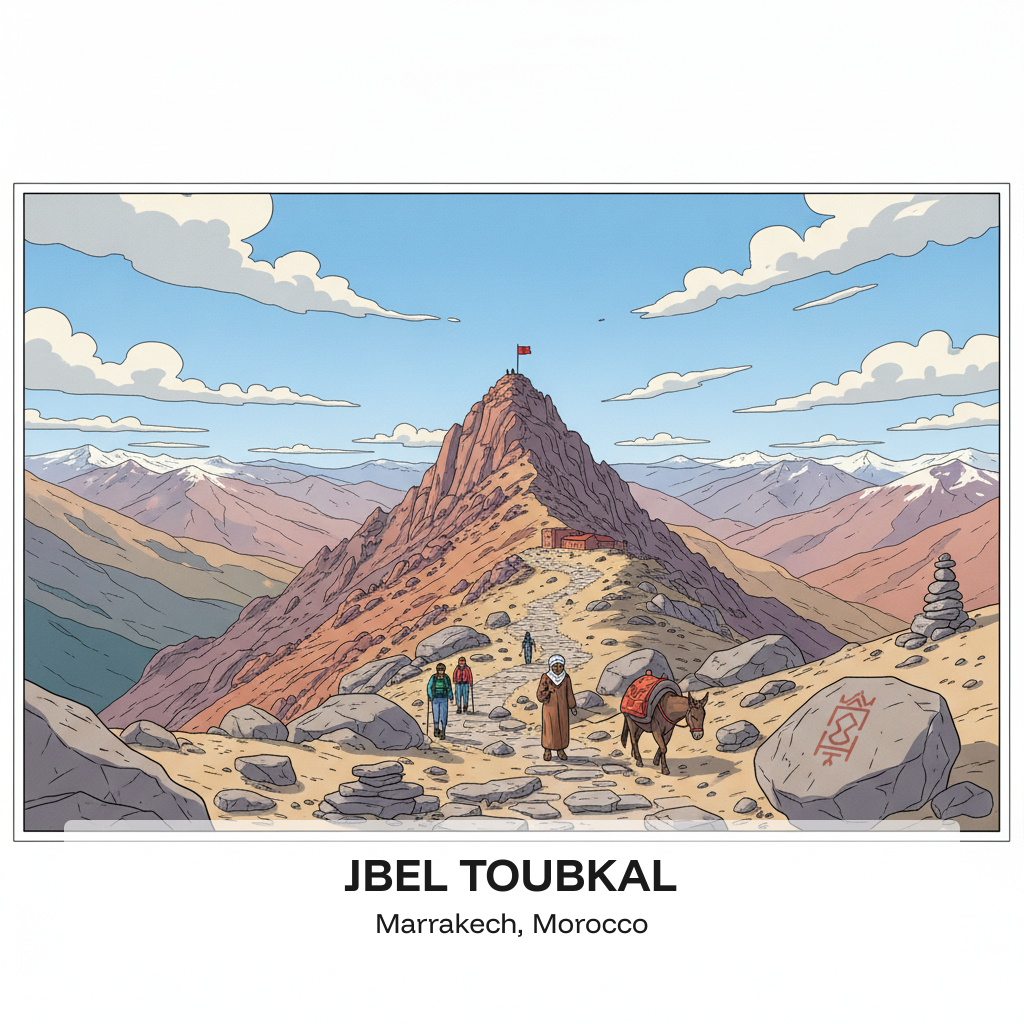
Jbel Toubkal (4,167 metres — the highest peak in North Africa and the highest peak in Morocco, in the Toubkal National Park of the High Atlas, approximately 60 km south of Marrakech via Imlil village): the Toubkal ascent (typically done as a 2-3 day expedition, with the first night at the Toubkal Refuge at 3,207 metres and the summit attempt on the second morning) is one of the classic mountain walks in North Africa, requiring no technical climbing equipment in summer (June-October) but requiring crampons and ice axes in winter/spring; the approach to Toubkal through the Berber (Amazigh) villages of the Asni valley and Imlil (Imlil village (1,740 metres) — the primary base for Toubkal expeditions, with multiple guides, mule hire services, and guesthouses operated by the local Amazigh community) gives an introduction to the traditional Amazigh mountain culture that has inhabited the High Atlas for thousands of years.
- 2
Ourika Valley — Berber Villages & Waterfalls
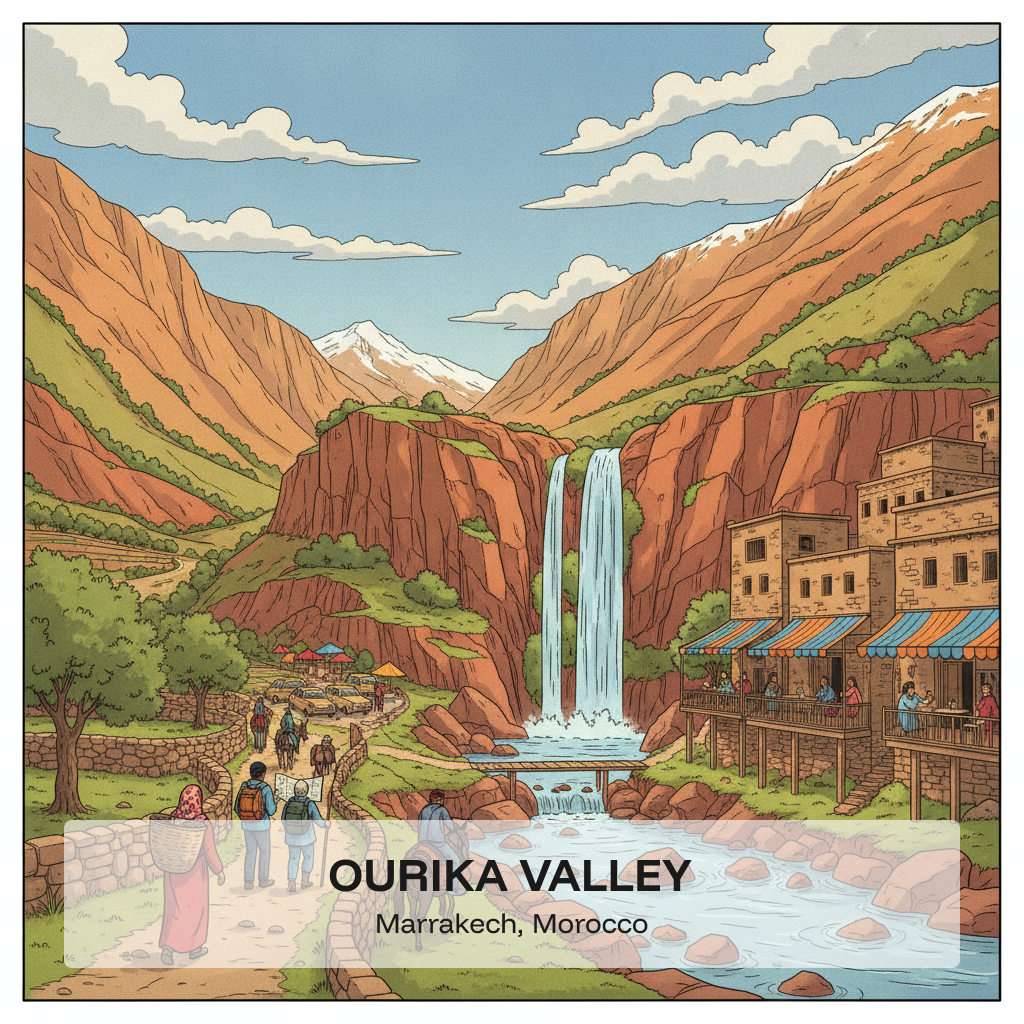
Ourika Valley (the valley of the Oued Ourika river, 30 km south of Marrakech on the N9 road to the Atlas — the most easily accessible Atlas Valley from Marrakech, popular as a day trip): the Ourika Valley (with its sequence of Berber (Amazigh) villages (Aghmat, Tnine de l'Ourika, Setti Fatma), olive groves, and the increasingly dramatic canyon scenery as the valley narrows into the Atlas) provides the most accessible introduction to Atlas mountain life and landscape from Marrakech; Setti Fatma (the village at the head of the Ourika Valley, approximately 65 km from Marrakech) is the most popular day-trip destination in the valley, with a weekly souk (Monday) and the series of seven waterfalls (cascades de Setti Fatma) accessible by a 30-45 minute walk up the valley from the village — the most visited natural attraction within a day's drive of Marrakech; the Ourika Valley hosts a Monday souk (the weekly market) at Tnine de l'Ourika, one of the most authentic traditional markets accessible from Marrakech.
- 3
Ait Ben Haddou — The UNESCO Kasbah of Morocco
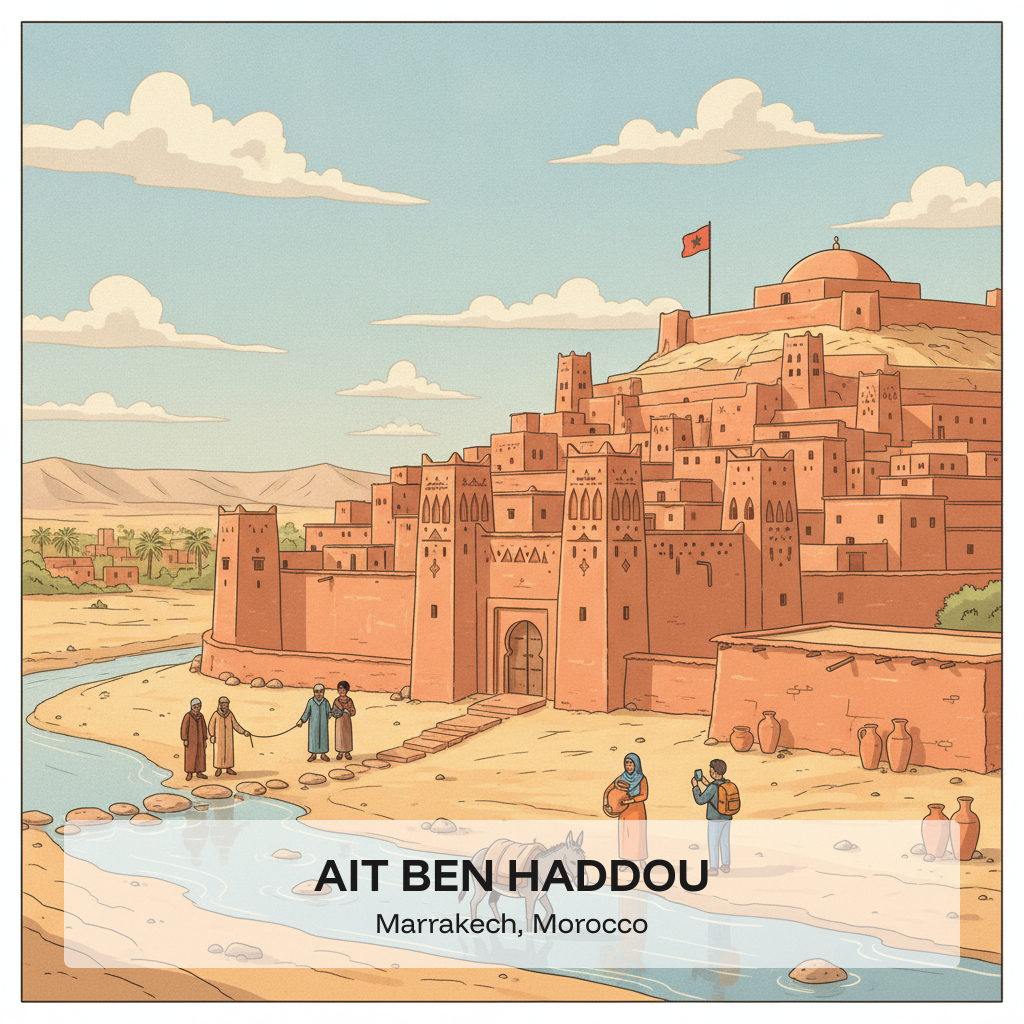
Aït Ben Haddou (a ksar (fortified village) on the Ounila River in the Draa-Tafilalet region, approximately 200 km southeast of Marrakech via the Tizi n'Tichka pass (2,260 metres) — the most famous example of southern Moroccan ksar architecture and a UNESCO World Heritage Site since 1987): Aït Ben Haddou (the name means 'the house of Ben Haddou' in Tamazight, the Amazigh language) is a cluster of earthen (pisé — rammed earth) kasbahs (fortified residences) and granaries (agadirs) in the traditional southern Moroccan defensive village architecture — the walls and towers built of local desert clay, decorated with geometric bas-relief patterns in the distinctive reddish-ochre colour of the pre-Saharan earth; the village has been used as a filming location for numerous major films (Lawrence of Arabia (1962), Sodom and Gomorrah (1962), The Man Who Would Be King (1975), Jewel of the Nile (1985), The Last Temptation of Christ (1988), Gladiator (2000), Alexander (2004), and Game of Thrones (season 3)).
- 4
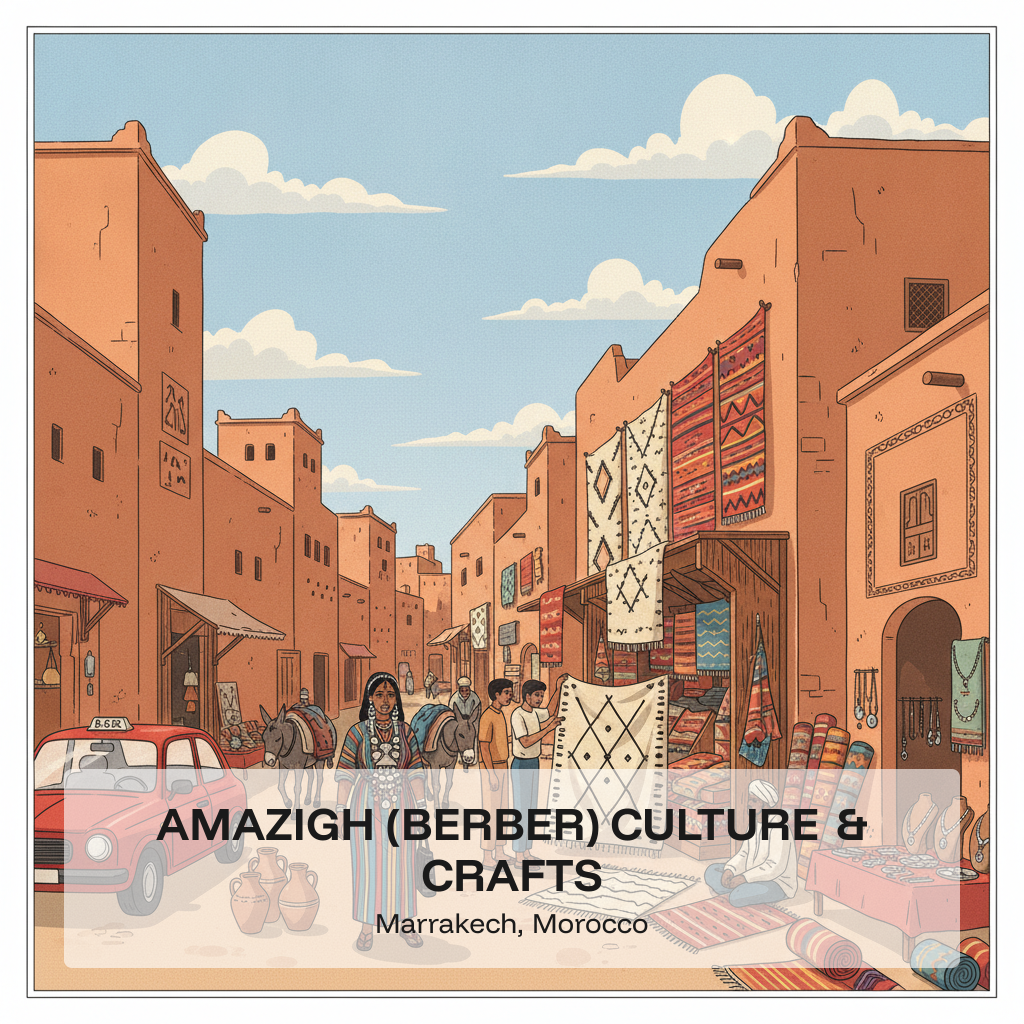
Amazigh (Berber) Culture & Crafts
The Amazigh people (the indigenous people of North Africa — the Berbers — who inhabited the Atlas Mountains, the Sahara, and the coastal lowlands of North Africa long before the Arab conquest of the 7th century, and who remain the majority population of Morocco): the Amazigh cultural heritage of Morocco is expressed most vividly in the High Atlas through the distinctive earthen kasbah architecture, the women's traditional dress (the colourful striped fabrics, the silver jewellery, the characteristic face tattoos of some Amazigh communities), the Tifinagh script (the ancient alphabet of the Amazigh languages, now taught in Moroccan schools and used on official signs), and the crafts: the Atlas Berber carpets (the most important Amazigh craft, with each regional carpet style (the abstract geometric designs of the Middle Atlas Beni Ourain carpets (the large white and black geometric wool rugs now fashionable internationally), the flat-woven kilim (hanbal) style of the southern Atlas, and the pile rugs of the High Atlas villages) reflecting the distinctive aesthetic of its producing community).
- 5
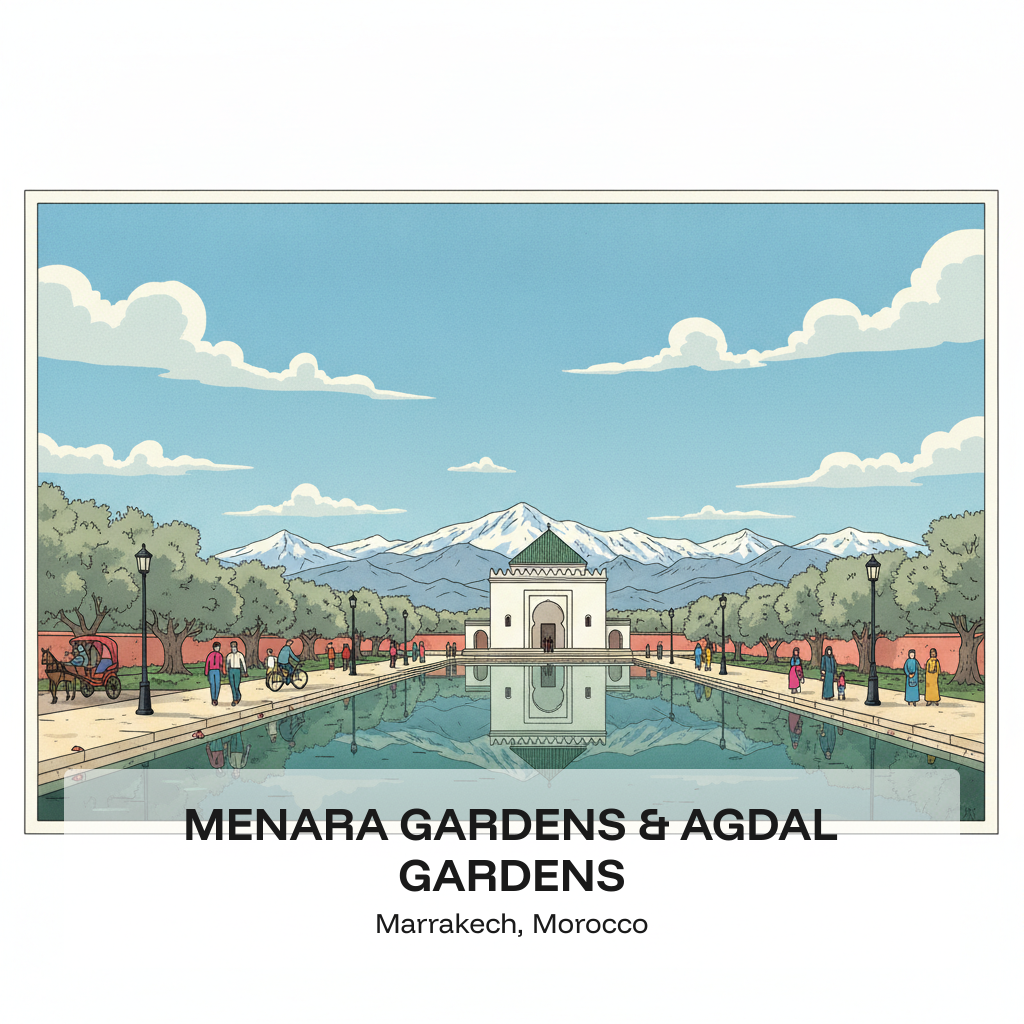
Menara Gardens & Agdal Gardens — Marrakech's Imperial Pleasure Gardens
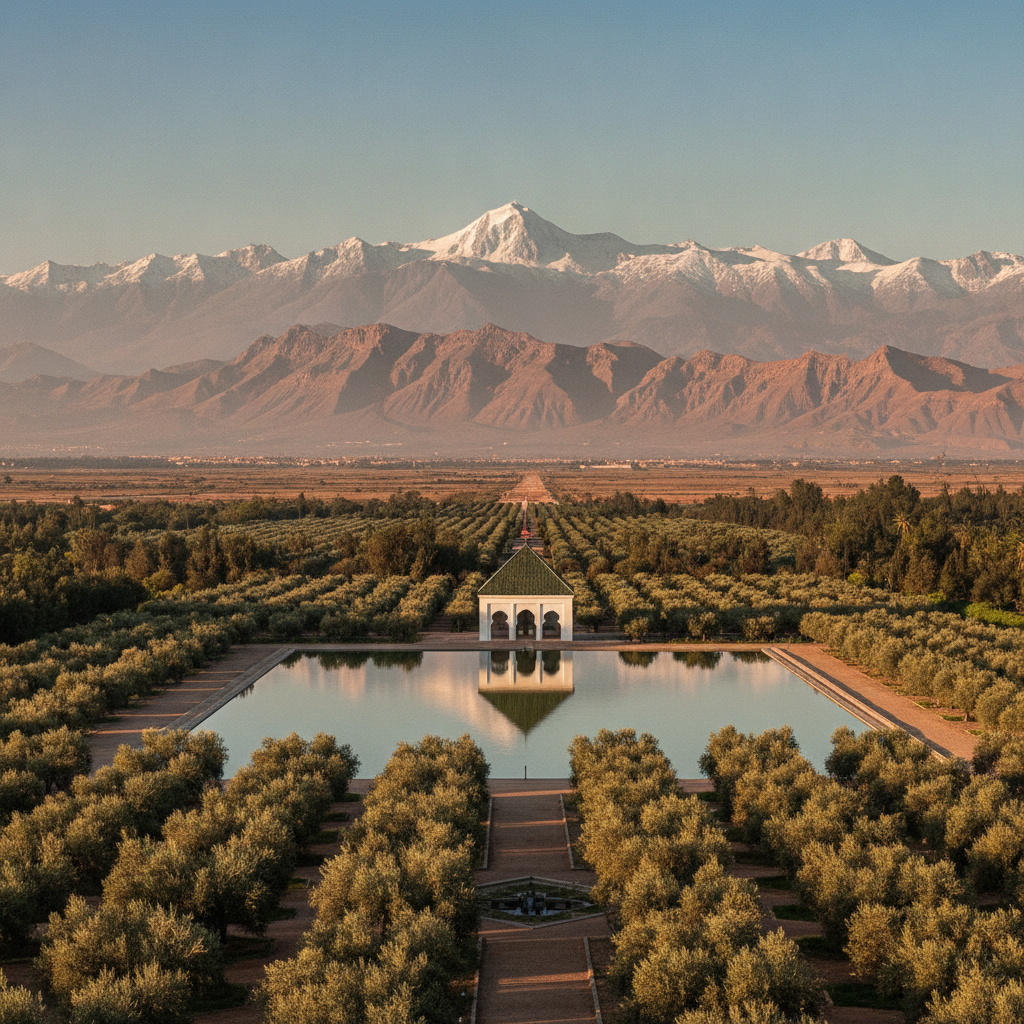
Menara Gardens (Rue de la Menara, southwest of the medina — the 12th-century Almohad garden with its vast rectangular reflecting pool (supported by a network of underground irrigation channels, the khettara, that draw water from the Atlas Mountains 30 km away) and the iconic 19th-century pavilion (the 'Pavillon de la Menara') reflected in the pool, with the Atlas Mountains as a backdrop — one of the most visited and most photographed viewpoints in Marrakech): the Almohad garden system of Marrakech (the Menara, the Agdal, and the former Saadian gardens) represents the most complete surviving example of the Islamic 'paradise garden' (from the Persian pairidaeza — 'walled enclosure') tradition in the western Islamic world; the Agdal Gardens (the enormous walled garden south of the medina, approximately 4 km × 2 km — the largest historic garden in Morocco, dating from the 12th century, with its sequence of reflecting pools, olive orchards, and citrus groves) are open on Friday and Sunday.
- 6
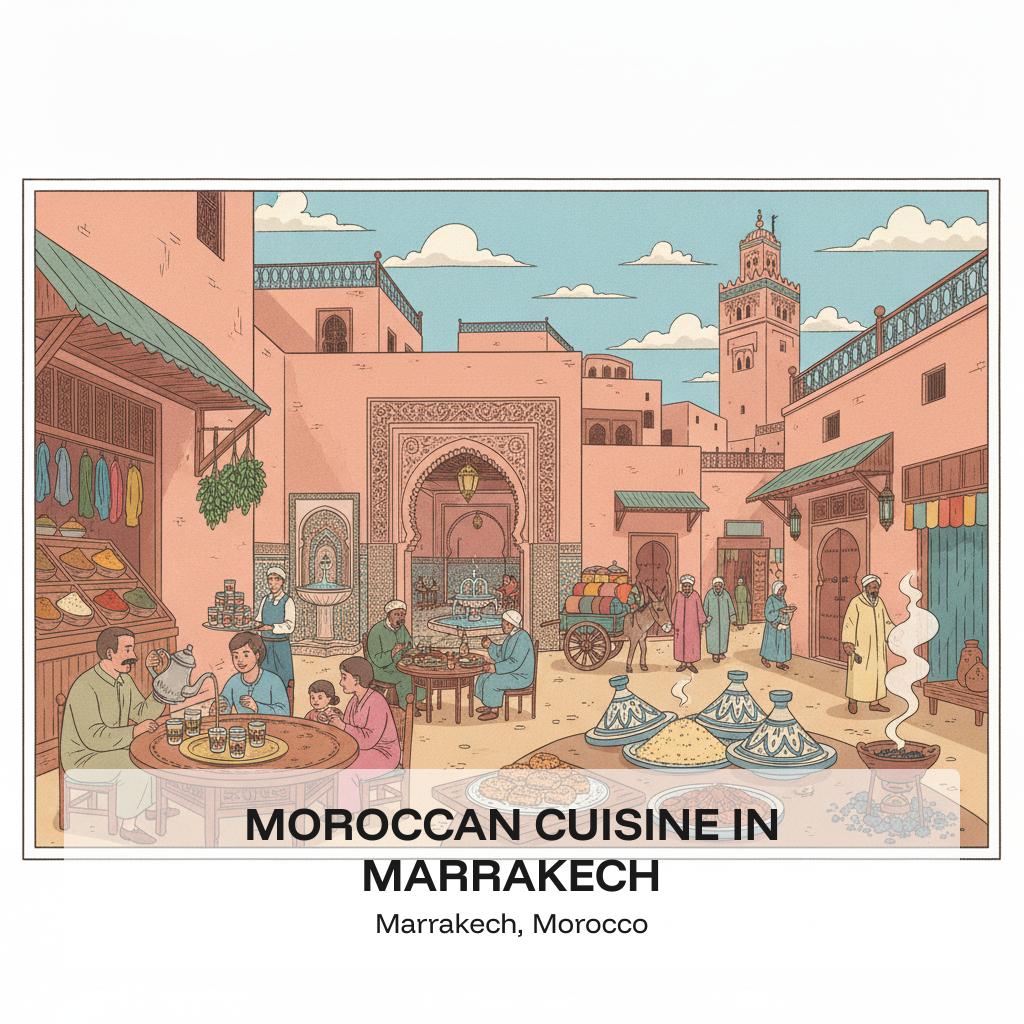
Moroccan Cuisine in Marrakech — Tagine, Couscous & Mint Tea
Moroccan cuisine (the most internationally celebrated cuisine of the African continent and one of the great cuisines of the world, combining Mediterranean, Saharan, and sub-Saharan African ingredients and techniques with the spice traditions of Arab and Andalusian cooking): the essential Moroccan dishes are: the tagine (the slow-cooked stew in the characteristic conical earthenware pot (the tagine vessel) — the most versatile Moroccan dish, with the lamb and prune (mrouzia) tagine, chicken and preserved lemon (djaj m'chermel) tagine, and the fish tagine as the classic variations), couscous (the steamed semolina grain, the traditional Friday dish of Morocco, served with a vegetable stew and meat), pastilla (the sweet-savoury pie of pigeon meat (or chicken) in filo pastry dusted with cinnamon and powdered sugar — the most complex and celebratory Moroccan dish), harira, and the mint tea ceremony (atay bil nana — the ritual preparation and service of highly sweetened mint tea poured from height into small decorated glasses — the primary social ritual of Moroccan hospitality, served with chebakia (honey pastry), msemen (square flatbread), and dates to all arriving guests).
Walk this route with audio
Stories play automatically as you reach each stop — no tapping needed.
More in marrakech
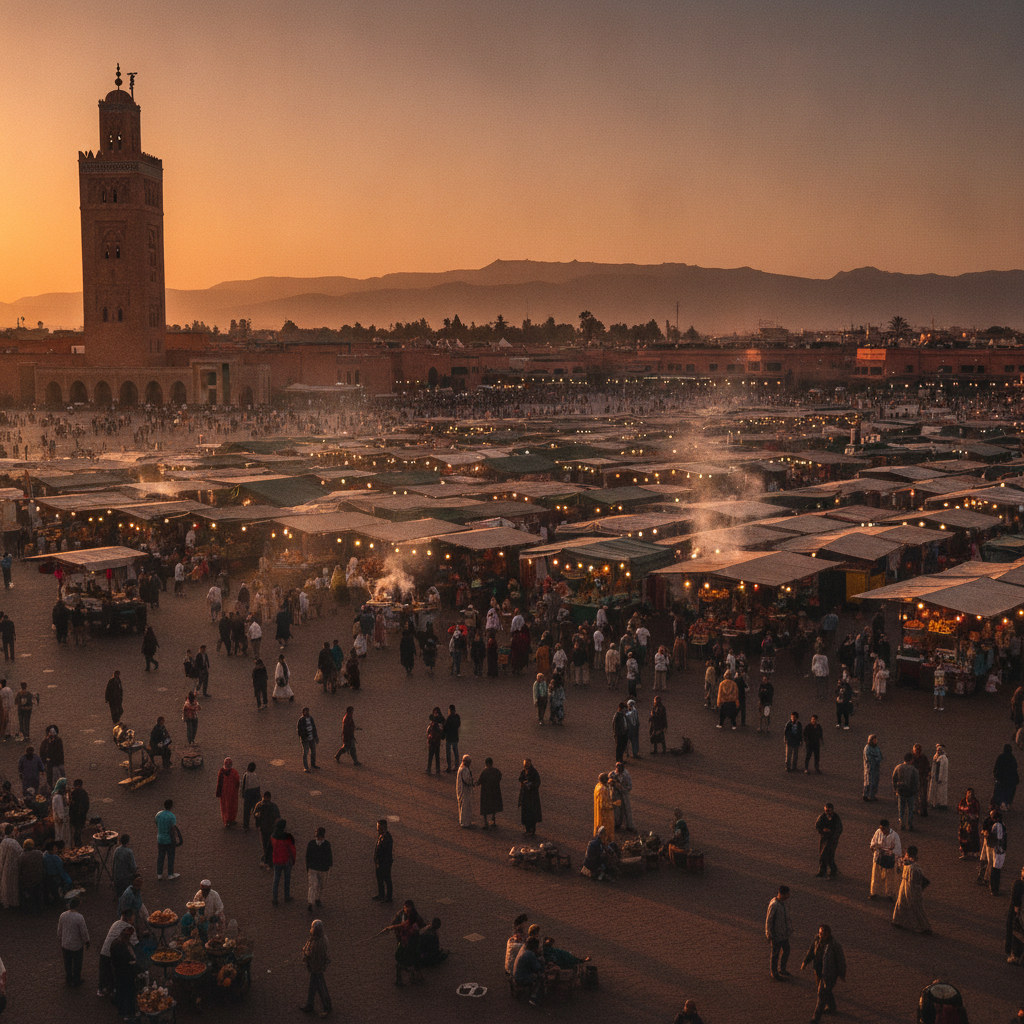
Djemaa el-Fna, the Medina & the Souks — Marrakech's Living UNESCO Heritage
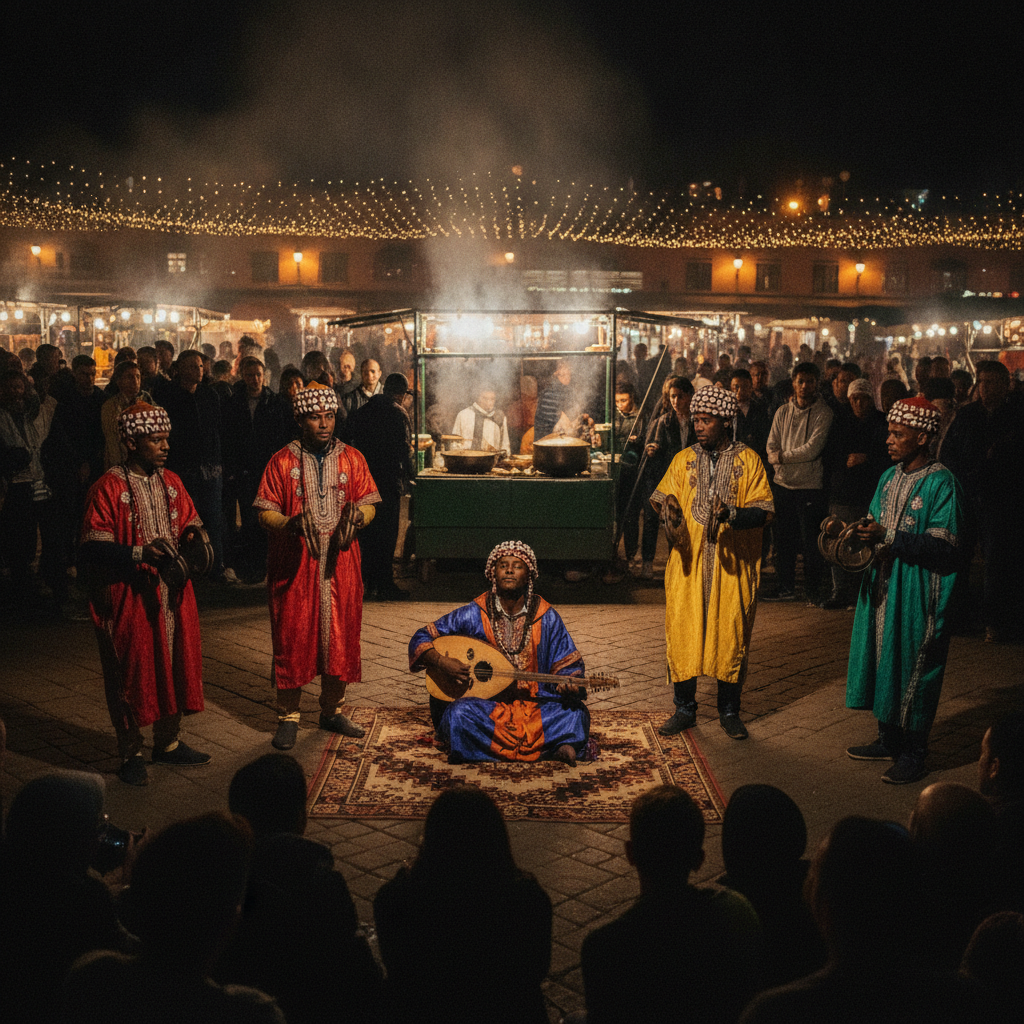
Gnawa Music, Sufi Culture & the Spiritual Heart of Marrakech
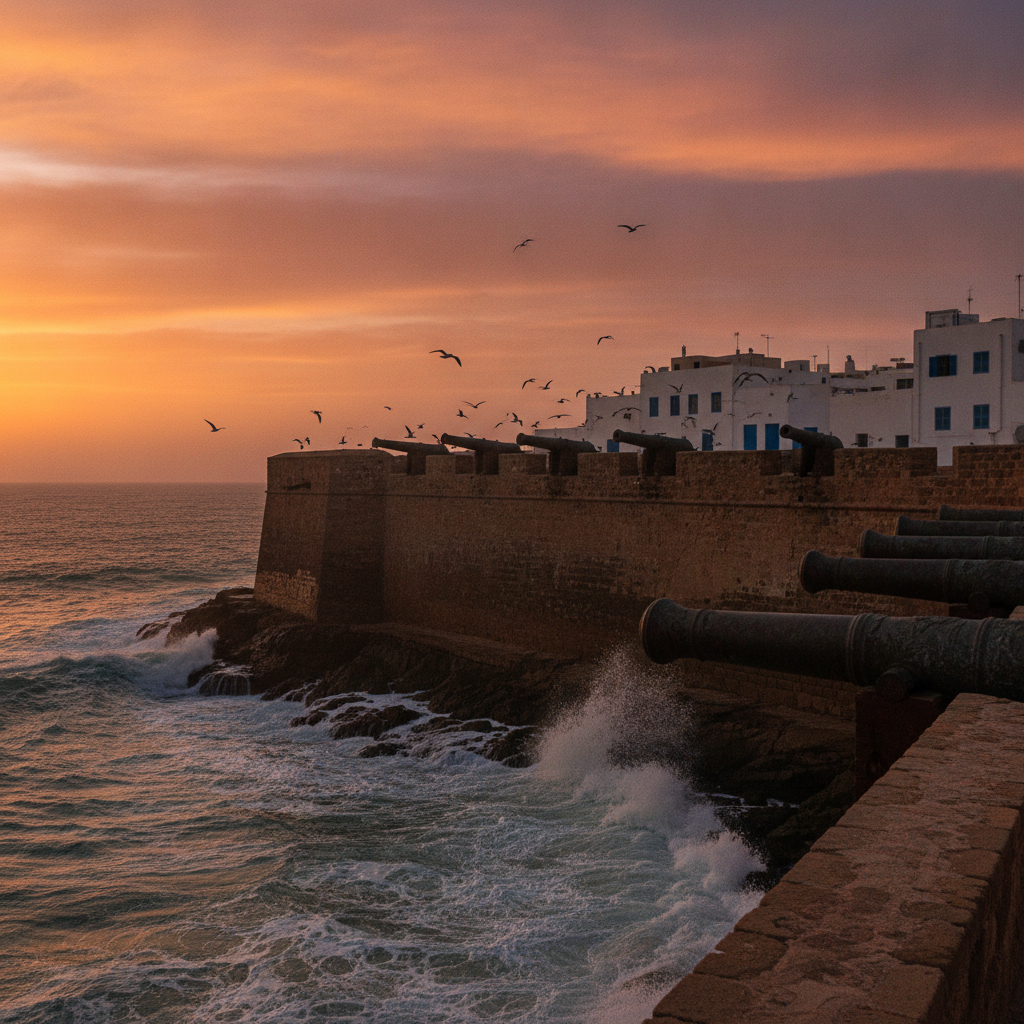
Essaouira — Marrakech's Atlantic Escape
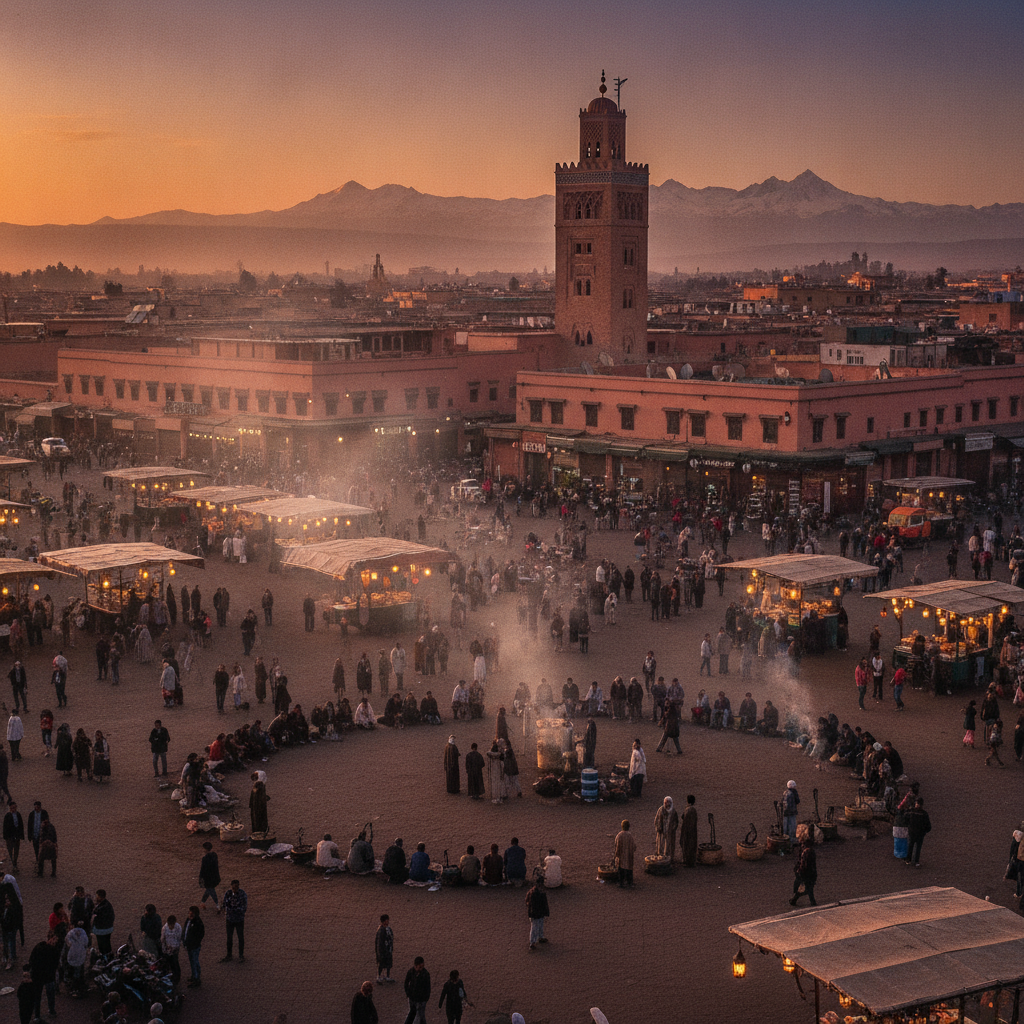
Marrakech Essential: Djemaa el-Fna the Living Square, the Medina Souks, the Koutoubia Mosque, the Bahia Palace, the Saadian Tombs, and the Pink City Character
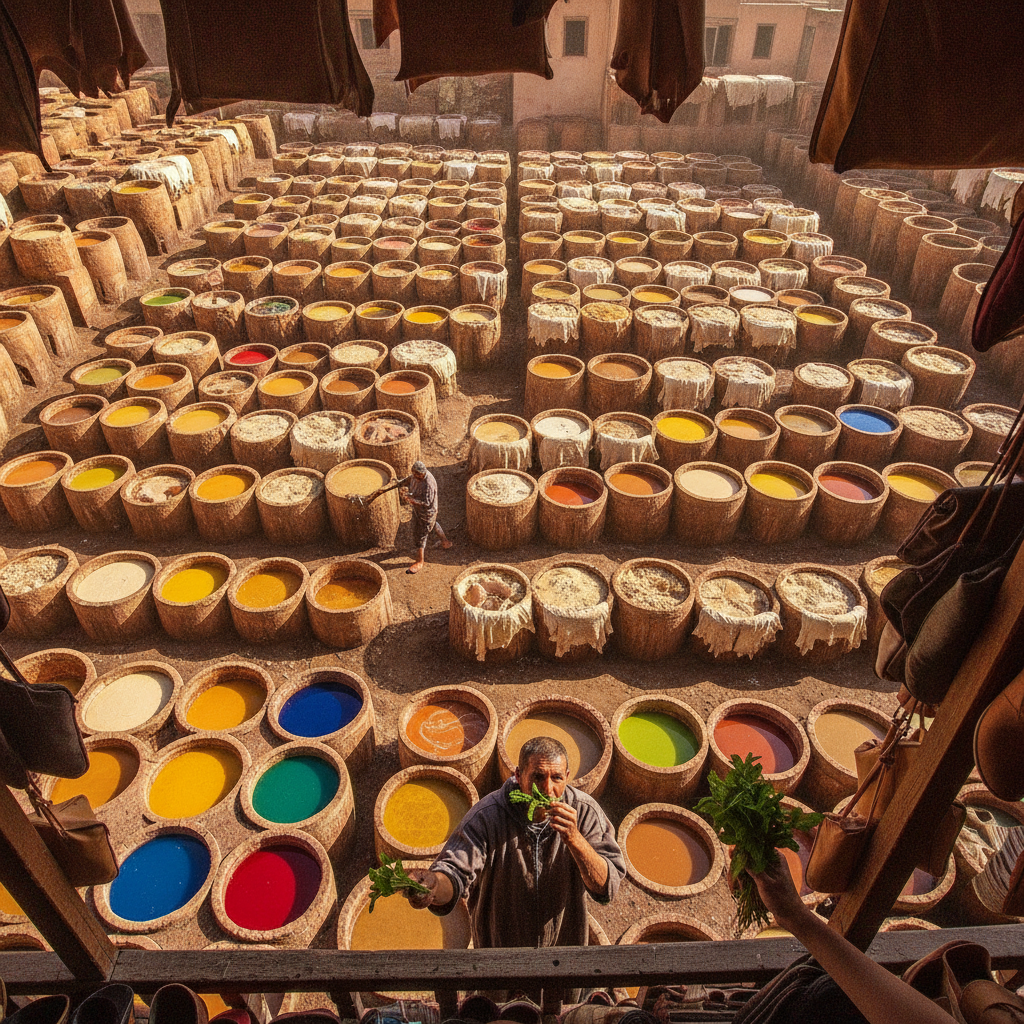
Moroccan Crafts — Leather Tanneries, Pottery & Artisans
