Manuel Antonio Food, Nightlife, and the Hillside Hotel Scene
The hillside above Manuel Antonio has become one of the most dramatic hotel corridors in Costa Rica, with boutique properties perched on the forested slope offering Pacific views from infinity pools. The food and nightlife scene in Quepos and the hotel zone serves a sophisticated international tourist market. This route covers the dining landscape from Quepos market sodas to hilltop restaurants, the bar scene centered on Quepos waterfront, and the economics of the luxury boutique hotel model that defines the upper end of the Manuel Antonio experience.
- 1
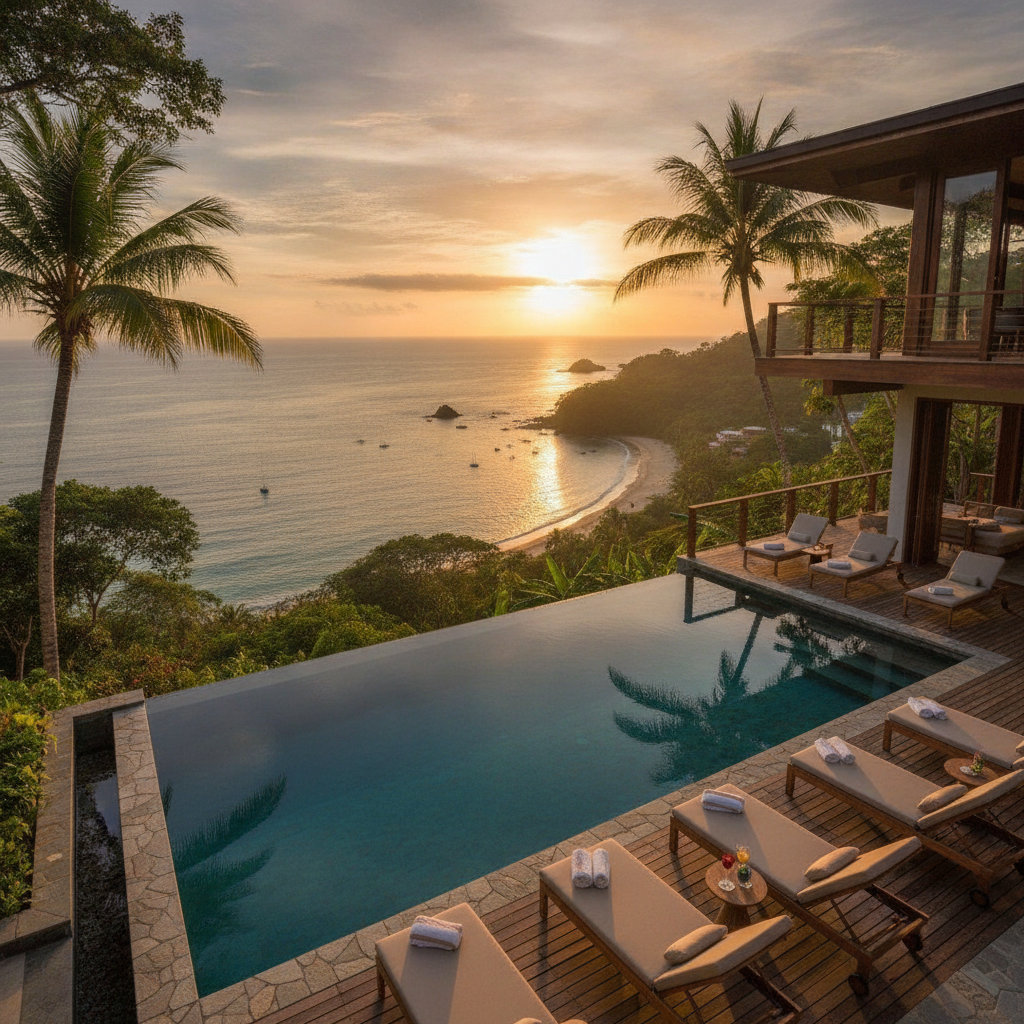
Hillside Boutique Hotels: Infinity Pools and Pacific Views
The hillside road between Quepos and the park entrance is lined with boutique hotels occupying former agricultural land on the steep forested slope. The defining feature is the infinity pool oriented to capture the Pacific panorama, with the Manuel Antonio peninsula and the open ocean visible below. Properties like Si Como No Resort established the model in the 1990s, combining sustainable design principles with luxury amenities at a price point that attracted the eco-luxury traveler before the category had a name. The hillside hotel density has increased substantially since, and the road is now a nearly continuous development of pools, restaurants, and viewing platforms suspended above the forest canopy.
- 2
Restaurant Scene: Hillside Fine Dining and Quepos Waterfront
The restaurant landscape splits between the hillside hotel restaurants, several of which are open to non-guests and serve contemporary Costa Rican cuisine with Pacific views, and the waterfront restaurants and bars of Quepos centered on the main drag near the bus terminal and market. The hillside options are more expensive and design-forward; the Quepos waterfront is louder, cheaper, and more local in character. The fish served throughout reflects the day-boat catch from the Quepos fleet: fresh mahi-mahi, yellowfin tuna, and red snapper prepared both in traditional preparations and in the fusion styles that appeal to the North American tourist market.
- 3
Quepos Nightlife: Waterfront Bars and the Fishing Village Energy
Quepos has a nightlife scene anchored by the waterfront bars and the strip near the central park that serves the local population, fishing crews, and the backpacker segment of the tourist market alongside more budget-conscious travelers. The contrast with the hillside hotel bars is complete: Quepos after dark is loud, cheap, and oriented around karaoke, sports television, and the social life of a working port town. The Iguana Tours complex near the waterfront has historically been a gathering point for travelers. The LGBTQ+ community has developed a visible presence in Manuel Antonio, and several venues cater specifically to this demographic.
- 4
Beaches Outside the Park: Playa Espadilla Norte and Boca Vieja
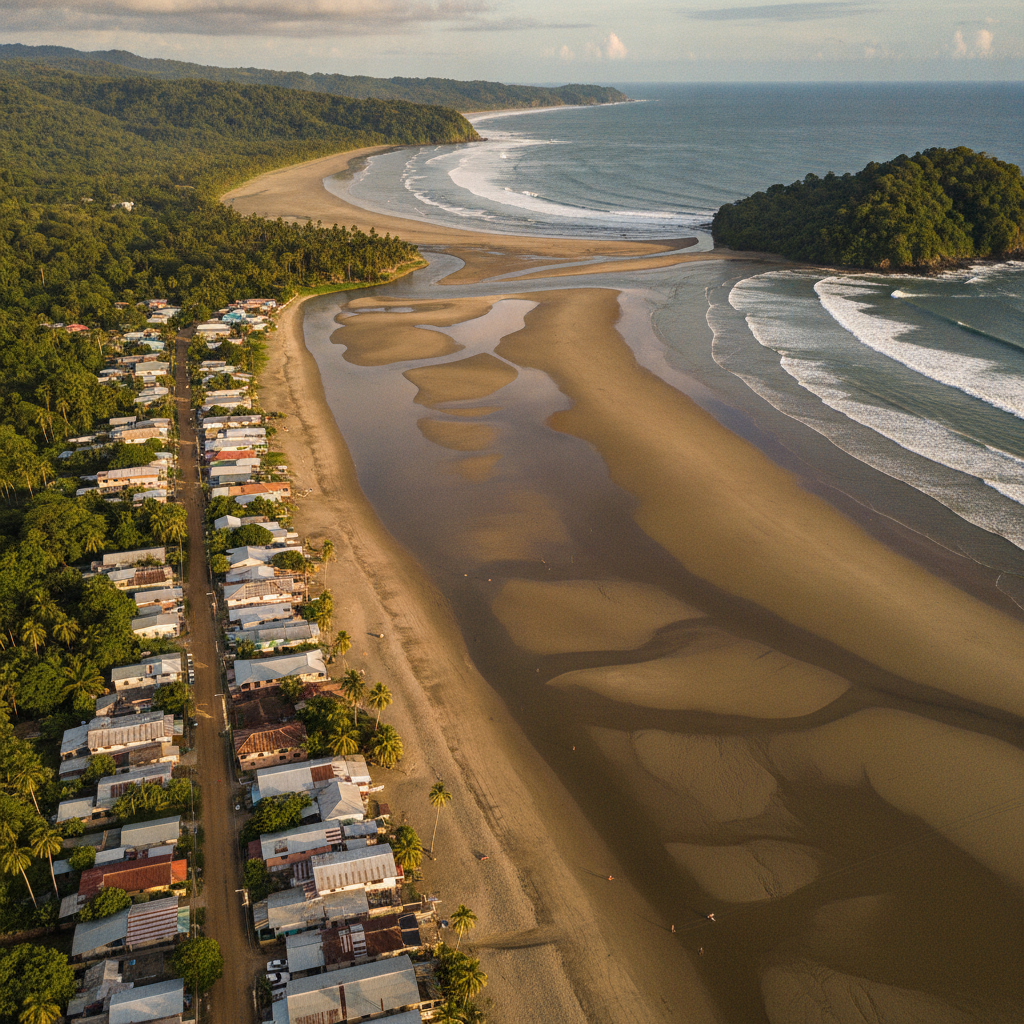
The main public beach, Playa Espadilla Norte, runs for two kilometers north of the park entrance and is accessible without paying park admission. The beach has strong surf and a dangerous rip current that claims several lives annually; the red flags and no-swimming warnings should be taken seriously. Beach vendors, surf rental shops, and a small selection of beachfront sodas line the road behind the sand. Further north, Boca Vieja near the Quepos estuary is a quieter beach used primarily by local families and fishermen. The contrast between the park beaches, calm and protected behind the headland, and the exposed Espadilla surf beach is the key physical geography of the Manuel Antonio experience.
- 5
Sustainable Tourism Claims and the Reality of Development Pressure
Manuel Antonio is one of the most densely developed beach areas in Costa Rica relative to its natural resource base. The hillside development has required removal of forest cover, generated significant plastic and food waste volumes that the local municipality has struggled to manage, and increased pressure on the park through visitor concentration at the single entrance point. The Certificate for Sustainable Tourism program applies to individual businesses, not to the destination as a system. Several researchers have noted that the clustering of development immediately adjacent to the national park boundary creates edge effects that degrade habitat quality in the outer park zones. The tension between the sustainability marketing and the ground-level development reality is particularly acute here.
- 6
Getting There, Around, and Practical Logistics
Quepos and Manuel Antonio are three hours from San Jose by direct bus on the Transporte Morales service, departing multiple times daily from the Coca-Cola terminal. Shared shuttle services from San Jose and from other destinations like Jaco and Monteverde take similar time at higher cost. A small airport in Quepos receives domestic flights from San Jose (Sansa Airlines) and from Liberia in the north, with flight times of thirty to forty minutes. Within the area, local buses run continuously along the hillside road between Quepos and the park entrance; taxis are abundant. Park tickets must be reserved online at least 24 hours in advance and frequently sell out days ahead during the December through April high season.
Walk this route with audio
Stories play automatically as you reach each stop — no tapping needed.
More in Manuel Antonio
LGBTQ+ Travel in Manuel Antonio and the Costa Rica Context

Osa Peninsula and Corcovado: The Most Biodiverse Place on Earth
Manuel Antonio Practical Guide: Park Access, Accommodation Budget, and Seasonal Planning
Manuel Antonio: National Park, Wildlife, and the Pacific Coast Beach Experience
Jaco Beach, Dominical, and the Central Pacific Coast Circuit
