Manila's Hidden Layers: Poblacion's Craft Cocktail Scene, Pasig River's Biological Death & Revival & the Jollibee Sweet Spaghetti That Conquered the Filipino Diaspora
Poblacion's 2014 craft cocktail transformation of pre-war Makati shophouses into a 12-block bar district that the travel press discovered and the Malate KTV scene didn't; the Pasig River's biological death in the 1990s (zero dissolved oxygen) and the 2022 ferry service running on a river that now technically has fish but is still unsafe for swimming; Tsinoy community controlling an estimated 60–70% of large Philippine private sector despite 1.3% ethnic share—from the 1603 Binondo massacre rebuilding to SM Malls' Henry Sy; the 'Jolly Spaghetti' with hotdog slices that Filipino-Americans line up for when they come home; Typhoon Ondoy's 444mm in 6 hours flooding Marikina to 3-metre depth in 2009; and the BGC outdoor mural programme as institutional outdoor art compared to the Paco Park cemetery-walls-turned-community-art-project.
- 1
Poblacion & the Manila Nightlife Geography
Poblacion (the barangay of Makati most associated with Manila's 'hipster' bar scene—a 12-block area in the older Makati district, south of the Ayala commercial centre and north of Forbes Park)—has been Manila's most internationally written-about nightlife district since approximately 2015: a concentration of independent bars, cocktail-forward establishments, and live music venues in the renovated ground floors of pre-war commercial buildings. The Poblacion character: less polished than BGC's nightlife (fewer international chains, more independently owned), more intimate than the Malate-Ermita entertainment district (which has declined since its 1990s–2000s heyday), and deliberately positioned against the mall-entertainment-complex model that dominates Philippine commercial culture. The key establishments: Curtsies and Hand Grenades (craft cocktail bar that helped define the Poblacion aesthetic in 2014), Niner Ichi Nana (a 3-storey building repurposed from a former residence, with different bar concepts on each floor), the Abrasa Social Club, and the Filipino tapas bar scene (small plates of Filipino bar snacks—tokwa't baboy, sisig, crispy pata—served in a craft beer and natural wine context). The Malate-Ermita contrast: the traditional Manila 'entertainment district' (Malate, south of Rizal Park) retains a legacy of karaoke bars, KTV (private room karaoke), and the nightclub culture that defined Manila's nightlife in the 1990s—a different, older, and declining scene.
- 2
The Wetlands & Pasig River Revival
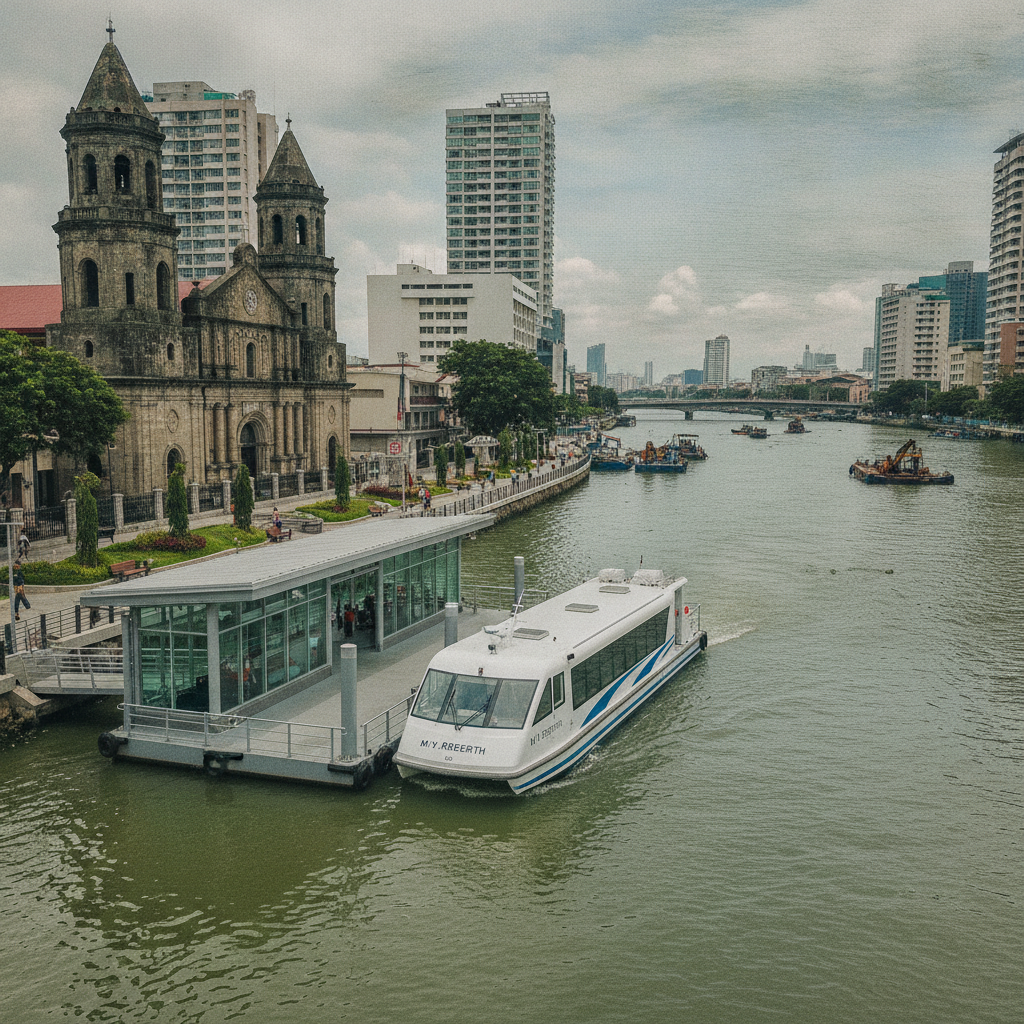
The Pasig River—the 25-km river connecting Laguna de Bay to Manila Bay, flowing through the heart of Metro Manila and dividing the north (Manila, Caloocan, Quezon City) from the south (Makati, Mandaluyong, Taguig)—was declared biologically dead in the 1990s (zero dissolved oxygen, extreme coliform contamination, used as an open sewer by the 3 million people living in informal settlements along its banks). The revival: the Pasig River Rehabilitation Commission (PRRC—established 1999 under the Estrada administration) has been conducting the longest continuous urban river rehabilitation effort in Southeast Asia; the most visible achievement is the Pasig River Ferry Service (launched 2007, expanded 2022—air-conditioned vessels connecting 14 stations from Pinagbuhatan in Pasig to Plaza Mexico in Intramuros, with a bike-friendly design that has attracted cycling commuters). The water quality: the river has improved from the biological death classification to a measurable oxygen level supporting some fish species, but remains severely polluted and unsafe for swimming or direct contact. The Las Casas Filipinas de Acuzar (Bagac, Bataan—2 hours from Manila): a heritage resort that has physically relocated 25 original colonial-era structures from across the Philippines (18th–19th century bahay na bato—stone-and-wood houses, Spanish convento buildings, and merchant houses) to a riverside complex—the most unusual heritage conservation project in the Philippines.
- 3
Manila's Chinese-Filipino (Tsinoy) Culture
The Chinese-Filipino community (Tsinoy—from 'Tsinoy'—'Chinese Filipino')—estimated at 1.35 million ethnic Chinese (about 1.3% of the population) but with much larger partial-Chinese ancestry numbers (some estimates suggest 20–30% of Filipinos have some Chinese ancestry from the centuries of Sino-Filipino intermarriage)—is the most economically influential minority community in the Philippines, controlling an estimated 60–70% of the Philippine economy's large private sector despite the small ethnic percentage. The historical foundation: the sangley Chinese community in Binondo (from 1594) formed the commercial base of the Spanish colonial economy; despite periodic massacres by the Spanish colonial government (the most lethal being the 1603 Binondo massacre and the 1639 Calamba massacre, each killing approximately 20,000 Chinese), the community rebuilt repeatedly because of its indispensability. The Tsinoy businesses: the SM Group (Henry Sy—the founder of SM Malls, once the richest man in the Philippines), the Jollibee Foods Corporation (Tony Tan Caktiong—founder of the Philippines' most successful fast food chain, which now has more outlets internationally than KFC in Southeast Asia), and the Lucio Tan Group (Lucio Tan—a tobacco and aviation conglomerate)—all founded by first- or second-generation Chinese Filipinos. The Jollibee phenomenon: Jollibee (the Filipino fast food chain, distinguished by its fried chicken, 'Jolly Spaghetti'—a sweet Filipino-style spaghetti with hotdog slices—and the Chickenjoy fried chicken that has cult status in Filipino diaspora communities) has become a more specific Manila pilgrimage for Filipino-Americans than any heritage site.
- 4
Typhoon Season & Manila's Climate Resilience
Manila sits in the Pacific typhoon belt—the most typhoon-active maritime region on Earth—and the Philippines experiences more typhoons annually (an average of 20 tropical cyclones, of which 8–9 make landfall) than any other country. The Metro Manila typhoon impact: while Manila is in the western Luzon coast area that receives typhoons differently from the typhoon-exposed east coast provinces (Typhoon Haiyan/Yolanda in 2013—the strongest tropical cyclone to make landfall in recorded history, with 315 km/h gusts, hit the Visayas 600 km south of Manila), the metro area is regularly affected by severe flooding (especially in areas built on former wetlands, including large sections of Marikina, Malabon, and the low-lying coastal areas). Typhoon Ondoy (2009—the most damaging typhoon in Manila's recent history): the storm's slow movement produced 444mm of rainfall in 6 hours—approximately equal to a month's average rainfall—causing catastrophic flooding across Marikina and Pasig (the communities along the Marikina River) that submerged entire neighbourhoods to 3-metre depth; 464 people died, 240,000 homes were flooded. The resilience dimension: Manila's experience of repeated typhoon flooding has produced a sophisticated informal disaster response system—barangay (neighbourhood) level early warning networks, volunteer rescue teams using improvised boats (bangka), and the distinctive Filipino 'bayanihan' (community solidarity) culture that mobilises neighbourhood assistance within hours of a disaster.
- 5
Street Art & the Creative Economy of Manila
Manila's street art scene—concentrated in specific districts but found across the entire Metro Manila area—reflects the Philippines' exceptionally high visual creativity (Filipino artists and designers are consistently overrepresented in international design competitions relative to the country's GDP) and the urban environment's hunger for colour in a city where grey concrete is the dominant material. The BGC mural programme: the Bonifacio Global City's systematic outdoor art programme (curated by the BGC Arts Center) has commissioned over 100 large-scale murals on the exterior walls of the district's buildings—the most coherent institutional outdoor art programme in the Philippines, featuring both local artists (Abi Goy, Buen Abrigo) and international muralists. The Paco Park area: the Paco district (south of Intramuros), with its 19th-century circular park (the original Spanish colonial cemetery, now a public park inside the stone cemetery walls—a unique urban space), is the locus of several community-led mural projects. The UP Diliman campus: the Oblation sculpture, the murals of the College of Fine Arts, and the works commissioned for the university's public spaces constitute the most significant collection of publicly accessible contemporary Philippine art. The Cartwheel Foundation and the CANVAS (Center for Art, New Ventures, and Sustainable Development): the two most active arts development organisations connecting Manila's visual arts scene with communities outside the city.
- 6
Leaving Manila – Philippines Island-Hopping Beyond the Capital
Manila's position as the central hub of the Philippine archipelago makes it the departure point for one of the world's most extraordinary island-hopping destinations—7,641 islands spread across 1,850 km from north to south. The Palawan circuit (2 hours by air from Manila): Puerto Princesa (the provincial capital—base for the Puerto Princesa Subterranean River, a UNESCO World Heritage Site; the world's longest navigable underground river at 8.2 km, flowing through a cathedral-like cave system with a 24-metre-high chamber before emerging into the sea); El Nido (the island of Bacuit Bay—limestone karst towers rising from turquoise lagoons, the most photogenic island landscape in Southeast Asia); Coron (an island in northern Palawan with the world's most diverse WWII wreck diving—12+ Japanese ships sunk in a single 1944 US air raid, now colonised by coral and marine life). The Visayas (1.5–2 hours by air from Manila): Cebu (the oldest city in the Philippines—Magellan's Cross, the Basilica del Santo Niño, and the most vibrant urban scene outside Manila); Bohol (Chocolate Hills—the distinctive geological formation of 1,776 conical limestone hills, the Philippine tarsier, and Panglao Island diving); Siargao (the surf destination—Cloud 9, the most internationally known surf break in the Philippines). The Batanes Islands (2 hours by air from Manila to Basco): the northernmost province of the Philippines, closest island group to Taiwan—a wind-swept volcanic landscape of Ivatan stone houses built to withstand typhoons, the most dramatic and culturally distinct islands in the Philippines.
Walk this route with audio
Stories play automatically as you reach each stop — no tapping needed.
More in Manila
Manila's Modern Layers: The 'Thrilla in Manila' Coliseum, Eraserheads' 1993 Debut Album & the 1986 People Power 2-Million-Person EDSA Standoff
Manila's Philippines: Ifugao's 2,000-Year Terrace Gravity Irrigation, Vigan's 600m Cobblestone Street & Toyo Eatery's Filipino-Ingredients-Only Tasting Menu
Manila: Intramuros' 1571 Spanish Walls, Binondo's 400-Year-Old Chinatown & the Spoliarium's Gold Medal in Madrid
Manila's Spanish Palimpsest: The 1607 Trompe-l'Oeil Church Ceiling That Survived 1945, Lapu-Lapu Killing Magellan & 8 Million People Carrying the Black Nazarene