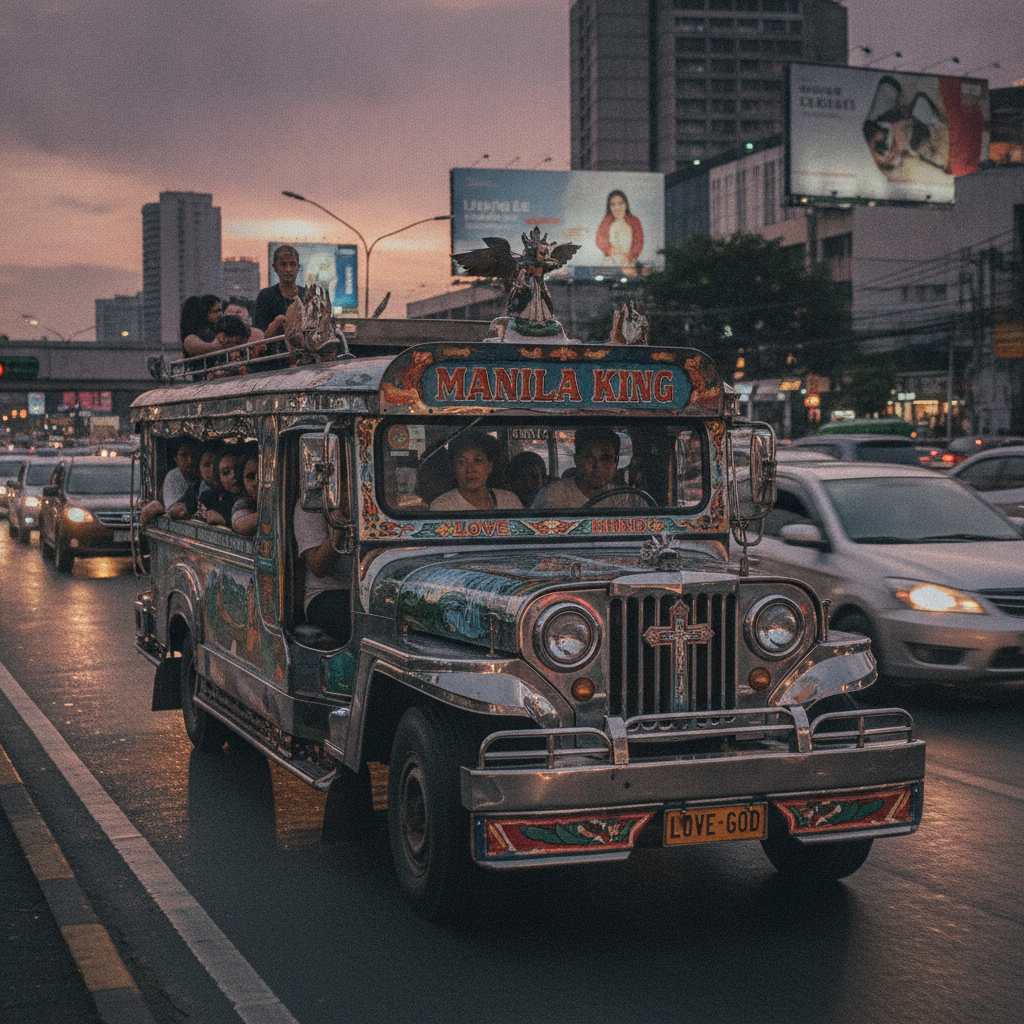
Manila's Philippines: Ifugao's 2,000-Year Terrace Gravity Irrigation, Vigan's 600m Cobblestone Street & Toyo Eatery's Filipino-Ingredients-Only Tasting Menu
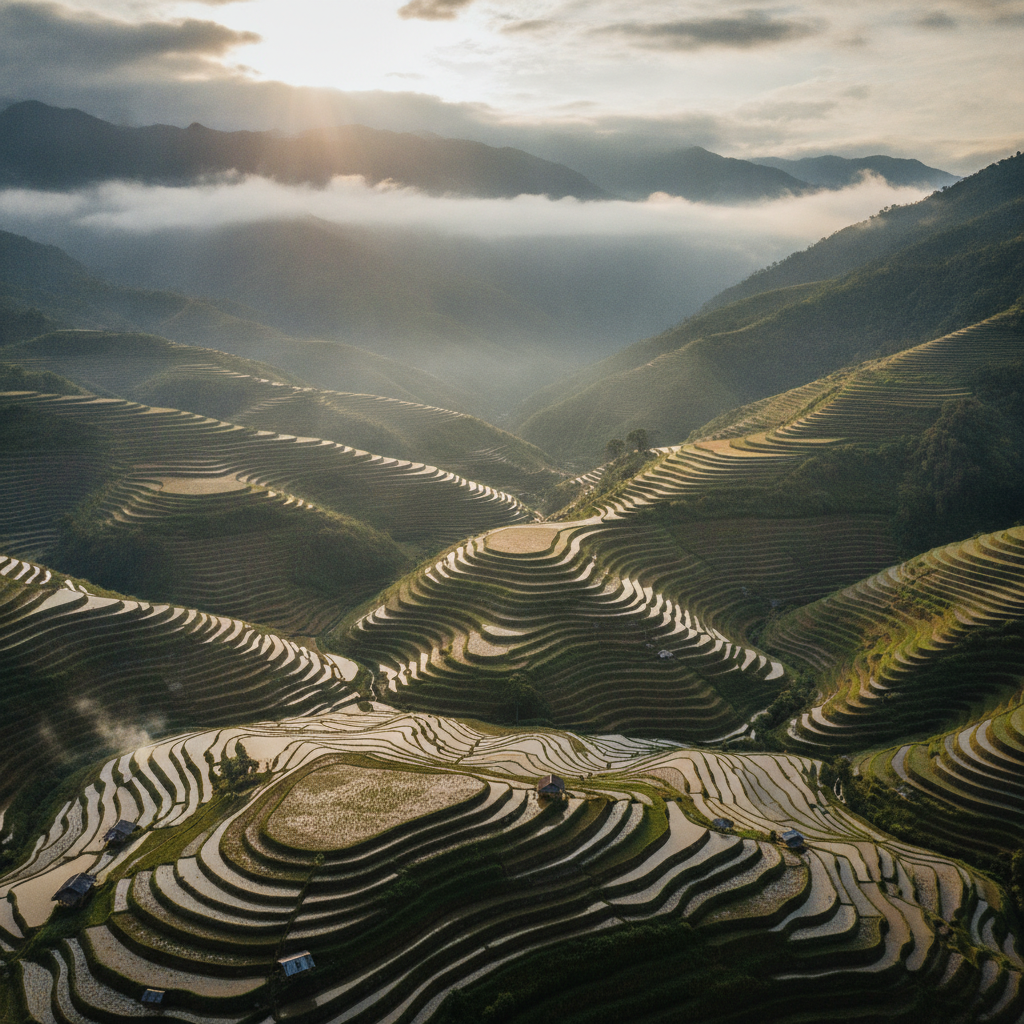
The Batad terraces' amphitheatre bowl with no road access reachable by 40-minute trek—the payeo mud walls maintained for 2,000 years by Ifugao gravity-fed channels from forest to lowest paddy; Vigan's Calle Crisologo cobblestones and kalesa horse carriages where strict heritage codes preserved 200 structures that Manila demolished; BenCab in Baguio and Ronald Ventura's $715,000 Sotheby's HK auction record defining the contemporary Philippine art market; the Binondo Chinese New Year tikoy distribution at San Lorenzo Ruiz Basilica where the patron saint of the Philippines was himself a Chinese-Filipino mestizo; ube purple yam on Brooklyn café menus; and Metro Manila sinking 10 cm per year from aquifer extraction as the 1,900-hectare Manila Bay reclamation proceeds above water.
- 1
The Cordillera Rice Terraces – Ifugao's UNESCO Mountain Agriculture
The Cordillera rice terraces of the Philippine highlands—the Ifugao, Kalinga, and Bontoc peoples' mountain rice agriculture system, carved into the Cordillera Central mountain range of northern Luzon—are the most extraordinary landscape of human agricultural engineering in Southeast Asia. The Banaue Rice Terraces (in Ifugao province, 350 km north of Manila—8–10 hours by overnight bus from the Cubao terminal): a system of irrigated rice terraces carved into the mountainsides over an estimated 2,000 years, rising from 700 to 1,500 metres altitude, covering approximately 20,000 km² of terraced landscape—often described as the 'Eighth Wonder of the World' (the phrase was coined by an early 20th-century American colonial administrator). The UNESCO inscription: the Ifugao Rice Terraces were inscribed by UNESCO in 1995 as the first Philippine cultural landscape on the World Heritage List; the inscription covers five clusters including the Batad and Bangaan terraces (the most photographed—an amphitheatre-like bowl of terraces surrounding a village with no road access, reached by a 40-minute trek from the nearest road). The living culture: the Ifugao people's maintenance of the terrace system—repairing the mud walls (payeo), managing the water distribution system (from the forest at the top of the terrace system to the lowest paddy through a gravity-fed channel network), and conducting the ceremonies that integrate rice cultivation with Ifugao spiritual practice—is the basis of the UNESCO inscription's significance.
- 2
Vigan – The Best-Preserved Spanish Colonial Town in Asia
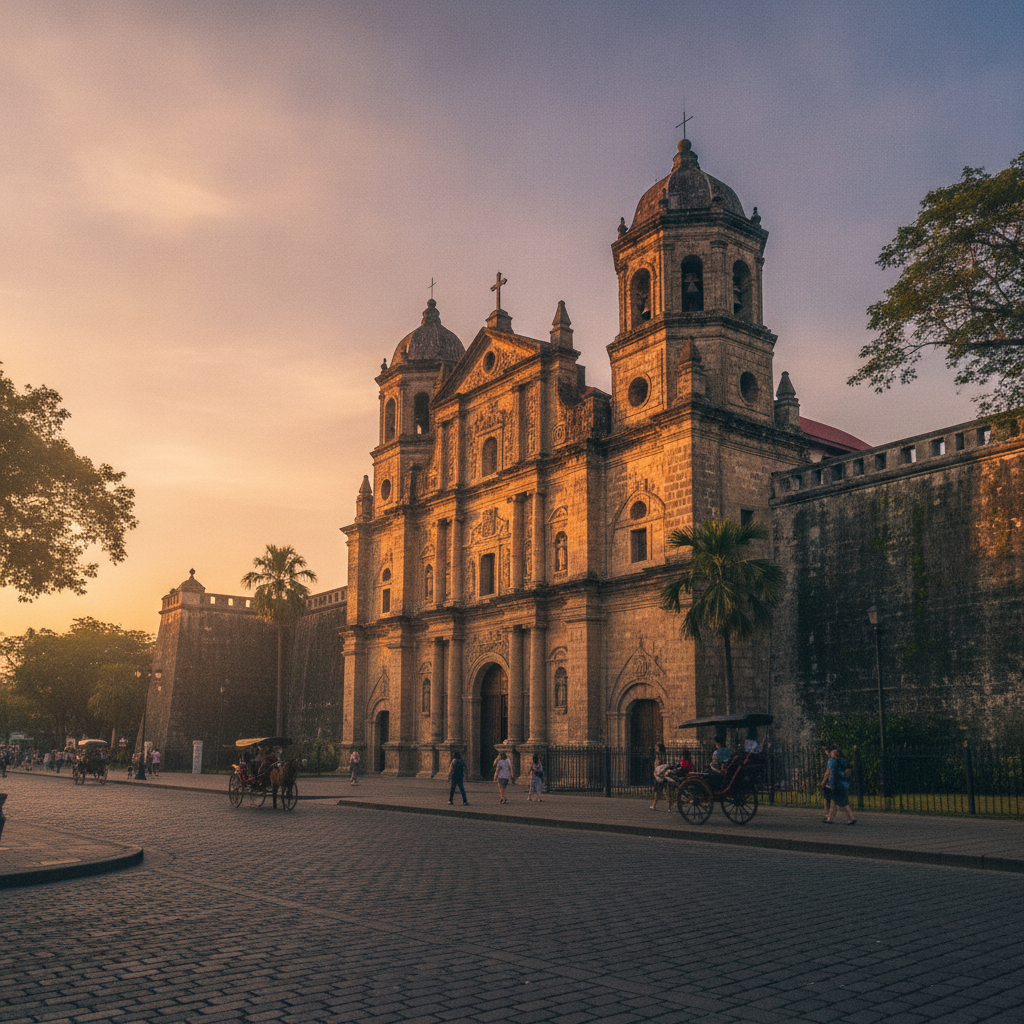
Vigan (the capital of Ilocos Sur province, on the northwestern Luzon coast, 400 km north of Manila—8 hours by bus or 1 hour by air)—is the best-preserved example of a planned Spanish colonial town in Asia, and is described by UNESCO (World Heritage Site 1999) as 'an outstanding example of the fusion of Asian building design and construction, with European colonial architecture.' The Calle Crisologo: the most photographed street in the Philippines—a 600-metre cobblestone street flanked by preserved 18th–19th century Filipino-Spanish vernacular houses (bahay na bato—'stone house'—the characteristic colonial type, with a ground floor of stone and brick and an upper floor of hardwood and capiz shell windows), with horse-drawn carriages (kalesa) still operating as the primary tourist transport. The Vigan character: unlike other Philippines historic towns (where heritage structures have been demolished or compromised by development), Vigan's local government has maintained strict heritage conservation regulations; the entire Vigan City historic district (approximately 200 heritage structures) is preserved. The Vigan longganisa: the Vigan longaniza (a garlic-intense pork sausage specific to Ilocos Sur, dark from garlic oxidation, the most flavourful sausage in the Philippines) and the bagnet (Ilocano deep-fried pork belly, more consistently crackling than Philippine lechón) are the region's culinary calling cards.
- 3
Philippine Contemporary Art & the Manila Art Scene
The Manila contemporary art scene—the most commercially active in Southeast Asia after Singapore, and arguably the most creatively dynamic—operates through a network of commercial galleries (Silverlens, Arndt Berlin's Artesan Gallery at Manila, Leon Gallery for auction and sales), non-profit spaces (Ateneo Art Gallery—the oldest private gallery in the Philippines, holding the most significant collection of Philippine modernist art; the Yuchengco Museum), and the Art Fair Philippines (held annually in February in BGC—the most attended contemporary art fair in Southeast Asia). The Philippine modernist masters: Fernando Amorsolo (1892–1972—the first National Artist of the Philippines, known for idealised rural Philippine landscapes in Impressionist-influenced technique); Vicente Manansala (1910–1981—the most significant Philippine modernist, combining Cubist vocabulary with Philippine cultural imagery); Arturo Luz (1926–2021—a minimalist and abstractionist who influenced the entire next generation of Philippine abstract painting). The contemporary scene: the BenCab (Benedicto Cabrera—one of the most internationally collected Filipino artists, now based in Baguio, where the BenCab Museum houses the finest single collection of contemporary Philippine art); Ronald Ventura, Leeroy New, and Geraldine Javier represent the international-market-active contemporary generation. The auction record: Ronald Ventura's 'Grayground' (2012) sold for $715,000 at Sotheby's Hong Kong—the highest price achieved by a living Filipino artist.
- 4
Manila's Chinese New Year & Cultural Festivals
Binondo's Chinese New Year celebrations—the most elaborate in Southeast Asia outside mainland China—convert the Chinatown district into a 15-day festival environment from the Lunar New Year Eve through the Lantern Festival (Yuanxiao—on the 15th day of the lunar new year month). The scale: the main celebration in Ongpin Street (the primary commercial artery of Binondo, named after Roman Ongpin—a Chinese-Filipino patriot who smuggled gold to Rizal and other ilustrados) fills the street with firecracker smoke and dragon dance performers; the Binondo Church (Minor Basilica of San Lorenzo Ruiz—the patron saint of the Philippines, the first Filipino saint, canonised 1987—himself a Chinese-Filipino mestizo) hosts special masses attended by the entire Binondo community. The food connection: the night markets that emerge around the Binondo Church during Chinese New Year sell the most authentic Chinese New Year foods available in Manila—tikoy (glutinous rice cake—the Chinese nian gao, traditionally given and received as a blessing for the new year), pineapple cakes (in the Hokkien tradition), and the full range of Hokkien-Filipino pastries (hopia, mooncake, etc.). The dragon boat racing: the Manila Dragon Boat Racing Festival (held at the Laguna de Bay shoreline and at Pasig River) is the largest dragon boat race outside China, drawing over 200 teams from across the Philippines and international competitors.
- 5
Manila's Culinary Renaissance – From Balut to Masa
The Philippine culinary renaissance—the most discussed gastronomic movement in contemporary Asian food media, driven by both the international Filipino diaspora (50+ Filipino restaurants opened in New York, Los Angeles, and London between 2015–2023) and by Manila's own restaurant innovation—is recasting Philippine food from an undervalued regional cuisine to a position of international recognition comparable to that of Thai and Vietnamese food 20 years ago. The Manila restaurant landscape: Toyo Eatery (Jordy Navarra—the most internationally profiled young Filipino chef, whose tasting menu uses exclusively Filipino ingredients in a contemporary interpretive framework; repeatedly ranked in Asia's 50 Best Restaurants); Locavore Manila (not the Bali restaurant—a different Manila concept focused on Luzon regional ingredients); Bamba Bistro (Filipino comfort food in a premium format); and the traditional carinderia (a Filipino working-class eatery where tubs of pre-cooked dishes are displayed at a counter—rice sold separately, the cheapest sit-down meal in Manila at Rp 80–150). The dessert tradition: halo-halo (the Filipino dessert—a layered mixture of shaved ice, evaporated milk, sweetened beans (monggo and white kidney beans), coconut strips, plantain, jackfruit, purple yam ice cream, flan, and leche flan—one of the most complex dessert constructions in Asian food culture, reflecting the Filipino aesthetic of layering and abundance); ube (purple yam—the defining Filipino flavour in the international food conversation, found in everything from halo-halo to pandesal to the ube latte at Brooklyn café menus).
- 6
Manila's Future – Metropolitan Challenges & Urban Transformation
Metro Manila—with approximately 14 million people in the city proper and 22–24 million in the broader metropolitan area (the 10th-largest urban agglomeration in the world)—faces a set of structural urban challenges that will determine the character of the Philippine capital through the 21st century. The transport crisis: the MRT-3 (the backbone of Metro Manila's rail transit—a 16.9 km elevated line built in 1999 that is now operating at 20% of designed capacity due to decades of deferred maintenance) is the most acute infrastructure failure in Metro Manila; the ongoing expansion of the LRT and MRT network (Metro Manila Subway—a 36-km underground line under construction, projected for partial opening in 2027) represents the largest public transit investment in Philippine history. The reclamation projects: the Manila Bay reclamation (the plan to create 1,900 hectares of new land in Manila Bay for residential, commercial, and entertainment development—the largest reclamation project in Philippine history) has generated intense environmental controversy (fisherpeople's loss of livelihood, mangrove destruction, disruption of the bay's flood-buffering function). The climate vulnerability: Manila sits on a delta—parts of the city are below sea level, and the aquifer subsidence caused by groundwater extraction is causing the city to sink at approximately 10 cm per year in the most affected areas; combined with sea level rise projections, this creates a mid-century inundation risk for coastal Manila comparable to Jakarta's documented flooding crisis.
Walk this route with audio
Stories play automatically as you reach each stop — no tapping needed.
More in Manila
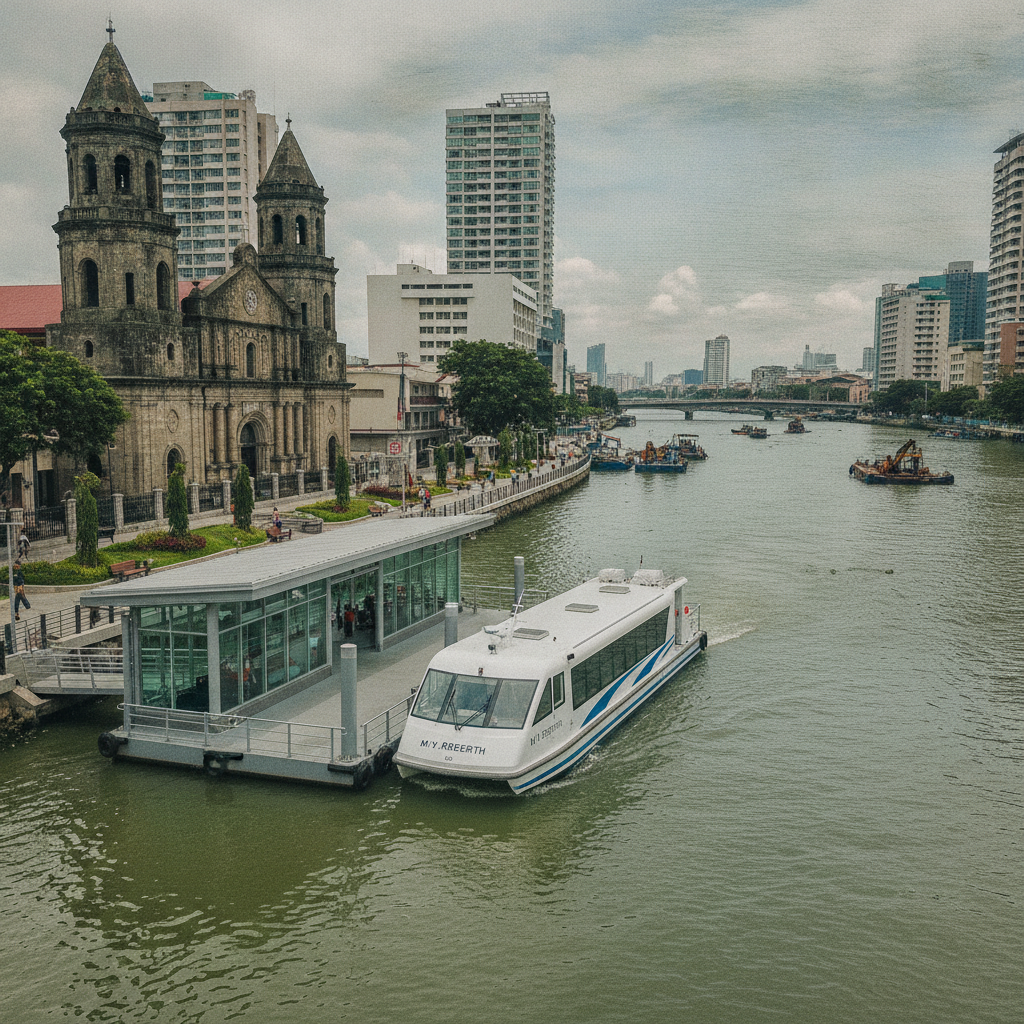
Manila's Hidden Layers: Poblacion's Craft Cocktail Scene, Pasig River's Biological Death & Revival & the Jollibee Sweet Spaghetti That Conquered the Filipino Diaspora
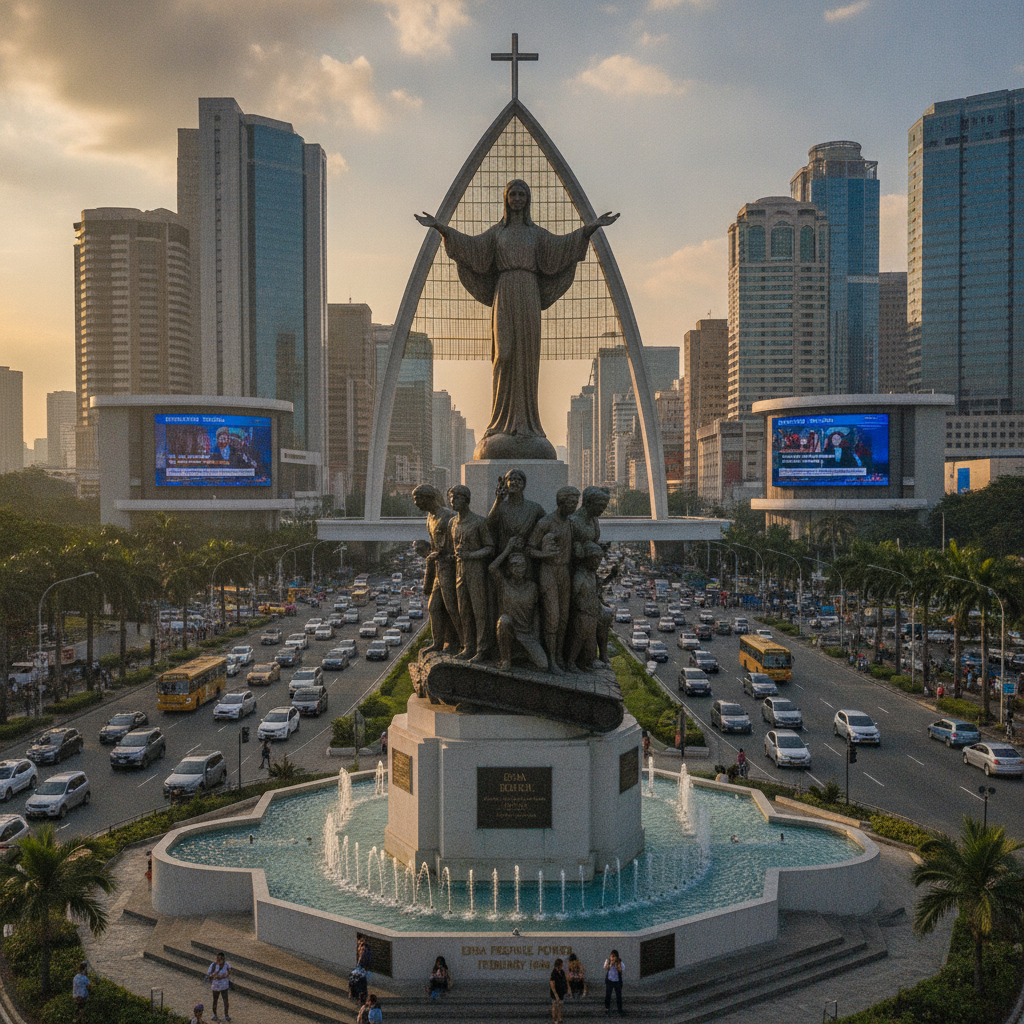
Manila's Modern Layers: The 'Thrilla in Manila' Coliseum, Eraserheads' 1993 Debut Album & the 1986 People Power 2-Million-Person EDSA Standoff
Manila: Intramuros' 1571 Spanish Walls, Binondo's 400-Year-Old Chinatown & the Spoliarium's Gold Medal in Madrid
Manila's Spanish Palimpsest: The 1607 Trompe-l'Oeil Church Ceiling That Survived 1945, Lapu-Lapu Killing Magellan & 8 Million People Carrying the Black Nazarene