Mandalay Endures: U Bein's Teak Silhouette, Thingyan's Water War & a City's Thousand-Year Continuity Under Pressure
Mandalay's permanence—U Bein's 1,086 teak posts (salvaged from Inwa's abandoned capital in 1849, now progressively concrete as the original decays, the tourist boat operators who know exactly where the sun sets at each season), the Burma Road alignment followed by today's China-Myanmar Economic Corridor trucking corridor through Muse, the Newar merchant community's Hindu temple near Zegyo Market from the Kathmandu-Burma trade network, April's Thingyan water festival where Mandalay's 66th Street hoses achieve the kind of social permission that circumspect Burmese society permits only in this one annual window, the 03:00 vegetable market and the jade stone evaluation before dawn, and the gold leaf workshops that have beaten gold onto Buddha images through every political era the city has survived.
- 1
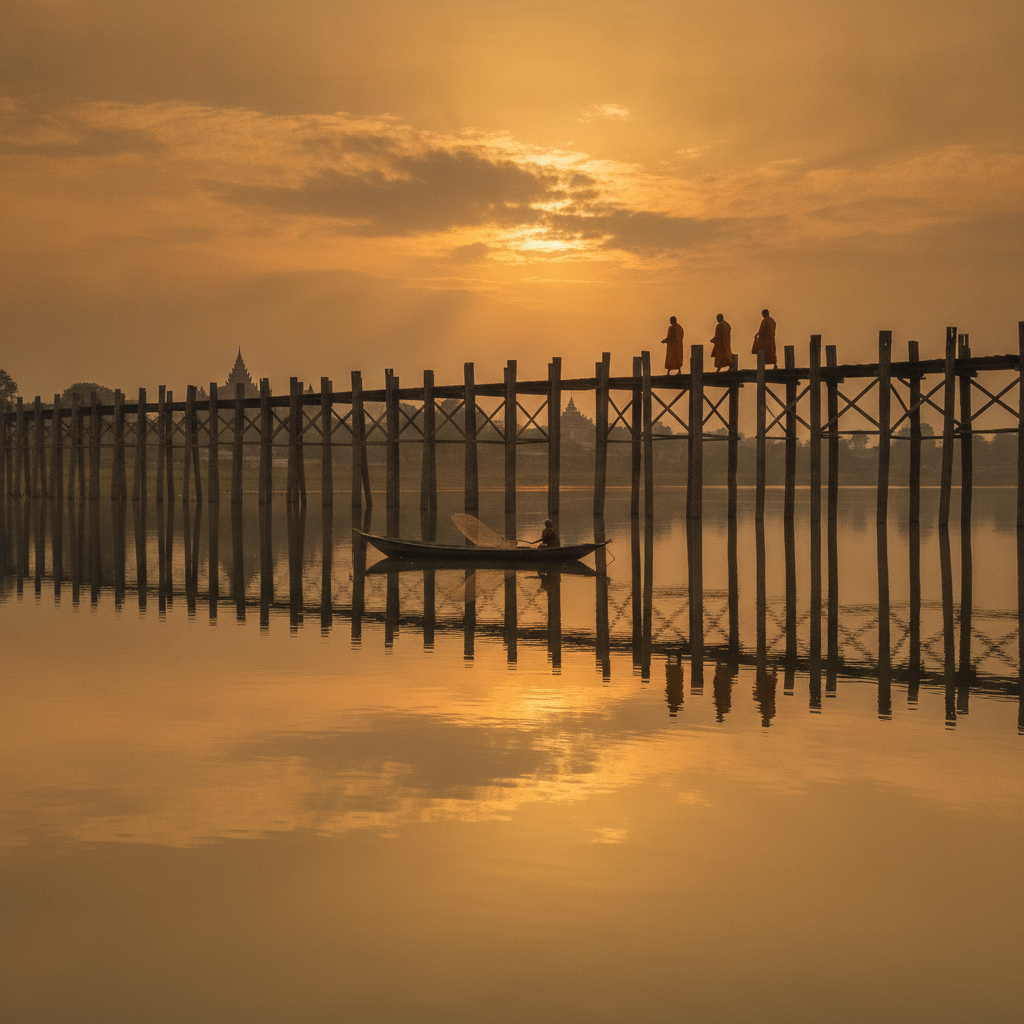
Mandalay's Sunset at U Bein Bridge
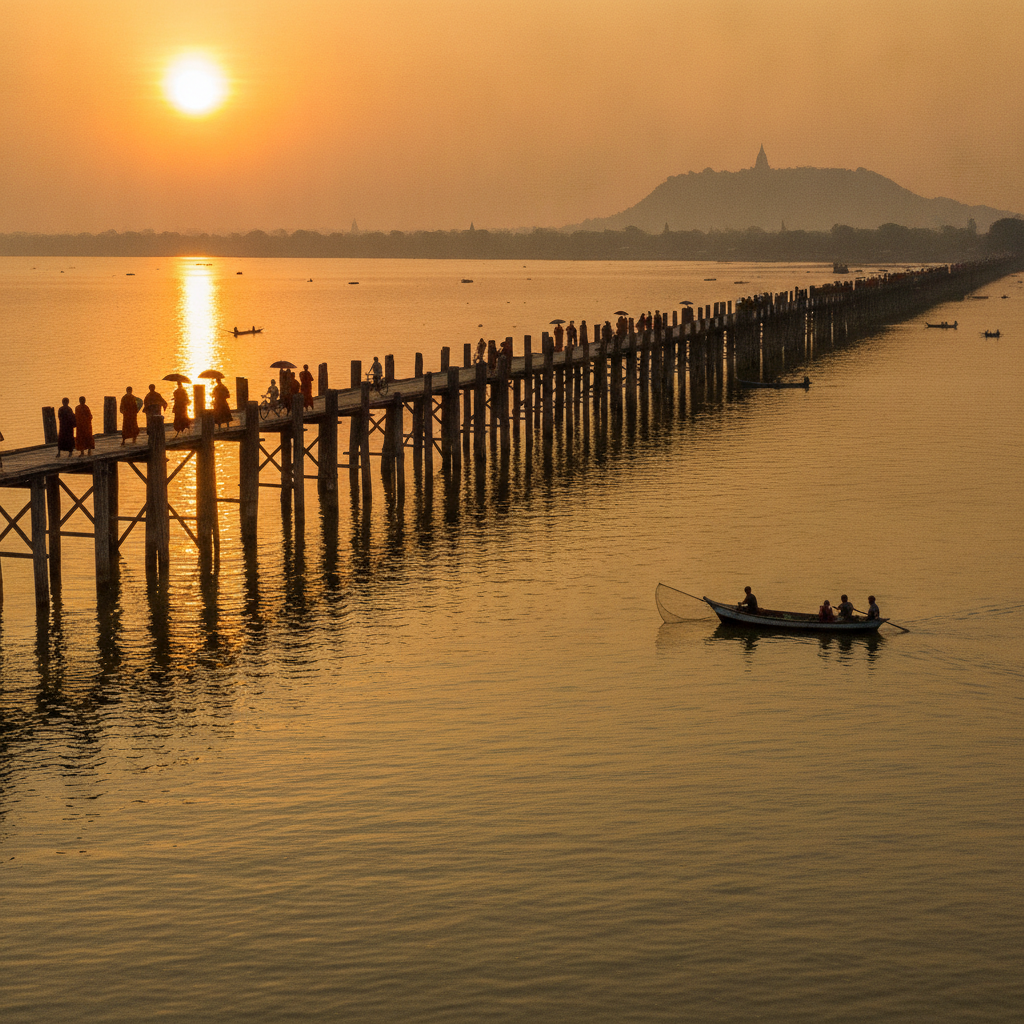
U Bein Bridge—the 1.2 km teak bridge across Taungthaman Lake in Amarapura, built in 1849 by the mayor U Bein using teak salvaged from the previous capital of Inwa (which had been abandoned after the 1838 earthquake)—is the quintessential Myanmar sunset photograph: the bridge's silhouette against orange sky, monks walking its boards, fishermen in shallow-draft boats beneath. The bridge: 1,086 teak posts of varying height accommodating the lake's uneven bottom, a walking-only bridge used daily by Amarapura villagers and monks between the monastery complexes on opposite shores. The sunset industry: a small fleet of flat-bottomed boats ferries paying tourists to the best mid-lake vantage point; the boat operators have precise knowledge of where the sun sets at each season, optimising the silhouette alignment. The pragmatic fact: U Bein's boards are being progressively replaced with concrete as the original 1849 teak deteriorates—some sections already have concrete pillars supporting what appear to be original teak decking boards. The bridge will eventually be entirely concrete, which will be structurally identical but historically different.
- 2
Mandalay's Connection to China – Ancient Trade Routes
The overland trade route between Yunnan Province (southern China) and the Bay of Bengal passed through the Mandalay area for centuries before the British colonial period—and continues to define the region's commercial geography in the 21st century. The ancient route: the Burma Road (built by the British and Chinese in 1937–1938 to supply Chiang Kai-shek's forces against Japan) follows the general alignment of the older Yunnanese trade route; the route carried opium, silk, jade, amber, and forest products southward while tea, cotton, and manufactured goods moved north. The China-Myanmar Economic Corridor (CMEC): a Chinese Belt and Road Initiative project that proposes to connect Kunming (Yunnan capital) to the Kyaukphyu deep-water port on the Rakhine Coast via a road, railway, and pipeline corridor through Mandalay. The Mandalay-Muse (border) section of this corridor is the most commercially significant land route in Myanmar; the volume of Chinese trucks crossing at Muse (the primary land border crossing) is the most visible indicator of China's economic penetration of northern Myanmar.
- 3
Mandalay's Hindu Temples & the Newar Merchant Community
Mandalay has a small but historically significant Hindu community—the descendants of Newar merchants (from the Kathmandu Valley of Nepal) who established a trade network across British Burma in the 19th century, and of South Indian Hindu communities (primarily Tamil and Telugu) who came with the colonial administration. The Newar merchants: among the most important commercial intermediaries in the Himalayan-Burma trade network, the Newar brought Newari-style metal craft and wood carving alongside their commercial activities; the small Hindu temple maintained by the Newar community near Mandalay's Zegyo Market is one of the most unusual religious buildings in Myanmar. The Hindu temples near 26th Street: several South Indian-style temples serve the Tamil and Telugu Hindu community (much reduced since the 1962 nationalisation forced most Indian-origin families to leave); the temples are actively maintained by a small permanent community and visited by Indian businesspeople who have settled in Mandalay in the context of the post-2011 economic opening.
- 4
Mandalay's Water Festival (Thingyan) – The Wildest Celebration
Thingyan (the Myanmar New Year Water Festival, held April 13–16—the same dates as Thailand's Songkran and Laos' Pi Mai)—is celebrated in Mandalay with a particular intensity that reflects the city's position as Myanmar's most culturally conservative major city: paradoxically, the festival that normally circumspect Burmese society permits as an annual release is most exuberantly observed precisely where social constraints are strongest year-round. The format: elaborately decorated stages (pandals) are constructed across the city, equipped with powerful water hoses, sound systems, and dance stages; vehicles with mounted water tanks drive through the streets; crowds gather to soak and be soaked. In Mandalay, the water throwing on 66th Street (the main Thingyan road) reaches intensities comparable to Yangon's most famous venues. The religious dimension: Thingyan is theoretically a ceremony of spiritual purification—the water 'washes away' the sins of the past year as the water spirit Thagya Min descends to earth; the practical dimension is that it is the most socially liberating event in the Myanmar calendar, allowing cross-gender interaction and public revelry not otherwise sanctioned.
- 5
The Mandalay Zei Markets – Commerce & Community
Mandalay's market system—centred on the large Zegyo Market (built 1999 on the site of the original colonial-era market) and extending through dozens of specialised markets in the surrounding streets—is the commercial heart of northern Myanmar. The Jade Market (the early-morning specialised market described above); the Flower Market (on the western side of the palace moat—Burmese Buddhism's enormous demand for flower offerings, particularly jasmine and chrysanthemum, sustains a significant cut-flower industry); the Vegetable and Fish Market (the Mandalay bazaar north of Zegyo—most active 03:00–07:00, the wholesale and retail food provisioning market for the city's restaurants and households); the Chinese Night Market (in Latha township equivalent—the area of Chinese restaurants and wholesale goods near 84th Street). The market culture: Mandalay's commercial traditions (the Indian merchant families, the Shan and Kachin traders who bring highland products to the city, the Chinese wholesalers) create a market atmosphere that is more pluralistic and commercially diverse than most Myanmar cities of comparable size.
- 6
Mandalay's Future – Resilience & Uncertainty
Mandalay in 2026 is a city living with deep uncertainty about its immediate future while maintaining remarkable continuity with its thousand-year cultural past. The economic situation: the kyat devaluation, power outages, and disruption of trade (particularly the jade and gem trade, which has been affected by international sanctions targeting military-connected businesses) have created hardship for many residents; the large Chinese commercial presence (which is relatively insulated from Myanmar's political crisis because of China's non-interference policy and economic relationship with the military government) has maintained a floor of commercial activity. The cultural continuity: the gold leaf workshops on 36th Street continue beating, the marble workshops on 35th Street continue carving, the Amarapura silk looms continue weaving, and the monks of Sagaing continue their dawn rounds. The monastic education system—the most resilient institution in Myanmar's history, surviving successive dynasties, two colonial occupations, and a military dictatorship—continues to function. Mandalay's future is uncertain in ways that could not have been predicted with confidence even five years ago; but its past is so dense with civilisational achievement that the present difficulty, however serious, reads as one episode in a very long story.
Walk this route with audio
Stories play automatically as you reach each stop — no tapping needed.
More in Mandalay
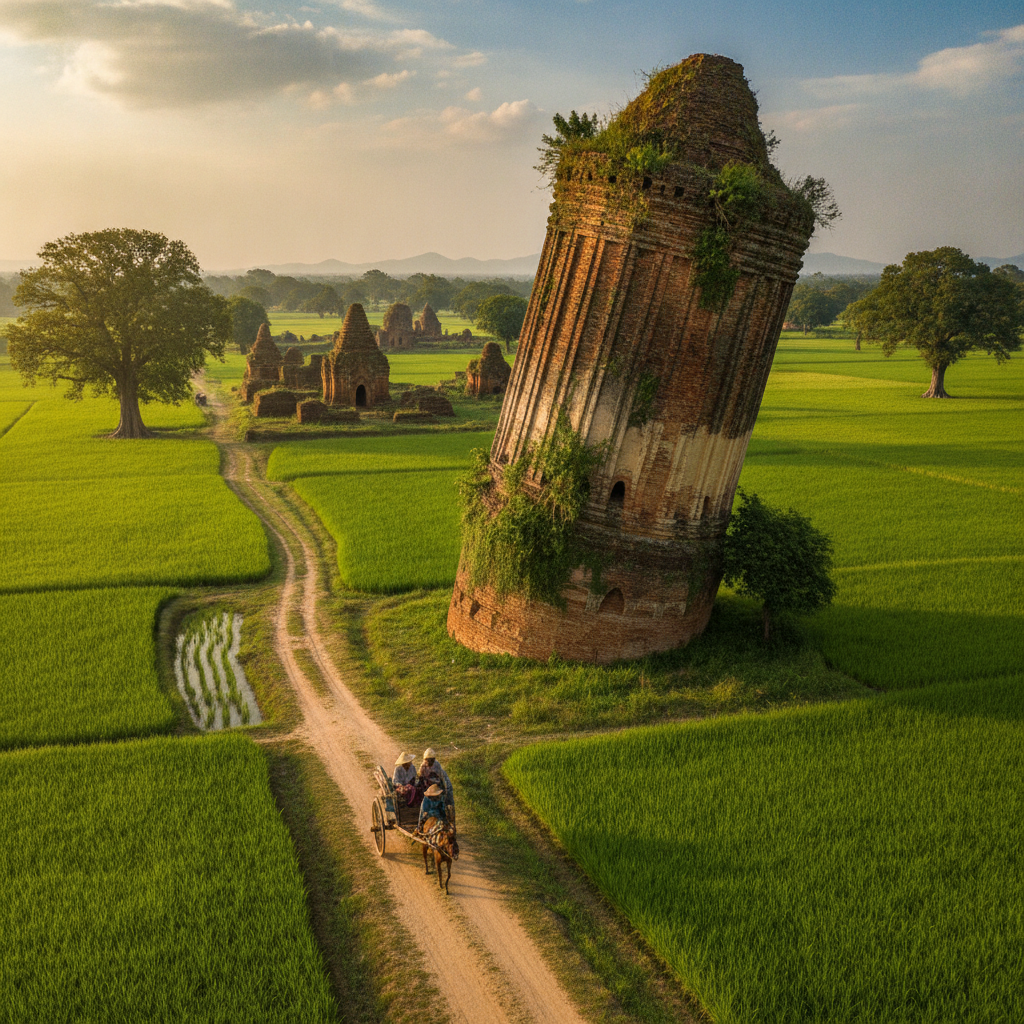
Mandalay's Soul: Anyein Comedy That Satirised Military Censors, Inwa's Rice-Field Ghost Capital & the Downstream River
Mandalay: 729 Marble Slabs of the Buddhist Canon, Gold Leaf Beaten on 36th Street & the Last Royal Palace
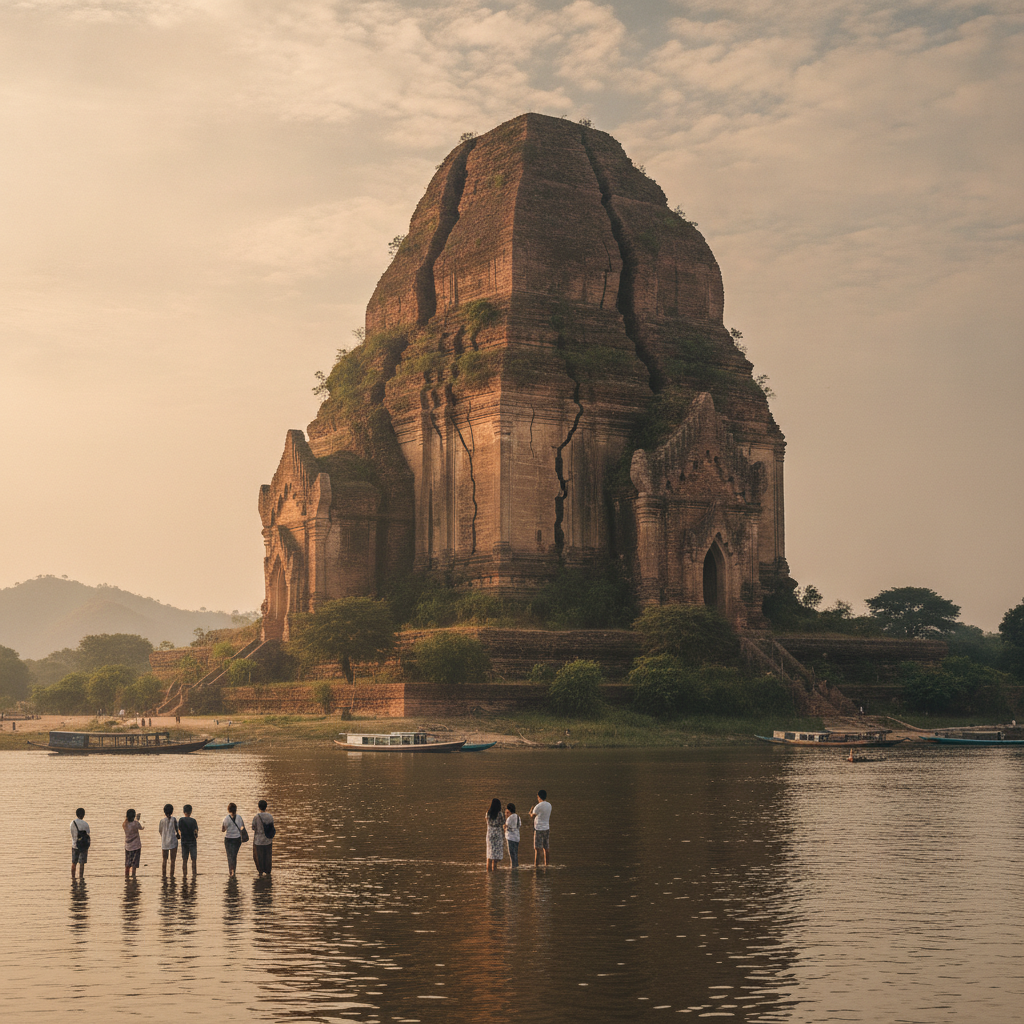
Mandalay's Radius: Mingun's Unfinished 50-Metre Pagoda, the Ayeyarwady Slow Boat South & a 20-Lane Empty Capital