Amazon Science and Conservation: Humboldt, INPA Research, Chico Mendes, and the Night Forest Soundscape
The scientific and conservation story of the Manaus Amazon covers the 19th-century natural history expeditions that discovered thousands of new species, the contemporary INPA ecosystem research, the Chico Mendes movement that created the extractive reserve system, and the extraordinary sensory experience of the Amazon night.
- 1
Alexander von Humboldt and the Amazon Scientific Tradition
The scientific tradition of Amazon exploration begun by Alexander von Humboldt and Aime Bonpland in 1800 and continued by Alfred Russel Wallace, Henry Walter Bates, and Richard Spruce in the 1840s and 1850s created the foundational knowledge of the Amazon ecosystem. Wallace and Bates together collected tens of thousands of new species from the Manaus area, with Bates alone describing 8,000 new species of insects during his 11 years on the Amazon. The Manaus museum preserves specimens and documents from this extraordinary scientific achievement.
- 2
Contemporary Amazon Science: INPA and International Research
The contemporary Amazon science conducted at INPA and in the international research programs based in Manaus has transformed the understanding of the Amazon ecosystem from a simple forest to a complex adaptive system of extraordinary sophistication, with discoveries including the carbon sink dynamics, the atmospheric moisture recycling system, and the underground mycelial networks that connect the trees of the forest in a communication and nutrient sharing system.
- 3
Rubber Tapping Legacy: The Chico Mendes Movement
Chico Mendes, the rubber tapper and union organizer murdered in Xapuri in Acre state in 1988 for his opposition to the deforestation of the rubber tapper forests, became the most internationally known figure in the Amazon conservation movement and catalyzed the creation of the extractive reserve system that protects forest areas under community management for sustainable use. The Chico Mendes Institute for Biodiversity Conservation manages the federal protected area system.
- 4
Amazon River: Hydrology and the Seasonal Pulse
The Amazon River system, which discharges approximately 20 percent of all the freshwater that enters the world's oceans, operates on an annual flood pulse cycle driven by the seasonal rains of the Andes and the central Amazon Basin. The river at Manaus rises and falls by an average of 14 to 15 meters between the low-water and high-water seasons, creating a wetland ecosystem of 300,000 square kilometers that is the largest seasonal floodplain on Earth.
- 5
Biosphere Experiment: The Fragmentation Study
The Biological Dynamics of Forest Fragments Project, begun in 1979 by Thomas Lovejoy at INPA and now the longest-running tropical ecology experiment in the world, created isolated forest fragments of different sizes surrounded by cattle pasture and documented the extinction debt of the fragmented forest over decades. The results showed that forest fragments lose species at predictable rates and that very small fragments of even a few hectares retain only a fraction of the biodiversity of intact forest.
- 6
Night in the Amazon: Soundscape and Darkness
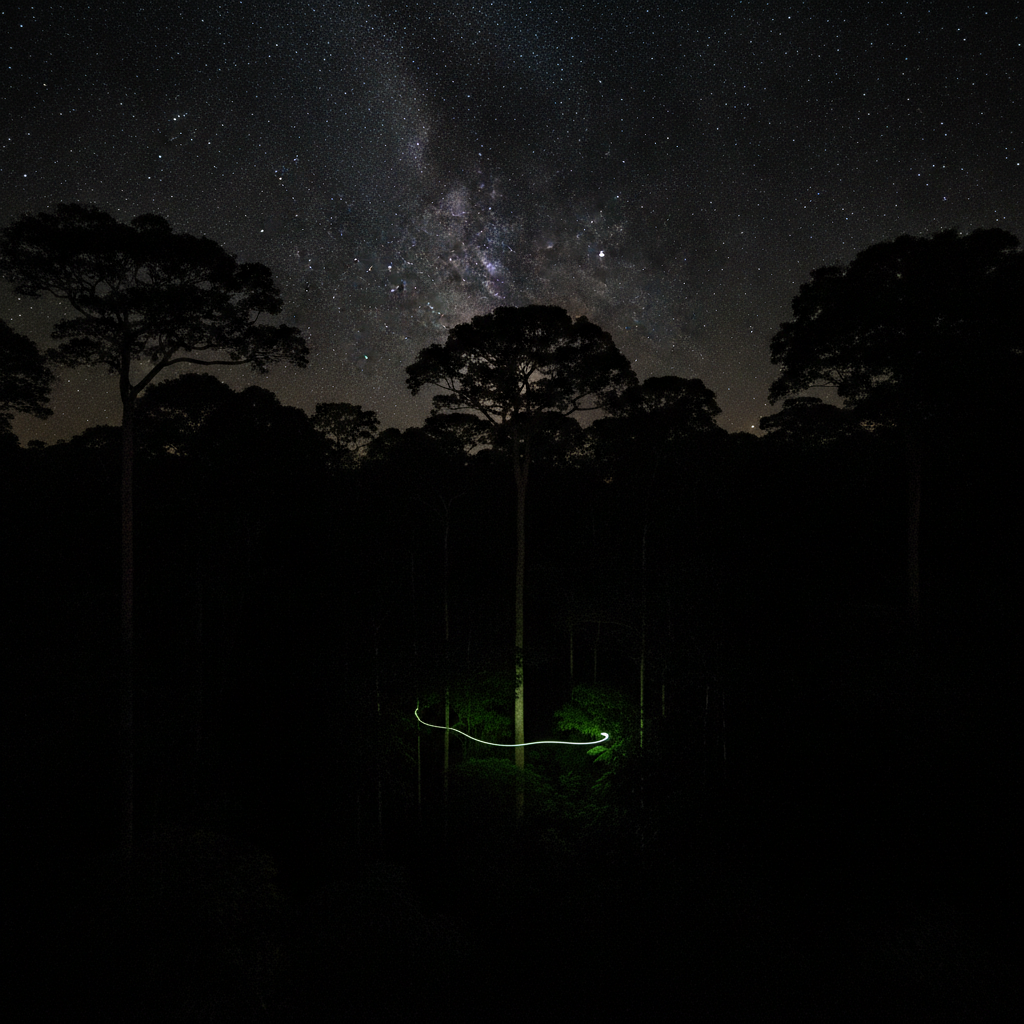
The Amazon forest at night is among the most acoustically rich environments on Earth, with the overlapping calls of frogs, insects, nightjars, and the occasional mammal building a soundscape of such complexity that the individual sounds disappear into the total acoustic texture. The experience of sitting on a lodge platform at night in the Amazon darkness, without artificial light, listening to the forest sounds while the stars appear through gaps in the canopy, is one of the most powerful sensory experiences available to a traveler anywhere on Earth.
Walk this route with audio
Stories play automatically as you reach each stop — no tapping needed.
More in Manaus
Manaus Jungle Guide: Survival Skills, Health Preparation, Responsible Operators, and the Amazon at Risk
Manaus Practical Guide: Airport, Amazon Seasons, Choosing a Jungle Lodge, and the River Cruise to Belem
Manaus History: The Rubber Boom, Fordlandia, Amazon Science, and the Industrial Free Trade Zone
Amazon Conservation and Wildlife: Deforestation, Yanomami Rights, the Flooded Forest, and the Species Kingdom
Amazon Nature Close-Up: Giant Water Lilies, Capybara, Sloths, Brazil Nuts, and Photography in the Tropics