Royal Madrid: Palaces, Plazas & Ancient Temples
Long before the Prado or the Gran Vía, Madrid was a Habsburg and Bourbon royal capital. This route follows the imperial spine of the city: the Palacio Real (the largest royal palace in Western Europe by floor area), Plaza Mayor (the grandest public square in Spain), the Almudena Cathedral—the only cathedral in the world whose crypt is partly Visigothic—and the Temple of Debod, an ancient Egyptian temple gifted to Spain by Egypt in 1968. The entire route is mostly flat and takes 3–4 hours at a gentle pace.
1. Palacio Real de Madrid — Europe's Largest Royal Palace
- 1
Palacio Real de Madrid — Europe's Largest Royal Palace
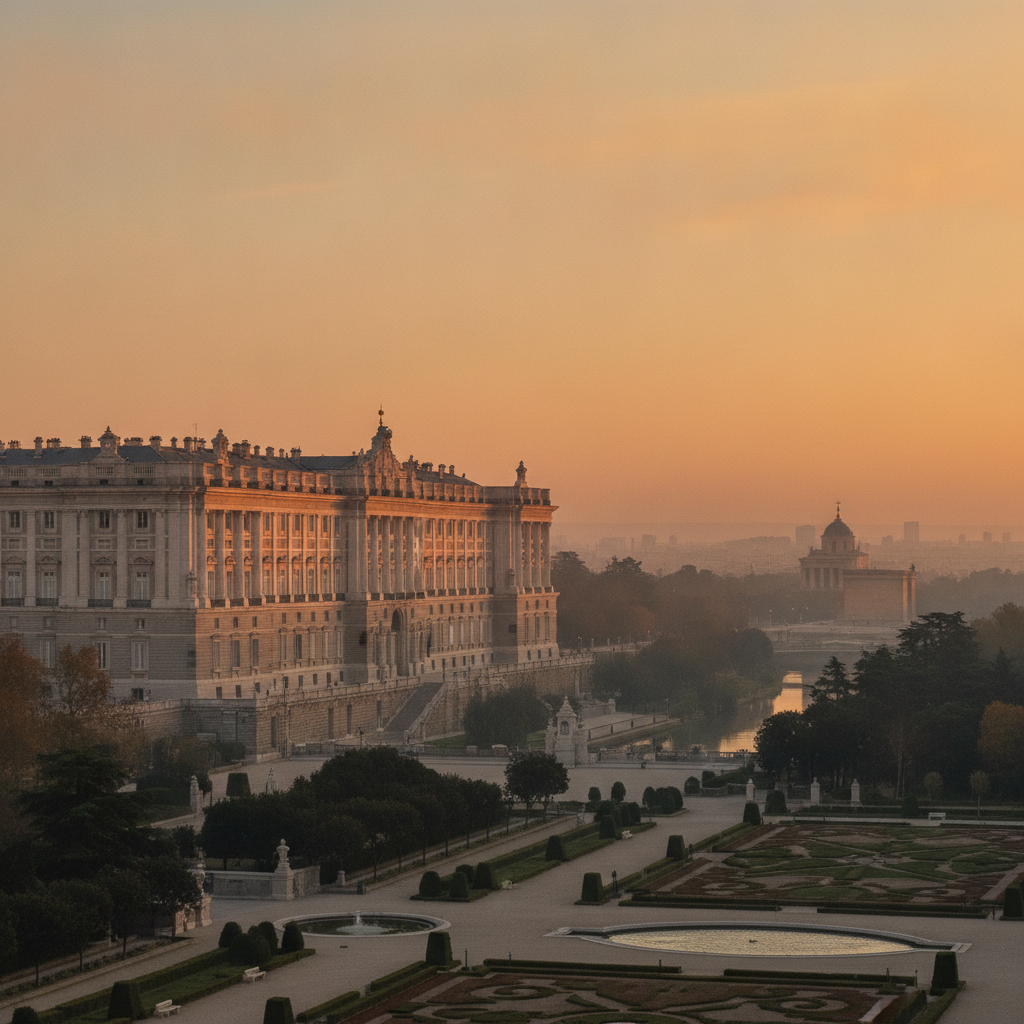
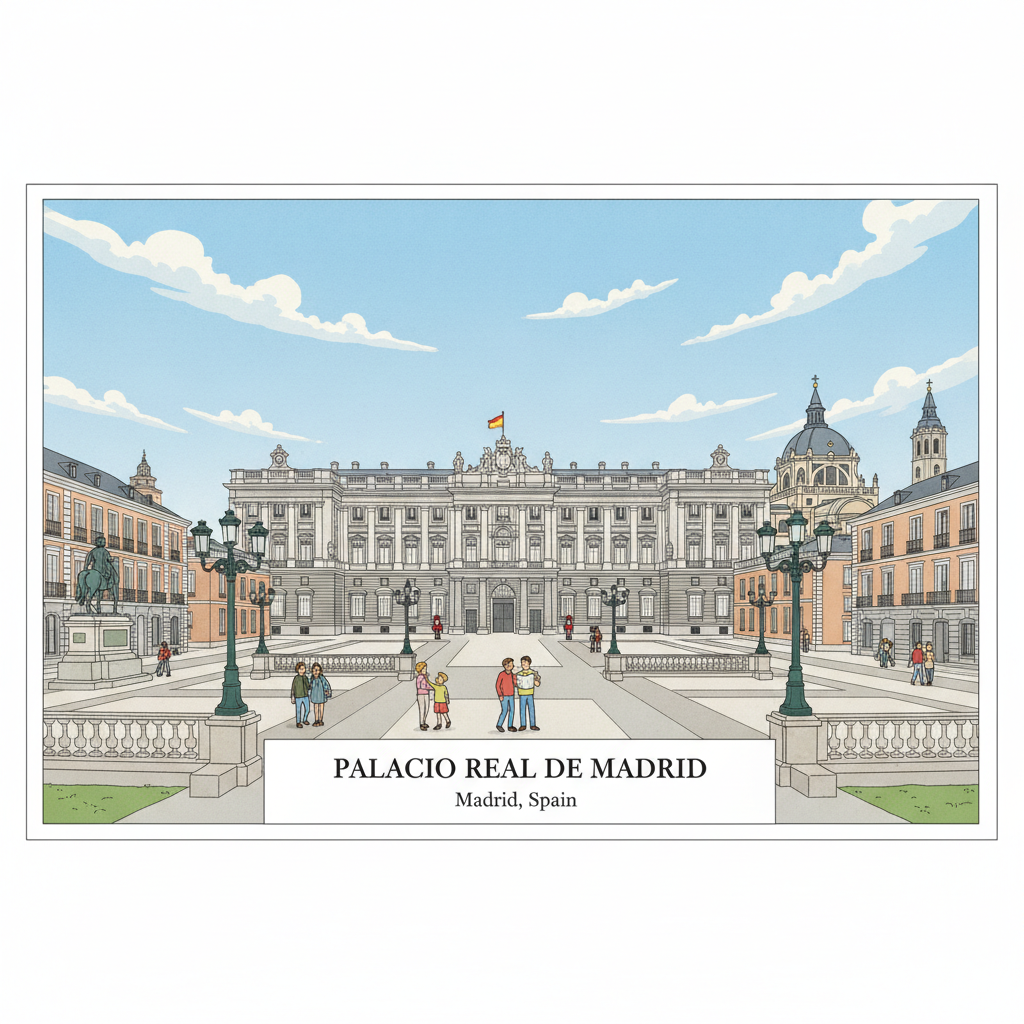
The Palacio Real is the official residence of the Spanish royal family, though King Felipe VI and family live elsewhere. Built on the site of a Habsburg fortress destroyed by fire in 1734, the current Baroque palace took 26 years to build (finished 1764) and has 3,418 rooms—more than any other palace in Western Europe. The State Rooms (official tour route, about 50 rooms) include the Royal Armory (one of the world's finest collections), the porcelain room entirely clad in Buen Retiro porcelain, and the Throne Room with frescoed ceiling by Tiepolo. Book online to skip the queue. Free for EU citizens on certain days.
- 2
Catedral de la Almudena — Madrid's Belated Cathedral
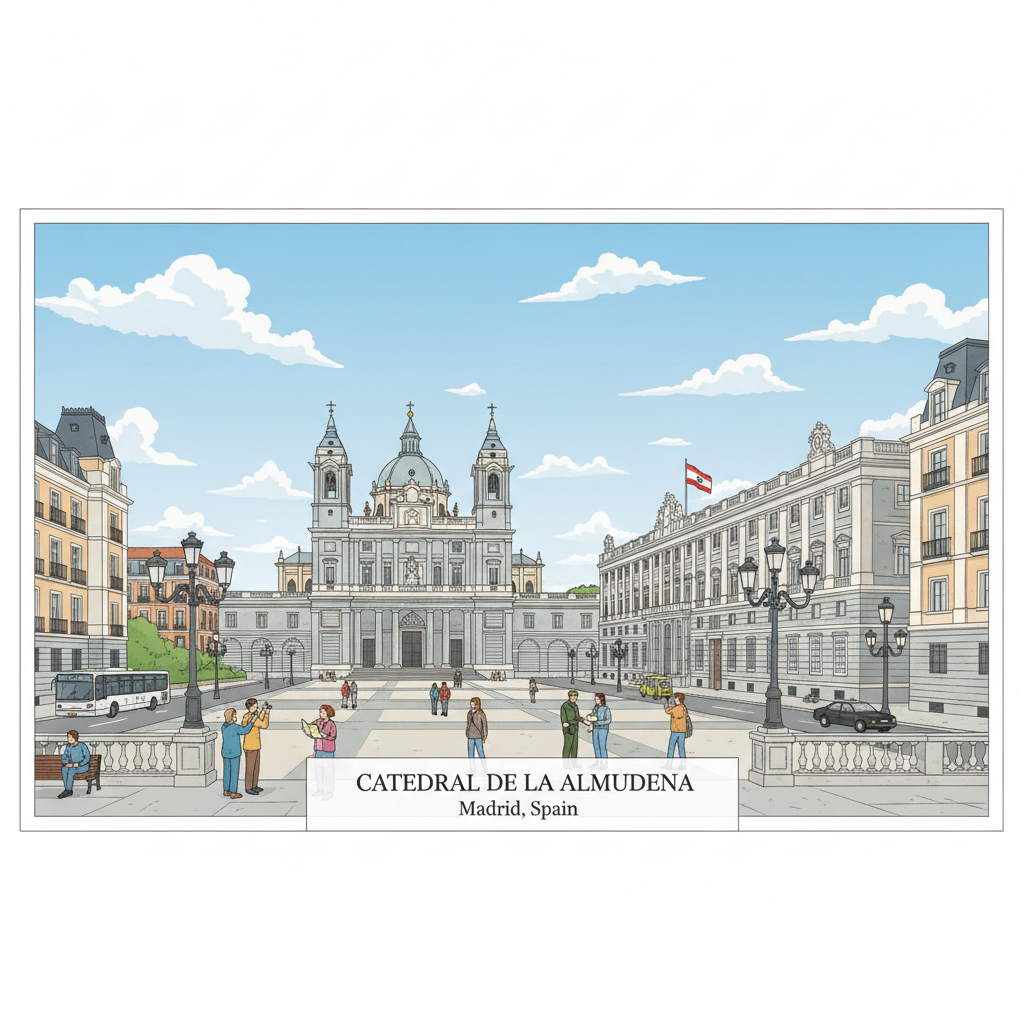
Standing directly beside the Palacio Real, the Almudena Cathedral was only consecrated in 1993—remarkably late for a major European capital. Construction began in 1879 and went on for 110 years. The exterior is neoclassical but the interior is strikingly modern: bright primary-coloured geometric ceiling panels designed in the 1990s that divide art historians. The crypt beneath, however, is a gem—a low, atmospheric space with brick columns dating to the 11th-century Romanesque structure. The rooftop terrace (small entry fee) offers close-up views of the palace and across the Manzanares valley. Pope John Paul II consecrated the cathedral in 1993.
- 3
Plaza Mayor — The Imperial Heart of Old Madrid
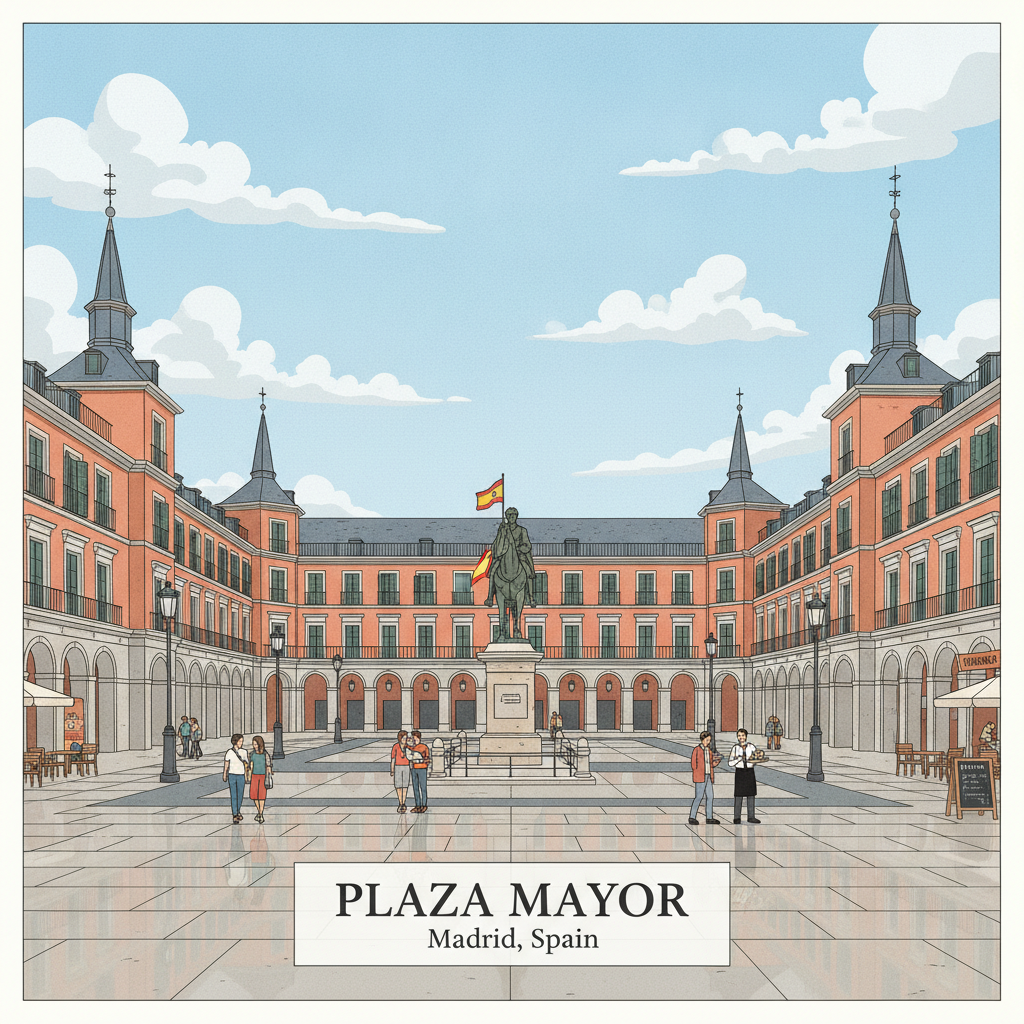
Plaza Mayor was built under Felipe III (the equestrian statue at the centre is of him) between 1617 and 1619. It is a perfectly harmonious arcaded square of 237 by 129 metres, surrounded by uniform apartment buildings with slate Habsburgian towers. In its four centuries of life it has been a market, a bullfighting arena, the venue for public executions and Inquisition autos-da-fé, and a celebration square. Today the ground floors are bars and restaurants (pricey but the setting is unbeatable) and the 9 archways lead into the surrounding old town. The best approach: enter through the Arco de Cuchilleros on the south side.
- 4
Mercado de San Miguel — Glass, Iron & Jamón
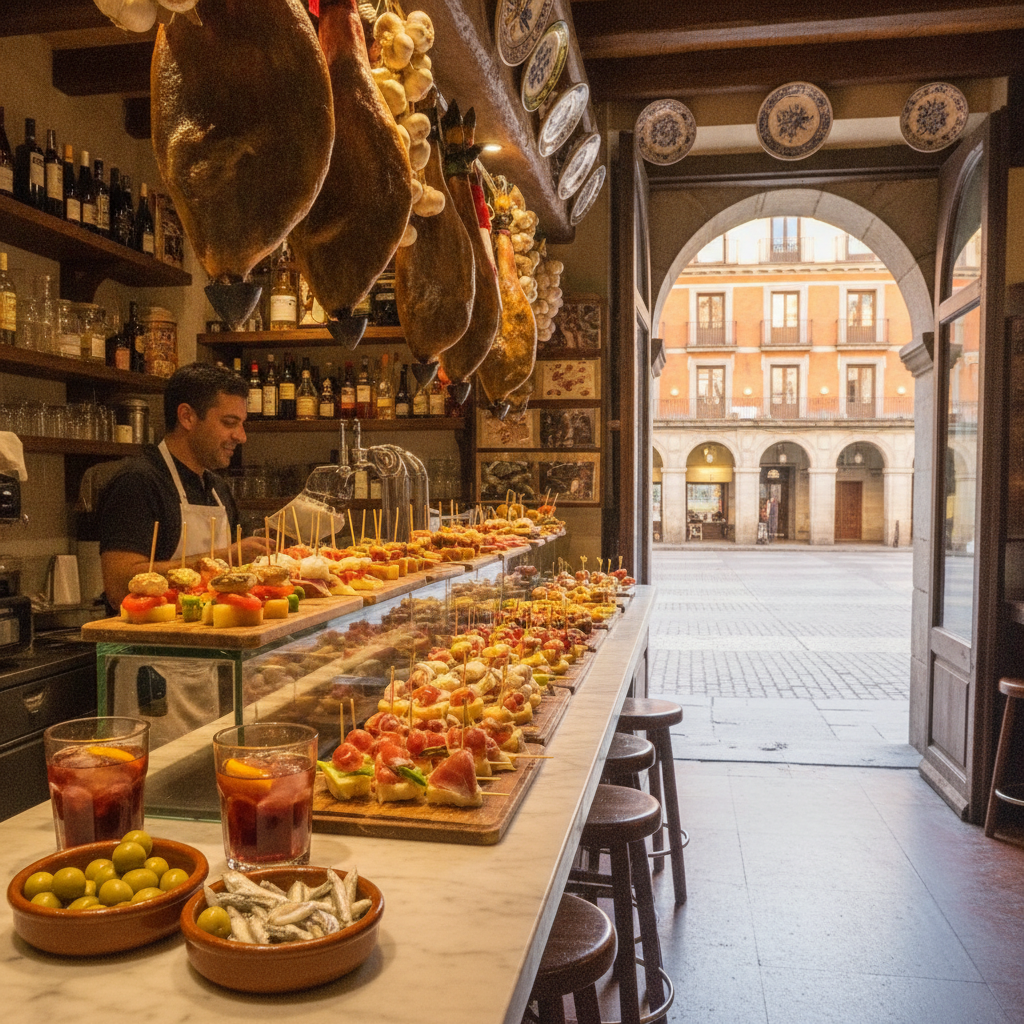
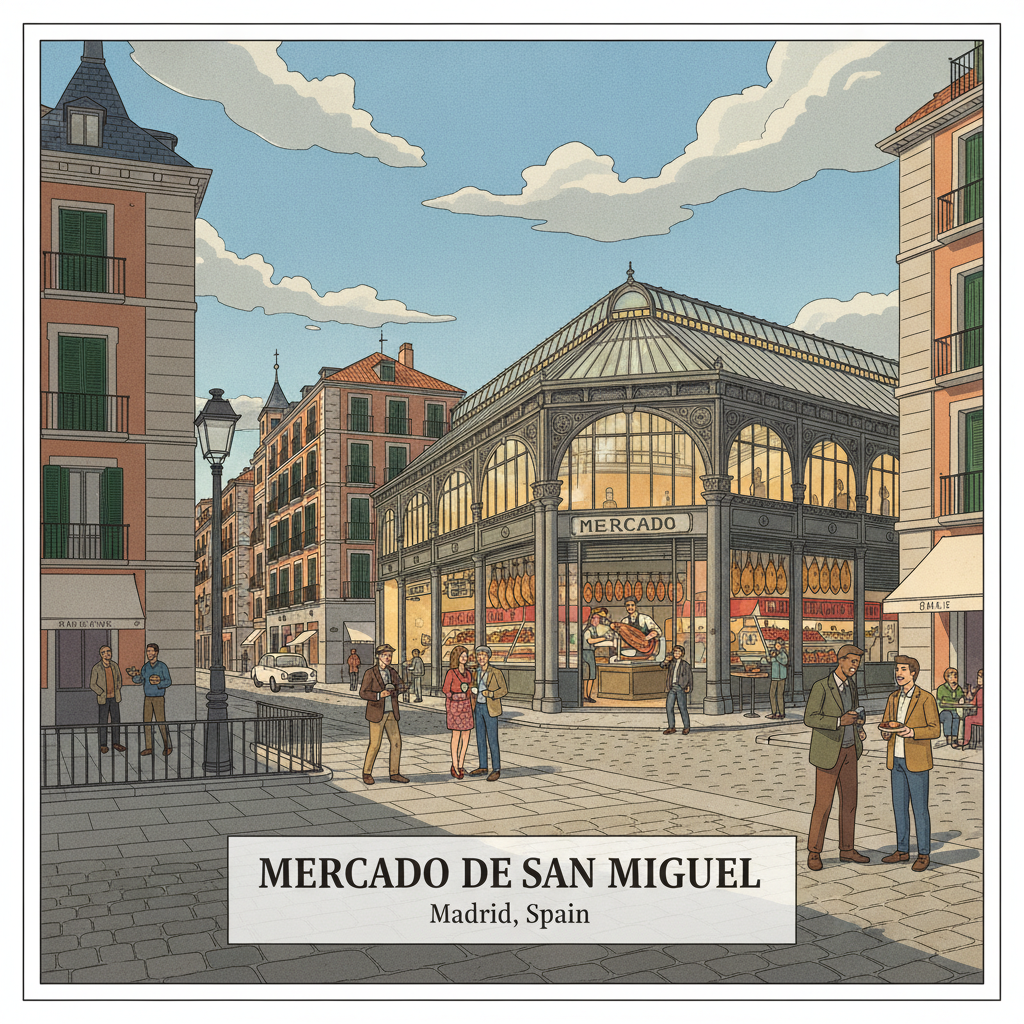
A one-minute walk from Plaza Mayor: the Mercado de San Miguel, a 1916 iron-and-glass market hall that was the city's main food market for most of the 20th century, restored and reopened in 2009 as an upscale food hall. It is more expensive and more touristy than Antón Martín, but the quality is high and the architecture—cast iron columns, ornate ironwork, glass panels flooding the space with light—is beautiful. Good for a mid-route stand-up snack: a glass of Galician albariño and a plate of jamón ibérico is a classic stop.
- 5
Temple of Debod — Egypt in the Heart of Madrid
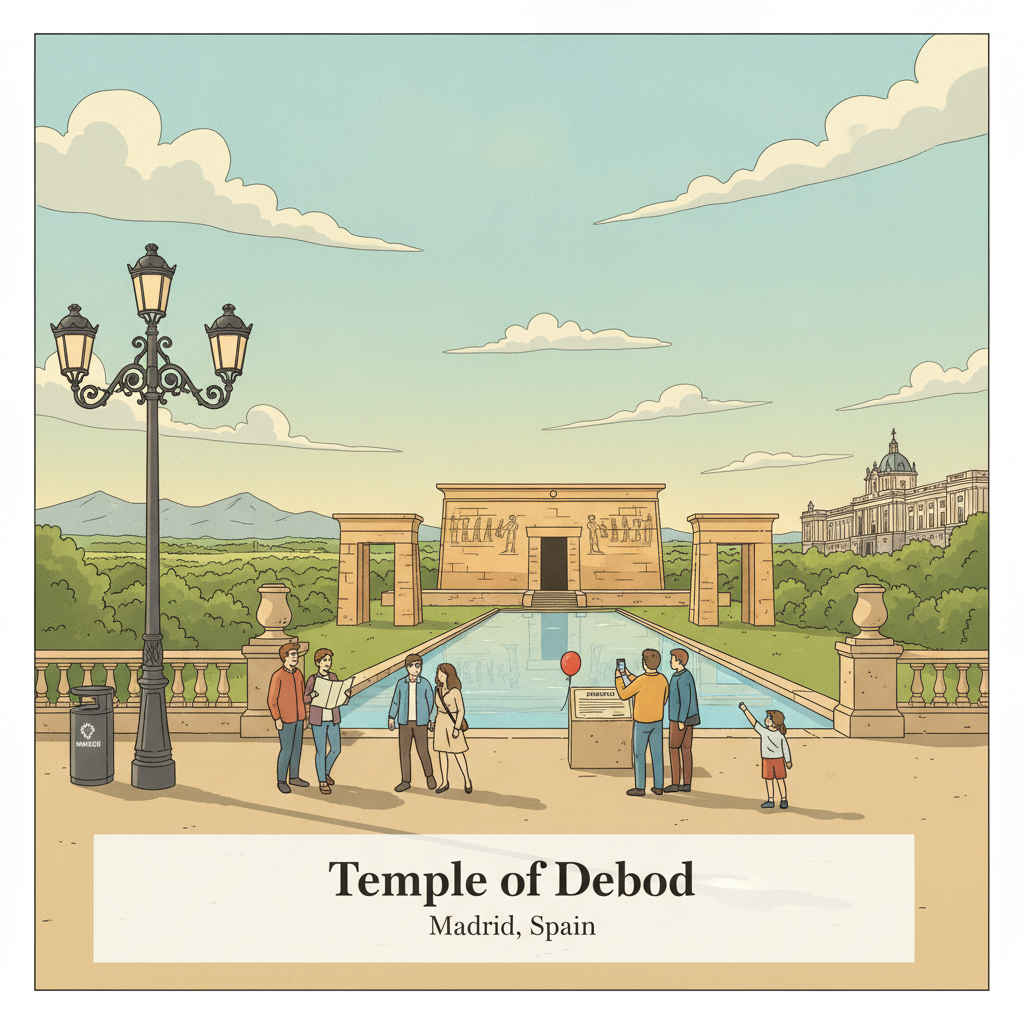
Walk 15 minutes north-west from the palace to reach one of Madrid's most surprising sights: a genuine 2,200-year-old Egyptian temple, the Temple of Debod, standing in Parque de la Montaña. The temple was built by the Nubian king Adijalamani in the 2nd century BC, dedicated to the gods Amun and Isis. When the Aswan Dam was built in the 1960s and would have flooded the temple, Egypt gifted it to Spain in thanks for Spanish help preserving Nubian monuments. It arrived in 4,000 crates and was reconstructed in 1972. The interior is free to visit. The park around it has the best sunset viewpoint in Madrid, facing west over the valley.
- 6
Jardines de Sabatini — The Palace's Secret Gardens
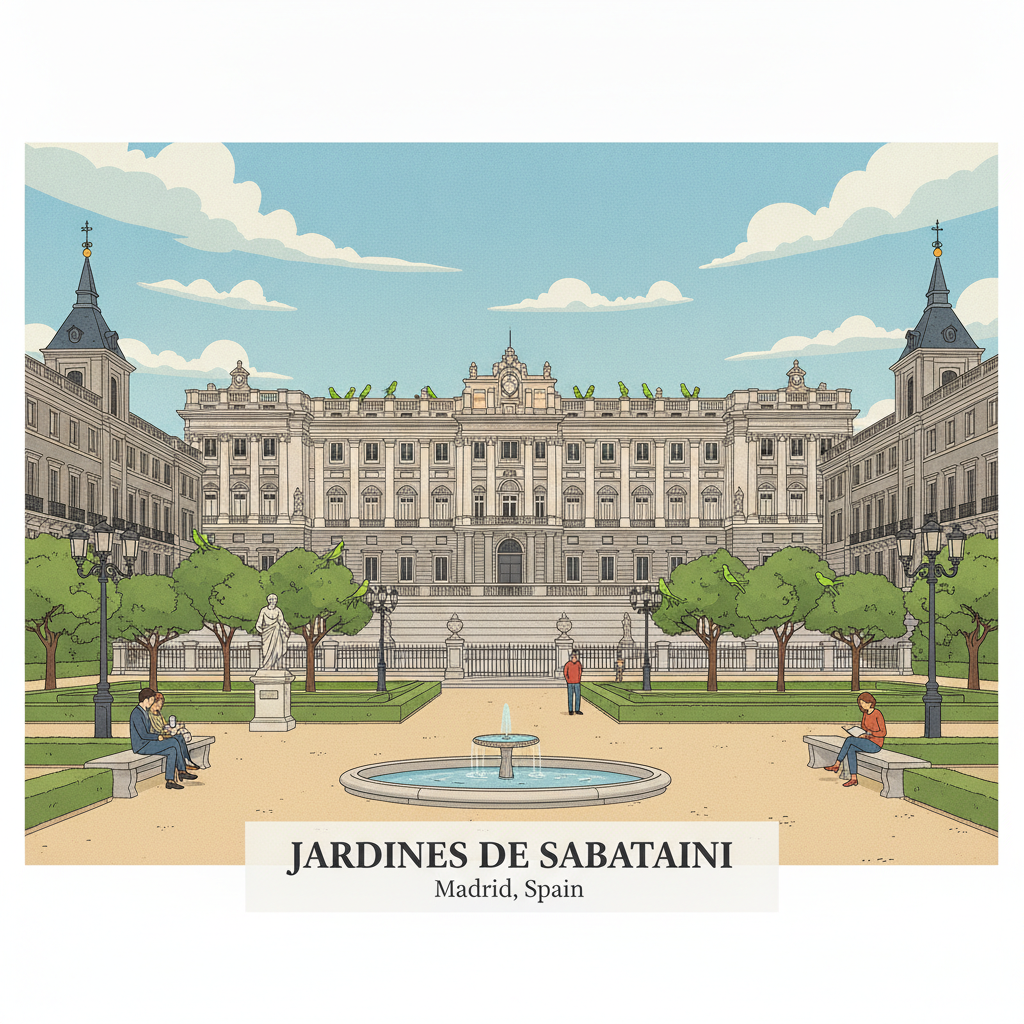
Back below the Palacio Real, the Sabatini Gardens occupy the north flank of the palace on the site of the old royal stables. Designed in the 1930s in a French formal garden style with fountains, box hedges and statuary, they are one of the quieter green spaces in central Madrid. A colony of feral parakeets—descended from escaped pets—nests in the trees and fills the air with their noise. The garden has a perfect viewpoint towards the palace facade. Sit on one of the stone benches, have a café con leche from a thermos or nearby bar, and watch the palace slowly change colour as the afternoon light shifts.
Walk this route with audio
Stories play automatically as you reach each stop — no tapping needed.
More in madrid
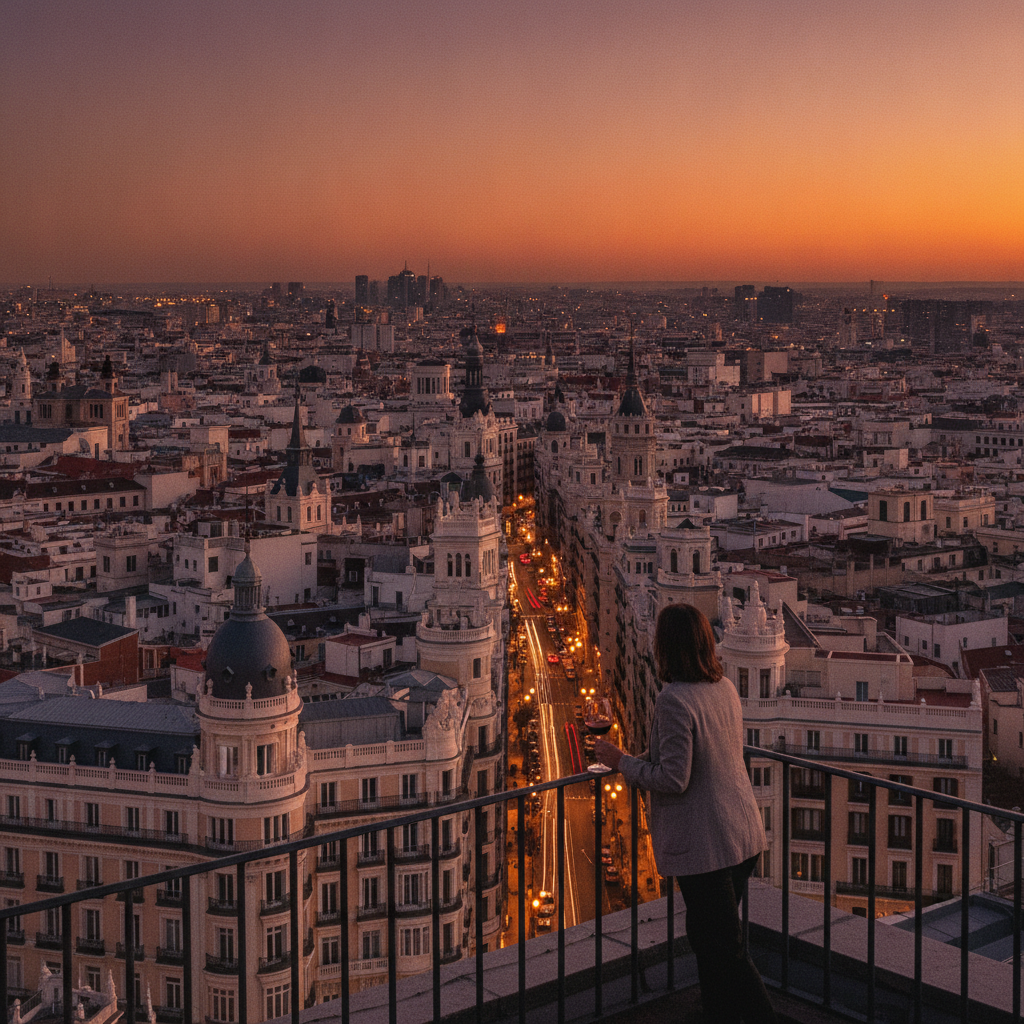
Madrid from Above: Rooftops, Terraces & Miradores
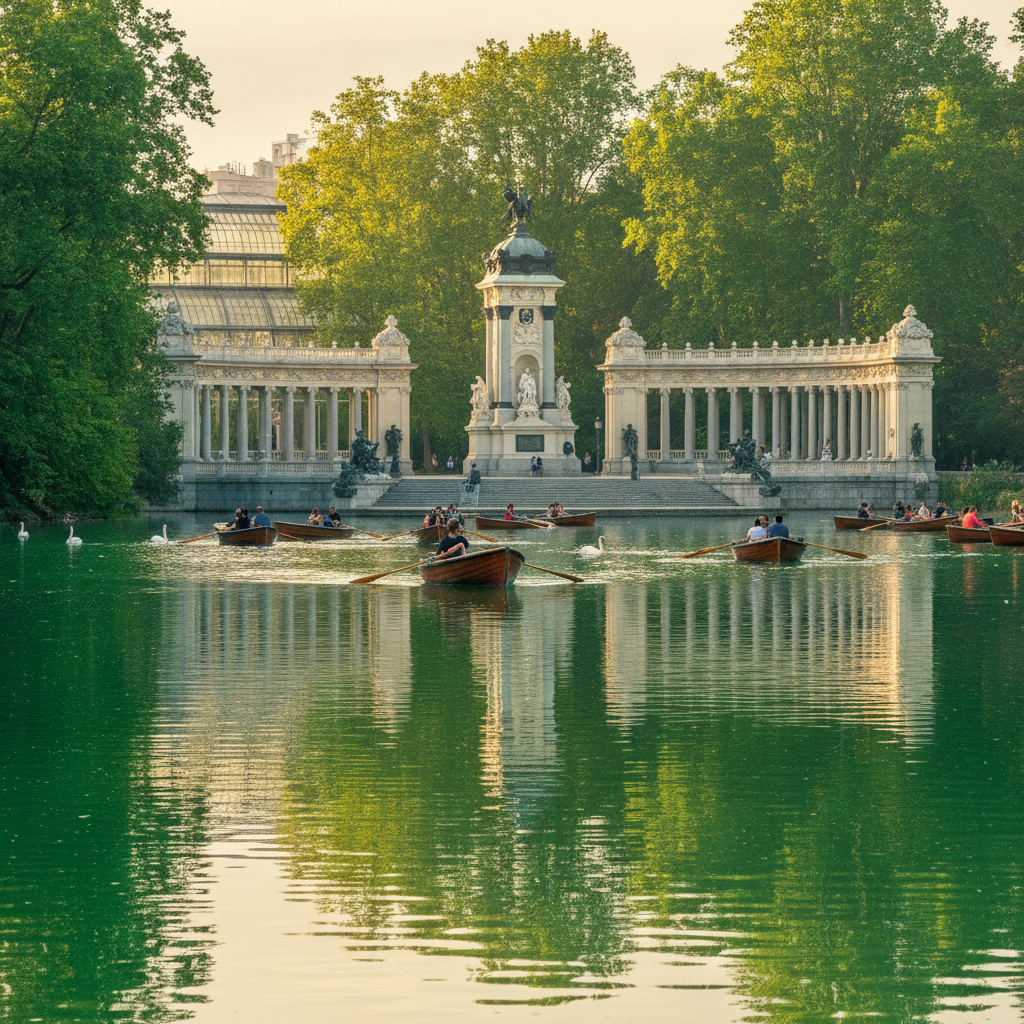
Retiro Park & La Castellana: Madrid's Green Spine
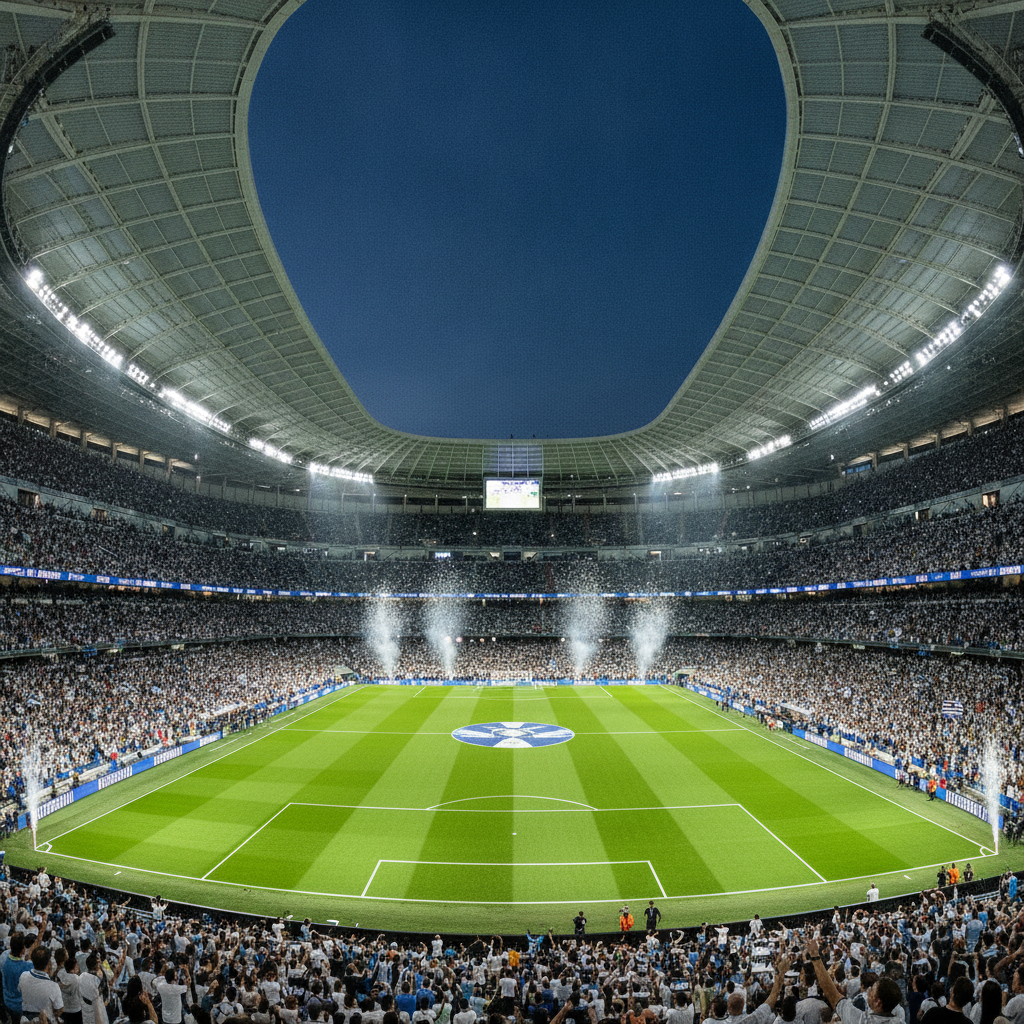
The Football Pilgrimage: Bernabéu, the City & Metropolitano
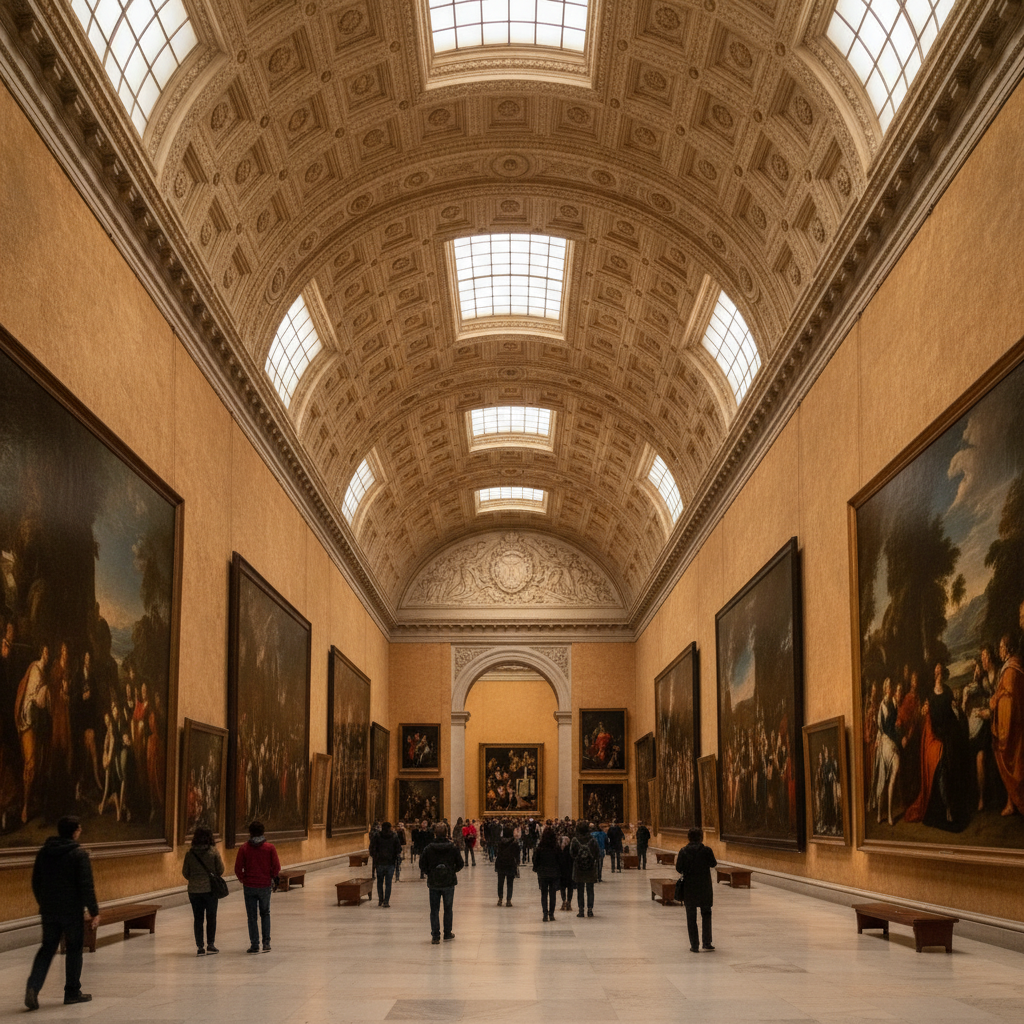
The Art Golden Triangle: Prado, Thyssen & Reina Sofía
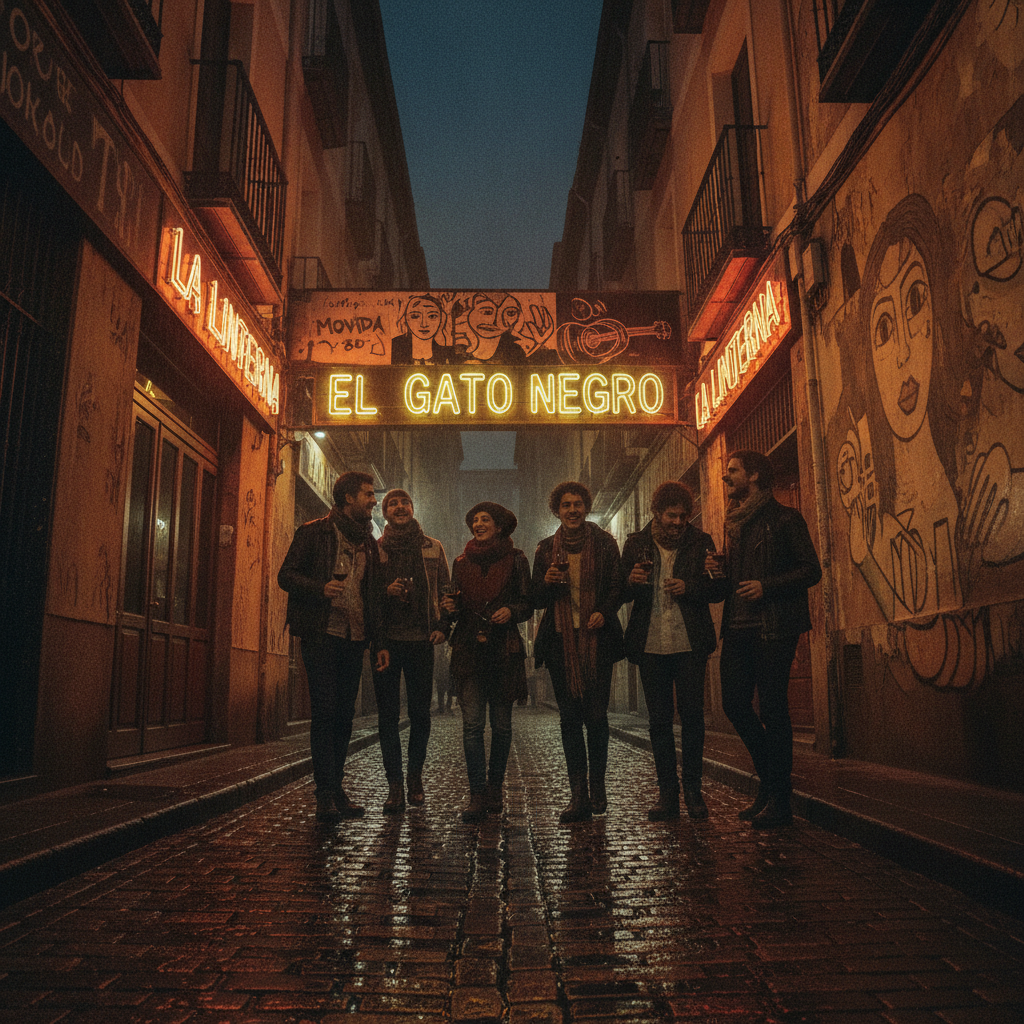
La Movida & Malasaña: Madrid's Cultural Revolution