The 1557 Port Where European and Chinese Cooking Created a New Cuisine, the USD 250 Million Water Show & the Black Sand Beach That Is the Only One in Greater China
Coloane's black volcanic sand as the only black-sand beach accessible from Hong Kong in 2 hours; the House of Dancing Water's USD 250 million production budget as the world's most expensive theatrical production; the Guia Lighthouse as the oldest modern lighthouse on the Chinese coast; George Chinnery's 27 years in Macau as the primary visual documentation of 19th-century Pearl River Delta life; the Chapel of Our Lady of Guia's East-West mural paintings as the oldest Christian murals in China; and the Venetian Macao gondoliers trained in Venice who must sing Italian arias while working.
- 1
Coloane – The Quiet Island
Coloane Island (路环—Lù Huán): the southernmost and most rural of Macau's 3 land masses—the island that retains the greatest amount of natural landscape and the most intact traditional village environment in the Macau SAR. The Coloane Village (路环村—the fishing village established in the 19th century at the southern tip of Coloane Island): the Chapel of St. Francis Xavier (圣方济各圣堂—the 1928 chapel containing the relics of Japanese and Vietnamese Christian martyrs and a bone fragment of St. Francis Xavier himself—the most historically significant Catholic chapel in Macau outside the Ruins of St. Paul's). The Hác-Sá Beach (黑沙海滩—'Black Sand Beach'—the volcanic black sand beach on the east coast of Coloane Island): the beach (the beach is 1 km long and black due to the heavy mineral content of the offshore volcanic seafloor sediment—the only black-sand beach in the Greater China region accessible from Hong Kong within 2 hours). Lord Stow's Bakery (安德鲁饼店—the original bakery opened in 1989 by the British pharmacist Andrew Stow (1956–2006) that created the Macau-Portuguese egg tart (葡式蛋撻)): the Coloane Village square (the small square in front of the Chapel of St. Francis Xavier where Lord Stow's original shop, the Pak Cheong General Store, and the traditional Cantonese herbalist shops create the most intact traditional Macau village commercial streetscape).
- 2
The Cotai Strip – The Las Vegas of Asia
The Cotai Strip (路氹城—the reclaimed land between Taipa and Coloane islands developed from 2007 as a casino resort complex): the development that fundamentally changed Macau's tourism model from day-trip gambling to multi-night integrated resort. The reclamation (the Cotai Strip is built on 6.64 km² of reclaimed seabed between Taipa and Coloane—the land that was intertidal wetland until the first reclamation in the 1990s): the name (the name 'Cotai' is a portmanteau of 'Coloane' and 'Taipa'—coined by Sheldon Adelson (1933–2021), the Las Vegas Sands founder who developed The Venetian Macao as the first Cotai resort in 2007). The Venetian Macao (威尼斯人—the 550,000 sq ft casino floor, the replica Grand Canal with singing gondoliers (the gondoliers are trained in Venice and must sing Italian arias on duty), the 15,000-seat arena (which has hosted Beyoncé, Taylor Swift, and the World Boxing Association bouts), 3,000 suite hotel): the City of Dreams (梦幻城市—the Melco Resorts integrated resort featuring the House of Dancing Water (水舞間)—the theatrical water show in a 270° water stage with a 3.7 million liter performance pool—the most technically complex live theatrical production in the world by production cost (USD 250 million production budget)).
- 3
Macau's Military History – Fort Guia & The Portuguese Garrison
The military history of Macau (the fortifications and military heritage that reflect the city's role as the Portuguese bridgehead for Asian trade from 1557 to 1999): the fortress circuit. The Guia Fortress (東望洋炮台—the fortress, lighthouse, and chapel on the highest point of the Macau Peninsula): the lighthouse (the Guia Lighthouse (1865)—the oldest modern lighthouse on the Chinese coast—the lighthouse still operational as a Portuguese-era maritime aid): the fortress chapel (the Chapel of Our Lady of Guia (1622) with the oldest and most significant collection of 17th-century East-West Christian mural paintings in China—the chapel murals combining Portuguese religious iconography with Chinese landscape painting techniques). The Monte Fort (大炮台—built 1617–1626 CE): the primary military fortification of Portuguese Macau, built to defend the city from Dutch naval attack (the Dutch besieged Macau twice (1607 and 1622)—the 1622 attack was repelled when a Jesuit priest fired the Monte Fort's cannons against the landing Dutch soldiers): the Fortaleza de São Francisco (the fortification at the A-Ma Temple waterfront—the site where the Portuguese first landed in 1557): the cannon count (the Portuguese garrison at peak (1700 CE) maintained 35 cannons across 7 coastal fortifications—the gun network visible from the water that deterred Dutch, English, and Chinese naval forces from attacking the city for 200 years).
- 4
Macau's Art Scene – East-West Creative Exchange
The Macau art and cultural scene (the creative output that makes Macau more than a gambling and eating destination): the art guide. The Macau Museum of Art (澳门艺术博物馆—the primary visual art museum in Macau): the collection (the museum's permanent collection focuses on: the Western paintings of China by George Chinnery (the English painter (1774–1852) who spent his last 27 years in Macau, documenting the colonial port life in meticulous oil paintings—his work is the primary visual documentation of 19th-century Macau and Hong Kong life): the seal-carving collection (the museum holds the largest collection of Chinese seal carving (篆刻) in Macau—the seals used by Qing Dynasty officials and scholars to authenticate documents). The Tap Seac Gallery (塔石展覽館—the converted 1920s Portuguese colonial building in the Tap Seac Square): the Macau Literary Festival (文學節—annual event in February presenting Portuguese, Chinese, and English language literature in panel discussions and readings at the Tap Seac venue and the Camões Garden). The Macau International Film Festival (澳门国际电影节—the annual film festival in December presenting Asian and European independent cinema at the Mac Cinematheque (澳门电影院)): the contemporary arts (the Ox Warehouse (牛房仓库—the converted industrial slaughterhouse turned arts center in the Macau Industrial Park): the primary contemporary arts space in Macau.
- 5
Macau's Churches & Religious Syncretism
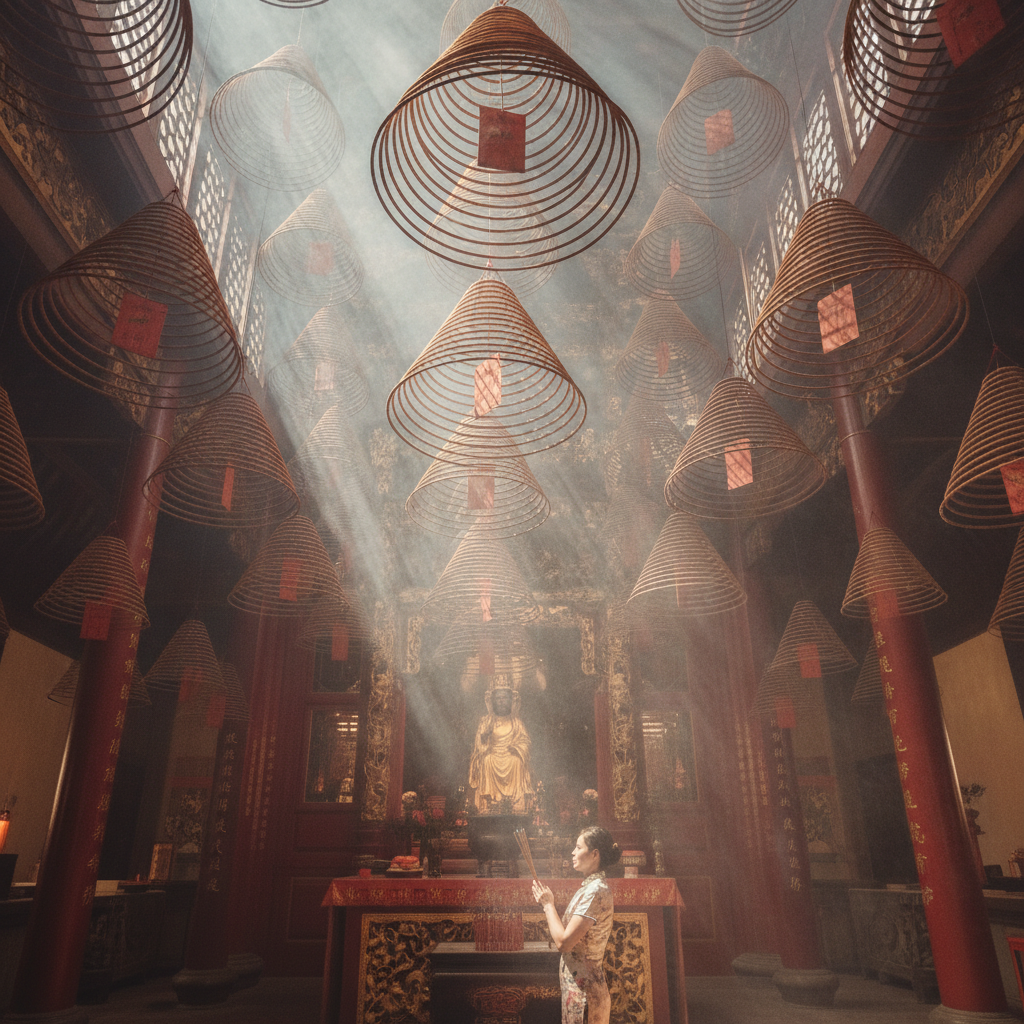
The religious architecture of Macau (the city where the most complete range of Catholic churches, Chinese temples, and hybrid religious spaces exist within walking distance): the religious tour. The church circuit: St. Dominic's Church (玫瑰堂—1587 CE—the oldest Baroque church in China, with the 'Treasure of Sacred Art' museum containing the largest collection of sacred art in Southeast Asia): St. Augustine's Church (圣奥斯定教堂—1586 CE—the church associated with the tradition of the annual Procession of Our Lord Jesus (耶稣圣像巡游) on the Sunday before Ash Wednesday—the most important Catholic procession in Macau): St. Lawrence's Church (圣老楞佐堂—the 16th-century church in the neighborhood where sailors' families lived, praying for the safe return of ships from the trade routes). The temple circuit: A-Ma Temple (妈阁庙—the oldest temple in Macau, dedicated to the sea goddess Mazu): Lin Fong Temple (莲峰庙—the temple where the Qing Dynasty commissioner Lin Zexu (林则徐—the official who destroyed the British opium imports triggering the First Opium War) stayed during his 1839 visit to Macau to consult with the Portuguese governor about the British drug trade). The Ka-Ho Village Tin Hau Temple (路环天后庙—the remote Coloane Island temple dedicated to the sea goddess, the least touristed major temple in Macau).
- 6
Macau Nightlife & Entertainment Beyond the Casino
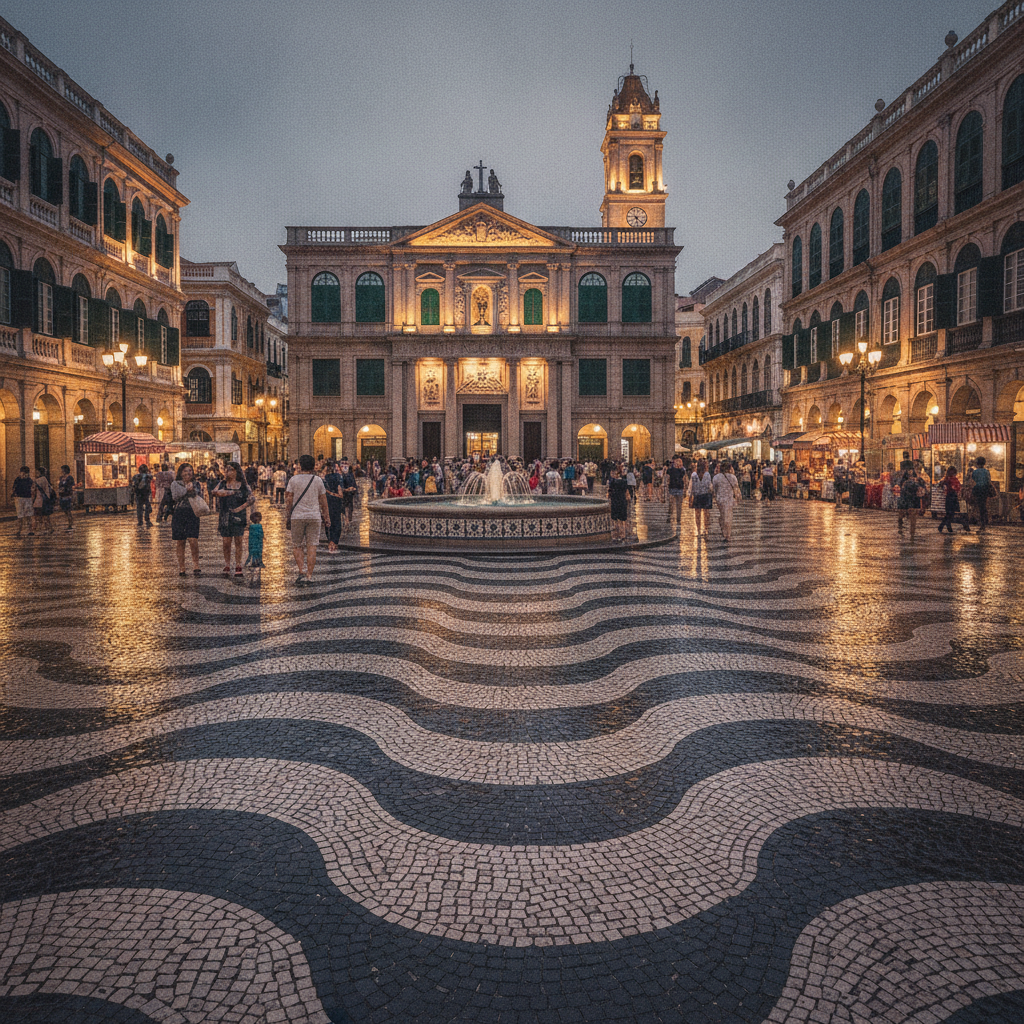
Macau's nightlife and entertainment beyond the casino floor (the evening culture that exists for the non-gambling visitor): the nightlife guide. The Senado Square evening (the pedestrian square and the surrounding lanes of the historic center come alive from 19:00–23:00 with the food stalls (the Portuguese pork chop sandwiches and egg tarts at the street stalls), the buskers on the cobblestone square, and the illuminated Portuguese colonial facades in the warm evening light): the wine bars (the wine bar culture along the Pátio das Virtudes (德仁里) laneway in the historic center—the most densely concentrated bar lane in Macau, where the Macau specialty cocktail (the Fernandes Cerveja mixing Macanese dark beer with local fruit liqueurs) is the most ordered evening drink). The Mandarin's House evening tour (the evening lighting tour of the Zheng Guanying mansion—offered Friday and Saturday evenings): the MGM Cotai Spectacle (MGM澳門—the MGM Cotai indoor tropical forest and the 'MGM Theater'—the performance venue hosting the most avant-garde theatrical productions in Macau). The Fisherman's Wharf (渔人码头—the entertainment complex on the Macau outer harbor waterfront—the open-air complex with its European and Asian themed facades is the most kitsch but most photogenic evening walking destination on the Macau Peninsula waterfront): the late-night Macanese food (the restaurants in the 'Road Taipa'—the old Taipa village center—serving traditional Macanese food until 01:00 on weekends).
Walk this route with audio
Stories play automatically as you reach each stop — no tapping needed.
More in Macau
The Only I.M. Pei Building in Macau, the Wynn Bar With 310 Japanese Single Malt Labels & the 2021 Junket Collapse That Shifted Macau From VIP to Mass Market
The Man Who Held the Gambling Monopoly for 40 Years and Married 4 Women Simultaneously, the World's Most Densely Populated Territory & How Macau's Gaming Revenue Is 3× Las Vegas Despite Half Its Size
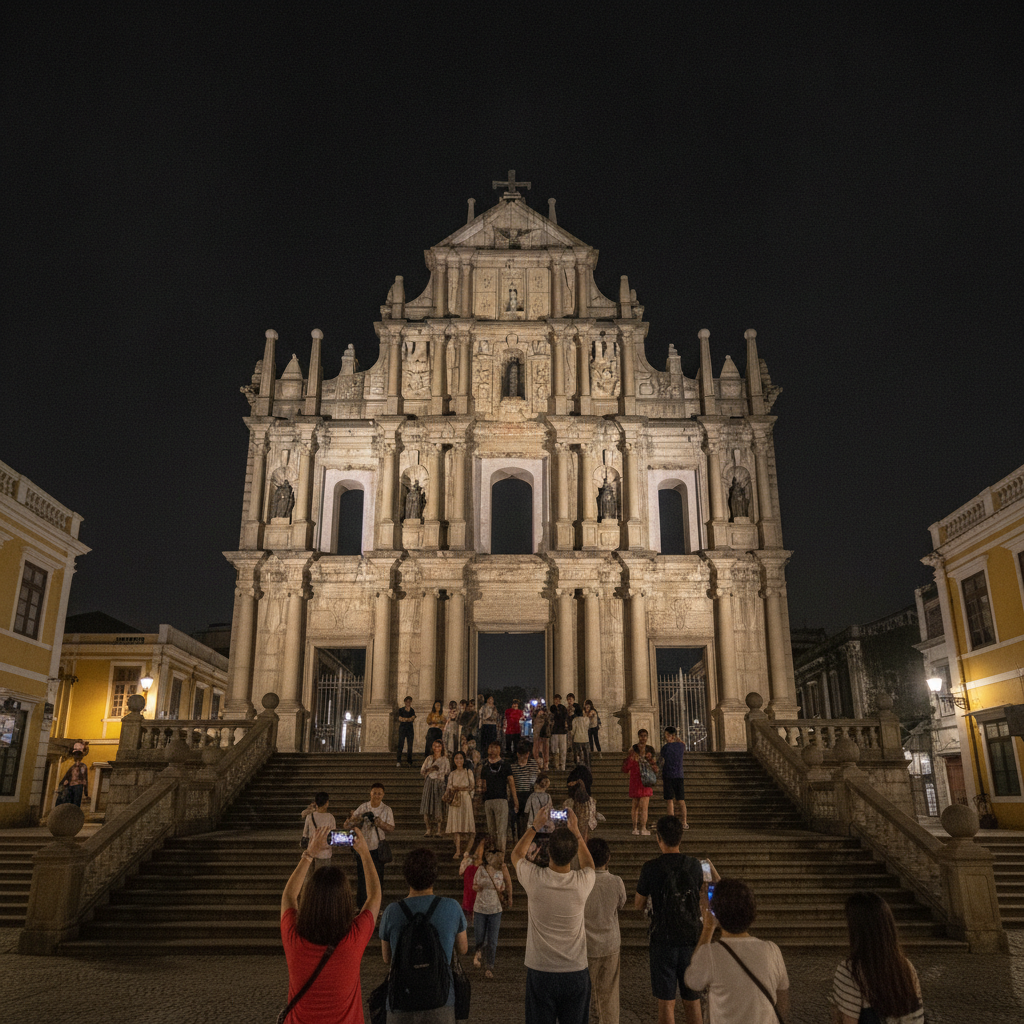
The Façade That Survived the 1835 Fire With Chinese Peonies in a Christian Composition, the 40-Year Casino Monopoly & the 1989 Egg Tart That Launched the Global Egg Tart Industry
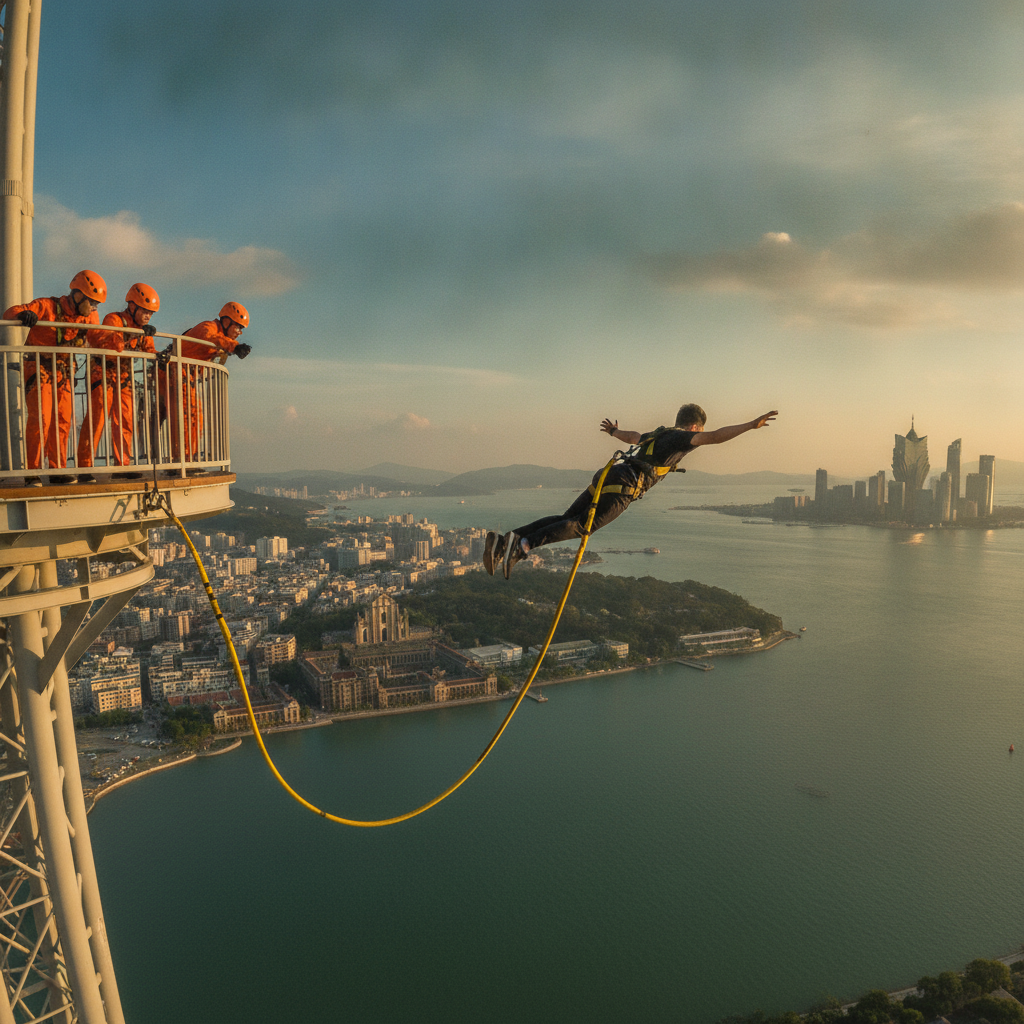
The 50 Remaining Speakers of the Macanese Creole Language, the World's Highest Commercial Bungee Jump & Why Macau Has Set the Same Diversification Target Every Government Since 1999 Without Achieving It