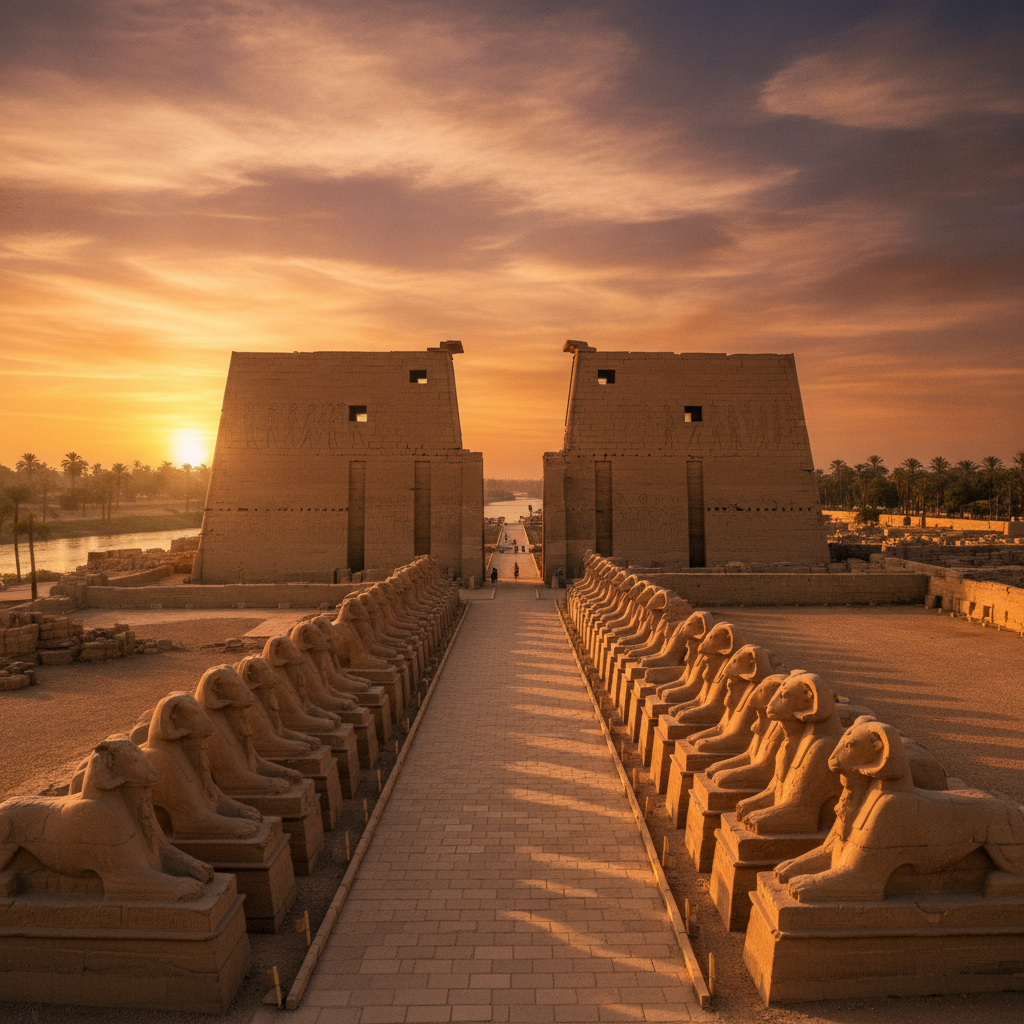
Luxor Complete Legacy - The Grand Egyptian Museum, Antiquities Debate, and Planning Your Perfect Nile Journey
The complete Luxor reference: comparing Luxor with Cairo and Aswan for the optimal Egyptian itinerary; the Grand Egyptian Museum and the complete Tutankhamun collection; the international antiquities repatriation debate (Rosetta Stone, Nefertiti Bust, Dendera Zodiac); Luxor in the literature of Flaubert, Agatha Christie, and Shelley Ozymandias; the accommodation guide from the Winter Palace to budget hostels; and the final legacy of the eternal city of the dead.
- 1
Luxor vs Cairo vs Aswan - Planning the Perfect Egyptian Itinerary
Luxor vs Cairo vs Aswan: the three essential Egyptian destinations compared to help plan the optimal Egyptian journey. Luxor (the greatest concentration of ancient Egyptian monuments: the East Bank (Karnak, Luxor Temple, Luxor Museum) and the West Bank (Valley of the Kings, Valley of the Queens, Deir el-Bahari, Deir el-Medina, Medinet Habu, Ramesseum, Colossi of Memnon): population approximately 500,000: minimum 3-4 days for a proper visit: the best hot air balloon destination in Egypt). Cairo (the largest city in Africa: the Giza Pyramids and the Great Sphinx: the Grand Egyptian Museum (opened 2023) with the complete Tutankhamun collection: the old Cairo Egyptian Museum (soon the Roman-period collections): Islamic Cairo (al-Azhar, the Khan el-Khalili, the Citadel): Coptic Cairo (the Hanging Church, Coptic Museum): minimum 4-5 days). Aswan (the southernmost significant city in Egypt: the Nubian cultural heartland: the Philae Temple (last pagan temple to operate, closed approximately 550 CE): the Aswan High Dam and Lake Nasser: the Unfinished Obelisk: Elephantine Island and Nilometer: the Nubian villages: Abu Simbel day trip or overnight (270 km south): minimum 2-3 days). The optimal Egyptian journey (11-14 days: Cairo 3-4 days, Luxor 4-5 days, Aswan 2-3 days, Nile cruise between Luxor and Aswan 4 days: doing the cruise before or after the major temple visits on land).
- 2
The Grand Egyptian Museum - Tutankhamun Collection and the New Home of Egyptian Heritage
The Grand Egyptian Museum (GEM) near the Giza Pyramids: the largest archaeological museum in the world (approximately 490,000 square meters total): opened in phases from 2021 with full opening in 2023. The Tutankhamun Galleries (the complete Tutankhamun collection (approximately 5,000 objects) was moved from the old Cairo Egyptian Museum to the dedicated Tutankhamun Galleries in the GEM: the golden death mask (11.1 kg gold inlaid with lapis lazuli): the nested coffins (the innermost solid gold coffin weighing 110.4 kg): the golden throne: the guardian statues: the canopic chest: the furniture: all properly displayed with individual lighting and contextual information for the first time). The atrium (the Grand Staircase of the GEM: the 83-ton quartzite statue of Ramesses II at the base of the main staircase (the largest ancient Egyptian statue moved indoors)). The permanent collection (the approximately 100,000-object collection spanning all periods of Egyptian history: the Old Kingdom solar boats: the Middle Kingdom models: the New Kingdom royal art: the Late Period bronzes: the Coptic and Islamic Egyptian collections). The context for Luxor visitors (all Luxor visitors should include a 1-2 day Cairo visit specifically to see the GEM and contextualize the Luxor monuments with the portable objects (statues, jewelry, ritual objects) that were originally in the temples and tombs they visited).
- 3
The Egyptian Antiquities Debate - The Rosetta Stone, the Nefertiti Bust, and Repatriation
The ongoing international debate over the return of Egyptian antiquities removed during the colonial period: the cases, the arguments, and the current state of negotiations. The Rosetta Stone (discovered by French soldiers at Rosetta in 1799: taken by Britain after the French surrender in 1801: in the British Museum since 1802: Egypt formally requested its return in 2022: the British Museum refused). The Nefertiti Bust (the 3,350-year-old limestone and stucco bust discovered at Amarna by Ludwig Borchardt in 1912: export to Germany was made under disputed circumstances (Borchardt is accused of deliberately mislabeling the bust in the Egyptian inspection to avoid restrictions): in the Neues Museum Berlin: Egypt has formally requested return since 1924: Germany has refused). The Young Memnon (the colossal head of Ramesses II from the Ramesseum: removed by Belzoni for the British Museum in 1821: in the British Museum Room 4 (Egyptian Sculpture Gallery)). The Dendera Zodiac (circular astronomical ceiling from the Hathor Temple at Dendera removed by French engineers in 1820: in the Louvre). The arguments (for retention (the universal museum argument: the British Museum argument that the objects are part of the world heritage accessible to all in London): for return (the source country argument: the cultural context argument: the Grand Egyptian Museum as a world-class facility argument)). Egypt position (Egypt is building the Grand Egyptian Museum as the definitive Egyptian heritage institution and has escalated repatriation requests).
- 4
Luxor in Egyptian and World Literature - Flaubert, Agatha Christie, and the Romantic East
Luxor in European and world literature: the city and its ancient monuments have inspired some of the most significant travel writing, fiction, and poetry in Western literature. Gustave Flaubert (Flaubert visited Egypt with his friend Maxime Du Camp in 1849-1850: his letters from Egypt (published posthumously) describe Karnak with extraordinary vividness: the moonlit hypostyle hall: the Sacred Lake: the colossal statues: Flaubert also described the Egyptian women, dancers, and the life of the Nile in letters that shocked his mother when she read them). Agatha Christie (Agatha Christie visited Egypt multiple times in the 1930s while her husband Max Mallowan conducted archaeological work in the Middle East: she wrote Death on the Nile (1937) while staying at the Winter Palace Hotel Luxor: the plot of Death on the Nile is set on a Nile cruise from Aswan to Abu Simbel: the Luxor temples, the Nile cruise, and the Old Cataract Hotel in Aswan all appear in the novel). Percy Bysshe Shelley (Shelley Ozymandias (1818) was inspired by the fallen colossal statue of Ramesses II (the Ozymandias / Usermaatre) at the Ramesseum in Luxor, which Belzoni was in the process of removing to the British Museum when Shelley wrote the poem: the poem is the most famous meditation on the ephemerality of power and the endurance of art in the English language). The Winter Palace Hotel (built 1886-1907 by Thomas Cook as a destination for wealthy travelers on the Nile cruise: Thomas Cook organized the first commercial Nile cruise in 1869: the Winter Palace remains one of the finest colonial-era hotels in the world).
- 5
Luxor Accommodation and Budget Guide - From the Winter Palace to Budget Hostels
The Luxor accommodation guide: from the historic Winter Palace to modern budget options, and the complete budget guide for visiting Luxor at every price level. The Winter Palace Hotel (the Old Winter Palace: built 1886-1907 by Thomas Cook: a Victorian-era grand hotel in a beautiful Nile-side setting with 92 rooms: Agatha Christie wrote Death on the Nile here: one of the most atmospheric hotels in Egypt: the formal dinner at the Winter Palace is a classic Luxor experience: book 3-6 months in advance in the peak winter season). The Sofitel Karnak Luxor (a modern luxury hotel with Nile views near the Karnak Temple: excellent facilities and pool). The Steigenberger Nile Palace (a large 5-star hotel on the Nile Corniche with pool and multiple restaurants). The mid-range (the Mercure Luxor (a dependable mid-range hotel on the East Bank): multiple boutique hotels and guesthouses in Luxor city). The West Bank accommodation (budget guesthouses in the West Bank villages (el-Gezira, el-Bayrat) give immediate access to all the West Bank monuments without crossing the Nile each day: the experience of waking with the Valley of the Kings in view from the room terrace is unique). The budget guide (Luxor is one of the most affordable UNESCO World Heritage cities in the world: the entry tickets are the primary cost (the Luxor Pass at USD 100-200 covers multiple days): food is inexpensive (koshary restaurants from approximately 20-30 EGP): accommodation ranges from approximately USD 10-15 (dormitory) to USD 300+ (Winter Palace)). The best season (October-April: November-February (peak): the summer months are very hot (40+ C) but also extremely quiet and inexpensive).
- 6
Luxor Final Legacy - The Eternal City of the Dead and the Living Heritage of the Nile
Luxor final legacy: the enduring significance of the world greatest open-air museum and its place in the story of human civilization. The scale (the ancient Egyptians built the largest stone structures in the ancient world, the longest-running religious tradition in history (approximately 3,000 years of continuous practice), and the most complex funerary art tradition in the ancient world: and the center of this civilization for 500 of its 3,000 years was Luxor (ancient Thebes)). The Egyptology revolution (the European rediscovery of Luxor from Napoleon (1798) through Champollion (1822) to Carter (1922) launched the modern discipline of archaeology and recovered 3,500 years of Egyptian history from complete obscurity within 200 years of scholarship). The living heritage (approximately 500,000 people live in modern Luxor: the town grew up on and around the ancient temples: the Abu el-Haggag Mosque still occupies Luxor Temple: the Coptic community maintains one of the oldest Christian traditions in the world: the alabaster craft tradition continues the ancient quarrying and stoneworking tradition). The conservation challenge (approximately 4 million tourists visit Luxor annually: the breath moisture from visitors damages the painted tomb walls: the Tomb of Nefertari (QV66) was closed for conservation for decades: the Valley of the Kings manages tomb rotations to reduce damage: the conservation of this irreplaceable heritage for future generations is the primary challenge of the 21st century for Egyptian authorities and international Egyptology).
Walk this route with audio
Stories play automatically as you reach each stop — no tapping needed.
More in Luxor
Luxor: Akhenaten, Nefertiti, Tutankhamun, and the Amarna Revolution

Luxor by River: The Nile Cruise to Aswan, the Dahabiyya Sailing Experience, the Temple of Edfu, and the Kom Ombo Temple
Luxor: The Nile Flood, Egyptian Afterlife, Coptic Christianity, and the Nile Cruise Guide
Luxor: Karnak, Luxor Temple, Valley of the Kings, and the World Greatest Open-Air Museum

Luxor Local Life: The East Bank Souq, the Alabaster Workshops, the Papyrus Art, and the Most Practically Lived-In Ancient City
