Lucerne Cultural Institutions — KKL, the Swiss Transport Museum, Wagner & the Art Scene
Lucerne's cultural landscape extends from Jean Nouvel's KKL concert hall to the Richard Wagner Villa, the Swiss Transport Museum, and the Rosengart collection — a circuit of the most distinctive museum experiences in central Switzerland.
- 1
The KKL — Jean Nouvel's Masterpiece on the Lake
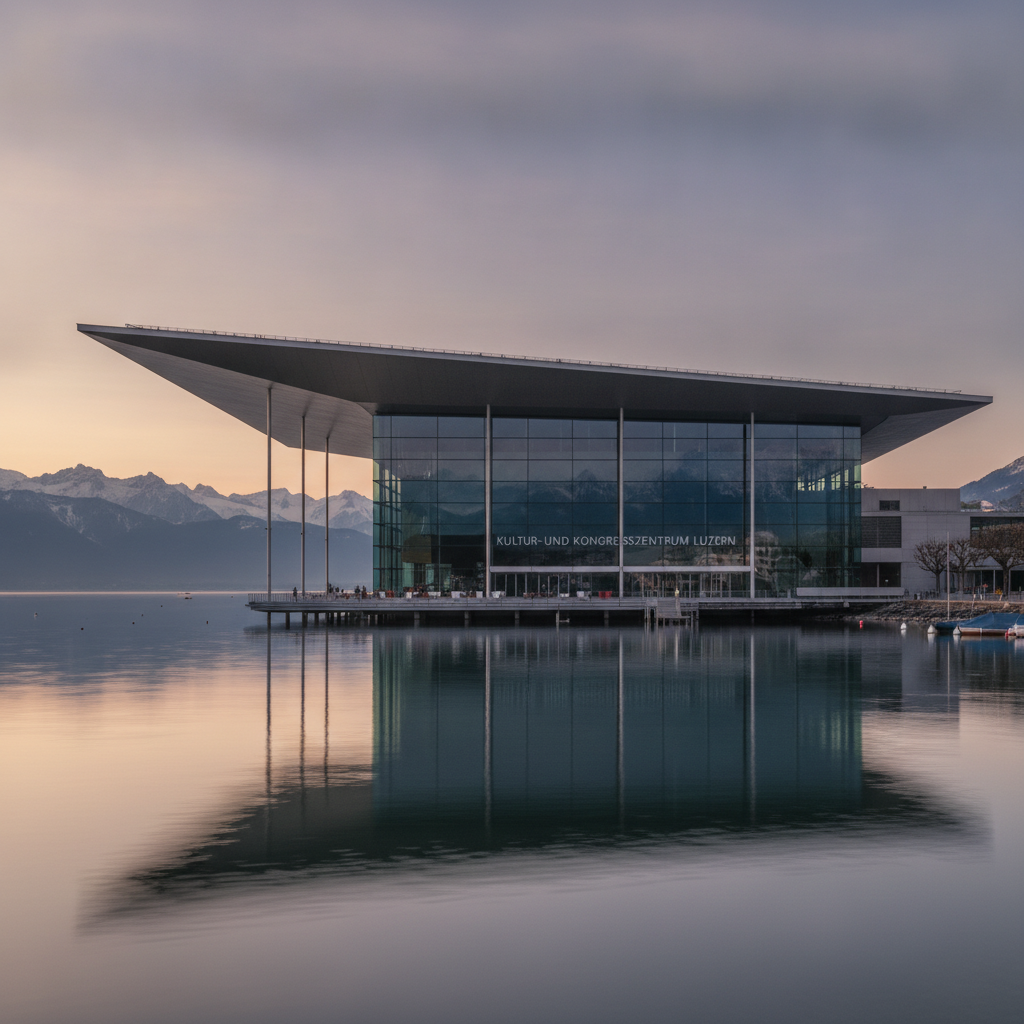
KKL Luzern (the Kultur- und Kongresszentrum Luzern, Europaplatz 1, the multipurpose cultural centre designed by Jean Nouvel and opened 1998, the most architecturally significant building in Lucerne and one of the most important concert halls in Europe): the Concert Hall (the 1,840-seat KKL Concert Hall, the acoustically engineered by Russell Johnson of Artec Consultants — the moveable concrete ceiling panels adjusting the reverberation time from 1.7 to 2.2 seconds for different repertoire, the most sophisticated variable acoustic system in Switzerland, the home of the Lucerne Symphony Orchestra and the Lucerne Festival, the concert programme at kkl-luzern.ch, the hall open for visits during the daytime when not in use for rehearsals at no charge), the Lucerne Festival (the annual festival August-September, the world's most prestigious contemporary classical festival — the festival week programme at lucernefestival.ch, the tickets available from March for the August event at CHF 40-280 per concert), the KKL roof terrace (the flat steel roof extending 45m over the lake surface, the public access to the roof level via the interior elevator during the KKL building open hours, the roof the finest single elevated viewpoint over the lake surface in Lucerne without the cable car ascent — the view from the roof encompassing the lake, the Pilatus, and the Old Town from the elevated lake-level position) and the KKL art collection (the site-specific art works commissioned for the KKL interior — the Joseph Kosuth neon text installation in the entrance hall, the Miró tapestry in the Council Chamber, and the 23 commissioned works throughout the building — the most concentrated public art commission of the 1990s in Switzerland).
- 2
The Swiss Museum of Transport
Verkehrshaus der Schweiz (the Swiss Museum of Transport, Lidostrasse 5, the most visited museum in Switzerland at 800,000+ visitors annually, the most comprehensive transport history museum in Europe, €26 adults, daily 10am-6pm): the railway hall (the central hall with the original SBB steam locomotives, the Ae 8/14 — the most powerful electric locomotive in the world when built 1931, the locomotive that established Switzerland's reputation for precision electrical engineering — and the historical carriages of the 19th-century Swiss rail expansion, the most complete Swiss railway technology collection in a single building), the aerospace collection (the Swiss aviation history from the early 20th century to the contemporary Pilatus aircraft, the Fokker F.VII that flew the first Swiss Alpine crossing 1919, the Swissair fleet documentation — the Swissair the most punctual airline in the world 1950s-1990s, the airline collapsed 2001 in the Swissair Grounding the most traumatic corporate failure in Swiss history — and the Space Hall with the Swiss-built satellite components), the Swiss Cheese Adventure (the 3D interactive exhibition dedicated to the production of Swiss cheese — the Emmental, the Gruyère, and the Appenzeller — the most unusual dedicated exhibition in a transport museum, the exhibition the single most visited section of the museum by Swiss primary school groups), the Hans Erni Museum (the dedicated museum to the Lucerne-born artist Hans Erni 1909-2015, the painter who created the most widely reproduced Swiss public art of the 20th century including the Swiss PTT postage stamps, the Olympic posters, and the UNICEF Christmas cards — the museum within the Transport Museum building, included in the entry price) and the IMAX cinema (the largest IMAX screen in Switzerland at the Transport Museum, the 600-seat IMAX cinema the primary entertainment film venue in Lucerne, the IMAX documentary programme included in the museum entry).
- 3
The Richard Wagner Museum at Tribschen
Richard Wagner Museum (Wagnerweg 27, the Villa Tribschen on the Lucerne lakeside 2km south of the Old Town, the house where Richard Wagner lived 1866-1872, the most important single Wagner residence outside Bayreuth, CHF 12 adults, Tuesday-Sunday 11am-6pm, accessible by bus 6 or by bicycle on the lakeside path in 20 minutes): the Wagner years at Tribschen (the 6 years at Tribschen the most personally stable and the most compositionally productive period of Wagner's life — at Tribschen he completed: Die Meistersinger von Nürnberg 1868, the first publicly acclaimed Wagner opera; Siegfried Act III; the Siegfried Idyll — the orchestral birthday surprise for Cosima composed in secret and first performed on the staircase of the Villa Tribschen on Christmas morning 1870 — and the conceptual development of the Ring cycle, the 6 Tribschen years producing 2 of Wagner's most important works and the personal transformation from the exile to the celebrated composer), the museum collection (the original furniture of the Wagner Tribschen period — the piano on which Wagner composed the Siegfried Idyll, the writing desk, the portrait collection including the Hans von Bülow period photographs — and the musical instruments collection, the most complete Wagner domestic object collection in any Swiss institution, the programme notes and the composition sketches on display in the rotating exhibitions), Nietzsche at Tribschen (Friedrich Nietzsche visiting Tribschen 23 times 1869-1872 as Wagner's closest intellectual companion — the Nietzsche-Wagner friendship at its most intense during the Tribschen years, the friendship ending definitively after the Bayreuth Festival premiere of 1876 when Nietzsche found Wagner's music too popular, the Tribschen records the most complete documentation of the Nietzsche-Wagner intellectual friendship before its breakdown) and the lakeside walk (the Tribschen peninsula the most peaceful park in Lucerne — the 2km lakeshore walk from the Transport Museum to the Wagner Villa through the Tribschen Naturschutzgebiet nature reserve, free, always accessible, the most relaxing waterfront walk available without leaving the greater Lucerne city area).
- 4
The Lucerne Festival and Classical Music Heritage
Lucerne and classical music (the most important classical music festival city in Switzerland, the Lucerne Festival the annual gathering of the world's greatest orchestras and soloists): the Lucerne Festival history (founded 1938 by the conductor Arturo Toscanini and the impresario Ernest Ansermet in response to the Salzburg Festival being compromised by the Nazi Anschluss — the first Lucerne Festival at the Wagner Villa Tribschen in August 1938, conducted by Toscanini, the political context giving the festival its initial identity as the 'free' alternative to the Nazi-adjacent Salzburg, the festival growing to its current scale under successive artistic directors — the Rafael Kubelík period 1950s, the Claudio Abbado period 2003-2013 the most celebrated, the Abbado Lucerne Festival Orchestra assembled from the finest orchestral musicians in the world for 3 weeks per year the most remarkable orchestral formation of the 21st century): the venue circuit (the KKL Concert Hall the primary venue, the Luzerner Theater for the chamber operas, the Jesuitenkirche for the sacred music, and the Museum of Natural History courtyard for the outdoor summer concerts, the most architecturally varied festival venue circuit in Switzerland), the contemporary music programme (the Lucerne Festival Forward the autumn contemporary music wing, the Lucerne Festival Piano at the KKL the spring piano recital series — the 3 annual festival wings together making Lucerne the most densely programmed classical music city in Switzerland per capita) and practical access (the train from Zurich to Lucerne 45 minutes at CHF 23, the most convenient major city access to the festival — the Zurich-based visitor attending the festival by morning train and returning in the evening the correct strategy, the same-day purchase of the orchestra standing tickets at the KKL box office from 1 hour before the concert the most affordable festival access at CHF 30-50 per concert).
- 5
Lucerne Practical — Swiss Currency, Accommodation and the Swiss Pass
Lucerne practical guide: currency (Switzerland uses the Swiss Franc — CHF — not the Euro, the current exchange rate approximately CHF 1.05 per Euro and CHF 0.90 per USD, the most expensive country in Europe for the visitor by purchasing power — the Lucerne restaurant dinner at CHF 40-70 per person, the cappuccino CHF 5-6, the public transport single trip CHF 2.60, the supermarket — Migros or Coop — the most cost-effective food source with the prepared meals at CHF 8-15), accommodation (the Lucerne accommodation the most expensive in German-speaking Switzerland after Zurich — the Old Town hotels: the Hotel des Balances at Weinmarkt the most historically located, the Hotel Schwanen near the Kapellbrücke the most centrally located, rates CHF 180-350 per night; the youth hostel at Am Rotsee the most affordable at CHF 45-85 per night including breakfast; the Airbnb rentals in the lake suburbs 20 minutes from the Old Town at CHF 80-150 per night the most cost-effective private accommodation), tipping (the Swiss tipping custom: round up to the nearest franc on small purchases, 5-10% on restaurant meals, tip in cash even when paying by card — the card tip often does not reach the server — the Swiss service charge not automatically included in the restaurant bill, the correct approach is to say 'stimmt so' — 'keep the change' — when paying), the Swiss Travel Pass (the most important single purchase for the Swiss visitor: the 3-day pass at CHF 244 adults covering all SBB trains, the lake steamers, the PostBus, 500 museums, and the discounts on the mountain railways — the pass available at the Lucerne train station and at sbb.ch) and the Lucerne Card (the city tourist card at CHF 29/24h, CHF 39/48h, CHF 49/72h covering the local LuzernMobil public transport, the museum entry to 5 Lucerne museums including the Transport Museum and the Rosengart Collection, the lake boat tours, available at the Lucerne tourist information at Zentralstrasse 5).
- 6
The Lucerne Natural History Museum and the Swiss Science Scene
Natur-Museum Luzern (Kasernenplatz 6, the Natural History Museum of Lucerne, the most family-friendly and the most locally specific museum in Lucerne, CHF 8 adults, Tuesday-Sunday 10am-5pm, the free admission on the first Sunday of each month): the geological collection (the geology of the Swiss Alps displayed at the most comprehensive regional level available in central Switzerland — the Alpine formation from the Tethys Sea floor 250 million years ago through the Eocene collision of the African and the Eurasian plates 65 million years ago to the Pleistocene glaciation that carved the Lake Lucerne basin 20,000 years ago, the educational sequence the most accessible single-room explanation of how Switzerland was built, the crystal and the mineral specimens from the Swiss Alpine deposits — the Bergkristall quartz from the Uri Alps, the amethyst from the Ticino, and the tourmaline from the Valais the most visually striking displays), the zoology section (the Swiss fauna displayed in the habitat diorama format — the roe deer of the Swiss forest, the chamois of the Alpine zone, the ibex reintroduced to the Alps from Piedmont in the 1910s after extinction in the 18th century, the marmot — the most characteristically Alpine rodent, the animal that whistles when the eagle approaches, the sound the most characteristic sound of the Swiss high Alps above 2,000m — and the aquatic fauna of the Swiss rivers and lakes, the lake trout and the char of Lake Lucerne among the freshwater fish on display), the butterfly collection (the Central Switzerland butterfly collection the most complete of any regional natural history museum in the Swiss Alps — 1,200 pinned specimens representing 180 species found in the Canton of Lucerne, the edelweiss — the Alpine flower that gave its name to the Rogers and Hammerstein song in The Sound of Music — the most culturally resonant Swiss plant specimen in the building) and the Museum im Bellpark (the photography and visual culture museum at Arsenalstraße 28 in Kriens 3km from the city centre, accessible by bus, the most interesting alternative art space near Lucerne for the visitor interested in the Swiss documentary photography tradition — the Swiss photography of the 20th century one of the strongest national documentary photography traditions in Europe).
Walk this route with audio
Stories play automatically as you reach each stop — no tapping needed.
More in lucerne
Lucerne Mountains — Pilatus, the Rigi, the Stanserhorn & the Golden Roundtrip
Swiss History from Lucerne — the Rütli, the Federal Charter & the Wilhelm Tell Legend
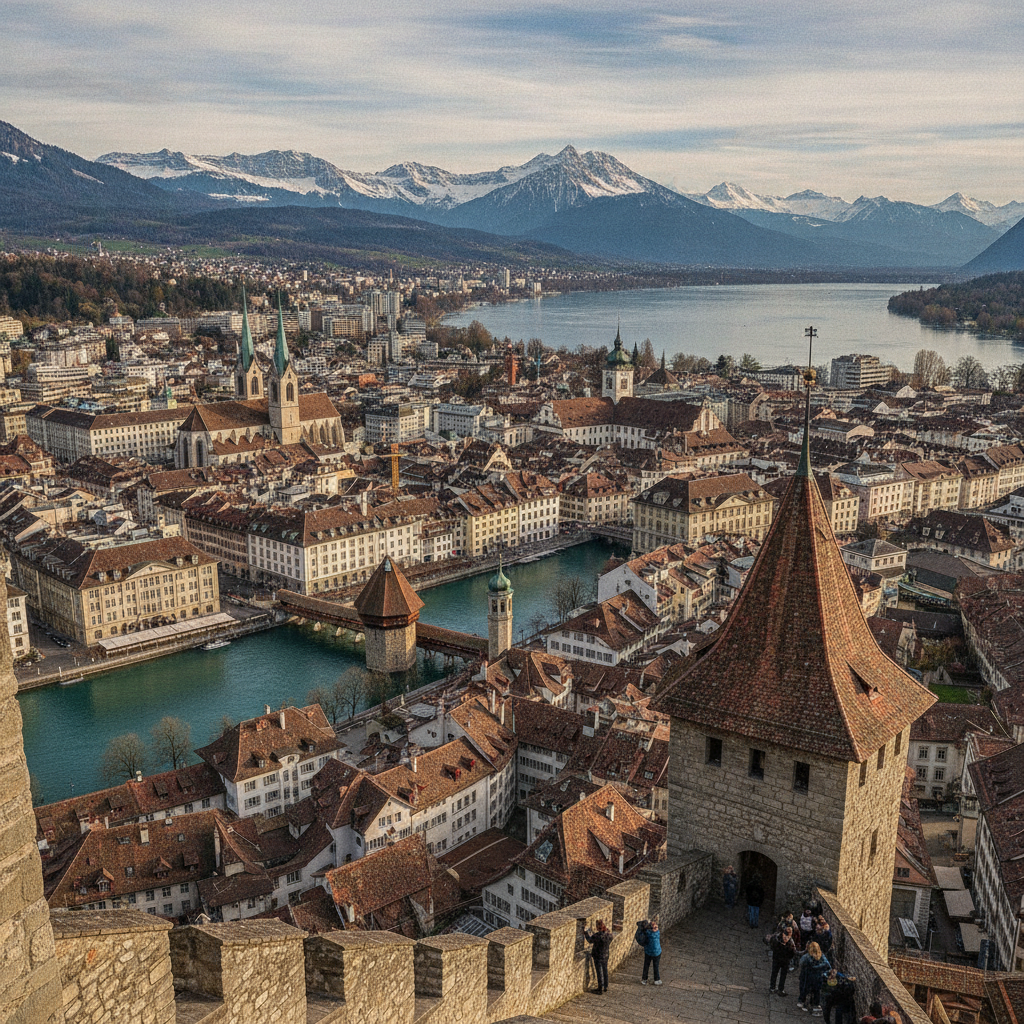
Lucerne Swiss Culture — Fondue, the Museggmauer, the Hofkirche & Swiss Traditions
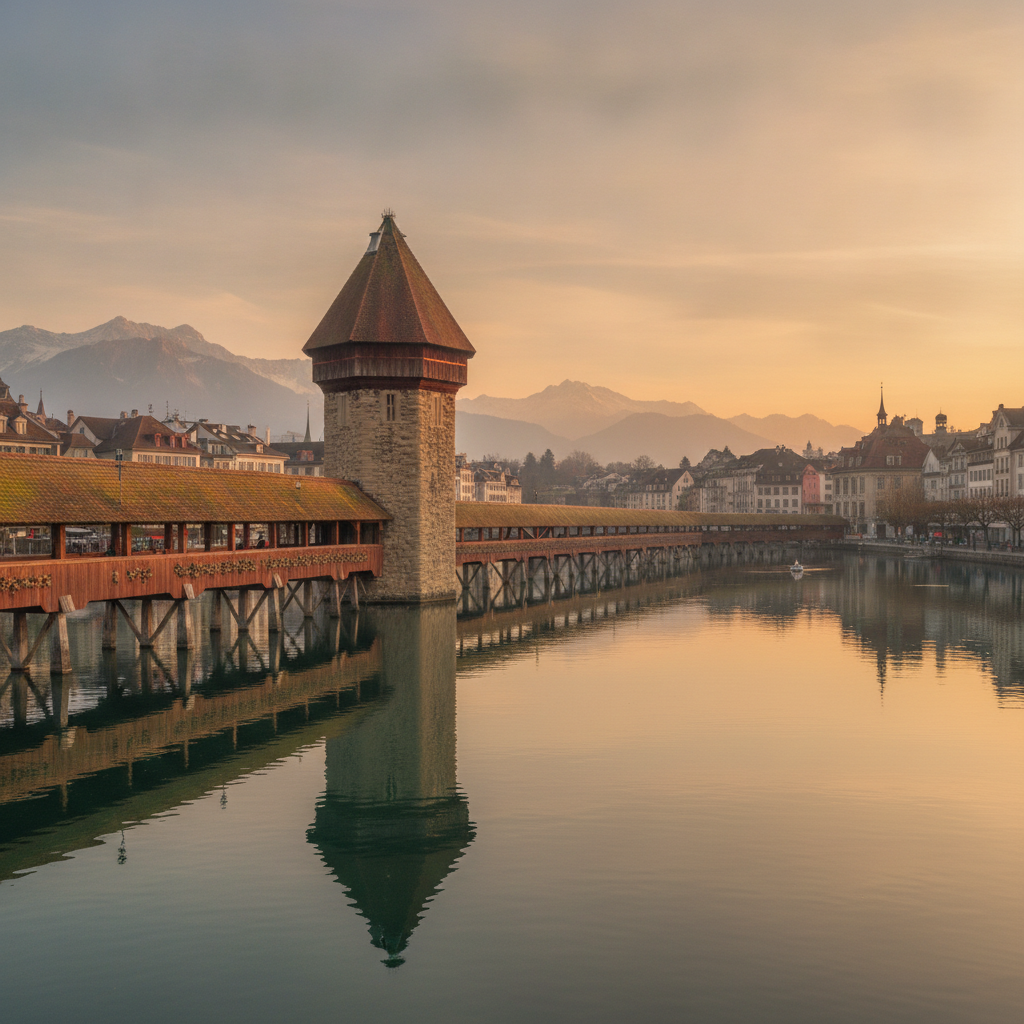
Lucerne — the Chapel Bridge, the Old Town & Lake Lucerne