Lucerne Food & Nightlife — Swiss Fondue, the Old Town Restaurants & the Lake Bar Scene
Lucerne's food scene centres on the Swiss culinary traditions — the cheese fondue, the raclette, the rösti, and the Zürcher Geschnetzeltes — served in the Old Town restaurants with the lake view and the mountain backdrop that make the Swiss dining experience unique.
- 1
Swiss Cheese Fondue — the Lucerne Essential
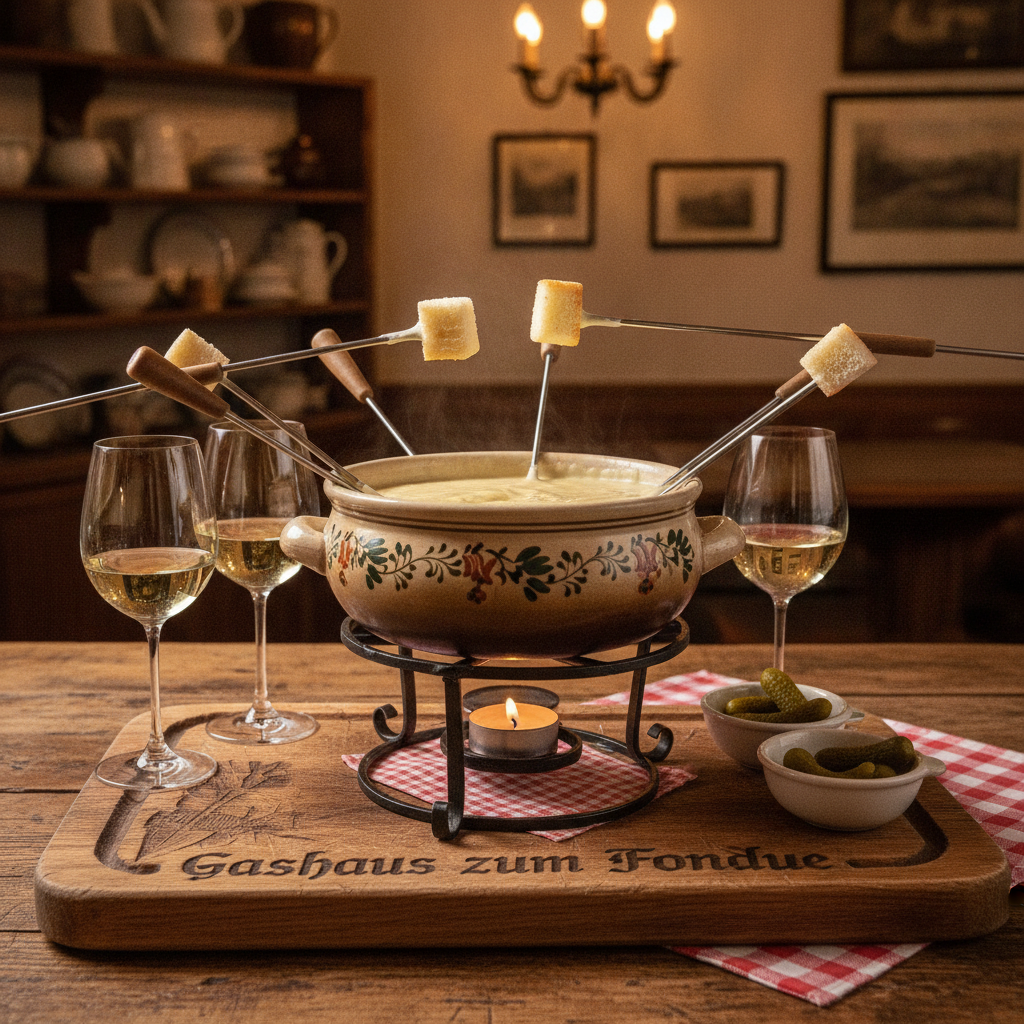
Fondue (the Swiss national dish, a pot of the melted cheese — the classic moitié-moitié mixture of half Gruyère and half Vacherin Fribourgeois — heated with the white wine and the kirsch cherry brandy in the ceramic caquelon pot over the spirit flame, the communal dipping of the bread cubes on the long forks into the shared pot the defining social eating ritual in Switzerland): the restaurants (the best addresses for the fondue in Lucerne: Restaurant Galliker at Schützenstraße 1 — the family restaurant since 1856, the most historically embedded Lucerne restaurant, the fondue at CHF 28 per person including the accompaniments — the pickled onions, the gherkins, and the potato cubes — the most authentic local fondue experience in Lucerne; Zunfthaus zur Pfistern at Kornmarkt 4 — the Baroque guildhall restaurant in the most elaborately painted building in the Old Town, the fondue at CHF 35 per person with the lake view from the terrace; and the Chesery at Rathausquai 12 — the specialist cheese restaurant, the most extensive fondue variety menu in Lucerne with the truffle fondue, the tomato fondue, and the champagne fondue variations at CHF 32-55 per person), the fondue etiquette (the Swiss fondue rules: stir the cheese in the figure-8 pattern to prevent the separation of the cheese and the wine — the Schichtung or layering of the separated fondue the most embarrassing fondue failure; never lose the bread in the pot — the tradition requires the man who loses the bread to buy the next bottle of wine, the woman to kiss every man at the table; the croûte — the crispy cheese crust at the bottom of the pot — the most prized fondue element, shared among the diners after the cheese is finished), raclette (the second Swiss cheese dish — the wheel of Valais Raclette cheese melted under the grill or by the open fire and scraped — racler — onto the plate, served with the boiled potatoes and the pickled onions and cornichons, the most accessible Swiss cheese dish at CHF 18-28 per portion at the Lucerne restaurants) and the Rösti (the Swiss potato hash, cooked as the full breakfast or the side dish, the Berner Rösti with the bacon and the egg the most complete version, at CHF 12-18).
- 2
The Old Town Restaurants and the Lake Terraces
Lucerne restaurant scene (the Old Town and the lakefront the primary dining zones, the restaurants dividing between the tourist-oriented Old Town establishments and the more locally frequented lake suburb restaurants): the Old Town (Kornmarkt and the Hirschenplatz the centre of the Old Town restaurant district — the Wirtshaus Galliker at Schützenstraße 1 the most locally authentic; the Restaurant Luz at Hirschengraben 18 the most contemporary Swiss cuisine in the Old Town; and the Takoda at Mühlenplatz 5 the best-value lunch in the pedestrian zone at CHF 18-22 for the daily set menu), the lake terrace restaurants (the restaurants on the Nationalquai and the Rathausquai with the lake and the Chapel Bridge view: the Ristorante Bacco at Furrengasse 14 the most consistently recommended Italian restaurant in Lucerne, the Restaurant Seeburg at Seeburgstrasse 61 on the lake 2km east of the Old Town the most romantic evening dinner position with the lake view — the terrace extending over the lake on wooden piers — at CHF 45-70 per main), the Bahnhofstrasse food hall (the Migros restaurant in the Migros Bahnhofstrasse the most practical lunch option in Lucerne at CHF 10-15 for the hot daily menu — the Swiss system of the supermarket self-service restaurant the most underused resource for the visitor on a budget) and the market fresh ingredients (the Lucerne Saturday market at Weinmarkt and Mühlenplatz the source for the fresh cheese, the Speck, the bread, and the seasonal vegetables for the self-catering visitor — the Lucerne lakeshore picnic with the market purchases the most cost-effective and the most scenically satisfying lunch option in the city at CHF 10-20 per person).
- 3
The Lucerne Nightlife — the Old Town Bars and the Lake Clubs
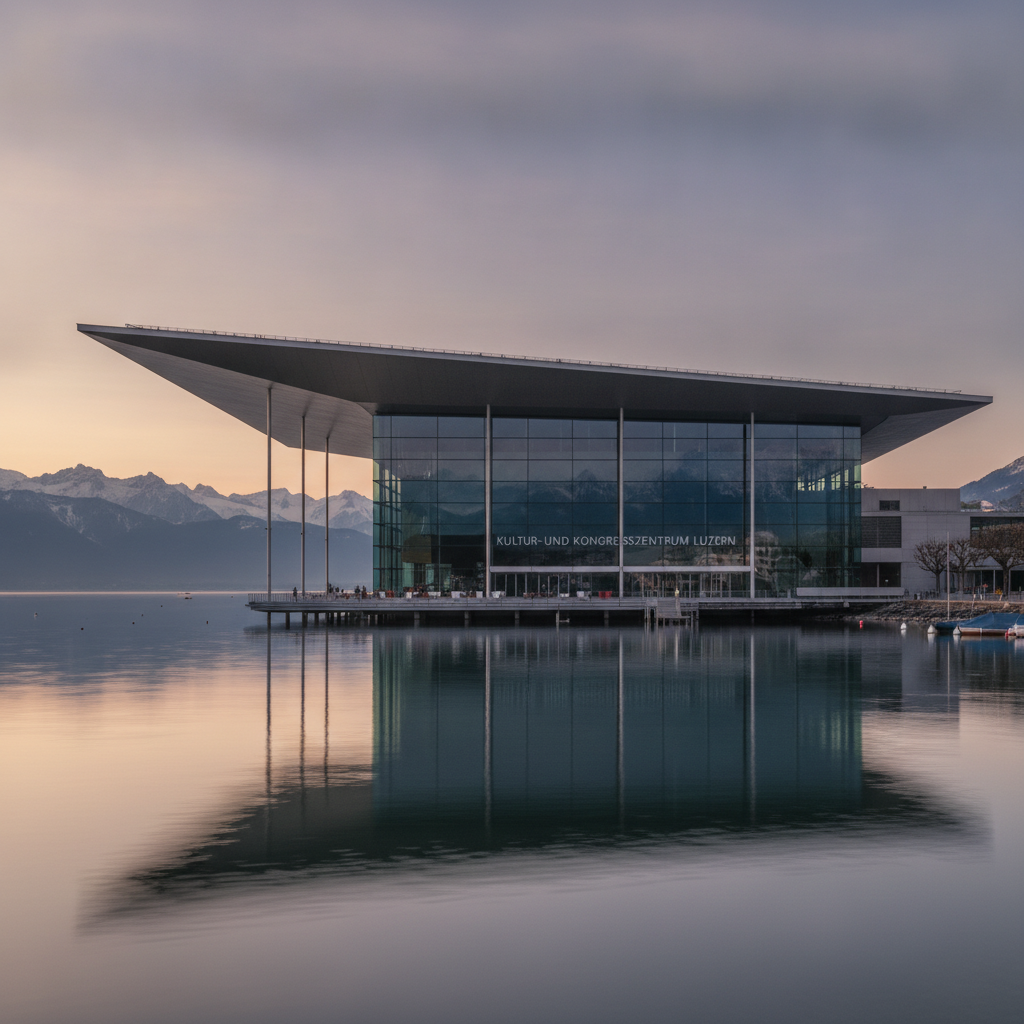
Lucerne after dark (the city's evening culture concentrated in the Old Town bars and the KKL lakefront, a relatively modest nightlife scene compared to Zurich but with the specific charm of the medieval setting): the Old Town bars (the Schwanenplatz and the Furrengasse the primary bar district — the Rathaus Brauerei at Unter der Egg 2 the most visited pub in Lucerne, the house-brewed Lucerne lager and the dark beer at CHF 7-9 per 0.5L glass, the medieval vaulted interior the most atmospheric setting in the Old Town bar scene; the Lörzenbrau at Weystraße the most local-feeling bar, the Lucerne sports bar tradition — the FC Luzern football club matches on the screen, the most locally attended bar experience), the KKL terrace (the outdoor bar on the KKL lake terrace in summer, open from 6pm to midnight, the most scenically positioned outdoor bar in the city — the lake surface and the Pilatus silhouette in the evening the most dramatic bar backdrop in Switzerland, the pre-concert drinks before the KKL concert the primary use), the Schüür (the Schüür at Tribschenstraße 1, the alternative music venue and the concert hall 1km from the Old Town, the most important live music venue in Lucerne for the independent and the alternative acts, the capacity 600, the programme at schuur.ch), and the Lake Cruise evening (the evening lake cruise on the electric motor boats from the Schiffstation Luzern at Pier 1, the evening boat rental from April to September — the most unusual Lucerne evening activity, the sunset over the Pilatus seen from the lake surface the most dramatic Lucerne visual experience, the boat rental at CHF 45-80 per hour for the motorboat accommodating 6 people).
- 4
Lucerne's Swiss Army Knife and Craft Souvenir Culture
Lucerne Swiss souvenirs (the Swiss souvenir culture concentrated in the Old Town shops from the Kapellbrücke to the Schwanenplatz, the balance between the authentic Swiss product and the mass-produced tourist item requiring the specific knowledge the visitor typically lacks): the Victorinox Swiss Army Knife (the most internationally recognized Swiss manufactured object, invented 1891 by Karl Elsener in Schwyz — the same town as the Rütli founding oath — for the Swiss Army, the knife the canonical Swiss tool combining the blade, the screwdriver, the can opener, the saw, and the corkscrew in the red handle with the white cross, the Victorinox Lucerne retail at the Victorinox store at Schwanenplatz 7, the price range from CHF 22 for the Classic SD to CHF 180 for the SwissChamp 33-function model, the factory visit at the Victorinox main store in Schwyz 35 minutes from Lucerne by train the most direct source), the Swiss chocolate (the Läderach Chocolatier at Weggisgasse 11 the most recommended Lucerne chocolate shop — the fresh chocolate slab sold by the 100g at CHF 4-7, the Läderach methodology of the fresh chocolate made without preservatives requiring consumption within 3 weeks the most authentic Swiss chocolate purchase; the Confiserie Bachmann at Mühlengasse 1 the most historical Lucerne confectioner, founded 1847, the Luzerner Lebkuchen the most Lucerne-specific souvenir food at CHF 3-5 per piece), the Swiss watches (the Schwanenplatz the primary Lucerne watch retail street — the Bucherer at Schwanenplatz 5 the most comprehensive, the Gübelin at Schwanenplatz 1 the most prestigious — the tourist watch purchase strategy: the VAT refund form for non-EU residents, the minimum purchase CHF 300, the refund 7.7% of the purchase price processed at the Zurich or Geneva airport) and the Swiss textiles (the Sturzenegger at Schweizerhofquai 3 the most complete Swiss embroidery and linen shop in Lucerne, the St. Gallen machine-embroidered fabrics the most specifically Swiss textile product, the handkerchiefs at CHF 15-30 and the tablecloths at CHF 80-250 the most practical format for the visitor).
- 5
Lucerne's Architecture — from the Medieval to Jean Nouvel
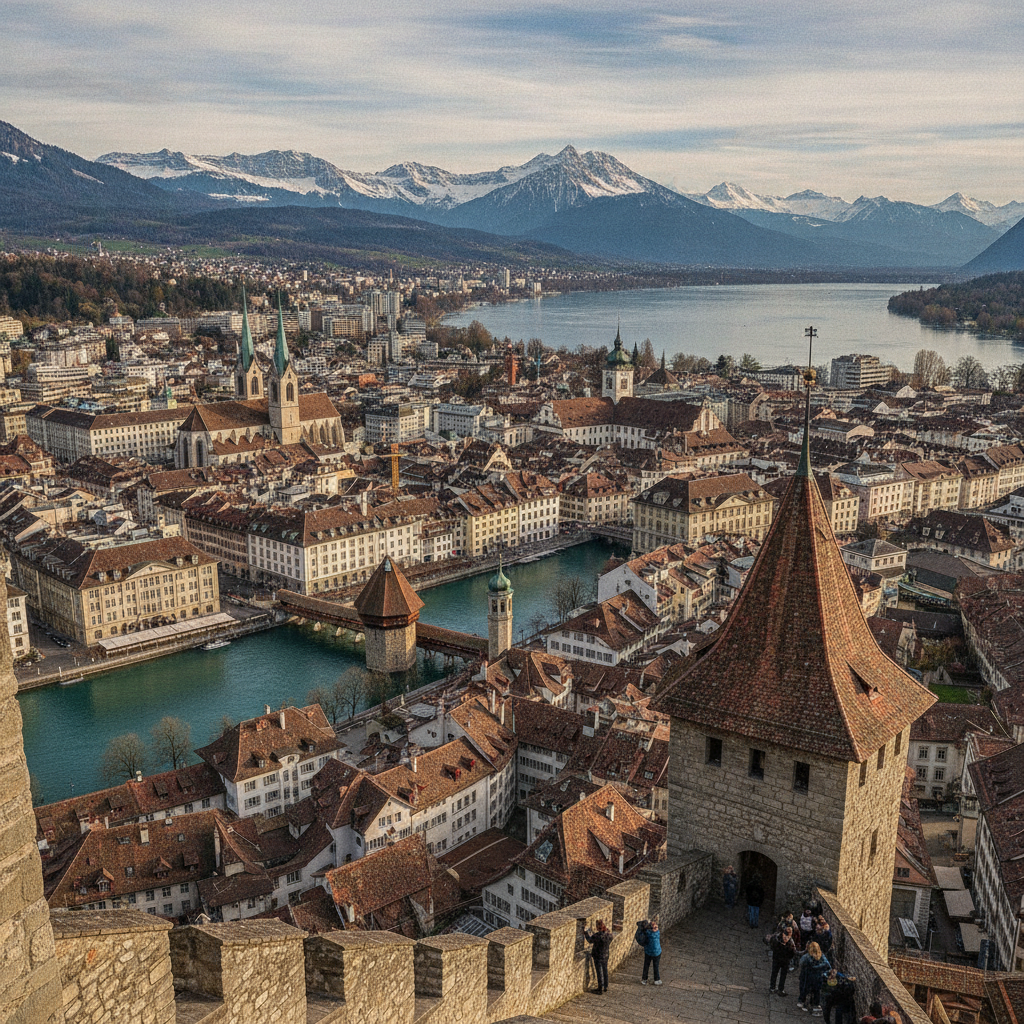
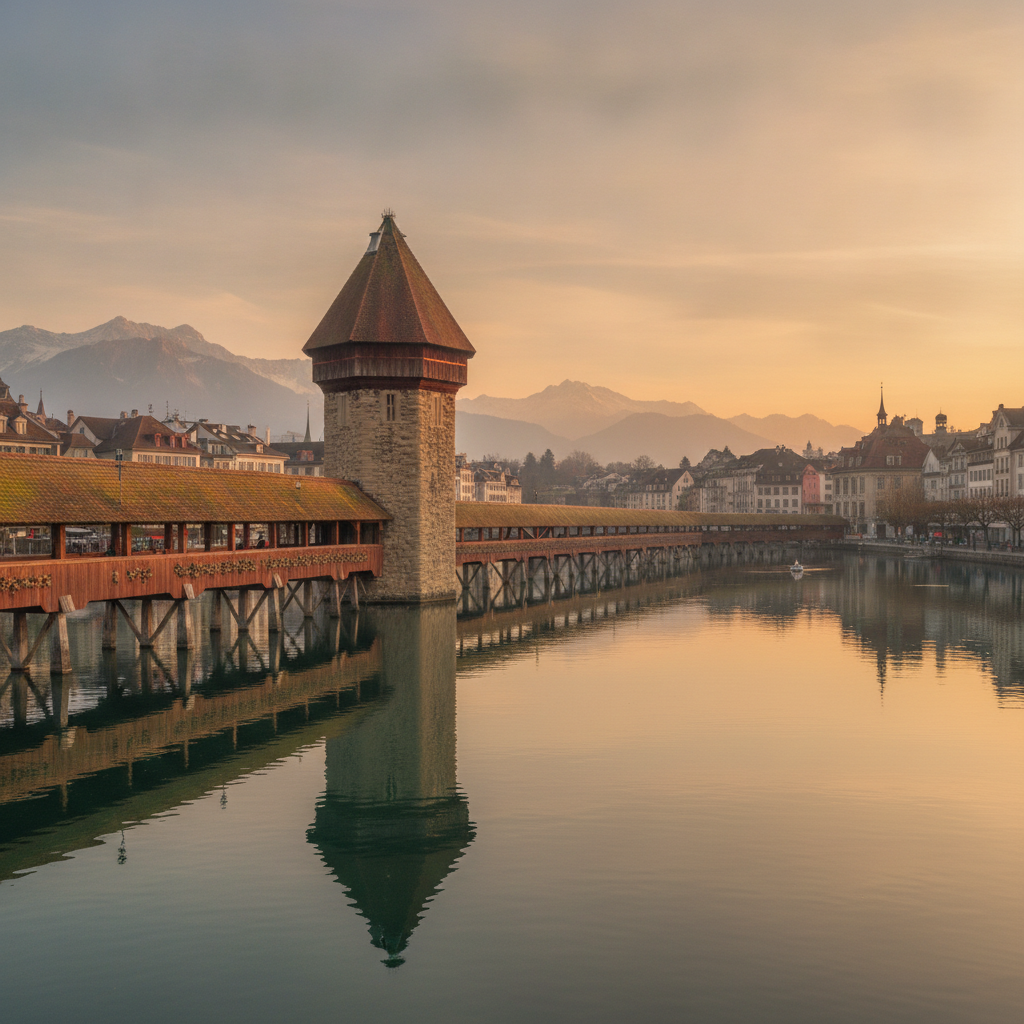
Lucerne architecture walk (the 700-year arc of building in Lucerne from the 14th-century Kapellbrücke to the 1998 KKL, the most varied single-city architectural survey available in central Switzerland): the medieval layer (the Kapellbrücke 1333, the Museggmauer 1350-1408, the Spreuerbrücke 1408 — the three surviving medieval structures that define the Lucerne skyline, the covered wooden bridge tradition specific to Switzerland and the southern German cities, the city wall tradition the most complete in Switzerland, the combination of the two bridge and the wall giving Lucerne the most medieval-concentrated central European skyline available without leaving the lakeside), the Renaissance and Baroque (the Rathaus 1602-1606 the primary Renaissance civic building, the Zunfthaus zur Pfistern 1505 with the late Gothic and Renaissance elements, the Jesuit Church 1666-1677 the first Baroque church north of the Alps — the chronological sequence from Gothic to Baroque visible in a 500m walk from the Spreuerbrücke to the Jesuitenkirche the most compressed architectural history in Switzerland), the 19th century (the Hotel National 1870 and the Hotel Schweizerhof 1845 on the Schweizerhofquai the most complete Belle Époque hotel facades in Lucerne, the tourism architecture of the Swiss mountain resort era, the Schwanenplatz and the National Quai ensemble the most photographed Belle Époque lakefront in Switzerland), the KKL 1998 (the Jean Nouvel building the defining single modernist intervention in the Lucerne skyline — the flat roof the element most visible from the Kapellbrücke, the building completing the 700-year progression from the horizontal covered bridge to the horizontal steel roof over the lake, both elements defined by the horizontal line above the water) and the Tschuggen Hotel Arosa (not in Lucerne but 2 hours away, the 2006 Tschuggen Grand Hotel extension by Mario Botta — the leaf-shaped glass panels the most internationally recognized Swiss contemporary hotel architecture, accessible as a day spa visit from Lucerne).
- 6
Lucerne's Seasonal Calendar — from the Summer Festival to the Winter Market
Lucerne annual calendar (the seasonal events that structure the Lucerne visitor experience): summer (June-August the peak season — the Lucerne Festival in August the primary cultural event, the lake swimming at the Lido, the mountain excursions to the Pilatus and the Rigi at maximum accessibility, the lake steamers on the full network, the Old Town pedestrian zone at its most animated — and most crowded — the accommodation at CHF 200-400 per night requiring the advance booking 3-6 months for the August Festival period), autumn (September-October the most recommended visiting period — the visitor numbers declining after August, the lake still swimmable until mid-September, the Pilatus mountain in autumn colour, the Swiss wine harvest in the nearby Aargau and the Zurich wine regions, the accommodation at CHF 150-250), the Christmas season (the Lucerne Weihnachtsmarkt — Christmas market — on the Franziskanerplatz and the Reuss bank from late November to December 24, the market less famous than the Salzburg and the Strasbourg markets but the Lucerne setting — the Franciscan Church, the medieval water towers reflected in the Reuss — the most intimate and the most architecturally embedded Christmas market in the German-speaking part of Switzerland, the hot spiced wine at CHF 5-7 per cup), the Fasnacht Carnival (February or early March, the 3-day Catholic carnival preceding Ash Wednesday, the most important annual event in the Lucerne municipal calendar — 100,000+ visitors, the Guggen bands, the Schnitzelbängg satirical songs, the entire Old Town converted into the largest outdoor party in central Switzerland) and the Lucerne Marathon (the annual marathon in October, the lake circuit course from the KKL through the Old Town and the lake suburbs — the most scenically dramatic marathon course in Switzerland, 10,000+ participants annually, the course passing the Kapellbrücke, the Museggmauer, and the Pilatus backdrop at every outdoor section, the race the most popular single sporting event in the Lucerne annual calendar at lucerne-marathon.ch).
Walk this route with audio
Stories play automatically as you reach each stop — no tapping needed.
More in lucerne
Lucerne Mountains — Pilatus, the Rigi, the Stanserhorn & the Golden Roundtrip
Swiss History from Lucerne — the Rütli, the Federal Charter & the Wilhelm Tell Legend
Lucerne Swiss Culture — Fondue, the Museggmauer, the Hofkirche & Swiss Traditions
Lucerne — the Chapel Bridge, the Old Town & Lake Lucerne