Luang Prabang's Depth: Lao King Who Died in a Re-education Camp, the Most Bombed Country on Earth & Ock Pop Tok Silk
Beyond the famous dawn procession—Wat Visoun's 1513 Watermelon Stupa and Wat Aham's animist spirit houses showing the Buddhist-animist coexistence that defines Lao religious life, the Royal Palace Museum's 53 kg gold Pra Bang Buddha and the absent acknowledgment that the last king died in a re-education camp in 1978, Vang Vieng's bar-on-river chaos that the government shut down in 2012 now reached in 30 minutes on a Chinese-built railway, Joma's Bolaven Plateau arabica and Tamarind's laap tasting menu, the Plain of Jars' Iron Age stone vessels on the most bombed per-capita landscape in human history (2 million tonnes, 30% unexploded), and Ock Pop Tok's silk-weaving social enterprise where the sinh skirt's geometric pattern encodes a family's ethnic identity.
- 1
Luang Prabang's Secret Garden of Temples
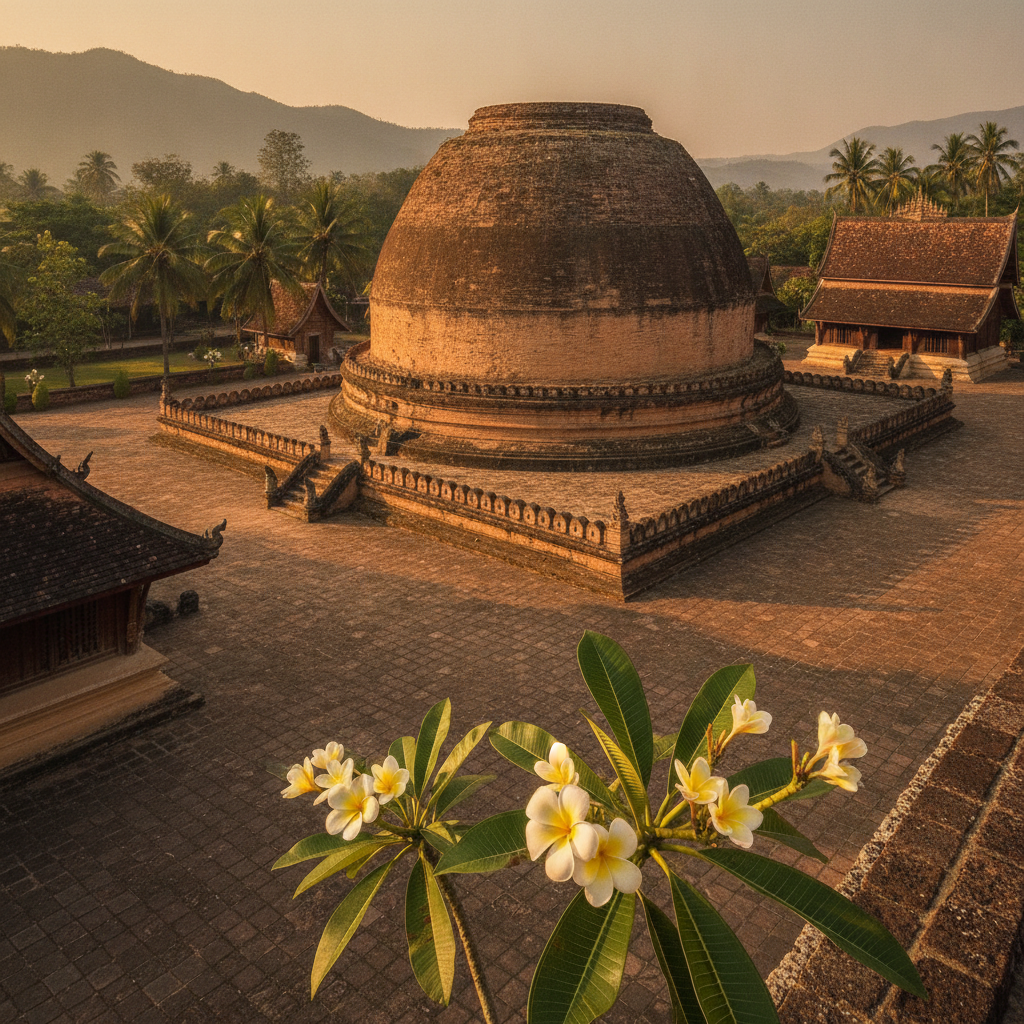
Beyond the main temple circuit centred on Wat Xieng Thong, Luang Prabang's lesser-visited wats contain some of the finest Buddhist art and most atmospheric spaces in Laos. Wat Visoun (1513—the oldest surviving temple in Luang Prabang, containing the That Makmo 'Watermelon Stupa'—a round stupa of unusual form, the city's most distinctive architectural profile after Wat Xieng Thong; the temple was rebuilt after being destroyed by Black Flag marauders in 1887 and houses a collection of Lao Buddha images and temple treasures). Wat Aham (adjacent to Wat Visoun—a small, rarely visited temple with sacred banyan trees and the residence of the city's guardian spirits worshipped in the pre-Buddhist animist tradition that coexists with Theravada Buddhism throughout Laos—the spirit houses in the temple courtyard are the most authentic expression of Lao animism accessible to visitors). Wat Sene (founded 1718—notable for Monk Chat sessions and a very fine exterior decoration in yellow and red; the temple was built with 100,000 kip—'sen'—donated by local families). Wat Mai (next to the Royal Palace—an 18th-century temple with a famous five-tiered roof and a richly decorated golden relief facade depicting scenes from the Ramayana and the Lao New Year celebrations).
- 2
The Royal Palace Museum – Laos' Last Monarchy
The Royal Palace Museum (Haw Kham)—the official residence of the Lao royal family until the Pathet Lao revolution of 1975, now open as a museum—occupies a French colonial mansion in classical Beaux-Arts style (built 1904) at the centre of the old town peninsula. The exhibits: the throne room (preserving the original royal furniture and regalia), the Pra Bang Buddha image in its own gilded sanctuary (the original image, received by King Fa Ngum from the Khmer court in the 14th century—a 53 kg solid gold Standing Buddha that is the most sacred object in Laos, brought out only for the Lao New Year ceremony). The political context: the Lao People's Democratic Republic (communist since the Pathet Lao revolution of December 2, 1975) abolished the monarchy without violence—King Savang Vatthana abdicated and was invited to serve as an advisor to the new government, then arrested in 1977 and died in a re-education camp in 1978 along with most of the royal family. The museum presents the royal heritage without direct acknowledgment of this history, in a characteristic LPRP (Lao People's Revolutionary Party) approach of allowing heritage tourism while controlling its political interpretation.
- 3
Vang Vieng – The Cautionary Tale on the Road South
Vang Vieng—160 km south of Luang Prabang on Route 13, 3.5 hours by bus (or 30 minutes on the new Chinese-built Laos-China Railway, the fastest and most dramatic travel upgrade in Laos history since the Mekong boat era)—is Southeast Asia's most dramatic cautionary tale in backpacker tourism: a small town of 25,000 in a spectacular limestone landscape on the Nam Song River that became in the 2000s–2010s the centre of a party and tube-floating tourism scene so chaotic (drug use, alcohol, river accidents, deaths) that the Lao government shut down most of the river bars in 2012, reducing the scene dramatically. The current Vang Vieng: tamed but still busy—tubing on the Nam Song (calmer than at its 2010 peak), rock climbing on the karst towers (the limestone provides excellent sports climbing), cave exploration (Tham Chang, Tham Hoi, Tham Phu Kham), and the Blue Lagoon (a swimming hole in a turquoise pool). The Chinese railway connection has made the Vientiane-Luang Prabang journey transformatively faster and created a new form of Lao tourism with Chinese domestic visitors.
- 4
Luang Prabang's Craft Beer, Coffee & Riverside Dining
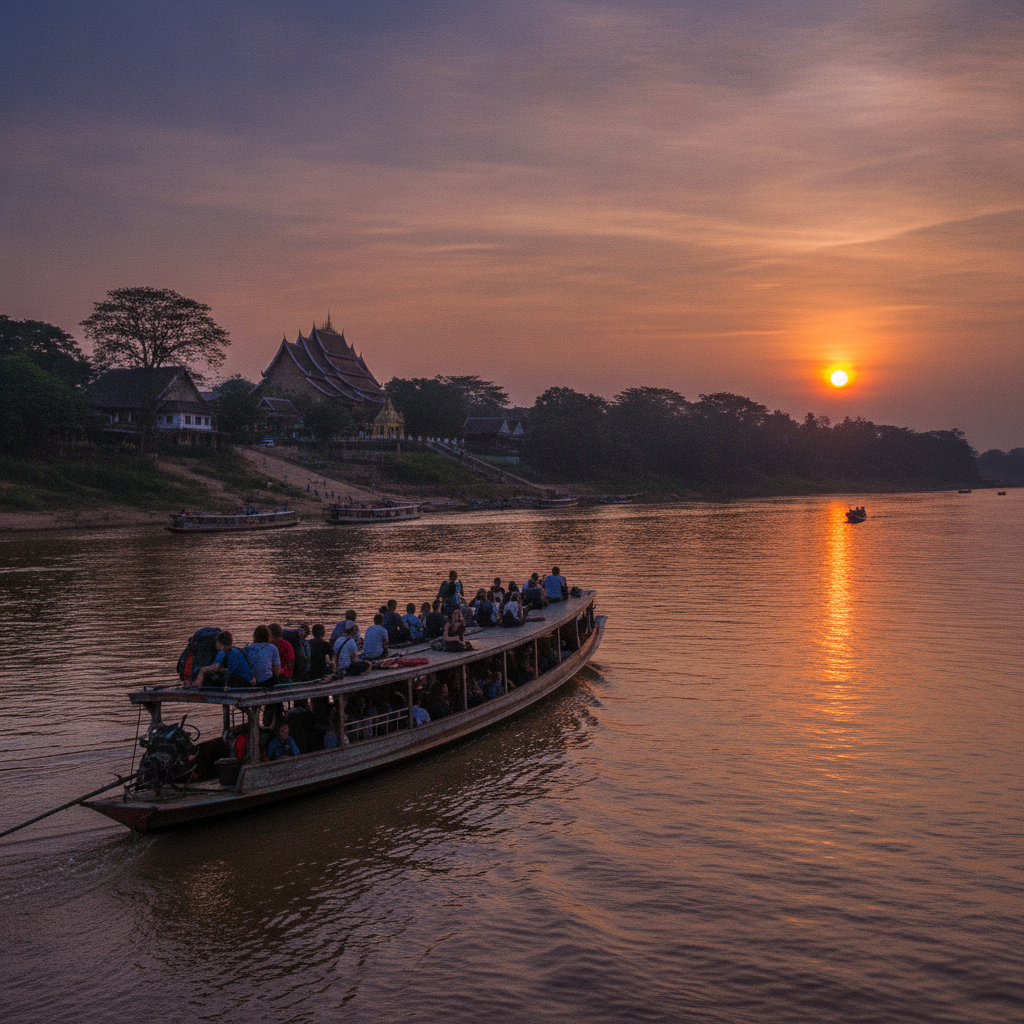
Luang Prabang's café and restaurant scene—disproportionately sophisticated for a town of 56,000, a product of the foreign visitor infrastructure built since the 1990s and the returnee diaspora investing in hospitality—offers some of mainland Southeast Asia's best dining within a few streets. Coffee: Lao coffee (grown in the Bolaven Plateau of southern Laos—one of Southeast Asia's finest arabica and robusta growing regions, with the volcanic plateau's altitude and rainfall producing beans with significant terroir character) is the primary product of the street café scene; Joma Bakery Café (a Lao chain founded by a Lao-American, now with multiple branches in Vientiane and Luang Prabang) is the most established international-standard café. Restaurants: Tamarind (the most consistently recommended restaurant in Luang Prabang for Lao cuisine—a tasting menu format introducing visitors to laap, mok varieties, and fermented ingredients in a pedagogical framework), the Mekong riverside restaurants (watching the river light change over evening drinks), and the affordable francophone restaurants in the colonial villas (Crêperie des Arts—consistently recommended for its French-Lao fusion).
- 5
The Plain of Jars & Xieng Khouang – The Most Bombed Place on Earth
The Plain of Jars—a plateau in Xieng Khouang province, 350 km east of Luang Prabang (accessible by domestic flight 40 minutes, or by bus 10 hours)—is both one of Southeast Asia's most mysterious archaeological sites and one of its most devastatingly bombed landscapes. The jars: thousands of large stone jars (1–3 metres tall, 1–10 tonnes weight) scattered across the plateau in groups, dated to the Iron Age (500 BCE–500 CE), function still debated (funerary urns? spirit vessels? storage? all proposed, none proved). The bombing: Laos was the most heavily bombed country in history per capita during the Second Indochina War (the Vietnam War)—the US dropped over 2 million tonnes of bombs on Laos between 1964 and 1973, more than the total dropped in World War II by all sides on all theatres. A third of the bombs did not explode (UXO—unexploded ordnance); the Plain of Jars was a primary target. UXO Lao and MAG (Mines Advisory Group) have been clearing the plateau since the 1990s; several jar sites are now safe for visitors, but vast areas of the plateau remain contaminated.
- 6
Luang Prabang's Weaving Villages & Textile Heritage
The villages across the Nam Khan River from the old town—Ban Xang Khong, Ban Xieng Leck, Ban Nong Khiaw—maintain traditional Lao weaving traditions that have been both sustained and commodified by tourism since the 1990s. Ban Xang Khong: the 'Paper Village'—where saa paper (made from the bark of the mulberry tree, the same base material as Japanese washi) is produced by hand using traditional methods; the paper is used in Lao ceremonial contexts (lamp shades for festivals, manuscript pages for palm-leaf manuscripts) and sold to tourists as notebooks, lampshades, and decorative items. The weaving villages produce silk and cotton textiles using traditional Lao designs (the sinh—the women's wraparound skirt, woven in silk with geometric patterns—is the primary product, with designs that encode the ethnic identity of the village or family producing them). The Ock Pop Tok weaving centre (on the Nam Khan south bank)—a social enterprise employing Lao women weavers and offering visitor workshops—is the most ethically structured textile tourism operation in the country.
Walk this route with audio
Stories play automatically as you reach each stop — no tapping needed.
More in Luang Prabang
Luang Prabang's Foundation: Lan Xang's Million Elephants, Lao Laap with Sticky Rice & River Boats to Buddha Caves
Luang Prabang Essentials: Monks at Dawn, Wat Xieng Thong's Sweeping Roof & Turquoise Kuang Si Falls
Luang Prabang's Present: China's $6B Railway, the Baci Wrist-Tying Ritual & the UNESCO Heritage Gentrification Trap
Luang Prabang's Living Layers: Hmong Morning Market, Ock Pop Tok Weavers & the Mekong's 11 Chinese Dams