Luang Prabang's Present: China's $6B Railway, the Baci Wrist-Tying Ritual & the UNESCO Heritage Gentrification Trap
The forces shaping Luang Prabang now—the Laos-China Railway's $6B cost (50% of Laos' GDP, mostly Chinese debt) cutting Vientiane to 2 hours and bringing Chinese domestic tourists on rail passes, the Nam Khan kayak day to Tad Sae waterfall (only accessible September–December when water levels are high), the phi spirit world coexisting with Buddhist temples in every property (32 souls per body, white cotton baci threads tied at every departure), the UNESCO listing that made old town property valuable enough to displace the residents who were the living heritage into concrete suburbs, Lao New Year's Pra Bang Buddha procession from the Royal Palace to Wat Mai (the only time the sacred gold image is publicly accessible), and the 2-day slow boat from Thailand that travellers consistently describe as one of the finest 48 hours in Asia.
- 1
The Laos-China Railway – How China Changed Luang Prabang
The Laos-China Railway (Boten–Vientiane, 414 km, opened December 2021)—built, financed, and largely operated by China as part of the Belt and Road Initiative at a cost of $6 billion (representing approximately 50% of Laos' annual GDP)—has transformed travel within Laos and fundamentally altered Luang Prabang's position in regional tourism. Before the railway: the journey from Vientiane to Luang Prabang was a 10-hour bus ride on a winding mountain road or a 1-hour domestic flight. After: the Luang Prabang–Vientiane route takes 2 hours on Chinese-built high-speed trains running at 160 km/h through tunnels and on viaducts across the Laotian mountains (the line is 65% tunnel and bridge—an extraordinary engineering achievement in the terrain). The consequences for Luang Prabang: the journey time from the Thai border now includes a 30-minute train segment from Vang Vieng instead of the old 3.5-hour bus; Chinese domestic tourists (who can book Chinese rail passes that extend into Laos) have become a major new visitor segment; and the economic and political influence of China over the Lao government has deepened, with the debt-to-China structure of the railway widely described as a potential sovereignty risk.
- 2
Tad Sae Waterfall & the Nam Khan River Kayaking
The Nam Khan River—which flows from the eastern mountains of Luang Prabang province and joins the Mekong at the southern tip of the old town peninsula—offers the most accessible river kayaking and natural swimming near the city. The standard half-day trip: kayak from Luang Prabang east through rural villages and forested riverbanks for 2–3 hours, finishing at the town. Tad Sae Waterfall (17 km southeast of Luang Prabang—accessible by road to the bank, then by short boat ride across the Nam Khan)—a multi-level cascading waterfall similar in character to Kuang Si but smaller, less visited, and only accessible September–December when the water levels are high enough (the falls dry almost completely in the dry season: January–August). The elephant camp at Tad Sae (one of Luang Prabang's several elephant sanctuaries—the shift from riding to observation-only models has advanced but is not universal)—provides optional elephant bathing interactions for visitors to the waterfall. The combination of kayak, falls, and elephant interaction is the most popular active day trip from the city.
- 3
Luang Prabang's Spirit World – Buddhism and Animism
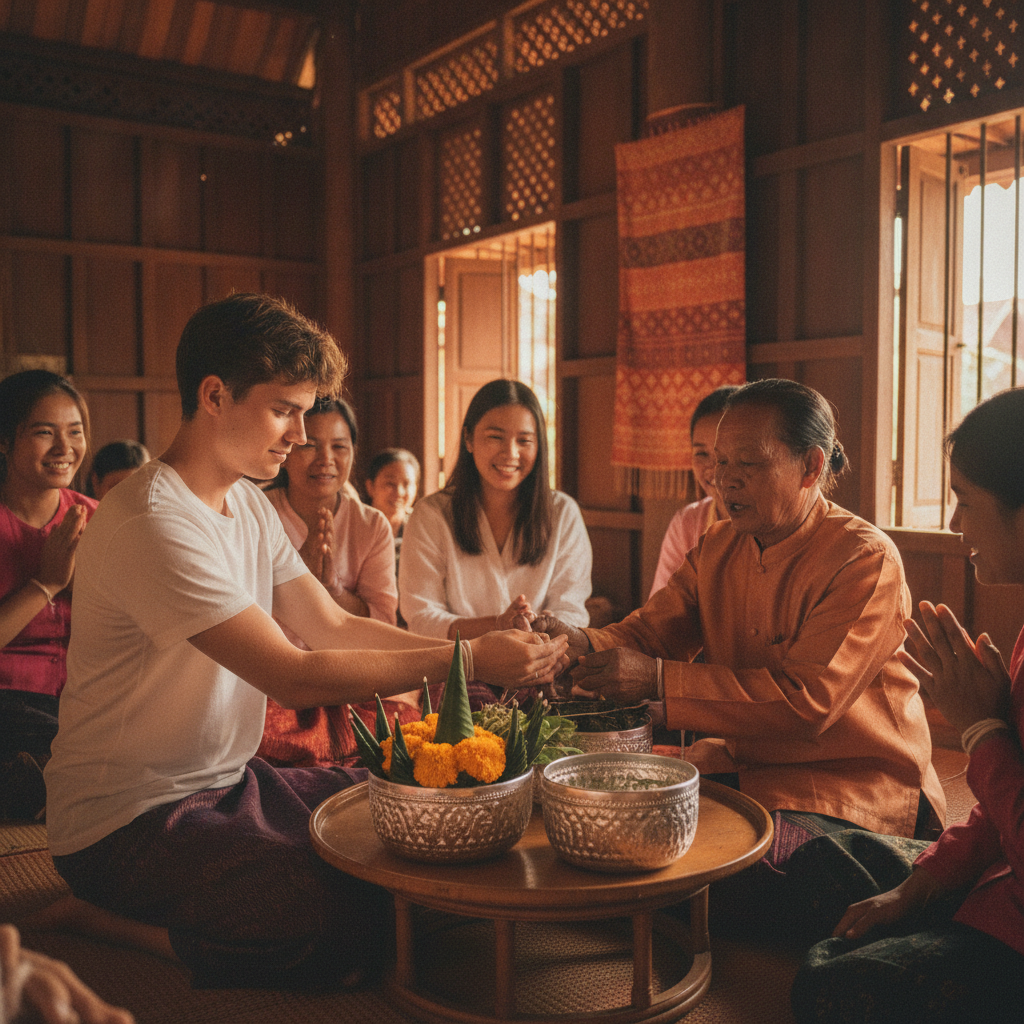
Laos' religious life operates on two parallel tracks that coexist without apparent contradiction in the Lao worldview: Theravada Buddhism (the formal, temple-based religious life of monks, merit-making, and the Buddha's teachings) and phi (animist spirit belief—the Lao system of spirits inhabiting places, objects, and natural phenomena). The phi world: phi ban (village spirit), phi ruan (house spirit), phi ton mai (tree spirits), and the phi that cause illness are all taken seriously in Lao daily life, and the baci ceremony (sou khuan—a ritual tying white cotton threads around the wrists of participants while recalling the 32 souls that Lao belief holds to reside in the human body) is performed at all major life events: births, marriages, departures, returns, and illnesses. The baci is the most commonly experienced Lao ritual for visitors: it is performed at guesthouses, at festival events, and by families for departing or returning members. Spirit houses (small wooden or concrete structures on poles, containing incense, offerings, and small figurines) are present outside virtually every building in Luang Prabang—the two belief systems occupying the same spiritual real estate without conflict.
- 4
Luang Prabang's Population & the Heritage Gentrification Problem
Luang Prabang's population of 56,000 (official figure; the greater metropolitan area is estimated at 100,000) has experienced a significant demographic shift since the UNESCO listing in 1995: the traditional Lao residents of the old town—who lived in the wooden houses that constitute the heritage—have progressively sold or leased their properties to hotel and guesthouse developers, relocating to new concrete housing in the suburbs and outer districts. The consequence: the 4 km² UNESCO zone has been progressively converted from a living community to a tourism infrastructure, with hotel rooms replacing family homes and restaurants replacing local food stalls. By 2018, estimates suggested that the majority of old town properties were operating as tourism businesses rather than residential households. The irony of heritage conservation: the UNESCO listing that was intended to preserve the living cultural heritage of Luang Prabang has, by generating the tourism that made old town property valuable, accelerated the displacement of the community whose cultural practices were the substance of the heritage. The same dynamic has been documented in Venice, the old town of Dubrovnik, and several other UNESCO World Heritage sites.
- 5
The Lao New Year (Pi Mai) – The Biggest Festival
Lao New Year (Pi Mai—'New Year,' also called Bun Pi Mai or Songkran equivalent in Laos)—celebrated April 13–15 (dates aligned with the Thai Songkran and the Burmese Thingyan water festival)—is the most important festival in the Lao calendar and Luang Prabang's single most significant cultural event. The Pi Mai in Luang Prabang: the most elaborate celebrations in the country, because Luang Prabang was historically the royal capital and the religious centre of Lao Buddhism (the Pra Bang Buddha is ceremonially moved from the Royal Palace to Wat Mai for public veneration—accessible only during Pi Mai). The rituals: sand stupas (small cone-shaped stupas built from river sand in temple courtyards as merit-making offerings), blessing ceremonies at temples (water poured over Buddha images flows down to worshippers below—'washing away' the sins of the past year), and the Bun Bang Fai (rocket festival—bamboo rockets launched to encourage the rains). The water-throwing component: similar to Thai Songkran but considerably calmer—water is poured respectfully on hands and shoulders rather than thrown from buckets on the street. Pi Mai is the busiest and most expensive time to visit Luang Prabang.
- 6
Crossing to Thailand & Nong Khai – Luang Prabang as a Hub
Luang Prabang's position in the broader mainland Southeast Asia travel circuit gives it a significance beyond its size: it is the most practical entry point into Laos from northern Thailand (via the Huay Xai border crossing, accessible from Chiang Rai in Thailand, then the 2-day slow boat or a domestic flight to Luang Prabang), and it connects south to Vang Vieng and Vientiane (by the new Chinese railway in 2–4.5 hours respectively). The onward options: continuing south to Vientiane and then to Cambodia (Phnom Penh by bus or domestic flight), crossing the Mekong on the Friendship Bridge at Vientiane to Nong Khai in Thailand (then the overnight train to Bangkok), or flying from Luang Prabang International Airport (LPQ) to Bangkok, Hanoi, Siem Reap, or Chiang Mai. The slow boat from Huay Xai remains the most romantically resonant way to arrive: 2 days on a wooden river boat through forested limestone gorges, sleeping in a simple guesthouse at Pakbeng, arriving at Luang Prabang at dusk. It is slower, more expensive, and less comfortable than flying—and it is consistently described by travellers who have done it as one of the finest two days in Asia.
Walk this route with audio
Stories play automatically as you reach each stop — no tapping needed.
More in Luang Prabang
Luang Prabang's Foundation: Lan Xang's Million Elephants, Lao Laap with Sticky Rice & River Boats to Buddha Caves
Luang Prabang Essentials: Monks at Dawn, Wat Xieng Thong's Sweeping Roof & Turquoise Kuang Si Falls
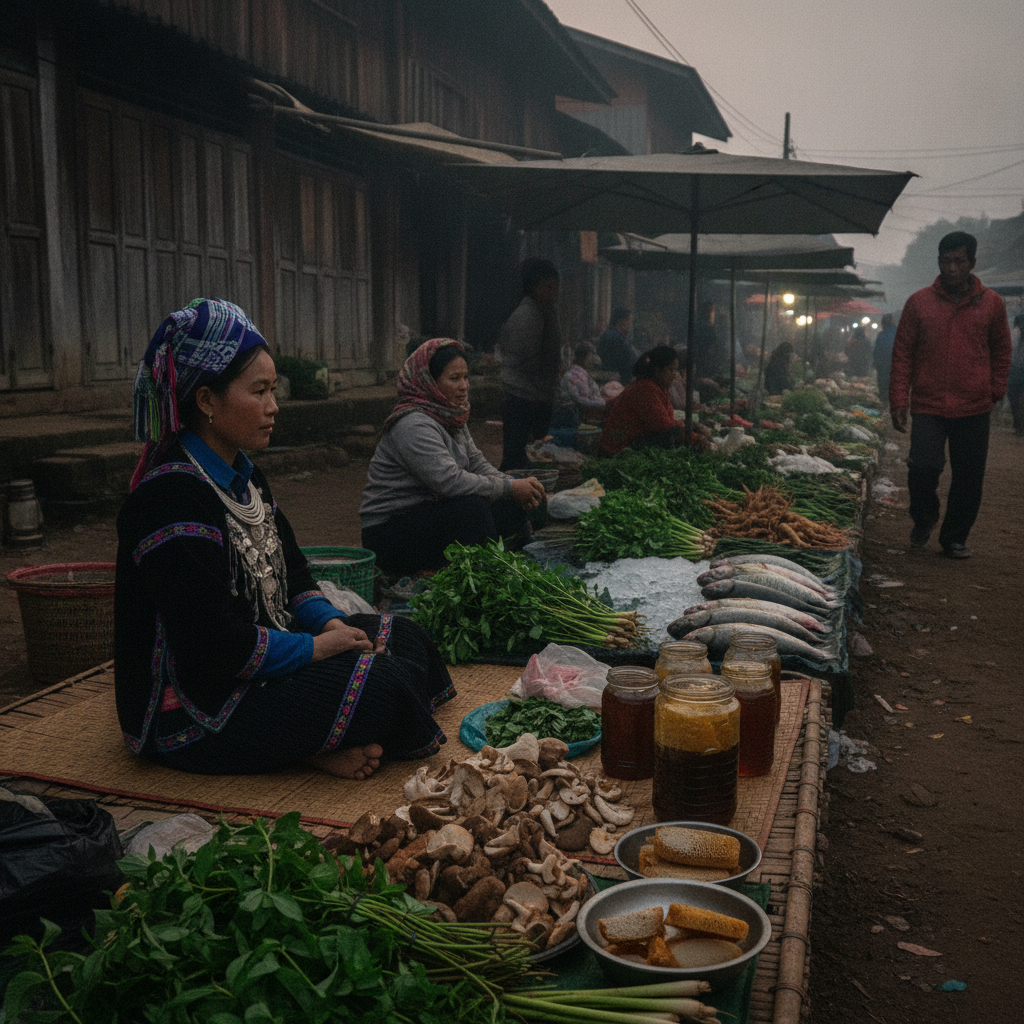
Luang Prabang's Living Layers: Hmong Morning Market, Ock Pop Tok Weavers & the Mekong's 11 Chinese Dams
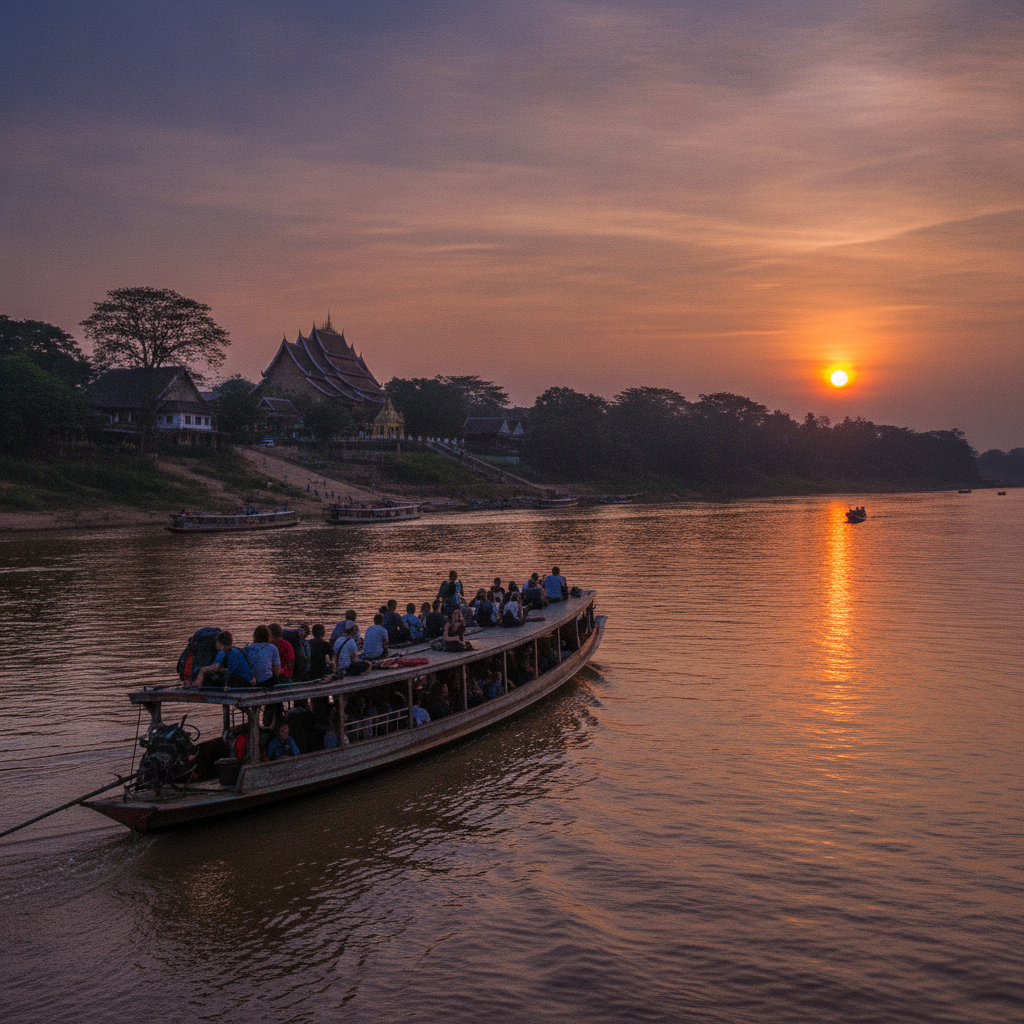
Leaving Luang Prabang: The Slow Boat Arrival That Changes You, Bolaven Plateau Coffee & the City After 21:00