Lombok: Rinjani's 3,726m Crater Lake Trek, Gili Trawangan's No-Motor-Vehicle Coral Reefs & the Sasak Wetu Telu Syncretic Islam
Indonesia's second-highest volcano—Rinjani's 3-day trek to the caldera rim, down to the turquoise Segara Anak lake at 2,000 metres with Gunung Baru Jari's new cone erupting from its centre (the volcano last caused a 555-death earthquake in 2018), then the 02:00 summit push for the sunrise; the Gili Islands' no-motorised-vehicle coral reef system where turtle cleaning stations deliver sightings so reliable they appear in dive shop brochures; the Sasak Wetu Telu minority in Bayan village blending Sunni Islam with animist traditions that predate the 16th-century conversion; Kuta Lombok's Tanjung Aan 'pepper-corn sand' twin bay versus Kuta Bali (not the same place, different island, different everything); and the MotoGP Mandalika Circuit that arrived as Indonesia's '10 New Balis' programme turns south Lombok into the next Seminyak.
- 1
Mount Rinjani – Indonesia's Second-Highest Volcano Trek
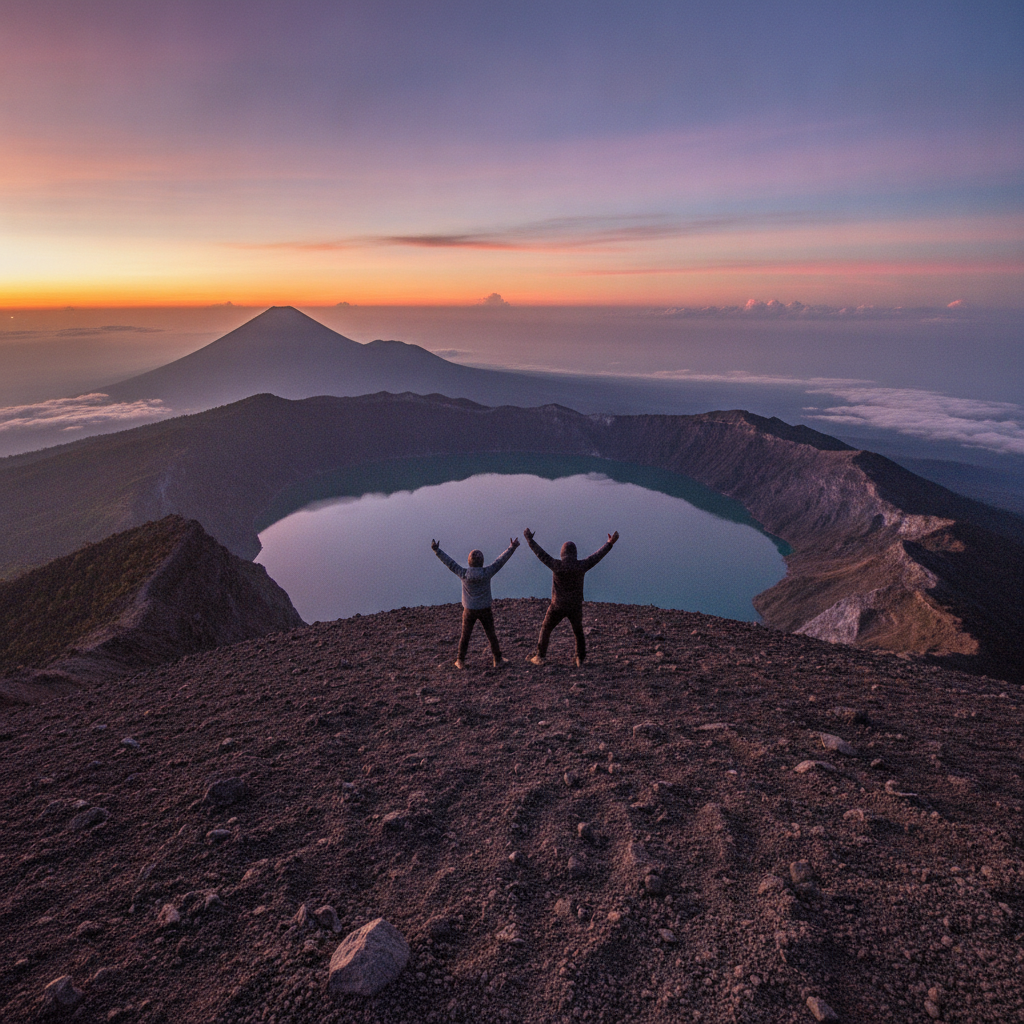
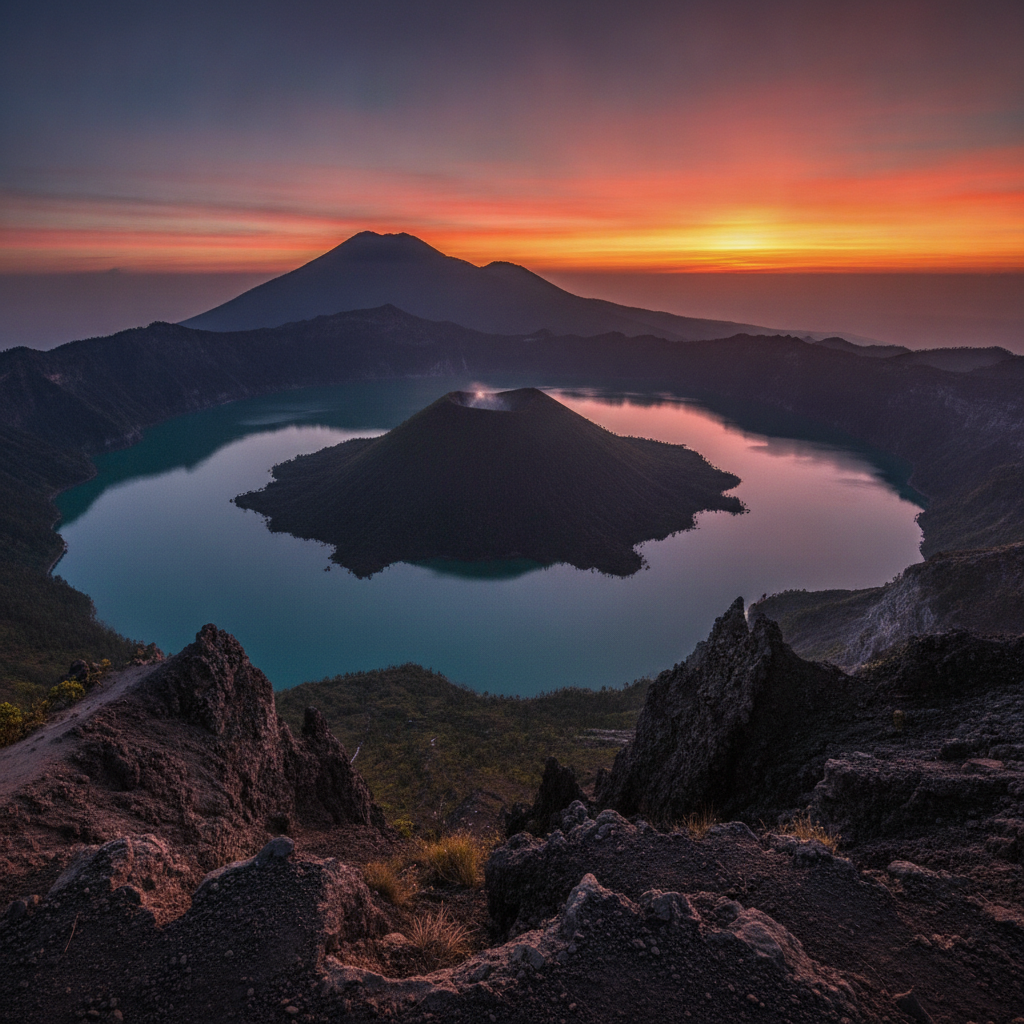
Mount Rinjani (Gunung Rinjani—3,726 metres, the second-highest volcano in Indonesia after Mount Kerinci in Sumatra, and one of the most dramatic multi-day volcano treks in Southeast Asia)—is Lombok's defining natural landmark, a UNESCO Global Geopark, and the spiritual centre of the Sasak Muslim community and the Hindu Balinese minority who both regard the volcano as sacred. The standard trek: 3 days/2 nights from the Senaru or Sembalun trailheads on the northern and eastern flanks; Day 1 ascends to the crater rim (2,641 metres) for the first view into the caldera; Day 2 descends 700 metres to the crater lake (Segara Anak—'Child of the Sea'—a turquoise volcanic lake 6 km across, at 2,000 metres altitude), with an optional side trek to the new cone (Gunung Baru Jari—'New Finger Mountain'—the post-1994 eruption cone rising from the lake's surface to 2,376 metres); Day 3 ascends to the summit (3,726 metres—a 5–6 hour push from camp, beginning at 02:00 for the sunrise view) and descends to Sembalun. The guide requirement: all trekkers must hire a licensed guide from the RINJANI TREK registered operator system; independent trekking is prohibited. The Rinjani eruption history: the volcano last erupted significantly in 2018, causing an 8.0 earthquake that killed 555 people on Lombok and temporarily closed the trek; it remains active with regular minor activity.
- 2
The Gili Islands – Gili Trawangan, Meno & Air
The Gili Islands—three small coral islands 15–30 minutes by fast boat from northwest Lombok (Bangsal pier) or 2 hours direct from Bali (Padang Bai or Serangan)—are among the most internationally recognised islands in Indonesia, attracting approximately 500,000 visitors annually to a combined land area of less than 7 km². The three islands: Gili Trawangan (the largest—3 km long, 2 km wide—the party island with the most bars, nightlife, dive shops, and tourist infrastructure; no motorised vehicles—transport by horse cart or bicycle only; a permanent population of approximately 1,500 with a tourist infrastructure supporting 5,000+ visitors per night at peak); Gili Meno (the smallest and quietest—1.5 km long, a turtle sanctuary, the honeymoon island with the lowest bar density); Gili Air (the middle island in both size and character—better local community feel than Trawangan, better nightlife than Meno). The diving: all three islands sit on the Lombok Strait's coral reef system—visibility typically 15–30 metres, water temperature 27–29°C year-round; the turtle sightings at the cleaning stations adjacent to all three islands are among the most reliable in Southeast Asia. The 2018 earthquake impact: the islands suffered significant damage (buildings collapsed, the reef was disturbed); recovery took approximately 18 months and the tourism economy fully rebuilt by 2020.
- 3
Sasak Culture – Lombok's Indigenous Muslim Majority
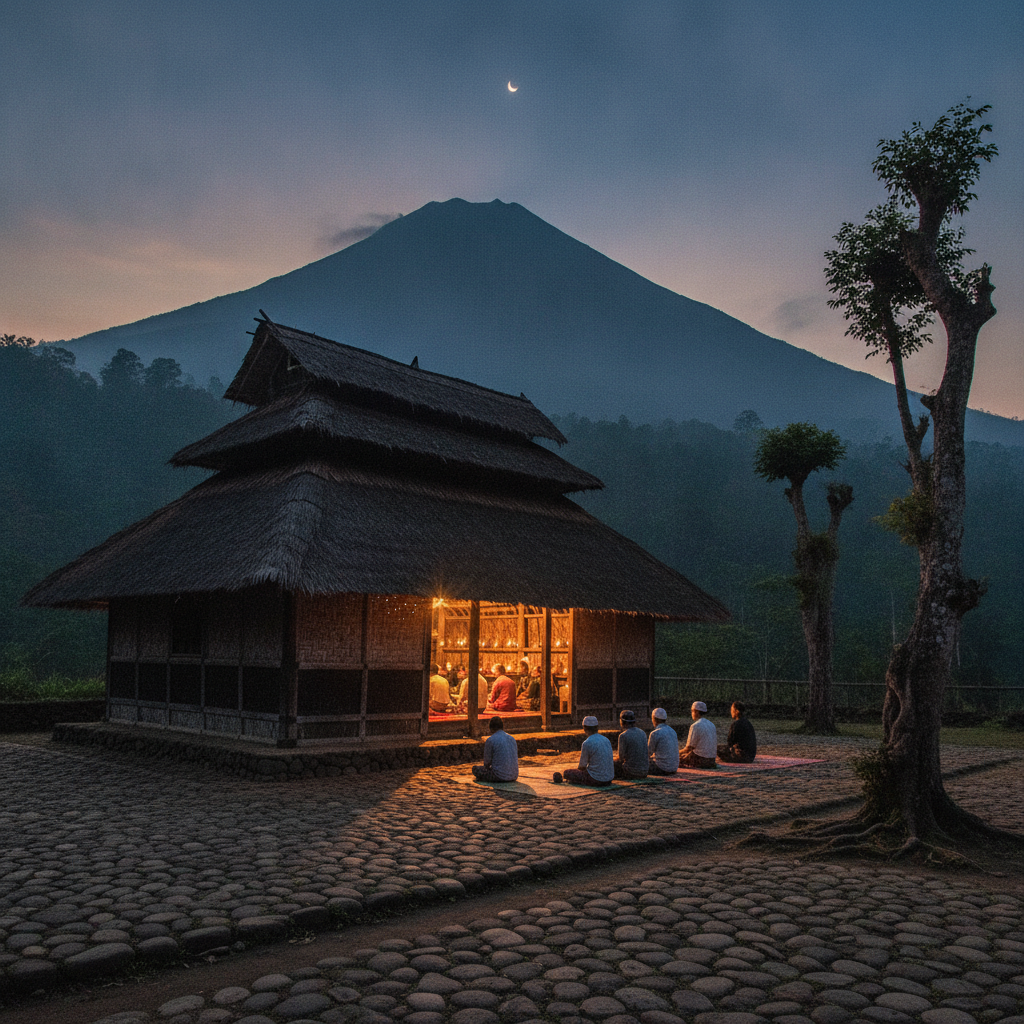
The Sasak—the indigenous people of Lombok, comprising approximately 85% of the island's 3.8 million population—are Muslim (predominantly Sunni, with a significant Wetu Telu minority—a syncretic tradition blending Islam with animist and Hindu elements predating the 16th-century Islamic conversion, practised in villages in the Rinjani foothills and most concentrated in Bayan, the oldest mosque village). The Sasak villages: traditional Sasak villages (desa adat) have a distinctive architecture—low-roofed houses built on raised bamboo platforms with thatched roofs, clustered within a bamboo compound wall, surrounded by rice paddies. The most visited: Sade village (near Kuta Lombok, 3 km inland) and Ende village (nearby)—communities that have maintained traditional architecture and weaving traditions while adapting to tourism visitation. The Sasak weaving tradition: handwoven songket (supplementary weft weaving with metallic thread on cotton or silk) and traditional ikat—the Lombok weaving tradition is distinct from Balinese and Javanese equivalents, with its own colour palette (predominantly dark red, black, and gold for songket; earthy tones for ikat) and pattern vocabulary. The Peresean: a traditional Sasak martial art involving rattan sticks and leather shields—performed at festivals and increasingly at cultural shows for visitors.
- 4
Kuta Lombok & the Southern Beaches
Kuta Lombok (not to be confused with Kuta Bali—a entirely different place and character)—a small town on Lombok's south coast, 54 km from Mataram (the provincial capital)—is the base for exploring the extraordinary series of beaches and bays along Lombok's southern coastline, widely regarded as the finest undeveloped beach landscape in Indonesia west of Raja Ampat. The beaches: Tanjung Aan (a twin-bay beach 5 km east of Kuta, with a distinctive 'pepper corn' sand texture coarser than normal—the result of the coral reef system's breakdown products—and turquoise water in two adjacent bays separated by a rocky headland); Mawun Beach (a horseshoe bay 12 km west of Kuta with calm water and a consistent surf break visible from the headland); Selong Belanak (a 3-km sweep of white sand 15 km west of Kuta, shallow water suitable for beginner surfing, and the most family-oriented of the southern beaches); Gerupuk (a bay with four surf breaks accessible only by boat, the most significant intermediate-to-advanced surfing destination in Lombok). The development trajectory: Kuta Lombok was selected by the Indonesian government as one of the '10 New Balis'—priority tourism development destinations intended to replicate Bali's economic success elsewhere in Indonesia. The Mandalika resort development (directly adjacent to Kuta) has brought the MotoGP Mandalika Circuit (which hosted the Indonesian Grand Prix from 2022) and significant hotel investment.
- 5
Mataram & North Lombok – The Island Beyond Tourism
Mataram (the capital of the West Nusa Tenggara province—a city of approximately 500,000, dominated by the Sasak Muslim majority with significant Balinese Hindu, Bugis, and Chinese communities)—is the administrative and commercial hub of Lombok but rarely visited by tourists, who typically transit directly from the airport to Gili Islands or Kuta. The Mataram sites: Pura Meru (the largest Hindu temple in Lombok, built 1720 by the Balinese Karangasem dynasty that ruled western Lombok until the Dutch conquest—three meru towers representing Brahma, Vishnu, and Shiva); the Mayura Water Palace (an artificial lake with a floating pavilion, also built 1744 by the Karangasem ruler); the Mataram Mall (the commercial centre, where the Lombok food court provides the best introduction to the full range of Sasak and Indonesian cuisine at local prices). North Lombok: the regency north of Rinjani—Senaru (the starting point for the northern Rinjani trek, with the Sindang Gila and Tiu Kelep waterfalls—the latter requiring a river crossing—in the Rinjani national park forest); Segenter (a traditional Wetu Telu village where the syncretic Islam-animist tradition is most intact); the Gili Gede and Gili Nanggu islands (small islands off southwest Lombok with excellent snorkelling and almost no tourist infrastructure—the alternative for those who find the Gili Trawangan crowds excessive).
- 6
Practical Lombok – Getting There, Getting Around & When to Go
Getting to Lombok: Zainuddin Abdul Madjid International Airport (LOP—in Praya, 23 km from Kuta and 25 km from Mataram)—opened 2011, receives direct international flights from Kuala Lumpur and Singapore, and domestic connections from Bali (40 minutes—multiple daily flights), Jakarta (2 hours), and Makassar. From the airport: the taxi cartel operates fixed-rate taxis (Rp 100,000–200,000 to Kuta, Rp 150,000–250,000 to Mataram); online transport apps (GoJek, Grab) cannot legally operate at the airport. From Bali: fast boats (2–2.5 hours, Rp 350,000–500,000—multiple operators including Eka Jaya, Gili Getaway, from Padang Bai/Serangan to Bangsal/Teluk Nara); the Lombok-Bali ferry (Lembar port to Padang Bai—4–5 hours, Rp 50,000–80,000—the budget option, used primarily for vehicle transport). Getting around: the island is large (80 km north-south, 70 km east-west) and public transport is minimal; options are rented scooter (Rp 70,000–100,000/day—most practical for southern beaches and Mataram); private car and driver (Rp 400,000–600,000/day); or ojek (motorcycle taxi). When to go: dry season May–October (low humidity, clear skies for Rinjani trekking—the summit is rarely cloud-free in wet season); wet season November–April (occasional rain, green rice paddies, fewer crowds—southern beaches still swimmable, Rinjani trek closed).
Walk this route with audio
Stories play automatically as you reach each stop — no tapping needed.
More in Lombok
Lombok's Full Picture: Gili Trawangan's Full Moon Parties, Pura Lingsar's Hindu-Wetu Telu Shared Temple & Sumbawa's Mt. Tambora
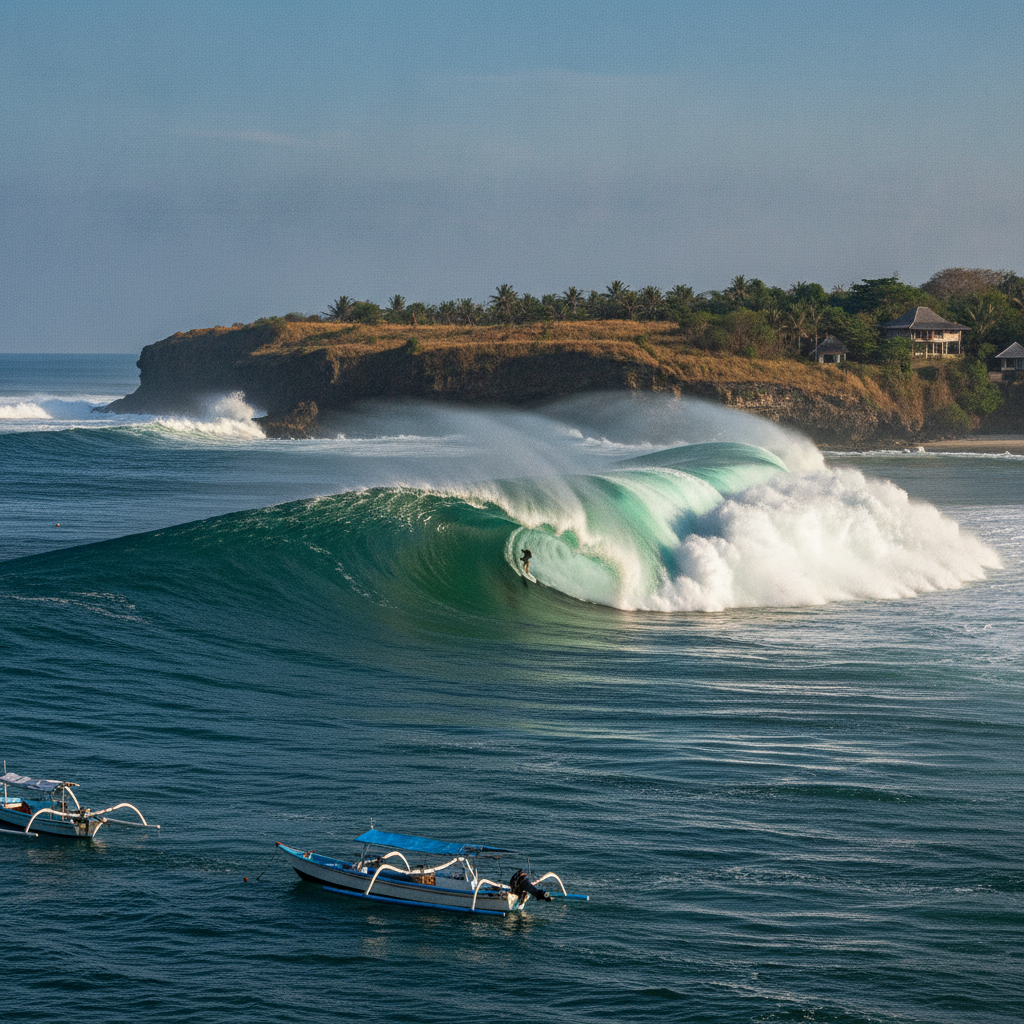
Lombok's Deeper Cuts: Segara Anak's Twin Pilgrimage Traditions, Desert Point's World-Record Barrel & Ayam Taliwang's Sasak Chilli Heat
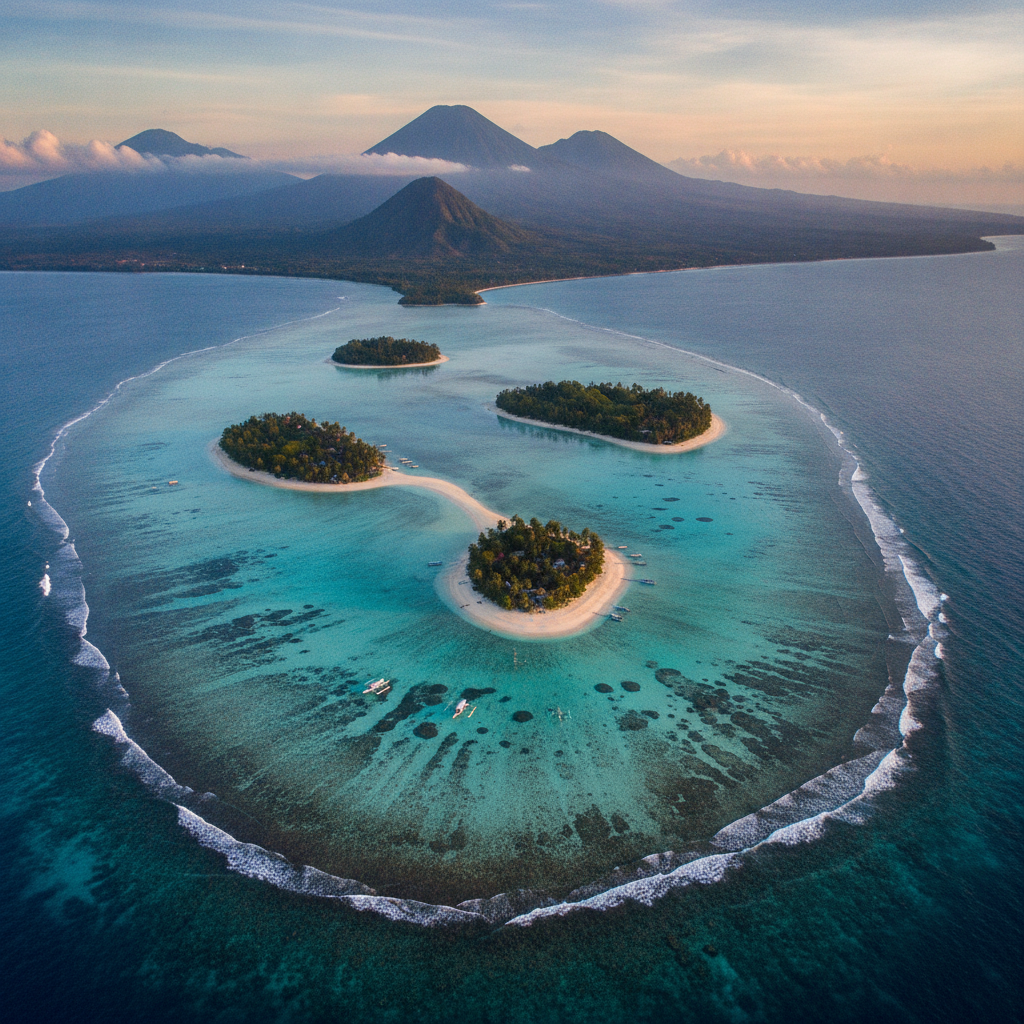
Lombok's Contested Future: The 2018 M7.0 Earthquake, Gili Eco Trust's Turtle Recovery & Mandalika's MotoGP Circuit Displacing Sasak Farmers
Lombok's Soul: Wetu Telu's Three-Daily-Prayer Islam, the Rinjani Scops Owl (New Species 2013) & the Sumbawa Tambora Connection