Baixa, Chiado & Rossio: The Pombaline City & Lisbon's Literary Heart
The Baixa Pombalina ('Pombaline Lowlands') is one of the most complete examples of Enlightenment urban planning in the world — a perfectly regular grid of streets rebuilt after the catastrophic 1755 earthquake and tsunami under the direction of the Marquis of Pombal, Sebastião José de Carvalho e Melo, the autocratic Prime Minister who remade Lisbon in 18 months of frenzied construction. Immediately to its west, the hillside neighborhood of Chiado — Lisbon's cultural and literary quarter since the 18th century — provides the elegant counterpoint to the Baixa's commercial rationalism.
- 1
Praça do Comércio & Rua Augusta Arch
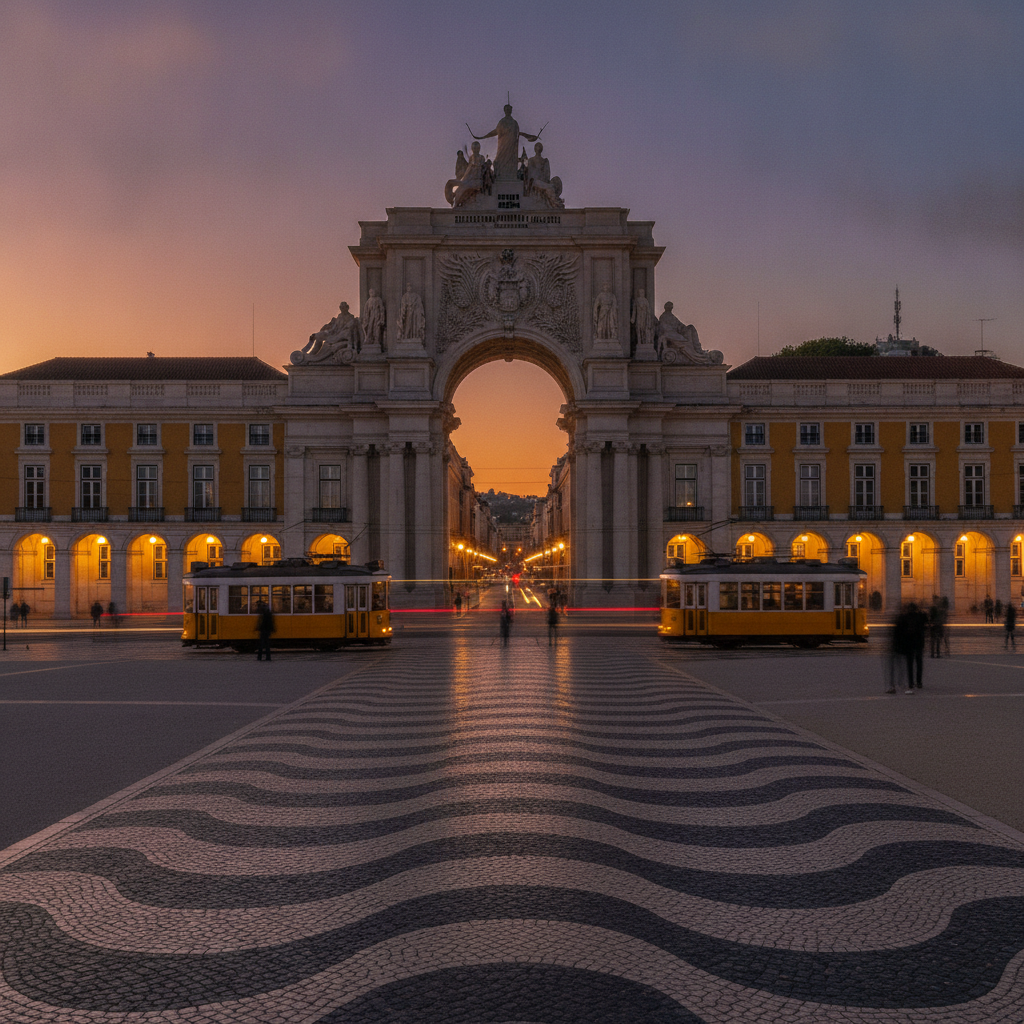
The Praça do Comércio (Commerce Square), Lisbon's great waterfront square, occupies the site of the pre-earthquake Ribeira Palace — the main royal residence from the 16th century. After the 1755 earthquake destroyed the palace, Pombal rebuilt the square as a triumphal statement of rational governance: three sides of uniform Pombaline arcaded buildings housing government ministries, a central equestrian statue of King José I (1775, the first large-scale equestrian monument in Portugal), and an open fourth side facing the Tagus. The Rua Augusta Arch (1875, delayed by funding difficulties since 1755) closes the northern end of the square, its allegorical sculpture groups representing Glory rewarding Valor and Genius, with the figures of Vasco da Gama and Marquis of Pombal at the sides. The square was the traditional arrival point for Lisbon by sea and for the royal processions that began and ended Portuguese imperial history.
- 2
Baixa Pombalina Grid
The grid of streets that constitutes the Baixa Pombalina — bounded by the Praça do Comércio to the south and the Rossio to the north, and flanked by the hills of Chiado to the west and Alfama to the east — was designed by military engineer Manuel da Maia and implemented with remarkable speed after the earthquake of November 1755. The design's innovation was structural as well as aesthetic: each building was constructed on a standardized framework of wooden 'cages' (gaiola pombalina) that acted as a shock-absorbing skeleton — an early example of earthquake-resistant construction. The streets were named for the trades that occupied them: Rua do Ouro (goldsmiths), Rua da Prata (silversmiths), Rua dos Sapateiros (shoemakers). The pattern has barely changed in 270 years.
- 3
Rossio Square (Praça de D. Pedro IV)
Rossio Square, the central public square of Lisbon since the medieval period (its official name is Praça de D. Pedro IV, for the Brazilian-born Portuguese king who stands on a column at its center), is ringed by Pombaline buildings and anchored at its northern end by the National Theatre (Teatro Nacional D. Maria II, 1842) — Lisbon's main stage for classical drama. The square's wavy black-and-white cobblestone mosaic pattern (known as calçada portuguesa, the distinctive Portuguese stone paving tradition) was created in 1849. The Rossio railway station (1892, Neo-Manueline facade by José Luís Monteiro) at the square's northwest serves the Sintra line and is notable for its extravagant horseshoe arches.
- 4
Chiado & Café A Brasileira
Chiado, the hillside neighborhood west of the Baixa, has been Lisbon's intellectual and bohemian quarter since the 18th century — the haunt of writers, poets, artists, and the educated bourgeoisie who gathered in its literary cafés and bookshops. The Café A Brasileira (1905), on Rua Garrett, is the most famous of these establishments: its Art Nouveau interior of dark wood, mirrors, and gilded ceiling has been a gathering place for Lisbon's cultural elite for over a century. Outside, a bronze seated statue of Fernando Pessoa (1985, by Lagoa Henriques) — Portugal's greatest modern poet (1888-1935), who was a regular customer — invites passersby to share his table.
- 5
Elevador da Glória & Miradouro de São Pedro de Alcântara
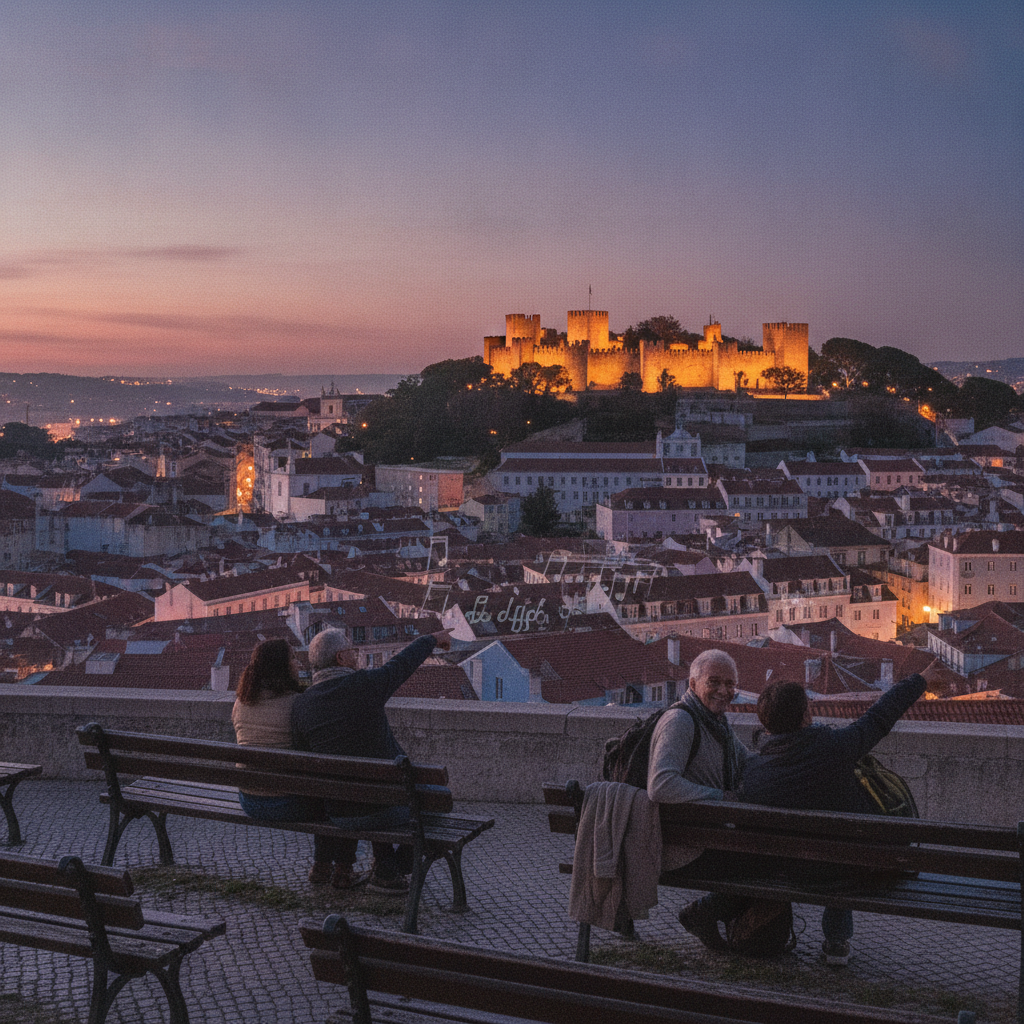
The Elevador da Glória (1885), one of Lisbon's famous funicular trams, runs from the Restauradores square at the bottom of the Baixa up the steep hill to Bairro Alto — a 232-meter ride up a 17.6% gradient that takes under two minutes. At the top, the Miradouro de São Pedro de Alcântara is a double-terraced garden viewpoint with one of Lisbon's most comprehensive panoramas: directly east across the valley are the São Jorge Castle, the Alfama rooftops, the Mouraria towers, and the Graça church on its hill, with a tiled map at the lower terrace identifying every landmark visible from the viewpoint.
- 6
Bairro Alto & Largo do Chiado
Bairro Alto ('High Neighborhood'), the hilly district immediately north of Chiado, was built in the 16th century as Lisbon expanded up the hill from the Baixa. By day its streets of plain 18th-century buildings house small restaurants, independent fashion shops, and wine bars; by night it transforms into one of Lisbon's densest nightlife zones, with tascas (traditional taverns) and clubs open until dawn. The Largo do Chiado — the small square connecting Chiado and Bairro Alto — is flanked by two churches (Igreja dos Mártires, where the great 18th-century Portuguese novelist Eça de Queirós married; and Igreja do Loreto, the Italian church) and the Bertrand Bookshop, the world's oldest operating bookshop, continuously open since 1732.
Walk this route with audio
Stories play automatically as you reach each stop — no tapping needed.
More in lisbon
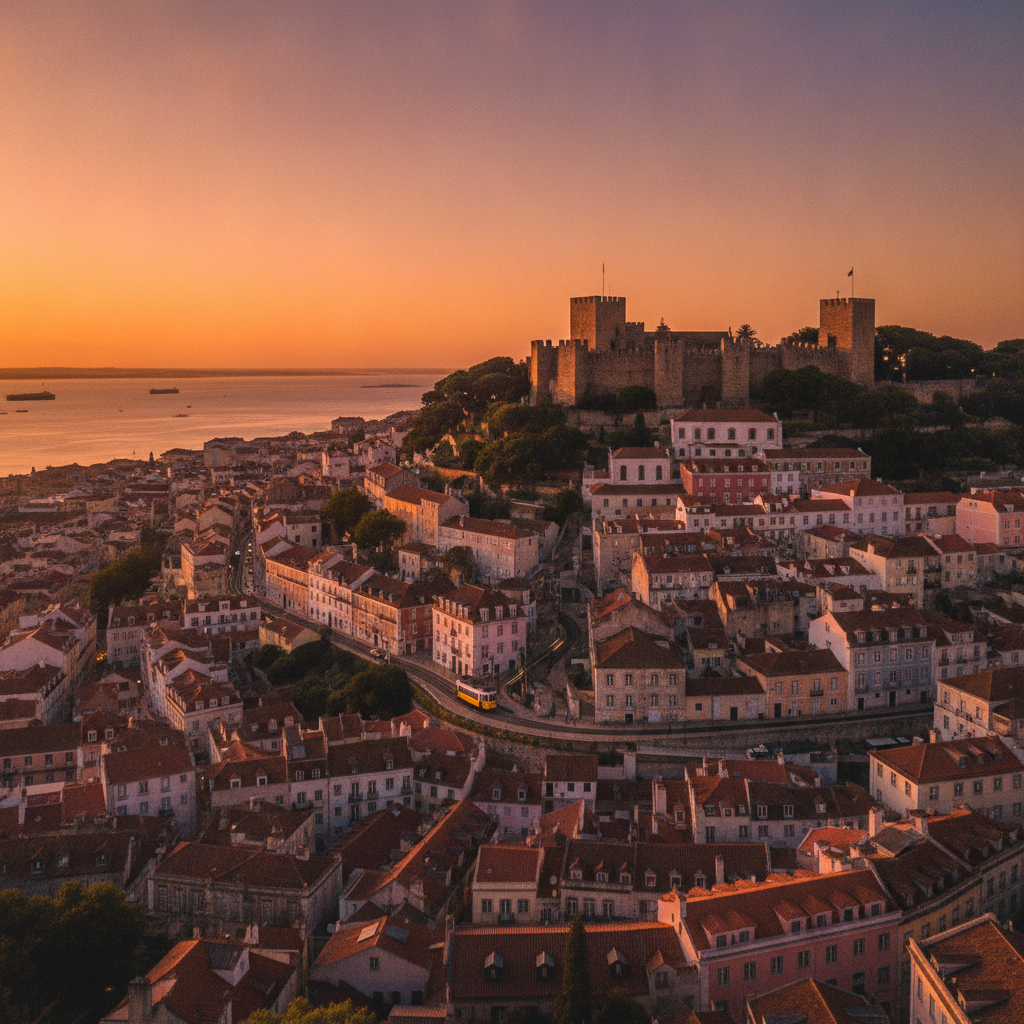
Alfama & São Jorge Castle: Lisbon's Moorish Heart
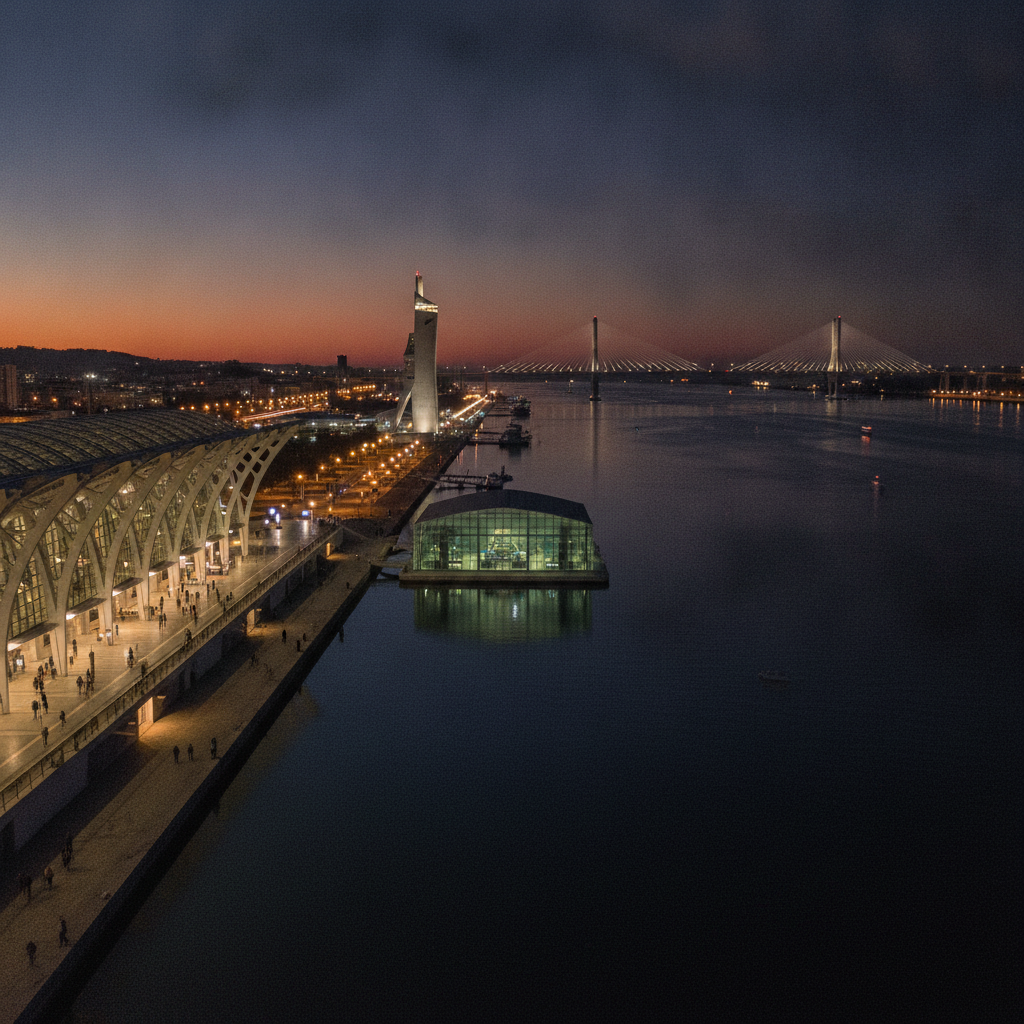
Parque das Nações: Expo '98 and Lisbon's City of the Future
Tram 28, Estrela & Campo de Ourique: Lisbon's Most Scenic Ride
LX Factory, Alcântara & the 25 de Abril Bridge: Industrial Lisbon Reborn
Cascais & Estoril: The Portuguese Riviera by the Sintra Line