Alfama & São Jorge Castle: Lisbon's Moorish Heart
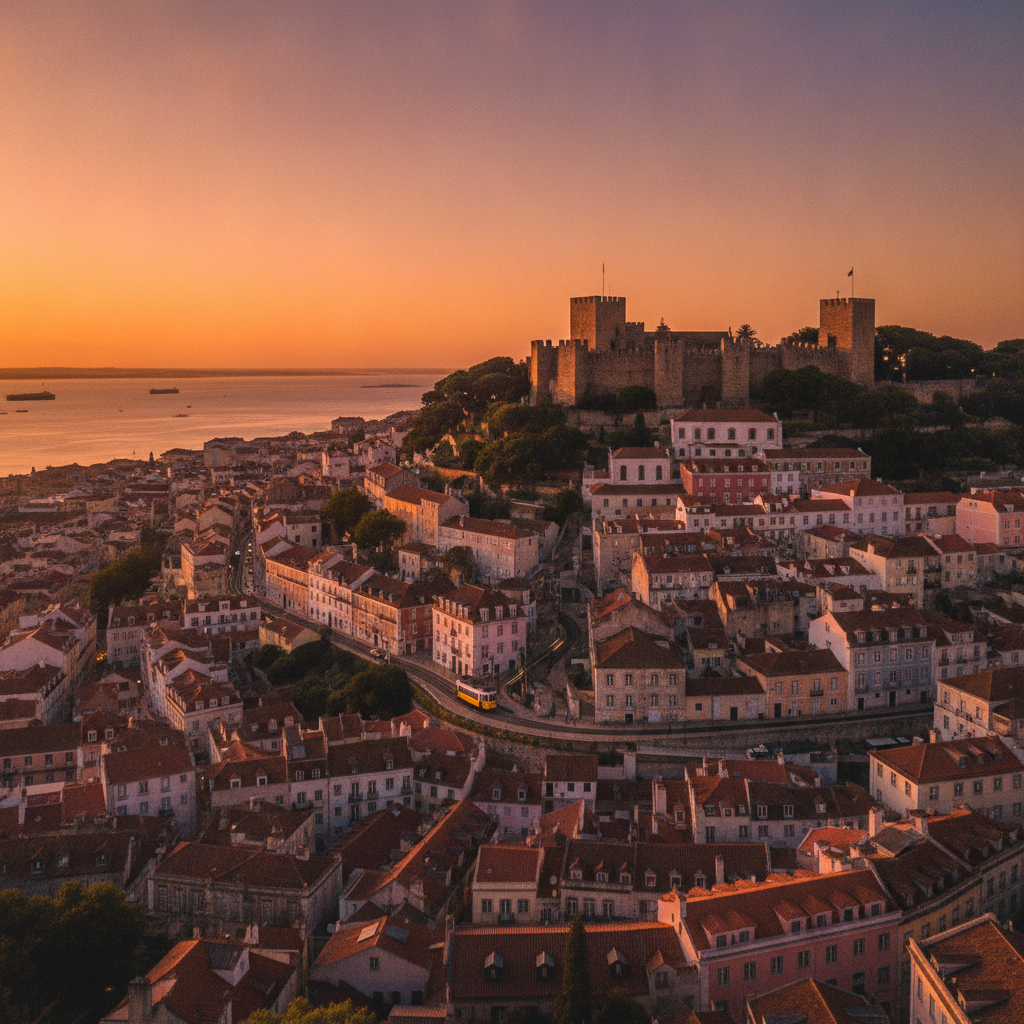
Alfama — from the Arabic al-hamma, 'the baths' — is the oldest surviving neighborhood of Lisbon, the only district that pre-dates the catastrophic 1755 earthquake that destroyed most of the city. Draped across a hillside above the Tagus beneath the Moorish castle of São Jorge, its labyrinth of steep lanes, tiled houses, miradouros (viewpoints), and fado bars represents the soul of the city as it existed before the rational Pombaline grid changed everything below. To walk Alfama is to navigate a living memory.
1. São Jorge Castle (Castelo de São Jorge)
- 1
São Jorge Castle (Castelo de São Jorge)
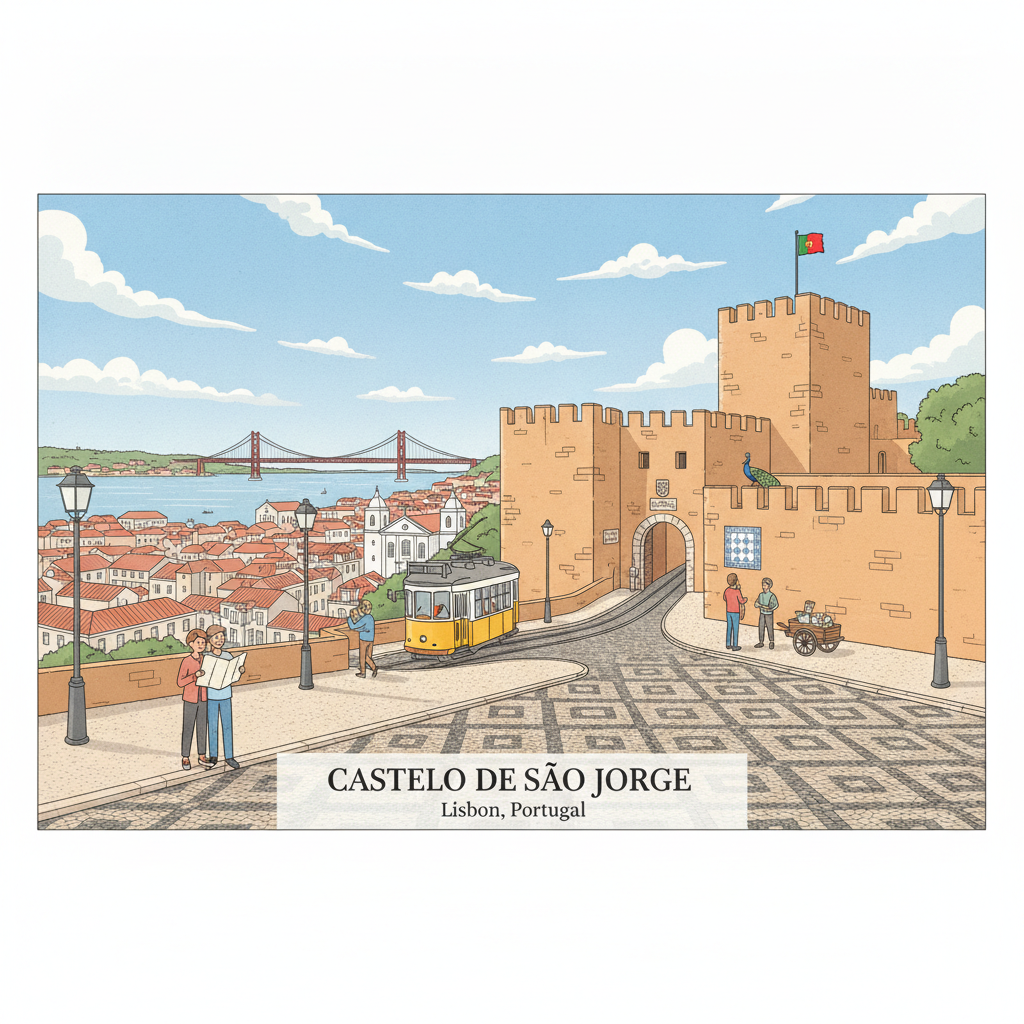
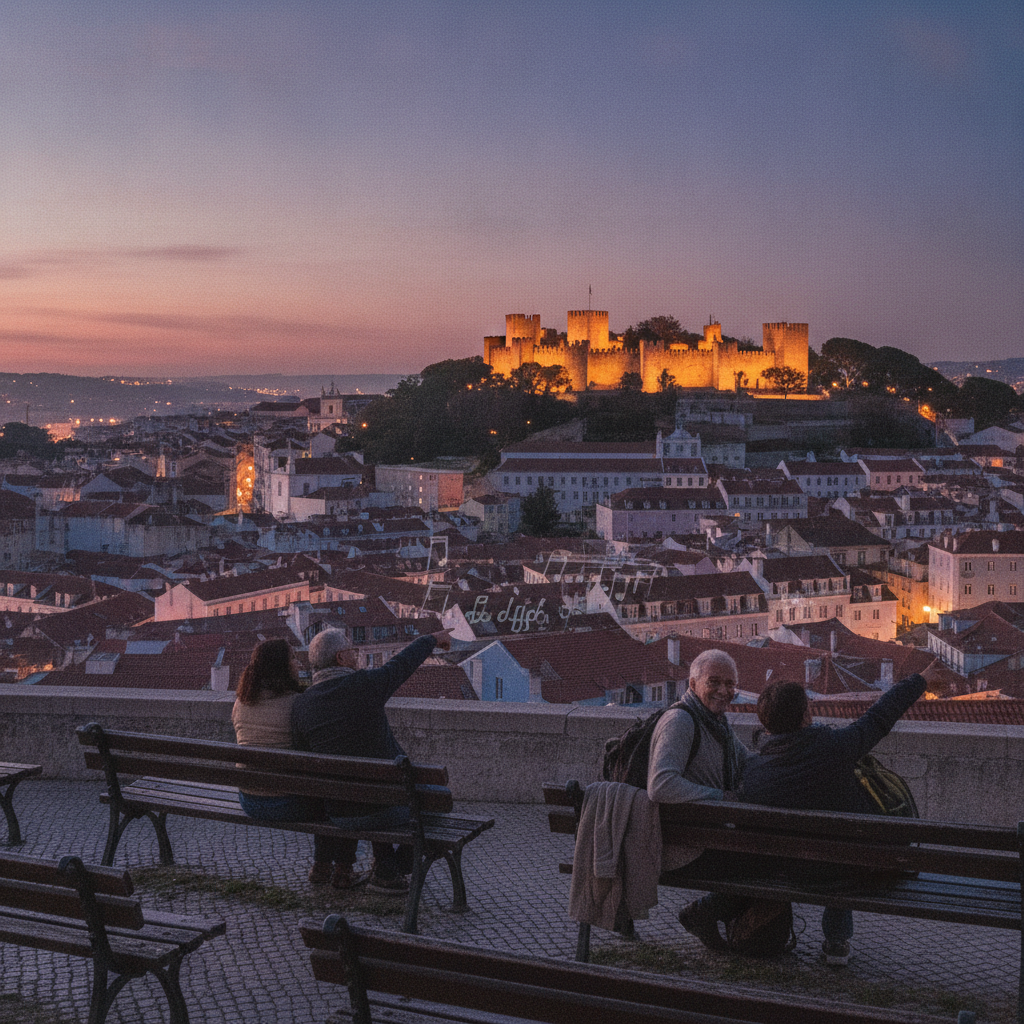
The Castelo de São Jorge, the Moorish hilltop fortress that dominates Lisbon's skyline, was first built as a fortification by the Moors in the mid-11th century on foundations of earlier Iron Age and Roman occupation. The Moors called it Al-Ushbuna; the Portuguese Afonso Henriques captured it in 1147 after a siege assisted by Crusaders passing through on their way to the Holy Land — a date considered the founding moment of Lisbon as a Portuguese city. The castle was subsequently rebuilt as a royal palace and used as such by successive dynasties until the 16th century, when the Court moved to the Ribeira Palace at the waterfront. Within its walls, an archaeological excavation (Olisipo) traces the castle hill's occupation from the 7th century BCE. The ramparts offer the finest panoramic views over Lisbon, the Tagus, and the 25 de Abril suspension bridge.
- 2
Lisbon Cathedral (Sé de Lisboa)
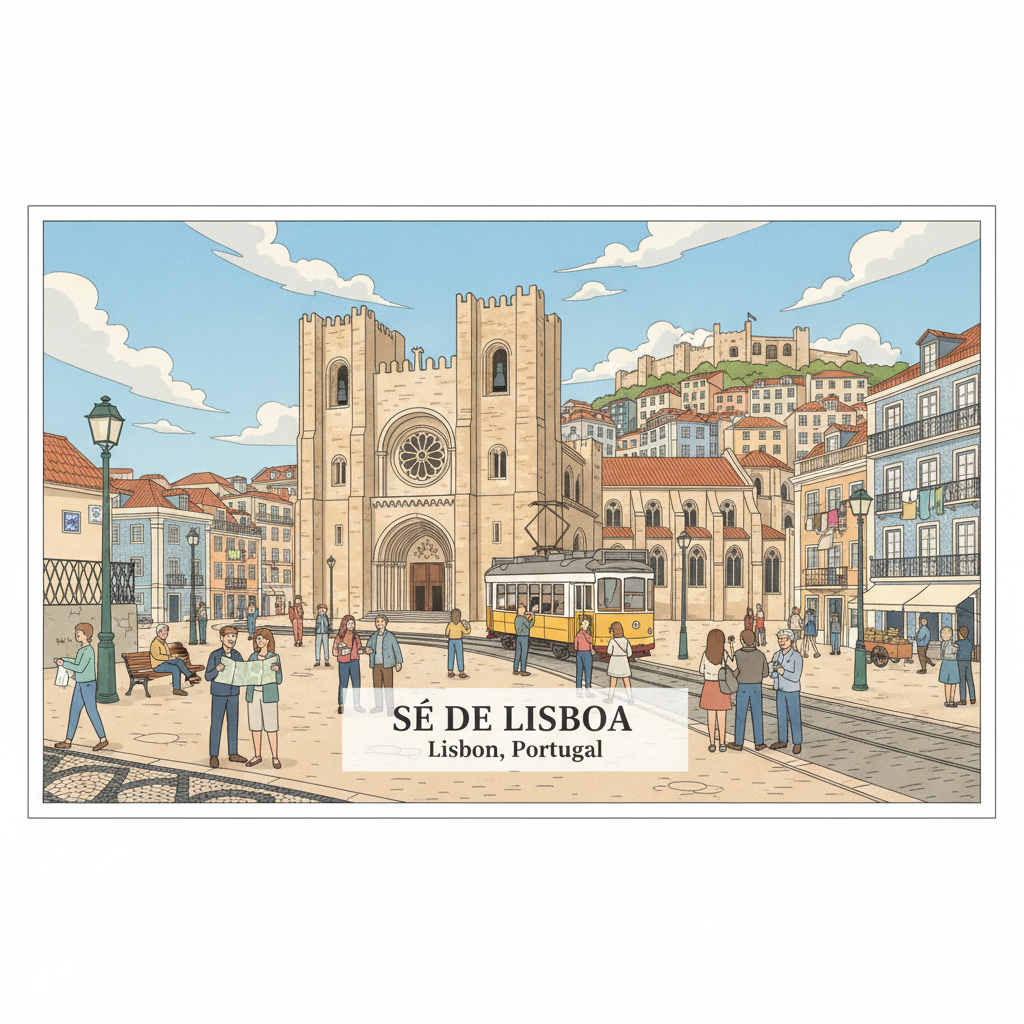
The Sé Catedral, Lisbon's oldest church, was founded in 1147 immediately after the Christian reconquest of the city — built, in an act of symbolic supersession, on the site of the main mosque. Its austere Romanesque facade with twin towers, begun in the 12th century and heavily altered after earthquake damage, is one of Portugal's finest examples of Romanesque ecclesiastical architecture. The cloisters (Gothic, 14th century) contain important archaeological excavations of the Roman and Moorish layers beneath the cathedral. The treasury holds medieval reliquaries and vestments of exceptional quality; the Chapel of Bartolomeu Joanes (1324) preserves the tomb of Saint Vincent, Lisbon's patron saint.
- 3
Portas do Sol & Santa Luzia Viewpoint
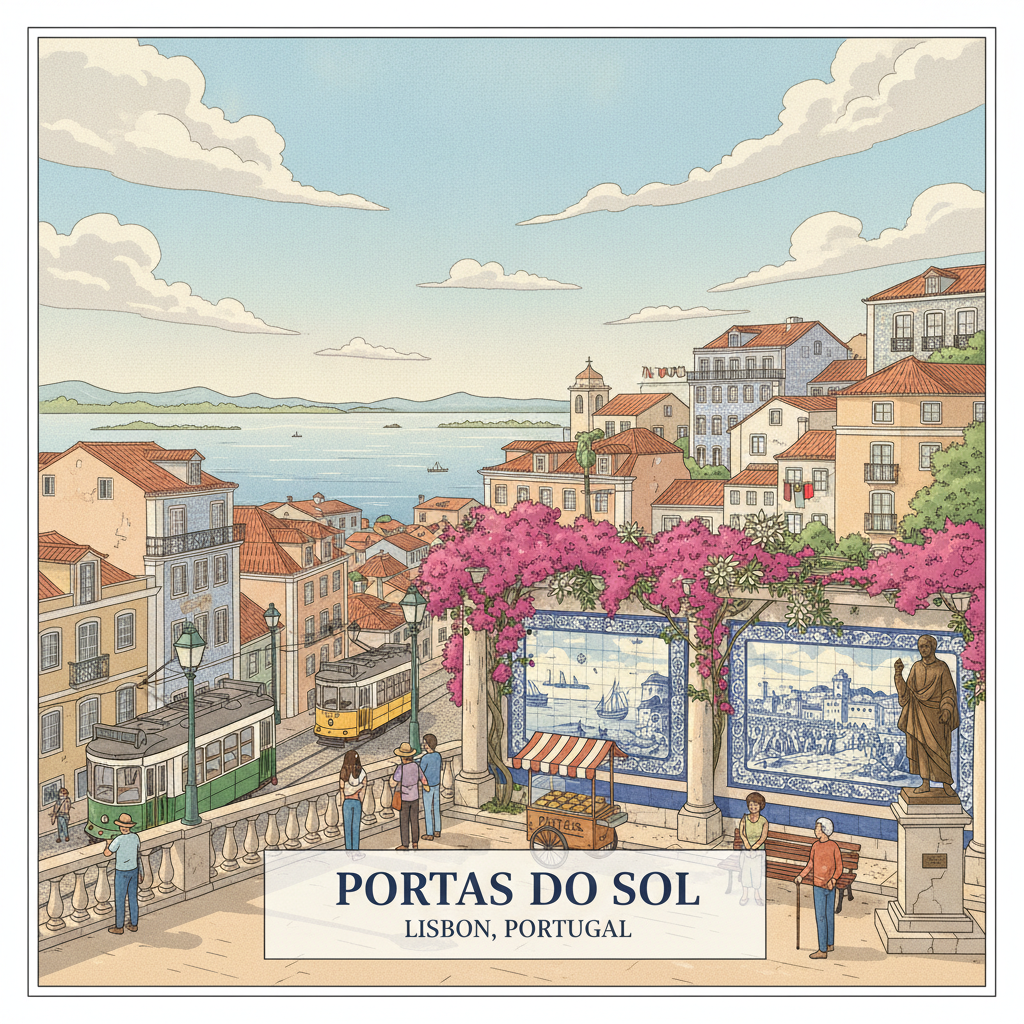
The Portas do Sol ('Gates of the Sun') viewpoint, at the eastern edge of the Alfama district, was once the location of one of the gates in Lisbon's medieval city wall. The broad esplanade now offers one of the city's most photographed views across the rooftops of Alfama to the Tagus. Immediately adjacent, the Santa Luzia terrace — its outer walls decorated with 1940s azulejo (blue and white ceramic tile) panels depicting pre-earthquake Lisbon and the Christian siege of the Moorish city — offers a quieter, more intimate viewpoint framed by bougainvillea and a passion flower-covered pergola. Below, the streets descend into the densest part of Alfama.
- 4
Alfama Lanes & Fado Houses
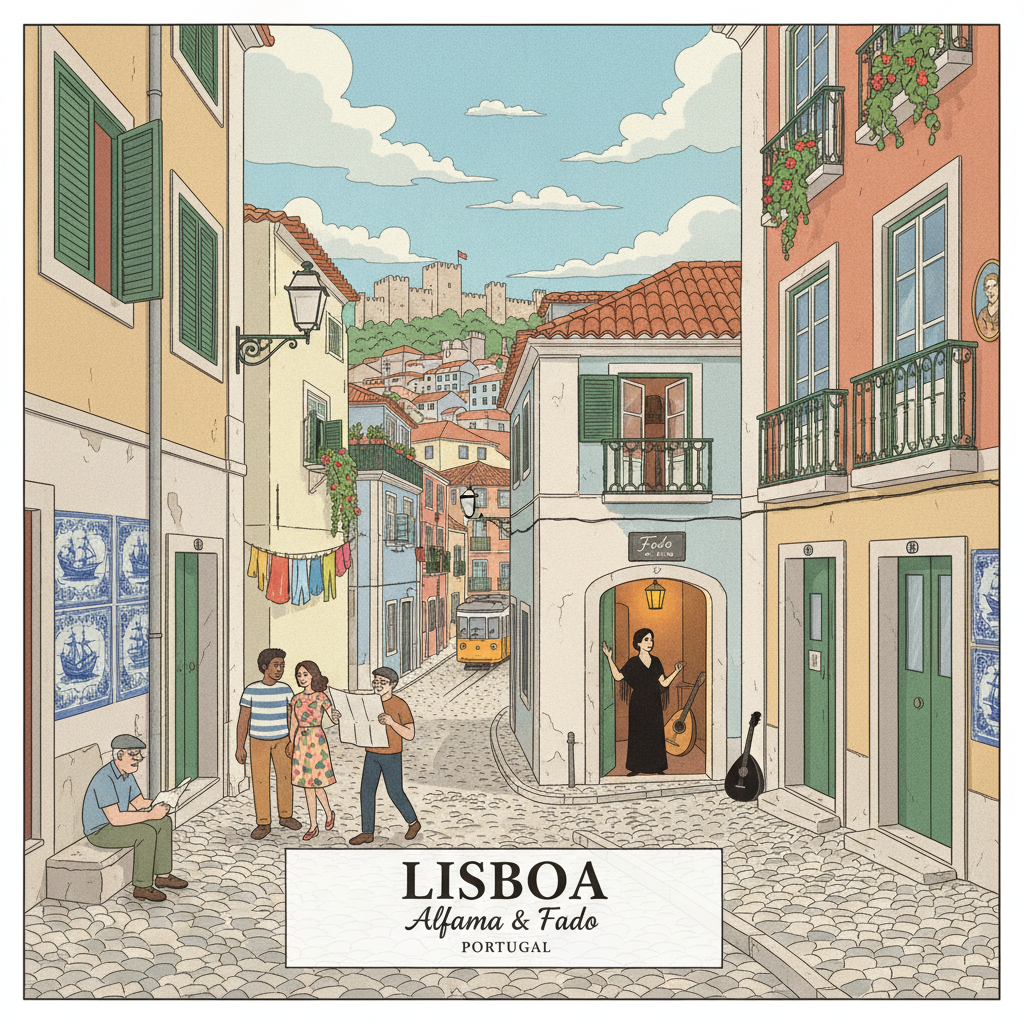
The lanes of Alfama — Rua das Escolas Gerais, Rua do Barão, Travessa da Água da Flor — follow alignments that have remained unchanged since the Moorish period. The neighborhood's most iconic feature is its profusion of fado houses (casas de fado): intimate venues where Portugal's defining musical tradition — the soulful, mournful song genre created in Lisbon's waterfront taverns in the 19th century — is performed nightly over dinner. Fado (from Latin fatum, 'fate') is a UNESCO Intangible Cultural Heritage since 2011; Alfama's most celebrated fado musician was Amália Rodrigues (1920-1999), whose house on Rua de São Bento is preserved as a museum.
- 5
Miradouro da Graça & Miradouro da Senhora do Monte
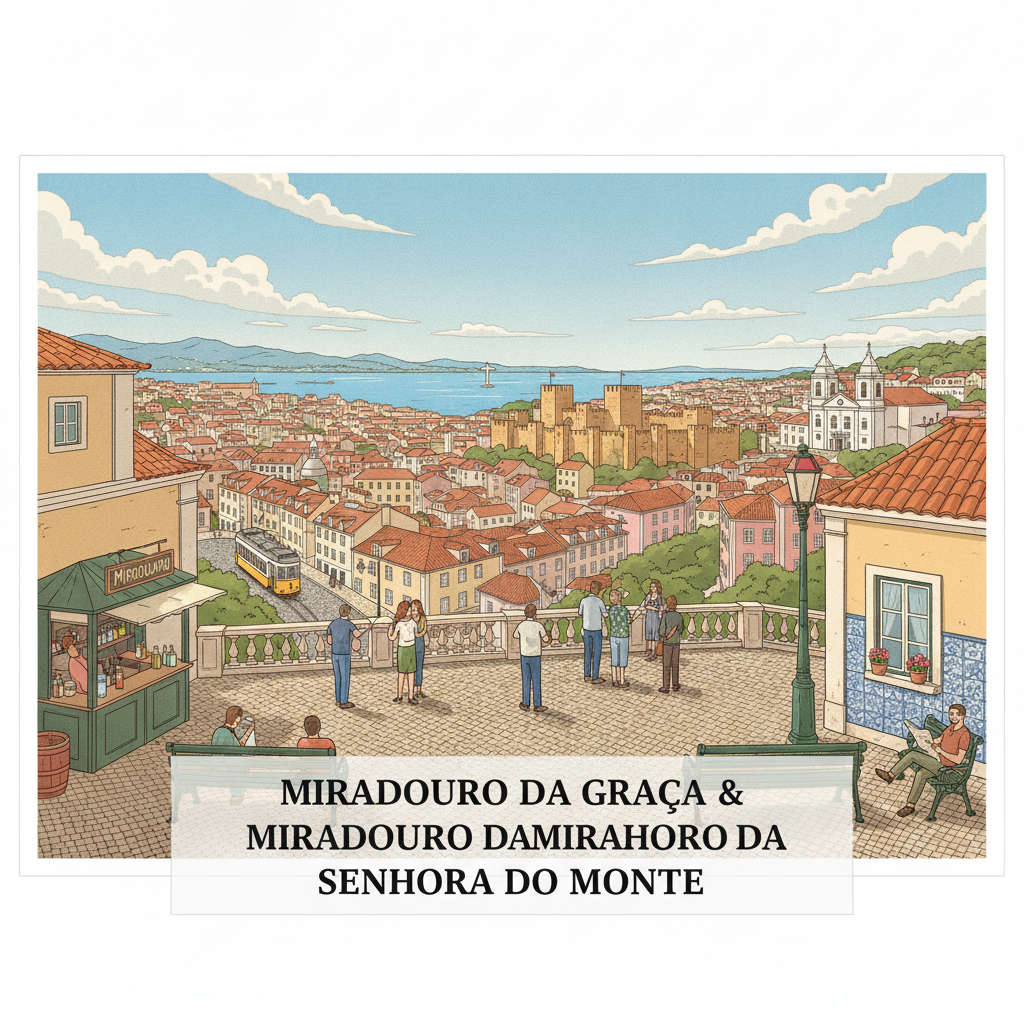
The miradouro (viewpoint) system is one of Lisbon's defining features — the city's hills demand viewpoints, and the municipality has formalized them into destinations with kiosks and benches. The Miradouro da Graça, on the hill just north of the castle, offers a more local, less tourist-crowded alternative to the castle viewpoints, popular with Lisbonites for evening drinks. Higher still, the Miradouro da Senhora do Monte — the highest viewpoint in the city proper — offers a 360-degree panorama that on clear days extends to the Serra de Sintra mountains 30 km west and includes the full sweep of the Tagus estuary and the Christ the King statue on the south bank.
- 6
Museu do Fado & Fado Birthplace Quarter
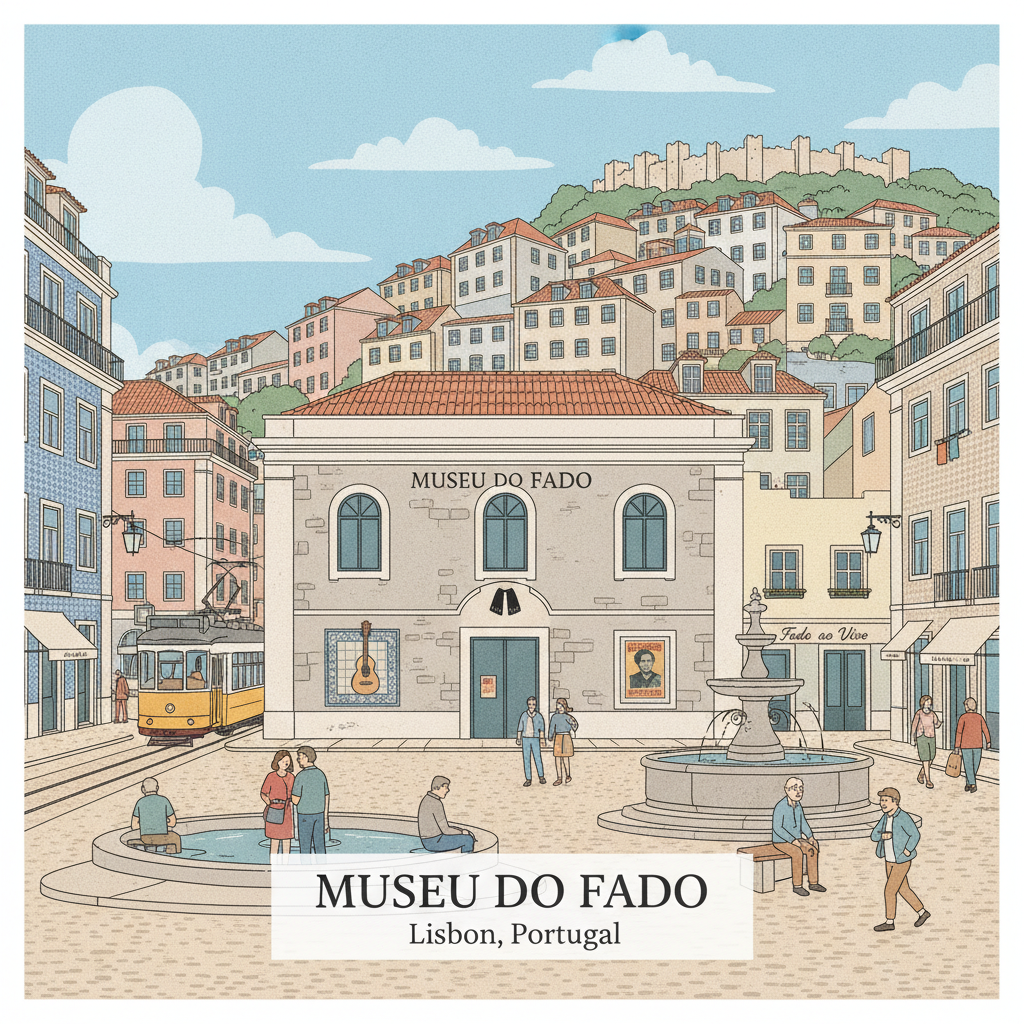
The Museu do Fado, in a former water pumping station beside the Alfama fountain, presents the history and cultural context of fado from its origins in Lisbon's waterfront Mouraria and Alfama neighborhoods in the early 19th century through its development into Portugal's most iconic cultural export. The museum contains instruments, costumes, photographs, recordings, and interactive stations documenting the genre's key figures — Amália Rodrigues, Carlos do Carmo, Mariza — and its social context among Lisbon's working-class communities. The museum also runs an academy that teaches fado performance.
Walk this route with audio
Stories play automatically as you reach each stop — no tapping needed.
More in lisbon
Parque das Nações: Expo '98 and Lisbon's City of the Future
Tram 28, Estrela & Campo de Ourique: Lisbon's Most Scenic Ride
LX Factory, Alcântara & the 25 de Abril Bridge: Industrial Lisbon Reborn
Cascais & Estoril: The Portuguese Riviera by the Sintra Line
Mouraria, Intendente & Graça: Lisbon's Most Authentic Neighbourhoods