The Snow Leopard With a 35% Sighting Probability in 7 Days, the Shahtoosh Shawl That Required Killing 5 Antelopes & the 26-Meter Copper Buddha Plated With 300 kg of Gold
The Tibetan chiru antelope recovery from 75,000 to 300,000 after the shahtoosh shawl poaching ban; the Nathu La Pass as the only open China-India land border crossing; the Tashilhunpo Monastery's 26.2m Maitreya Buddha containing 300kg of gold plating; Lhasa's urban expansion from 53 to 544 km² in 23 years; the Everest North Base Camp at 5,200m as the most accessible 5,000m+ point for non-mountaineers; and the mandatory 48-hour Lhasa acclimatization before ascending to the Potala's 300-step approach.
- 1
Tibet's High-Altitude Wildlife – Snow Leopard Country
The wildlife of the Tibetan Plateau (the most diverse high-altitude megafauna ecosystem on earth): the wildlife guide for Lhasa-based visitors. The snow leopard (雪豹—Panthera uncia): the flagship predator of the Tibetan Plateau—the estimated population of 4,500–7,500 individuals (2020 IUCN assessment)—the highest density is in the Sanjiangyuan National Park (三江源国家公园—the 'Source of Three Rivers National Park' in Qinghai Province, the source of the Yangtze, Yellow, and Mekong Rivers): the snow leopard viewing (the most reliable snow leopard sighting location accessible from Lhasa is the Sanjiangyuan area—approximately 1,200 km from Lhasa by road—the sighting probability per 7-day visit in winter is approximately 35% with a specialized wildlife guide). The Tibetan antelope (藏羚羊—Pantholops hodgsonii—chiru): the CITES-protected antelope of the Tibetan Plateau whose underfleece (shahtoosh) was the most valuable textile fiber in the world (a single shahtoosh shawl required the killing of 3–5 chiru)—the chiru population fell to approximately 75,000 in the 1990s due to poaching but has recovered to 300,000+ following the Chinese protection program. The wild yak (野牦牛—Bos mutus): the ancestor of the domestic yak—the wild yak stands 1.8–2.0m at the shoulder and weighs 800–1,000 kg—the wild population has recovered to approximately 15,000 animals in the Qiangtang Nature Reserve in northern Tibet.
- 2
Tibetan Carpets & Thangkas – The Collector's Guide
Tibetan art and craft for collectors (the 2 most internationally traded categories of Tibetan material culture): the authentication and acquisition guide. Thangka paintings (唐卡): the authentic hand-painted thangka (the cotton or linen canvas prepared with chalk-based gesso (rab-gnas), painted with mineral pigments (the deep blue from azurite (自然铜蓝), the deep red from cinnabar (朱砂), the green from malachite (孔雀石), and the gold from actual gold dust applied in the final detail stage)): the quality spectrum (the master thangka painters of Lhasa, Thimi (Nepal), and Dharamsala (India) work for months to years on a single piece—the most accomplished large-format thangkas (depicting the complete Wheel of Life or the 84 Mahasiddhas) sell for $10,000–$100,000): authentication markers (the gold details of an authentic thangka have a matte, non-metallic sheen—reproductions use gilt paint that reflects more sharply). Tibetan carpets (藏毯—the hand-knotted wool carpets from Lhasa, Shigatse, and Gyangze): the Gyangze carpet (the Gyangze area (江孜—110 km west of Lhasa) is the primary carpet-weaving center of Tibet—the traditional Gyangze carpet uses the 'Sehna' knot (the Persian asymmetric knot—1 of the 3 primary carpet knots, used across the Islamic and Tibetan carpet traditions) at a density of 40–60 knots per square centimeter: the most durable hand-knotted carpet produced in Asia.
- 3
The Tibet-India Highway – The Ancient Trade Route
The Lhasa-to-India connections (the ancient trade routes that connected the Tibetan Plateau with the Indian subcontinent—the routes that transmitted Buddhism from India to Tibet and silk from Tibet to India): the historical and contemporary route guide. The Nathu La pass (乃堆拉山口—Nathu La—4,545m): the mountain pass connecting Tibet (Chumbi Valley) with Sikkim (India)—the pass was the primary trade route between Tibet and British India until its closure in 1962 following the Sino-Indian War: the reopening (the Nathu La pass was reopened for bilateral trade in 2006—the only open border crossing between China and India): the trade goods (the Indian bazaar at Gangtok (the capital of Sikkim) specializes in Tibetan goods (thangkas, prayer wheels, and yak products) imported via Nathu La). The ancient salt-wool trade (the traditional Tibetan pastoral economy was based on trading plateau salt (from the high-altitude salt lakes) with Indian valley communities for grain, spices, and forest products): the annual salt caravan (the trans-Himalayan salt caravan (the Dolpo route through the Mustang Kingdom of Nepal—the route depicted in the 1999 documentary film 'Himalaya' (Caravan)): the last salt caravans using the traditional yak-pack method were filmed in the 1990s—the trade has largely shifted to truck transport via the Arniko Highway (the road from Lhasa to Kathmandu via Zhangmu).
- 4
Contemporary Lhasa – Han Chinese Migration & Urban Change
Contemporary Lhasa (the city that has undergone the most rapid urban transformation of any UNESCO World Heritage site in Asia since 2000): the sociological and architectural analysis of the modern city behind the heritage tourism. The urban transformation (the Lhasa urban area has expanded from 53 km² (2000) to 544 km² (2023)—a 10× expansion in 23 years, the fastest urban growth rate of any Chinese city with a World Heritage designation): the Han Chinese migration (the Chinese government's Western Development Campaign (西部大开发—launched 2000) has incentivized Han Chinese migration to Lhasa—the Han Chinese population of Lhasa has increased from approximately 20% of total residents (1990) to an estimated 40–50% (2023, exact figures are contested)): the economic displacement (the most common criticism from Tibetan advocacy organizations: the Han Chinese migrants dominate the commercial districts outside the Barkhor Old Town—the large department stores, the modern restaurant chains, and the electronics shops in the new town are predominantly Han-owned enterprises). The infrastructure (the Lhasa infrastructure investment since 2000: the Qinghai–Tibet Railway (2006); the Lhasa Gonggar International Airport expansion (2023, new terminal); the expressway network connecting Lhasa to Shigatse (240 km, 2 hours by expressway)): the Olympic Flame (the 2008 Beijing Olympics torch relay passed through Lhasa and over the summit of Everest—the relay was disrupted by pro-Tibet protests at multiple international stages).
- 5
Shigatse & Tashilhunpo – The Panchen Lama's Seat
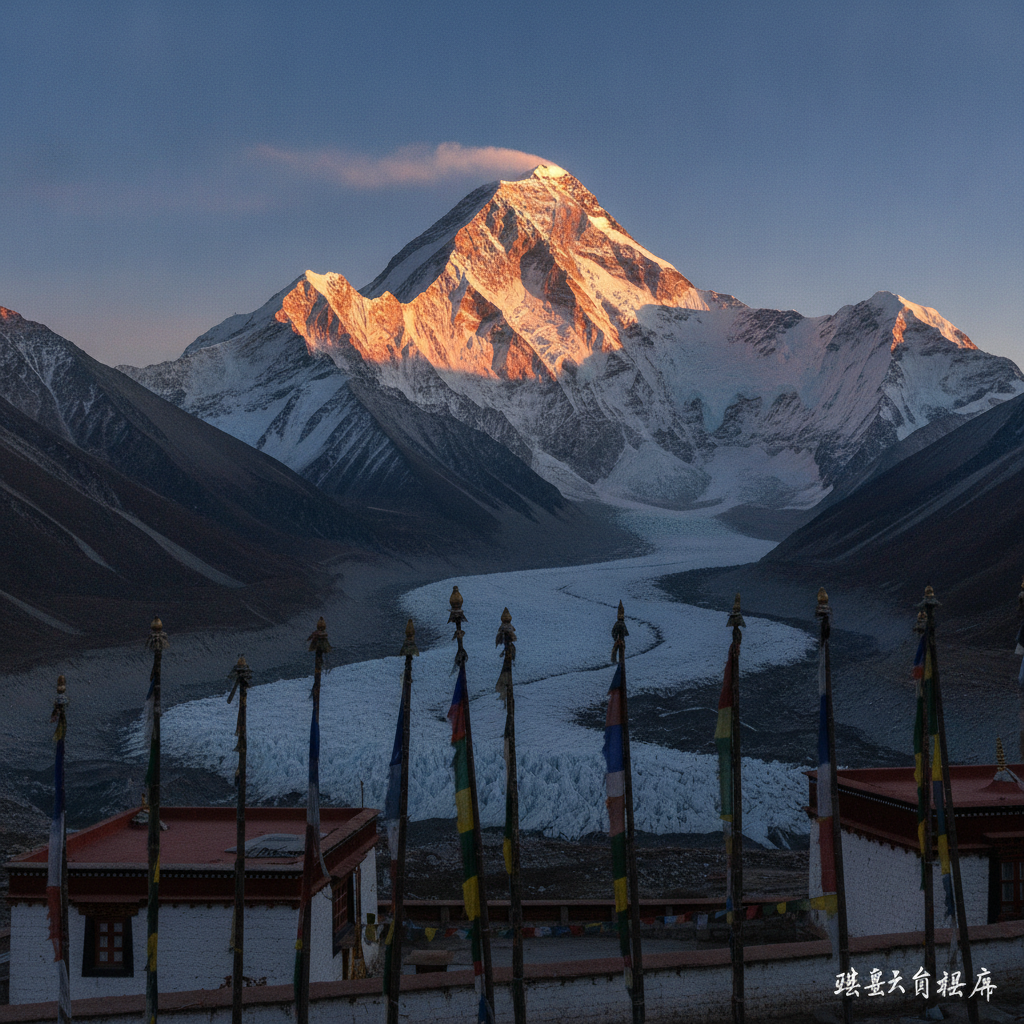
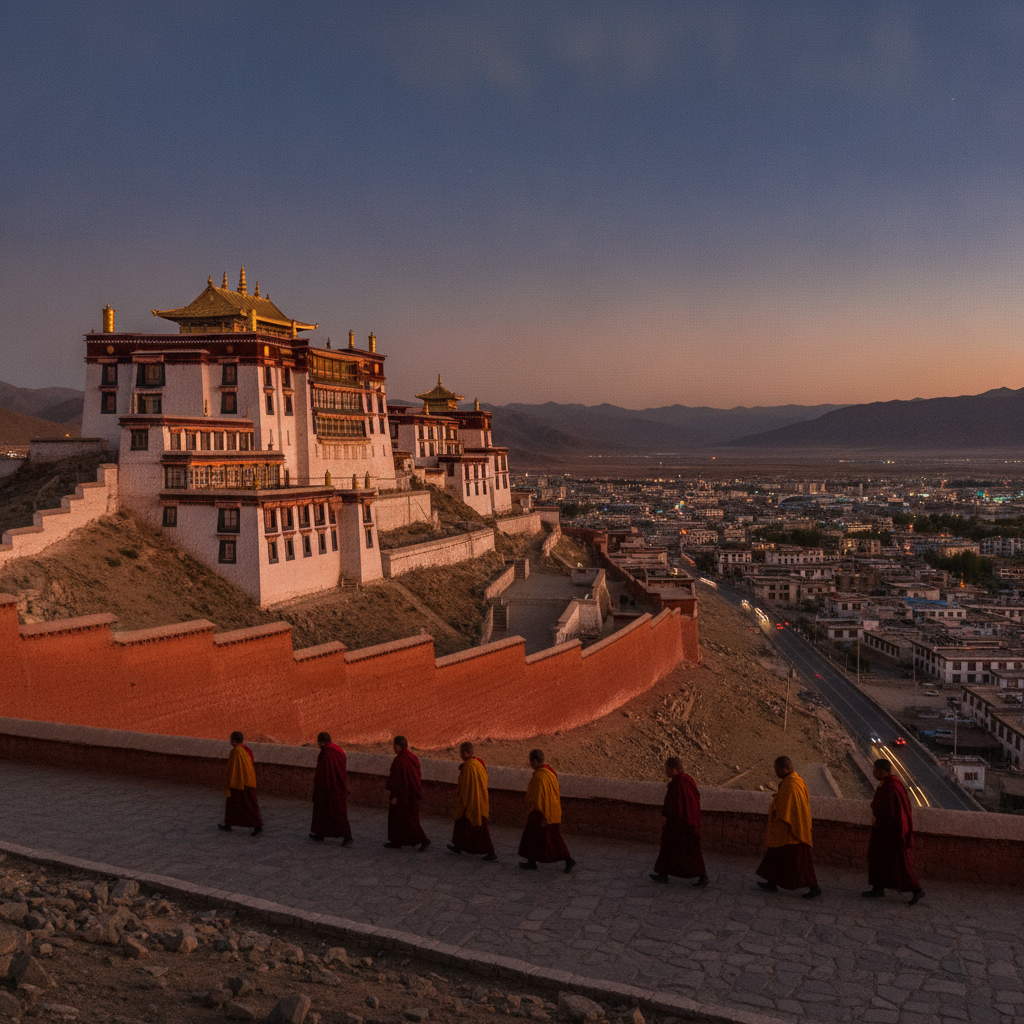
Shigatse (日喀则—Rikaze—the second city of Tibet, 240 km west of Lhasa): the home of the Tashilhunpo Monastery (扎什伦布寺)—the seat of the Panchen Lama and the most important Gelug monastery outside Lhasa. The Tashilhunpo Monastery (扎什伦布寺—founded 1447 CE by the 1st Dalai Lama (Gendun Drup)—the monastery that became the seat of the Panchen Lamas from the 4th Panchen Lama onward): the monastery complex (the most intact large-scale Tibetan monastery in Tibet—largely undamaged during the Cultural Revolution because the 10th Panchen Lama (Choekyi Gyaltsen, 1938–1989) intervened with the Chinese authorities): the Maitreya Buddha (the 26.2m high seated copper Maitreya Buddha in the Jampaling Chapel—the largest copper statue in Tibet, containing 6,700 kg of copper plated with 300 kg of gold). The Everest Base Camp extension (Shigatse to Everest Base Camp (珠穆朗玛峰大本营): 290 km by road (5–6 hours via the Friendship Highway and then the Everest road from Tingri): the Everest North Face Camp (5,200m)—the most accessible 5,000m+ point on earth for non-mountaineers (the road to the Base Camp is accessible by Land Cruiser 4WD). The Everest permit (the Tibet Tourism Bureau requires a Restricted Areas Permit for the Everest Base Camp area—in addition to the standard Tibet Travel Permit).
- 6
Lhasa Complete Itinerary – 4 Days to 10 Days
The complete Lhasa itinerary guide (the planning framework for visits of 4 different durations): 4-Day Itinerary: Day 1 (Arrival + acclimatization): arrive at Lhasa Gonggar Airport—transfer to hotel (1 hour)—mandatory rest (no temple visits on Day 1—the altitude effect is most severe in the first 6 hours): Day 2 (Barkhor + Jokhang): morning Jokhang Temple (07:00–09:00 at the Jowo Rinpoche prayer hour)—Barkhor circumambulation (09:00–11:00)—Norbulingka Palace (14:00–17:00): Day 3 (Potala + Sera): Potala Palace (09:00–12:00—book 2 days in advance online)—Sera Monastery debate (14:00–17:00): Day 4 (Drepung + departure): Drepung Monastery (08:00–11:00)—Lhasa departure flight (afternoon). 7-Day addition: Days 5–6 (Shigatse + Gyangze): the Friendship Highway west to Shigatse via the Karo La Glacier (卡若拉冰川—the glacier visible from the road at 5,560m, the source of the Nyang River): Day 7 (return via Yamdrok Lake (羊卓雍措—the turquoise lake at 4,441m, 70 km south of Lhasa—the most photographed lake in the Lhasa region)). 10-Day addition: Days 8–10 (Namtso Lake + Everest Base Camp)—the most ambitious Tibet circuit accessible with a licensed guide and the standard Tibet Travel Permit plus Restricted Areas Permit.
Walk this route with audio
Stories play automatically as you reach each stop — no tapping needed.
More in Lhasa
The Escape in a Soldier's Disguise in 1959, the Paving Stones Worn Concave by 1,380 Years of Pilgrim Feet & the Observatory at 5,100 Meters That Studies the Clearest Sky in Asia
The 1,380-Year Pilgrimage Circuit That Has Been Walked Every Day Since 639 CE, the Golden Tomb Containing 18,680 Taels of Gold & the Train That Crosses 5,072 Meters to Reach the World's Highest Capital
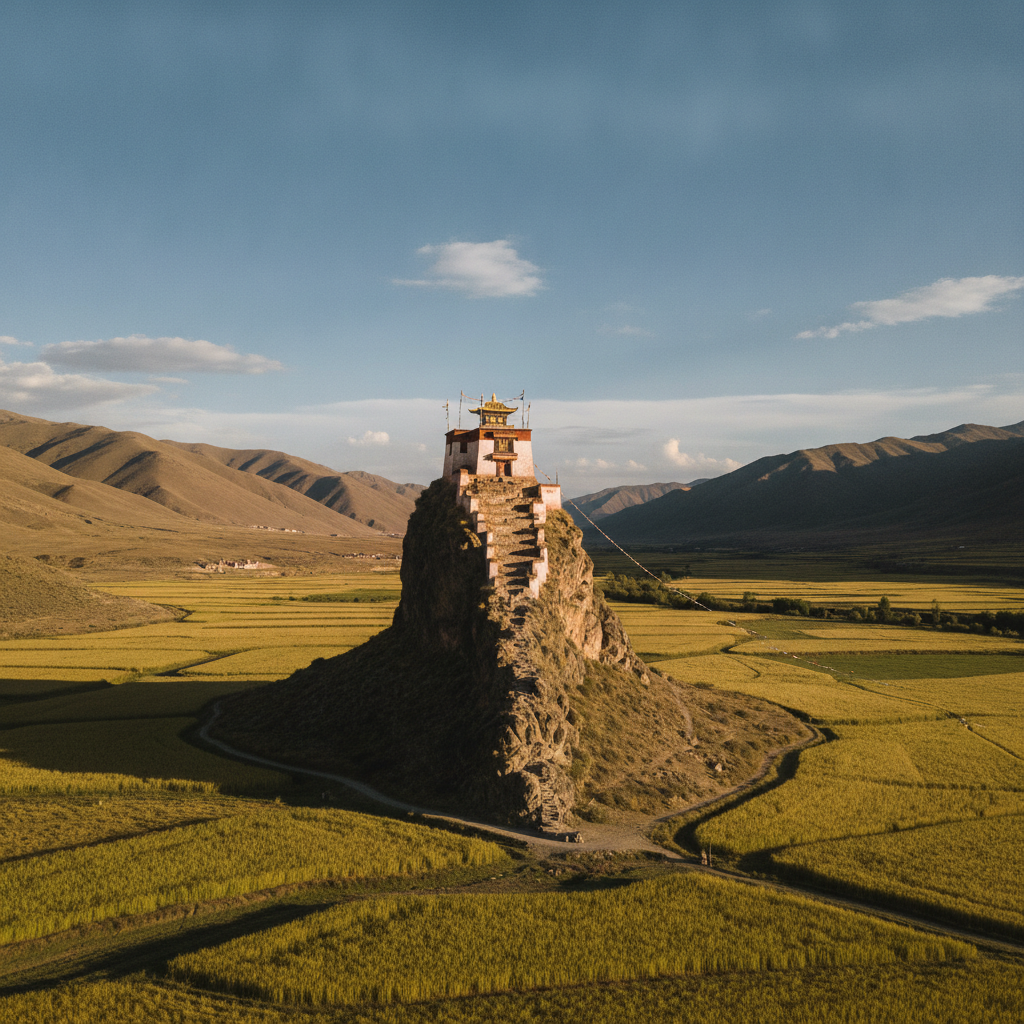
The First Building in Tibet Built Before 127 BCE, the 36-Position Pulse Diagnosis System & the Child Whose 1995 Recognition by the Dalai Lama Led Immediately to His Disappearance
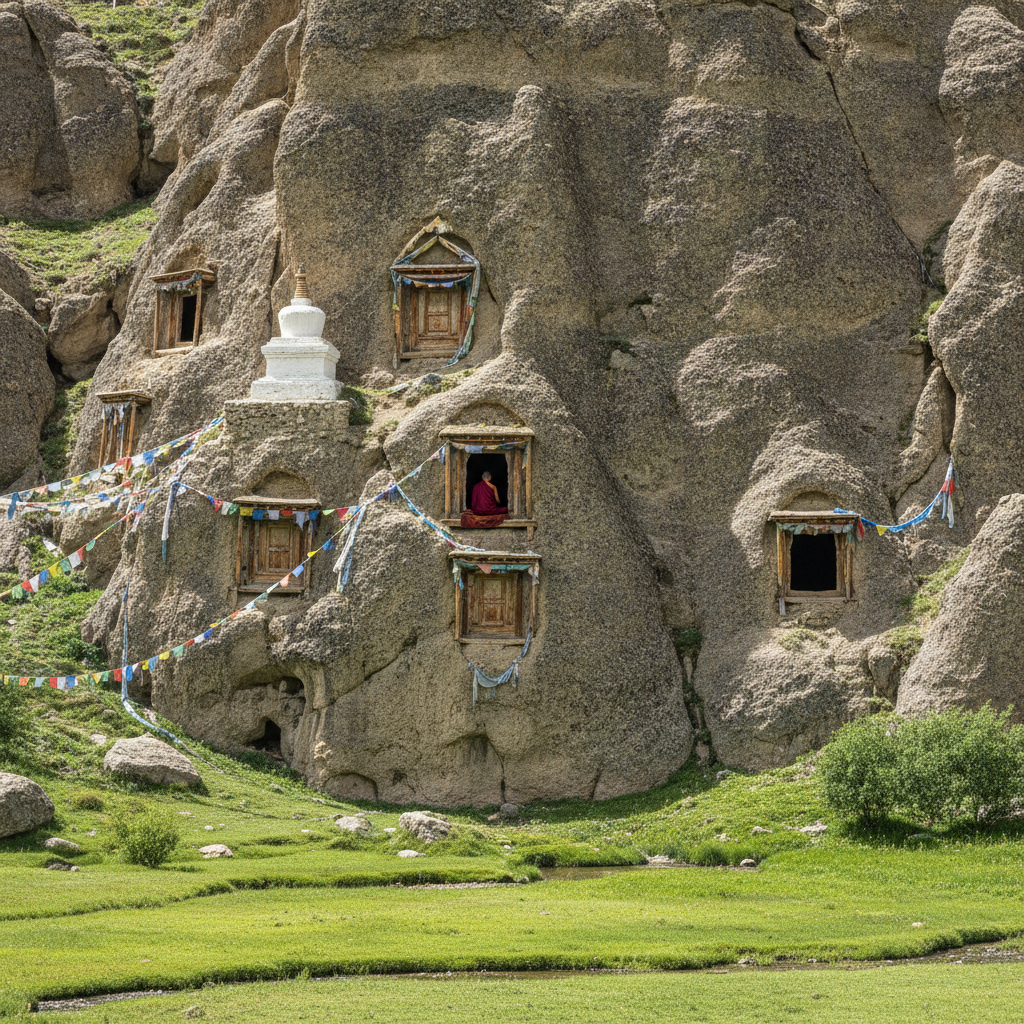
The 42 Meditation Caves Where Padmasambhava Subdued Tibet's Spirit World, the Yak-Hair Tent That Waterproofs Itself in Rain & Why the Kathmandu-to-Lhasa Overland Circuit Is the Most Complete Himalayan Experience