Varenna — the Passeggiata degli Innamorati, the Gardens & the Grigne Mountains
Varenna (population 800, on the east shore of Lake Como opposite the centre of the lake, accessible by ferry from Bellagio in 15 minutes or by train from Milan Centrale in 1 hour on the Lecco-Sondrio line, with Varenna-Esino-Perledo station 400m above the village requiring a local bus or 20-minute walk down) is the quietest and most locally authentic of the three ferry triangle villages.
- 1
Passeggiata degli Innamorati — the Lovers Walk
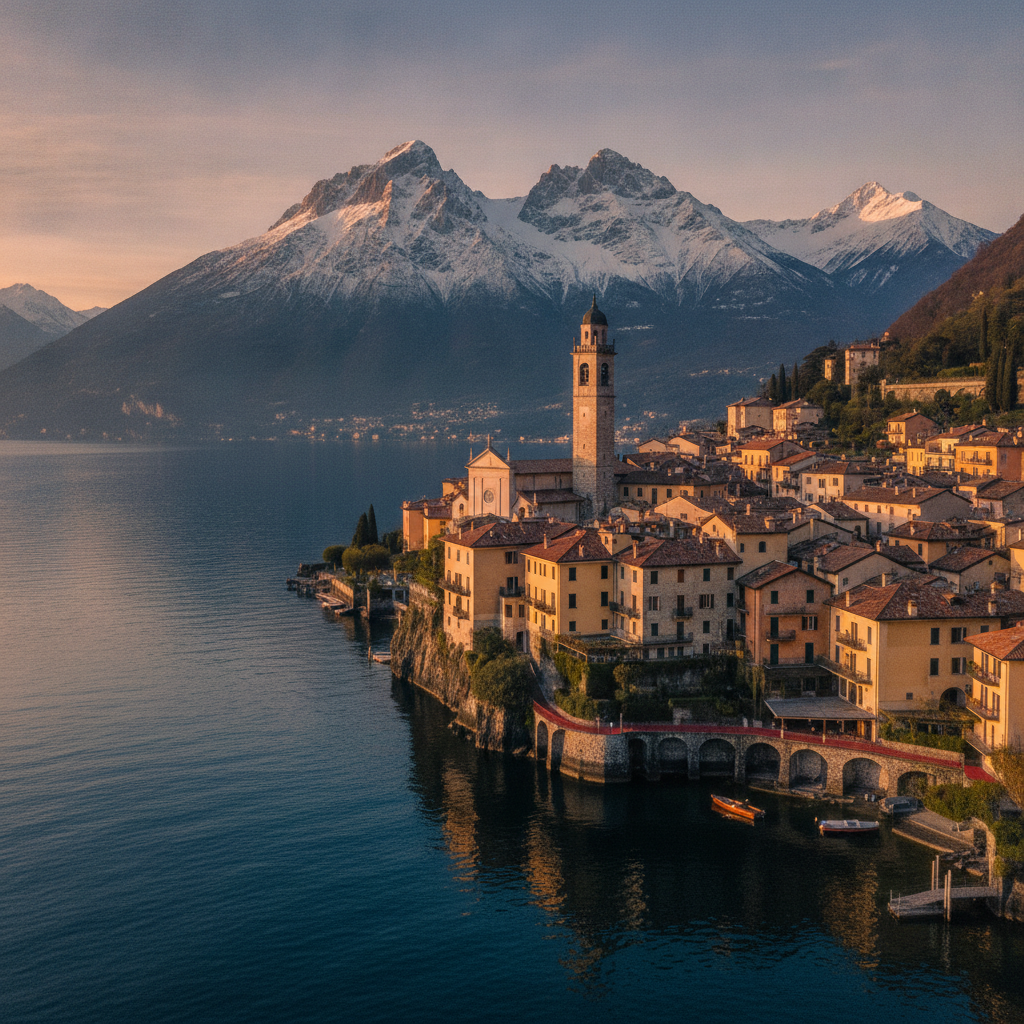
The Passeggiata degli Innamorati (the lakeside walk connecting Varenna's ferry dock with the old village centre and Villa Monastero, carved from the cliff face above the lake in the early 20th century, the path running 500m at lake level between the rocky cliff face above and the lake immediately below, the width of the path in places only 1m with the lake surface 50cm to the right) is the most romantic short walk on Lake Como. The walk (free, always open, 15 minutes end to end at normal pace) is best done in the golden hour before sunset when the west-facing villages of Bellagio and Menaggio across the lake turn pink-gold in the late light.
- 2
Villa Monastero — the 350-Metre Lakefront Garden
Villa Monastero (Viale Giovanni Polvani, Varenna, €7 adults, April-October daily 9:30am-7pm, the former Cistercian monastery founded 1208, converted to a private villa in the 17th century and donated to the Province of Como in 1939, now used as a scientific conference centre with the garden publicly accessible) stretches 350m along the lakefront, the longest continuous garden on Lake Como. The garden (the 14 distinct garden rooms, the lemon and citrus section, the rose terrace, the palm promenade, the lakefront magnolia avenue, the neoclassical statuary from 19th-century villa renovations) and the view from the garden's north end (the direct view across to Bellagio at the tip of the promontory, the best daytime photography position for Bellagio from the lake) make it the most architecturally varied garden on the lake's eastern shore.
- 3
Chiesa di San Giorgio — the Medieval Church Above the Waterfront
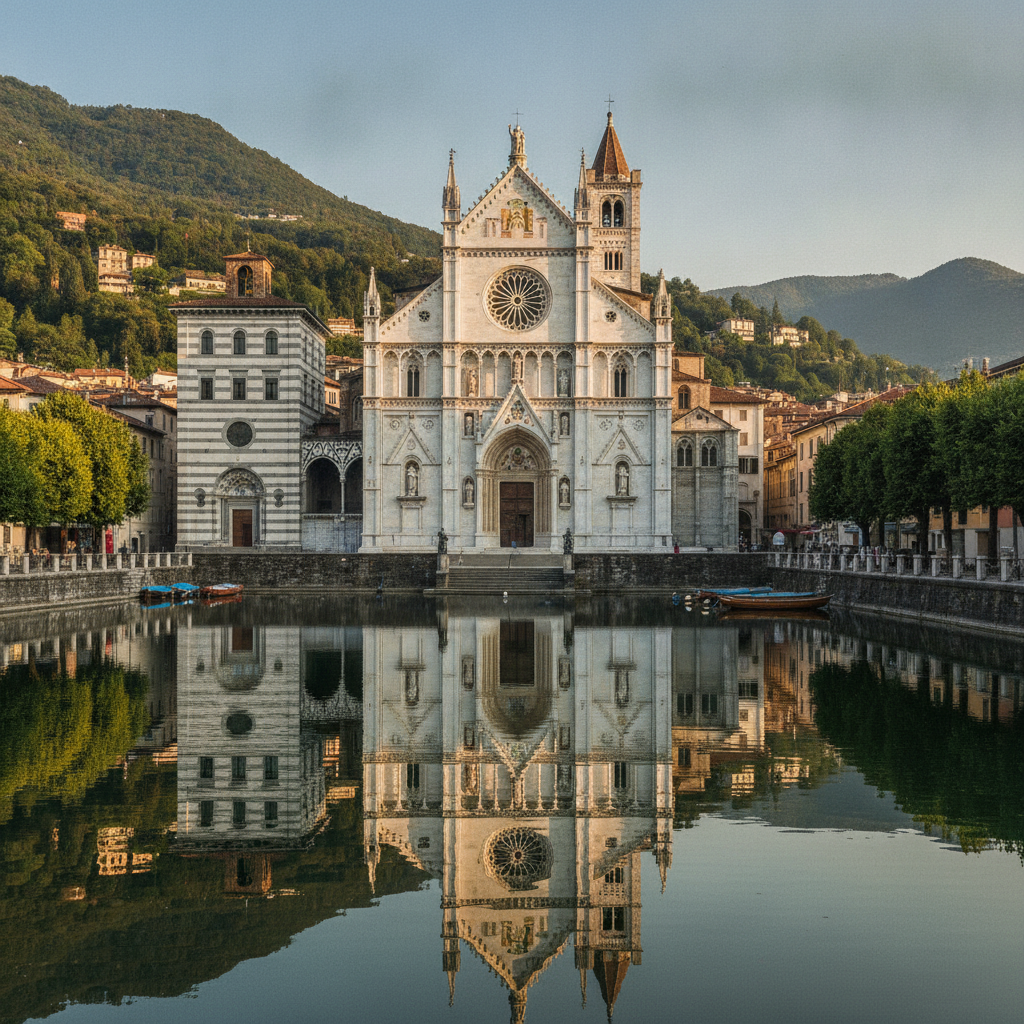
The Chiesa di San Giorgio (the 12th-century Romanesque church on the small piazza above the Varenna waterfront, free entry, daily 8am-noon and 3-7pm) contains the most important medieval fresco cycle on Lake Como: the 14th-century frescoes in the lunette of the main apse (the Christ in Mandorla, the Virgin and Child, the 12 Apostles, painted in the Byzantine-influenced Lombard Gothic style of the Giotto school, the colours — malachite green, lapis lazuli blue, and lead white — preserving their original intensity due to the dry microclimate of the east-facing interior) are accessible only by asking the sacristan to open the chancel (which he will do with no charge but expects a modest donation). The 15th-century polyptych by Melerio in the left transept is the secondary art-historical element.
- 4
Valsassina — the Valley Above the Eastern Shore
Valsassina (the valley east of Varenna, accessible by a 15-minute drive up the hairpin road from Varenna station at 200m to Perledo at 600m and on to Barzio at 742m, the traditional mountain valley of cheesemakers and ironworkers historically isolated from both the lake below and Milan above) is the correct destination for the Lake Como visitor wanting to escape the lake's tourist monoculture — the Grigne mountains (the two limestone peaks of the Grigna Settentrionale at 2,409m and the Grigna Meridionale at 2,177m, the most dramatic Alpine limestone massif immediately above any Italian lake, the climbing routes on the Grigne attracting Milanese climbers since the 1880s) and the Valsassina cheese (the formaggi di malga, the mountain-pasture cheeses produced by the 8 alpine dairies still operating in summer above Barzio at 1,200-1,600m altitude, sold at the cooperative cheese shop in Pasturo at €8-15/kg) are the valley's distinctive products.
- 5
Colico and the Northern Lake — the Lecco Branch Head
Colico (the town at the northern tip of Lake Como where the Adda river enters the lake bringing meltwater from the Rhaetian Alps and Swiss glaciers, 40 minutes by ferry from Varenna, the northernmost settlement of any size on the lake) is the departure point for the most dramatic ferry journey on Lake Como: the ferry from Colico south to Como (1 hour 50 minutes on the slow ferry, the full length of the lake at 46km, the longest navigated lake in Italy — the passenger ferry is the only public transport option for the full lake length, €20 for the full-length ticket on the Navigazione Laghi service). The Forte di Fuentes (the 16th-century Spanish fort at the north tip of the lake, free access daily, the 360-degree view of the lake's northern section and the Alpine peaks above) is the historical site at the northern extreme of the Tremezzina area.
- 6
Lake Como by Train — the Milan-Sondrio Line Through Lecco
The Milan Centrale to Sondrio regional train (the Lecco line, stopping at Varenna-Esino-Perledo and all eastern shore villages, the train running hourly in both directions, Milan Centrale to Varenna 57 minutes, €5.30 standard fare) is the most efficient access route for the eastern shore from Milan — significantly faster than the Como line (Milan to Como Nord on the Malpensa Express: 35 minutes, then bus or ferry to Bellagio another 60 minutes) for reaching the central lake. The train along the eastern shore (the tracks running at lake level between Lecco and Varenna, the tunnel sections under the headlands, the views of the lake directly from the carriage window at water level) is one of the most scenically dramatic short-distance train journeys in northern Italy.
Walk this route with audio
Stories play automatically as you reach each stop — no tapping needed.
More in lakecomo
Bellagio — the Pearl of the Lake, Villa Serbelloni Gardens & the Ferry Triangle
Cernobbio — Villa d Este, Lake Como's Grand Hotel Tradition & George Clooney's Lake
Villa Carlotta, Tremezzo & Lenno — the Western Shore's Botanical Gardens
Lake Como Through the Seasons — Spring Camellias, Summer Crowds & Winter Calm