Lake Atitlan Textiles: Maya Weaving Traditions and the Huipil
The twelve villages around Lake Atitlan produce some of the most distinctive handwoven textiles in the Maya world, with each community maintaining identifiable weaving patterns, colors, and techniques that have identified community membership for centuries. The huipil, the traditional woven blouse worn by Maya women, carries encoded information about the weavers community, marital status, and sometimes clan. The backstrap loom technique used around the lake predates the Spanish conquest and produces cloth of extraordinary intricacy. This route examines the textile traditions of the lake communities, the cooperatives that have organized production for the tourism market, and the social meaning of weaving within contemporary Maya culture.
- 1
The Backstrap Loom: Pre-Columbian Weaving Technology
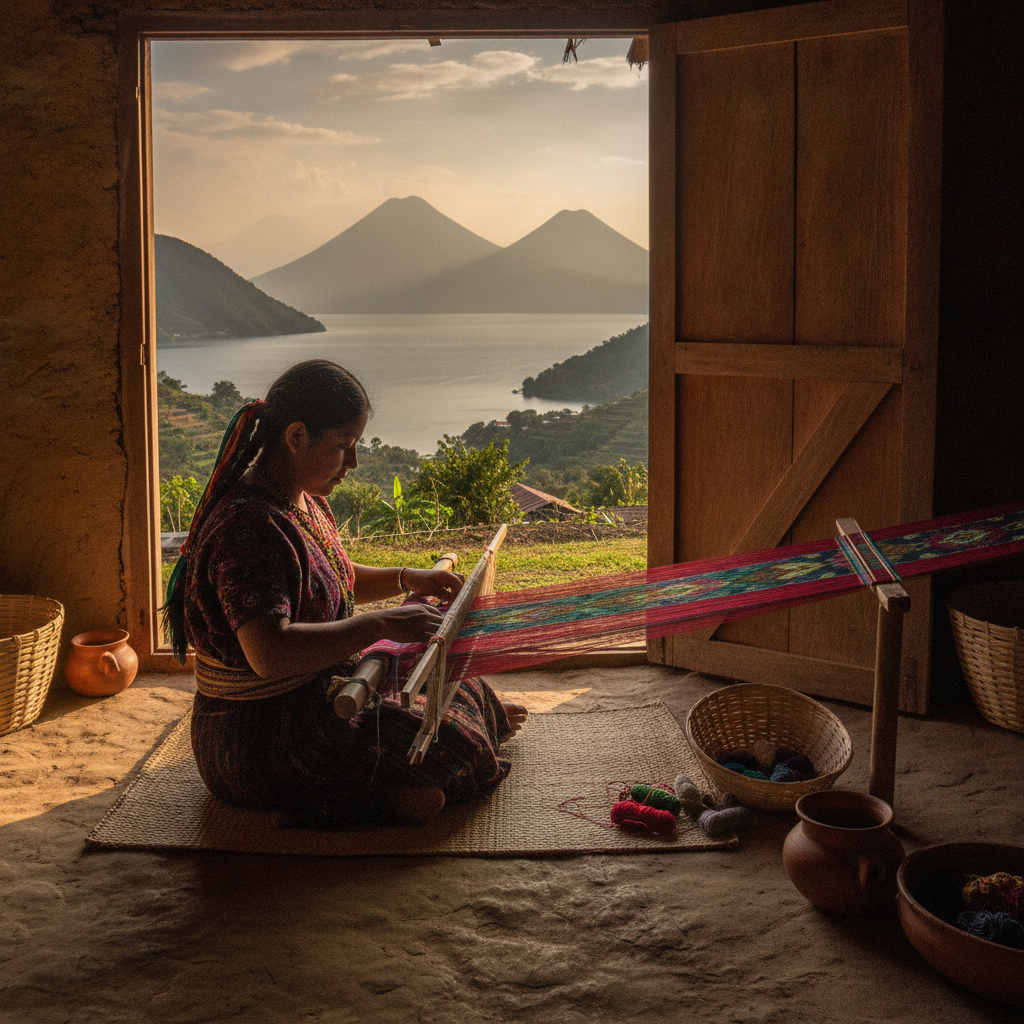
The backstrap loom used around Lake Atitlan is essentially identical in design to looms depicted in pre-Columbian Maya codices and ceramic figurines, making it among the oldest continuously used technologies in the Americas. The weaver anchors one end of the loom to a fixed object such as a tree or post, and controls tension with a belt or strap around the lower back, using body movement to adjust the working tension of the warp threads. The technique allows the production of cloth up to about 70 centimeters wide in lengths determined by the weavers reach. The intricacy possible with a backstrap loom rivals mechanical jacquard weaving; the most complex huipiles can take three to six months to complete. Backstrap weaving is almost exclusively a female skill around the lake, learned from mothers beginning in childhood.
- 2
Huipil Patterns as Community Identity Markers
Each of the twelve lake communities around Atitlan has historically maintained distinctive huipil designs that visually identified community membership, and in some cases specific lineage or clan affiliation within a community. Santiago Atitlan huipiles feature stylized birds, often identified as quetzals, woven in purple and red threads against a white ground, a pattern so specific that scholars have traced its origins to pre-conquest iconography. Panajachel huipiles use geometric diamond patterns. San Pedro La Laguna uses bold horizontal stripes. The designs are not merely aesthetic but carry social information; in traditional village contexts, a woman wearing another communities huipil pattern would attract comment. The tourist market has created pressure to produce generic pan-Maya designs, which some cooperatives resist and others embrace.
- 3
Natural Dyes at San Juan La Laguna: Indigo, Achiote, and Marigold
San Juan La Laguna has become the center of natural dye textile production around the lake, with several cooperatives specializing in plant-based colorants that have largely been replaced by cheaper synthetic dyes elsewhere in Guatemala. Indigo, producing shades from pale blue to deep navy, comes from the Indigofera plant and requires a fermentation process to extract the dye. Achiote seeds produce orange and yellow tones. Marigold flowers produce clear yellows. Local barks, berries, and mineral compounds expand the palette. The natural dye process is substantially more labor-intensive than synthetic dyeing; a cooperatively organized demonstration shows visitors the complete sequence from plant preparation through mordanting, dyeing, and setting the color. The resulting textiles are sold at premium prices justified by both the labor and the environmental differentiation.
- 4
Cooperative Organizations and the Tourist Market
The growth of tourism at Lake Atitlan from the 1990s onward created both opportunities and challenges for traditional weaving communities. Women weaving cooperatives formed across the lake villages to negotiate better prices and provide reliable quality for tourist buyers, replacing the individual piece-by-piece bargaining that had historically disadvantaged individual sellers. The Maya Women Weavers cooperative network, with chapters in multiple lake villages, provides marketing training, quality standards, and collective price-setting. The challenge has been maintaining the cultural meaning and quality of traditional weaving while producing sufficient volume for the tourist market; the most intricate traditional huipiles remain too time-intensive to produce at prices most tourists will pay, so cooperatives often maintain traditional production for community use while producing simpler items for sale.
- 5
Men and Weaving: The Chichicastenango Tradition and Lake Differences
In the broader Maya highland weaving tradition, men historically wove on treadle looms introduced by the Spanish while women used backstrap looms. The Chichicastenango market, two hours north of the lake, remains the major commercial center for highland textiles produced on both loom types, with vendors from across the department of El Quiche bringing goods to the twice-weekly market. At Lake Atitlan, the gender division is more fluid in some communities; in San Juan La Laguna, some men participate in the natural dye cooperatives. The treadle loom, which can produce cloth faster than the backstrap loom but with less intricate patterns, is used for the mass-produced table runners and placemats that fill the Panajachel market stalls and represent the lower end of the lake textile economy.
- 6
Textile Tourism: How to Buy Ethically and Recognize Quality
The Panajachel Calle Santander market offers the widest selection of lake textiles but mostly represents low-price commercially produced goods rather than the finest traditional weaving. Visitors seeking authentic handwoven pieces from specific communities should visit the village cooperatives directly: the San Juan La Laguna cooperatives for natural dye pieces, the Santiago Atitlan market for traditional Tz utujil huipiles, or the San Pedro La Laguna women cooperatives. Authentic backstrap-woven cloth has a slight irregularity visible on close inspection; machine-woven imitations have the perfect regularity of mechanical production. Fair prices for a complete handwoven huipil from a skilled weaver reflect weeks or months of labor; prices below 300 quetzales for a claimed traditional huipil should raise questions about the production method or authenticity.
Walk this route with audio
Stories play automatically as you reach each stop — no tapping needed.
More in Lake Atitlan
Lake Atitlan Day Trips: Chichicastenango, Antigua, and the Pacific Coast
Lake Atitlan Practical Guide: Getting There, Accommodation, and Village Logistics
Lake Atitlan Food and Coffee: Dining Between the Villages
Lake Atitlan History: Maya Kingdoms, Spanish Conquest, and Civil War
Lake Atitlan Birdwatching: Endemic Species and Shoreline Habitats