Lake Atitlan Food and Coffee: Dining Between the Villages
The food culture around Lake Atitlan reflects the intersection of traditional Maya highland cuisine, a thriving expat and backpacker restaurant economy centered on San Pedro La Laguna, and the growing specialty coffee production from the volcanic slopes above the lake. Traditional Kaqchikel and Tz utujil dishes based on corn, black beans, squash, and chiles survive in village comedores and home kitchens. The international restaurant scene in San Pedro and Panajachel offers everything from wood-fired pizza to vegan cooking. The coffee from the slopes of Volcan San Pedro is considered among the finest in Guatemala, with several small-farm roasters now selling directly to visitors.
- 1
Traditional Maya Highland Cuisine: Corn, Beans, and Tamales
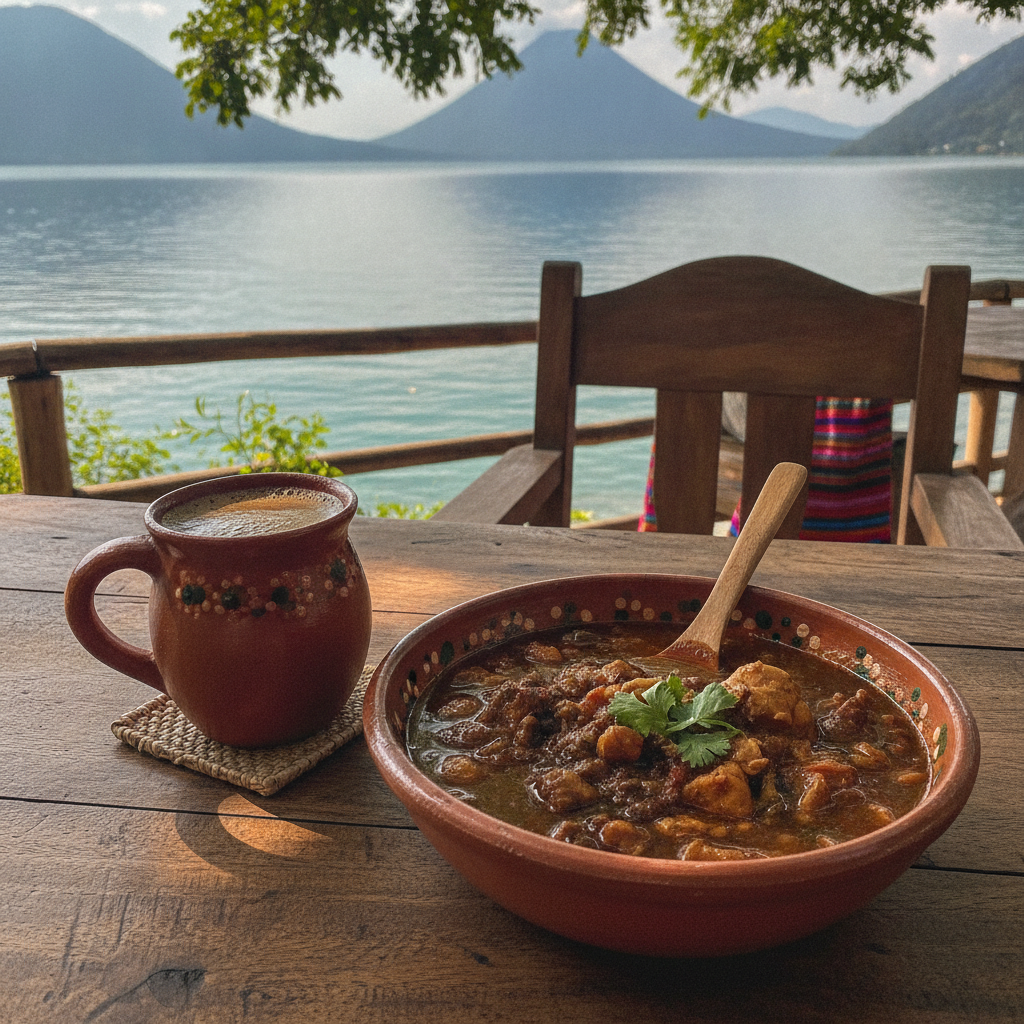
The foundation of traditional Maya highland cuisine around the lake is the same corn-bean-squash triad that has sustained Mesoamerican populations for 3,000 years. The local tamale tradition differs from the Mexican version: Guatemalan tamales are typically larger, wrapped in banana leaves rather than corn husks, and filled with combinations of chicken or pork, a red recado sauce made from dried chiles and tomato, and sometimes capers and olives reflecting colonial Spanish influences. The black bean soup served with a crumbled white cheese and fried plantain is the daily staple in village comedores throughout the lake region. Corn is consumed as tortillas, atol (a warm corn drink), and tamales, with each form representing a different preparation technique and social context.
- 2
Pepian and Traditional Guatemala Sauces
Pepian, the national dish of Guatemala, is a thick sauce made from toasted pumpkin seeds, sesame seeds, dried chiles, tomatoes, and tomatillos, typically served over chicken or turkey with rice and tortillas. The pepian tradition is strongest in the highlands including the Lake Atitlan region, where the dish has pre-Columbian roots as a ceremonial food. Jocón is a green sauce made from green tomatillos, green chiles, cilantro, and pepitas served over chicken; the green color comes from the tomatillos rather than any leafy green. Kak ik is a turkey soup flavored with achiote and a variety of dried chiles traditional to the Alta Verapaz region but found across the highland restaurant scene. These sauces represent a complexity of flavor achieved without dairy or refined fats.
- 3
San Pedro Coffee: Volcanic Slope Production and Direct Trade
The coffee grown on the slopes of Volcan San Pedro above the village is produced at altitudes between 1,500 and 2,000 meters in a combination of shade and sun conditions that creates the slow bean development associated with complex flavor profiles. The volcanic mineral-rich soil contributes to a cup profile that coffee professionals describe as having chocolate, caramel, and stone fruit notes with bright acidity. Several small producers in San Pedro La Laguna now sell directly to international specialty buyers, bypassing the cooperative and exporter structure that traditionally mediated between farmer and market. Visitors can tour active farms on the lower volcano slopes during the harvest from October through January, witnessing the picking and initial wet-processing stages before beans are transported to mills for further processing.
- 4
Panajachel Restaurants: From Street Food to Lakeside Dining
Panajachel offers the widest restaurant variety around the lake, from the cheapest street food at the central market to upscale lakeside restaurants targeting the day-trip visitor from Antigua and Guatemala City. The Calle Principal and Calle Santander restaurant strip concentrates the mid-range options: grilled meats, Guatemalan standards, and the international traveler staples of pasta, burgers, and breakfast food. The lakefront restaurants at the end of Calle del Lago offer the most dramatic dining setting, with views across the water to the volcanoes. Cafe Bombay, one of the oldest restaurants in Panajachel, has operated on the main street since the 1970s backpacker era and serves a combination of Guatemalan, Indian, and traveler-oriented food at prices that have gradually tracked the gentrification of the lakefront.
- 5
San Pedro Backpacker Kitchen: Budget Food and International Cooking
San Pedro La Laguna has developed a restaurant economy centered on the budget traveler market, with a concentration of establishments offering international food at prices accessible to long-term travelers. The streets above the dock in San Pedro contain pizza restaurants with wood-fired ovens, vegan cafes using local produce, Israeli and hummus-focused kitchens reflecting the large Israeli traveler presence, and smoothie bars using lake region tropical fruits. The fruit market in the village center offers papayas, mangoes, avocados, and citrus at prices substantially lower than in Panajachel. Several budget restaurants serve a rotating daily menu of Guatemalan standards for 25 to 40 quetzales including soup, a main course, and a drink, representing the most economical way to eat well while spending extended time at the lake.
- 6
Chocolate and Coffee Tours: Processing from Bean to Cup
Several producers around the lake offer structured tours showing the complete processing chain from raw cacao pod or fresh-picked coffee cherry to finished product. The chocolate tour operations in San Juan La Laguna walk visitors through the fermentation, drying, roasting, and grinding process that transforms cacao into chocolate, typically ending with a tasting of various percentages and flavored bars. The coffee farm tours on the San Pedro volcano slopes focus on the wet-processing stage, where the fruit is removed from the coffee cherry to reveal the green bean inside. Both types of tour have become popular additions to the lake itinerary, providing an educational counterpoint to the historical and natural attractions, and the products sold at the end of each tour represent direct income for small producers without the margins taken by intermediaries.
Walk this route with audio
Stories play automatically as you reach each stop — no tapping needed.
More in Lake Atitlan
Lake Atitlan Day Trips: Chichicastenango, Antigua, and the Pacific Coast
Lake Atitlan Textiles: Maya Weaving Traditions and the Huipil
Lake Atitlan Practical Guide: Getting There, Accommodation, and Village Logistics
Lake Atitlan History: Maya Kingdoms, Spanish Conquest, and Civil War
Lake Atitlan Birdwatching: Endemic Species and Shoreline Habitats