Lagos Culture: Fela Kuti, Nollywood, Nigerian Cuisine, Nightlife, Beaches, and Nigeria in Context
Lagos cultural life: Fela Kuti and the Afrika Shrine legacy, Nollywood (the world third-largest film industry), Nigerian cuisine (egusi, suya, jollof), the Lagos nightlife and owambe culture, the Lagos beaches, and Nigeria in continental context.
- 1
Fela Kuti and the Kalakuta Republic - The Shrine and Afrobeat Legacy
Fela Anikulapo Kuti (1938-1997): the most important Nigerian musician and political activist of the 20th century, the creator of Afrobeat, and the most fearless opponent of Nigerian military rule. Fela biography: born in Abeokuta (approximately 100 km north of Lagos) to a prominent Yoruba family (his mother Funmilayo Ransome-Kuti was a prominent feminist and political activist). Fela studied music at the Trinity College of Music in London and developed his early career in London and the United States. He returned to Nigeria and founded the Afrika 70 band in Lagos in the late 1960s. The Kalakuta Republic: Fela established the Kalakuta Republic in Lagos (his compound that he declared an independent state outside Nigerian law). The compound included a recording studio, a clinic, and a communal living space. The Nigerian military raided the Kalakuta Republic multiple times; the most brutal raid (February 1977) involved approximately 1,000 soldiers who burned the compound and threw Fela mother Funmilayo Ransome-Kuti from a window (she died of her injuries). Fela was arrested and imprisoned multiple times. The Shrine (the Afrika Shrine: the venue in the Ikeja area of Lagos where Fela performed regularly: the shrine was both a music club and a political space: Fela performances combined music with political speeches against military rule). The New Afrika Shrine (the venue maintained by his son Femi Kuti today) remains active.
- 2
Nollywood - The World Third Largest Film Industry in the Heart of Lagos
Nollywood: the Nigerian film industry based in Lagos, the third largest film industry in the world by number of films produced (after Hollywood and Bollywood), and the largest in Africa. The history: the Nigerian film industry developed from the Yoruba traveling theater tradition and the early video film era (the Nigerian video film industry (the straight-to-video era of the 1990s: the breakthrough film Living in Bondage (1992) was the first major Nollywood success: produced for approximately USD 12,000 and sold approximately 750,000 VHS cassettes): the video format made Nigerian films affordable to produce and accessible across Nigeria and the African diaspora). The scale: Nollywood produces approximately 2,500 films per year (as of 2024): the industry employs approximately 1 million people directly and indirectly: the total value of the Nollywood industry is estimated at approximately USD 1-2 billion annually. The themes: Nollywood films are known for their distinct genre conventions (the Nollywood thriller, the Nollywood romantic comedy, the Nollywood Christian morality drama, the supernatural thriller): the films are primarily made in English and in Yoruba. The premium era: the Netflix era has transformed Nollywood (Netflix began licensing and producing Nigerian content from approximately 2018): premium Nollywood films (Lionheart (2018), Gangs of Lagos (2023), Blood Sisters (2022)) have brought international attention to Nigerian filmmaking.
- 3
Nigerian Cuisine - Jollof, Suya, Egusi, and the Food Culture of Lagos
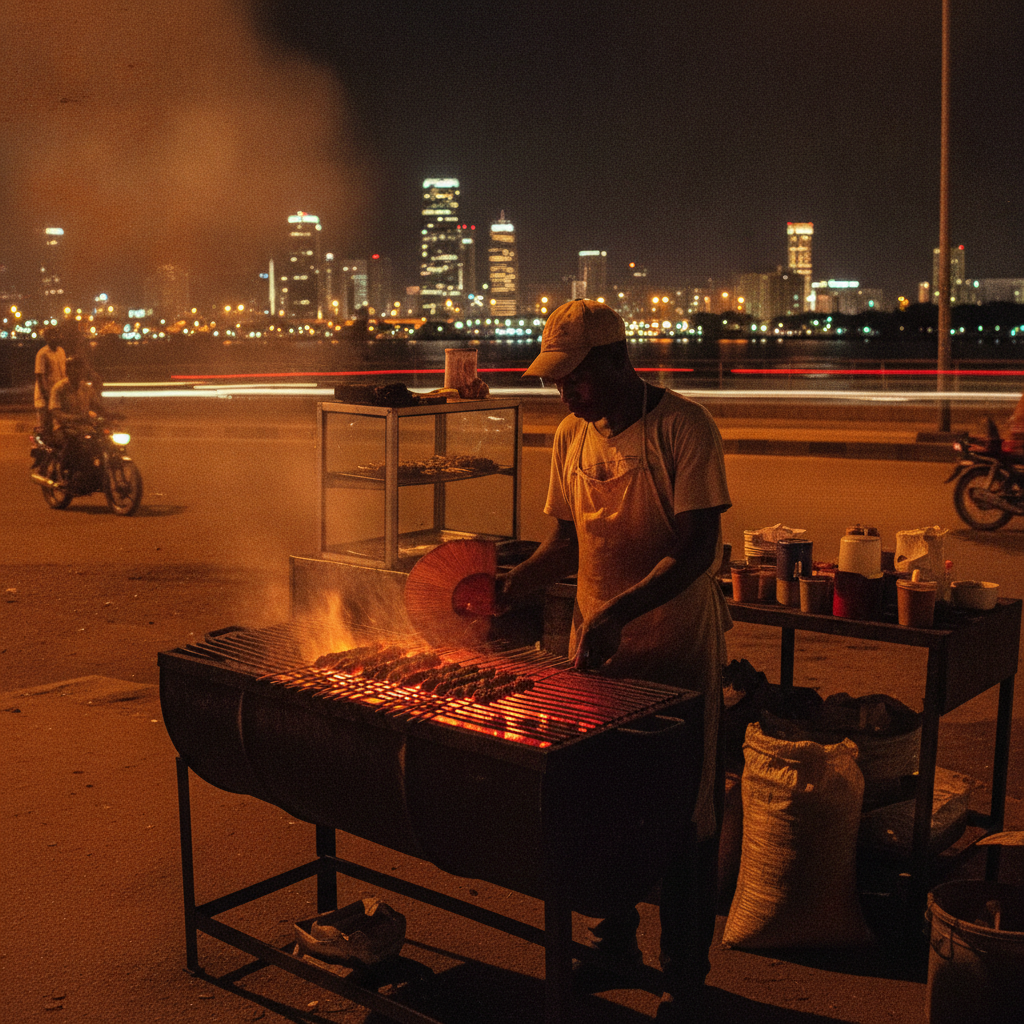
Nigerian cuisine: one of the richest and most diverse food cultures in Africa, with the Lagos food scene reflecting the Yoruba and pan-Nigerian culinary traditions. The staples: the primary Nigerian staple carbohydrates include pounded yam (boiled yam pounded in a mortar until smooth and elastic: the premium starch in Yoruba cuisine), eba (gari: cooked cassava granules mixed with boiling water), fufu (fermented cassava starch), and rice. The soups: egusi soup (the most popular Nigerian soup: ground melon seeds (egusi) cooked with palm oil, vegetables (usually bitter leaf or spinach), and meat or fish: the signature flavor of Nigerian cuisine): banga soup (the Delta State specialty: palm nut soup similar to the Ghanaian version but with a distinctly Nigerian flavor profile): ogbono soup (the soup made from ground ogbono seeds (African bush mango seeds) which give the soup a distinctive slimy texture). The suya (the most iconic Nigerian street food: thin strips of beef seasoned with a blend of ground peanuts, spices, and the yaji spice blend (ground ginger, paprika, and other spices) and grilled over charcoal: the Hausa culinary tradition (suya is a northern Nigerian (Hausa) street food that has become universally popular across Nigeria): the Lagos suya spots (the roadside suya grills that operate in the evening in every Lagos neighborhood)). The jollof rice (Nigerian jollof: the Nigerian version of jollof rice is the primary competitor in the West African jollof wars: cooked in a tomato-pepper-onion sauce with Nigerian seasoning).
- 4
Lagos Nightlife - The Club Scene, Beach Bars, and the City That Never Sleeps
Lagos nightlife: one of the most extraordinary party scenes in Africa, a city where the social life runs from midnight to dawn and the weekends are a non-stop celebration. The Lagos nightlife culture: Lagos is known for its extravagant nightlife: the Lagos party culture (the owambe: the Yoruba word for a large, lavish party (the Yoruba culture of the owambe: the elaborate celebration with loud music, extravagant food and drink, and competitive display of wealth and fashion: the fabric and lace (the aso-ebi (coordinated fabric worn by the invited guests at an owambe): the aso-ebi culture (the practice of selecting a specific fabric and having the entire wedding or party guest group dress in the same fabric): the fashion (the Nigerian fashion and luxury goods culture: Lagos is the primary African market for luxury goods and fashion, with a concentration of designer boutiques in the Victoria Island and Ikoyi areas)). The clubs and bars: the primary nightlife districts in Lagos are Victoria Island and Lekki (the upscale clubs and bars of VI and Lekki): the beach bars (the beach clubs along the Lekki-Epe Expressway and on Elegushi Beach): the rooftop bars of Victoria Island. The music (the Afrobeats soundtrack of Lagos nightlife: the Burna Boy, Wizkid, and Davido tracks that define the Lagos party scene).
- 5
Lagos Beaches - Elegushi, Tarkwa Bay, and the Atlantic Coast
The Lagos beaches: the Atlantic Ocean beaches accessible from the city. Elegushi Beach (the most popular beach on the Lekki peninsula: accessible from Lagos: the beach is a long stretch of Atlantic Ocean beach in the Lagos mainland area: the beach has private beach clubs and bars as well as public access areas: the beach is crowded on weekends). Tarkwa Bay (the island beach accessible only by boat from the Lagos harbor: the boat ride from CMS jetty or Five Cowrie Creek marina takes approximately 20-30 minutes: the sheltered bay provides calmer waters than the open Atlantic beaches: popular for picnics, swimming, and beach sports). The beach bar culture (the Lagos beach experience is primarily a social event: the beach bars serve cold beer, fresh coconut water, grilled fish, and peppered snails: the music (the sound system playing Afrobeats at the beach bars): the Lagos beach scene on a Saturday afternoon is one of the most exuberant social experiences in West Africa). The practical (the Lagos beaches are generally safe for swimming in calm conditions: the Atlantic rip currents can be dangerous during the peak of the wave season: follow the advice of local swimmers).
- 6
Lagos and Nigeria in Context - The Giant of Africa and its Contradictions
Nigeria in context: the most populous country in Africa, the largest economy in Africa (by nominal GDP), and a country of extraordinary contradictions. Nigeria by numbers: population approximately 220-230 million (2024, the most populous country in Africa and the 6th most populous in the world): GDP approximately USD 477 billion (2024, the largest in Africa by nominal GDP): the oil sector (Nigeria is the largest oil producer in Africa and one of the top 15 globally: the oil sector accounts for approximately 50-70% of government revenue and 90% of foreign exchange earnings but only approximately 5-6% of GDP: the resource curse (the paradox of significant oil wealth coexisting with widespread poverty and poor public services)). The ethnic and religious diversity: Nigeria has approximately 250 ethnic groups; the three largest are Hausa-Fulani (predominantly Muslim, in the north), Yoruba (predominantly Christian and Muslim, in the southwest, the ethnic group of Lagos), and Igbo (predominantly Christian, in the southeast). The Nigeria contradiction (Nigeria is simultaneously one of the most frustrating countries in the world (the infrastructure deficit, the corruption, the insecurity in parts of the north and southeast) and one of the most energizing (the entrepreneurialism, the creativity, the Afrobeats music, the Nollywood films, the fashion, and the extraordinary human energy of Lagos)). The Lagos vs Accra debate (Lagos vs Accra as the primary West African city for visitors: Accra is easier and more comfortable; Lagos is more intense and more interesting for the serious traveler).
Walk this route with audio
Stories play automatically as you reach each stop — no tapping needed.
More in lagos
Lagos History and Culture: Yoruba Heritage, Nigerian Independence, the Lagos Economy, and Art Lagos
Lagos: Africa Commercial Capital, Eko Atlantic, the Bronzes, Afrobeats, and the Nigeria Guide
Lagos Region and Nigeria Legacy: Benin Kingdom, Osun-Osogbo, Nigerian Literature, and Music History
Lagos Complete Reference: Victoria Island, Traffic, Religion, Food Markets, Photography, and Final Legacy