La Paz Aymara Culture: Language, Cosmology, and Living Indigenous Traditions
The Aymara people are the dominant indigenous group of the La Paz altiplano and the Titicaca basin, with a population of approximately two million in Bolivia and another million in Peru and Chile. The Aymara language is spoken by a majority of the El Alto population and widely understood throughout La Paz despite Spanish dominance in formal and commercial contexts. Aymara cosmology, centered on the concept of the Pachamama earth mother and a complex relationship between the living and dead worlds, continues to shape daily life across the altiplano in ways that coexist with Catholicism and modern political structures. The election of Evo Morales as Bolivia's first indigenous president in 2005 gave formal political expression to an Aymara cultural resurgence that had been building for decades.
- 1
The Aymara Language: One of the Worlds Mathematical Languages
Aymara is spoken by approximately two to three million people across Bolivia, Peru, and Chile, making it one of the largest surviving indigenous languages of the Americas alongside Quechua. Linguists have noted that Aymara has an unusual cognitive structure regarding time: in Aymara conceptual space, the past is located in front of the speaker because it is known and visible, while the future is located behind because it is unseen and unknown. This is the opposite of the spatial metaphor used in European languages. Aymara is also notable for its tripartite truth system that requires speakers to grammatically mark whether they know something from direct experience, inference, or hearsay, a feature called evidentiality that is built into the verb structure. The language has survived centuries of Spanish colonial pressure, the Bolivian national education system that long taught exclusively in Spanish, and economic pressure to assimilate; the 2009 Bolivian constitution recognized Aymara as an official language alongside Quechua and Spanish, a symbolic and practical shift that has encouraged Aymara-medium schools and media.
- 2
Pachamama and Aymara Cosmology: The Earth Mother and the Living Landscape
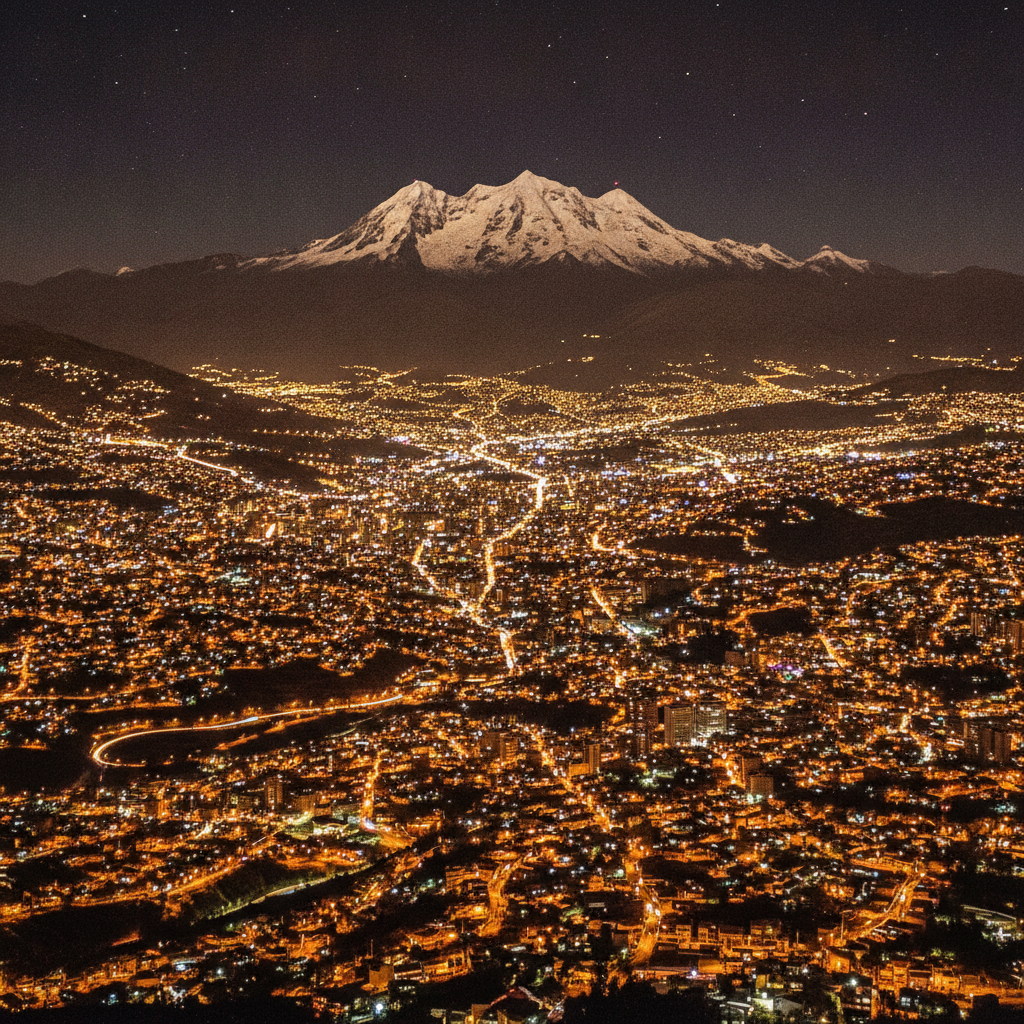
The Pachamama, commonly translated as earth mother but more accurately understood as the totality of living nature including soil, water, weather, and the crops that depend on them, is the central spiritual reference of Aymara and broader Andean cosmology. The Pachamama is fed through regular offerings called ch'alla, in which chicha or alcohol is poured on the ground before drinking, and through more elaborate despacho ceremonies in which a ritual bundle containing specific symbolic items is prepared by a specialist and then burned or buried to communicate with the earth. The apus, or mountain spirits, are the second major category of non-human beings in Aymara cosmology; each major peak has its own apu personality and sphere of influence, and Illimani, the peak that dominates the La Paz skyline to the southeast, is the primary apu of the city. The concept of the ayni, reciprocal obligation within a community, structures social relationships throughout the altiplano; labor, resources, and ritual obligations circulate through a network of reciprocal relationships that predate and extend beyond the cash economy.
- 3
The Witches Market: Ritual Supplies and Aymara Spiritual Commerce
The Mercado de las Brujas, the Witches Market, occupies several streets in the older section of La Paz near the church of San Francisco and is the most accessible concentration of traditional Aymara ritual supplies in the city. The market stalls sell dried llama fetuses, used in despacho offerings for building construction and car purchase ceremonies where they are buried in the foundation or under the vehicle; dried armadillos, owls, and various birds; bundles of herbs for different purposes including attracting love, repelling illness, and ensuring good fortune in commerce; sugar tablets pressed into the shapes of houses, cars, and body parts that represent wishes to be sent to the Pachamama; and the bright-colored confetti and streamers used in ch'alla celebrations. The practitioners called yatiris, traditional Aymara spiritual specialists who diagnose misfortune and prescribe offerings, can be found in the market area and by referral throughout the altiplano community. The market operates as a completely serious commercial enterprise serving genuine religious needs of the Aymara community, alongside its secondary function as a tourist attraction.
- 4
El Alto: The Aymara Megacity Above La Paz
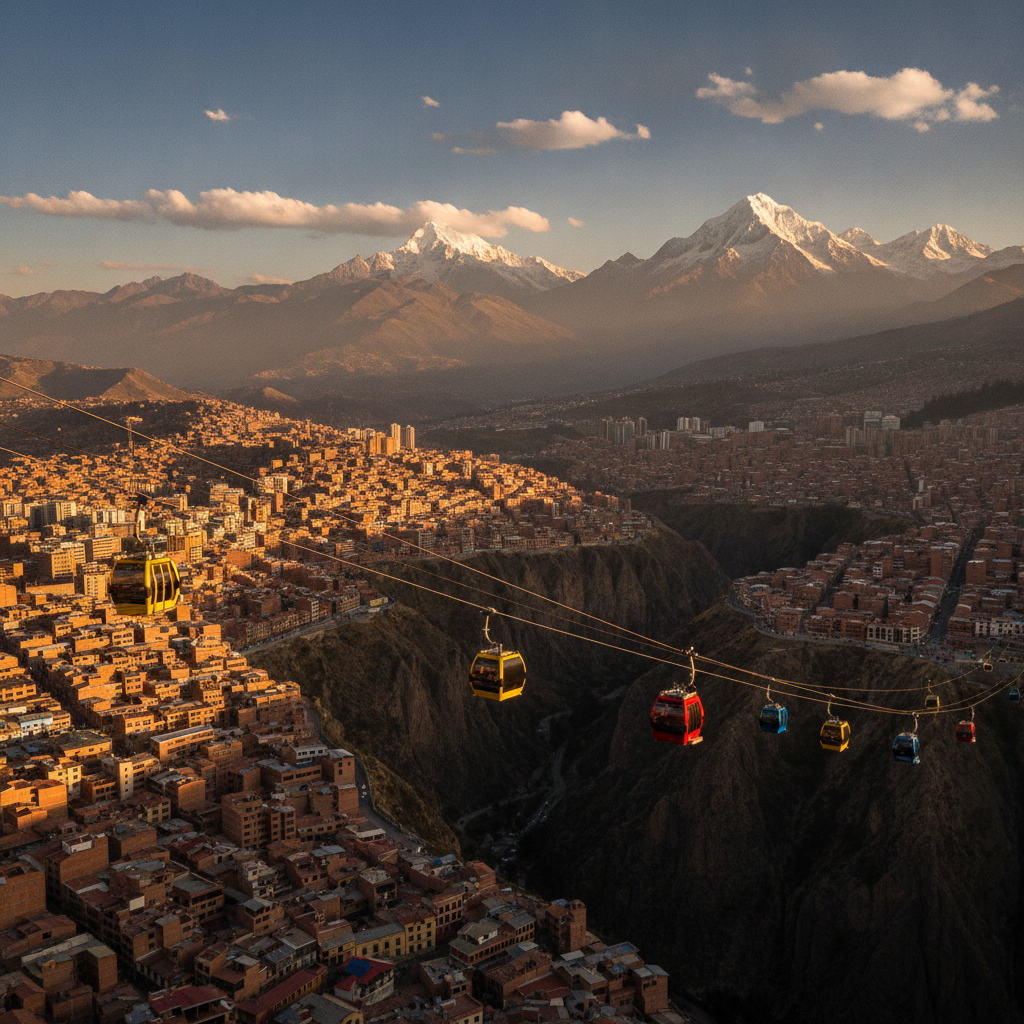
El Alto, the city that occupies the altiplano plateau above La Paz at 4,150 meters altitude, is the fastest-growing large city in Bolivia and one of the most intensely Aymara cities in the world, with approximately 80 percent of its population identifying as Aymara. Founded as a settlement of rural migrants from the altiplano who came to La Paz in search of work, El Alto became a separate municipality in 1988 and had grown to approximately one million residents by 2020, making it larger than La Paz proper. El Alto is both the airport location and the primary industrial and commercial base of the La Paz metropolitan area, connected to the city below by the teleférico cable car system and by roads that descend the steep canyon wall. The city became internationally known in 2003 when El Alto residents blockaded the roads connecting La Paz to the rest of Bolivia during the Gas War protest movement, ultimately forcing the resignation of President Gonzalo Sanchez de Lozada. The Feria 16 de Julio, the vast weekly market, is the economic heart of El Alto and the primary commercial gathering point of the altiplano.
- 5
Cholita Dress and Aymara Visual Identity
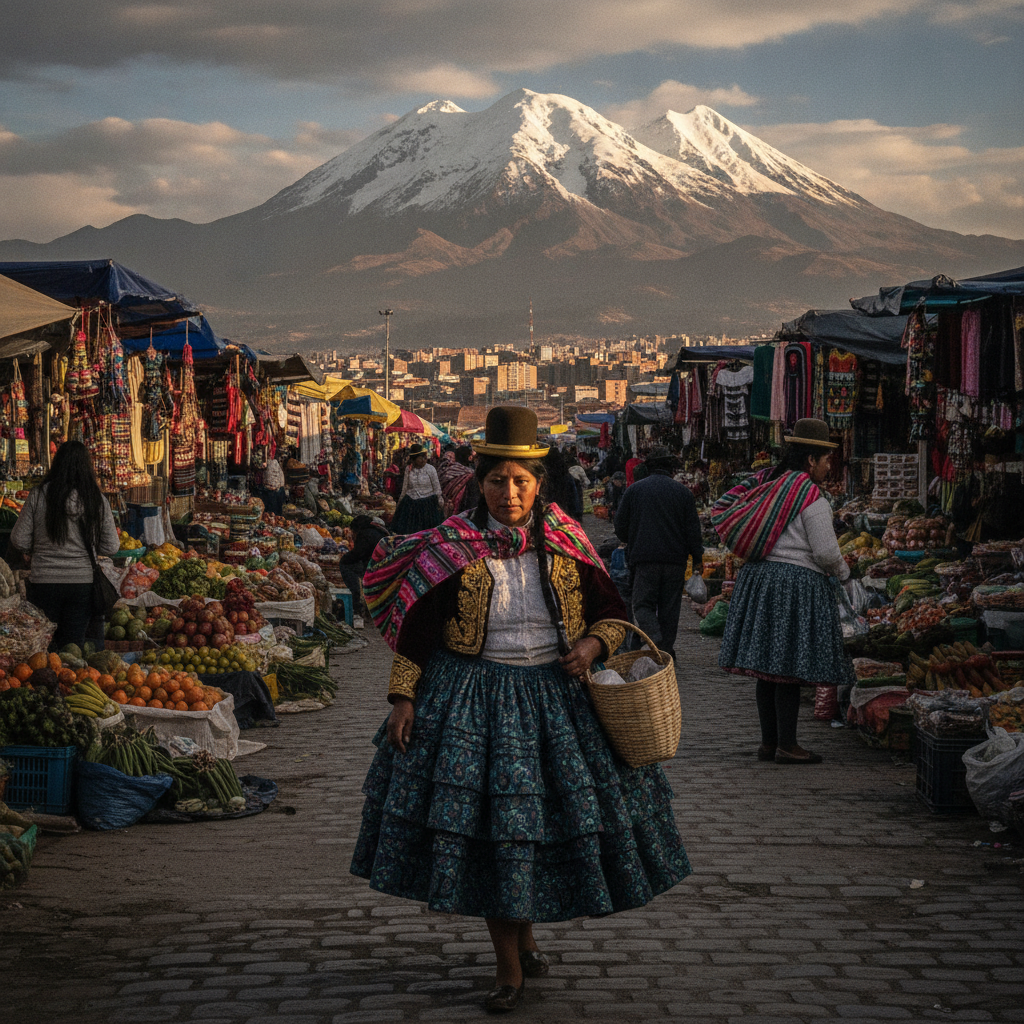
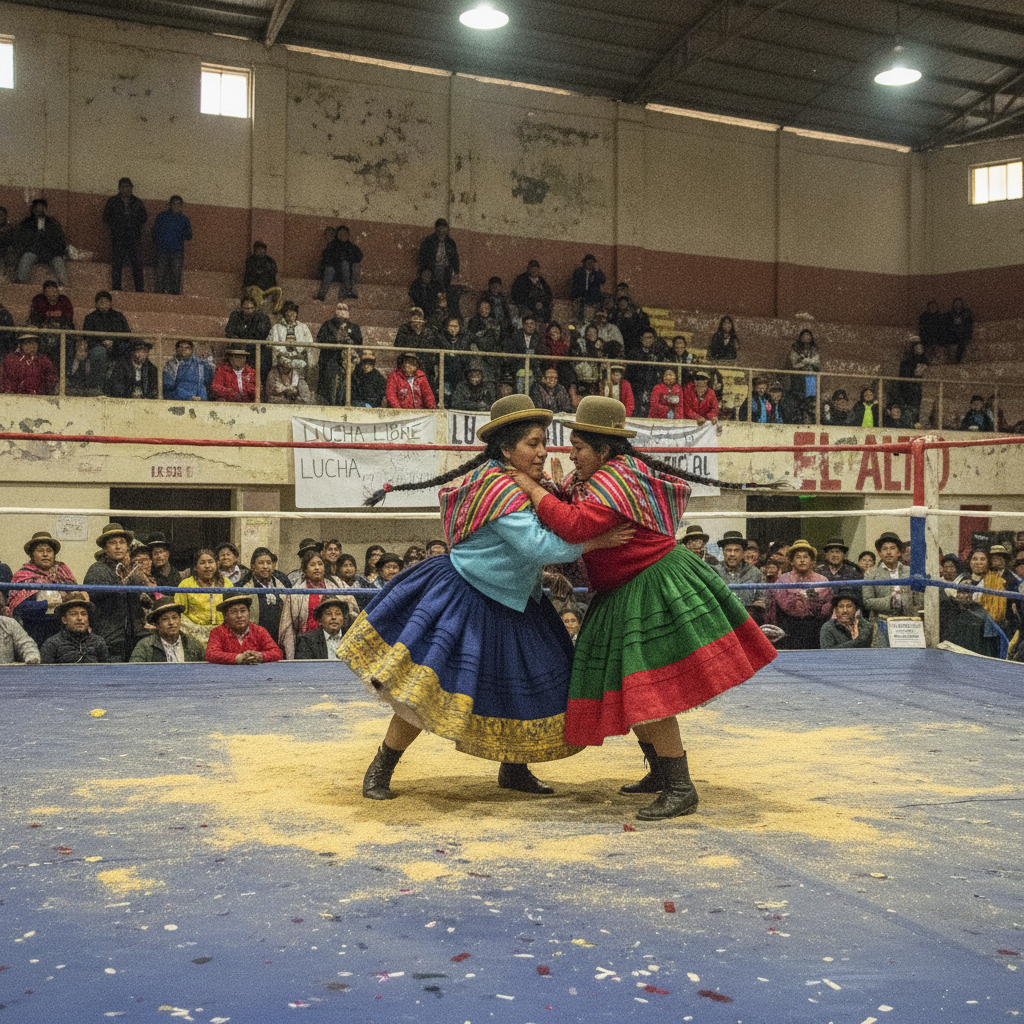
The cholita dress style, consisting of the pollera gathered skirt with multiple layers of petticoats, the manta shawl pinned at the chest, the bowler hat worn at an angle, and the long black braids often extended with wool called lluch'u, is the most visually distinctive element of Aymara cultural identity in Bolivia and the image most associated internationally with Bolivian women. The bowler hat, introduced to Bolivia by British railway workers in the 1920s who brought surplus stock that was marketed to Aymara women after the intended male European buyers rejected the small sizes, was adopted within decades as a central element of indigenous identity in what is a striking example of cultural reappropriation. The pollera itself has colonial origins from Spanish requirements for indigenous women to adopt European dress, which over centuries transformed into the distinctive Bolivian indigenous women's garment. The cholita wrestling spectacle in El Alto on Sundays has become a popular tourist attraction that combines lucha libre performance with cholita dress in a deliberately theatrical context; the wrestlers are real athletes performing for a real paying audience.
- 6
Evo Morales and the Indigenous Political Revolution
The election of Evo Morales Ayma as President of Bolivia in December 2005 with 54 percent of the vote was the first time an openly indigenous person had won the Bolivian presidency in a country where the majority of the population had indigenous heritage but had historically been governed by a mestizo and white elite. Morales, born in the Oruro altiplano to an Aymara family and a former coca growers union leader from the Chapare region, built the MAS political movement on a coalition of altiplano Aymara, lowland indigenous groups, coca growers, and urban left constituencies. His government nationalized the natural gas industry in 2006, used the resulting state revenue to fund social programs that significantly reduced poverty, and oversaw the writing of a new constitution in 2009 that declared Bolivia a plurinational state and gave formal recognition and rights to 36 indigenous nations. Morales was forced to resign in November 2019 after disputed election results and military pressure, an event his supporters call a coup and his opponents call a democratic correction; he was succeeded by caretaker president Jeanine Anez and then by MAS candidate Luis Arce in 2020 elections, restoring MAS to government.
Walk this route with audio
Stories play automatically as you reach each stop — no tapping needed.
More in La Paz
La Paz History: From Inca Settlement to the Seat of Government
La Paz Adventure: Death Road Cycling, Cholita Wrestling, and Urban Zip Lines
La Paz: The World Highest Seat of Government and the City in a Canyon
La Paz Practical Guide: Altitude, Neighborhoods, Transport, and Bolivia Circuit
La Paz Arts, Music, and the Cholita Wrestling Scene