La Paz Adventure: Death Road Cycling, Cholita Wrestling, and Urban Zip Lines
La Paz has developed one of the most distinctive adventure tourism offerings of any city in the world, built on the dramatic topography of the canyon city and the surrounding Andes. The Yungas Road, nicknamed the Death Road, is the most famous downhill mountain bike route on earth, descending 3,500 meters from the altiplano to the subtropical valleys in 64 kilometers of hairpin turns and sheer cliff edges. Cholita wrestling combines Aymara women in traditional dress with lucha libre theatrics in genuinely raucous weekend bouts. The urban zip line crosses the canyon above the city brick houses. This route covers the adventure experiences that make La Paz one of the most unusual activity destinations in South America.
- 1
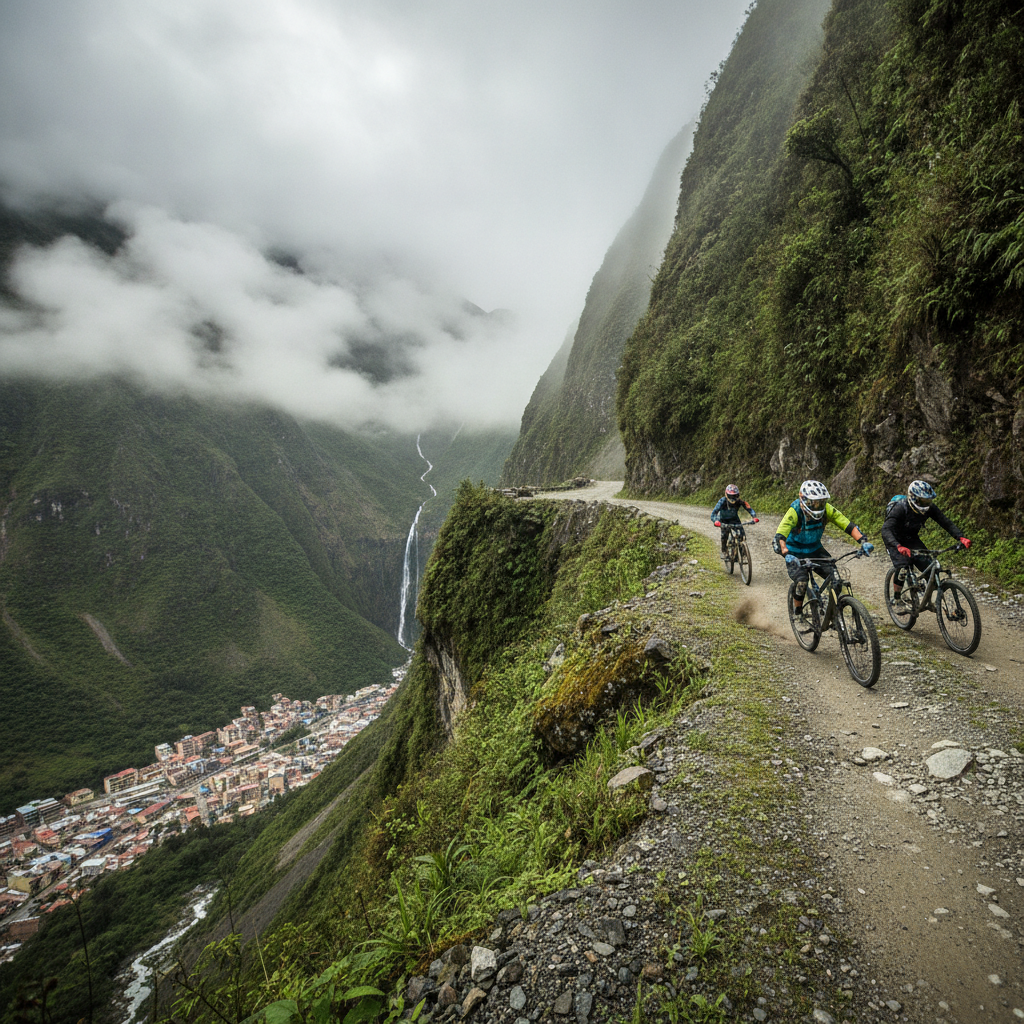
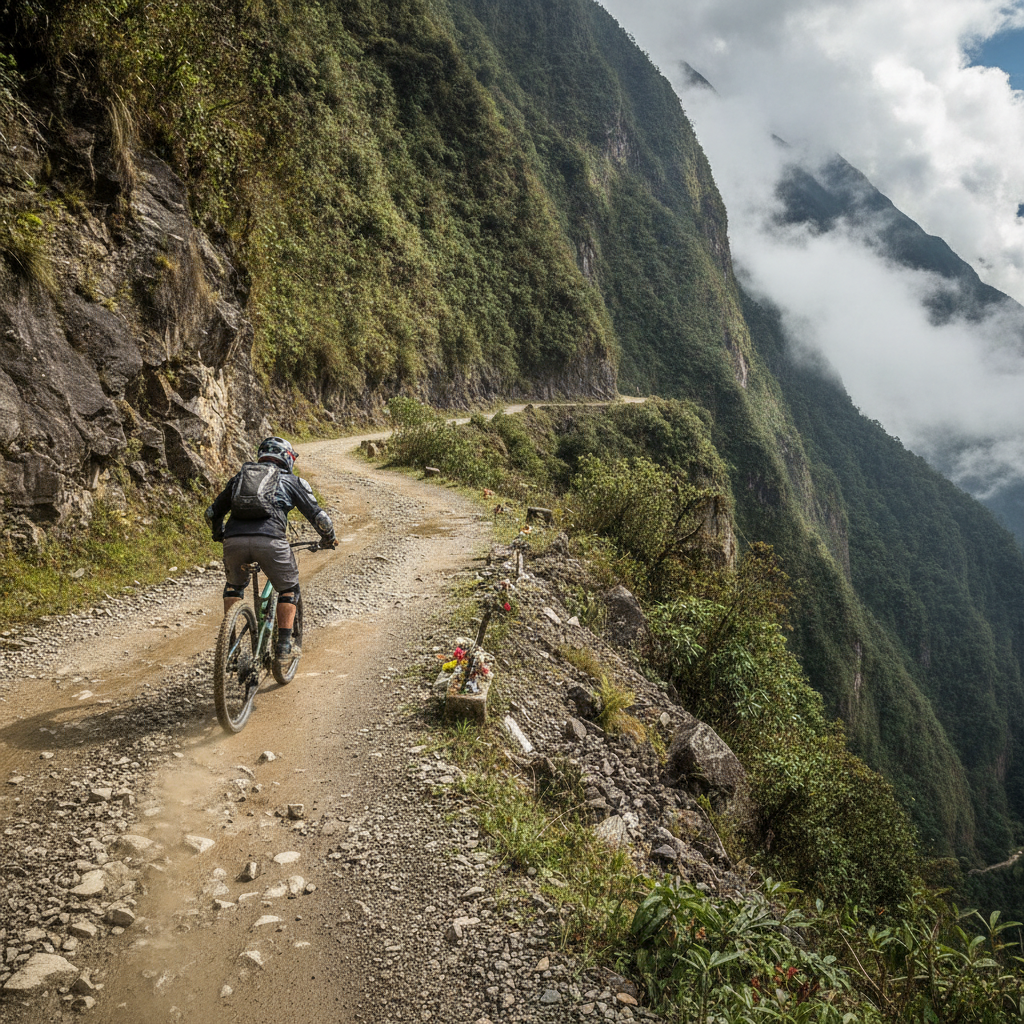
Death Road Cycling: The Yungas Road Descent from La Cumbre
The Yungas Road from La Cumbre pass at 4,650 meters to the town of Coroico in the subtropical valleys at 1,700 meters is marketed as the world most dangerous road, a designation earned by the hundreds of deaths that occurred annually on the narrow single-track gravel road with no guardrails and sheer thousand-meter drops before a new paved road opened in 2006. The old road, now used primarily by mountain bikers, descends 3,500 meters in 64 kilometers through five distinct climate zones from icy altiplano to lush subtropical forest, passing waterfalls that pour across the road surface, clouds that drift through the canyon, and occasional crosses marking where vehicles went over the edge. Dozens of La Paz operators run Death Road cycling tours as a full-day trip, providing quality mountain bikes, helmets, gloves, and a support van that follows the descent. The combination of the road history, the dramatic scenery, and the adrenaline of the descent has made Death Road one of the most consistently requested activities in all of South America, with hundreds of riders daily during high season.
- 2
Cholita Wrestling: Aymara Women in the Ring
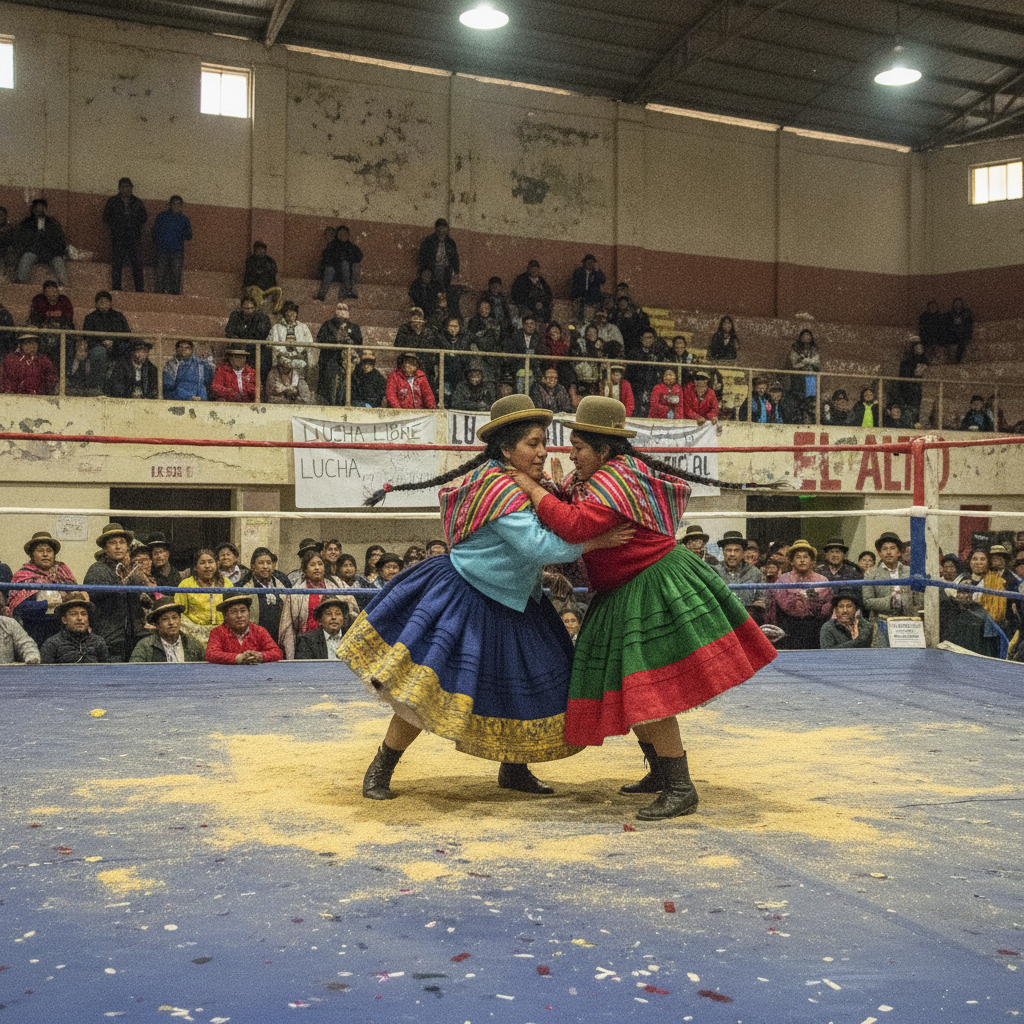
Cholita wrestling, in which traditionally dressed Aymara women perform theatrical lucha libre wrestling bouts in a ring at the El Alto stadium on weekend afternoons, began in the late 1990s when female wrestlers entered the previously all-male Bolivian wrestling scene and became a significant tourist attraction by the mid-2000s. The bouts are theatrical rather than competitive sport in the lucha libre style: the outcomes are pre-arranged and the performance emphasizes dramatic falls, audience interaction, and the contrast between the formal traditional dress, with the bowler hat, full skirt, and shawl, and the athleticism required for the wrestling moves. The wrestlers, who are professional entertainers with their own stage personas, have become international media figures; several have been photographed for major fashion magazines and featured in documentary films. The weekend bouts at the Multifuncional de La Ceja stadium in El Alto are attended by both Bolivian families and international tourists; the entry price and the transport via teleférico make it one of the most accessible and entertaining experiences available in La Paz.
- 3
Urban Zip Line: Crossing the Canyon on a Wire
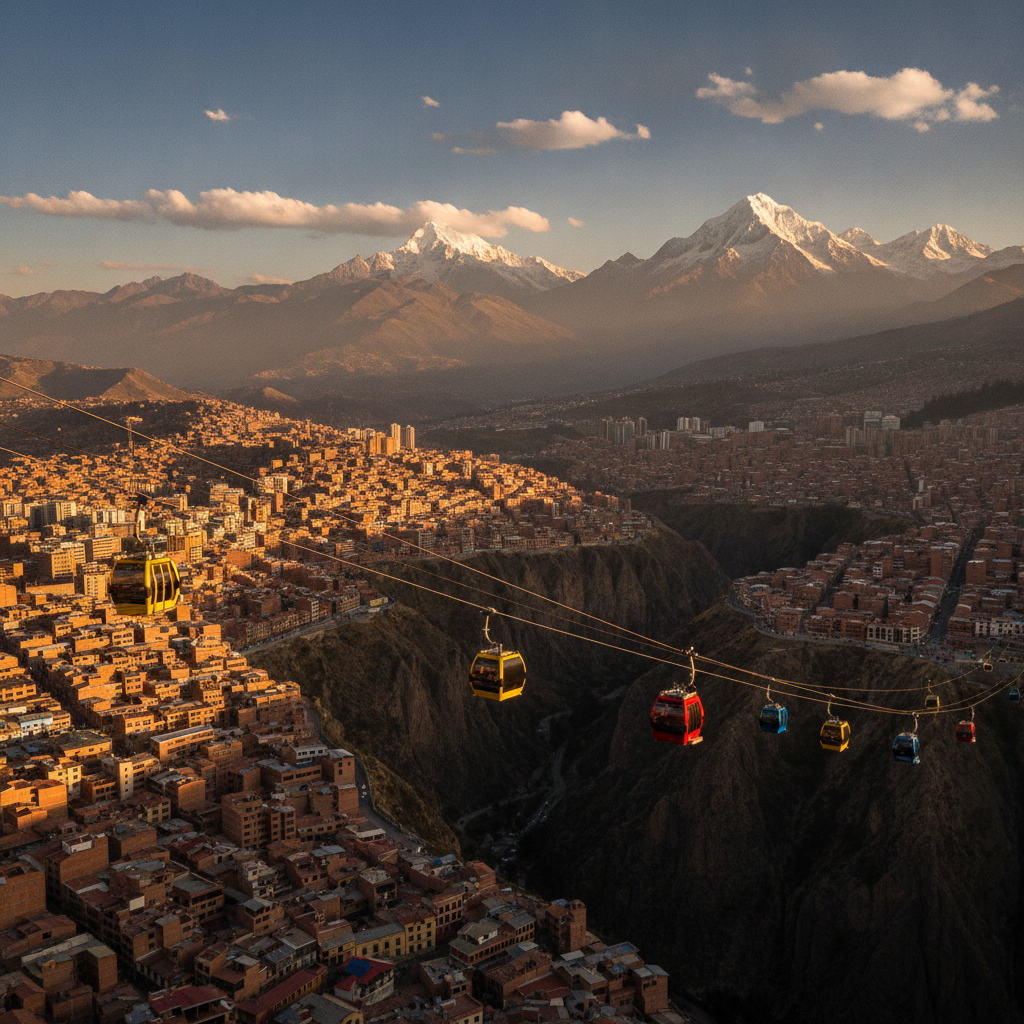
The La Paz urban zip line, installed across the canyon in the Cholitas Voladoras section of the teleférico gondola network, allows passengers to descend across the canyon on a wire with the full panorama of the city below. The zip line component is integrated into a cable car line that also carries gondola cars, providing both adrenaline and the standard transit function of the network. The perspective from the zip line crossing, with the dense brick city visible thousands of feet below and the altiplano rim with El Alto on one side and the canyon walls on the other, is the most dramatic urban aerial experience available outside a helicopter. La Paz zip line experiences are also available through private adventure operators offering dedicated zip line experiences in the canyon sections below the main city. The combination of urban density and extreme vertical geography that makes La Paz visually unlike any other city in the world is most powerfully experienced from a zip line cable rather than a gondola car.
- 4
Huayna Potosi: The Accessible 6000 Meter Mountaineering Experience
Huayna Potosi at 6,088 meters is the most accessible technical high-altitude mountaineering peak in South America, requiring crampons, ice axes, and rope skills but considered within reach of properly acclimatized non-expert climbers with guide assistance over a two-day ascent from the mountain hut at 5,130 meters. The peak is reached by road from La Paz in approximately two hours to the mountain hut, making it usable as a two or three day trip from the city. The summit views on clear mornings extend across the Cordillera Real chain and down to the La Paz canyon. Several La Paz mountaineering agencies offer guided Huayna Potosi packages including transport, guide fees, mountain hut accommodation, and equipment rental; prices range from approximately 200 to 350 USD for the two-day ascent. Proper acclimatization in La Paz for at least 48 to 72 hours before attempting the mountain is essential; attempting the summit after arriving directly from sea level is medically dangerous. The success rate for guided groups is high when acclimatization is adequate.
- 5
Valle de la Luna: Lunar Landscape Within the City
The Valle de la Luna, a landscape of eroded clay pinnacles and spires 12 kilometers from the city center in the Zona Sur canyon system, provides one of the most unusual geological landscapes accessible as a half-day city excursion anywhere in the world. The formations, eroded from the clay and sandstone strata by rain and seasonal streams, create a forest of pointed spires up to 15 meters high that resembles nothing so much as a miniaturized lunar or Martian surface. The name is accurate: Neil Armstrong and the Apollo program geologists used similar formations in the American Southwest for lunar surface training and the visual comparison to photographs of lunar geology is immediately obvious. The site is accessible by taxi from the Zona Sur in 15 minutes and has a marked walking trail through the main erosion zones. Early morning and late afternoon light is best for photography when the low sun casts long shadows across the spire fields. The combination of altitude, dramatic erosion forms, and Illimani visible above makes it one of the most photogenic half-day excursions from any city in South America.
- 6
Chacaltaya: The Former Ski Slope and High-Altitude Plateau Walk
Chacaltaya at 5,421 meters, the highest ski slope ever operated commercially in the world, was a functioning ski area from the 1930s until 2009 when the Chacaltaya glacier that provided the snow had melted completely as a consequence of Andean glacier retreat driven by climate change. The glacier, which covered 0.22 square kilometers in 1940, had completely disappeared by the late 2000s, making Chacaltaya one of the most visible and documented climate change impacts in the Andes. A road from La Paz ascends to 5,200 meters near the summit, providing one of the most accessible high-altitude points on earth reachable by vehicle. The plateau walk at this altitude, with views across the altiplano to the western Andes and south to Illimani, is an extraordinary experience for properly acclimatized visitors; the extremely thin air at 5,400 meters makes even walking pace feel intensely demanding to those not thoroughly adapted to high altitude. The ruined ski lodge and old ski lift machinery remain as monuments to the now-vanished glacier.
Walk this route with audio
Stories play automatically as you reach each stop — no tapping needed.
More in La Paz

La Paz History: From Inca Settlement to the Seat of Government

La Paz: The World Highest Seat of Government and the City in a Canyon

La Paz Aymara Culture: Language, Cosmology, and Living Indigenous Traditions
La Paz Practical Guide: Altitude, Neighborhoods, Transport, and Bolivia Circuit
La Paz Arts, Music, and the Cholita Wrestling Scene