Wildlife of the Arenal Area: Sloths, Tapirs, Jaguars, and the Corridor
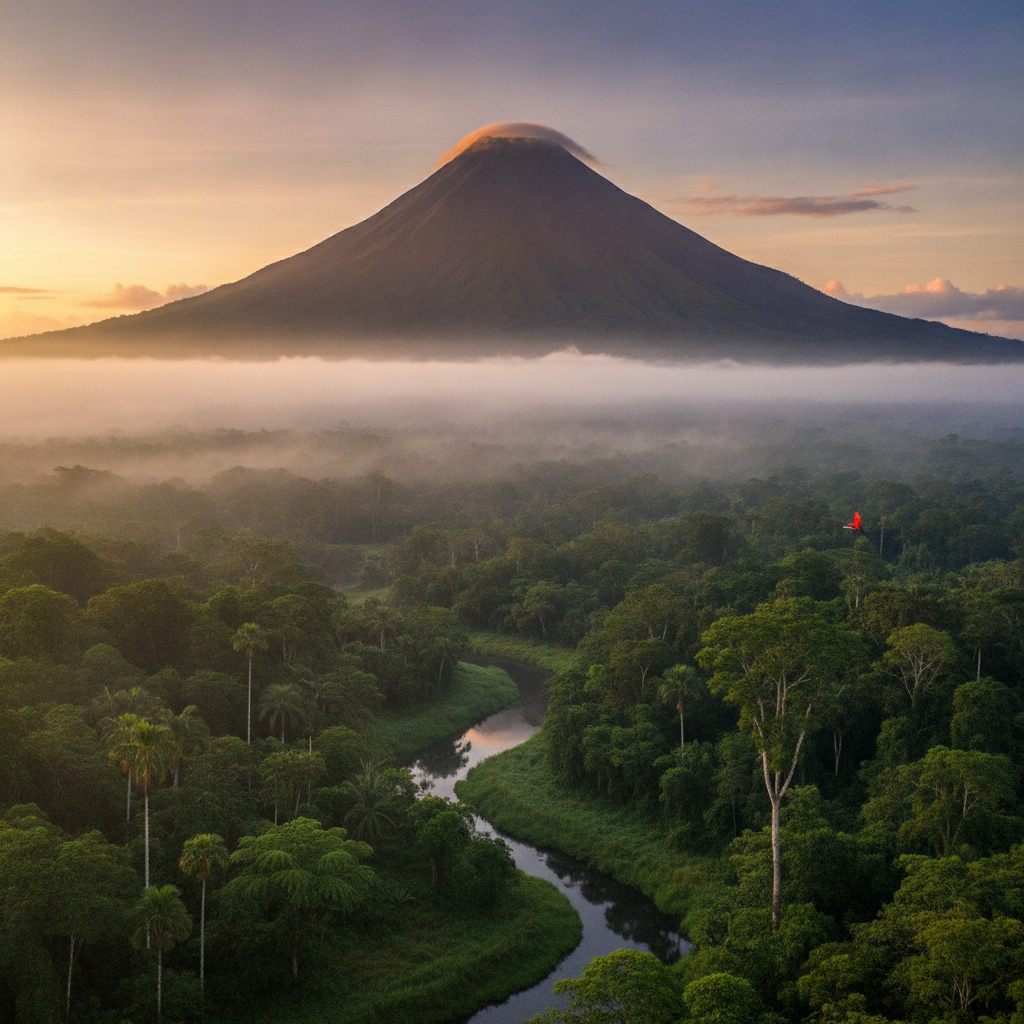
The Arenal Volcano National Park and surrounding private reserves form a critical node in the Mesoamerican Biological Corridor, the network of protected and semi-protected land intended to maintain wildlife movement between North and South America. The corridor through the northern highlands of Costa Rica connects the Pacific slope forests with the Caribbean lowland reserves and provides sufficient territory for species requiring large home ranges including tapirs, pumas, and jaguars. This route examines the specific wildlife of the Arenal area and the conservation challenges of maintaining corridor function in a heavily touristed landscape.
- 1
Sloths: Three-Toed and Two-Toed Species in the Arenal Forest
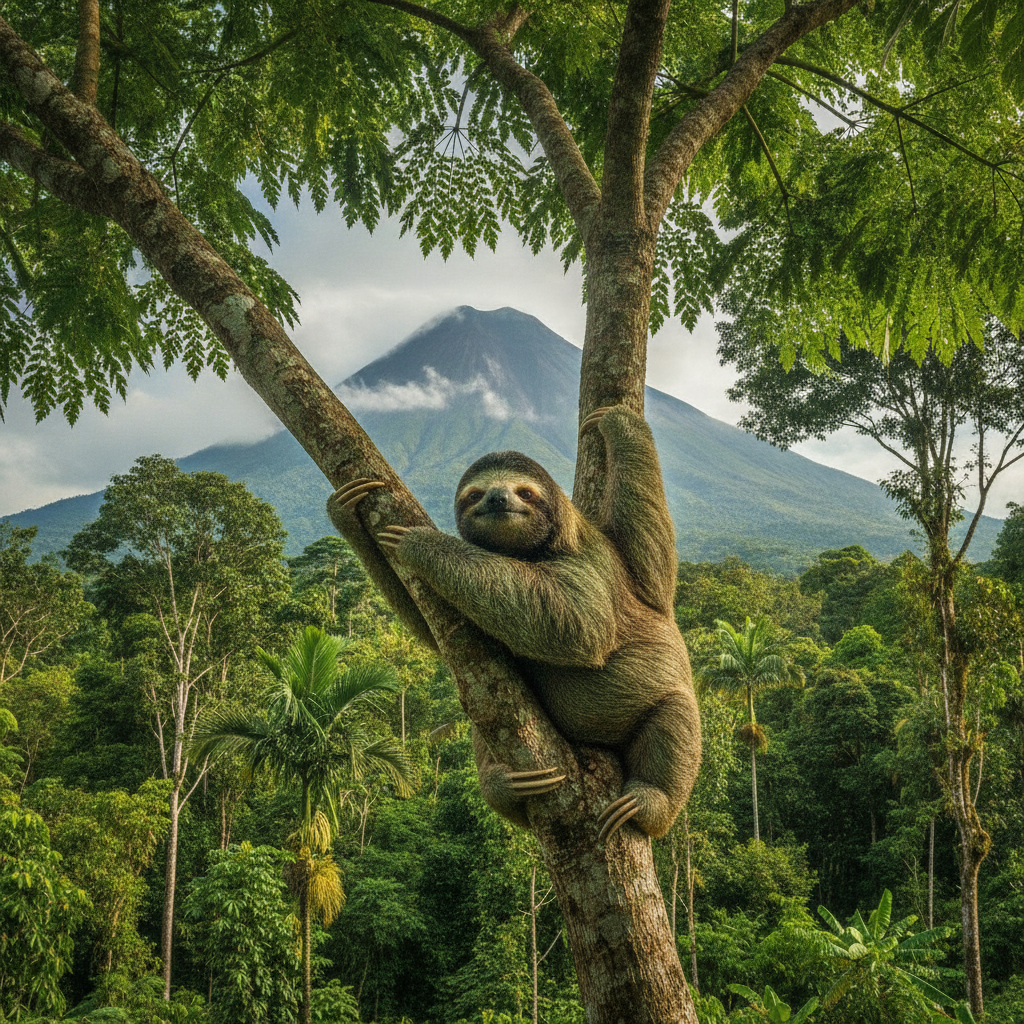
Both sloth species occurring in Costa Rica are found in the Arenal area: the three-toed sloth (Bradypus variegatus) and the two-toed sloth (Choloepus hoffmanni). The three-toed sloth is more commonly seen in the open canopy along roadsides and in the secondary forest, where it favors cecropia trees. The two-toed species is more nocturnal and harder to spot. Sloths are so motionless and camouflaged that most visitors walk past them without seeing them; a local guide is the most effective way to find them. The Arenal Ecocentro Danaus, a private reserve near La Fortuna, maintains a sloth rescue and rehabilitation program and offers close encounters with habituated sloths that could not be returned to the wild.
- 2
Baird's Tapir: The Largest Land Mammal in Central America
The Baird's tapir (Tapirus bairdii), the largest land mammal in Central America at up to 300 kilograms, is present in the Arenal Volcano National Park and the forest corridors connecting the protected areas of the northern zone. The tapir is primarily nocturnal and extraordinarily shy, making direct encounters rare. Camera trap studies in the Arenal-Tenorio corridor have documented tapir movement through forest patches between protected areas, confirming the corridor function of the landscape mosaic. Tapirs are classified as endangered, with the principal threats being hunting and habitat fragmentation. The La Fortuna area, with its combination of protected park core and surrounding private reserves, represents one of the more secure tapir habitats in Costa Rica.
- 3
Jaguars and Pumas in the Northern Corridor
Camera trap data from the Arenal and Maquenque national wildlife refuges of the northern zone has documented jaguar (Panthera onca) and puma (Puma concolor) presence, though direct sightings by visitors are extremely rare. The jaguar population in the northern highlands is part of a corridor population connecting the larger Corcovado-Osa population with the Nicaraguan forests to the north. The Jaguar Corridor Initiative, coordinating land managers and researchers across the range, treats the Costa Rica-Nicaragua border zone as a priority area for corridor maintenance. The practical implication for visitors is that jaguars are present but almost certainly will not be seen; the value of the northern zone for jaguar conservation is real even if the visitor experience of the species is negligible.
- 4
Monkeys of the Arenal Area: Four Species in One Landscape
The Arenal area supports all four monkey species occurring in Costa Rica. Howler monkeys (Alouatta palliata) are the most commonly heard, with the male's roar audible at distances of several kilometers at dawn and dusk. White-faced capuchins are the most frequently seen, habituating readily to human presence in secondary forest. Spider monkeys (Ateles geoffroyi) require larger areas of primary forest and are less reliable in disturbed landscapes; they are seen in the national park core but not in the hotel zone secondary growth. The Central American squirrel monkey is absent from the Arenal area, restricted to the Pacific coast south of Quepos. The four-species assemblage visible in a single Arenal visit is unusual globally.
- 5
Reptiles: Crocodiles, Basilisks, and the Iconic Jesus Christ Lizard
The waterways and wetlands of the La Fortuna area support American crocodiles in the Rio Frio and its tributaries north toward Caño Negro. The spectacled caiman, smaller and more abundant than the crocodile, is visible in the lake margins and river channels throughout the northern lowlands. The green basilisk (Basiliscus plumifrons), famous for its ability to run across water on its hind legs, earns its popular name of Jesus Christ lizard from this behavior; it is common along the streams of the Arenal area and spectacular when encountered in flight. Fer-de-lance snakes, eyelash pit vipers, and boa constrictors are present but rarely seen by visitors on maintained trails.
- 6
Birdwatching Around La Fortuna: 500 Species in the Northern Zone
The La Fortuna area sits at the transition between highland and lowland bird communities, producing exceptional species diversity across a small geographic area. The Arenal Observatory Lodge, perched above the lava fields with direct views of the volcano, maintains extensive grounds with feeders that attract tanagers, hummingbirds, and manakins reliably. The Celeste River in the Tenorio Volcano area, an hour from La Fortuna, runs through forest holding scarce Caribbean slope species including the keel-billed motmot and various antbirds. The Caño Negro wetlands north of La Fortuna provide the most spectacular waterbird concentrations in the country during the dry season. A dedicated birding day from La Fortuna can produce 100 to 150 species with a knowledgeable local guide.
Walk this route with audio
Stories play automatically as you reach each stop — no tapping needed.
More in La Fortuna
Ziplining, ATV Tours, and the Adventure Activity Economy of La Fortuna

Arenal Lake, Windsurfing, and the Tilaran Highlands Connection
Sarapiqui Lowlands: Rainforest, Rivers, and the Caribbean Slope from La Fortuna
Volcanism, Geology, and the Tectonic Story of Arenal and Northern Costa Rica

La Fortuna Practical Guide: Accommodation, Seasons, Costs, and Scams to Avoid