Gion — Kyoto's Geisha District, Hanamikoji & the Ochaya Tea Houses
Gion (祇園 — the geisha entertainment district of Kyoto, on the east bank of the Kamo River in the Higashiyama area — the most culturally significant entertainment district in Japan): Gion is the home of the geiko (the Kyoto term for geisha) and maiko (apprentice geisha) — the most refined tradition of female entertainment arts in East Asia, combining music, dance, conversation, and the tea ceremony in the ochaya (tea house) system.
- 1
Hanamikoji Street — The Heart of Gion
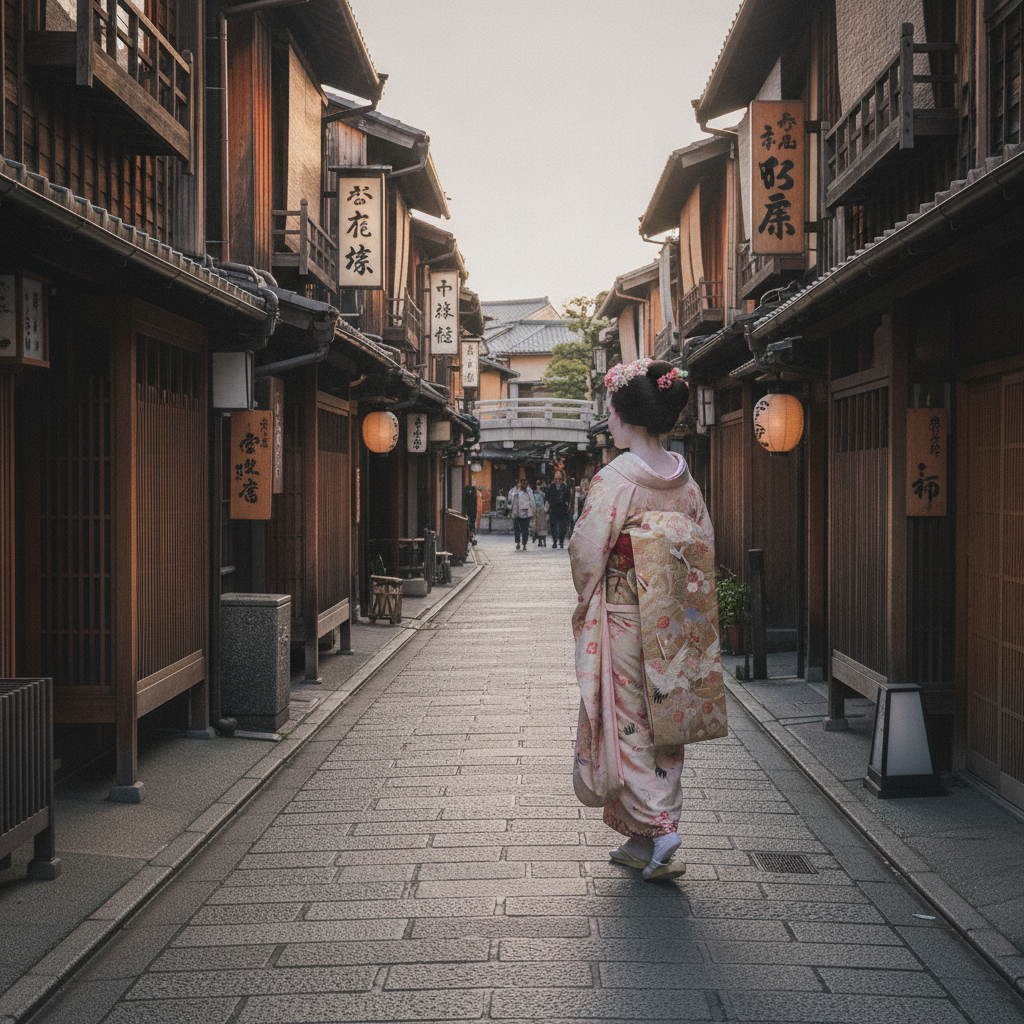
Hanamikoji Street (花見小路 — 'Flower Viewing Lane' — the main north-south street of Gion Kōbu, the most prestigious of Kyoto's five geisha districts (hanamachi), running south from Shijo Street to Kennin-ji temple): Hanamikoji is the most iconic street in Kyoto, lined on both sides with traditional machiya townhouses (the narrow two-storey wooden townhouses with their characteristic wooden lattice screens (koshi), the distinctive ochaya (tea house) architecture developed in the Edo period (1603-1868)), the finest of which have been operating as ochaya (tea houses where geiko entertain clients) continuously since the 18th century; the street is at its most beautiful in the evening (from approximately 5-8pm), when maiko and geiko in full formal dress can be seen walking between engagements (ozashiki) — the best time to observe the traditional Gion entertainment culture; the southern end of Hanamikoji (the area around Kennin-ji temple) has a higher density of traditional restaurants (ryotei) and lower-key ochaya than the more photographed northern section.
- 2
Gion Shinbashi — The Most Preserved Street in Kyoto
Gion Shinbashi (祇園新橋 — the Shinbashi area (the streets around the Tatsumi-bashi bridge over the Shirakawa canal) in the northern part of Gion — designated by the Japanese government as an Important Preservation District for Groups of Traditional Buildings (重要伝統的建造物群保存地区) in 1976, the first such designation in Japan): the Shinbashi canal street (the weeping willows (Salix babylonica) lining the Shirakawa canal, the stone lanterns on the canal bank, and the traditional ochaya and machiya townhouses reflected in the water) is the most perfectly preserved historic streetscape in Kyoto and one of the most beautiful in Japan; the area is best experienced at cherry blossom time (late March to early April, when the cherry trees along the Shirakawa canal are in full bloom — the most romantic sakura spot in Kyoto) and on summer evenings during the Gion Matsuri (the Gion Festival, one of Japan's three great festivals, held throughout July with the main processions (yamaboko junko) on July 17 and July 24).
- 3
Geiko & Maiko — The Art of the Kyoto Geisha
Geiko and maiko (the Kyoto terms for geisha and apprentice geisha respectively — the Kyoto dialect uses 'geiko' (芸妓 — 'arts child') where Tokyo and the rest of Japan use 'geisha' (芸者 — 'arts person')): the geiko system (the training and employment structure of the Kyoto geisha world) is one of the most demanding professional training systems in Japanese culture — a maiko begins training at approximately 15-16 years old, spending approximately 5 years as an apprentice before debuting as a full geiko; the maiko's formal dress (the elaborate furisode kimono in seasonal colours, the darari obi (the long trailing obi unique to maiko), the okobo (the tall wooden platform shoes), the elaborate kanzashi (hair ornaments of seasonal flowers in silk or tortoiseshell) and the distinctive white face make up (oshiroi — the thick white rice powder applied to the face, neck, and the back of the neck, leaving the characteristic 'W' or 'V' of bare skin at the nape)) is the defining visual image of traditional Kyoto; approximately 200 geiko and 80 maiko are active in Kyoto's five hanamachi (geisha districts), with the largest concentration in Gion Kōbu.
- 4
Kennin-ji — Kyoto's Oldest Zen Temple
Kennin-ji (建仁寺 — the oldest Zen Buddhist temple in Kyoto, founded 1202 by the monk Eisai (Myōan Eisai, 1141-1215) — the monk who introduced Rinzai Zen Buddhism and tea cultivation to Japan from China (where he had studied from 1187): Eisai brought tea seeds from China and planted them on the slopes of Kyoto's hills, establishing the tea culture that would eventually produce the Japanese tea ceremony (chanoyu) and Uji green tea): the temple complex (in the south of Gion, accessible from Hanamikoji Street) is architecturally distinguished by its Hōjō (方丈 — the abbot's hall) with its exceptional painted sliding screens (fusuma-e): the 'Wind God and Thunder God' (Fūjin Raijin-zu — the famous pair of screens by Tawaraya Sōtatsu (early 17th century), the masterpiece of the Rinpa school of Japanese painting — the originals are now at the Kyoto National Museum and high-quality replicas hang in the temple), the ceiling dragon (the circular 'Twin Dragons' (双龍図 — Soryūzu) painted by Koizumi Junsaku in 2002 in the Hattō hall ceiling), and the three karesansui gardens.
- 5
Kamo River & Pontocho — Kyoto's River Entertainment District
Kamo River (鴨川 — the river running north-south through central Kyoto, defining the western boundary of Gion) and Pontocho (先斗町 — the narrow alley running parallel to the Kamo River between Sanjo and Shijo streets — one of Kyoto's five geisha districts, the most atmospheric dining street in Kyoto): the Pontocho alley (approximately 500 metres long, 3 metres wide — a single lane flanked on both sides by the wooden facades of restaurants, bars, and ochaya townhouses, lit in the evening by red lanterns and the glow from the restaurant interiors) is the finest example of a traditional Kyoto dining street; the Kamo River yuka (川床 — the temporary wooden platforms built over the river from May to September, on which restaurants place outdoor seating — the most atmospheric outdoor dining experience in Kyoto, with the city's summer heat (Kyoto is famous for its extreme summer humidity) alleviated by the river breeze); the stretch of the Kamo River between Sanjo and Shijo bridges is the principal outdoor social space of Kyoto — couples traditionally sit at equal intervals on the riverside steps (the 'Kamo River spacing phenomenon' (等間隔の法則) has been noted as a Japanese social curiosity).
- 6
Yasaka Shrine & Gion Matsuri — Japan's Greatest Festival
Yasaka Shrine (八坂神社 — the Shinto shrine at the eastern end of Shijo Street, at the entrance to Gion — one of the oldest Shinto shrines in Kyoto, founded in 656 CE according to shrine records, dedicated to the deity Susanoo-no-Mikoto): Yasaka Shrine is the venue and organizer of the Gion Matsuri (祇園祭 — the Gion Festival, the most famous of Kyoto's festivals and one of Japan's three great festivals (Nihon Sandai Matsuri), held throughout the month of July since its establishment in 869 CE): the festival was established to appease the gods during a plague epidemic in 869, and has been held every year since (with the exception of the civil wars of the Onin War period (1467-1477)) — the festival events include the yoiyama (preliminary evenings of July 15-16-17, when the magnificent yamaboko floats (the enormous festival floats, up to 25 metres tall, elaborately decorated with tapestries including Gobelin tapestries from Flanders (a result of the Gion Matsuri's extraordinary historical mercantile connections)) are displayed in the streets of central Kyoto) and the yamaboko junko procession (July 17 — the grand procession of the 23 yamaboko floats through the streets of central Kyoto, the most spectacular festival procession in Japan).
Walk this route with audio
Stories play automatically as you reach each stop — no tapping needed.
More in kyoto
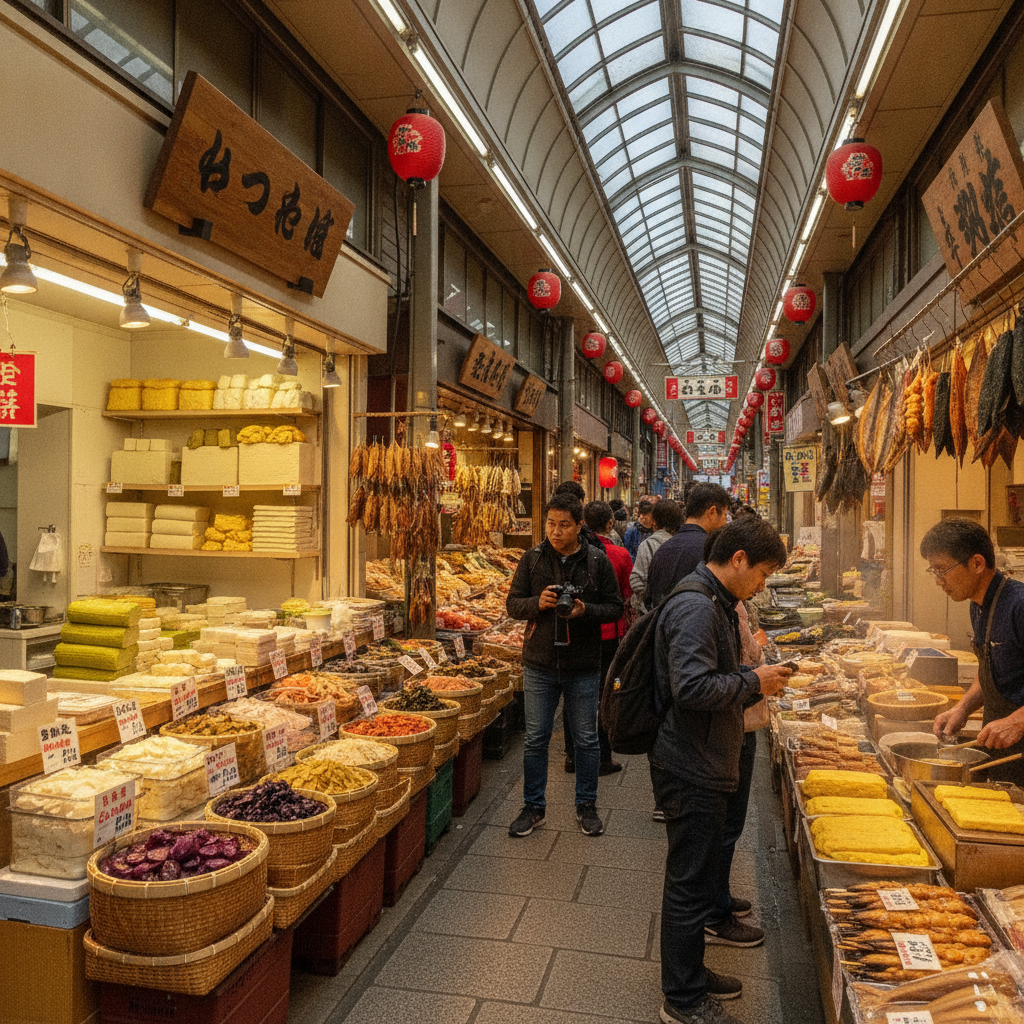
Nishiki Market & Kyoto Cuisine — The Kitchen of Kyoto
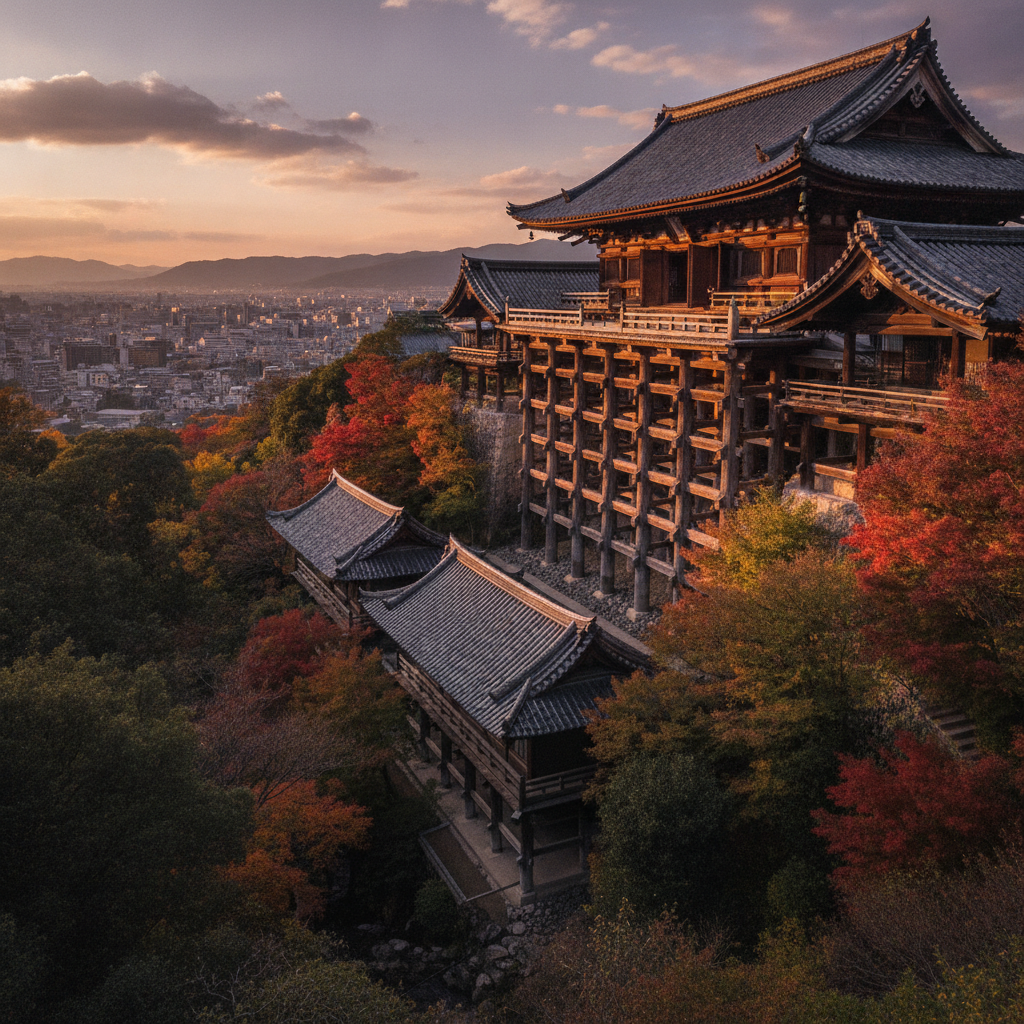
Higashiyama — Kiyomizudera & the Historic Preserved Streetscapes
Ryoan-ji, Daitokuji & the Zen Garden Philosophy of Kyoto
Kyoto Imperial Palace, Nijo Castle & the City's Imperial History
Fushimi Inari-taisha — 10,000 Torii Gates to the Mountain Summit