Fushimi Inari-taisha — 10,000 Torii Gates to the Mountain Summit
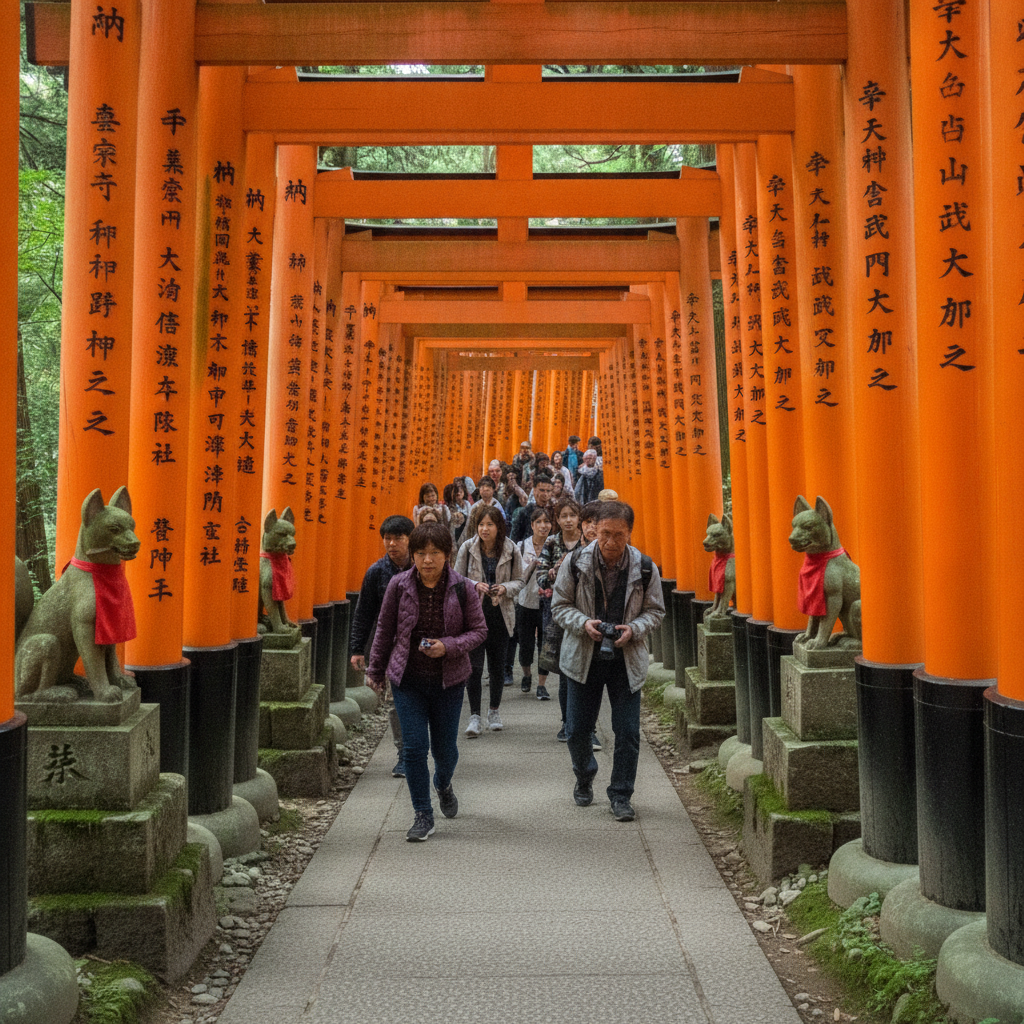
Fushimi Inari-taisha (the Shinto shrine in southern Kyoto dedicated to Inari, the deity of rice, sake, foxes, and business prosperity — the most visited Shinto shrine in Japan (approximately 3 million visitors per year) and consistently the top-ranked attraction in Japan on TripAdvisor): the shrine's famous tunnel of approximately 10,000 vermilion torii gates ascending Mount Inari is the most iconic single image of Japanese Shinto culture.
- 1
The Main Shrine & the Senbon Torii
Fushimi Inari-taisha (伏見稲荷大社 — the head shrine of approximately 32,000 Inari shrines across Japan, founded in 711 CE (making it one of the oldest Shinto shrines in Kyoto, predating the founding of the city itself in 794) on the slopes of Mount Inari in the Fushimi district of southern Kyoto — dedicated to Inari Ōkami, the Shinto deity of rice agriculture, sake brewing, foxes (kitsune), and business prosperity): the main shrine complex at the base of the mountain (the Rōmon gate (重文 — Important Cultural Property), the Outer Shrine (Gaiden), and the Inner Shrine (Naitenden)) is the starting point for the mountain trail; the Senbon Torii (千本鳥居 — 'thousand torii gates', the pair of parallel tunnels of torii gates ascending from the main shrine area to the Okusha shrine at the mid-mountain level) is the most photographed section — the gates are a dense orange tunnel that filters the sunlight into an extraordinary atmosphere; the individual torii gates (each donated by a Japanese business or individual, ranging in size from small (approximately ¥175,000 (US$1,200) for the smallest sizes) to very large (up to several million yen for the largest gates)) have the donor's name and donation date inscribed on the back.
- 2
The Mountain Trail — 4 Hours to the Summit
Mount Inari trail (the full circuit hike of Mount Inari (233 metres), ascending through the continuous tunnel of torii gates to the summit Ichi-no-mine (233 metres) and returning via the other side of the mountain — approximately 4 km round trip, taking 2-3 hours at a relaxed pace): the trail ascends through a series of shrine complexes (Yotsutsuji intersection (the main viewpoint at approximately the halfway point, with a panoramic view west over the Fushimi district and the Kyoto basin), Sannomiya, Nino-mine, and the summit shrine complex) and through a forest of tall cryptomeria cedar (Cryptomeria japonica — sugi) and bamboo; the torii gates (maintained and repainted in their characteristic vermilion (the colour of Shinto shrines, believed to repel evil spirits)) line the trail almost continuously from the base to the summit; the best time to visit is early morning (before 8am, when the trail is far less crowded — Fushimi Inari has no closing time and is open 24 hours) or evening (after 5pm, when the day-trip crowds have departed and the gates are lit atmospherically).
- 3
Inarizushi & the Food of Fushimi
The Fushimi Inari shrine area food culture (the traditional food stalls and restaurants of the shrine approach (omotesando) and the surrounding Fushimi district): Inarizushi (稲荷寿司 — the triangular rice-filled deep-fried tofu pouches (abura-age) that take their name from the Fushimi Inari shrine — the fox messengers of Inari are said to particularly enjoy abura-age, and inarizushi is the traditional food offering at Inari shrines, making Fushimi Inari the original source of inarizushi culture): the stalls on the Fushimi Inari omotesando sell inarizushi in traditional wicker basket bento boxes (the most photographed food souvenir in Fushimi), along with kitsune udon (the noodle soup with an abura-age tofu pouch — 'kitsune udon' means 'fox udon'), yakidori (grilled chicken skewers), and the Kyoto specialty of yudofu (the Zen Buddhist hot tofu dish, served in the traditional Kyoto style with kombu dashi broth); Fushimi (the district surrounding the Inari shrine) is also the Kyoto sake-brewing district — home to approximately 40 sake breweries, producing sake from the famously pure underground water (the Fushimizu — the water of Fushimi) that feeds from the surrounding mountains.
- 4
Tofuku-ji Temple — Kyoto's Most Spectacular Autumn Garden
Tofuku-ji (東福寺 — one of the five great Rinzai Zen temples (Gozan) of Kyoto, founded 1236 — located 1 km north of Fushimi Inari, in the Higashiyama foothills): Tofuku-ji is most famous for its Tsuten-kyo Bridge (通天橋 — the covered wooden bridge spanning the Tani-gawa valley below the temple, surrounded by 2,000 Japanese maple trees (Acer palmatum) that turn brilliant red, orange, and yellow in late November — the most visited single autumn colour (koyo) spot in Kyoto, typically receiving 2,000-3,000 visitors per hour during the peak (typically the third or fourth weekend of November)); the main temple complex (the Sanmon gate (国宝 — National Treasure), the oldest Zen gate in Japan (1425), and the Hattō (法堂 — Dharma Hall)) is one of the finest Zen temple complexes in Kyoto; the four connected karesansui stone gardens created by the landscape designer Shigemori Mirei in 1939 (the checkerboard moss and stone garden of the South Garden, and the geometrically abstract gardens of the East, West, and North — the first modernist Zen garden in Japan) are among the most influential garden designs of the 20th century.
- 5
Fushimi Sake Breweries — The Water of Fushimi
Fushimi sake district (the sake-brewing district of Kyoto, centred on the Fushimi ward south of the city centre, approximately 1 km southwest of Fushimi Inari-taisha — the second largest sake-producing district in Japan (after Nada in Kobe), with approximately 35-40 active sake breweries still operating): Fushimi sake (伏見の酒 — Fushimi no sake) is characterized by its soft, slightly sweet style (tanrei karakuchi in Japanese classification), deriving from the famously pure soft water (the Fushimizu — the underground spring water filtered through the granite of the Fujiwara Mountains) that makes Fushimi sake distinctively different from the harder water and more robust style of Nada-Kobe sake; the most notable breweries with visitor facilities are: Gekkeikan Okura Sake Museum (the museum brewery of the Gekkeikan company (the largest sake company in Japan, founded 1637), with exhibits on the sake brewing process (the koji mold cultivation, moromi fermentation, and pressing stages) and free tastings of Gekkeikan's signature products), Kizakura Kappa Country (the entertainment complex of the Kizakura brewery, with a museum, sake bar, and restaurant), and Yamamoto Honke (the family brewery dating to 1677, producing the Hanatsuru label — the most artisanal of the Fushimi breweries open to visitors).
- 6
Daigo-ji Temple — Cherry Blossoms & Mountain Zen
Daigo-ji (醍醐寺 — the Shingon Buddhist temple complex in the Fushimi hills, 5 km east of Fushimi Inari — UNESCO World Heritage since 1994, one of the most extensive temple complexes in Kyoto): Daigo-ji is famous as the site of Toyotomi Hideyoshi's legendary cherry-blossom viewing party (hanami) of 1598, at which 1,300 guests were entertained under the cherry trees in the most extravagant hanami in Japanese history — the party that established cherry-blossom viewing as the central ritual of Japanese spring culture; the temple complex has approximately 1,000 cherry trees (primarily Prunus x yedoensis — Yoshino cherry (somei-yoshino), the standard Japanese spring cherry blossom) that flower in early April; the five-storey pagoda of Daigo-ji (醍醐寺五重塔 — the 38-metre wooden pagoda built in 951 during the reign of Emperor Murakami — the oldest standing structure in Kyoto, surviving all the fires that destroyed most of the ancient city) is the finest and oldest wooden pagoda in the Kyoto area.
Walk this route with audio
Stories play automatically as you reach each stop — no tapping needed.
More in kyoto
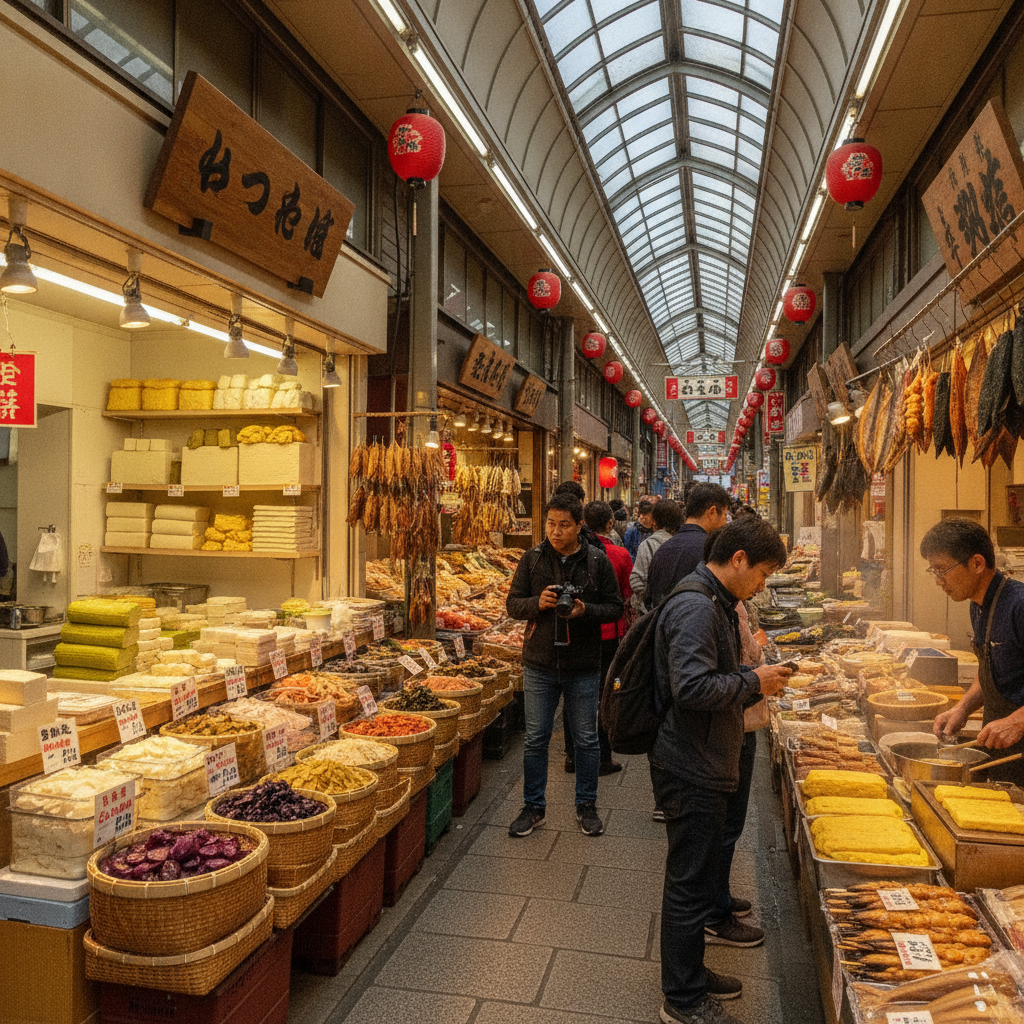
Nishiki Market & Kyoto Cuisine — The Kitchen of Kyoto
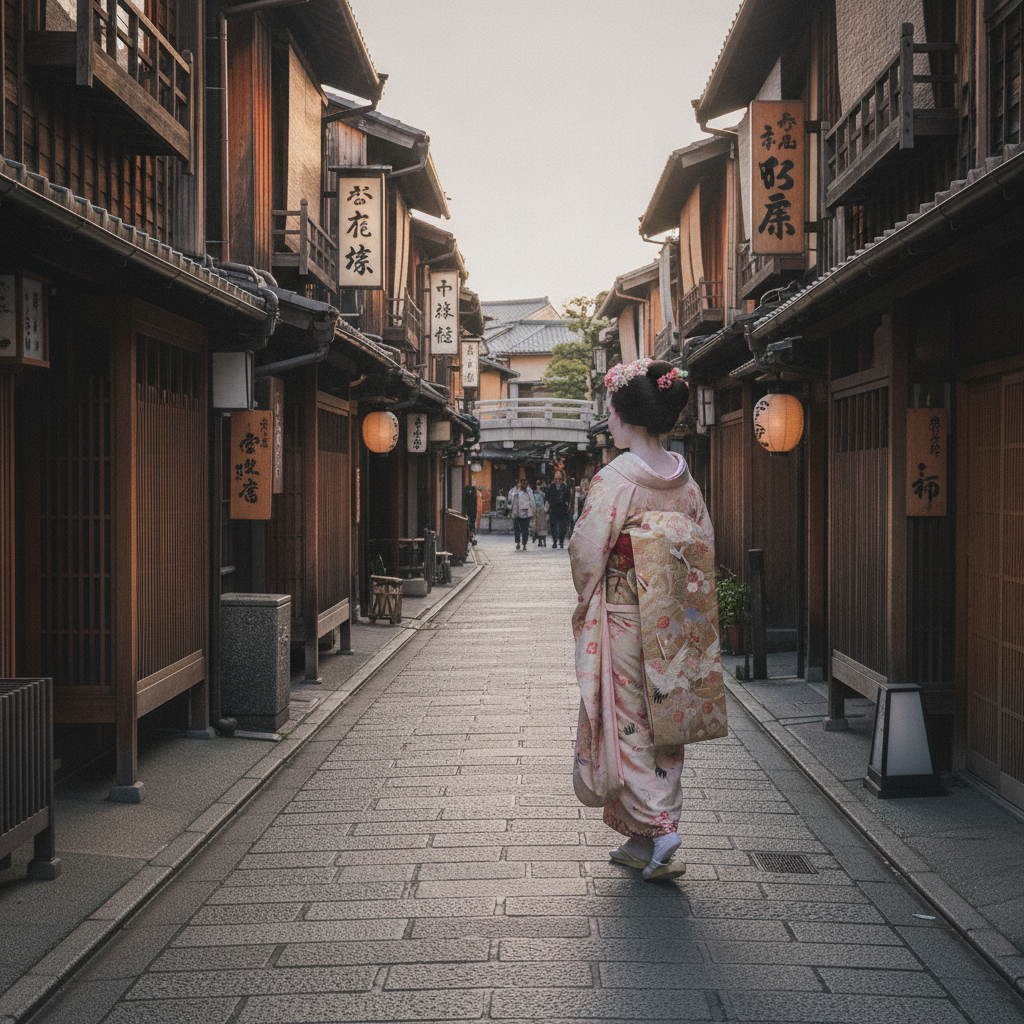
Gion — Kyoto's Geisha District, Hanamikoji & the Ochaya Tea Houses
Higashiyama — Kiyomizudera & the Historic Preserved Streetscapes
Ryoan-ji, Daitokuji & the Zen Garden Philosophy of Kyoto
Kyoto Imperial Palace, Nijo Castle & the City's Imperial History