Cotton Fields and Soviet Agricultural Legacy
Explore the complex legacy of Soviet collectivization in the Kulob region, where massive cotton monoculture schemes transformed the Vakhsh Valley landscape, creating both economic dependence and agricultural infrastructure that persists today.
- 1
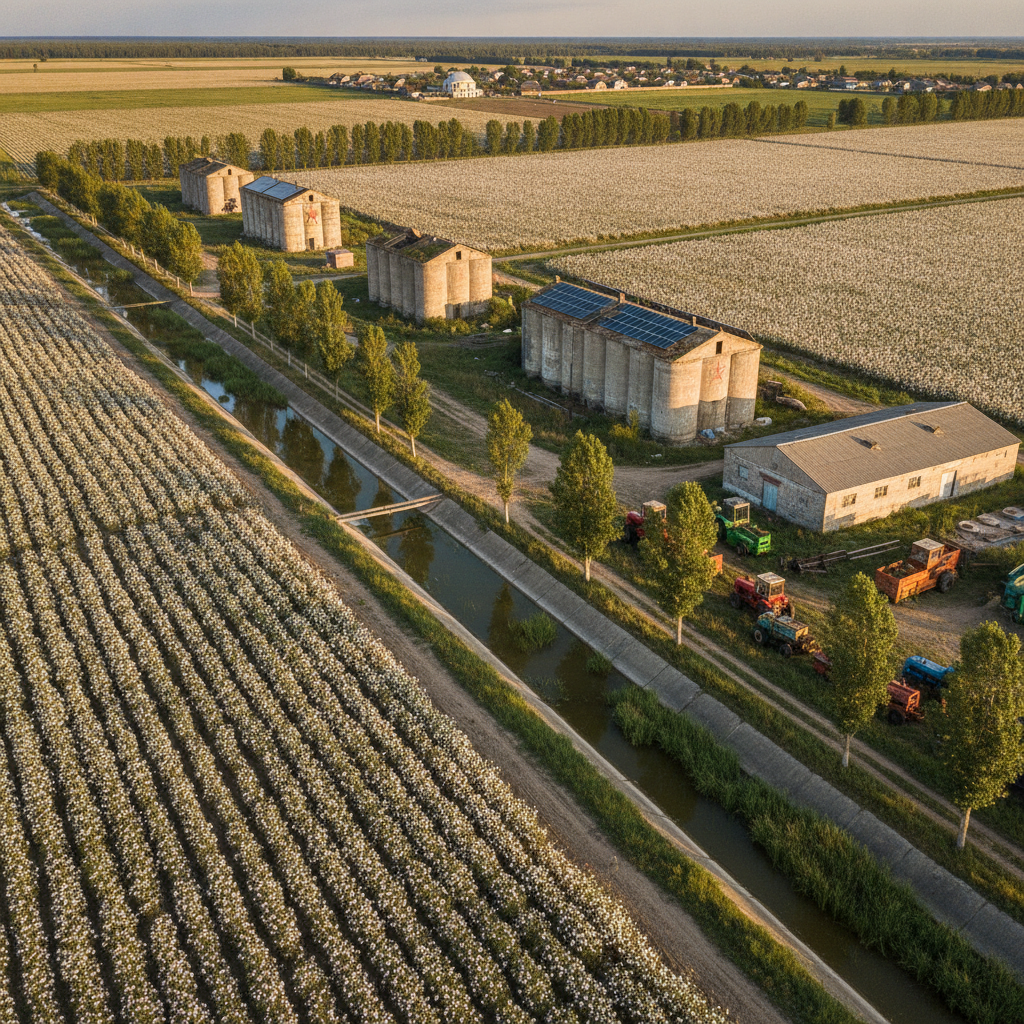
Soviet Collective Farm Site
Visit the site of a former Soviet kolkhoz collective farm, now restructured but still shaped by the infrastructure of Soviet agriculture: irrigation canals, storage facilities, and field layouts imposed by central planning.
- 2
Cotton Field
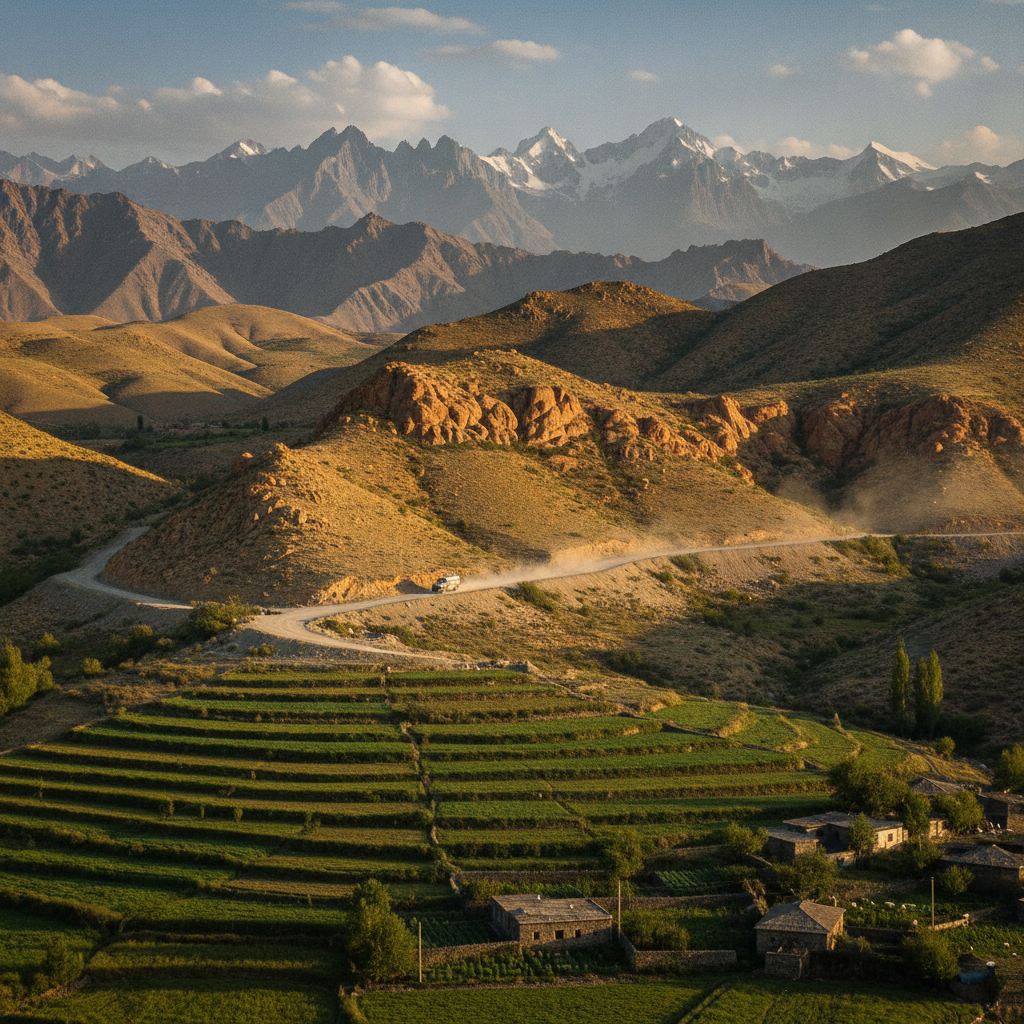
Walk through white-bolled cotton fields that cover the Vakhsh Valley floor in an agricultural monoculture established by Soviet planners who diverted rivers and leveled terrain to maximize cotton production for the Soviet textile industry.
- 3
Irrigation Canal System
Follow one of the massive Soviet-era irrigation canals that transformed desert and semi-arid land into productive agricultural territory, engineering projects that allowed cotton cultivation in landscapes previously too dry for farming.
- 4
Agricultural Processing Facility
See a cotton gin and processing facility where the harvested crop is cleaned, graded, and baled before export, the industrial scale of the operation reflecting the Soviet vision of the Vakhsh Valley as a specialized production zone.
- 5
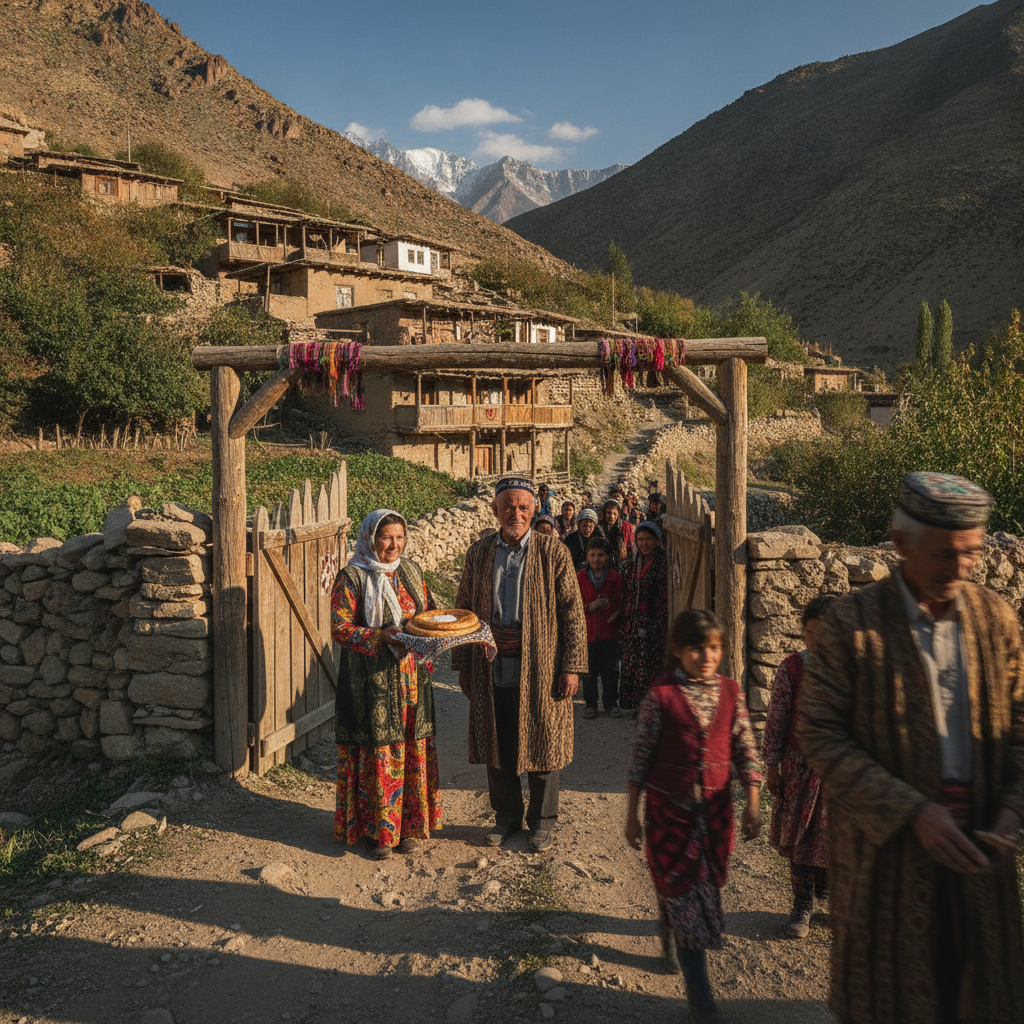
Village Transformation Story
Hear from elderly residents how collectivization transformed their grandparents' lives — replacing subsistence farming and herding with assigned agricultural labor, disrupting ancient social structures and land relationships.
- 6
Post-Soviet Agricultural Change
Observe how the Kulob region's agriculture is transforming since independence, as collective farm land is redistributed to individual farmers who face the challenge of maintaining Soviet-era infrastructure without centralized support.
Walk this route with audio
Stories play automatically as you reach each stop — no tapping needed.