Kraków Practical Guide — Seasons, Trams, Nightlife & Getting Around
Kraków is a year-round destination with a strong four-season character. The combination of the intact medieval and Renaissance architecture, the compact old town walkable in its entirety, the 200,000-strong student population, and the direct air connections from 50 European cities make it the most visited city in Poland after Warsaw.
- 1
When to Visit — Spring and Autumn are Peak Value
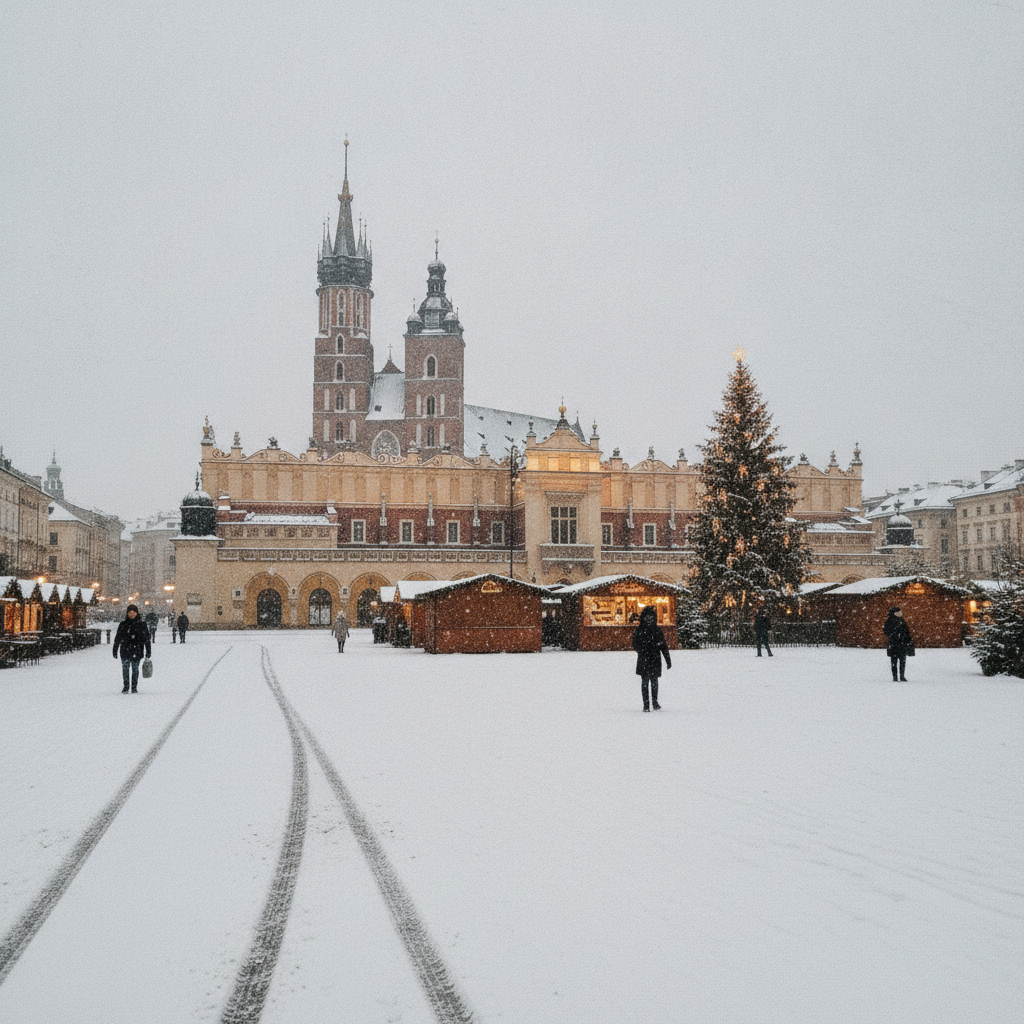
Kraków seasons: Spring (March-May, the most pleasant visiting period — the Planty gardens in bloom, the Easter celebrations including the Emaus market at the Salwator monastery on Easter Monday and the Śmigus-dyngus water-throwing festival, temperatures 10-18 degrees, the accommodation at 20-30 percent below the July-August peak), Summer (June-August, temperatures 22-30 degrees, the city at maximum tourist capacity — Kraków receives 14 million visitors per year, concentrated June-September, the Main Market Square crowded from 10am to midnight, the Kazimierz Jewish Culture Festival in late June-early July the most important cultural event of the summer), Autumn (September-November, the trees in the Planty turning, the temperatures 10-18 degrees through October, the Polish holiday pilgrimages to Jasna Góra in Częstochowa and the autumn school trips filling the museums in October, the most comfortable visiting period combining decent temperatures with reduced foreign tourist numbers), Winter (December-February, the Christmas market on the Main Market Square the most atmospheric in Poland, the snow on the Wawel the most photographed winter image in Poland, temperatures -5 to 5 degrees, the city at its quietest and most local, accommodation at minimum prices).
- 2
Getting to Kraków — the Train from Warsaw
Kraków access: train from Warsaw (the PKP Intercity Express from Warsaw Central in 2 hours 15 minutes, €15-35 one-way in advance booking, the fastest and most comfortable connection, the PKP IC Express running 12+ times daily, the Kraków Główny station 500m from the old town boundary — walking distance to the Planty and the Florian Gate in 10 minutes), flight from London (the direct flights on Ryanair from Stansted, Luton, and Manchester, easyJet from Gatwick, the Balice Airport 12km west of Kraków, the bus connection to the city centre at €1.50 every 30 minutes or the taxi at €15-20), from Vienna (the flixbus in 6 hours, €15-25, the regiojet train in 7 hours, €20-35, the night train from Vienna Hauptbahnhof arriving Kraków Główny the following morning). Within Kraków: the tram network (the most efficient way to move between the old town boundary and the outer districts, the €1.50 per journey ticket from the tram stop machine or the Jakdojade or UrbanCard apps, the No.8 tram from the Wawel to the Kazimierz, the No.1 and No.6 to the Nowa Huta district), walking (the old town is entirely walkable — the Rynek to Wawel is 10 minutes, the Rynek to Kazimierz is 15 minutes on foot through Grodzka Street).
- 3
Kraków Nightlife — Student Bars and Jazz Cellars
Kraków nightlife (the city's 200,000 student population creating the most active and affordable bar scene in Poland, concentrated in: the old town cellar bars — the stone vaults of the medieval buildings converted to bars from the 1990s, the most atmospheric in Central Europe — the Kazimierz district, and the Nowy Świat and Dolnych Młynów streets in Krowodrza 1km west of the old town): the Jazz Club u Muniaka (Floriańska 3, the basement jazz club of the Polish jazz musician Janusz Muniak, live jazz and blues 7 nights per week from 9pm, no cover charge, the cocktails at €6-9, the most consistent live music programme in Kraków), Pod Aniołami (Grodzka 35, the cellar bar restaurant in a 14th-century vault, the brick arches and the candlelight, the craft beer and the wine list, the live music on weekends, the pre-dinner aperitivo crowd from 7pm), and the Alchemia in Kazimierz (Estery 5, the most atmospheric bar in Kazimierz, the multi-room bohemian interior with antique furniture, the occasional live music in the inner courtyard, open daily noon to 4am, the bar most associated with the post-Schindler's List Kazimierz revival of the 1990s). The old town cellar bars close at 2-3am, the Kazimierz bars at 4am, the nightclubs (Cien Club on Szewska Street, Frantic on Szewska) until 5-6am.
- 4
Nowa Huta — the Communist Model City
Nowa Huta (literally 'New Steelworks', the planned socialist industrial city built from scratch on the eastern outskirts of Kraków from 1949, the Stalinist urban plan designed to create a workers' counterweight to the 'bourgeois' and Catholic city of Kraków, the central Plac Centralny — the central square with the Stalinist-style apartment blocks and the Boulevard of Roses — the Central Cultural Centre, the Wanda Mound — the ancient burial mound at the edge of Nowa Huta from which the city was designed to be visible — the steelworks themselves still partially operating under the ArcelorMittal brand) is the most unusual and undervisited district of Kraków and the most complete surviving example of Stalinist urban planning in Poland. Accessible by tram from the Kraków old town (tram No.4 from the stop at the Poczta Główna post office, 25 minutes, €1.50, the terminus at the Plac Centralny): the walking tour of the central plan (the 15-minute walk from Plac Centralny along the main boulevard through the residential blocks, the tour maps available at the Nowa Huta Museum), the Nowa Huta Museum (Os. Słoneczne 16, the local history museum in a former community centre, €4 adults, Tuesday-Sunday 10am-5pm, the Stalinist-era propaganda posters, the reconstruction of a 1950s worker's apartment, the history of the Solidarity movement's roots in the steelworks).
- 5
Day Trips from Kraków — Wieliczka, Zakopane, and Częstochowa
Day trips from Kraków within 120km: Wieliczka Salt Mine (the UNESCO World Heritage salt mine 12km southeast of Kraków, the mine operating since the 13th century, the underground chambers carved over 700 years including the extraordinary Chapel of St. Kinga — the 54m-long underground church with the ceiling, walls, and chandeliers entirely carved from salt by miners over 300 years, the largest underground salt-carved space in the world, €45 adults for the 2-hour standard tour, the mine accessible by bus from the main bus station in 30 minutes at €2 or by the dedicated tourist bus at €4, the tour departing every 30 minutes), Zakopane (the Tatra Mountain resort, 100km south, 2 hours by bus at €6, the cable car to Kasprowy Wierch, the Morskie Oko lake, the Gubalówka ridge walk, the oscypek cheese market on Krupówki Street), and Częstochowa (the Jasna Góra monastery, 120km northwest, 2 hours by train at €8, the Pauline monastery housing the Black Madonna icon — the most important Marian pilgrimage site in Poland, visited by 4 million pilgrims per year, the icon visible in the Chapel of Our Lady daily 6am-9pm, the monastery fortification walls and the treasury — the most significant Catholic site in Poland).
- 6
Accommodation — Old Town, Kazimierz & Salwator
Kraków accommodation at the correct levels: old town (the hotels and apartments within the Planty ring, the most expensive and most convenient, the walking distance to all old-town sights at 5-15 minutes, the Main Market Square noise audible in the summer nights in rooms facing the square — earplugs and courtyard rooms the mitigation, prices in July-August at €80-200/night for a double room in a 3-star hotel), Kazimierz (the Jewish quarter hotels and apartments 15 minutes walk from the old town, the most atmospheric alternative to the old town, prices 20-30 percent below old-town equivalents, the Kazimierz evening activity directly accessible on foot), and Salwator-Zwierzyniec (the residential neighbourhoods west of Wawel along the Vistula, the quiet streets 15-20 minutes walk from the old town, the guesthouses and apartments in the residential buildings at €50-100/night in season, the local neighbourhood bakeries and cafes accessible, the most genuinely residential Kraków experience for visitors who want the city rather than the tourist quarter). The stag and hen party economy: Kraków receives a significant volume of UK stag and hen party groups, particularly on summer weekends — the effects (noise, public drunkenness) concentrated in the old town and Kazimierz on Friday and Saturday nights, the early Sunday morning the correct time for the undisturbed old town photographs.
Walk this route with audio
Stories play automatically as you reach each stop — no tapping needed.
More in krakow
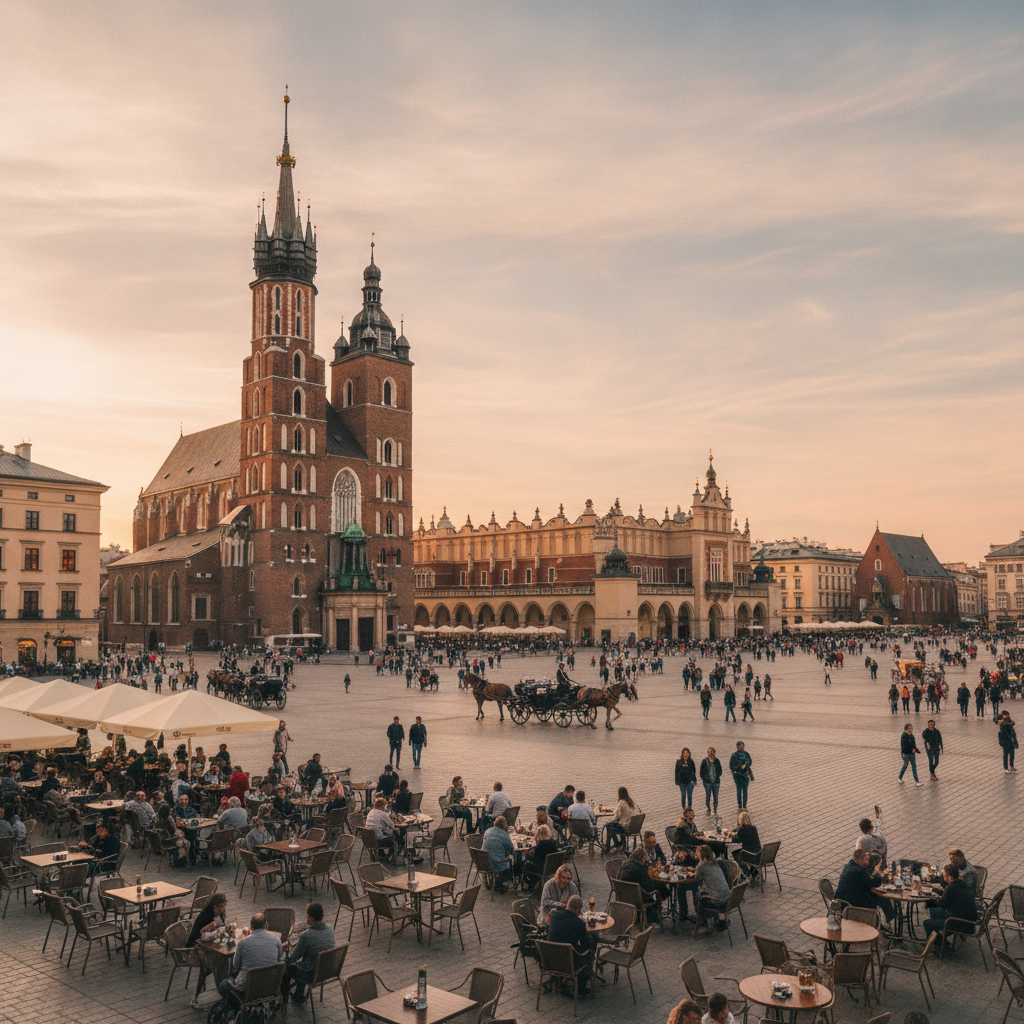
Kraków Old Town — the Main Market Square, St. Mary's Basilica & Wawel Castle
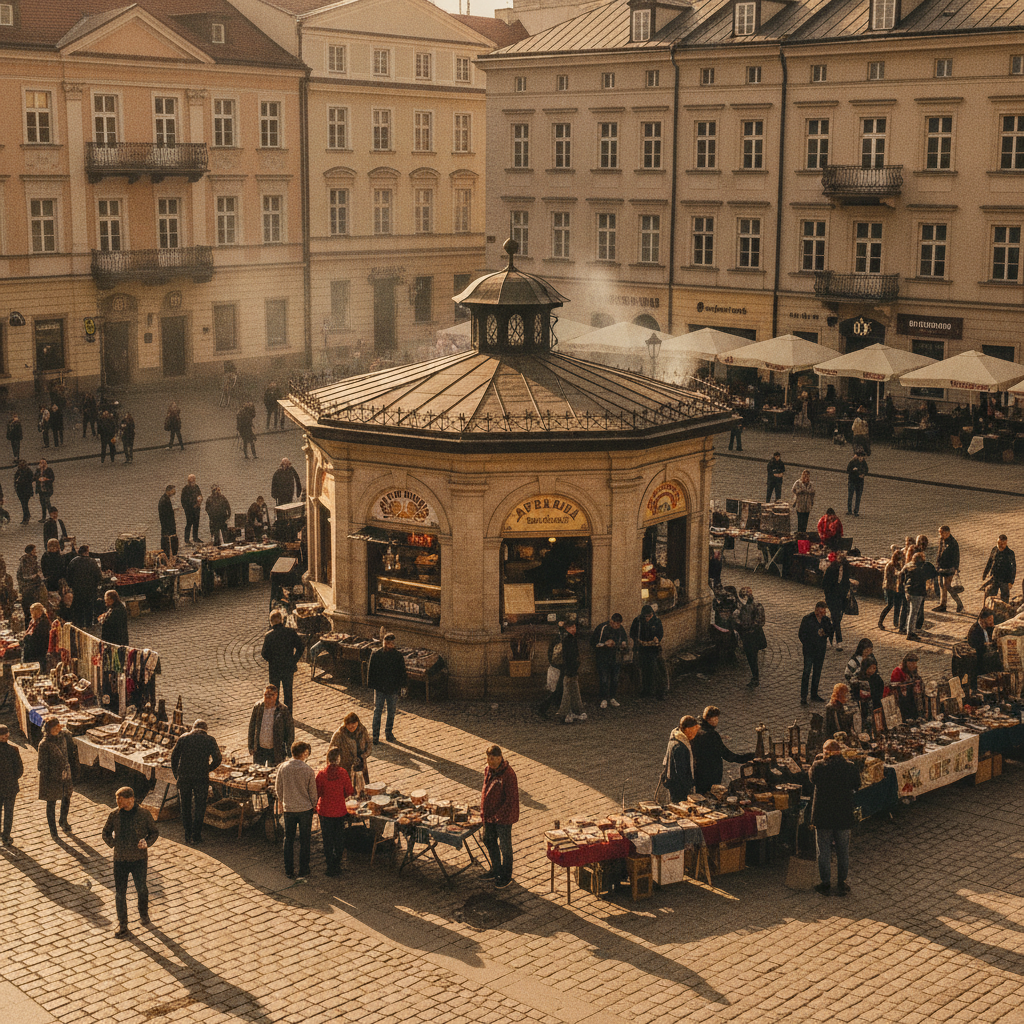
Kazimierz — the Jewish Quarter, Synagogues & the Schindler Factory
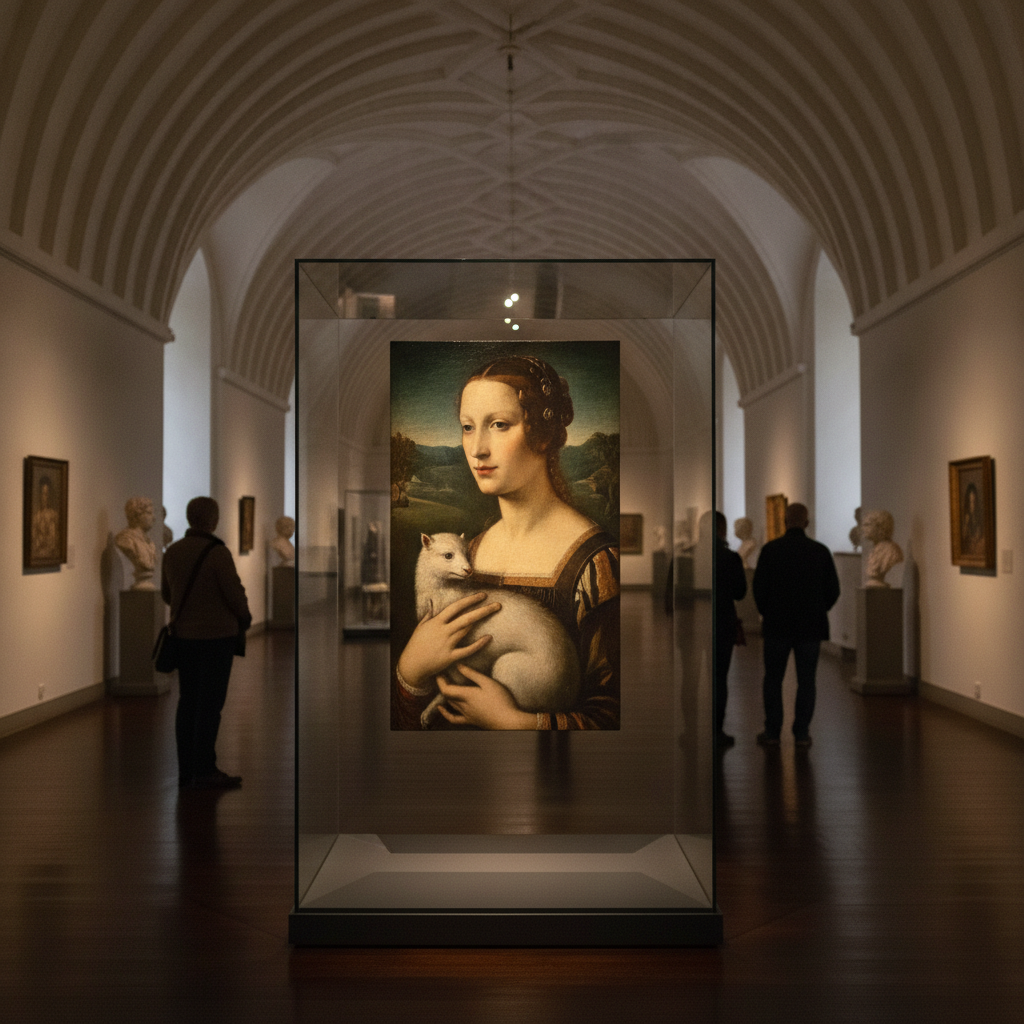
Kraków Museums & the Royal Road — the Czartoryski Collection, Lady with an Ermine & National Galleries
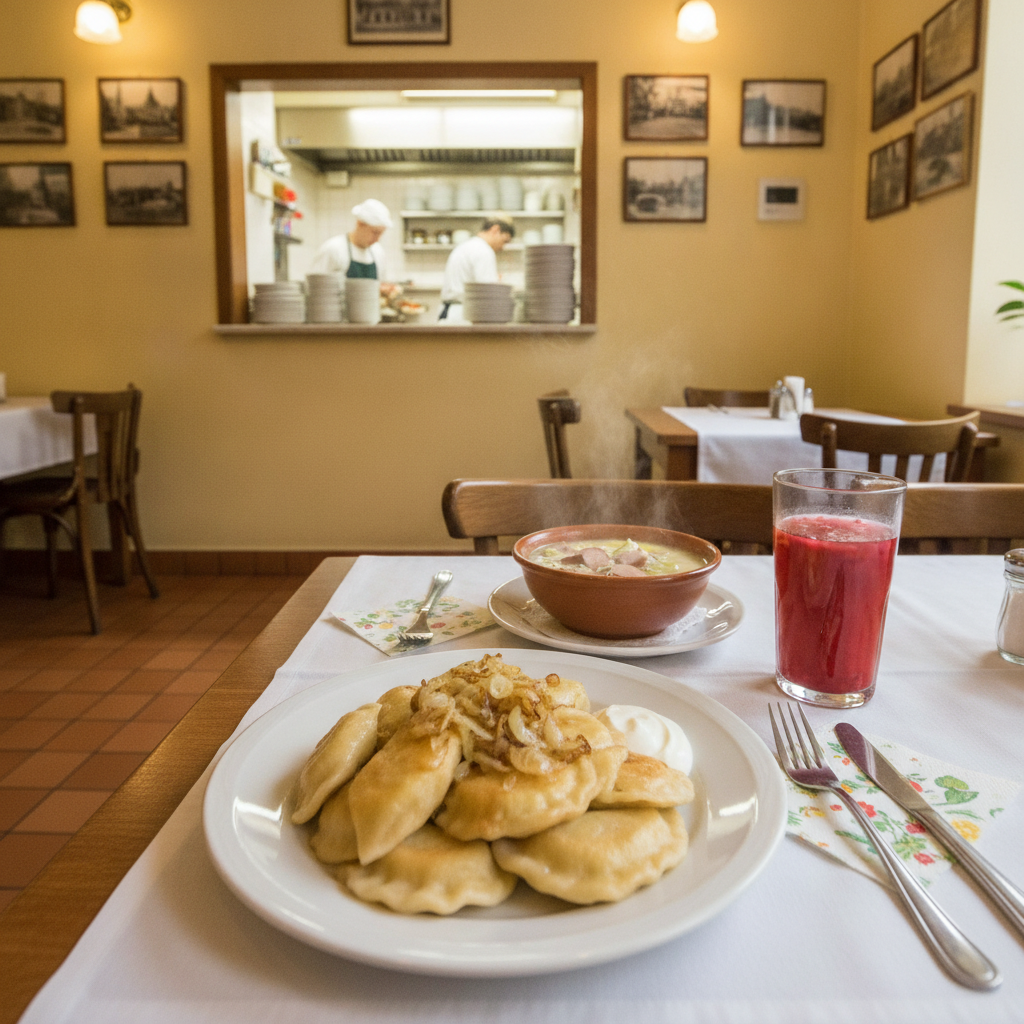
Kraków Food — Pierogi, Żurek, Zapiekanka & the Polish Restaurant Tradition