Auschwitz-Birkenau Memorial — the Most Important Historical Site in Europe
Auschwitz-Birkenau (the Nazi German concentration and extermination camp complex 70km west of Kraków, established in the German-occupied Polish territory in 1940, the site of the systematic murder of 1.1 million people between 1941 and 1945 — 90 percent of them Jews — from across occupied Europe, the largest and most deadly of the Nazi extermination camps, UNESCO World Heritage Site since 1979) is the most important historical memorial site in Europe and one of the most visited in the world.
- 1
The Historical Context — Why Auschwitz Was Located in Poland
Auschwitz (the German name for the Polish town of Oświęcim, captured by Germany in September 1939, the camp established in April 1940 initially as a concentration camp for Polish political prisoners) was selected as the site of the systematic extermination of the European Jews for logistical reasons: the railway junction at Oświęcim connected to the rail networks of all occupied European territories, allowing the transport of victims from France, Greece, Italy, Hungary, the Netherlands, and all other occupied countries directly to the camp. The three-camp complex: Auschwitz I (the original concentration camp, the administrative centre, the location of the gas chamber and crematorium I used for early experiments with Zyklon B in September 1941), Auschwitz II-Birkenau (the extermination camp built 3km from Auschwitz I beginning in 1941, the four crematoria-gas chamber complexes capable of murdering 6,000 people per day, the camp where 90 percent of the killings occurred), and Auschwitz III-Monowitz (the labour camp providing forced labour to the IG Farben Buna synthetic rubber plant, the camp where Primo Levi was imprisoned and which he described in If This Is a Man).
- 2
Auschwitz I — the Concentration Camp and the Museum
Auschwitz I (the original camp, Więźniów Oświęcimia 20, Oświęcim, free admission for the permanent exhibition with the pre-booked guided tour mandatory from 10am to 4pm between April and October at €18 per person for the 3.5-hour tour, the remaining hours available for self-guided visits, the entrance block with the Arbeit Macht Frei gate the most reproduced image of the Holocaust, the 28 surviving blocks containing the permanent exhibition organized thematically): Block 4 (the extermination exhibition, the photographs of the arrival transports, the statistics of the killing, the 2-tonne pile of human hair from the shaved heads of murdered prisoners behind the glass wall — the most immediate physical encounter with mass murder in the museum), Block 5 (the stolen material possessions — the rooms of eyeglasses, the room of suitcases with the names still painted on, the room of children's shoes, the room of prosthetic limbs — the personal belongings of the murdered victims, each object representing a specific human life), and Block 11 (the punishment block, the standing cells, the execution wall where SS guards shot prisoners by the thousands).
- 3
Auschwitz II-Birkenau — the Extermination Site
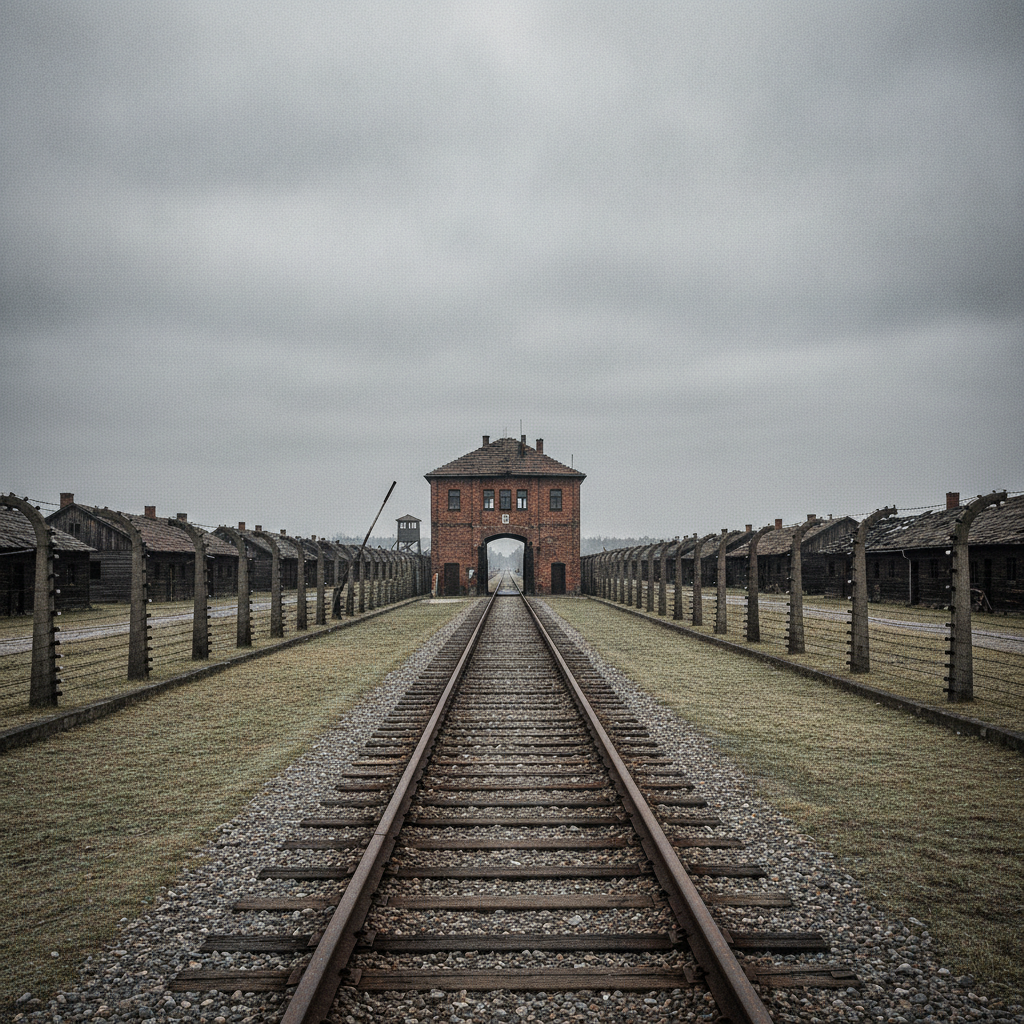
Auschwitz II-Birkenau (the extermination camp 3km from Auschwitz I, the vast 140-hectare site with the iconic Gatehouse of Death, the railway track passing through the arch to the Selection Platform where arriving prisoners were divided into those selected for forced labour and those to be murdered immediately — 70-80 percent of each arriving transport sent directly to the gas chambers — free, accessible from Auschwitz I by shuttle bus every 10 minutes, the guided tour including both sites, self-guided visit possible at any time) is the physical site of 90 percent of all the killings at Auschwitz. The ruins of Crematoria II and III (the gas chamber-crematorium complexes deliberately blown up by the SS before the Soviet liberation in January 1945, the concrete rubble of the gas chambers and the crematoria lying in the field exactly as the explosions left them, the steps descending to the underground undressing room visible in the ruin, the position of the Zyklon B introduction shafts in the ceiling of the gas chamber identifiable in the structure) and the International Monument (the monument at the end of the main camp road, between the ruins of the crematoria, the inscription in 19 languages — the languages of the murdered victims' nationalities — 'Let this place be an eternal cry of despair and warning to humanity').
- 4
The Liberation, the Survivors & Primo Levi
The Soviet liberation of Auschwitz (27 January 1945 — now International Holocaust Remembrance Day, the date chosen by the United Nations in 2005 — the Soviet 60th Army advancing from the east, the SS guards having fled 12 days earlier after marching approximately 60,000 surviving prisoners westward in the Death Marches, 7,000 prisoners too ill to march remaining in the camp when the Soviets arrived, the soldiers finding 7 tonnes of human hair, 348,820 men's suits, 836,255 women's garments, and 38,000 pairs of men's shoes in the storehouses, the sheer material volume the most immediate quantitative expression of the scale of the murder operation) and the survivor testimony tradition (Primo Levi — the Italian Jewish chemist imprisoned at Monowitz-Auschwitz III, author of If This Is a Man and The Truce, the most widely read and considered Holocaust memoir in any language, his testimony the literary context for the Auschwitz visit, the books available in the Auschwitz I museum bookshop in English, Polish, and Italian) frame the visit. The memorial book of the 1.1 million (the Yad Vashem Book of Names, the list of 4.2 million identified Jewish victims of the Holocaust available in the Auschwitz Museum library, the visitors able to search for family names).
- 5
Practical — the 70km Trip from Kraków
Auschwitz from Kraków: bus (the most practical option, the public PKS bus departing from the Kraków main bus station adjacent to the Kraków Główny railway station every 30-60 minutes from 6am, the journey 1.5-2 hours, €3-5 each way, the bus arriving at the Auschwitz I museum directly, the correct option for independent visitors), train (the regional train from Kraków Główny to Oświęcim, 1.5-2 hours, €4-6, the walk from Oświęcim station to Auschwitz I 2km — 25 minutes on foot or €5 taxi), organized tour (the full-day organized tour from Kraków including transport, entry, and guided tour, €40-60 per person, the guided tour particularly valuable for giving the contextual narrative that the museum's self-guided route does not fully provide, dozens of operators at the Main Market Square tourist offices). The timing: arriving at Auschwitz I before 9am (the timed entry system and the tour group management mean that mornings before 10am are significantly less crowded than afternoons, the guided tour beginning at 9am the correct choice for the full-day visit including both sites). The visit requires a full day: 3.5-4 hours minimum for Auschwitz I, 1-2 hours for Birkenau, the shuttle bus between the two sites running every 10 minutes.
- 6
After the Visit — Processing and Context in Kraków
Returning to Kraków after Auschwitz: the standard response to a first visit to Auschwitz-Birkenau is exhaustion and a need for quiet and space before re-engaging with the tourist activity of Kraków. The evening programme that works: the Planty park walk (the quiet gardens encircling the old town, the trees and the absence of market noise, the 4km circuit taking 45-60 minutes at a slow pace), the Galicia Jewish Museum in Kazimierz (Dajwór 18, €10 adults, daily 10am-7pm, the photography exhibition 'Traces of Memory' by Chris Schwartz documenting the surviving physical traces of Jewish Galicia — the Jewish cemeteries, the ruined synagogues, the gravestones reused as building material — the exhibition the most appropriate visual decompression from the Auschwitz experience, the photographs showing what survived rather than only what was destroyed), and the evening at one of the Kazimierz cafe-bars (the Alchemia on Estery Street, the Singer on Estery Street, both open until late, the most appropriate of the Kraków social venues for the reflective conversation that tends to follow a first Auschwitz visit).
Walk this route with audio
Stories play automatically as you reach each stop — no tapping needed.
More in krakow
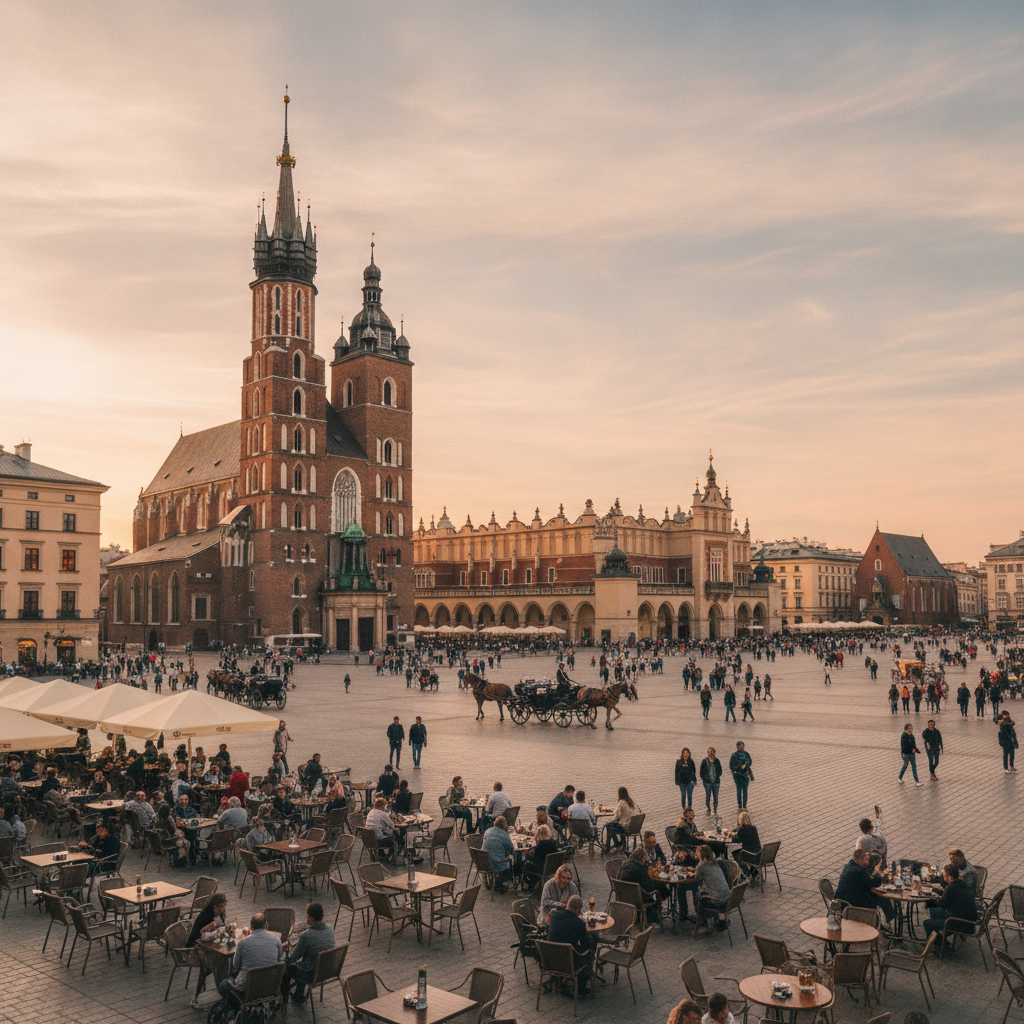
Kraków Old Town — the Main Market Square, St. Mary's Basilica & Wawel Castle
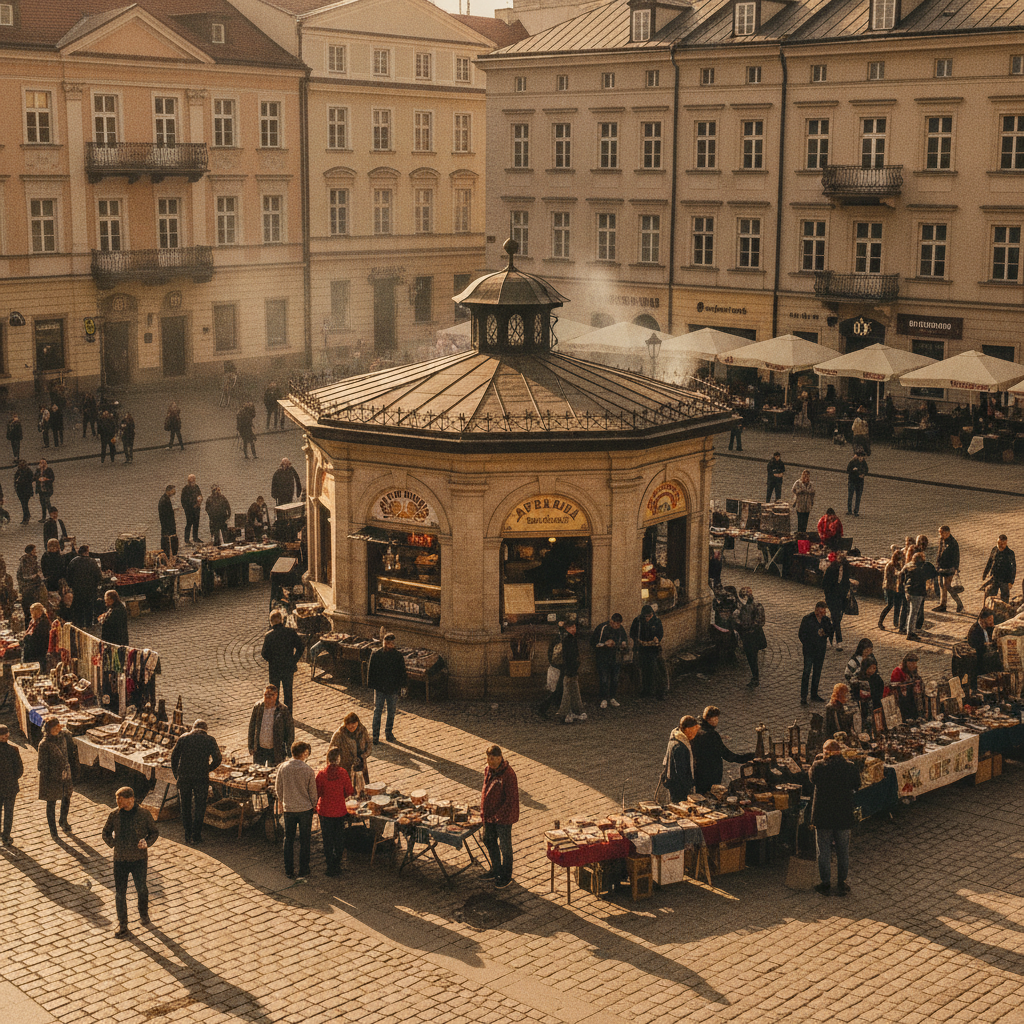
Kazimierz — the Jewish Quarter, Synagogues & the Schindler Factory
Kraków Museums & the Royal Road — the Czartoryski Collection, Lady with an Ermine & National Galleries
Kraków Practical Guide — Seasons, Trams, Nightlife & Getting Around