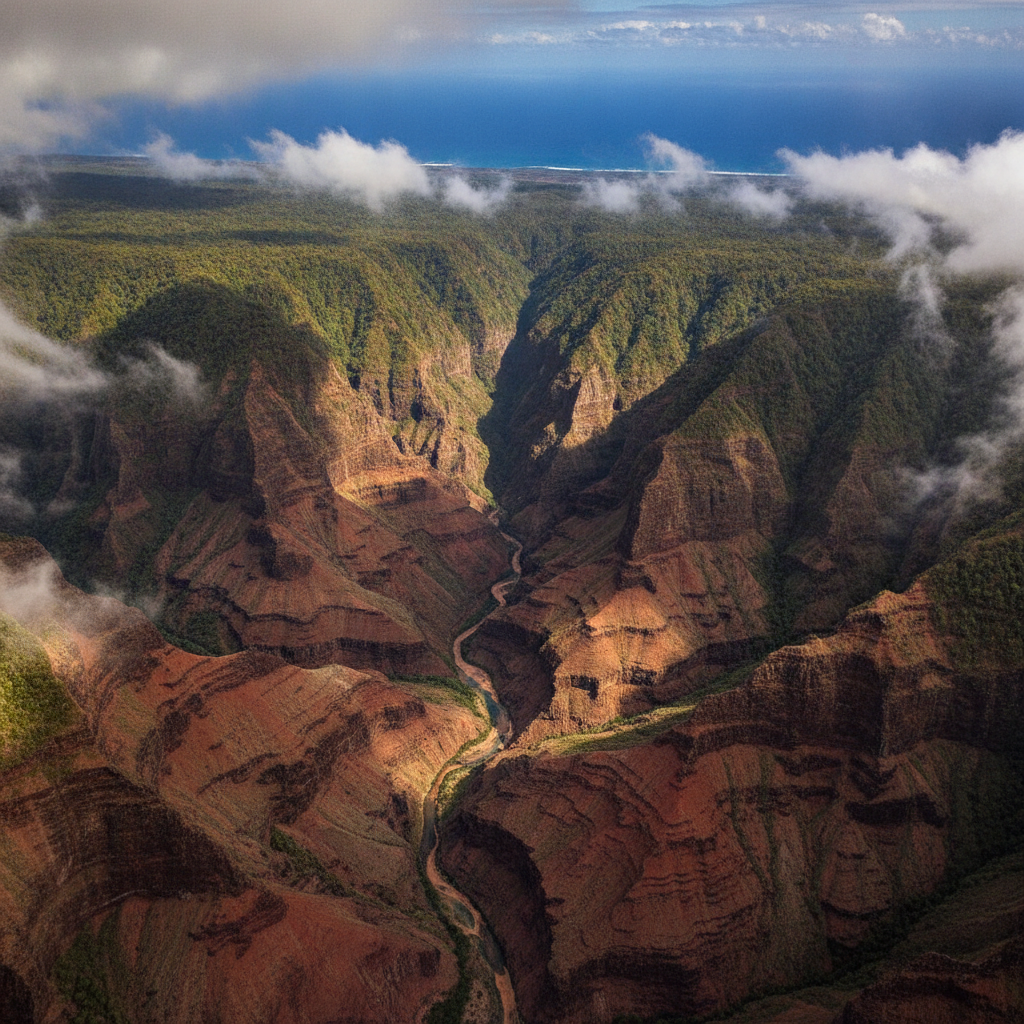
Kauai: Wailua River Sacred Heiau Complex and Fern Grotto, Kilauea Lighthouse Seabird Colony (red-footed boobies, Laysan albatross, frigatebirds), Kokee Trail System and Alakai Swamp (world highest altitude swamp, rare native birds), Allerton and McBryde National Tropical Botanical Gardens (Jurassic Park fig trees), Kauai Coffee Company (largest US estate), and Accommodation Guide Comparing Hawaiian Islands
Kauai in depth: Wailua River (only navigable river in Hawaii, ancient royal heiau complex, Fern Grotto river boat tours), Kilauea Lighthouse Wildlife Refuge (seabird colonies, spinner dolphins, Anini Beach reef), Kokee hiking (Awaawapuhi cliff ridge, Alakai Swamp boardwalk, native honeycreeper birds), Allerton Garden (National Tropical Botanical Garden, Jurassic Park fig trees), Kauai Coffee (largest US coffee estate, 50% of all US coffee production), and island comparison accommodation guide (Poipu vs Princeville vs Hanalei, Kauai vs Maui vs Oahu vs Big Island).
- 1
Wailua River and Fern Grotto - Sacred Ancient Kauai
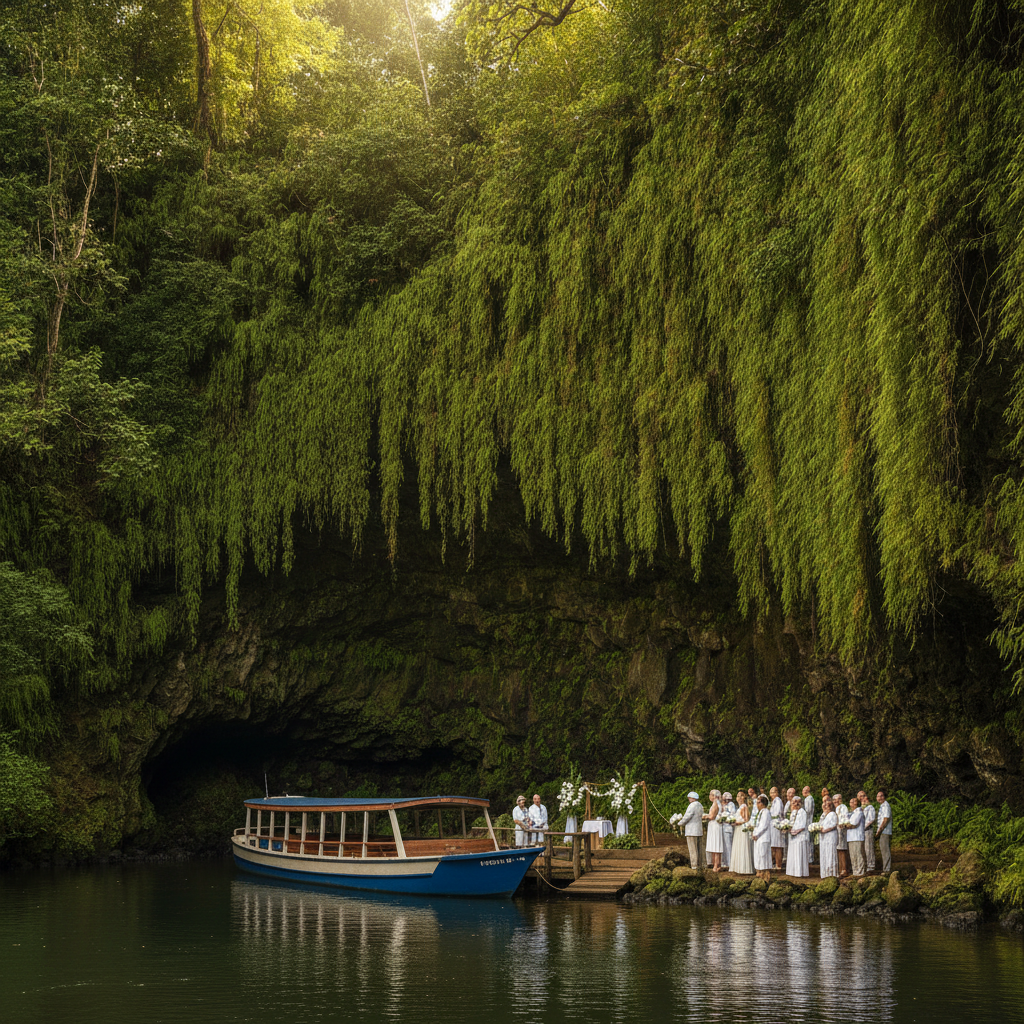
The Wailua River (on the east coast of Kauai, flowing from the slopes of Mount Waialeale to the sea at the Lydgate Beach Park): the only navigable river in Hawaii and a sacred waterway of the ancient Kauai kingdom. The Wailua River Valley (the ahupuaa of Wailua, the stretch of river from the coast to the base of the mountains): the royal center of ancient Kauai, containing the highest concentration of heiau (Hawaiian temple platforms) in all of Hawaii. The major Wailua Valley heiau: Hikina a ka La (the first point of sunrise, a coastal heiau built of river stones at the river mouth, one of the few heiau aligned with the sunrise), Malae Heiau (the largest heiau on Kauai, a massive stone platform above the north bank), Holoholoku Heiau (the royal birthing place, where the chiefesses of the Kauai royal family gave birth to ensure their children were born at the most sacred location on the island), and Poli-ahu Heiau (the massive flat-topped heiau above the north fork of the Wailua River). The Fern Grotto (a lava cave 3 km up the Wailua River from the coast, accessible only by flat-bottomed river boat): a natural lava amphitheater with a ceiling of hanging maiden-hair ferns (Adiantum capillus-veneris), a perennially moist environment created by the dripping water from the fern-covered ceiling. The Smith Family Garden Luau (adjacent to the Smith Boats at the Wailua Marina): one of the most authentic commercial luau experiences on Kauai, in a 30-acre tropical garden setting.
- 2
Kilauea Lighthouse and the North Shore Wildlife
Kilauea Lighthouse and Kilauea Point National Wildlife Refuge (at the northernmost point of Kauai, 50 km north of Lihue on the north coast): the wildlife refuge protecting the seabird colonies of the dramatic headland. The Kilauea Lighthouse (built 1913, the largest clamshell Fresnel lens lighthouse in the world): decommissioned in 1976 and now a landmark of the wildlife refuge. The Kilauea Point seabird colonies: the headland provides nesting habitat for the red-footed booby (the largest red-footed booby colony in the main Hawaiian Islands), the great frigatebird, the white-tailed tropicbird (the koa-e kea), the Laysan albatross (the moli, which nests in large numbers on the Kauai north shore cliffs), and the wedge-tailed shearwater. The spinner dolphin pods (visible from the lighthouse in the mornings): the Kilauea Bay is a regular resting area for spinner dolphin pods (Stenella longirostris, the species famous for aerial spinning leaps) after their nighttime offshore feeding. The Anini Beach (on the north coast east of Kilauea, a 3 km beach protected by the longest continuous fringing reef on Kauai): the calmest and most protected swimming beach on the north coast, and the primary windsurfing and kiteboarding learning location on Kauai. The Kalihiwai Valley and Kilauea town: Kilauea has a small historic plantation town and the Kong Lung Historic Market Center (a restored 1942 plantation-era stone building with galleries and boutiques).
- 3
Kauai Hiking Trails and the Kokee Trail System
Kauai hiking: the most diverse trail system in Hawaii, ranging from the extreme Kalalau Trail (see R1) to gentle botanical walks. The Kokee State Park trail system (above the Waimea Canyon, at 1,100-1,200 m elevation): 45 km of trails through the native Hawaiian highland forest. The Awaawapuhi Trail (6.4 km one-way, descending 620 m): the most dramatic viewpoint trail in Kokee, ending at a knife-edge ridge overlooking the Awaawapuhi and Nualolo valleys on the Na Pali Coast 900 m below. The Pihea Trail (from the Kalalau Valley Lookout parking area): following the ridge above the Kalalau Valley for 3 km before descending into the Alakai Swamp. The Alakai Swamp Trail (from the Pihea trailhead or from the Mohihi Camp 10 Road): the elevated boardwalk trail through the Alakai Wilderness Preserve, the largest high-altitude swamp in the world, where the cloud forest vegetation includes rare native plants found nowhere else on earth. The native birds of the Alakai Swamp: the puaiohi (the small Kauai thrush, fewer than 500 individuals remaining), the akeke-e (the Kauai akepa, a small honeycreeper found only in the Alakai), the anianiau (the small Kauai amakihi), and if very lucky the o-o-aa (almost certainly extinct). The Nounou Trail (the Sleeping Giant Trail): the 2.4 km ridge hike from Wailua to the spine of the Nounou Mountain (the ridge that resembles a sleeping giant from the highway), with views over the Wailua River and the east coast.
- 4
Allerton and McBryde Gardens and South Shore Nature
The Allerton Garden and McBryde Garden (National Tropical Botanical Garden, at the Lawai Valley on the south coast of Kauai, 3 km west of Poipu): the two side-by-side gardens of the National Tropical Botanical Garden, the only federally chartered botanical garden in the United States. The McBryde Garden (the primary scientific garden, 81 acres): the conservation garden with the largest collection of native Hawaiian plant species (including the Hawaii state flower, the pua-aloalo, the yellow hibiscus, and multiple endangered species). The Allerton Garden (the formal garden, 100 acres, accessible only by guided tour): the private garden developed by Robert Allerton and John Gregg Allerton in the 1930s-1950s, with a series of outdoor rooms, fountains, and garden sculptures in a formal European style set within the tropical Lawai Valley. The Moreton Bay fig trees in the Allerton Garden (the iconic trees with the buttressed root systems): featured in the film Jurassic Park (1993) as the tree root systems in which the velociraptors were trapped. The Lawai Beach (the small beach at the mouth of the Lawai Valley, adjacent to the garden): the site of the Allerton family private beach house. The Glass Beach (at Port Allen, west of Poipu): the beach where the wave action has rounded old glass bottles and pottery fragments into smooth sea glass, creating a colorful beach surface. The Hanapepe Town (between Port Allen and Waimea): the small arts community with the Friday Night Art Walk, the Hanapepe bridge (the swinging footbridge), and the Taro Ko Chips Factory (the hand-made taro chip operation).
- 5
Kauai Coffee and Agricultural Heritage
Kauai Coffee Company (at Eleele, on the south coast between Hanapepe and Kalaheo): the largest coffee estate in the United States, with 3,100 acres of coffee trees covering the slopes above the south Kauai coastline, producing approximately 3.5 million kg of green coffee per year. Kauai Coffee produces approximately 50% of all the coffee grown in the United States (Hawaii is the only state that grows coffee commercially). The coffee varieties grown on Kauai: Yellow Catuai (a Brazilian-Brazilian hybrid), Blue Mountain (the Jamaican variety, grown at the higher elevations), Typica, and Mundo Novo. The estate tour (free self-guided walking tour with a tasting): the primary agricultural visitor experience on the south shore. Coffee history in Hawaii: coffee was introduced to Hawaii by Don Francisco de Paula Marin in 1817, and by the Brazilian variety introduced to Kona on the Big Island in the 1820s; the Kona coffee district (the volcanic slopes of Mauna Loa and Hualalai on the Big Island) became the most famous Hawaiian coffee origin in the 19th century. The Kona coffee belt (the approximately 50 sq km area on the western slope of Mauna Loa between 150 m and 800 m elevation, with the mineral-rich volcanic soil, afternoon cloud cover, and ideal rainfall): still the most prestigious Hawaiian coffee origin, with the Kona Extra Fancy designation. Kauai also grows taro (the traditional Hawaiian staple crop), guava (used for Guava Kai guava products), papaya, and macadamia nuts.
- 6
Kauai Accommodation and Comparing the Hawaiian Islands
Kauai accommodation and the island comparison: Kauai has no major city and no large convention hotels; the largest hotel on the island (the Grand Hyatt Kauai Resort and Spa at Poipu, 602 rooms) would be a medium-size property in Waikiki. The accommodation zones: Poipu (the south shore resort zone): the sunniest area, closest to the Waimea Canyon, with the largest concentration of hotels and vacation rentals; Princeville (the planned resort community on the north shore plateau above Hanalei Bay): with the St. Regis Princeville (the most upscale hotel on Kauai, with the dramatic views over Hanalei Bay from the lobby), the Westin Princeville, and the Princeville Ranch activities. The vacation rental market on Kauai: Kauai has a very large vacation rental stock relative to its population, particularly on the north shore (many Hanalei properties are vacation rentals). Kauai county has implemented strict vacation rental regulations to try to limit the conversion of residential properties to short-term rentals. Comparing the Hawaiian Islands for visitors: Oahu (the urban island with Waikiki and Pearl Harbor, the most infrastructure, the highest visitor numbers); Maui (the resort island, between urban Oahu and remote Kauai, with the best range of beaches and activities); Kauai (the wild island, the least developed, the most dramatic scenery, but the most limited infrastructure and the highest risk of weather delay on the north shore); Big Island of Hawaii (the geology island, the most diverse landscape, the active volcanoes, the least beach infrastructure but the most unique natural experiences).
Walk this route with audio
Stories play automatically as you reach each stop — no tapping needed.
More in kauai
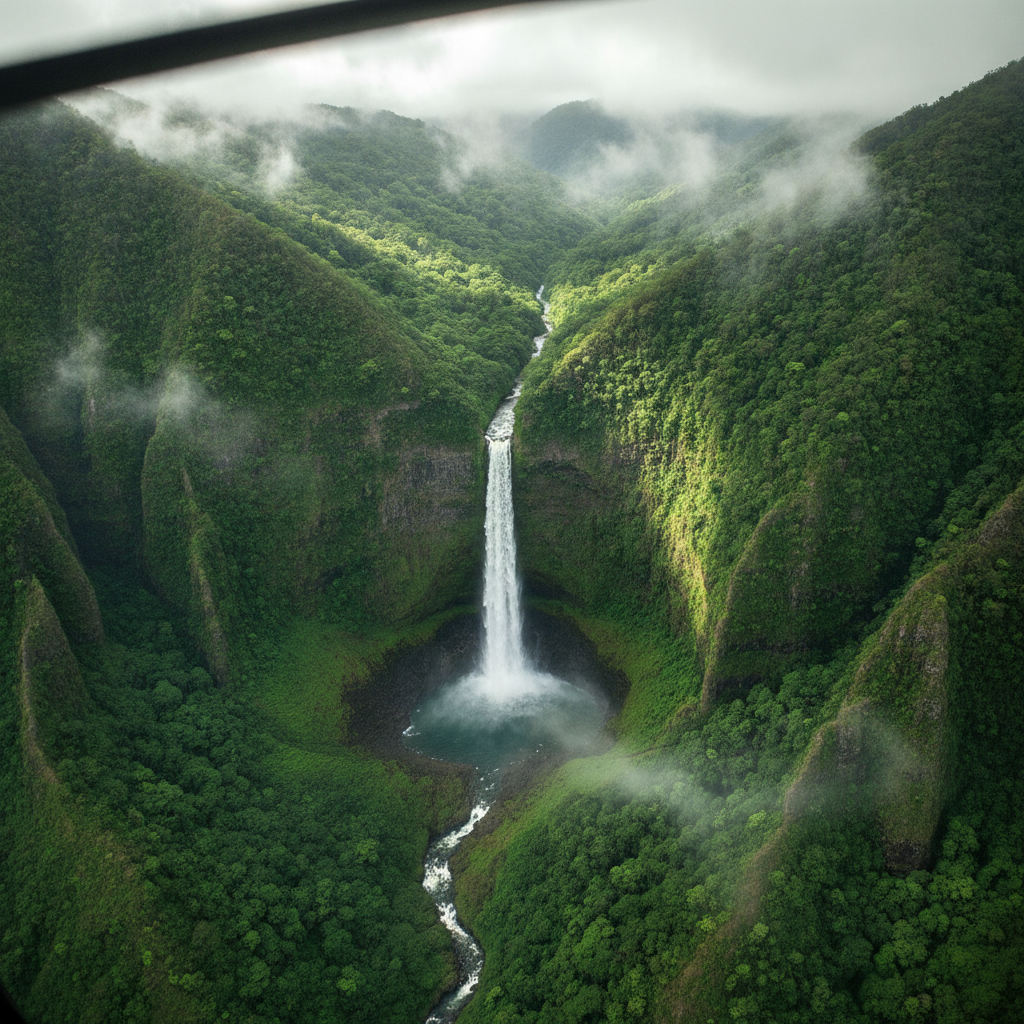
Kauai: No Mongooses So the Birds Survived, Polihale Where Souls Depart and the Island That Resisted Kamehameha
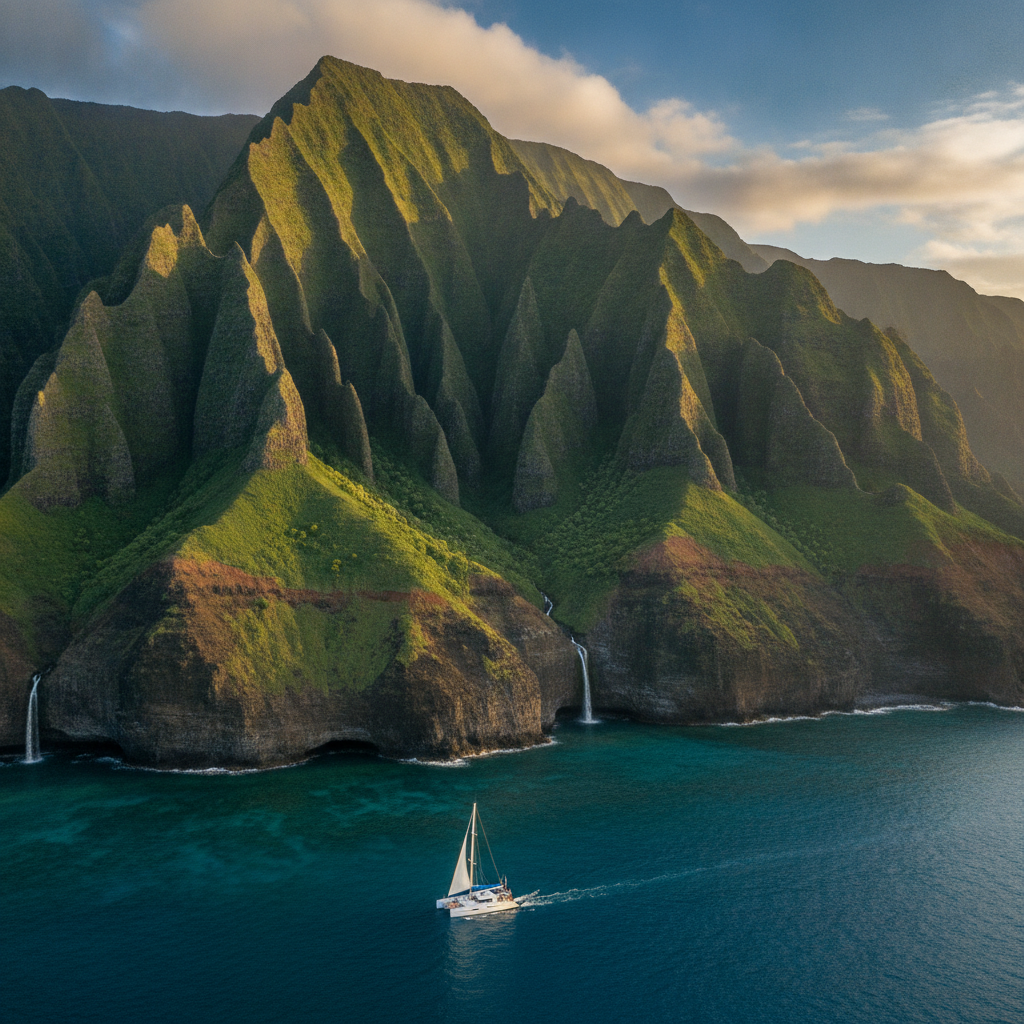
Kauai: Na Pali Coast Sea Cliffs and Kalalau Trail (18km hiking permit), Waimea Canyon (Grand Canyon of the Pacific, 1097m deep), Hanalei Bay and Taro Valley (Jurassic Park locations, Tunnels Beach snorkeling), Poipu South Shore (Hawaiian monk seals, bodysurfing, Koloa rum distillery), and Film History (Raiders of the Lost Ark, Pirates of Caribbean, Jurassic Park) with Practical Guide
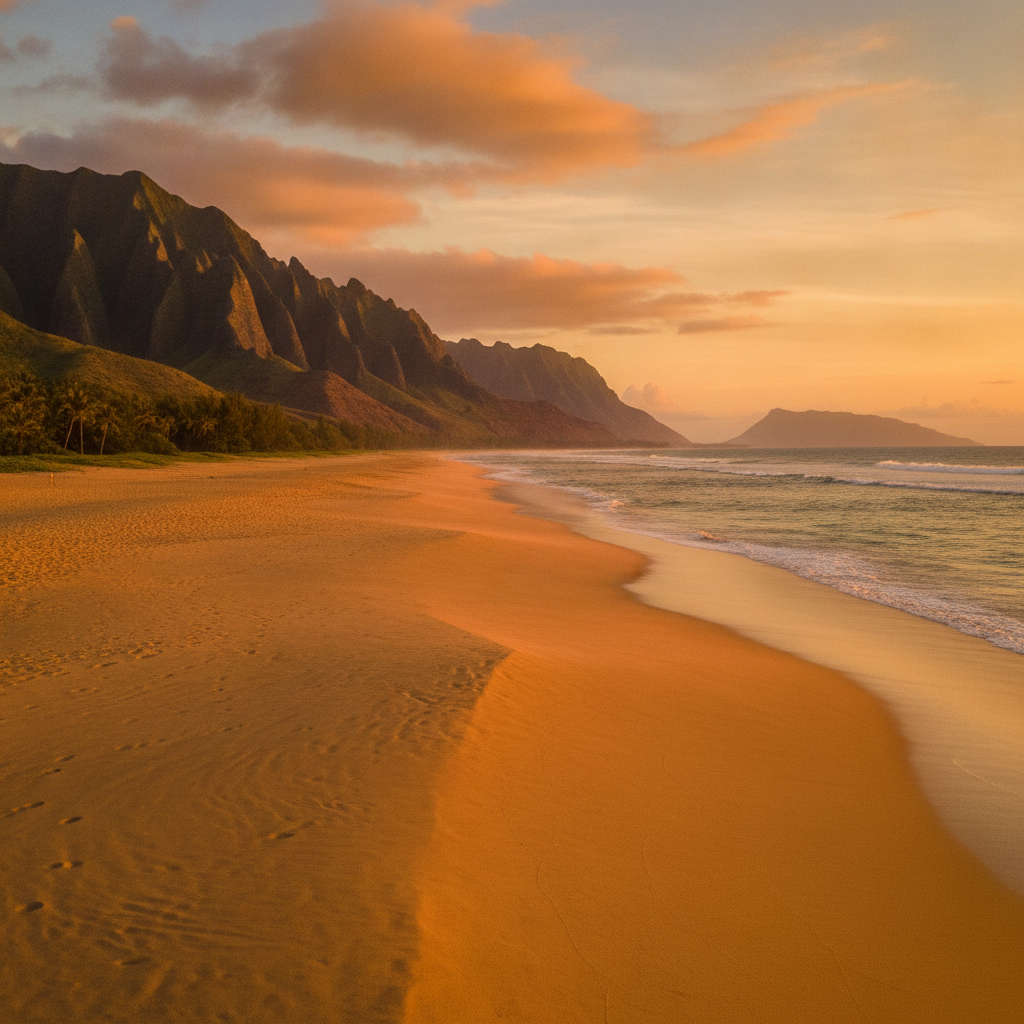
Kauai: Polihale Remote Beach (27km sand, Niihau Forbidden Island view), Russian Fort Elizabeth and Cook First Landing (Waimea 1778), Kauai Ocean Activities (Tunnels snorkeling, Uluwehi Secret Falls kayak, Na Pali summer kayak), Menehune Legend and Native Wildlife (Hawaiian waterbirds, Wailua fish pond), Kauai Waterfalls (Wailua Falls, Hanakapiai 120m, Jurassic Park Manawaiopuna), and Seasons Guide (Hurricane Iniki 1992, best times for north versus south shore)
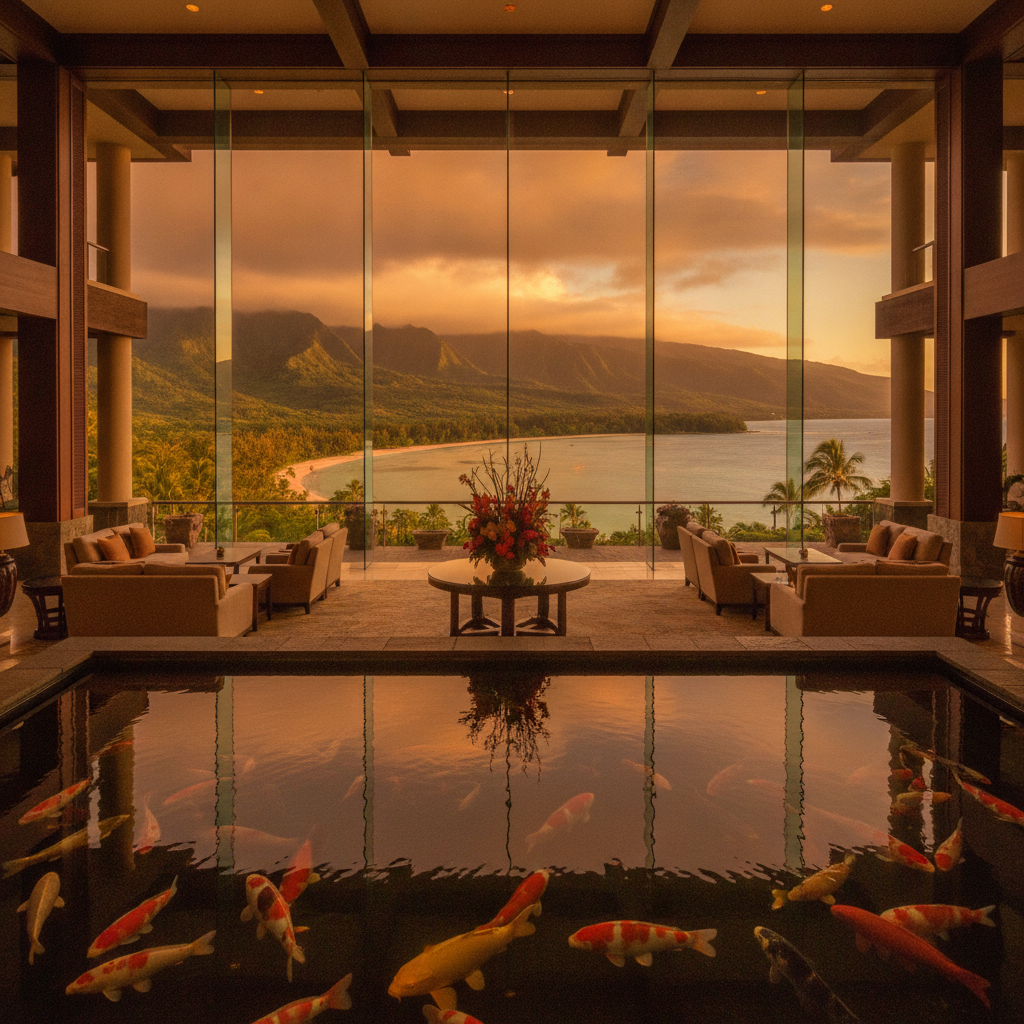
Kauai: Princeville St. Regis Resort (most dramatic lobby view in Hawaii), Niihau Forbidden Island and Rare Shell Lei Tradition, Kauai Plantation Era Ethnic Diversity (Portuguese, Japanese, Filipino, Korean immigrants), Hanapepe Friday Art Walk, Dark Sky Stargazing (Kalalau Lookout, Polihale, Polynesian star navigation), and Hawaiian Islands Visitor Decision Guide (Kauai vs Maui vs Oahu vs Big Island)