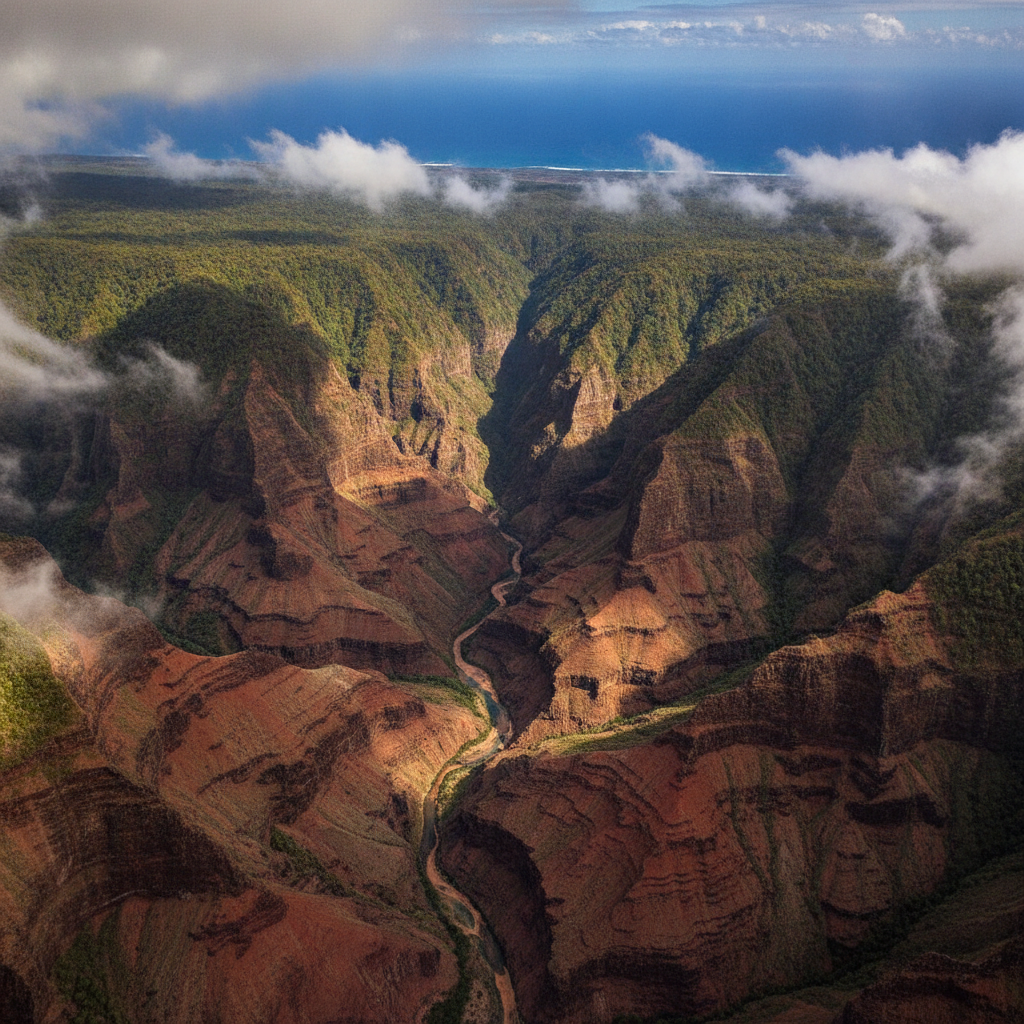
Kauai: Polihale Remote Beach (27km sand, Niihau Forbidden Island view), Russian Fort Elizabeth and Cook First Landing (Waimea 1778), Kauai Ocean Activities (Tunnels snorkeling, Uluwehi Secret Falls kayak, Na Pali summer kayak), Menehune Legend and Native Wildlife (Hawaiian waterbirds, Wailua fish pond), Kauai Waterfalls (Wailua Falls, Hanakapiai 120m, Jurassic Park Manawaiopuna), and Seasons Guide (Hurricane Iniki 1992, best times for north versus south shore)
Kauai wild west and practical: Polihale remote beach (27km, dangerous shore break, Niihau island view), Russian Fort Elizabeth 1816 (unique Russian-Hawaiian episode), ocean activities (Tunnels and Ke-e snorkeling, Wailua kayak to Secret Falls, Na Pali summer kayak), menehune legend (Alekoko fish pond, Menehune Ditch, Hawaiian waterbirds), Kauai waterfalls (Wailua Falls Fantasy Island credits, Hanakapiai 120m, Jurassic Park helicopter falls), and seasonal guide (wet north shore, dry south shore, Hurricane Iniki 1992 Category 4, best times to visit).
- 1
Polihale State Park and the Remote West Coast
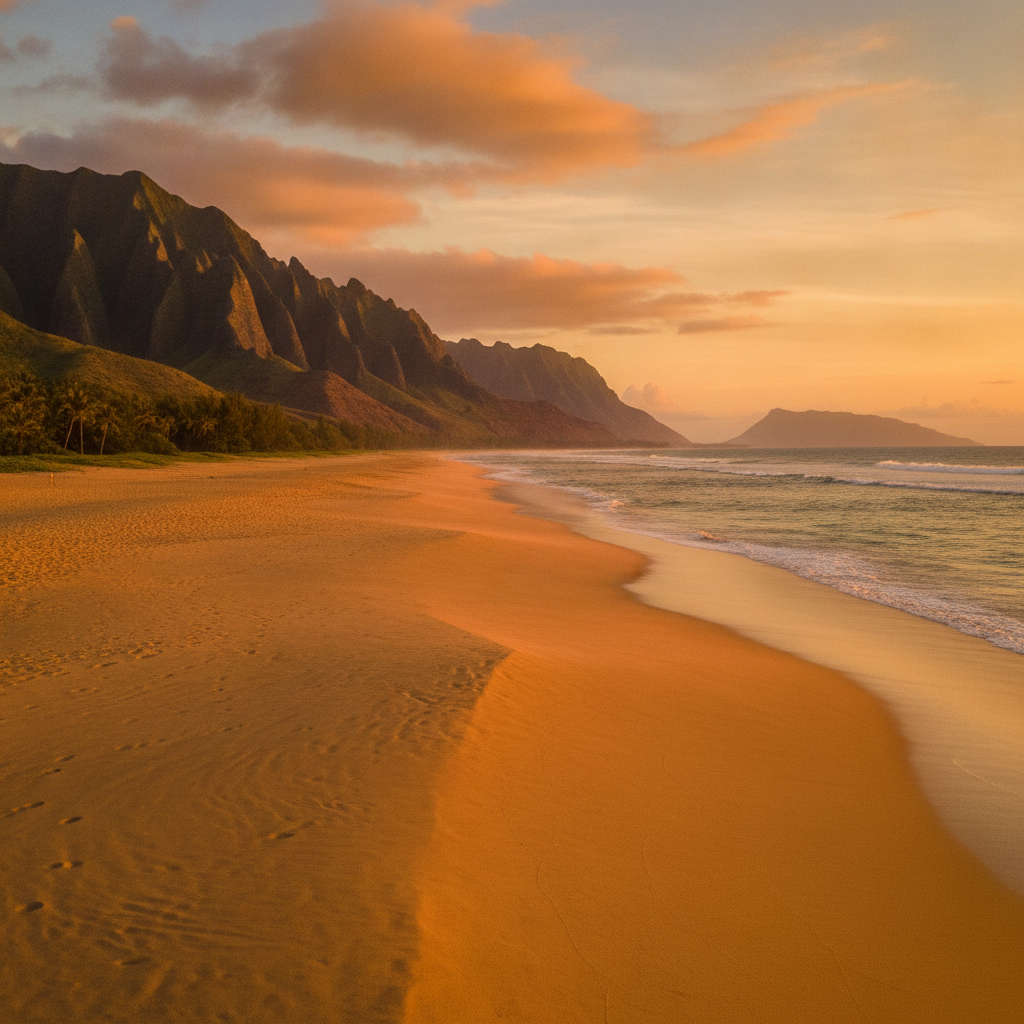
Polihale State Park (at the end of the dirt road beyond Waimea, on the west coast of Kauai): the most remote and wild beach on Kauai, a 27 km stretch of wide golden sand at the base of the Na Pali cliffs. Polihale is the longest beach in Hawaii and one of the most isolated, reached after 5 km of rough dirt road (4WD recommended) through sugar cane fields and sand dunes. The beach itself is dramatic: the wide sand, the powerful shore break (swimming is dangerous at Polihale due to the strong shore break and currents, especially in the winter months), the view of the Na Pali cliffs at the north end, and the view of Niihau island across the Kaulakahi Channel to the west. Niihau (the Forbidden Island, 24 km west of Kauai): the privately owned island (purchased by Elizabeth Sinclair from King Kamehameha V in 1864 for USD 10,000 in gold, and still owned by the Robinson family descendants): the only island in Hawaii where Hawaiian (olelo Hawaii) is the primary language of daily life, with approximately 70-130 Native Hawaiian residents. Access to Niihau is restricted to the Robinson family, residents, and select permitted activities (the Niihau Helicopters shell lei tours and hunting safaris). The Barking Sands (the official name of the Polihale Beach area, now part of the Pacific Missile Range Facility): the sand produces a barking sound when walked on in dry conditions, due to the hollowness of the sand grains. The Pacific Missile Range Facility (PMRF, adjacent to Polihale): the US Navy installation that monitors Pacific missile and aircraft testing.
- 2
Russian Fort Elizabeth and Kauai Early History
Russian Fort Elizabeth State Historical Park (at the mouth of the Waimea River, in Waimea town on the south coast of Kauai): the ruins of a fortification built in 1816-1817 by the Russian-American Company agent Georg Anton Schaeffer, on behalf of the Russian Empire, under an agreement with Kauai King Kaumualii. The Russian fort history: Georg Schaeffer arrived in Kauai in 1815 with the mission of recovering a Russian cargo ship that had been wrecked and its cargo seized by King Kaumualii. He negotiated an alliance with the king that included building the fort; the fort was named after Empress Elizabeth of Russia. The Russian presence in Kauai was short-lived (Schaeffer was expelled by Kamehameha I in 1817) but remains a unique episode in Hawaiian history. Waimea town (the first place on Kauai visited by Captain Cook on 19 January 1778): the site of Cook first landing in Hawaii. The Waimea Valley: the wide valley behind Waimea town, through which the Waimea River descends from the Waimea Canyon. The Grove Farm Homestead Museum (at Puhi, east of Lihue): the most intact example of a 19th century sugar plantation homestead in Hawaii, preserving the main house, cookhouse, and outbuildings of the Grove Farm plantation (established 1864 by George Wilcox). The Kauai Museum (at Lihue): the primary museum of Kauai history, with exhibits on the natural history, the ancient Hawaiian culture, the plantation era, and the Russian fort episode.
- 3
Kauai Snorkeling Surfing and Ocean Adventures
Kauai ocean activities: the premier snorkeling sites on Kauai are at Tunnels Beach (Makua Beach, at Haena on the north shore, the most diverse reef with frequent sea turtle, reef shark, and spinner dolphin sightings), Ke-e Beach (at the end of the north shore road, the small beach at the base of the Na Pali cliff), Poipu Beach Park (the east reef section, accessible from the beach), and Anini Beach (the long reef on the north shore east of Kilauea, the most protected snorkeling in rough weather). The surf breaks on Kauai: Hanalei Bay (the gentle inside break in summer, the expert waves in the bay on northwest swells in winter); Pakala Village (Infinities, on the south coast west of Poipu): one of the longest left-hand point breaks in Hawaii, surfing a slow long wall for up to 400 m in south swells. The Tunnels reef outer break (Makua): an advanced reef break on the outer edge of the Tunnels reef, with the powerful right-hand tubes in northwest swells. Stand-up paddleboarding on the Wailua River: the most popular SUP tour on Kauai, paddling up the Wailua River through the dense riverbank vegetation to the Uluwehi Falls (Secret Falls, a 30 m waterfall accessible only from the river). The Hanalei Bay SUP flat water session (in summer when the bay is flat): Hanalei Bay Surf Company and the Kayak Kauai provide equipment. Kayak tours on the Na Pali Coast: the summer kayak tour from Ke-e to Polihale (the 27 km Na Pali coast in one day, expert kayakers only, requiring a permit).
- 4
Kauai Native Culture Menehune and Hawaiian Mythology
Native Hawaiian culture on Kauai and the menehune legend: Kauai has the strongest surviving tradition of the menehune, the legendary small people of Hawaiian mythology said to have inhabited the Hawaiian Islands before the arrival of the Polynesian settlers. The menehune are described in Hawaiian tradition as a skilled and industrious people who performed remarkable feats of construction (the Menehune Fish Pond at Niumalu, the Menehune Ditch at Waimea) in a single night. The Menehune Fish Pond (Alekoko Fish Pond, in the Hule-ia Stream valley south of Lihue): a large rock-walled fish pond (a loko ia, the Hawaiian fish pond enclosed by a stone wall with sluice gates to allow juvenile fish in and trap adult fish). The Hule-ia National Wildlife Refuge (the stream valley adjacent to the fish pond): the primary habitat of the Hawaiian stilt (ae-o), the Hawaiian duck (koloa), the Hawaiian coot (alae keokeo), and the Hawaiian moorhen (alae ula). These four native waterbirds were nearly extinct by the mid-20th century due to habitat loss; all are partially recovered through refuge protection. The Menehune Ditch (Kiki a Ola, at Waimea): a section of a pre-Western Hawaiian irrigation ditch built in an unusual cut-stone block masonry style (unlike the typical Hawaiian stacked stone construction), sometimes cited as evidence of non-Polynesian or pre-Polynesian construction in Hawaii. The Kauai oral history traditions: the Kumulipo (the Hawaiian creation chant, the cosmological account of the Hawaiian universe from the first night through the emergence of human beings) was first recorded in writing by King Kalakaua in the 1880s.
- 5
Kauai Waterfalls and Scenic Drives
Kauai waterfalls and scenic drives: Kauai has the highest density of waterfalls of any of the Hawaiian islands, due to the exceptional rainfall of the Mount Waialeale summit area. The Wailua Falls (on the east coast, 8 km north of Lihue, visible from a roadside lookout): a 27 m double waterfall on the South Fork of the Wailua River, one of the most photographed waterfalls in Hawaii, featured in the opening credits of the TV series Fantasy Island (1977-1984). The Uluwehi Falls (Secret Falls, 2 km up the North Fork of the Wailua River from the kayak launch at the Wailua Marina): the 30 m waterfall accessible only by a 2 km jungle hike from the river landing, the destination of the most popular kayak tour on Kauai. The Hanakapiai Falls (at the end of the 4 km Hanakapiai Valley trail, off the Kalalau Trail): the 120 m waterfall at the back of the Hanakapiai Valley, regarded as one of the most beautiful and remote waterfalls in Hawaii. The Manawaiopuna Falls (the Jurassic Park helicopter falls in the 1993 film): accessible only by helicopter (Blue Hawaiian Helicopters includes a landing at the Manawaiopuna Falls in their Kauai waterfall tour). The Kokee Road (the scenic drive from Waimea up to the Waimea Canyon Lookout and Kokee State Park): one of the most scenic mountain roads in the Pacific, passing through eucalyptus forests and native ohia stands before reaching the canyon overlooks at 1,000-1,200 m elevation. The Hana Road equivalent on Kauai: the north shore drive from Lihue to the Ke-e Beach road end, approximately 56 km of increasingly narrow and dramatic coastal road.
- 6
Kauai Weather Seasons and Best Time to Visit
Kauai weather and the best time to visit: Kauai receives more rain than the other main Hawaiian islands due to its high central peaks and its position as the northernmost main island (most exposed to the north Pacific weather systems). The wet season on the north shore and interior (October-April): the north shore of Kauai (Hanalei, Princeville, Ke-e) is frequently overcast and rainy in winter; the Na Pali Coast boat tours are cancelled on most winter days due to rough north seas. The dry season on the south shore (year-round): Poipu receives 500-700 mm of rain per year and is largely immune to the north shore rain patterns. Hurricane season (June-November): Kauai was directly hit by Hurricane Iniki on 11 September 1992, the most powerful hurricane to strike Hawaii in recorded history (Category 4 at landfall, with wind gusts to 320 km/h); Iniki killed 6 people and caused USD 1.8 billion in damage. The film Jurassic Park (1993) was being filmed on Kauai when Iniki struck; Director Steven Spielberg and the cast sheltered in the Westin Kauai hotel (now the Grand Hyatt Kauai). The best time to visit Kauai: for north shore activities (Kalalau Trail, Na Pali boat tours, Hanalei Bay): May-September (the calm summer seas and driest north shore weather). For south shore activities (Poipu, Waimea Canyon): year-round. For whale watching: December-April (the humpback season). The shoulder seasons (April-May, September-October): less crowded and lower prices than the summer and winter peaks.
Walk this route with audio
Stories play automatically as you reach each stop — no tapping needed.
More in kauai
Kauai: No Mongooses So the Birds Survived, Polihale Where Souls Depart and the Island That Resisted Kamehameha
Kauai: Na Pali Coast Sea Cliffs and Kalalau Trail (18km hiking permit), Waimea Canyon (Grand Canyon of the Pacific, 1097m deep), Hanalei Bay and Taro Valley (Jurassic Park locations, Tunnels Beach snorkeling), Poipu South Shore (Hawaiian monk seals, bodysurfing, Koloa rum distillery), and Film History (Raiders of the Lost Ark, Pirates of Caribbean, Jurassic Park) with Practical Guide
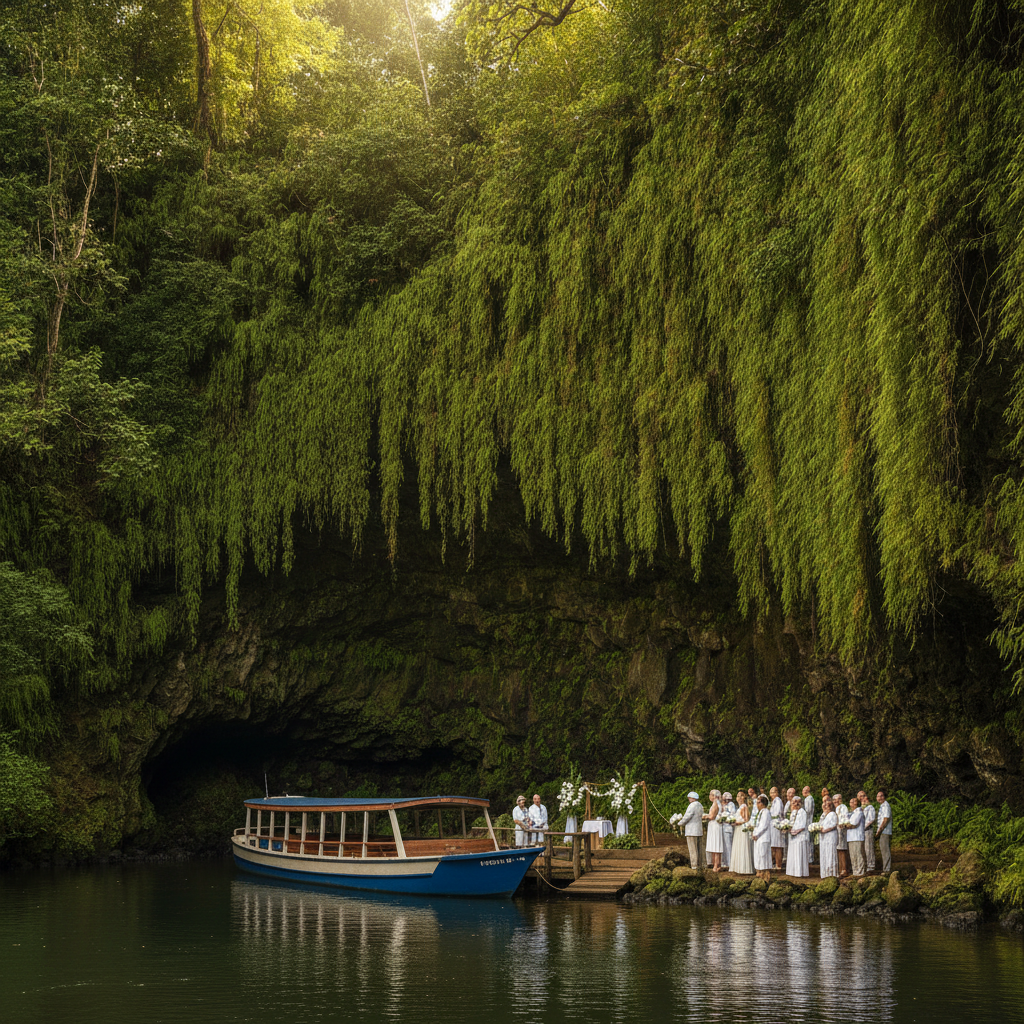
Kauai: Wailua River Sacred Heiau Complex and Fern Grotto, Kilauea Lighthouse Seabird Colony (red-footed boobies, Laysan albatross, frigatebirds), Kokee Trail System and Alakai Swamp (world highest altitude swamp, rare native birds), Allerton and McBryde National Tropical Botanical Gardens (Jurassic Park fig trees), Kauai Coffee Company (largest US estate), and Accommodation Guide Comparing Hawaiian Islands
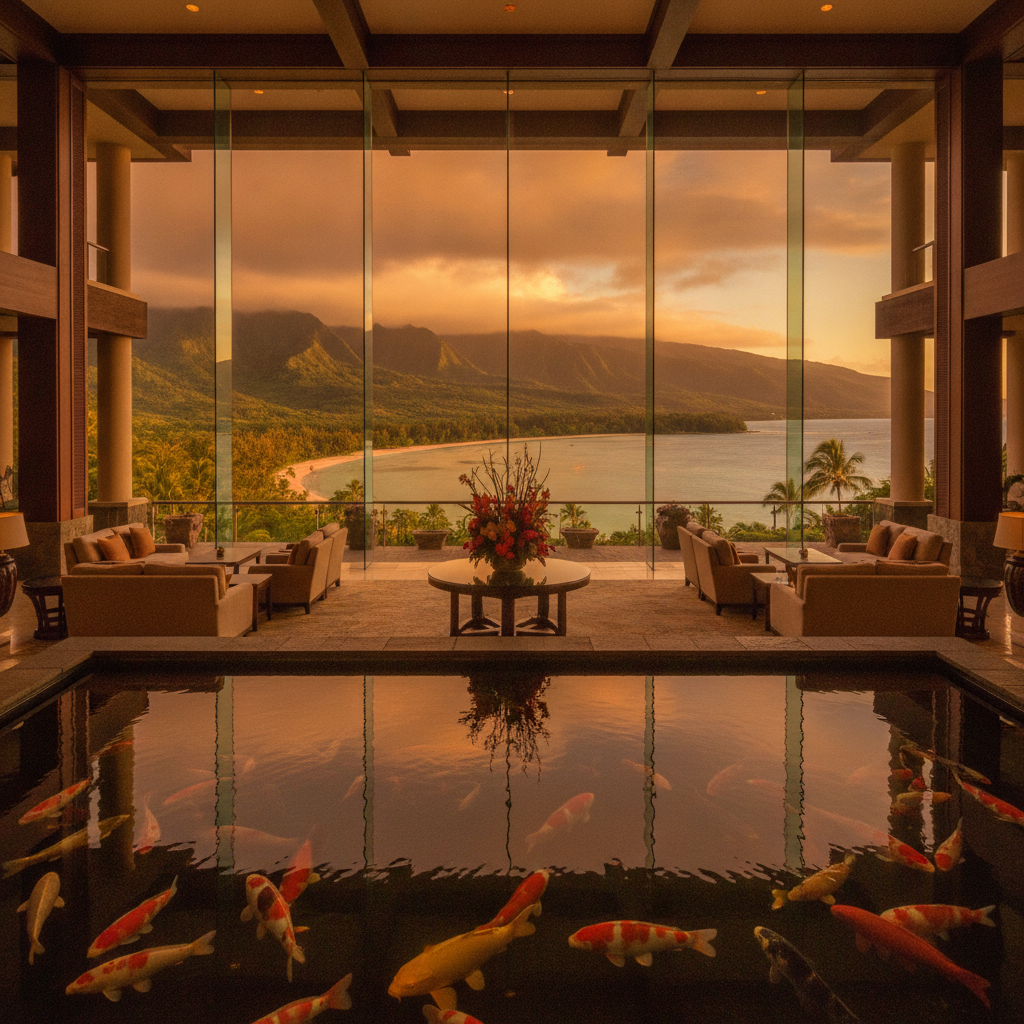
Kauai: Princeville St. Regis Resort (most dramatic lobby view in Hawaii), Niihau Forbidden Island and Rare Shell Lei Tradition, Kauai Plantation Era Ethnic Diversity (Portuguese, Japanese, Filipino, Korean immigrants), Hanapepe Friday Art Walk, Dark Sky Stargazing (Kalalau Lookout, Polihale, Polynesian star navigation), and Hawaiian Islands Visitor Decision Guide (Kauai vs Maui vs Oahu vs Big Island)