Kansas City R4-R6: West Bottoms (stockyards 400 acres 1917 hotel bank post office, First Weekend antique market largest Midwest monthly, American Royal Livestock largest combined livestock horse show rodeo world, 1993 flood 4m underwater, West Bottoms beef culture direct legacy), Kauffman (Marion Labs USD 5,000 basement 1950 to USD 6.5B 1989, Royals USD 5.25M 1968 now USD 1.8B, Kauffman Foundation USD 3.5B largest entrepreneurship focus US, Sprint founded Abilene 1899 T-Mobile 2020, Cerner 1979 Oracle USD 28.3B 2022), Civil rights (Troost Wall most persistent racial boundary US history, Jenkins v Missouri 1977-2011 longest desegregation case USD 2B 12 years considered failed, Bruce Watkins Cultural Heritage Center, 1968 uprising 6 killed after King assassination), Parks (Swope Park 1769 acres zoo 1700 animals, Loose Park Battle of Westport October 23 1864 29,000 vs 8500 largest Civil War battle west Mississippi, tallgrass prairie less than 4% original remains), tech (Google Fiber 2012 first gigabit residential US USD 300M economic impact, 500+ tech companies AgTech health IT, Hallmark since 1910 largest greeting cards world, H&R Block 1955 brothers Bloch), Identity (KCK vs KCMO separate states governments, 39th Street 3am vs 2am bar migration, Sporting KC Children's Mercy Park 2011, Taylor Swift Travis Kelce 2023 USD 100-200M economic impact).
Kansas City R4-R6: West Bottoms (stockyards 400 acres peak 1917, First Weekend antique market largest Midwest monthly, American Royal largest livestock horse rodeo, 1993 flood 4m, beef culture legacy), Kauffman (Marion Labs USD 5,000 1950 to USD 6.5B 1989, Royals USD 5.25M now USD 1.8B, Foundation USD 3.5B largest entrepreneurship US, Sprint Abilene 1899 T-Mobile 2020, Cerner 1979 Oracle USD 28.3B 2022), civil rights (Troost Wall most persistent racial boundary US history, Jenkins v Missouri 1977-2011 longest desegregation USD 2B considered failed, 1968 uprising 6 killed), parks (Swope 1769 acres zoo 1700 animals, Loose Park Battle Westport October 23 1864 largest Civil War battle west Mississippi, tallgrass prairie less than 4%), tech (Google Fiber 2012 first gigabit US USD 300M, 500+ companies, Hallmark 1910 largest greeting cards, H&R Block 1955), identity (KCK vs KCMO separate states, 39th Street 3am vs 2am bar migration, Sporting KC MLS 2000 2013 cups, Taylor Swift Travis Kelce 2023 USD 100-200M impact).
- 1
Kansas City and the West Bottoms - Industrial History
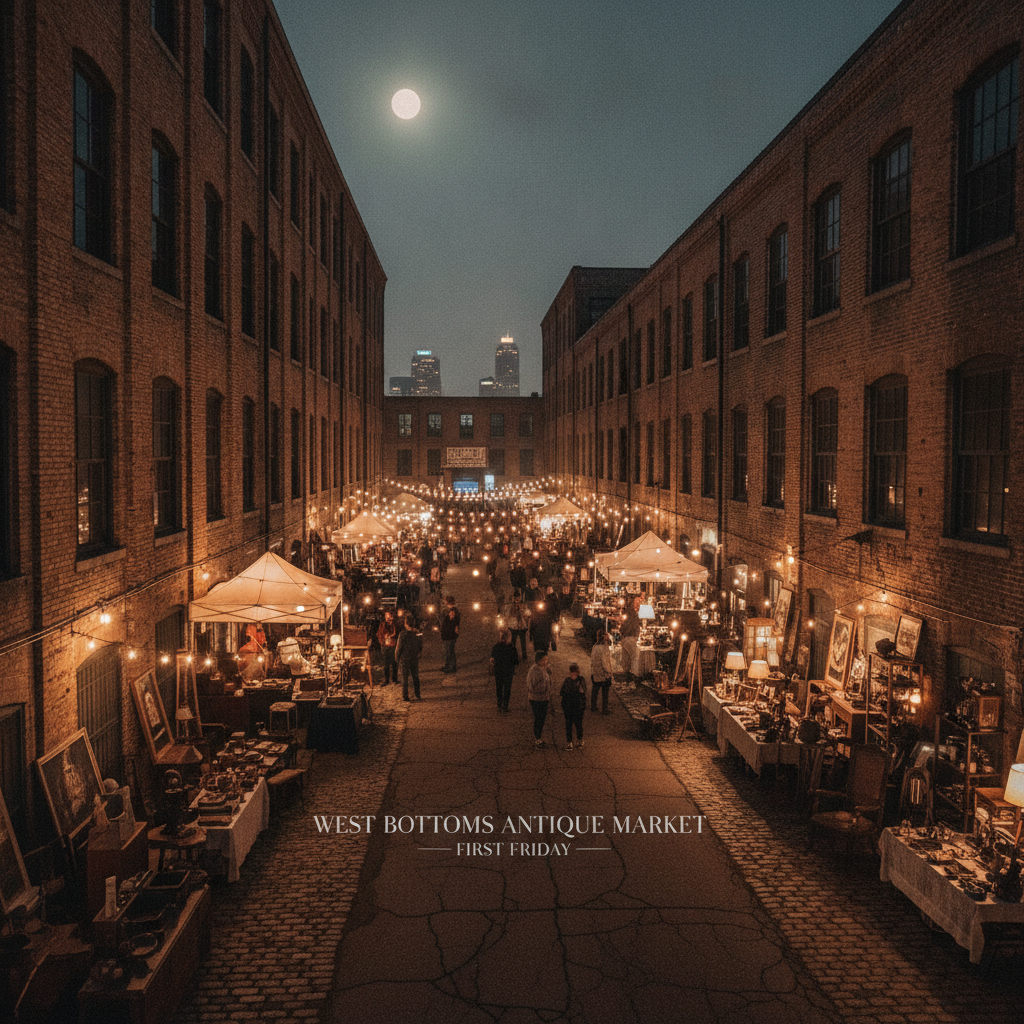
The West Bottoms (the lowland industrial neighborhood at the confluence of the Missouri and Kansas Rivers, immediately west of downtown Kansas City): the oldest industrial district in Kansas City, where the stockyards, meatpacking plants, flour mills, and rail yards that made Kansas City one of the most important industrial cities in the American Midwest were concentrated from the 1860s to the 1950s. The West Bottoms today: after decades of decline following the closure of the stockyards (1991) and the devastating 1993 flood that inundated the entire West Bottoms neighborhood under 4 meters of water, the district has been partially revived as an antique and flea market destination. The First Weekend antique shows: on the first weekend of each month, the empty industrial warehouses of the West Bottoms host one of the largest antique and collectible markets in the Midwest, drawing thousands of buyers from across the region. The Kansas City Stockyards (Kansas City, Kansas): the stockyards, at their peak in 1917, occupied approximately 400 acres and included a hotel (the old Stockyards Hotel, where cattle buyers, ranchers, and commission men stayed while doing business), a bank, a post office, and all the support services of a small city embedded within the larger city. The American Royal Complex (at 1701 American Royal Court, West Bottoms): the major events complex that hosts the American Royal Livestock Show (the largest combined livestock, horse show, and rodeo in the world), the American Royal Barbecue Contest, and the American Royal Art Show — all within a historic setting at the edge of the old stockyard district. The influence of the West Bottoms on American food: the beef-heavy, portion-generous food culture of Kansas City (massive steaks, burnt ends, and the prevalence of red meat in local restaurants) is a direct legacy of the stockyard era, when workers, cattlemen, and buyers had daily access to the finest beef in the world.
- 2
Ewing Kauffman - Entrepreneurs and Kansas City Innovation
Ewing Marion Kauffman (born September 21, 1916, Garden City, Missouri; died August 1, 1993, Kansas City): the founder of Marion Laboratories (a pharmaceutical company he started in the basement of his Kansas City home in 1950 with USD 5,000 in savings, which grew to USD 1.3B in annual revenues and USD 6.5B in market value at the time of its 1989 merger with Merrell Dow Pharmaceuticals), and the owner of the Kansas City Royals baseball team (purchased for USD 5.25M in 1968, now worth approximately USD 1.8B). The Ewing Marion Kauffman Foundation (at 4801 Rockhill Road, Kansas City, established 1966): the largest foundation focused exclusively on entrepreneurship and education in the United States, with approximately USD 3.5B in assets, the Kauffman Fellows Program (the fellowship training venture capitalists), the KC Scholars college scholarship program, and the StartupKC initiative. The Kauffman entrepreneurship legacy: the Kauffman Foundation has invested over USD 4B in entrepreneurship education, research, and policy since its founding, and publishes the annual Kauffman Index of Entrepreneurial Activity — the most widely cited measure of new business formation in the United States. Sprint Corporation (founded in 1899 as the Brown Telephone Company in Abilene, Kansas, later Kansas City): the telecommunications company that grew from a small Kansas telephone company into the fourth-largest wireless carrier in the United States (and a component of the Fortune 500) before merging with T-Mobile in 2020 — headquartered in Overland Park, Kansas, 15 km south of downtown Kansas City. Cerner Corporation (founded 1979 by Neal Patterson, Cliff Illig, and Paul Black): the healthcare information technology company headquartered in North Kansas City that grew into one of the largest health IT companies in the world before being acquired by Oracle Corporation in 2022 for USD 28.3B.
- 3
Kansas City and the Civil Rights Movement
Kansas City civil rights history: Kansas City was a segregated city for most of its history, with African American residents concentrated in the neighborhoods east of Troost Avenue (a street that became one of the most sharply defined racial dividing lines in American urban geography — the Troost Wall). The Troost Avenue divide: Troost Avenue (running north-south through the middle of Kansas City) has been described as one of the most persistent racial boundaries in American urban history, with predominantly white neighborhoods to the west and predominantly Black neighborhoods to the east, maintained by a combination of the J.C. Nichols racial restrictive covenants (see above), discriminatory lending practices (redlining — the practice of denying mortgage loans to Black applicants in neighborhoods colored red on government maps), and the Kansas City school desegregation case (Jenkins v. Missouri, 1977-2011, the longest-running school desegregation case in US history, in which the federal courts ordered the Kansas City school district to spend approximately USD 2B on school improvements over 12 years to attract suburban white students to urban schools — an experiment that was widely considered unsuccessful). The Kansas City chapter of the NAACP (founded 1914): one of the earliest NAACP chapters west of the Mississippi. Bruce R. Watkins (born 1924, Kansas City; died 1980): the civil rights leader and city councilman who was a principal figure in the Kansas City civil rights movement. The Bruce R. Watkins Cultural Heritage Center (at 3700 Blue Parkway, Kansas City): the cultural center honoring the African American heritage of Kansas City. The 1968 Kansas City uprising: following the assassination of Dr. Martin Luther King Jr. on April 4, 1968, six people were killed in civil unrest in Kansas City — a less-remembered parallel to the contemporaneous uprisings in Washington DC, Baltimore, and Chicago.
- 4
Kansas City Parks, the Zoo, and Outdoor Recreation
Kansas City outdoor recreation: despite its inland location in the center of the continent, Kansas City has an excellent park system (the Kessler Plan, see above) and extensive outdoor recreation opportunities in and around the city. The Kansas City Zoo and Aquarium (at 6800 Zoo Drive, Swope Park, 10 km south of downtown): the 202-acre zoo in Swope Park (the largest park in Kansas City at 1,769 acres, donated to the city in 1896 by businessman Thomas H. Swope). The zoo is home to approximately 1,700 animals of 200 species, with a recently renovated Africa exhibit (the most comprehensive Africa habitat exhibit in the Midwest) and the Wyandotte County Lake Park (in Kansas City, Kansas) satellite. Loose Park (at Wornall Road and 51st Street, 7 km south of downtown): the 75-acre park in the Country Club District that was the site of the Battle of Westport (October 23, 1864 — the largest Civil War battle west of the Mississippi River, in which 29,000 Union troops defeated 8,500 Confederate troops under General Sterling Price in a 6-hour engagement that ended Price's last attempt to retake Missouri for the Confederacy). The Minor Park (south Kansas City): the park along the Indian Creek greenway with the most visible ruts of the Santa Fe Trail remaining in the Kansas City metropolitan area. The Blue River Parkway: the greenway system connecting Swope Park to the Blue River Corridor (a 24-km linear park along the Blue River from its confluence with the Missouri River to the southern edge of the metro area). The Prairie Center at Ernie Miller Nature Center (at 909 N Highway K-7, Olathe, Kansas): the nature center preserving remnant tallgrass prairie — the ecosystem that once covered approximately 570,000 km2 of the central North American interior and is now one of the most endangered ecosystems in the world (less than 4% of original tallgrass prairie remains).
- 5
Kansas City Today - The Tech Scene and Population Growth
Kansas City in the 21st century: after decades of slow growth and population stagnation, Kansas City has emerged as one of the fastest-growing major American cities, with a metropolitan population that has increased by approximately 300,000 people since 2000 and a downtown core that has been dramatically revitalized by transit-oriented development, the arts community, and the tech sector. Google Fiber and smart city initiatives: Google selected Kansas City as the first city to receive its fiber-optic internet service (Google Fiber, launched in 2012 — the first gigabit residential internet service available to consumers in the United States), in a competition in which Kansas City, Kansas and Kansas City, Missouri submitted a joint application. The Google Fiber installation catalyzed approximately USD 300M in broadband-related economic activity and established Kansas City's reputation as a tech-forward city. The KC Tech sector: the Kansas City metropolitan area is home to more than 500 tech companies, with strengths in agriculture technology (AgTech — leveraging the city's proximity to America's agricultural heartland), health information technology (the legacy of Cerner Corporation), and financial technology. The Sprint Accelerator (now the KC Tech Campus, at 511 Delaware Street, River Market): the technology startup incubator that has supported more than 100 startups since 2012. Animal Kingdom (the concentration of advertising, marketing, and media agencies in the Crossroads Arts District): the local branding for the Kansas City advertising industry, which has produced nationally recognized creative work for clients including Hallmark Cards (headquartered in Kansas City since 1910, the world's largest manufacturer of greeting cards), H&R Block (founded 1955 in Kansas City by brothers Henry and Richard Bloch), and DST Systems.
- 6
Kansas City - Kansas vs Missouri, the Metropolitan Area, and Identity
Kansas City the metropolitan paradox: despite sharing the same name, Kansas City, Missouri (pop. approximately 500,000) and Kansas City, Kansas (pop. approximately 160,000) are separate municipalities in separate states, with separate governments, separate school systems, separate tax bases, and occasionally competing economic development strategies. The Kansas City metropolitan area (the 9-county bi-state metropolitan statistical area covering portions of Missouri and Kansas): the 2.2-million-person metro that functions economically as a single unit while being politically divided at the state line. The state line: the Kansas-Missouri state line runs through the middle of what appears to be a single city, creating the famous phenomenon of the 39th Street bar district (where bars on the Missouri side close at 3am while bars across the street in Kansas close at 2am — leading to a nightly migration of bar patrons across the state line at closing time). The Kansas City, Kansas (KCK) revitalization: the opening of Legends Outlets Kansas City (at I-70 and State Avenue, 2009) and the Children's Mercy Park (the Major League Soccer stadium, opened 2011, home of Sporting Kansas City — one of the founding clubs of MLS and the MLS Cup champion in 2000 and 2013) have revitalized the KCK waterfront and made the Kansas side of the metro a destination. Sporting Kansas City: the MLS team (founded 1996 as the Kansas City Wiz, renamed Wizards and then Sporting KC) that has the most sophisticated soccer-specific stadium in Major League Soccer and one of the most passionate fanbases. Patrick Mahomes's Kansas City: the Taylor Swift connection (Swift and Mahomes's teammate Travis Kelce began dating in 2023, with Swift attending multiple Chiefs games and Arrowhead Stadium) brought unprecedented national and international media attention to Kansas City in 2023-2024, with estimates of Taylor Swift-related economic impact ranging from USD 100M to USD 200M.
Walk this route with audio
Stories play automatically as you reach each stop — no tapping needed.
More in kansas-city
Kansas City: World-Class Art, Jazz Heritage and Legendary Smoke
Kansas City: BBQ, jazz, architecture, Negro Leagues, Chiefs, and practical guide
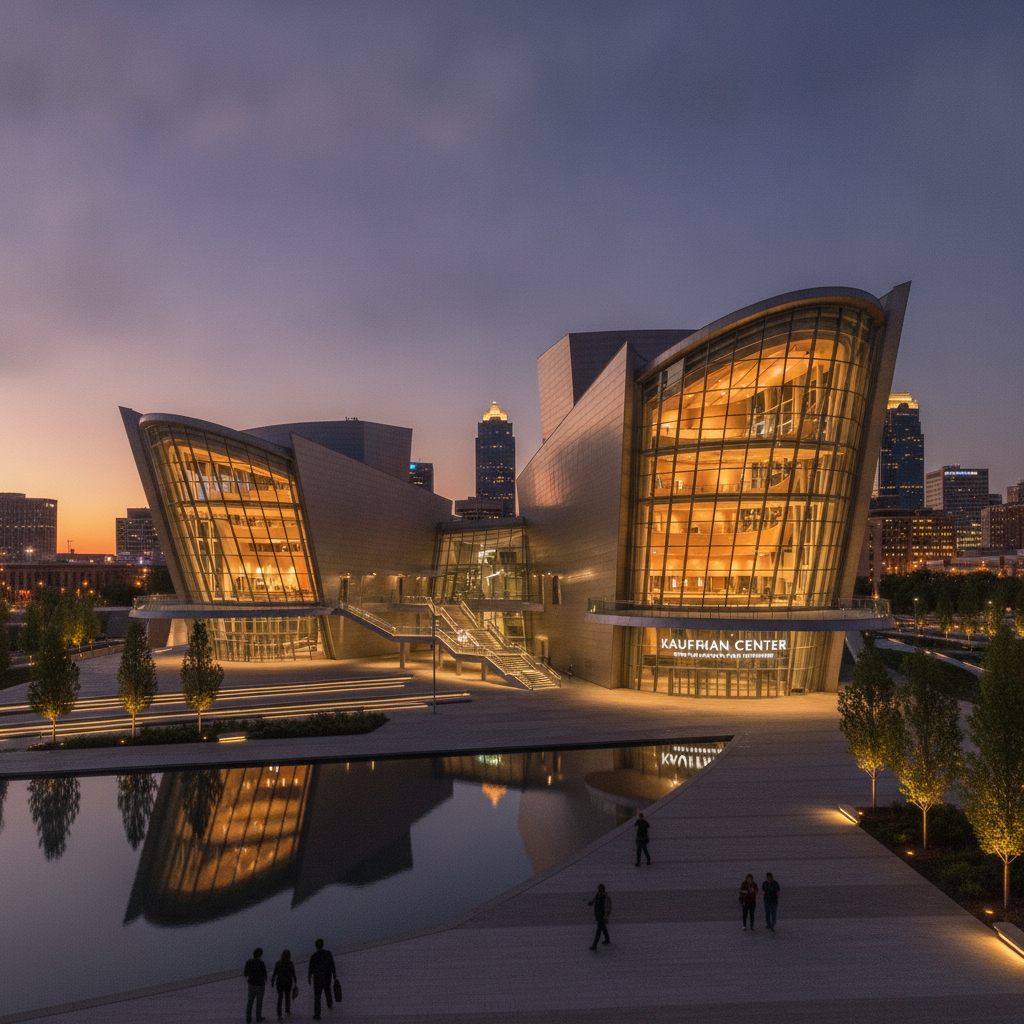
Kansas City R3: Pendergast Machine (ghost voters ballot stuffing police control USD 40M 12-year plan City Hall courthouse, Ready Mixed Concrete Company conflict of interest, Truman Jackson County judge 1922 presiding 1926 attended Pendergast funeral 1945), Truman (Boys if you ever pray pray for me now April 12 1945, Hiroshima August 6 1945 70,000 immediate 120,000 total, Nagasaki August 9 40,000 immediate 80,000 total, desegregated military EO 9981 July 26 1948, recognized Israel May 14 1948 11 minutes first nation, Marshall Plan USD 13B 1948-1952, Korea June 27 1950, Truman Library Independence 1957), Santa Fe Trail (1821 1400km Independence Missouri to Santa Fe, Kearny Army of the West conquered New Mexico August 1846, National Frontier Trails Museum ruts still visible, Westport Landing outfitting point 1830s-1860s Fremont Pathfinder), music (Knuckleheads Saloon country blues Americana, Kauffman Center 2011 Moshe Safdie Helzberg Hall violin shell, Charlie Parker Jazz Festival August Penn Valley, Boulevard Brewing 1989 700,000 barrels Midwest largest specialty), streetcar (3.5km free USD 1.7B development since 2016, extension to Plaza UMKC under construction), food beyond BBQ (West Side Mexican 60% Hispanic authentic, Cafe Sebastienne Kemper Museum Jennifer Maloney, Boulevard Brewing Tank 7 Saison-Brett).
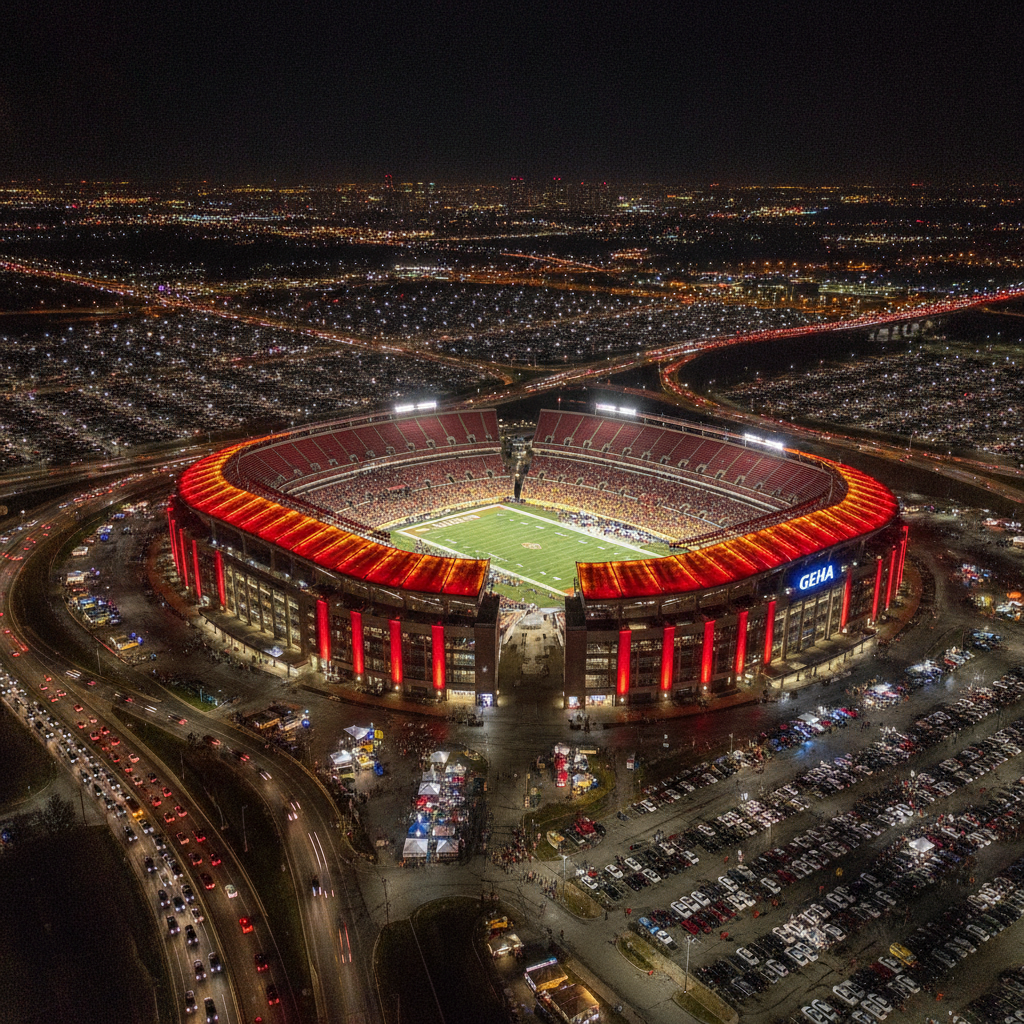
Kansas City: Creative Arts, Champion Chiefs and Pioneer Outfitting Ground
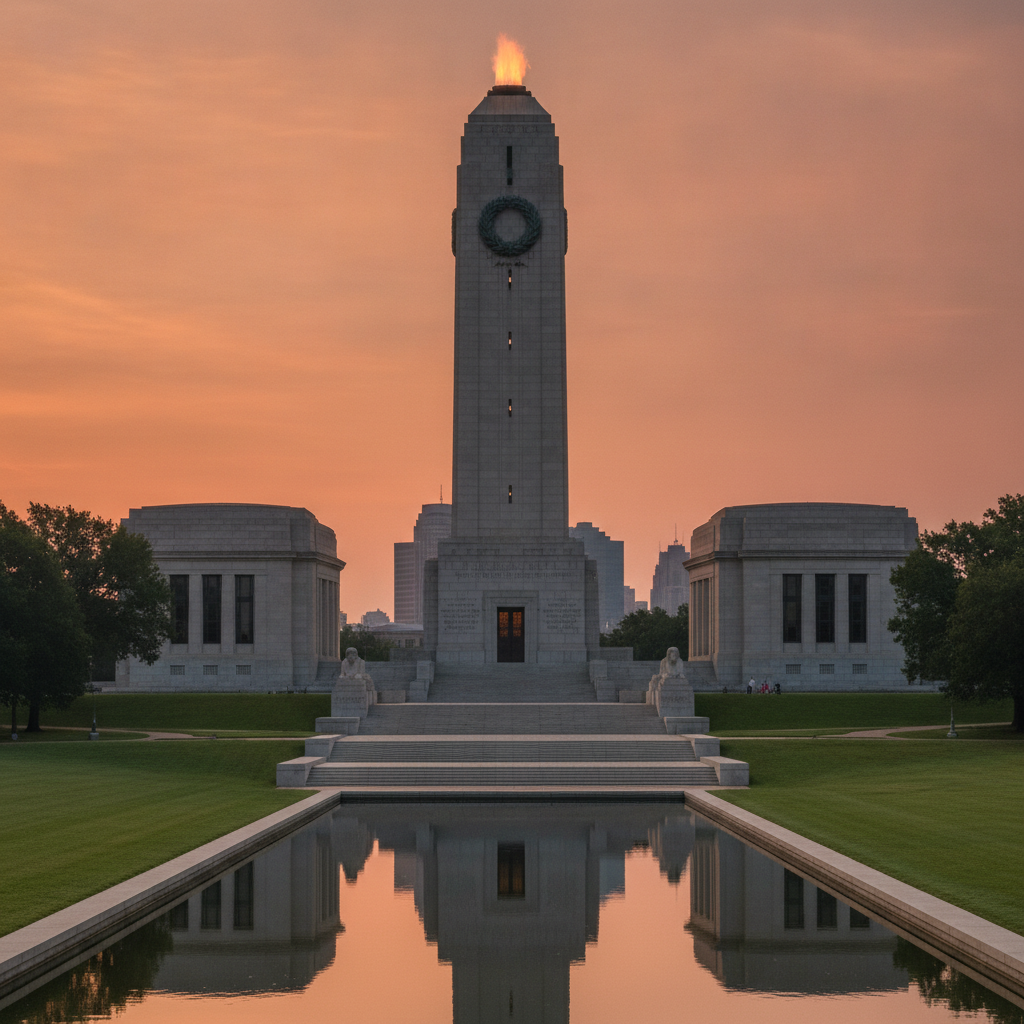
Kansas City R5-R6: Crown Center (85 acres Hallmark Cards HQ 1971 mixed-use precursor, J.C. Hall 1891-1982 arrived 18 two shoeboxes USD 183 savings built USD 4B revenue Hallmark Channel, H&R Block Henry Bloch 1922-2019 20M clients 60 countries donated USD 25M Nelson-Atkins), WWI Memorial (Liberty Memorial 1921-1926 five Allied commanders only time together Pershing Foch Wilson Diaz Jacques, USD 2.5M raised 10 days 83,000 donors fastest civic fundraising 1921, National WWI Museum 2006 75,000 artifacts most comprehensive world, glass floor 9000 poppy seed heads Allied dead Western Front), Royals (1969 expansion, 1985 WS comeback 3-1 Denkinger missed call, George Brett three-decade batting titles .390 1980 closest to .400 since Williams 1941, Pine Tar Incident July 24 1983, Dan Quisenberry poet sidearm), African American culture (Paseo main street Black KC, Thomas Dorsey Father Gospel Music Take My Hand Precious Lord 1932 tragedy-written, Charlie Parker Center music education, Black Archives Mid-America 2033 Vine), Immigrants (Garozzo Italian since 1989, Guadalupe Centers 1919 oldest largest Latino Midwest West Side, Vietnamese pho Independence Ave, Cambodian largest Midwest northeast KC), Practical (hot humid summers 30-35C ice storms winters, Plaza Lighting Ceremony 280,000 lights Thanksgiving 1925 100,000 spectators, KC Renaissance Festival 200,000 Bonner Springs September-October, Hotel Phillips 1931 Art Deco, Crossroads Hotel 2019 Pabst warehouse, free streetcar Main Street).