Kansas City R3: Pendergast Machine (ghost voters ballot stuffing police control USD 40M 12-year plan City Hall courthouse, Ready Mixed Concrete Company conflict of interest, Truman Jackson County judge 1922 presiding 1926 attended Pendergast funeral 1945), Truman (Boys if you ever pray pray for me now April 12 1945, Hiroshima August 6 1945 70,000 immediate 120,000 total, Nagasaki August 9 40,000 immediate 80,000 total, desegregated military EO 9981 July 26 1948, recognized Israel May 14 1948 11 minutes first nation, Marshall Plan USD 13B 1948-1952, Korea June 27 1950, Truman Library Independence 1957), Santa Fe Trail (1821 1400km Independence Missouri to Santa Fe, Kearny Army of the West conquered New Mexico August 1846, National Frontier Trails Museum ruts still visible, Westport Landing outfitting point 1830s-1860s Fremont Pathfinder), music (Knuckleheads Saloon country blues Americana, Kauffman Center 2011 Moshe Safdie Helzberg Hall violin shell, Charlie Parker Jazz Festival August Penn Valley, Boulevard Brewing 1989 700,000 barrels Midwest largest specialty), streetcar (3.5km free USD 1.7B development since 2016, extension to Plaza UMKC under construction), food beyond BBQ (West Side Mexican 60% Hispanic authentic, Cafe Sebastienne Kemper Museum Jennifer Maloney, Boulevard Brewing Tank 7 Saison-Brett).
Kansas City R3: Pendergast (ghost voters stuffed ballots police control USD 40M 12-year plan City Hall courthouse, Ready Mixed Concrete conflict, Truman machine candidate judge 1922 1926 attended funeral 1945), Truman (April 12 1945 load of hay, Hiroshima August 6 70,000 immediate, Nagasaki August 9 40,000, desegregated military EO 9981 July 26 1948, Israel May 14 1948 first nation 11 minutes, Marshall Plan USD 13B 1948-1952, Korea June 1950, Library 1957 Independence), Santa Fe Trail (1821 1400km Independence to Santa Fe, Kearny conquered New Mexico 1846, Frontier Trails Museum wagon ruts, Westport Landing 1830s-1860s Fremont), music (Knuckleheads Saloon, Kauffman Center 2011 Safdie violin shell, Parker Jazz Festival August, Boulevard Brewing 1989 700,000 barrels Tank 7), streetcar (3.5km free USD 1.7B investment, Plaza extension under construction), food (West Side 60% Hispanic Mexican authentic, Cafe Sebastienne Kemper, Boulevard craft scene).
- 1
Tom Pendergast and Kansas City Political History
Thomas J. Pendergast (born July 22, 1872, St. Joseph, Missouri; died January 26, 1945, Kansas City): the most powerful political boss in the American Midwest in the 1920s-1930s, who ran Kansas City as a political machine that controlled elections through stuffed ballot boxes, ghost voters (thousands of registered voters whose addresses were vacant lots or cemeteries), and direct control of the police department. Pendergast's empire: at the height of his power (approximately 1930-1938), Pendergast controlled all city and county patronage jobs in Kansas City, the construction contracts for the 12-year plan (a USD 40M public works program that built most of the public infrastructure of modern Kansas City — the City Hall, the Jackson County Courthouse designed by Edward Neild, and more than 150 other public buildings), and the city's nightlife economy (the wide-open town policy that allowed gambling, prostitution, and 24-hour liquor service that fueled the jazz economy of 18th and Vine). The concrete connection: Pendergast owned the Ready Mixed Concrete Company, and his concrete was specified in city contracts with suspicious frequency — a conflict of interest that was the subject of federal investigation. Harry S. Truman (born May 8, 1884, Lamar, Missouri; died December 26, 1972, Independence, Missouri): the 33rd President of the United States (serving 1945-1953), who launched his political career as a Pendergast Machine candidate (elected Jackson County judge — an administrative rather than judicial position — in 1922 and Jackson County presiding judge in 1926). Truman maintained a complex relationship with Pendergast: he benefited from machine support while maintaining personal honesty, and after Pendergast's conviction and imprisonment in 1939 continued to attend his funeral in 1945 — an act of loyalty that briefly damaged Truman's reputation. The Harry S. Truman Library and Museum (at 500 W US Highway 24, Independence, Missouri, 18 km east of downtown Kansas City): one of the finest Presidential libraries in the United States.
- 2
Harry Truman - Independence Missouri and the Decision to Drop the Atomic Bomb
Harry Truman biographical highlights: Truman served as a US Senator from Missouri (1935-1944), was selected as FDR's running mate in 1944 despite having no significant national profile, became President on April 12, 1945 (on the death of FDR — telling reporters the next day: Boys, if you ever pray, pray for me now. I don't know whether you fellows ever had a load of hay fall on you, but when they told me yesterday what had happened, I felt like the moon, the stars, and all the planets had fallen on me), and had to make the decision to use atomic bombs against Japan within 4 months of taking office. The atomic bomb decision: Truman approved the use of atomic bombs against Hiroshima (August 6, 1945, approximately 70,000 immediately killed, 90,000-120,000 total killed by year end) and Nagasaki (August 9, 1945, approximately 40,000 immediately killed, 60,000-80,000 total killed) — the most consequential decisions made by any American president, still debated by historians (with arguments ranging from the decision saved 1 million Allied and Japanese lives that would have been lost in an invasion of the Japanese home islands to the decision was a war crime committed against civilian populations). Other Truman decisions: Truman desegregated the US military by Executive Order 9981 (July 26, 1948), recognized the State of Israel on May 14, 1948 (11 minutes after its declaration of independence — the first nation to do so), initiated the Marshall Plan (the European Recovery Program, 1948-1952, which provided approximately USD 13B to rebuild Western European economies devastated by WWII), and sent US troops to Korea (June 27, 1950). The Truman Library and Museum (Independence, Missouri): opened on July 6, 1957, the only Presidential library designed and overseen personally by the president it honors, with Truman working in an office at the library until shortly before his death in 1972.
- 3
Kansas City and the Santa Fe Trail - Westward Expansion
Kansas City as the Gateway to the West: while St. Louis has the Gateway Arch, Kansas City has the more legitimate historical claim to the title — the three major overland trails of the 19th century (the Santa Fe Trail, the Oregon Trail, and the California Trail) all departed from the Kansas City metropolitan area, making it the literal jumping-off point for the westward expansion of the United States. The Santa Fe Trail (established 1821): the 1,400-km trade route from Independence, Missouri (15 km east of downtown Kansas City) to Santa Fe, New Mexico, that was the primary commercial link between the United States and the Spanish (later Mexican) Southwest from 1821 to 1880 (when the Atchison, Topeka and Santa Fe Railway reached Santa Fe, making the wagon road obsolete). The trail carried millions of dollars worth of trade goods in both directions annually and was the route of the US Army of the West (commanded by General Stephen Kearny) that invaded and conquered New Mexico in August 1846 during the Mexican-American War. The National Frontier Trails Museum (at 318 W Pacific Avenue, Independence, Missouri, 18 km east of downtown Kansas City): the museum covering the history of all three major overland trails (Santa Fe, Oregon, and California), with the wagon ruts of the trails still visible in the surrounding landscape. Westport Landing (the neighborhood of Kansas City, at the intersection of Westport Road and Broadway Boulevard, 5 km south of downtown): the historic district that was the actual outfitting and departure point for Santa Fe Trail wagon trains from the 1830s to the 1860s — where trappers, merchants, soldiers, and emigrants purchased their supplies before heading west, and where John C. Fremont (the Pathfinder) organized his four western explorations.
- 4
Kansas City Music Scene - From Jazz to Contemporary
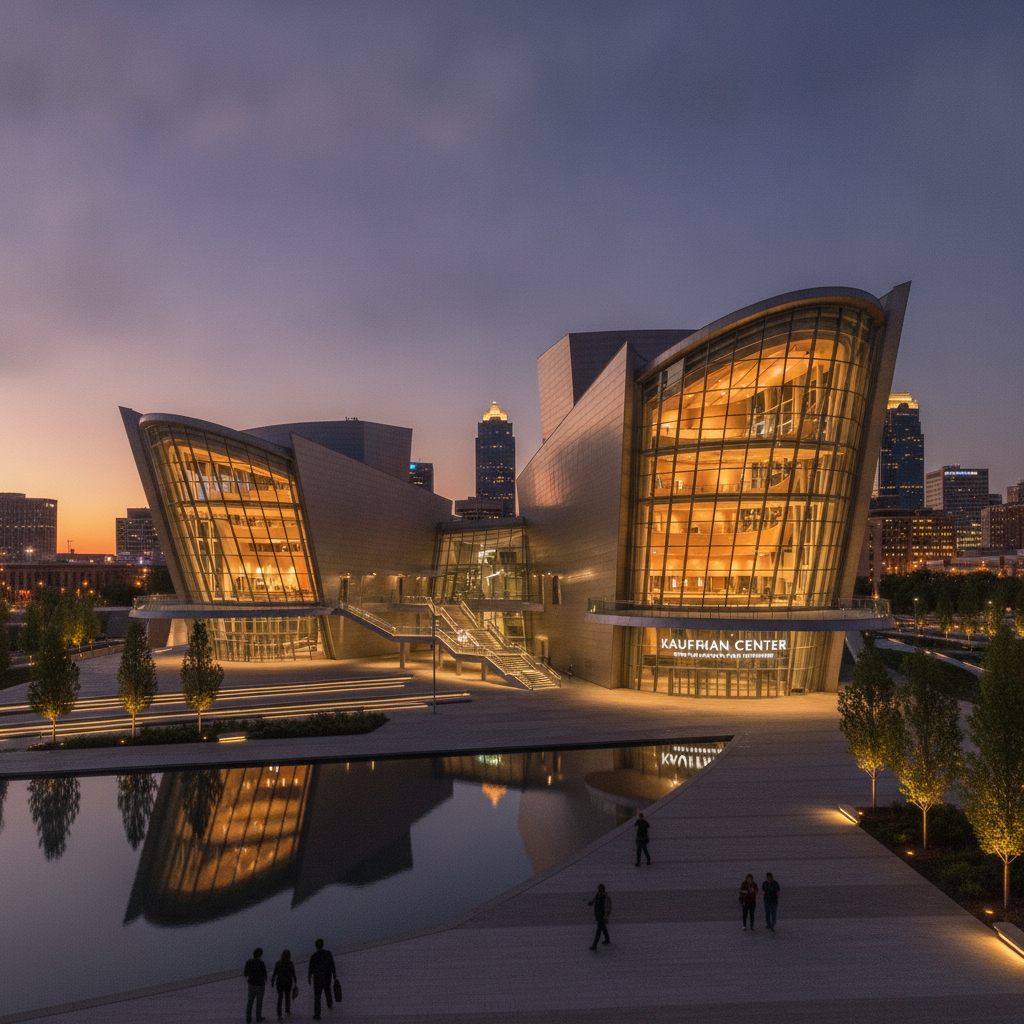
Kansas City music beyond jazz: while Kansas City jazz is the city's most internationally recognized musical contribution, the city has a rich and continuing musical culture across multiple genres. The Kansas City bluegrass and country music tradition: Kansas City is at the cultural intersection of Appalachian country music (brought by migrants from Kentucky, Tennessee, and the Ozarks) and the Western swing tradition (developed in Texas and Oklahoma), with the Knuckleheads Saloon (at 2715 Rochester Avenue, East Bottoms) as the most beloved live music venue in the city for country, blues, and Americana. The Folly Theater (at 300 W 12th Street, downtown Kansas City, built 1900 as the Standard Theater, renamed 1948): the oldest surviving theater in Kansas City, restored in 1981 after years as a burlesque house, now presenting jazz, opera, and chamber music. Charlie Parker Memorial Foundation: the annual Kansas City Jazz and Heritage Festival (held in August in Penn Valley Park, drawing approximately 8,000 attendees) honoring the city's most important jazz legacy. The Kauffman Center for the Performing Arts (at 1601 Broadway Boulevard, downtown Kansas City, opened 2011, designed by Moshe Safdie): the most significant piece of new civic architecture in Kansas City in the 21st century, with the Helzberg Hall (the 1,800-seat symphony hall whose interior is designed as a violi-like shell of wood suspended within the glass-and-steel exterior) and the Muriel Kauffman Theatre (the 1,600-seat opera and ballet hall). The Grand Emporium (at 3832 Main Street, Midtown): the blues and rock club that launched more Kansas City music careers than any other venue from 1980 to 2012 before closing.
- 5
The Kansas City Streetcar and Urban Development
Kansas City's urban development challenges and opportunities: Kansas City is one of the fastest-growing major American metropolitan areas, with a metro population that has increased by approximately 300,000 people (16%) since 2000. The Kansas City Streetcar (the 3.5-km free streetcar route running on Main Street from the River Market neighborhood in the north to Crown Center in the south, opened May 6, 2016): the free public transit connection that has been credited with catalyzing approximately USD 1.7B in private real estate investment along the Main Street corridor since its opening — the most frequently cited example in the United States of transit-oriented development as an economic development tool. The streetcar extension: a 3.7-km extension from the Crown Center terminus to the Country Club Plaza and the University of Missouri-Kansas City campus was approved by voters in 2019 and is under construction. The River Market (the historic neighborhood north of the Missouri River confluence, at 5th Street and Walnut Street): the oldest commercial neighborhood in Kansas City, with the City Market (the oldest continuously operating market in the Midwest, with 140 vendors open year-round, Saturday and Sunday markets drawing 30,000 weekly visitors). The Zona Rosa development (at 8640 N Stoddard Avenue, Kansas City, 20 km north of downtown): the open-air lifestyle center that represents the suburban retail development that has competed with (and contributed to the decline of) downtown retail. The Kansas City Sprint Center (now T-Mobile Center, at 1407 Grand Boulevard): the 19,500-seat arena that has hosted more than 250 concerts and events per year since opening in 2007.
- 6
Kansas City Food Beyond BBQ - The Culinary Scene
Kansas City dining beyond BBQ: the city has developed a sophisticated dining scene that extends well beyond its barbecue heritage, particularly in the neighborhoods of the Crossroads Arts District, the Country Club Plaza, and Westport. The Culinary Center of Kansas City (at 7920 Santa Fe Drive, Overland Park, Kansas): the cooking school that reflects the city's growing culinary sophistication. Julios Street Tacos (at 1314 Washington Boulevard, the West Side neighborhood, an historically Mexican-American neighborhood): the authentic Mexican street food tradition of the West Side neighborhood, which has a population of approximately 60% Hispanic residents (predominantly Mexican and Central American) and supports one of the most authentic Mexican food scenes in the Midwest. Cafe Sebastienne (at 4420 Warwick Boulevard, Kemper Museum of Contemporary Art): the museum restaurant run by chef Jennifer Maloney, consistently ranked among the finest art museum restaurants in the United States. Story (at 3931 W 69th Street, Prairie Village, Kansas): the fine dining destination that brought national culinary attention to the Kansas City suburbs. The KC Restaurant Week: the annual promotional event (held twice yearly) in which more than 100 Kansas City restaurants offer prix-fixe menus. Beer culture in Kansas City: the Boulevard Brewing Company (at 2501 Southwest Boulevard, Westside neighborhood, founded 1989 by John McDonald): the largest specialty brewery in the Midwest, producing approximately 700,000 barrels annually, with the Smokestack Series (limited-release beers including Tank 7 American Saison and Saison-Brett) representing the most acclaimed beers in the Kansas City market. Kansas City is also home to more craft breweries per capita than almost any major American city, with notable producers including Torn Label Brewing, Border Brewing, and Double Shift Brewing.
Walk this route with audio
Stories play automatically as you reach each stop — no tapping needed.
More in kansas-city
Kansas City: World-Class Art, Jazz Heritage and Legendary Smoke
Kansas City: BBQ, jazz, architecture, Negro Leagues, Chiefs, and practical guide
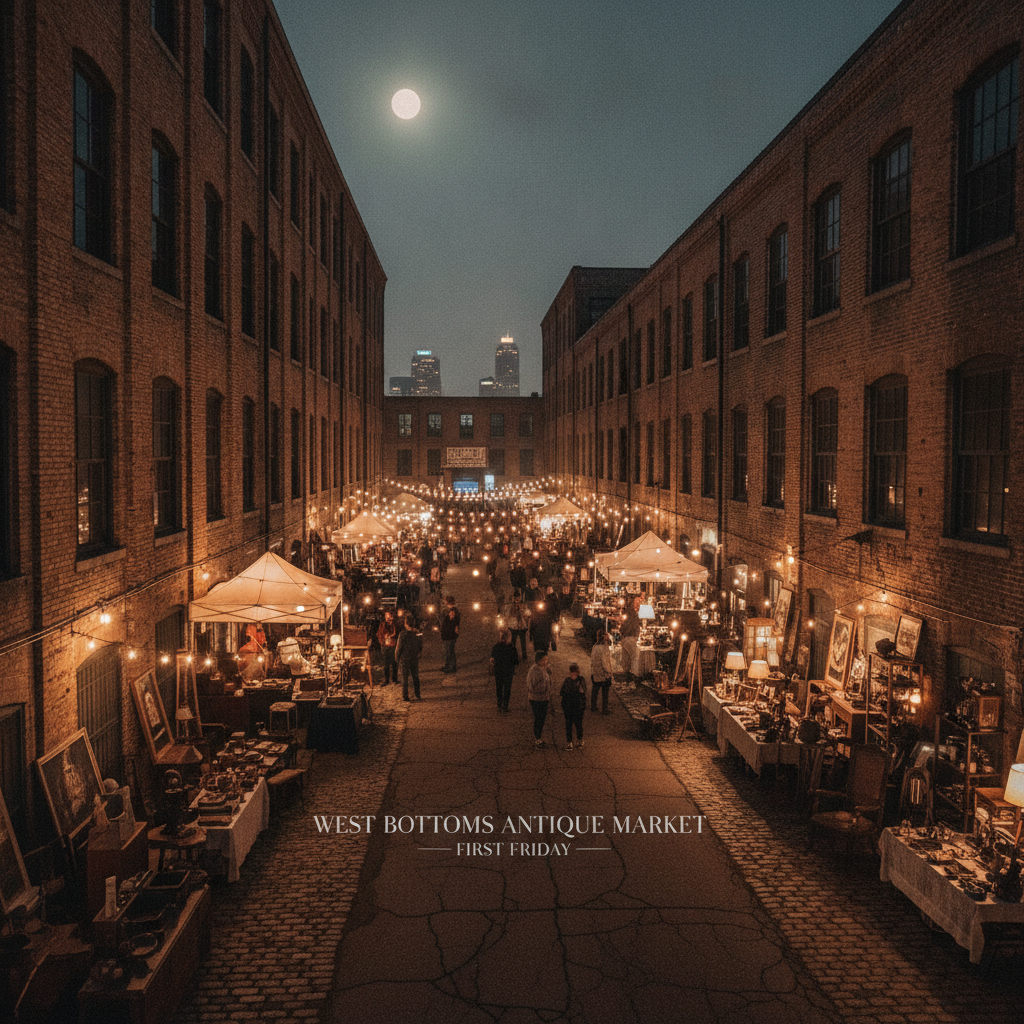
Kansas City R4-R6: West Bottoms (stockyards 400 acres 1917 hotel bank post office, First Weekend antique market largest Midwest monthly, American Royal Livestock largest combined livestock horse show rodeo world, 1993 flood 4m underwater, West Bottoms beef culture direct legacy), Kauffman (Marion Labs USD 5,000 basement 1950 to USD 6.5B 1989, Royals USD 5.25M 1968 now USD 1.8B, Kauffman Foundation USD 3.5B largest entrepreneurship focus US, Sprint founded Abilene 1899 T-Mobile 2020, Cerner 1979 Oracle USD 28.3B 2022), Civil rights (Troost Wall most persistent racial boundary US history, Jenkins v Missouri 1977-2011 longest desegregation case USD 2B 12 years considered failed, Bruce Watkins Cultural Heritage Center, 1968 uprising 6 killed after King assassination), Parks (Swope Park 1769 acres zoo 1700 animals, Loose Park Battle of Westport October 23 1864 29,000 vs 8500 largest Civil War battle west Mississippi, tallgrass prairie less than 4% original remains), tech (Google Fiber 2012 first gigabit residential US USD 300M economic impact, 500+ tech companies AgTech health IT, Hallmark since 1910 largest greeting cards world, H&R Block 1955 brothers Bloch), Identity (KCK vs KCMO separate states governments, 39th Street 3am vs 2am bar migration, Sporting KC Children's Mercy Park 2011, Taylor Swift Travis Kelce 2023 USD 100-200M economic impact).
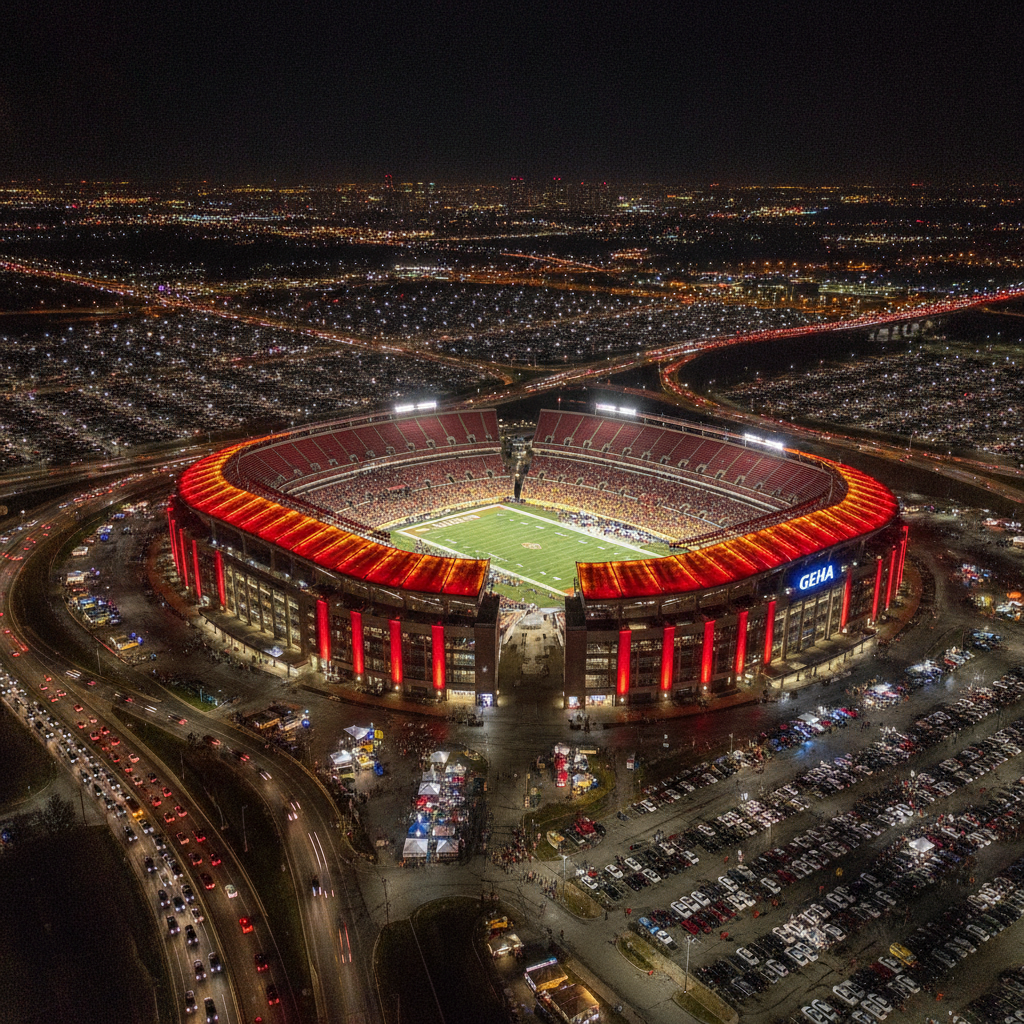
Kansas City: Creative Arts, Champion Chiefs and Pioneer Outfitting Ground
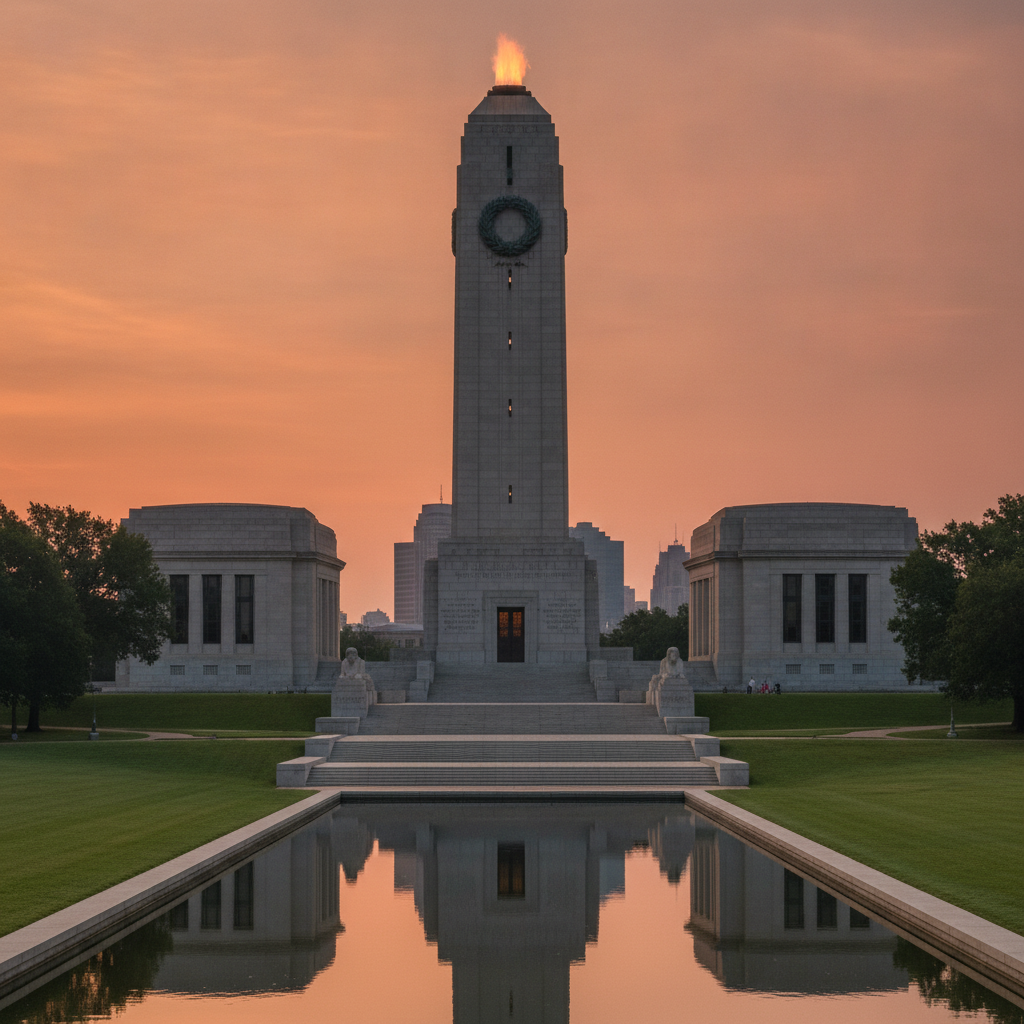
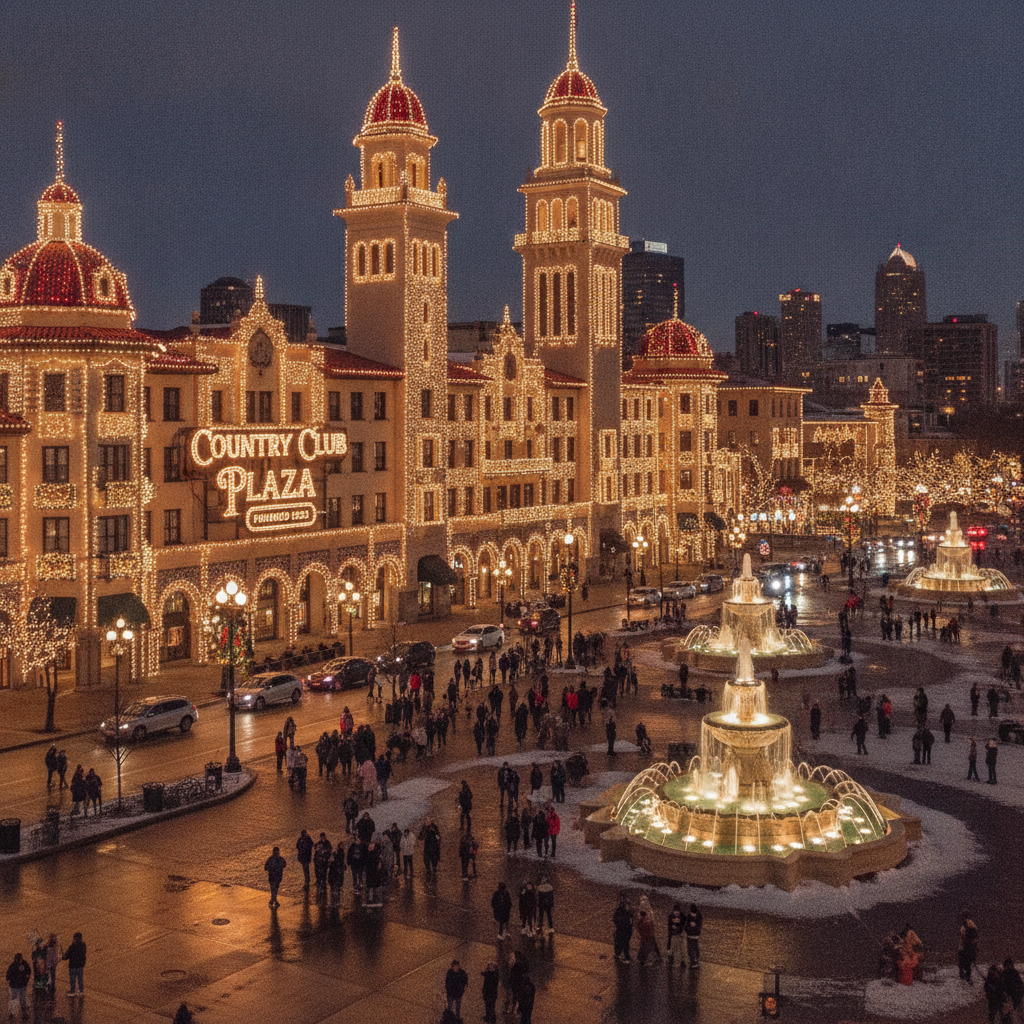
Kansas City R5-R6: Crown Center (85 acres Hallmark Cards HQ 1971 mixed-use precursor, J.C. Hall 1891-1982 arrived 18 two shoeboxes USD 183 savings built USD 4B revenue Hallmark Channel, H&R Block Henry Bloch 1922-2019 20M clients 60 countries donated USD 25M Nelson-Atkins), WWI Memorial (Liberty Memorial 1921-1926 five Allied commanders only time together Pershing Foch Wilson Diaz Jacques, USD 2.5M raised 10 days 83,000 donors fastest civic fundraising 1921, National WWI Museum 2006 75,000 artifacts most comprehensive world, glass floor 9000 poppy seed heads Allied dead Western Front), Royals (1969 expansion, 1985 WS comeback 3-1 Denkinger missed call, George Brett three-decade batting titles .390 1980 closest to .400 since Williams 1941, Pine Tar Incident July 24 1983, Dan Quisenberry poet sidearm), African American culture (Paseo main street Black KC, Thomas Dorsey Father Gospel Music Take My Hand Precious Lord 1932 tragedy-written, Charlie Parker Center music education, Black Archives Mid-America 2033 Vine), Immigrants (Garozzo Italian since 1989, Guadalupe Centers 1919 oldest largest Latino Midwest West Side, Vietnamese pho Independence Ave, Cambodian largest Midwest northeast KC), Practical (hot humid summers 30-35C ice storms winters, Plaza Lighting Ceremony 280,000 lights Thanksgiving 1925 100,000 spectators, KC Renaissance Festival 200,000 Bonner Springs September-October, Hotel Phillips 1931 Art Deco, Crossroads Hotel 2019 Pabst warehouse, free streetcar Main Street).