Kansas City: Creative Arts, Champion Chiefs and Pioneer Outfitting Ground
Gallery-hop the Crossroads Arts District on First Friday, follow the Chiefs dynasty at Arrowhead Stadium, walk the restored Beaux-Arts Union Station, marvel at the Arabia Steamboat 1856 cargo, learn how Joyce Hall built Hallmark from two shoeboxes, and drink in Westport where wagon trains loaded up for the West.
- 1
Crossroads Arts District
The Crossroads Arts District, centered on the intersection of Southwest Boulevard and Baltimore Avenue south of downtown Kansas City, transformed from a warehouse district into the city primary contemporary art hub after First Fridays began in 1998. The monthly gallery walk draws between 10,000 and 30,000 visitors to over 100 galleries, studios, boutiques, and restaurants. The district was anchored initially by the Kemper Museum of Contemporary Art, which opened nearby in 1994 with a permanent collection of 20th and 21st century work. The 2011 opening of the Kauffman Center on the north edge of Crossroads accelerated development. The 1912 building at 1611 Main Street, once a wholesale grocery warehouse, now contains artist studios alongside technology startups in a pattern seen in creative districts across the American Midwest.
- 2
Kansas City Chiefs and Arrowhead Stadium
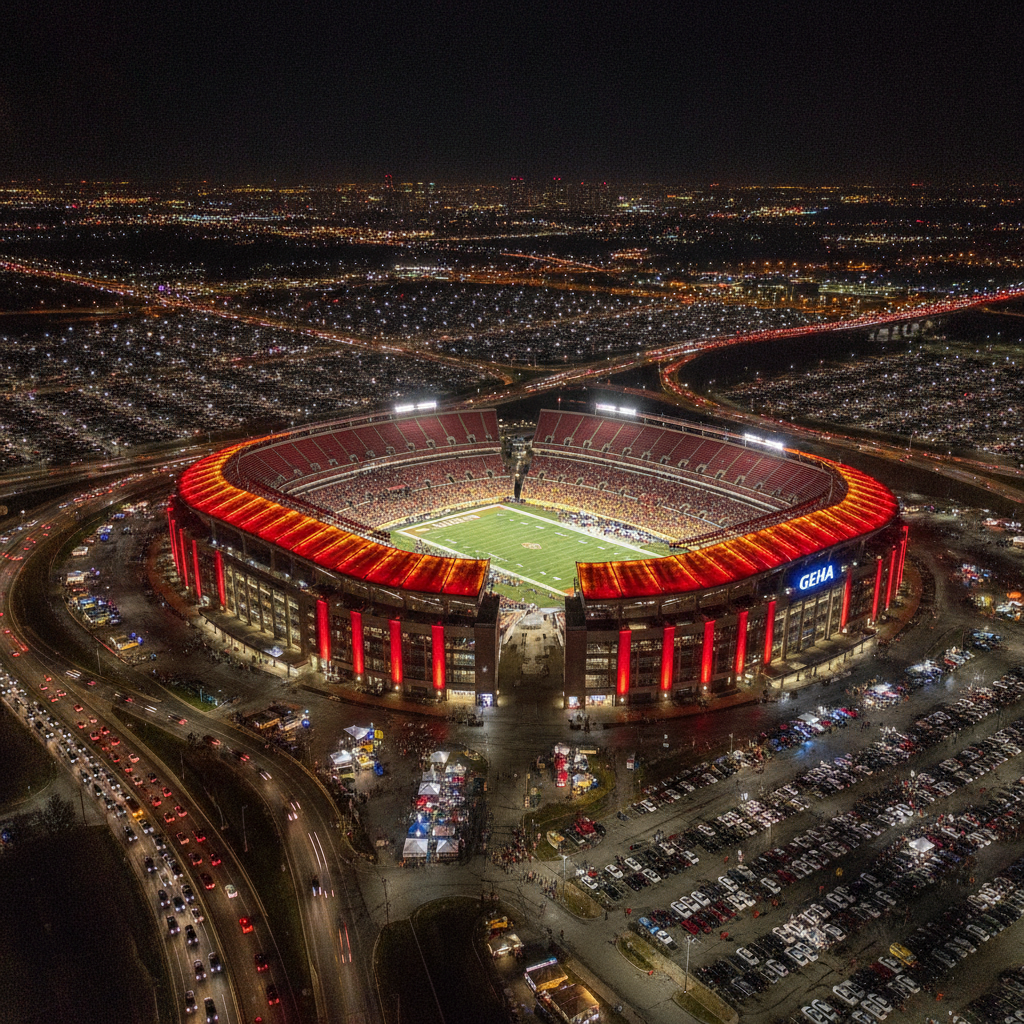
The Kansas City Chiefs NFL franchise, founded in Dallas as the Texans in 1960 and relocated to Kansas City in 1963, won Super Bowl IV in 1970, Super Bowl LIV in 2020, Super Bowl LVII in 2023, and Super Bowl LVIII in 2024, with the back-to-back 2023-2024 championships establishing the Patrick Mahomes-led era as one of the dynasties of modern professional football. Arrowhead Stadium, opened in 1972 and renovated in 2010 for 375 million dollars, holds 76,416 fans and has been measured as the loudest stadium in the NFL, setting a Guinness World Record of 142.2 decibels in 2014. The Chiefs compete in the AFC West alongside the Las Vegas Raiders, Denver Broncos, and Los Angeles Chargers.
- 3
Kansas City Union Station
Kansas City Union Station, completed in 1914 at a cost of 6 million dollars, was designed by Jarvis Hunt in Beaux-Arts style and was the third largest train station in the United States at its opening. The main hall, with a ceiling rising 95 feet and a waiting room 305 feet long, processed as many as 678,000 passengers per month during World War II. The station declined as rail travel collapsed and closed in 1985. A 1996 ballot measure in Missouri and Kansas provided 250 million dollars for its restoration, which was completed in 1999. The restored station now contains Science City museum, restaurants, a hotel, and event space. The June 17, 1933 Union Station Massacre, in which four law enforcement officers and a federal prisoner were killed by gangsters in the parking lot, is interpreted in a permanent exhibit.
- 4
Arabia Steamboat Museum
The Arabia Steamboat Museum in the River Market district contains the largest collection of pre-Civil War artifacts in the world, recovered from the 1856 steamboat Arabia which sank in the Missouri River after hitting a submerged log with 200 tons of frontier merchandise aboard. The boat was buried under a Kansas farm field as the river shifted course over 130 years. The Hawley family excavated it in 1988 using farm equipment and hand tools. The cargo included 40,000 complete items in near-perfect preservation thanks to the oxygen-free river mud: bottles of cologne, leather boots, bolts of cloth, china sets, tools, guns, and food. The museum displays the complete restored paddlewheel and boilers alongside thousands of individual objects in their original shipping crates.
- 5
Hallmark Cards and Creative Industries
Hallmark Cards, founded in Kansas City in 1910 by Joyce Clyde Hall, who arrived from Nebraska at age 18 with two shoeboxes of postcards and a vision for the greeting card industry, grew into the largest greeting card company in the world with annual revenue exceeding 4 billion dollars. Hallmark is one of the largest private companies in the United States, remaining family-owned through its fifth generation. The Hallmark Visitors Center at Crown Center presents the history of the company and its role in shaping American social rituals around holidays, birthdays, and life events. The Crown Center development surrounding Hallmark headquarters is a 85-acre mixed-use development that pioneered the concept of a large private company anchoring urban revitalization, opening in 1971 and influencing similar projects nationwide.
- 6
Westport and Kansas City History
Westport, now a Kansas City neighborhood centered on Pennsylvania Avenue and Westport Road, was an independent town founded in 1833 that served as the primary outfitting point for settlers heading west on the Santa Fe, Oregon, and California Trails. Thousands of wagons, oxen teams, and pioneer families purchased provisions in Westport before beginning their overland journeys. The trading post of John Calvin McCoy, who platted Westport in 1833, competed with the landing at the river four miles north that would become Kansas City. Westport was eventually annexed by Kansas City in 1897. The Westport neighborhood today is the city primary entertainment district for live music bars, with dozens of venues along Westport Road presenting everything from blues and jazz to indie rock and country.
Walk this route with audio
Stories play automatically as you reach each stop — no tapping needed.
More in Kansas City
Kansas City: World-Class Art, Jazz Heritage and Legendary Smoke
Kansas City: BBQ, jazz, architecture, Negro Leagues, Chiefs, and practical guide
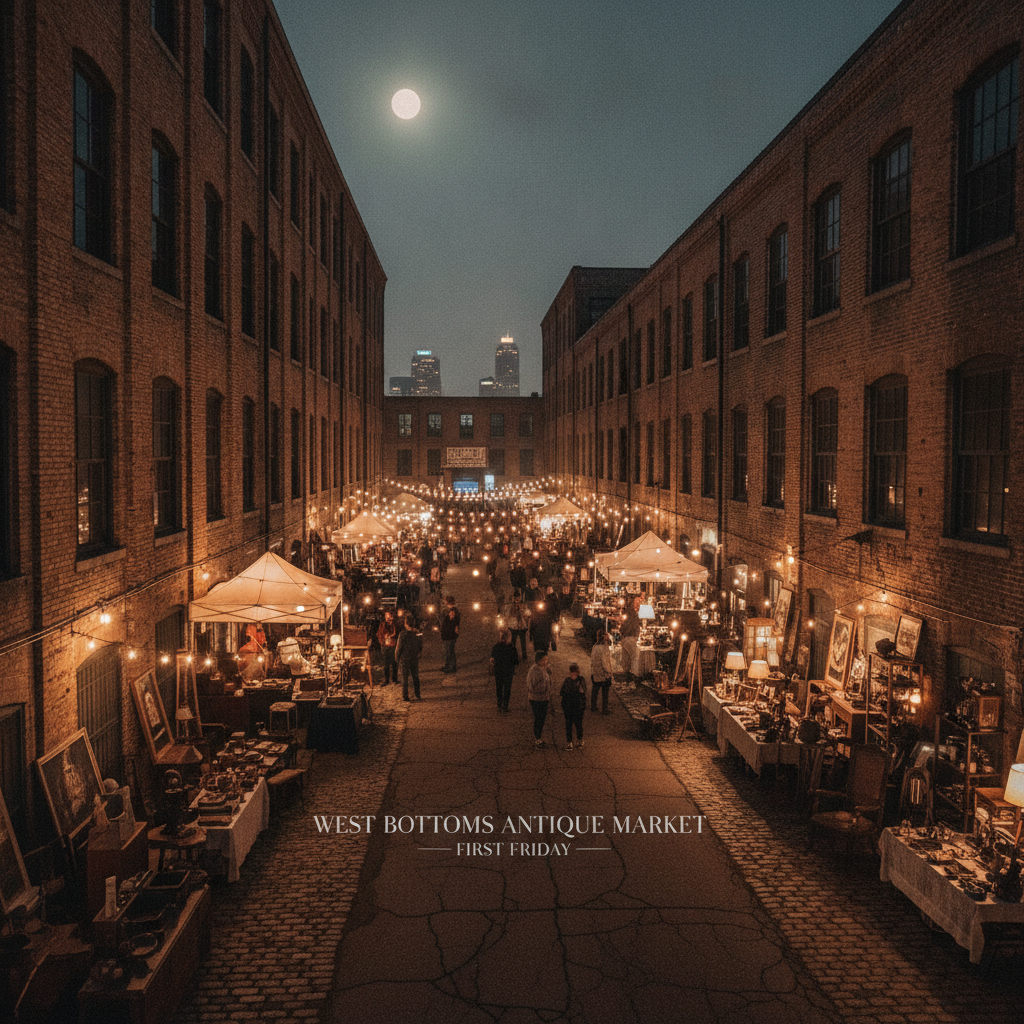
Kansas City R4-R6: West Bottoms (stockyards 400 acres 1917 hotel bank post office, First Weekend antique market largest Midwest monthly, American Royal Livestock largest combined livestock horse show rodeo world, 1993 flood 4m underwater, West Bottoms beef culture direct legacy), Kauffman (Marion Labs USD 5,000 basement 1950 to USD 6.5B 1989, Royals USD 5.25M 1968 now USD 1.8B, Kauffman Foundation USD 3.5B largest entrepreneurship focus US, Sprint founded Abilene 1899 T-Mobile 2020, Cerner 1979 Oracle USD 28.3B 2022), Civil rights (Troost Wall most persistent racial boundary US history, Jenkins v Missouri 1977-2011 longest desegregation case USD 2B 12 years considered failed, Bruce Watkins Cultural Heritage Center, 1968 uprising 6 killed after King assassination), Parks (Swope Park 1769 acres zoo 1700 animals, Loose Park Battle of Westport October 23 1864 29,000 vs 8500 largest Civil War battle west Mississippi, tallgrass prairie less than 4% original remains), tech (Google Fiber 2012 first gigabit residential US USD 300M economic impact, 500+ tech companies AgTech health IT, Hallmark since 1910 largest greeting cards world, H&R Block 1955 brothers Bloch), Identity (KCK vs KCMO separate states governments, 39th Street 3am vs 2am bar migration, Sporting KC Children's Mercy Park 2011, Taylor Swift Travis Kelce 2023 USD 100-200M economic impact).
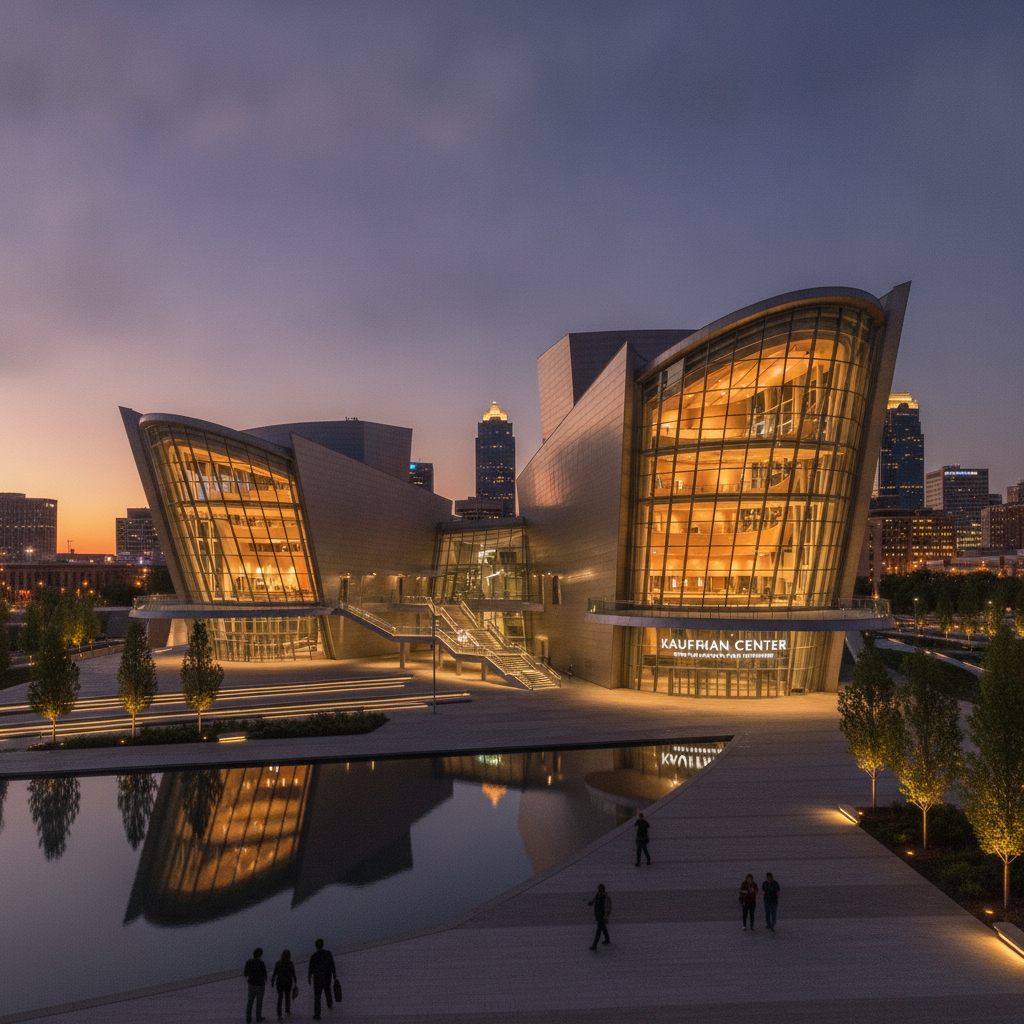
Kansas City R3: Pendergast Machine (ghost voters ballot stuffing police control USD 40M 12-year plan City Hall courthouse, Ready Mixed Concrete Company conflict of interest, Truman Jackson County judge 1922 presiding 1926 attended Pendergast funeral 1945), Truman (Boys if you ever pray pray for me now April 12 1945, Hiroshima August 6 1945 70,000 immediate 120,000 total, Nagasaki August 9 40,000 immediate 80,000 total, desegregated military EO 9981 July 26 1948, recognized Israel May 14 1948 11 minutes first nation, Marshall Plan USD 13B 1948-1952, Korea June 27 1950, Truman Library Independence 1957), Santa Fe Trail (1821 1400km Independence Missouri to Santa Fe, Kearny Army of the West conquered New Mexico August 1846, National Frontier Trails Museum ruts still visible, Westport Landing outfitting point 1830s-1860s Fremont Pathfinder), music (Knuckleheads Saloon country blues Americana, Kauffman Center 2011 Moshe Safdie Helzberg Hall violin shell, Charlie Parker Jazz Festival August Penn Valley, Boulevard Brewing 1989 700,000 barrels Midwest largest specialty), streetcar (3.5km free USD 1.7B development since 2016, extension to Plaza UMKC under construction), food beyond BBQ (West Side Mexican 60% Hispanic authentic, Cafe Sebastienne Kemper Museum Jennifer Maloney, Boulevard Brewing Tank 7 Saison-Brett).
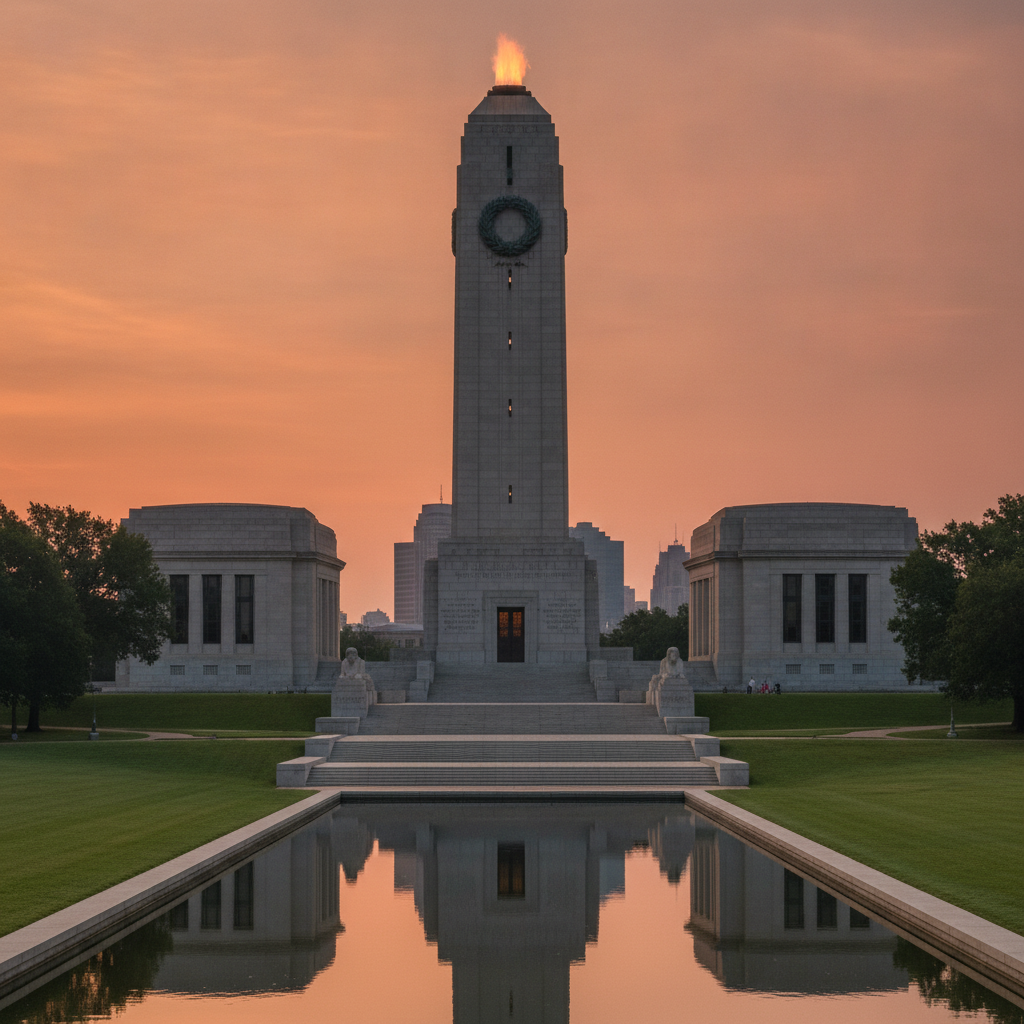
Kansas City R5-R6: Crown Center (85 acres Hallmark Cards HQ 1971 mixed-use precursor, J.C. Hall 1891-1982 arrived 18 two shoeboxes USD 183 savings built USD 4B revenue Hallmark Channel, H&R Block Henry Bloch 1922-2019 20M clients 60 countries donated USD 25M Nelson-Atkins), WWI Memorial (Liberty Memorial 1921-1926 five Allied commanders only time together Pershing Foch Wilson Diaz Jacques, USD 2.5M raised 10 days 83,000 donors fastest civic fundraising 1921, National WWI Museum 2006 75,000 artifacts most comprehensive world, glass floor 9000 poppy seed heads Allied dead Western Front), Royals (1969 expansion, 1985 WS comeback 3-1 Denkinger missed call, George Brett three-decade batting titles .390 1980 closest to .400 since Williams 1941, Pine Tar Incident July 24 1983, Dan Quisenberry poet sidearm), African American culture (Paseo main street Black KC, Thomas Dorsey Father Gospel Music Take My Hand Precious Lord 1932 tragedy-written, Charlie Parker Center music education, Black Archives Mid-America 2033 Vine), Immigrants (Garozzo Italian since 1989, Guadalupe Centers 1919 oldest largest Latino Midwest West Side, Vietnamese pho Independence Ave, Cambodian largest Midwest northeast KC), Practical (hot humid summers 30-35C ice storms winters, Plaza Lighting Ceremony 280,000 lights Thanksgiving 1925 100,000 spectators, KC Renaissance Festival 200,000 Bonner Springs September-October, Hotel Phillips 1931 Art Deco, Crossroads Hotel 2019 Pabst warehouse, free streetcar Main Street).