The 6-Stage 3-Day Process That Produces a Sheet Lighter Than Breath, the Apprenticeship Fund Paying 60% of New Craft Learners' Wages & the Four Kenroku-en Peaks That Each Justify a Separate Trip
The gold leaf production science from alloy adjustment through the Kanazawa humidity advantage (65–75% RH optimal for paper interleaving) to the 20% premium-grade rejection rate; the Noto Craft Recovery Fund for earthquake-displaced Wajima lacquerware and Suzu pottery makers; the Kenroku-en head gardener's monthly seasonal bulletin and the November yukitsuri installation watched by photography enthusiasts; the Nohi Bus alpine route through Hakusan National Park to Takayama and the Kanazawa–Shirakawa-go–Takayama triangle as Japan's most variety-dense 4-day western coast itinerary; and the gold leaf facial mask as the most commercially successful contemporary craft application alongside the paulownia box of 50 edible sheets.
- 1
Kanazawa University & the Student City
Kanazawa University (the national research university on the Kakuma campus northwest of the city center—16,000 students; the medical faculty is the most prestigious of the university's 11 schools and traces its origin to the Maeda domain's medical institute established in 1821): the student population creates a younger urban culture in the Katamachi and Korinbo districts that is not always visible in the tourism-focused image of Kanazawa as a purely traditional city. The Kanazawa University Museum (the university museum in the Kakuma campus—the natural history collection including the Type A T-rex skeleton cast and the Noto Peninsula fossil collection—the peninsula's Miocene-era marine sedimentary layers produce among the highest concentrations of Miocene marine mammal and fish fossils in Japan): the museum is free and is the least-touristed significant collection in the Kanazawa area. The Kanazawa medical tradition (the Keijukan—the Maeda domain's Western medicine institute, established in 1821 using Dutch medical texts obtained through the Nagasaki trade: the oldest Western medicine institution in Japan operated by a non-capital domain): the Keijukan legacy shaped the Kanazawa University Medical School's position as one of Japan's premier medical research institutions. The student bar and cafe culture (the Higashiyama Korinbo crossing area—the most active young-person evening area in Kanazawa; coffee shops (the Kanazawa craft coffee scene concentrated around the Higashiyama base): the Annon Coffee Roasters and the Gyokusen-an coffee-and-garden cafe are the two most design-conscious cafes in the Kanazawa young food scene).
- 2
Kanazawa Gold Leaf – The Full Science
The Kanazawa gold leaf production (the technique that produces 99% of Japan's gold leaf): a production process requiring 6 processing stages over 3 days for a batch of approximately 12,000 gold leaf sheets from 10g of gold. Stage 1: the gold alloy preparation (1000-parts gold with 10–12 parts silver and copper to adjust the colour temperature and working properties—pure gold is too soft to beat without tearing). Stage 2: the initial beating (the gold alloy is beaten into a strip using a mechanical hammer, then cut into small squares). Stage 3: the interleaf assembly (the gold squares are placed between thin paper sheets in a stack and beaten repeatedly—the paper absorbs the impact and prevents sticking). Stage 4: the final beating (the final beating rounds produce leaf of 1/10,000 mm thickness—at this thickness, a 10cm² sheet weighs less than 0.1g and can be moved by breathing near it). The Kanazawa humidity advantage: the Japan Sea coast humidity (65–75% relative humidity year-round in Kanazawa vs 40–50% in Tokyo) keeps the paper interlayers at the optimal moisture level for beating—in drier climates the paper becomes brittle and tears. Stage 5: the quality inspection (each leaf is individually inspected for tears and thickness uniformity—the reject rate for premium-grade leaf is approximately 20%). Stage 6: the packaging (the accepted leaves are interleaved in the traditional paulownia wood box that maintains the correct humidity during storage and transport): the artisanal process from alloy to boxed leaf is demonstrated at the Kanazawa Hakuichi studio.
- 3
Kanazawa's Environmental & Sustainability Initiatives
Kanazawa's environmental programme has been shaped by two distinct concerns: the Japan Sea coast's exposure to the Asian dust (kosa) and pollution transport from continental East Asia, and the city's aspiration to be a model of traditional craft sustainability in the face of declining practitioner numbers. The kanazawa craft survival programme (the city's apprenticeship support system—the Kanazawa Ishikawa Craft Apprenticeship Fund, which pays 60% of an apprentice's first-3-year stipend to encourage new entrants in the Kutani, Kaga Yuzen, Wajima lacquerware, and gold leaf traditions): the programme has been running since 1999 and has maintained the number of active Kutani and gold leaf practitioners at relatively stable levels despite the broader national trend of craft decline. The Noto Peninsula recovery (the post-earthquake reconstruction following the January 2024 magnitude 7.6 earthquake—the Noto Peninsula's traditional craft communities (the Wajima lacquerware, the Suzu pottery) were severely disrupted): the Kanazawa city government established the Noto Craft Recovery Fund (2024) supporting displaced Noto craftsmen to establish temporary studios in Kanazawa. The circular economy food programme (the Kanazawa food system's approach to the Noto Peninsula's GIAHS-designated satoyama-satoumi landscape—the partnership between the Kanazawa restaurant community and the Noto Peninsula traditional farmers to source the 4 Kaga vegetables and the Noto oysters and abalone from the designated traditional production areas as a conservation-through-consumption strategy).
- 4
The Kenroku-en Seasonal Deep Dive
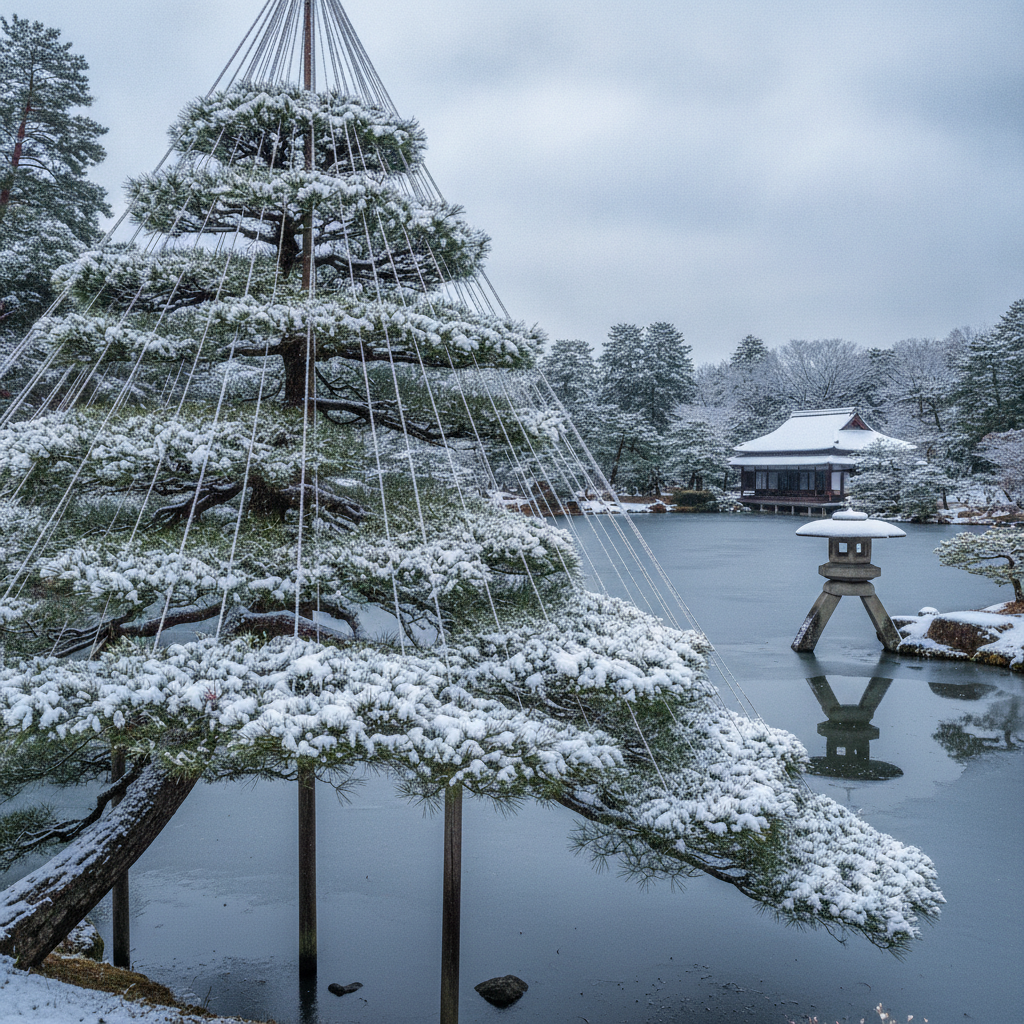
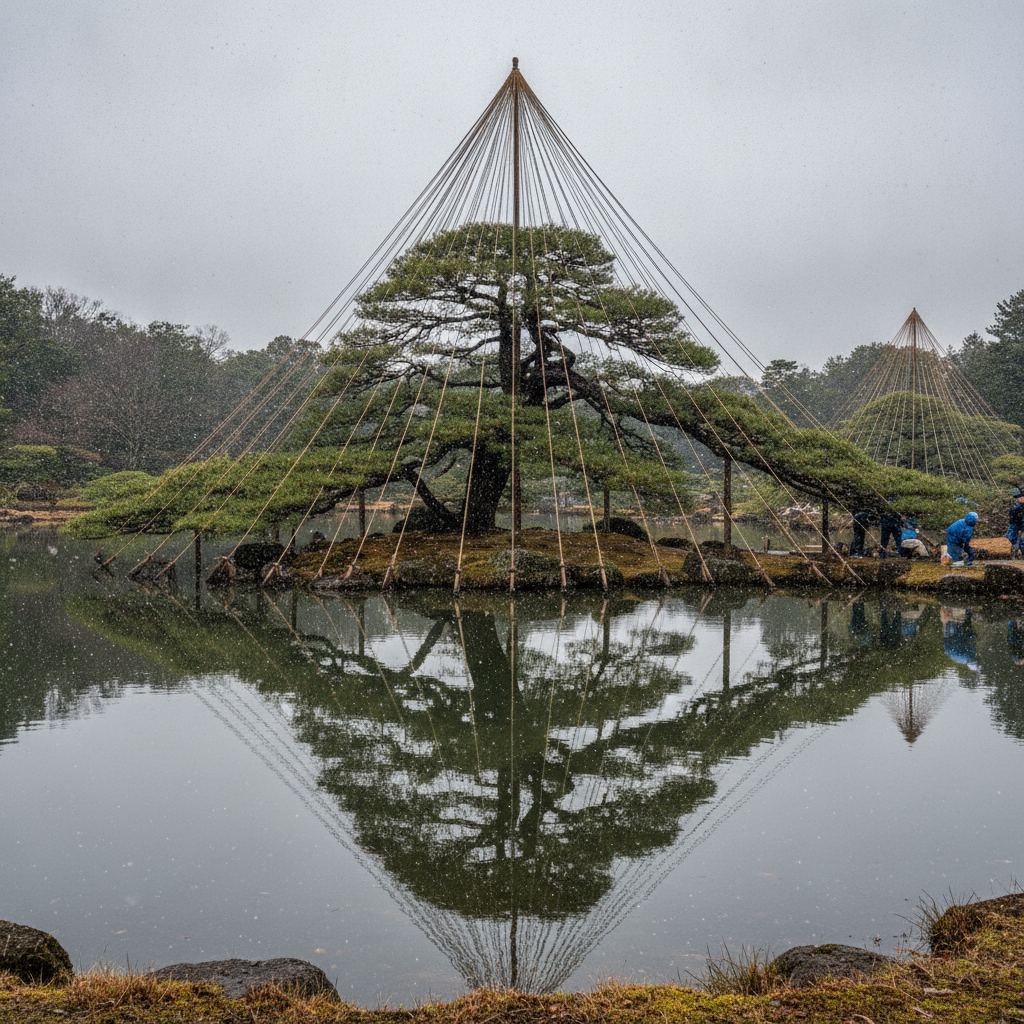
Kenroku-en's seasonal programme is the most exhaustively managed in Japan—the garden's 11 hectares contain over 8,750 trees of 183 species, each managed individually for seasonal effect, and the garden's head gardener (the Kanazawa City Parks and Greenery Division's chief garden curator) publishes a monthly seasonal expectation bulletin used by visitors to time their visit. The four peak events: the plum blossom (late February–early March; the plum grove in the garden's northwestern area—30 trees; typically 1–2 weeks before the cherry blossom); the cherry blossom (late April in Kanazawa, approximately 10 days after Tokyo; the cherry trees are distributed throughout the garden and the combination of cherry over the Kasumigaike pond with the Kotoji-toro lantern is the most sought-after composition); the iris (late May–early June; the Kenroku-en iris garden of 400 iris plants in the eastern section—the one garden element that has no equivalent in Tokyo's major parks); and the autumn maple (mid-November; the 100+ maple trees throughout the garden at peak colour—the most visited period after cherry blossom). The yukitsuri (the winter rope supports installed in November and removed in March): the Karasaki Pine's 250 supports are installed over 3 days by the garden's professional team in the third week of November, and the installation itself is attended by photography enthusiasts who document the process.
- 5
Kanazawa to Takayama – The Alpine Route Connection
The Kanazawa–Takayama connection (the Nohi Bus route through the Northern Alps connecting the Japan Sea coast city of Kanazawa with the mountain town of Takayama in the Hida region of Gifu Prefecture): the most scenic bus route in Japan and the logical extension of a Kanazawa visit for travelers who want the combination of sea coast traditional culture and mountain historic town. The route (Kanazawa to Takayama: 2h45m by Nohi Bus; ¥3,900; advance booking recommended in autumn leaf season): the road passes through the Hakusan National Park alpine area (over the Gokasho Pass at 1,445 metres), the Shirakawa-go UNESCO village (30-minute stop at the village bus terminal), and the Hida Forest before descending to Takayama. Takayama (the 'Little Kyoto of the Mountains'—another city claiming the comparison more credibly than Kanazawa in the specific sense of preserved Edo-period merchant town architecture): the Sanmachi Suji historic district (the preserved merchant town lanes of sake breweries, miso shops, and craft stores—the most complete Edo-period merchant streetscape in Japan) and the Takayama Jinya (the only surviving Tokugawa government administrative building in Japan). The Kanazawa–Shirakawa-go–Takayama triangle (the standard 2-day extension circuit from Kanazawa covering the coastal city, the UNESCO mountain villages, and the alpine merchant town): the most variety-dense itinerary available on Japan's western coast in a 4-day trip from Tokyo.
- 6
Leaving Kanazawa – What to Take & What Returns You
The specific objects that make Kanazawa a souvenir destination of the highest calibre: the gold leaf items (the paulownia box of 50 gold leaf sheets at the Hakuichi studio—¥1,500; the paper-thin edible gold leaf for home cooking; the gold leaf facial mask set (the luxury cosmetic product that combines Kanazawa gold leaf with Japanese rice bran oil and represents the most commercially successful contemporary application of the traditional craft)). The craft objects for serious buyers: the Kutani tea cup set (the hand-painted overglaze Kutani cup and saucer at the Kosen studio—approximately ¥3,000–8,000 per piece; the cup is the most transferable Kutani form for Western table use). The food items (the Kanazawa vakuum-packed sea bream (tai) flakes—the dried and seasoned Kanazawa-style tai flakes used as a rice topping; the Masuizumi sake (available at the brewery's Kanazawa Station shop and the Ōmi-chō Market sake stalls); the Kaga miso in the 300g package from the Yamatoyo miso shop in Ōmi-chō). The return visit reason: the seasonal calendar's four distinct peaks (cherry blossom, iris, autumn maple, and winter yukitsuri) provide a compelling reason to return to Kenroku-en specifically in each season—and each season also brings a different set of geisha performances, sake events, and seafood peaks. Kanazawa is one of the few Japanese cities that rewards 4 separate visits with 4 genuinely distinct seasonal experiences.
Walk this route with audio
Stories play automatically as you reach each stop — no tapping needed.
More in Kanazawa
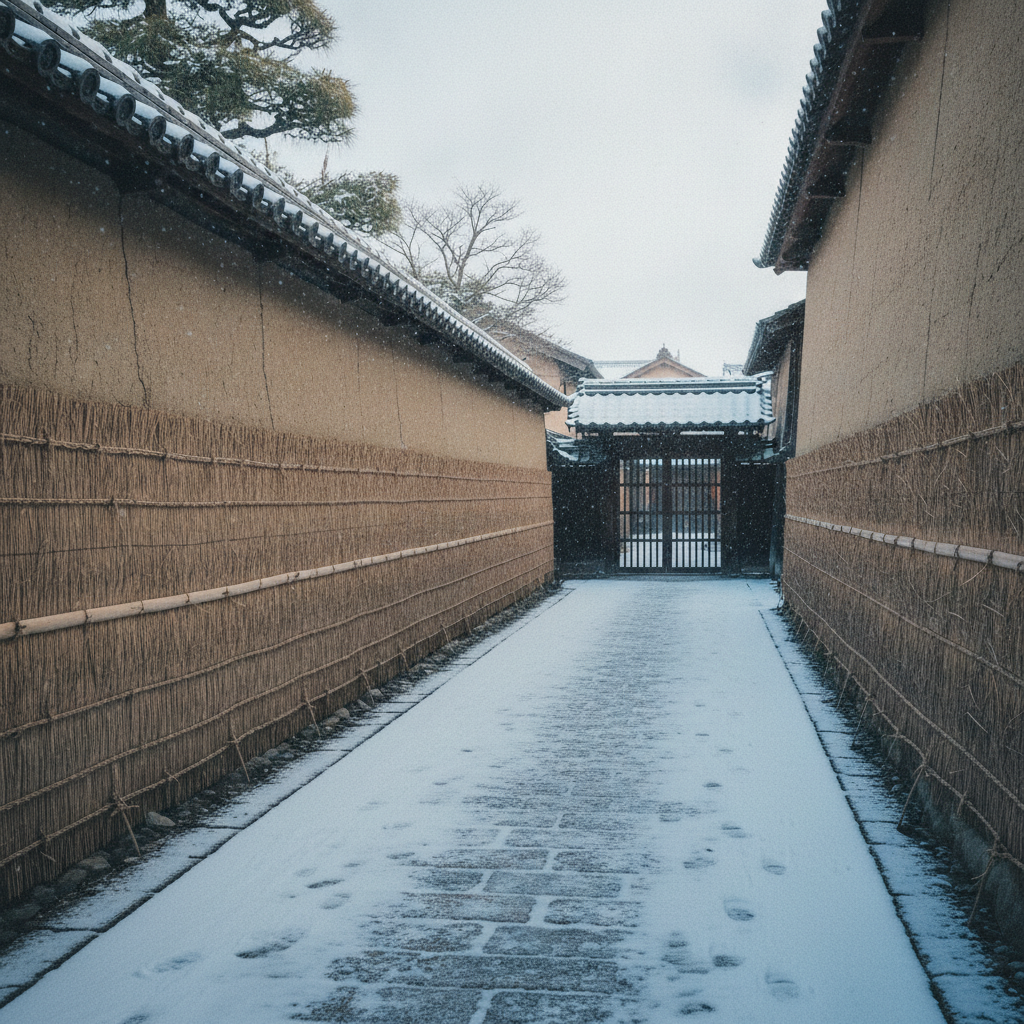
The Straw-Wrapped Walls, the Perforated White Library & Why Kanazawa Has One-Sixth Kyoto's Crowds at One-Third the Price
The Chaya Patron Introduction System Still Requiring Sponsorship, the Kanazawa Konbu Producing the Sweetest Stock in Japan & the 4,000-Costume Foundation Festival Parade
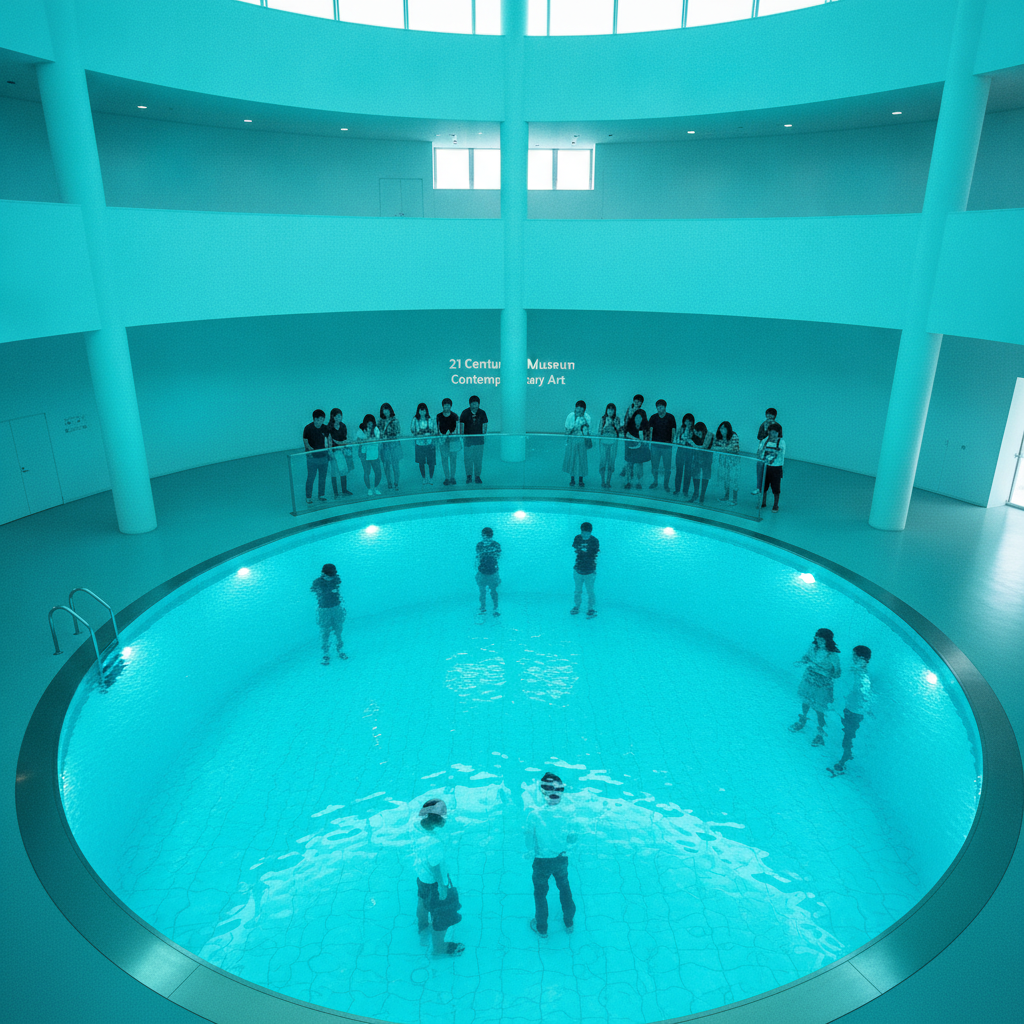
The Swimming Pool That Isn't, the 4-Story Building That Looks Like 2 & the 800 Noh Students in a City of 465,000
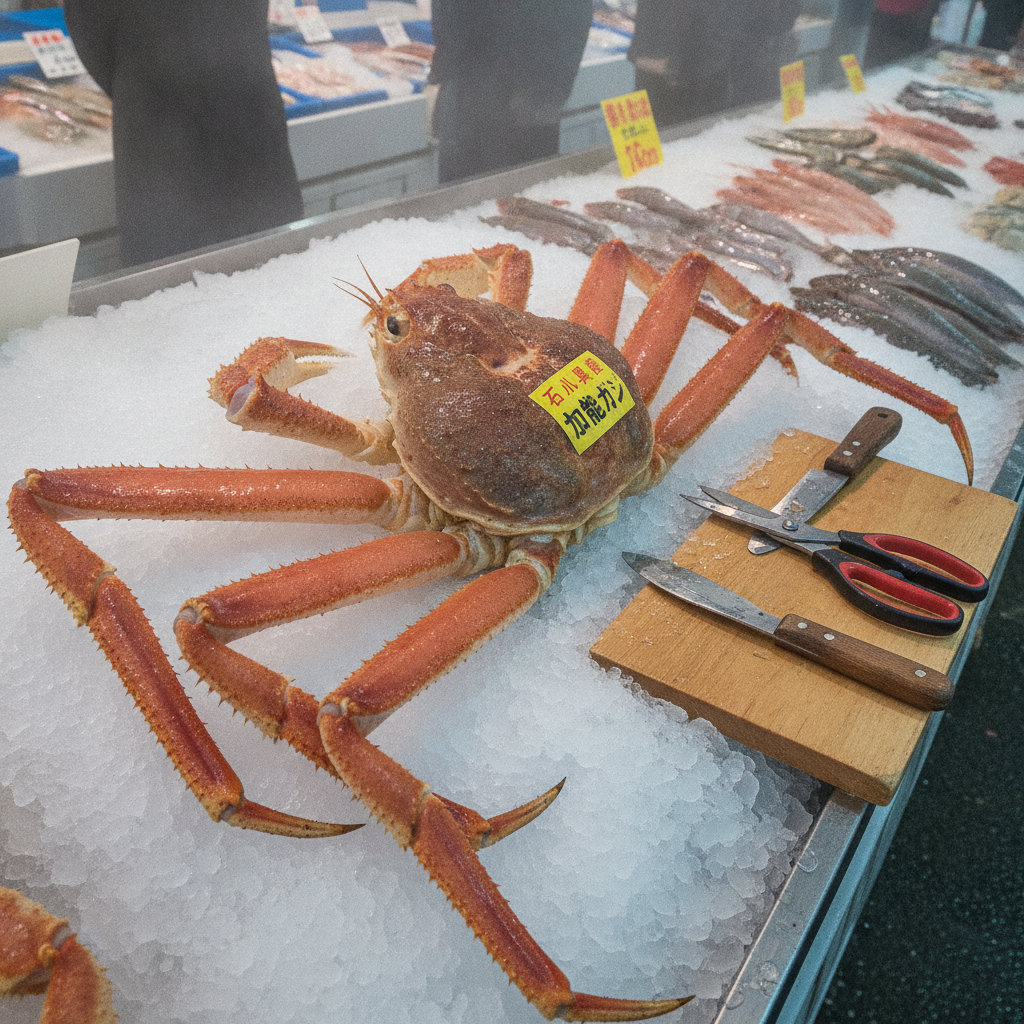
SANAA's Circular Museum Aligned With Japan's Oldest Great Garden, the ¥500,000 Opening-Day Crab & Why the Japan Sea Side of Japan Is a Different Country