The Straw-Wrapped Walls, the Perforated White Library & Why Kanazawa Has One-Sixth Kyoto's Crowds at One-Third the Price
The Nagamachi dobei earthen walls and the Nomura House's garden rated among Japan's finest per square metre; the Higashiyama temple walk past the only Jewish cemetery in Japan; the Siberian Express's Japan Sea snowfall and the three parallel winter maintenance traditions (yukitsuri, komo-gake, roof bamboo poles); SANAA's 21st Century Museum and the Kanazawa Station Motenashi Dome as the two most photographed contemporary architecture pieces in Hokuriku; the Shirakawa-go winter light-up's 1,800-visitor limit oversubscribed months in advance; and the Kanazawa-vs-Kyoto cost-and-crowd case for visiting the city that pioneered Japanese culture with fewer people and a snow calendar.
- 1
Kanazawa's Samurai Quarters – Nagamachi
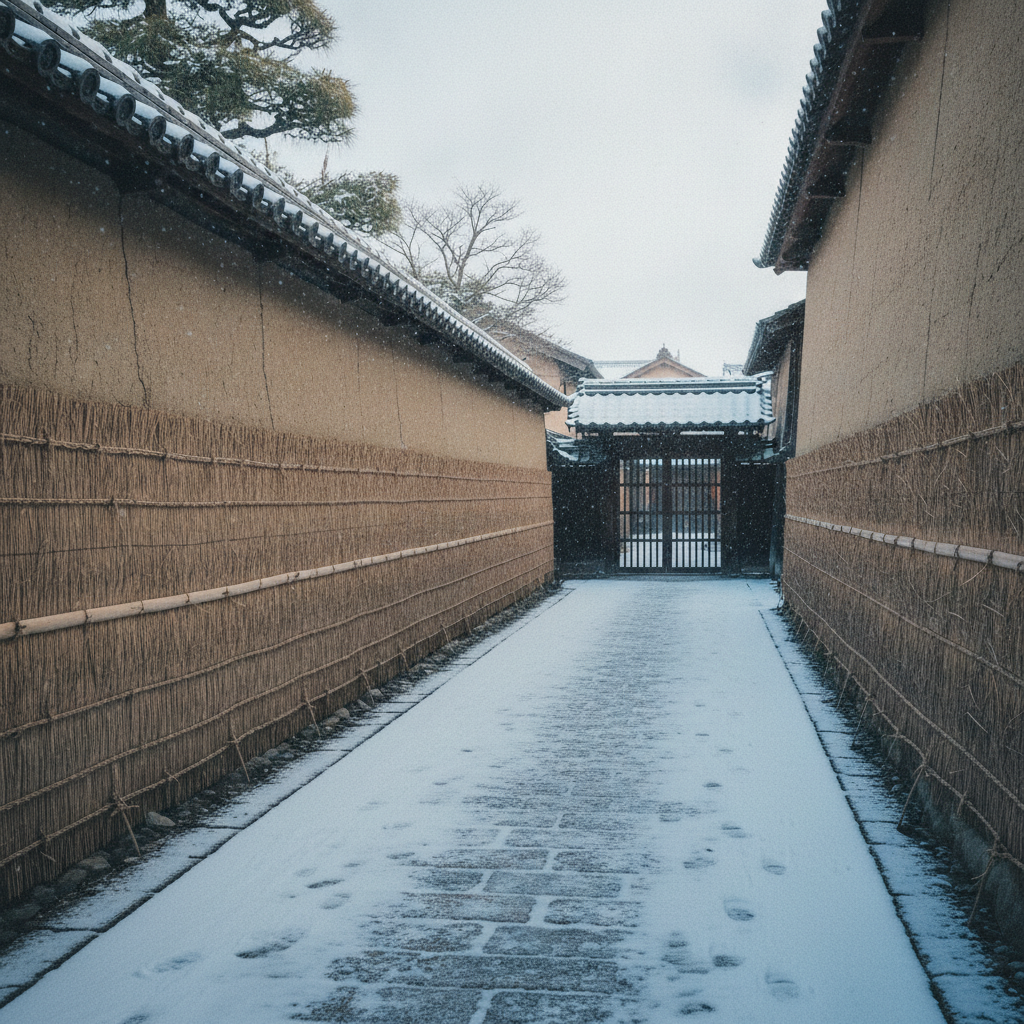
The Nagamachi samurai district (the residential area on the western slope below Kanazawa Castle—the preserved network of earthen walls (dobei), narrow lanes, and wooden samurai residences (buke yashiki) that housed the Maeda clan's retainer samurai): the most intact surviving samurai residential quarter in Japan. The Nomura Clan House (the Nomura Samurai House—the most visited building in Nagamachi; a 17th-century samurai residence with the formal reception room (zashiki) overlooking a 3-level garden; the garden is considered one of the finest small gardens in Japan per square metre of area; the shoin-style architecture (the architectural style associated with samurai housing—fusuma sliding panels, tokonoma alcove, and chigaidana stepped shelving): open for admission ¥500). The earthen walls (the dobei—the 3-metre-high earthen walls with tile-roofed caps that line the Nagamachi lanes; the walls use multiple earthen layers mixed with straw and dried under the tiled cap—the construction technique provides both status demonstration and structural integrity): the lane between the Nomura House and the Onosho sake brewery is the most photographed Nagamachi street view. The winter straw protection (the komo-gake—the winter straw wrapping placed around the earthen wall bases in November and removed in March to protect the earthen walls from the Kanazawa snow): the straw-wrapped Nagamachi walls in early December are the most seasonal sight in the district and the most distinctively Kanazawa winter image after the Kenroku-en yukitsuri tree supports.
- 2
The Higashiyama Hill & Temple Town Walk
The Higashiyama district (the hill east of the Higashi Chaya district—the area of Buddhist temples and smaller Shinto shrines that extends from the Asano River eastward up the Higashiyama hillside): the Kanazawa temple town walk (the 2-km linear route from the Asano River through the Higashi Chaya district, up the Higashiyama temple hill, and along the Utatsuyama Koen ridgeline) is the most rewarding urban walk in Kanazawa for the combination of cultural sites and elevated views. The Utatsuyama Koen (the hilltop park above Higashi Chaya—the cherry blossom viewing site with a view over Kanazawa city toward the Sea of Japan; in October, the park's maple trees turn red over the chaya district below): the standard autumn Kanazawa image (red maple above the Higashi Chaya rooflines). The Kanazawa Jewish Cemetery (the Western-style cemetery on the Higashiyama slope—one of the only Jewish burial grounds in Japan; dating from the Meiji-period expatriate community in Kanazawa; the cemetery's existence reflects the late 19th-century Kanazawa University's attraction of Western scholars including the Jewish-American zoologist Edward Morse (who also documented Nara): the most unexpected heritage site in Kanazawa). The Zen temple circuit (the Soto Zen temples clustered on the Higashiyama slope—the Kenroku-en's sister cultural institutions in the Maeda family's religious programme; the Kenchū-ji, Ryūfuku-ji, and Nishida Kichibe-en gardens within the temple complex are the least visited gardens in Kanazawa and some of the most refined).
- 3
Kanazawa's Snow Country Identity
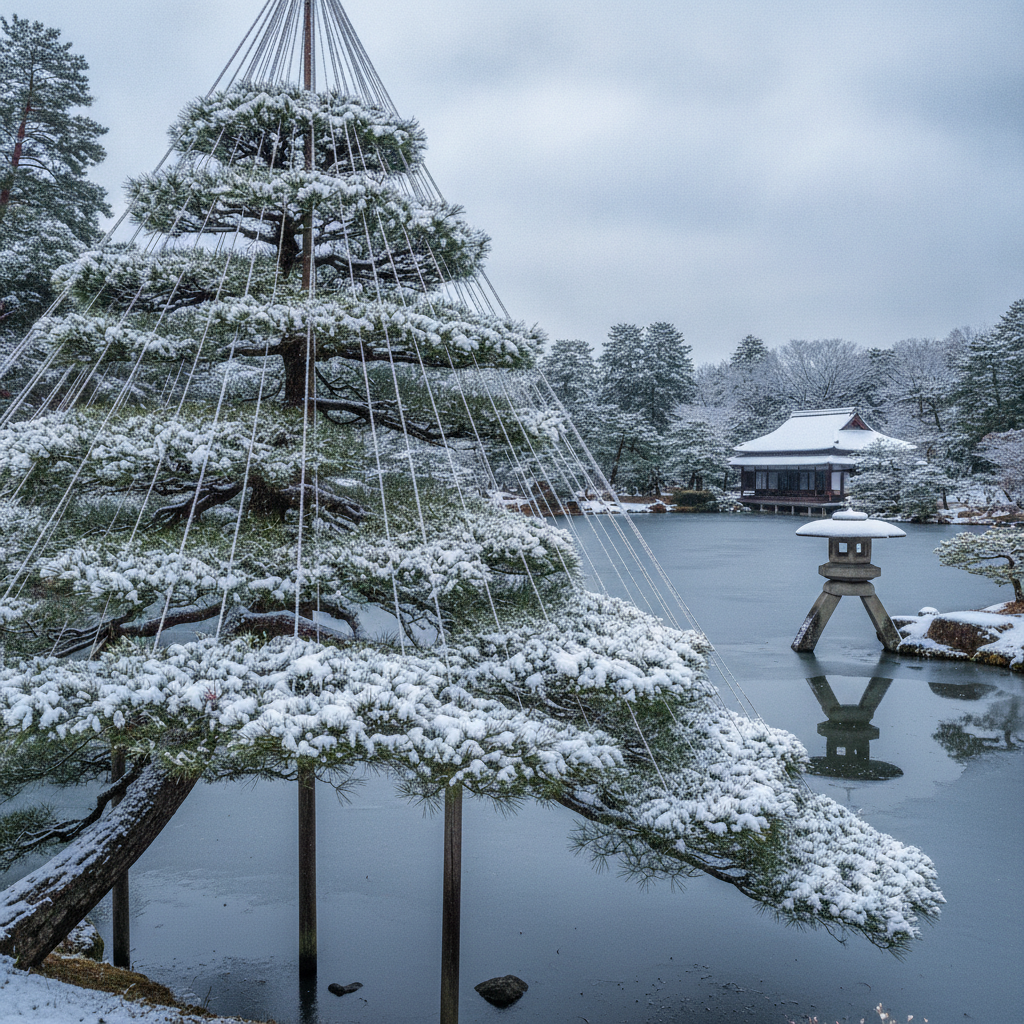
Kanazawa's annual precipitation (the second highest among Japan's major cities, after Kōchi): the Japan Sea side of Honshu receives the winter 'Siberian Express'—the cold continental air masses from Siberia that cross the Japan Sea pick up moisture and deposit heavy snowfall on the coastal cities and mountain ranges. Kanazawa receives approximately 200–300 cm of snow per winter in heavy years (though annual variation is large: in mild El Niño years the city may receive only 50 cm). The snow culture: the Kanazawa snow preparations (the yukitsuri—the tree branch rope supports in Kenroku-en (the most elaborate, requiring 250 supports for the Karasaki Pine alone); the komo-gake earthen wall straw wrapping in Nagamachi; and the traditional roof snow-clearing with long bamboo poles in the Higashi Chaya district): the three winter preparations together constitute the most culturally specific seasonal maintenance programme in Japan. The Kanazawa snow festival (the Hyakumangoku Festival in June celebrates the foundation of the Maeda domain, not the snow season, but the winter Kanazawa light-up events (January–February: the 'Kanazawa in Winter' illumination of Kenroku-en, Higashi Chaya, and the 21st Century Museum) are the snow-season events that attract the most overnight visitors. The Snow Country literature (the Kawabata Yasunari novel 'Snow Country' (Yukiguni, 1956)—the Nobel Prize-winning novel set in a fictional hot spring town on the Japan Sea side of the Niigata mountains: while not set in Kanazawa, the novel's aesthetic of cold, isolation, and melancholy perfectly captures the Japan Sea winter culture that defines Kanazawa's emotional character).
- 4
Kanazawa's Contemporary Architecture Tour
The 21st Century Museum transformed Kanazawa's relationship to contemporary architecture—the museum's 2004 opening made the city a destination for architecture tourism and prompted a decade of significant new building investment. The contemporary architecture circuit: the 21st Century Museum (SANAA, 2004—the circular civic museum); the Ishikawa Prefectural Art Museum (the adjacent museum housing the Kutani ceramics and Kaga Yuzen collection—designed as a modernist white box whose neutrality provides the deliberate contrast with the 21st Century Museum's glass openness); the Kanazawa Station glass roof (the Motenashi Dome—the 70-metre-high hyperbolic paraboloid glass roof over the Kanazawa Station entrance plaza, designed by Kawamoto Norihiko in 2005 as a symbol of Kanazawa's welcome: the most photographed train station approach in Japan after Kyoto Station); the Kanazawa Umimirai Library (the perforated white concrete library by Coelacanth K&H architects (2011)—the 6,000 circular perforations in the concrete exterior wall allow filtered natural light to enter without direct sunlight: the most photographed library in Japan since its completion). The Kenroku-en and contemporary art relationship (the tension between Kenroku-en's Edo-period garden aesthetic and the 21st Century Museum's SANAA transparency philosophy, resolved by the physical adjacency of the two institutions on opposite sides of the Kenroku-en southern approach road): the most intellectually interesting juxtaposition of historic and contemporary culture in any Japanese city.
- 5
Day Trip to Shirakawa-go & Gokayama
Shirakawa-go (the UNESCO World Heritage village 60 km east of Kanazawa in the Shōgawa River valley—the village of gassho-zukuri (the prayer-hands farmhouses—the steeply pitched thatched-roof farmhouses designed for the heavy snow of the Shōgawa valley): accessible from Kanazawa by Hokutetsu Bus (2 hours; ¥1,800 each way; advance booking essential) or by the Nohi Bus from Nagoya (2h30m) or Takayama (50 minutes). The gassho-zukuri architecture (the steeply pitched thatched roof—the pitch is approximately 60 degrees, steep enough to shed the 3-metre-deep snowfall of the inland mountain valley; the roof space is used for silkworm cultivation (the interior of a gassho-zukuri roof is one large room maintained at 25–30°C by the silkworm production during the Edo period): the largest surviving gassho-zukuri farmhouse (the Wada-ke house—the largest farmhouse in the village, 250 years old, with a 4-story interior roof space) is open for visits. The village at night in snow (the Shirakawa-go winter light-up events—2 Saturdays in January and February (advance ticket reservation required—the light-up event is oversubscribed months in advance): 1,800 visitors admitted per event; the illuminated gassho-zukuri roofs in falling snow at 17:30–19:30 are the most sought-after single photographic event in rural Japan). The Gokayama extension (the smaller, less visited UNESCO village 15 km north of Shirakawa-go—the Suganuma and Ainokura hamlets are smaller but receive 10× fewer visitors than Shirakawa-go and preserve a more authentic rural atmosphere).
- 6
Kanazawa vs Kyoto – Japan's Two Traditional Culture Capitals
The comparison that Japanese travellers make most frequently when discussing Kanazawa: the 'other Kyoto' evaluation. What Kanazawa has that Kyoto lacks: the active Snow Country climate (the seasonal rhythms of the Japan Sea coast—the yukitsuri tree-roping, the komo-gake wall-wrapping, and the snow-clearing are lived practices rather than tourist events); the significantly lower visitor volume (Kanazawa receives approximately 8 million annual visitors vs Kyoto's 50 million: the ratio is approximately 1:6, meaning the craft workshops, geisha districts, and garden are accessible without the crushing crowds of the Kyoto tourist peak); the Sea of Japan seafood supply (no equivalent in Kyoto's landlocked and Pacific-coast-facing position); and the 21st Century Museum's contemporary architecture as a globally significant complement to the historic craft culture. What Kyoto has that Kanazawa lacks: the Imperial heritage sites (Nijo Castle, Kinkaku-ji, Ryōan-ji—world-class heritage with no Kanazawa equivalent in scale); the geisha population (Kyoto's estimated 200 geisha vs Kanazawa's 50—4× the presence and the corresponding restaurant entertainment infrastructure); and the international brand recognition (the 'Kyoto' name has a tourism draw that 'Kanazawa' has not yet achieved internationally, despite the Hokuriku Shinkansen access). The practical recommendation: Kanazawa is the most rewarding Japanese city for the visitor who has already done Kyoto and Osaka and wants to experience Japanese traditional culture with one-sixth the crowding at one-third the accommodation cost.
Walk this route with audio
Stories play automatically as you reach each stop — no tapping needed.
More in Kanazawa
The Chaya Patron Introduction System Still Requiring Sponsorship, the Kanazawa Konbu Producing the Sweetest Stock in Japan & the 4,000-Costume Foundation Festival Parade
The Swimming Pool That Isn't, the 4-Story Building That Looks Like 2 & the 800 Noh Students in a City of 465,000
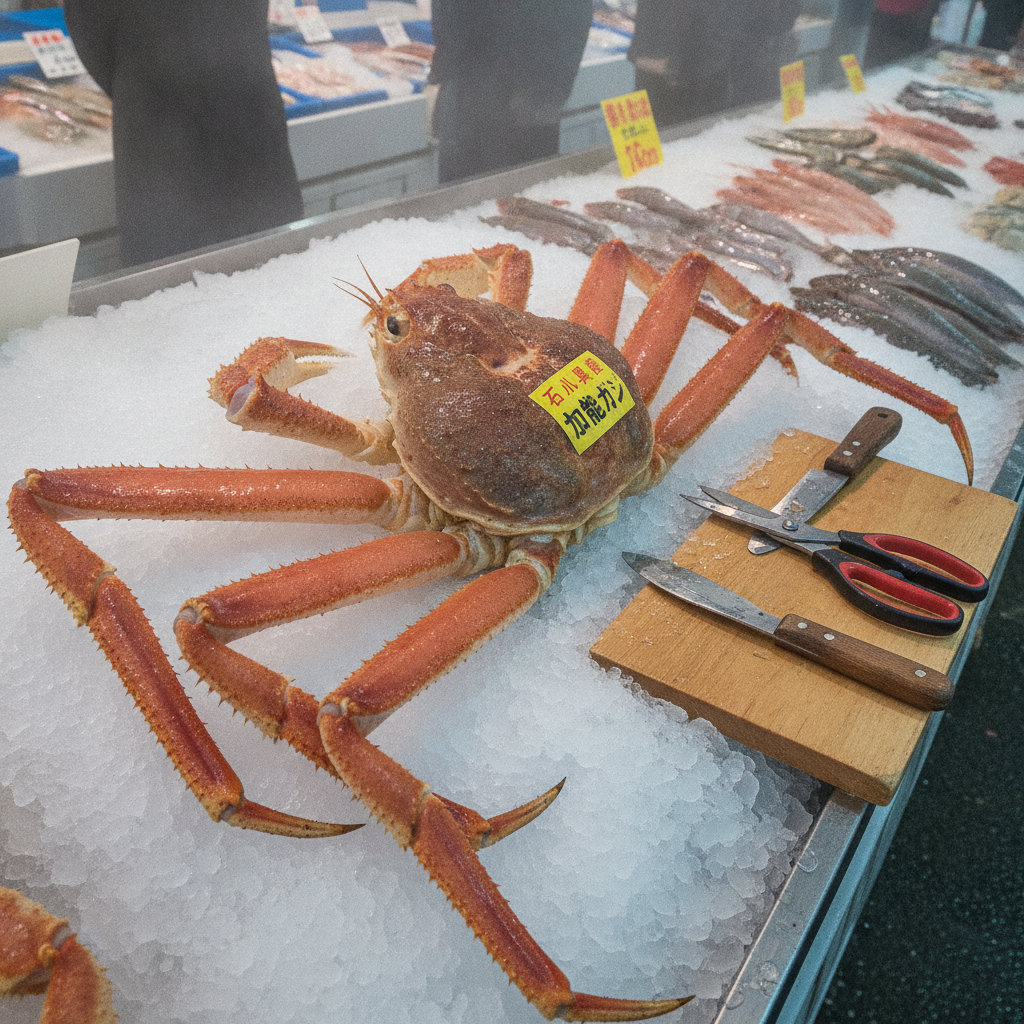
SANAA's Circular Museum Aligned With Japan's Oldest Great Garden, the ¥500,000 Opening-Day Crab & Why the Japan Sea Side of Japan Is a Different Country
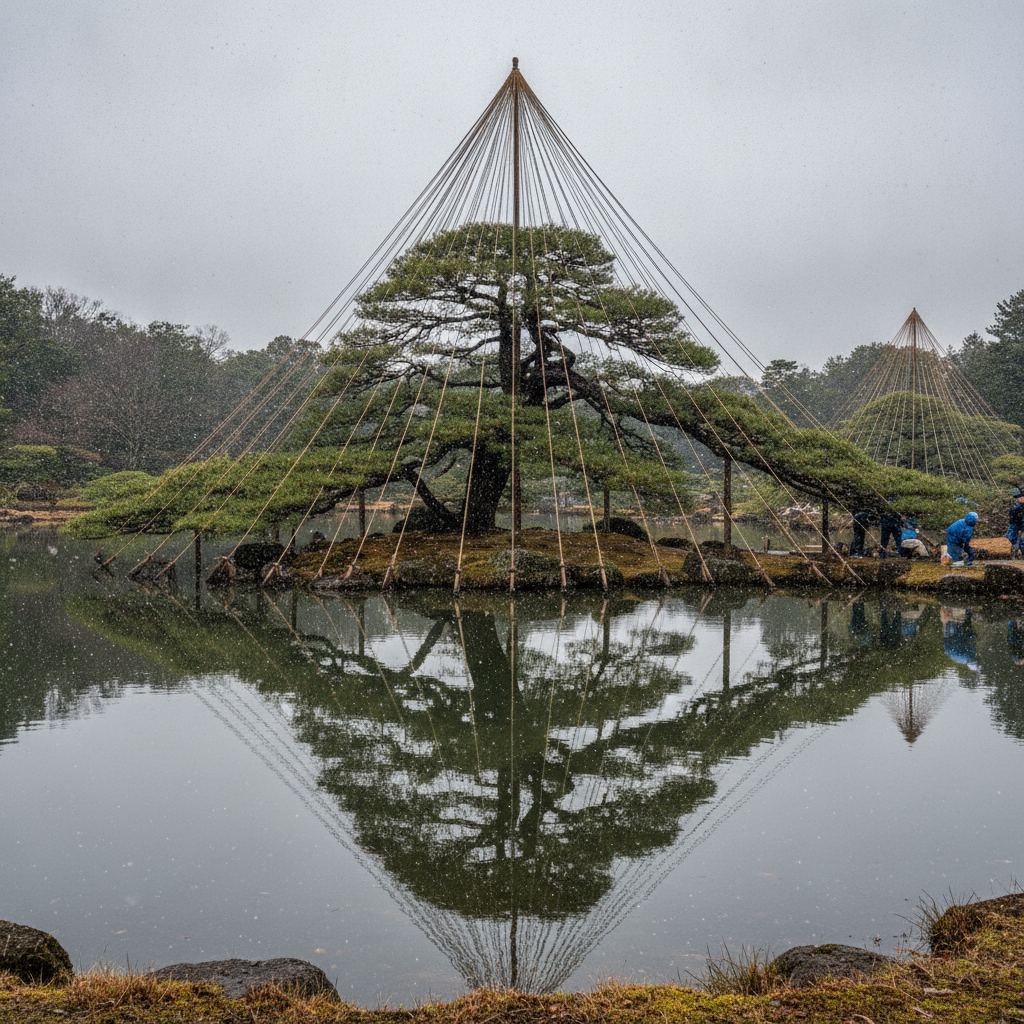
The 6-Stage 3-Day Process That Produces a Sheet Lighter Than Breath, the Apprenticeship Fund Paying 60% of New Craft Learners' Wages & the Four Kenroku-en Peaks That Each Justify a Separate Trip