The Garden That Has All Six Impossible Attributes, the Geisha Quarter Whose Lattice Spacing Was Government-Regulated & 99% of Japan's Gold Leaf
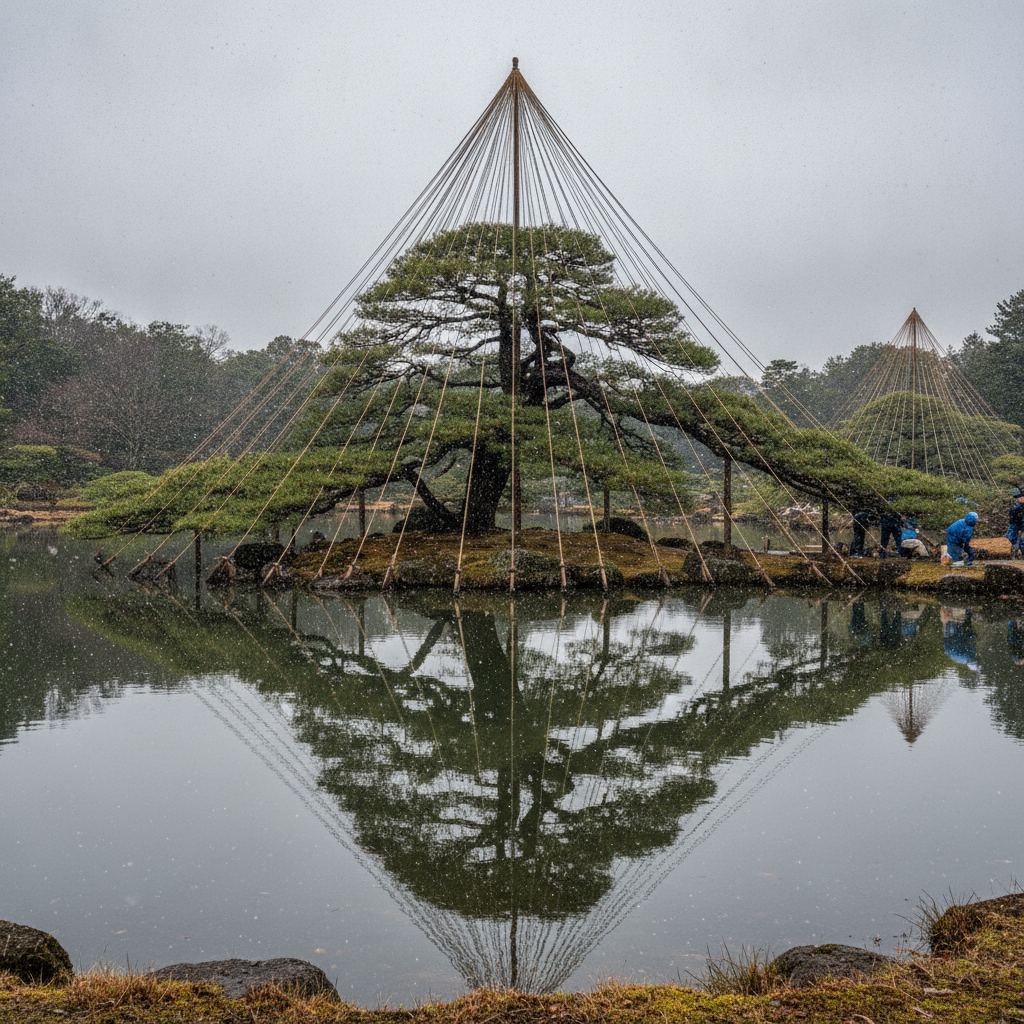
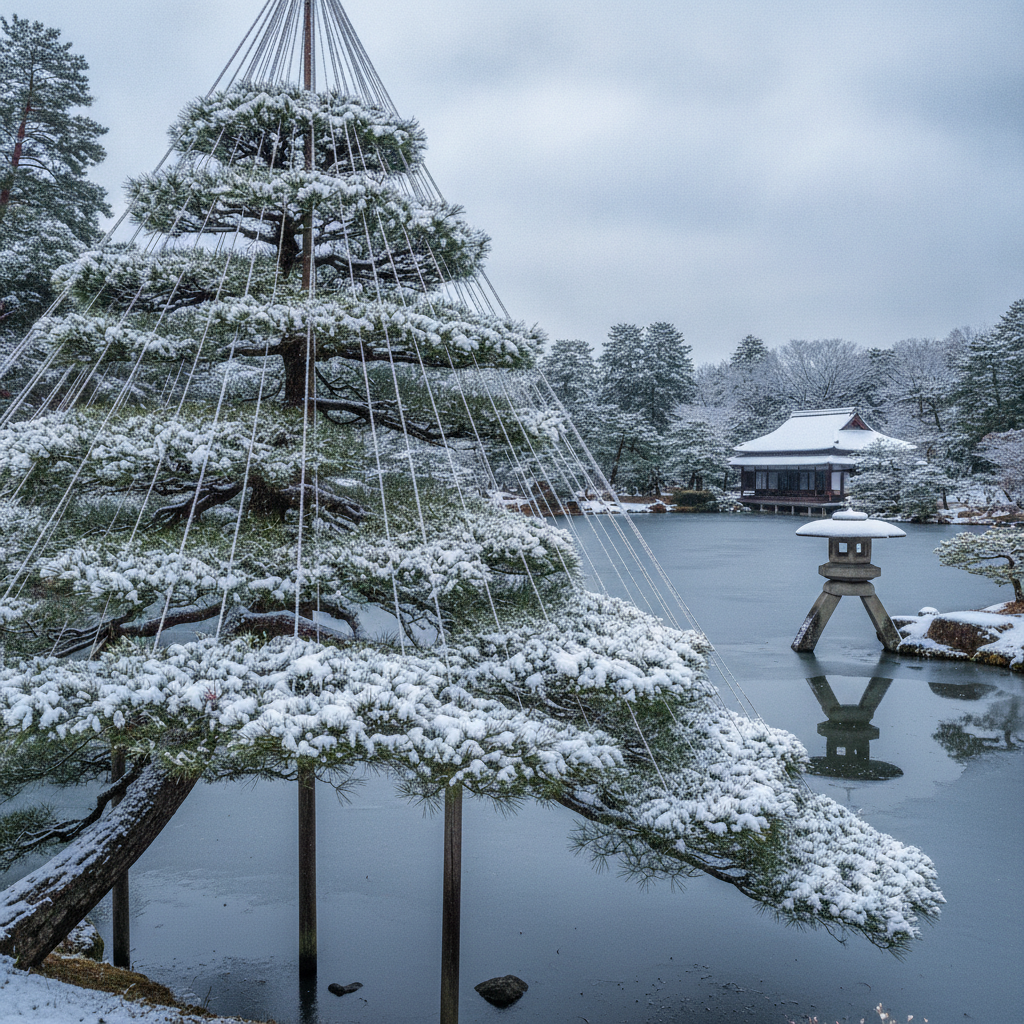
Kenroku-en's Kotoji-toro asymmetric lantern in the pond water and the Karasaki Pine's 250 winter rope supports creating Japan's most distinctive snow garden silhouette; the Higashi Chaya district's kimesho-goshi lattice spacing as a Maeda clan regulatory system; the Maeda clan's deliberate non-military cultural survival strategy producing the most concentrated craft tradition outside Kyoto; Ōmi-chō Market's 300-year continuous operation and the 08:15 arrival for the freshest Noto yellowtail and Zuwaigani snow crab; the gold leaf beaten to 1/10,000 mm in Kanazawa's optimal humidity; and the Hokuriku Shinkansen's 2015 opening that brought the city to 2h30m from Tokyo.
- 1
Kenroku-en – One of Japan's Three Great Gardens
Kenroku-en (the daimyo garden of the Maeda clan, developed over 200 years from the 1620s to the 1840s on the plateau above Kanazawa's castle): the garden's name (Kenroku—'six attributes combined') comes from a Chinese classical theory of garden design that states the six attributes of a perfect garden (spaciousness, seclusion, artificiality, antiquity, flowing water, and views) are normally mutually exclusive—Kenroku-en is considered to possess all six simultaneously, making it one of the three officially designated 'great gardens of Japan' alongside Korakuen in Okayama and Kairaku-en in Mito. The garden's most photographed features: the Kotoji-toro (the two-legged stone lantern in the Kasumigaike pond—the lantern's asymmetric design (one leg short, one long, creating a slight tilt over the water) has appeared in Kenroku-en's promotional image since at least 1890 and is the single most recognised garden object in Japan after the Kinkaku-ji's gold pavilion reflection); the Karasaki Pine (the black pine with branches supported by wooden posts spanning approximately 28 metres horizontally—the tree requires 250 supporting posts in winter for the snow-loaded branch protection programme called yukitsuri, the practice of supporting tree branches with rope tied to a central pole, which creates the most distinctive winter silhouette in the Japanese garden tradition). The garden hours and seasonal programme: open from 07:00 (06:00 in summer); the early morning before 09:00 is the quietest period—the garden is one of Japan's most visited and crowded, so arriving at opening is the most consistently recommended strategy.
- 2
The Higashi Chaya Geisha District
The Higashi Chaya district (the largest and best preserved of Kanazawa's three chaya (teahouse entertainment) districts—the area where geisha performances and the associated formal dinner culture have been maintained since the Edo period): Kanazawa is the only city in Japan outside Kyoto and Tokyo with an active geisha tradition of comparable institutional depth, with approximately 50 registered geisha in three districts (Higashi, Nishi, and Kazue-machi). The chaya architecture (the two-story wooden machiya buildings with the distinctive red-latticed windows on the upper floor—the lattice (kimesho-goshi) is the architectural marker of a licensed chaya: the spacing of the lattice slats was regulated by the Maeda clan administration to prevent the direct view of geisha from the street while allowing light and sound to pass): the Higashi district's surviving machiya street (approximately 10 buildings on the main approach lane—the most intact Edo-period geisha quarter streetscape in Japan outside Kyoto's Gion). The Shima (the Higashi chaya interior open for museum visits—the only historically preserved chaya interior accessible to the public in Kanazawa; the ground floor entertainment room, the first-floor ozashiki (tatami reception room), and the kitchen: ¥500 admission): the most direct insight into what the chaya interior looked like during an active entertainment evening.
- 3
Kanazawa Castle Park & the Maeda Clan
Kanazawa Castle (the Maeda clan's castle at the center of the city—the largest feudal domain in Japan outside the Tokugawa shogunate's direct holdings; the Maeda clan controlled approximately 1,020,000 koku (units of rice production) of domain revenue, the largest non-Tokugawa domain in Japan): the current castle structure (the Hishi Yagura turret, Gojukken Nagaya armory, and the Kahoku-mon Gate—the three historic structures surviving from the original castle; the reconstructed Ni-no-maru palace completed 2020): the castle park is free to enter; the reconstructed palace interior charges ¥700 admission. The Maeda clan's cultural patronage (the reason Kanazawa is called 'Japan's Little Kyoto' by Japanese visitors—a somewhat misleading comparison but one that captures the Maeda family's 265-year programme of cultural investment that produced: the largest Noh theatre tradition outside Tokyo/Kyoto (Kanazawa has maintained 3 Noh stages and the largest non-urban Noh community in Japan); the Kaga Yuzen silk dyeing tradition (the most technically demanding silk painting technique in Japan); the Kenroku-en garden; and the Kutani-yaki ceramics): the Maeda cultural programme was explicitly designed to make Kanazawa's arts indistinguishable from the Kyoto court tradition as a political strategy. The Maeda clan's survival policy (the Maeda deliberately avoided military conflict with the Tokugawa shogunate and invested their energy in cultural programmes—the reason Kanazawa was never attacked and its culture survived intact).
- 4
The Ōmi-chō Market – Kanazawa's Kitchen
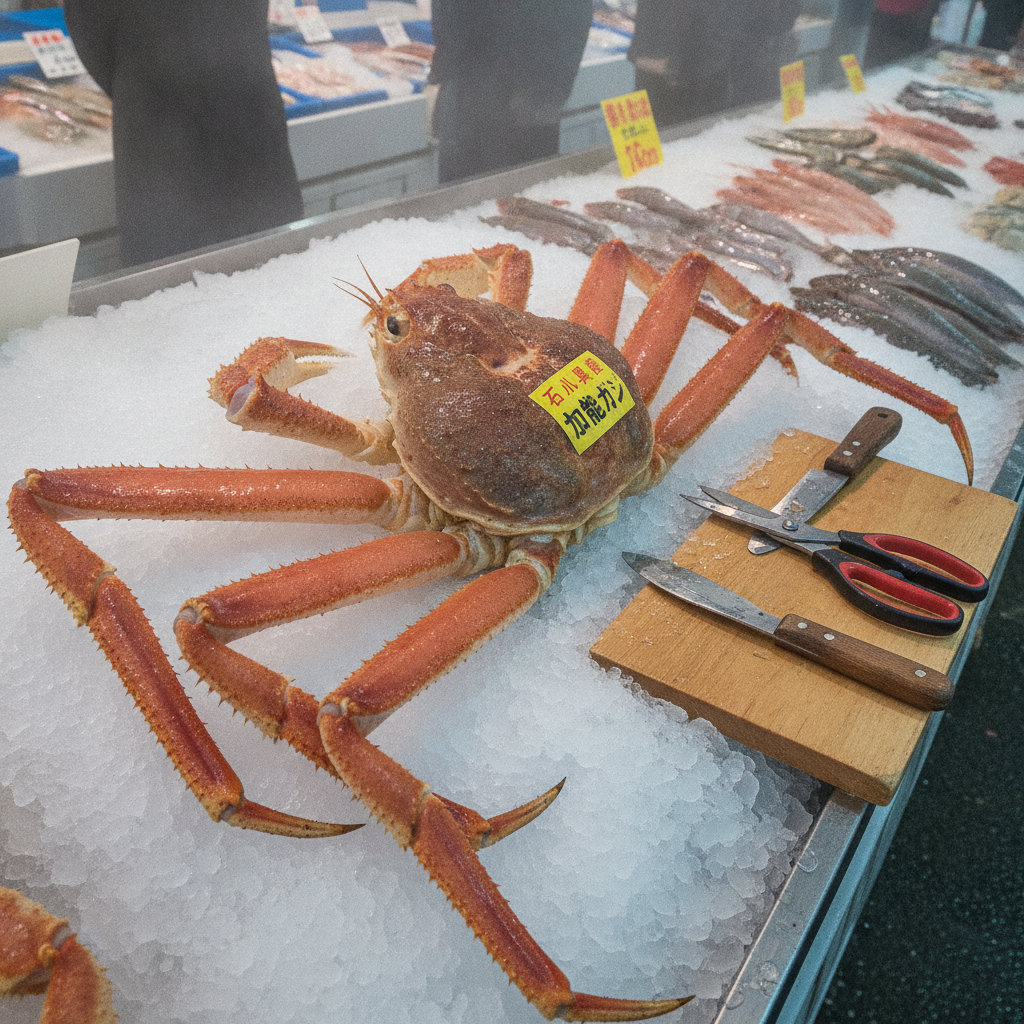
The Ōmi-chō Market (the covered market at the center of Kanazawa's old merchant district—240+ stalls in a partially covered arcade structure established in 1721 and operating continuously for 300 years): the market whose specialty products define Kanazawa's cuisine and whose market circuit provides the best introduction to the Sea of Japan seafood culture. The Kaga seafood (the cold Sea of Japan producing conditions—Kanazawa's location on the Noto Peninsula coast gives access to the Japan Sea's cold-water fish species: the Zuwaigani (snow crab—the most prized crustacean in Japanese winter cuisine; season November–March); the Noto yellowtail (buri—the large yellowtail that migrates from the north in winter, arriving in Kanazawa's Noto-oki fishing grounds in December; the largest and most premium buri in Japan are the Noto-oki specimens); and the Aori-ika (bigfin reef squid—the squid with the most delicate texture in Japanese seafood, available fresh in Kanazawa from summer through autumn). The market breakfast (the 8:00–10:00 market breakfast circuit—fresh seafood on ice in one hand, a bowl of miso soup from the market's kitchen stall in the other; the most local morning experience available in Kanazawa): the Ōmi-chō market opens at 08:00 and the freshest seafood is on display by 08:15—the market's peak activity is 08:00–11:00. The don-bowl restaurants in the market (the second-floor restaurants and the basement food area serving kaisendon (sashimi rice bowls) with the morning's catch—the market restaurants are crowded by 11:00 and require arrival by 10:30 for a seat without a long wait).
- 5
Kanazawa's Crafts – Gold Leaf, Kutani & Kaga Yuzen
Kanazawa's craft tradition is the most concentrated in Japan outside Kyoto—the product of the Maeda clan's 265-year policy of importing Kyoto craftsmen and developing local craft industries. The three flagship Kanazawa crafts: Kanazawa Hakuichi (Kanazawa gold leaf—the city produces 99% of Japan's gold leaf output; the gold is beaten to a thickness of 1/10,000 mm using a technique requiring 3 days of beating; Kanazawa's high humidity conditions (the city receives the second-highest annual precipitation of any Japanese city) are optimal for gold leaf production, which requires specific humidity levels to prevent the leaf from sticking to the beating paper): the Hakuichi gold leaf studio near Higashi Chaya offers the gold leaf application workshop (¥500–¥3,000 depending on the item). Kutani-yaki (the Kutani porcelain tradition—the polychrome overglaze porcelain using five colours (green, yellow, red, purple, and navy blue) in densely painted floral and bird compositions; produced since 1655 in the Kutani village in the mountains south of Kanazawa; the Ishikawa Prefectural Museum of Art houses the most complete collection). Kaga Yuzen (the Kanazawa silk kimono painting tradition—the most difficult Japanese textile technique, applying pigments directly to silk fabric using a resist-dyeing method that requires up to 5 years of apprenticeship before independent production; the motifs are the specific Kaga style (realistic natural subjects (flowers, birds, insects) with a characteristic grey or brown shading at the petal edge that distinguishes Kaga Yuzen from Kyoto Yuzen's more abstract colour fields)).
- 6
Getting to & Around Kanazawa – Practical Guide
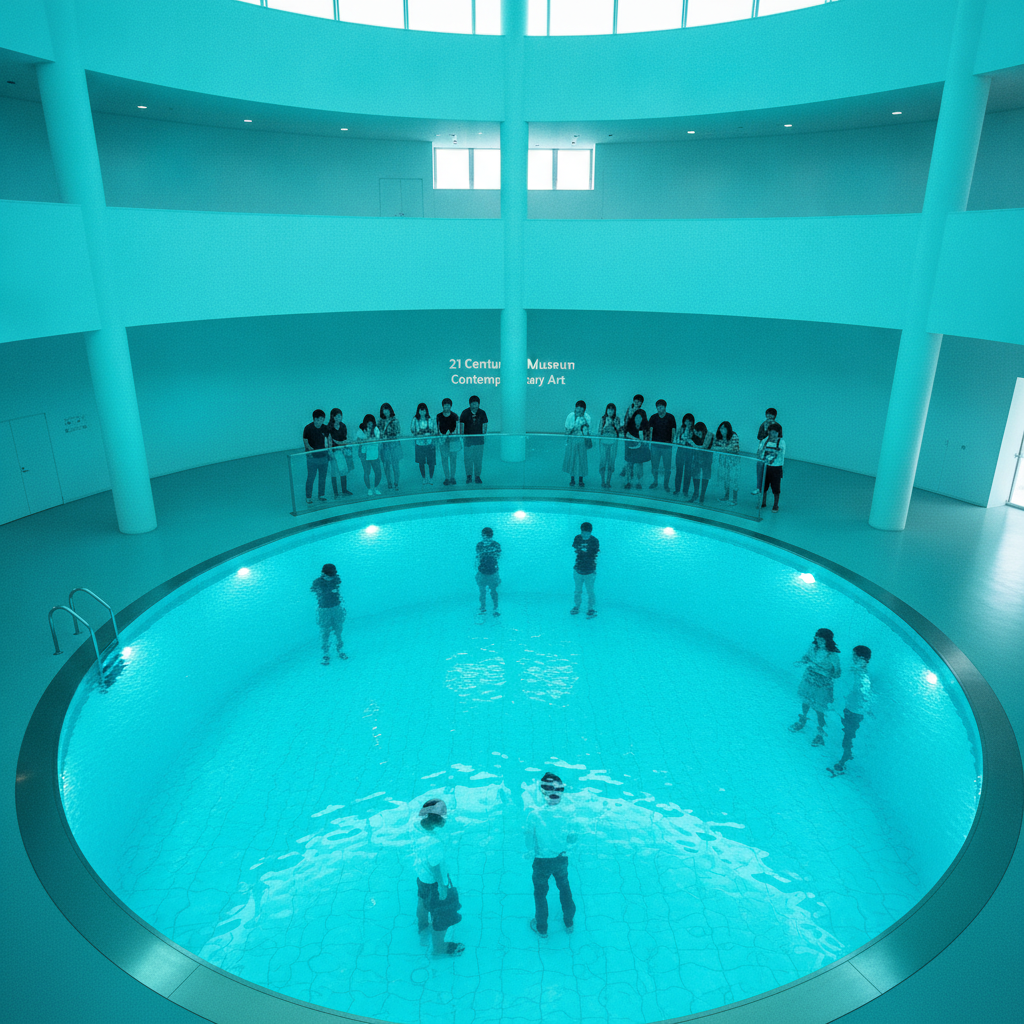
Kanazawa's accessibility improved dramatically with the March 2015 extension of the Hokuriku Shinkansen from Nagano to Kanazawa (the original Shinkansen opened for the 1998 Nagano Olympics reached only to Nagano; the 2015 extension brought Kanazawa within 2h30m of Tokyo on the Kagayaki (direct; ¥14,380) or 3h hours on the Hakutaka (with stops)). From Osaka: the Thunderbird Limited Express from Osaka Station to Kanazawa (2h30m; ¥6,890—the express that predated the Shinkansen and still runs from Osaka, providing the most useful connection for visitors coming from Kyoto or the Kansai region). Within Kanazawa: the Kanazawa Loop Bus (the tourist bus circuit connecting all major Kanazawa attractions—the orange and blue loop buses run every 15 minutes clockwise and counterclockwise; the 1-day pass (¥500) provides unlimited rides and is the most convenient option for the standard Kanazawa circuit). The walking alternative: the Kenroku-en, Kanazawa Castle, Higashi Chaya, and the 21st Century Museum are all within a 25-minute walk of each other—the compact city center is the most walkable major heritage destination in Japan after Kyoto's downtown area. The 2-day structure: Day 1 (Kenroku-en at 07:00, Kanazawa Castle and 21st Century Museum, Higashi Chaya afternoon, Katamachi night district evening); Day 2 (Ōmi-chō Market at 08:00, Nishi Chaya, Ninja-dera Temple, Myoryuji crafts and gold leaf; optional half-day Noto Peninsula extension for overnight visitors).
Walk this route with audio
Stories play automatically as you reach each stop — no tapping needed.
More in Kanazawa
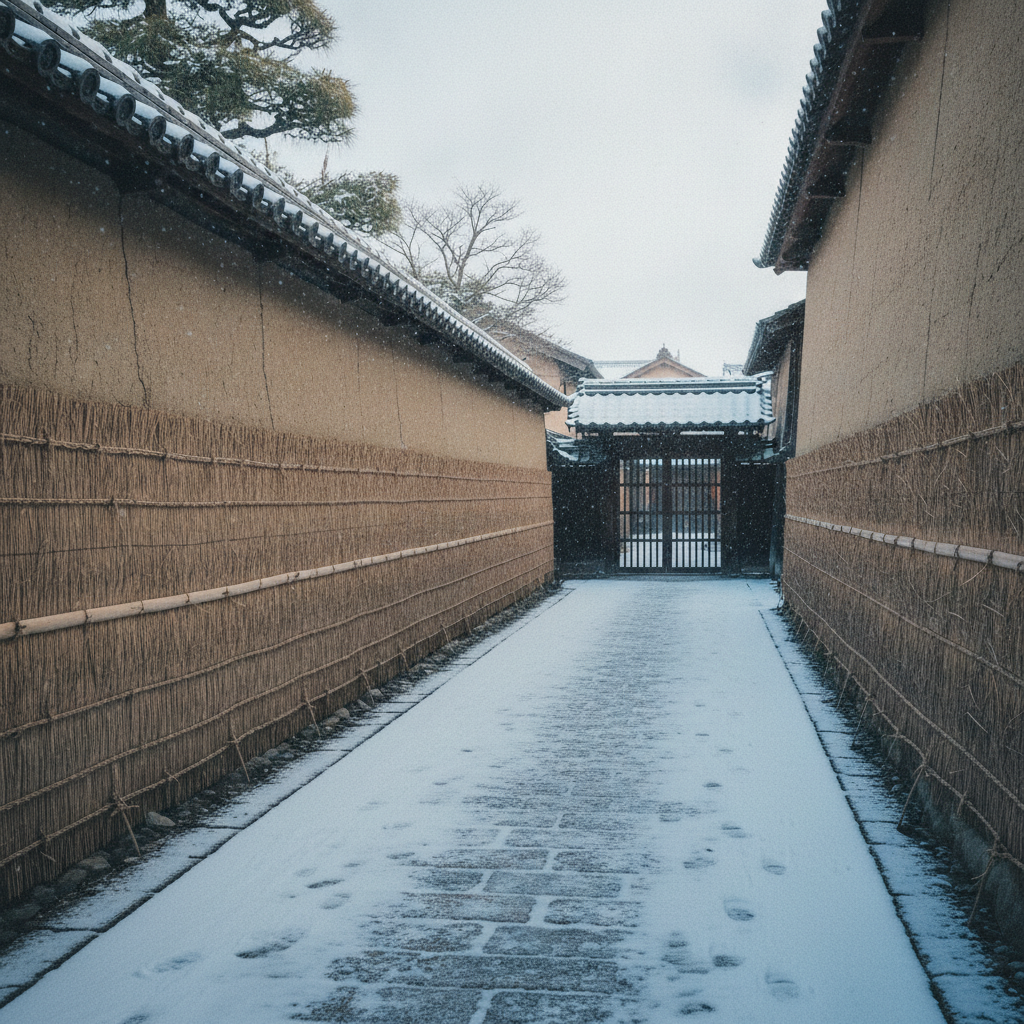
The Straw-Wrapped Walls, the Perforated White Library & Why Kanazawa Has One-Sixth Kyoto's Crowds at One-Third the Price
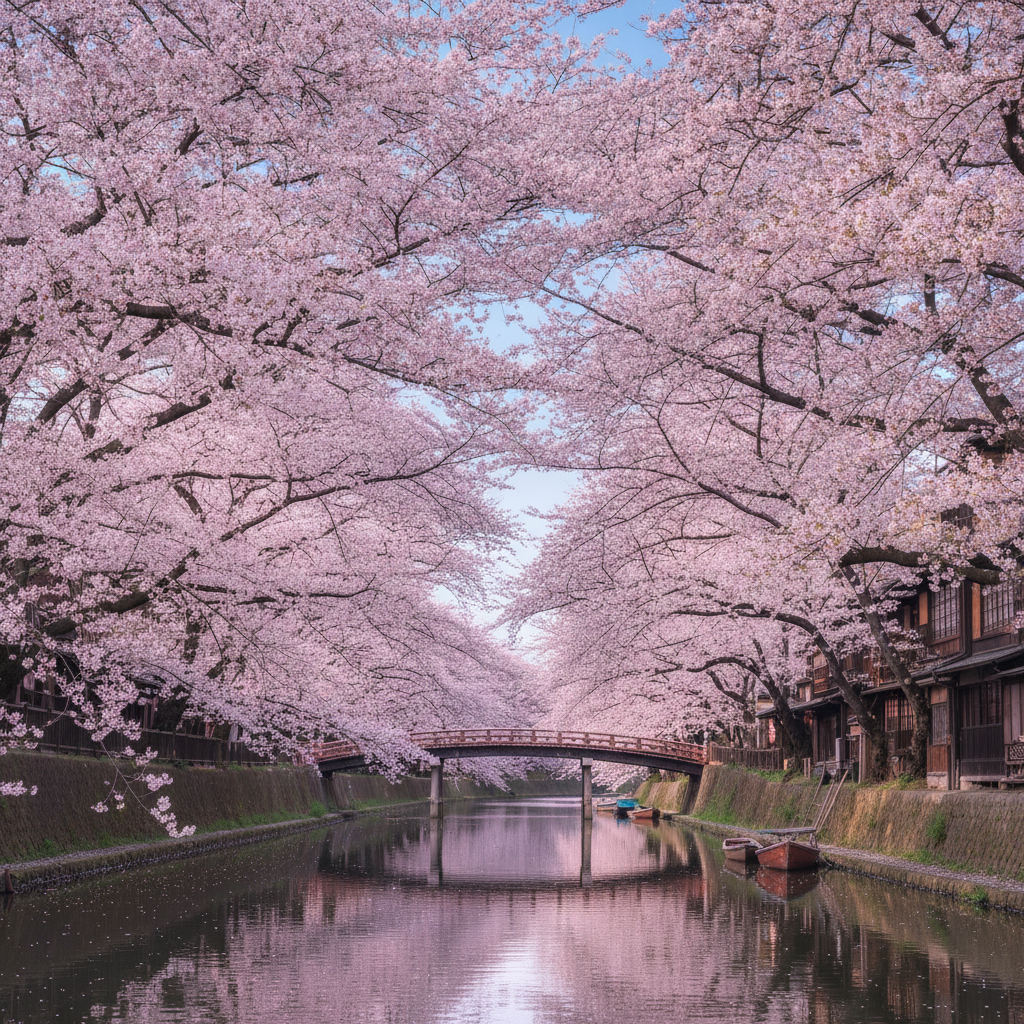
The Chaya Patron Introduction System Still Requiring Sponsorship, the Kanazawa Konbu Producing the Sweetest Stock in Japan & the 4,000-Costume Foundation Festival Parade
The Swimming Pool That Isn't, the 4-Story Building That Looks Like 2 & the 800 Noh Students in a City of 465,000
SANAA's Circular Museum Aligned With Japan's Oldest Great Garden, the ¥500,000 Opening-Day Crab & Why the Japan Sea Side of Japan Is a Different Country