The Swimming Pool That Isn't, the 4-Story Building That Looks Like 2 & the 800 Noh Students in a City of 465,000
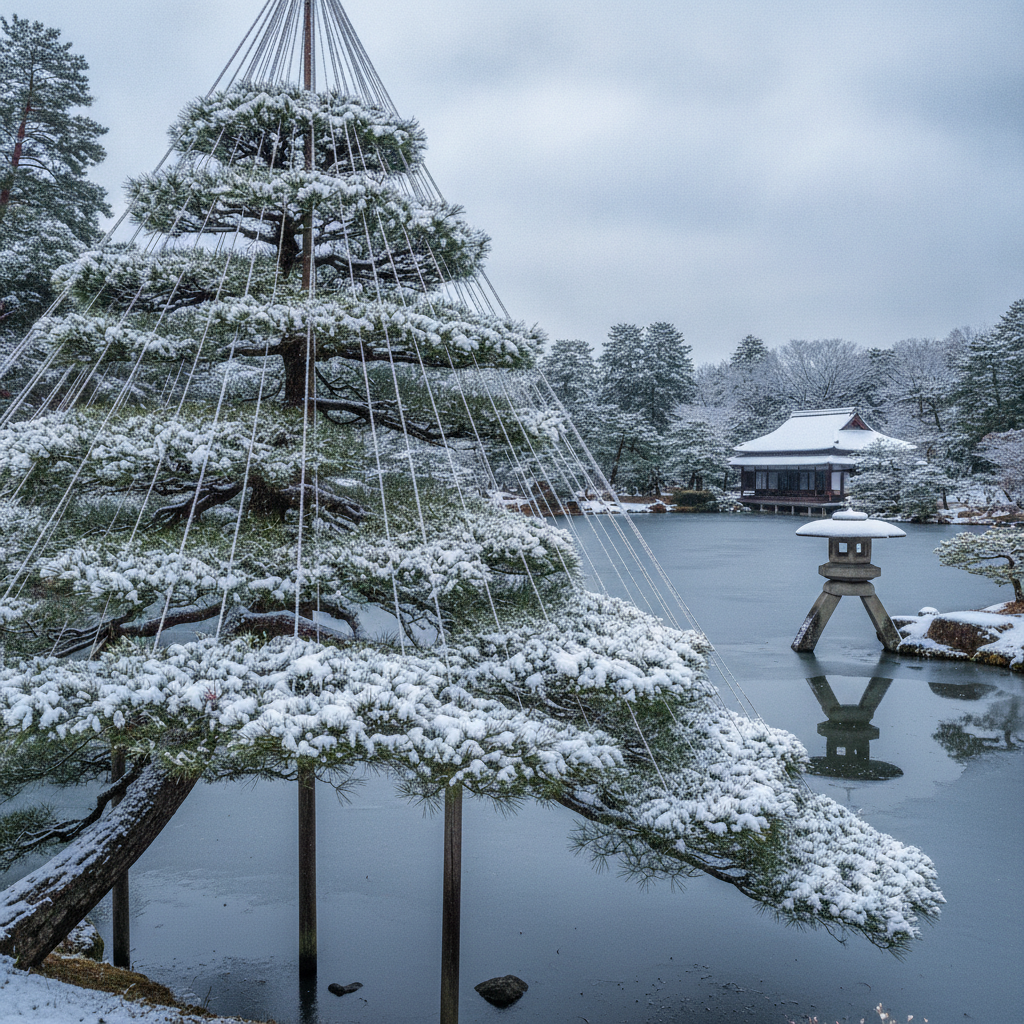
The 21st Century Museum's circular building with no front door as architecture-as-civic-philosophy, and the Swimming Pool illusion as the most copied contemporary installation concept in Japan; Myōryū-ji's 29 staircases and suicide room visible only on mandatory guided tour; Kanazawa's 10× national-average Noh participation rate and the 120-mask museum allowing physical handling; the Noto Peninsula's 1,004 coastal rice paddies and the 76-step Wajima lacquer process; the gold leaf ice cream's 24-karat edible sheet applied by bamboo chopstick; and the Kazue-machi riverside lanterns in the December first snowfall.
- 1
The 21st Century Museum of Contemporary Art
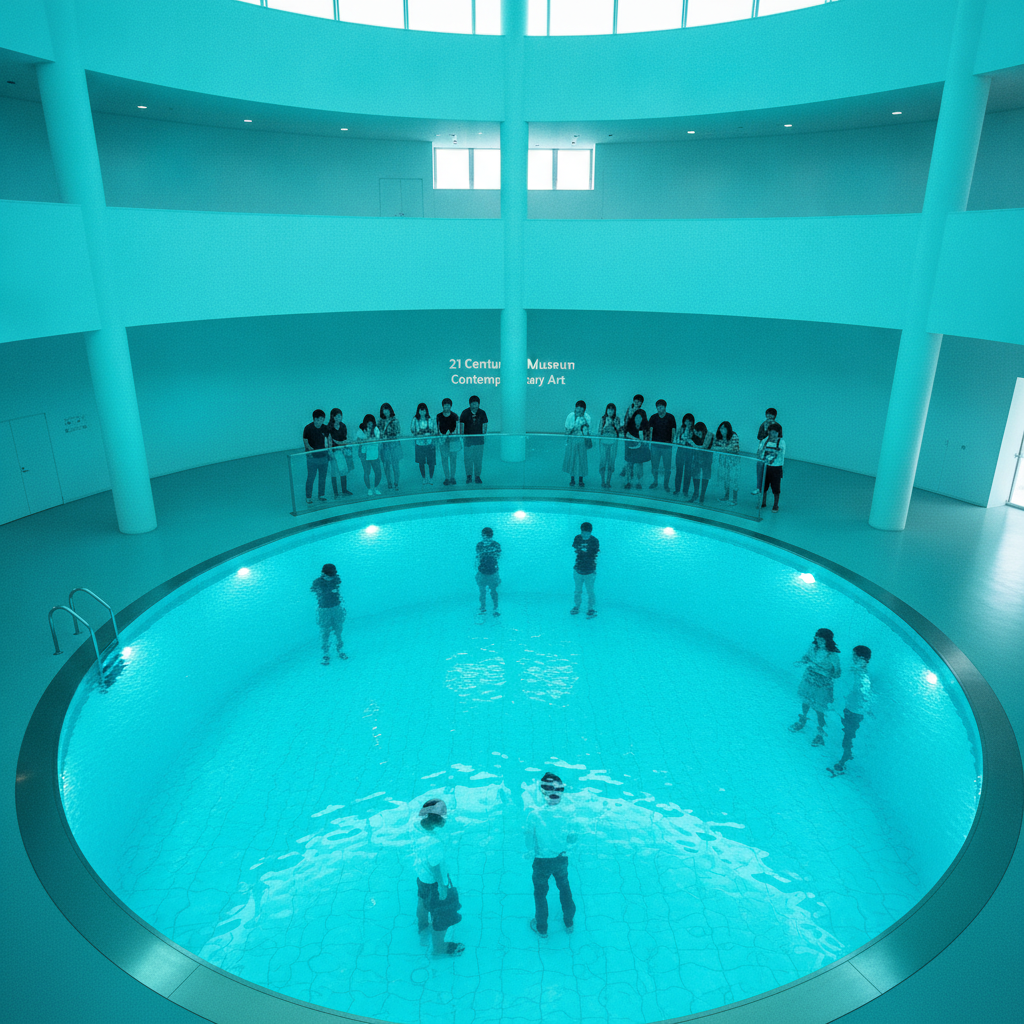
The 21st Century Museum of Contemporary Art, Kanazawa (21seiki Bijutsukan—the circular contemporary art museum designed by SANAA (Sejima and Nishizawa) in 2004 in the center of Kanazawa, adjacent to Kenroku-en and the Kanazawa Castle park): one of the most influential contemporary architecture buildings of the 21st century and the defining example of the 'museum as civic space' design philosophy. The building concept: the circular plan (113-metre diameter) with glass exterior walls means the museum is visible from all directions and accessible from any point on the perimeter—the building has no single front entrance, symbolizing the museum as equally open to everyone. The permanent collection installations: the Swimming Pool (Leandro Erlich's underground light installation that creates the optical illusion of a swimming pool filled with water—visitors on the upper level look down through transparent water-effect glass to see people below 'underwater'; people below look up through the same glass to see people above: the most copied contemporary installation concept in Japan and the most photographed single work of art in Kanazawa). The Light Garden (the James Turrell 'Blue Planet Sky' skylight room—an oculus installation where the ceiling is open to the sky and the changing sky colour from dawn to dusk creates a continuously changing natural colour field within a white room): the most consistently meditative contemporary art experience in Japan.
- 2
Kanazawa's Ninja-dera – The Deception Temple
Myōryū-ji (the temple universally known as Ninja-dera—'Ninja Temple'—despite having no historical connection to ninja): the 1643 temple in the Teramachi (Temple Town) district of Kanazawa built by the 3rd Maeda lord Toshitsune as a lookout and refuge complex. The architectural complexity: the temple appears to be a 2-story building from outside but is actually a 4-story building (the exterior reveals only 2 stories while the interior has 4 levels and 7 tiers, with 29 staircases, hidden rooms, escape tunnels, trapdoors, and a well shaft connecting to the exterior moat): the temple's complexity was designed to confuse enemy infiltrators and provide escape routes for the Maeda lord in case of attack. The specific features: the suicide room (the concealed room where cornered defenders could perform ritual suicide without discovery); the reversible alcove (the tokonoma display alcove that rotates to reveal a hidden staircase); and the 3-metre pit below the main hall (the dug area that allowed defenders to emerge from below in a surprise counterattack). The guided tour requirement (Myōryū-ji requires advance reservation and accepts only guided tours—individual exploration is not permitted because the building is structurally confusing and visitors would become lost): the tour operates in Japanese only, with English notes provided; the combination of the guide's theatrical presentation and the genuine architectural mystery makes this the single most popular individual attraction in Kanazawa for Japanese domestic visitors.
- 3
Kanazawa's Noh Theatre Tradition
The Noh theatre (the classical Japanese theatrical form originating in the 14th century, combining masked performance, chant, dance, and flute/drum music in highly formalized sequences): Kanazawa's Noh tradition is the largest outside the major metropolises and the most living in the sense that the Kanazawa community's Noh practice extends beyond professional performance into amateur participation at a level unseen elsewhere in Japan. The Maeda Noh (the specific Kanazawa Noh style—the Maeda clan imported Kyoto Noh masters from the 17th century onward and developed a local style (Kaga Hosho school) that differs from the standard Tokyo and Kyoto Noh schools in specific pattern, timing, and mask use): the Kanazawa Noh Performances (the regular public performances at the Ishikawa Ongakudo (the Ishikawa Prefecture Concert Hall) and the Kanazawa Noh Museum's performance stage). The Kanazawa Noh Museum (the dedicated Noh museum in the Higashi Chaya district—the museum's exhibition of 120+ Noh masks and 200+ Noh costumes is the most comprehensive single-site Noh collection in Japan; the demonstration programme allows visitors to try on and handle Noh masks—the most direct encounter with the physical object of Noh performance available without attending a performance). The Noh popularity in Kanazawa: approximately 800 registered Noh students in the Kanazawa area (population 465,000)—a per-capita Noh participation rate approximately 10× the national Japanese average.
- 4
The Noto Peninsula – Kanazawa's Wild Extension
The Noto Peninsula (the peninsula extending 100 km north from Kanazawa into the Sea of Japan—the most remote rural landscape within 2 hours of the Hokuriku Shinkansen network): the peninsula's dramatic Sea of Japan cliff coast, traditional fishing villages, and UNESCO-listed satoyama-satoumi (mountain-village and sea-village) traditional landscape make it the most significant rural heritage landscape accessible from Kanazawa. The Wajima Lacquerware (the Wajima-nuri—the lacquerware produced in the Wajima city on the northern Noto coast, considered the finest lacquerware in Japan: the production process requires 76 separate steps and takes 3–6 months per item; the characteristic red base coat visible when the lacquerware is chipped or worn distinguishes Wajima-nuri from other Japanese lacquerware traditions): the Wajima Lacquerware Museum displays the production process and the highest-grade pieces. The Noto satoyama (the traditional Noto landscape of rice paddies, woodland, and fishing harbours maintained in essentially unchanged condition from the Edo period—the GIAHS (Globally Important Agricultural Heritage Systems) designation by the UN FAO in 2011): the Shiroyone Senmaida (the 1,004 small rice paddies cascading down a coastal hillside to the Sea of Japan: the most photographed agricultural landscape in Japan). The 2024 Noto earthquake (the magnitude 7.6 earthquake on January 1, 2024 caused severe damage to the Noto Peninsula's coastal towns and traditional structures—the Wajima Asaichi morning market was destroyed by the earthquake-triggered fire; recovery is ongoing as of 2026 and visitor support is one component of the recovery strategy).
- 5
Kanazawa's Food Scene – Gold Leaf Ice Cream & Beyond
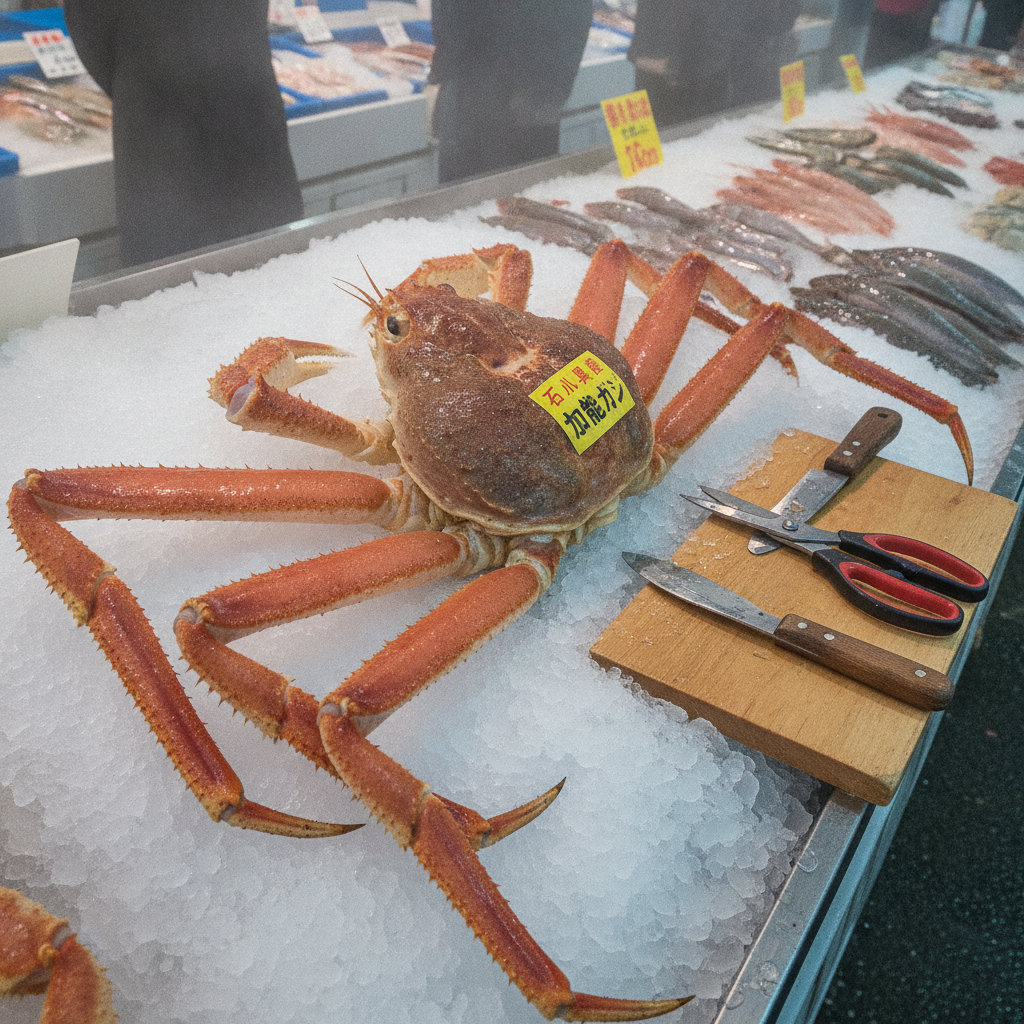
The Kanazawa food culture is centred on the Sea of Japan seafood (the most diverse cold-water seafood supply in Japan, available 365 days a year) and the luxury food aesthetic of the Maeda clan's Kaga Cuisine (the kaiseki style specific to Kanazawa, distinguishable from Kyoto kaiseki by its heavier, more warming character suited to the Sea of Japan winter and by the specific Kaga vegetables used exclusively in the region). The Kaga-ryori kaiseki dinner (the formal multi-course dinner at a Kanazawa restaurant or ryokan featuring the 4 traditional Kaga vegetables (gobo-gobo burdock root, kinuura turnip (in autumn), Kaga lotus root (the lotus with the distinctive triangular holes rather than the round holes of standard lotus), and Kaga cucumber) plus the seasonal seafood): the benchmark Kanazawa kaiseki experience is available at mid-tier restaurants from approximately ¥8,000 per person. The gold leaf ice cream (the Hakuichi Kanazawa gold leaf soft-serve ice cream—a single soft-serve cone wrapped entirely in a paper-thin sheet of 24-karat gold leaf (the gold sheet is applied by the shop assistant using a bamboo chopstick): ¥891; sold at the Higashi Chaya district Hakuichi shop): the most Instagrammed food item in Kanazawa and the one that has the strongest grip on the food tourism imagination despite being primarily visual. The Kanazawa sake (the Tedorigawa and Masuizumi breweries—the two premium Kanazawa sake brands; the Tedorigawa Junmai Daiginjo is consistently rated among Japan's top 20 sake labels; the Masuizumi Junmai is the most internationally exported Kanazawa sake).
- 6
Kanazawa's Night & Katamachi District
The Katamachi district (the entertainment district at the center of Kanazawa—the main izakaya, bar, and restaurant concentration occupying the area between Katamachi and Korinbo crossing, 10 minutes by bus from Kenroku-en): the most active nightlife concentration between Osaka and Sapporo on the Sea of Japan coast. The Kanazawa izakaya culture (the local izakaya tradition incorporating the Sea of Japan seafood at the chef's discretion menu (the omakase izakaya experience—you tell the chef your budget and preferences and they order for you from the daily specials, typically fresh seafood from the Ōmi-chō market's morning delivery)): the most cost-effective way to eat Kanazawa's highest-quality seafood outside a formal kaiseki restaurant. The Kazue-machi Chaya district at night (the smallest of the three chaya districts, on the Asano River—the most atmospheric evening walk in Kanazawa at dusk when the riverside lanterns illuminate the willow trees and the chaya windows): the Kazue-machi district is particularly beautiful in the early December snowfall when the willows carry snow and the lantern light reflects in the river ice. The Kanazawa bar scene (the Korinbo 109 building area and the Kata-machi alley bars—approximately 30 small bars in a 200-metre radius; the Kanazawa Jazz Street festival (October—the largest jazz festival in Hokuriku, with approximately 100 performances in venues across the city) is the most significant annual night event in the Kanazawa entertainment district).
Walk this route with audio
Stories play automatically as you reach each stop — no tapping needed.
More in Kanazawa
The Straw-Wrapped Walls, the Perforated White Library & Why Kanazawa Has One-Sixth Kyoto's Crowds at One-Third the Price
The Chaya Patron Introduction System Still Requiring Sponsorship, the Kanazawa Konbu Producing the Sweetest Stock in Japan & the 4,000-Costume Foundation Festival Parade
SANAA's Circular Museum Aligned With Japan's Oldest Great Garden, the ¥500,000 Opening-Day Crab & Why the Japan Sea Side of Japan Is a Different Country
The 6-Stage 3-Day Process That Produces a Sheet Lighter Than Breath, the Apprenticeship Fund Paying 60% of New Craft Learners' Wages & the Four Kenroku-en Peaks That Each Justify a Separate Trip